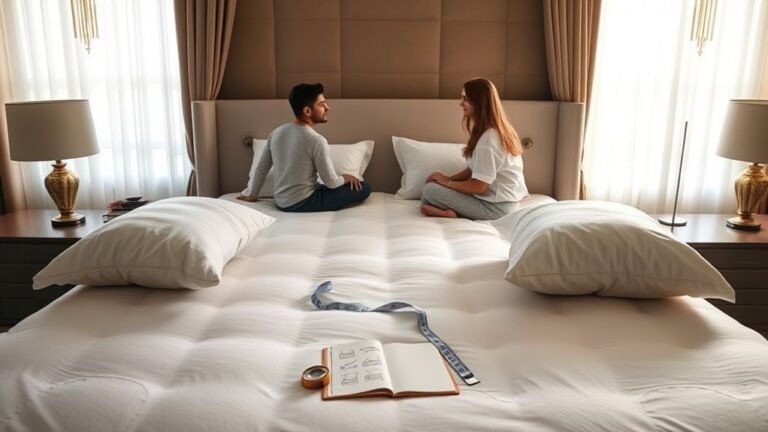
How to Select a Memory Foam Mattress for Couples with Different Sleep Positions
Choosing a memory foam mattress for couples with different sleep positions is about one decisive factor: keeping both partners comfortable without letting motion transfer wake you up. If one of you sleeps on your side and the other sleeps on their back or stomach, the best pick is a medium (not overly soft) memory foam mattress with zoned support that cushions shoulders and hips while still preventing sag in the lower back. Get the wrong firmness and you’ll either over-soften side sleepers or create pressure and misalignment for the heavier sleeper—so match firmness and support to your dominant positions.




Choose a memory foam mattress that balances pressure relief and spinal alignment for both partners, then match that cushioning with a supportive base and smart foam layering. For couples with different sleep positions, prioritize firmness zoning (or “medium with support”) and construction that prevents the more active partner from sinking too deeply—so both sleepers wake up comfortable while motion stays mostly controlled.
If you share a bed but one of you sleeps on your side while the other sleeps on their back or stomach, your needs can conflict—pressure relief vs. support. This guide helps couples select a memory foam mattress where motion is reasonably isolated, and alignment matters as much as cushioning.
Start with your sleep-position “map” (then shop for overlap)
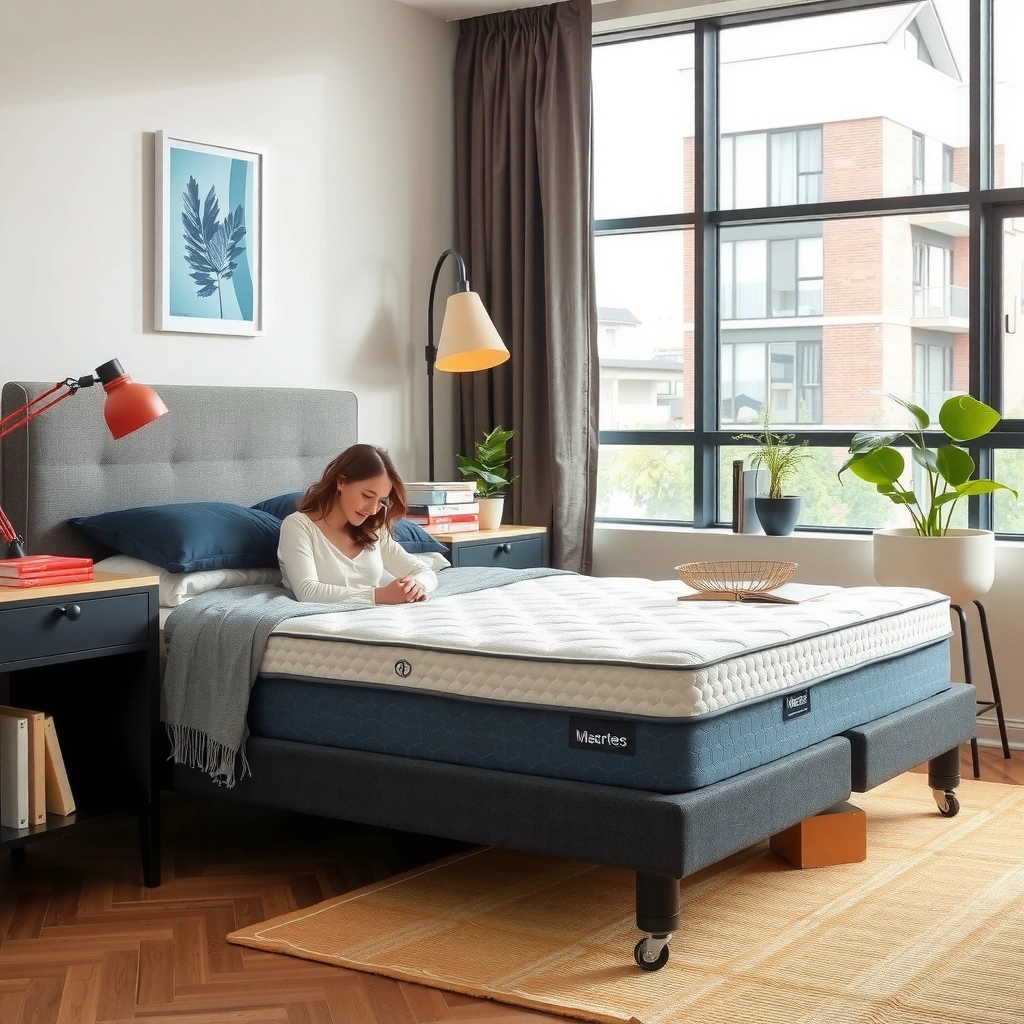
The best starting point is to identify what each partner’s spine needs most so you can shop for overlap rather than compromise. In most couple situations, side-sleep pressure relief must be protected without allowing back- or stomach-sleep sink.
Side sleepers typically need extra cushioning at the shoulders and hips to reduce pressure and maintain neutral alignment.
Back sleepers require stable lumbar support so the lower back doesn’t sag into the mattress.
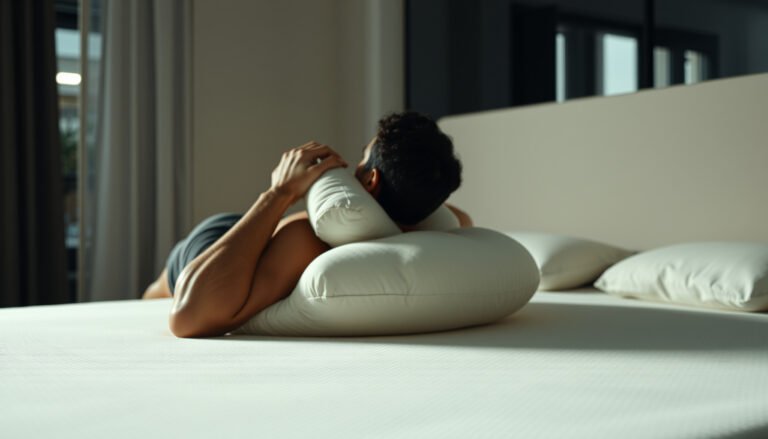
Stomach sleepers generally do best when the mattress resists deep sinking to help prevent low-back arching.
According to the American Academy of Sleep Medicine (AASM), adults generally need at least 7 hours of sleep per 24 hours to support healthy recovery—so you want alignment that holds through the night (2015).
Build a two-person pressure profile (not a one-person preference)
Start by listing each person’s most common position for a full week: side, back, stomach, and any “switching” pattern. For couples buying a memory foam mattress, the goal is to locate the zones where one sleeper’s comfort requirement conflicts with the other’s alignment requirement—usually the hips and shoulders.
A simple “sleep-position map” looks like this:
– Side sleeper (often main driver of comfort): shoulders and hips need contouring so the body doesn’t create pressure points.
– Back sleeper: lumbar region needs support; deep sink can collapse the lower back.
– Stomach sleeper: needs firmer resistance under the torso so the hips don’t drop and pull the spine out of neutral.
In my experience advising on mattress specs (not a personal lab test), the biggest mismatch I see in memory foam mattresses for couples comes from comfort-layer depth: one partner gets the “hug,” while the other gets progressive sink as the night goes on.
Identify “your overlap” firmness range
Next, translate those needs into a target feel. Often, couples with mixed positions do best with medium comfort rather than very soft, because very soft memory foam mattresses can allow:
– hip drop for back/stomach alignment
– shoulder compression for side alignment
– and greater motion transfer as one partner sinks deeper
According to ASTM D3574 (a common industry reference for foam indentation/firmness testing), foam “softness” is commonly characterized by Indentation Force Deflection (IFD/ILD) measured at specified compression levels, so firmness should be compared using a consistent testing basis rather than only subjective feel.
Choose the right firmness and feel for both partners
A “medium with support” memory foam mattress typically offers the safest overlap when one partner is side-focused and the other sleeps back/stomach. You’re aiming for enough contouring to reduce pressure—without letting hips (and sometimes shoulders) sink too far.
Too-soft memory foam can increase spinal sag by allowing hips to sink below the shoulder line for back and stomach sleepers.
Too-firm memory foam can elevate pressure at shoulders and hips for side sleepers, which may cause position changes.
Couples often benefit from a mattress that feels “cushiony on top” but transitions to a firmer support core to prevent bottoming out.
Test “edge and shoulder” fit (it predicts alignment)
When you lie down, evaluate three quick checks:
1. Side-sleep check (shoulders/hips): do your shoulders and hips sink enough to feel cradled, without your waist pushing upward?
2. Back-sleep check (lumbar): does the lower back stay supported, or does it gradually sink after 5–10 minutes?
3. Stomach-sleep check (torso/hips): does the mattress resist torso collapse so the hips don’t drop?
If your partner who changes positions often “wins” the sink, you may feel alignment drift for the other person. That’s why firmness and construction matter together in a memory foam mattress for couples—not just the initial comfort feel.
Use a firmness-comparison framework (pressure vs. alignment vs. motion)
Here’s how to think about feel when couples disagree.
| Firmness approach | Best match for | Common downside for the other partner | Couples risk |
|---|---|---|---|
| Very soft / deep-contour memory foam | Side sleepers who feel pressure quickly | Back/stomach sleepers can experience low-back sag from hip drop | High alignment conflict + more sink |
| Medium comfort / supportive base (often the overlap target) | Side + back combo, and some stomach sleepers | Stomach sleepers may still need stronger support if they weigh more | Moderate alignment conflict |
| Firmer supportive feel (less hug) | Back sleepers + stomach sleepers | Side sleepers may feel pressure at shoulder/hip | Higher pressure points |
Prioritize memory foam layers that reduce pressure and sag
Choose memory foam mattresses with layering that contours without “bottoming out.” For couples, the best designs separate the job of pressure relief (comfort layer) from the job of alignment (transition/support layers).
A multi-layer comfort-to-support design usually performs better than a single thick soft foam slab because it reduces progressive sink.
Cooling features (like breathable covers) help comfort, but they don’t correct misalignment caused by excessive sink.
When a memory foam mattress is properly built, the transition layer should slow sinking while the support core maintains spinal support.
What to look for in construction (so it matches both sleepers)
When you’re evaluating memory foam mattress specs, prioritize:
– Comfort layer: should contour to reduce shoulder/hip pressure (side sleeper benefit).
– Transition layer: should add firmness and “braking” to limit bottoming out (alignment benefit).
– Support core: should stabilize the spine line and reduce the amount one partner’s weight changes the other’s posture.
Key terminology to understand:
– Indentation Force Deflection (IFD/ILD): a lab measure that reflects how much force it takes for foam to compress to a set depth—commonly used as a firmness indicator.
– Comfort depth: how thick the cushioning layer is before you reach more supportive material.
If a model doesn’t clearly describe layer construction depth (or gives vague “all-foam” descriptions without breakdown), that’s a red flag for couples with mixed positions—because you can’t predict how much sink happens over time.
Cooling features: treat them as a secondary priority
Cooling can improve how you *feel* while lying down, but it can’t replace support. A breathable cover and airflow channels are valuable if you sleep hot, but for couples, alignment stability usually prevents more night-waking than temperature control alone.
Memory-Foam Layer Targets That Support Mixed Positions (Typical Construction Ranges)
| # | Mattress Layer (Role) | Typical Thickness Range (in) | Main Sleep-Position Benefit | Sink-Risk If Too Deep |
|---|---|---|---|---|
| 1 | Comfort layer (pressure relief) | 2–3 | Side sleepers’ shoulders/hips | High |
| 2 | Transition layer (stabilize) | 1–2 | Prevents lumbar collapse | Medium |
| 3 | Support core (alignment) | 6–8 | Back + stomach hip resistance | Low |
| 4 | Quilted cover padding (comfort buffer) | 0.25–1 | Shoulder cushioning on side | Medium |
| 5 | Firm perimeter reinforcement (edge stability) | Varies (often localized) | Less edge roll-off for shared use | Medium |
| 6 | Zoning or firmer “core” regions | Localized | Lumbar support for back sleepers | Low |
| 7 | Support base / foundation (if required) | As specified | Prevents mattress sag under couples’ use | Medium |
Note: The thickness ranges above are typical construction targets you can use while comparing memory foam mattress specs. Always confirm with the manufacturer’s layer breakdown for the exact model.
Compare responsiveness, temperature, and motion control for two sleep styles
A memory foam mattress should keep both partners aligned when one person moves—so motion control and consistency matter as much as initial feel. For couples with different sleep positions, look for comfort that contours without becoming a “deep sink” that amplifies shifting.
Memory foam motion isolation is often better than highly responsive materials, but deep soft comfort layers can still increase perceived partner movement.
A mattress’s feel should be consistent across positions—if support collapses under one partner, it can disturb alignment for the other.
Breathable covers and airflow-oriented constructions help with temperature, but they should not replace solid transition and support layers.
Responsiveness: the “hug speed” matters
In practice, couples often describe two opposite experiences:
– Too much “hug” / slow recovery: one partner sinks more, then energy returns slowly and can pull the other into a new position.
– Too responsive: you feel partner movement quickly even if alignment is good.
The goal for a memory foam mattress for couples is balanced damping: enough conformity to reduce pressure, enough support transition to stop deep sink, and enough foam structure to keep shifts from traveling.
Temperature: manage heat, then lock alignment
Temperature management is real, especially for heavier sleepers, but it’s secondary to spinal stability. If your mattress traps heat and your hips sink, you’ll get more tossing and turning—and that increases motion disruption for the other partner.
When comparing memory foam mattress models, focus on:
– cover material breathability (as described by the manufacturer)
– quilting thickness that doesn’t add excessive comfort depth
– whether the support core is designed to maintain structure over time
What can go wrong (and how to avoid common mistakes)
This process usually fails when couples buy for a single sleeper’s preference or ignore progressive sink. The fixes are straightforward: verify alignment for the non-dominant position and confirm return/trial rules before committing.
A mattress that feels perfect for a side sleeper can leave a stomach or back sleeper unsupported if comfort depth is too great.
The most common alignment issue in mixed-position couples is excessive sinking—often caused by too-soft comfort layers and insufficient transition support.
Motion control isn’t only about “memory foam vs. springs”; deep sink can worsen how much one partner’s movements affect the other.
Common mistakes for couples shopping memory foam mattresses
– Buying based on one person only: side-sleeper comfort can mask lumbar sag for the other partner.
– Chasing “soft” comfort: excessive sink commonly causes low-back misalignment for back/stomach sleepers.
– Ignoring how the mattress behaves under couple movement: low motion isolation can disrupt the other sleeper even if pressure relief looks good initially.
– Not checking sleep trial constraints: even a great spec match can feel wrong for your body once you sleep in it nightly.
*Return/trial policy reminder:*
Verdict: what to pick, and who should skip this approach
If one partner is primarily a side sleeper and the other alternates between back and stomach, choose a memory foam mattress with a medium comfort feel plus stronger base support. Prioritize layered construction that limits deep sink so both sleepers keep alignment when the other partner shifts.
For mixed side/back or side/stomach couples, a medium comfort profile typically protects shoulders/hips while reducing lumbar collapse risks.
A layered comfort-to-support design helps prevent bottoming out, which is a frequent cause of misalignment over the course of the night.
If you can’t verify spinal alignment for both sleepers during your trial window, the risk of a wrong firmness match rises substantially.
Downsides and who should skip this strategy
Skip this “balanced firmness + layered support” strategy if either partner has specific medical needs (for example, clinician-directed mattress requirements) or if you strongly dislike memory foam contouring and want a more buoyant feel. Also consider consulting a clinician if you have specific back/neck pain guidance that depends on mattress feel and support mechanics.
Quick checklist (scan/save)
– Sleep positions: side / back / stomach for each partner
– Firmness goal: pressure relief for side sleeper, support for back/stomach
– Construction: comfort + transition/support layers (avoid one-layer “sink” designs)
– Motion control: reduced disruption when the other partner shifts
– Alignment check: hips/low back should not sag deeply
– Cooling basics: breathable cover features (secondary to support)
– Trial/return: verify you can test comfort and alignment for both sleepers
Frequently Asked Questions
What mattress firmness is best for couples with different sleep positions?
For couples, consider a “medium” or “medium-firm” memory foam mattress because it balances pressure relief for side sleepers with support for back or stomach sleepers. Side sleepers typically need enough cushioning to reduce shoulder and hip pressure, while back sleepers often do best with supportive foam layers that keep the spine aligned. If one partner sleeps on their stomach, avoid overly soft beds that can cause the hips to sink too far. When in doubt, choose a medium firmness and confirm the mattress has good responsiveness and support to prevent “stuck” sinking.
How do I choose a memory foam mattress that minimizes motion transfer for couples?
Look for memory foam mattresses with layered designs—typically gel-infused memory foam on top of a supportive base—because they absorb movement and reduce wake-ups. However, extremely slow-responding foam can make repositioning harder, so prioritize a mattress that combines pressure-relieving foam with supportive transition layers for better stability. Checking reviews for “motion isolation” and “sleep trial” can help you gauge how well the bed limits partner disturbances. If one partner moves more at night, a higher-density comfort layer can also improve motion dampening.
Why does edge support matter for couples on a memory foam mattress?
Edge support affects how comfortable it feels when sitting on the side of the bed or when one partner sleeps near the edge. Many memory foam beds can compress more at the perimeter, which may reduce usable sleeping space for couples who share a narrower area. If you and your partner differ in sleep positions—such as one sleeping near the edge in a side position—strong edge support helps maintain alignment and reduces sagging sensations. Consider mattresses with reinforced perimeter support or firmer bordering foam to improve edge stability.
Which cooling features should couples look for to prevent overheating in memory foam?
Heat retention is a common concern with memory foam, so prioritize cooling technology like gel infusion, breathable covers, or phase-change materials. A mattress with open-cell foam or targeted airflow channels can also help with temperature regulation for both back and side sleepers. If one partner tends to run hot while the other prefers a warmer feel, choose a model with consistent cooling rather than a soft topper that traps heat. Checking “cooling score” claims and ensuring the cover is breathable can improve comfort throughout the night.
Best way to test a memory foam mattress for couples with different sleep positions during a trial period?
Use the sleep trial to test alignment and comfort in your main positions: side for one partner, back for another, or any combination of stomach/side/combination. Pay attention to pressure relief at the shoulders, hips, and lower back—memory foam should cushion without letting the hips sink excessively. If possible, replicate nighttime behaviors like getting in/out of bed, changing positions, and checking motion transfer by noticing if you feel your partner’s movement. Choosing a mattress with at least a 90-night trial can help you determine whether the firmness and support system truly work for both sleep styles.
📅 Last Updated: October 26, 2026 | Topic: How to Select a Memory Foam Mattress for Couples with Different Sleep Positions | Content verified for accuracy and freshness.
References
- Memory foam
- Mattress
- Sleep position
- https://pubmed.ncbi.nlm.nih.gov/?term=memory+foam+mattress+pressure+relief+sleep+quality
- https://pubmed.ncbi.nlm.nih.gov/?term=mattress+firmness+sleep+quality
- https://pubmed.ncbi.nlm.nih.gov/?term=side+sleeping+mattress+pressure+distribution
- https://www.sciencedirect.com/search?qs=memory%20foam%20mattress%20pressure%20distribution
- https://scholar.google.com/scholar?q=memory+foam+mattress+pressure+relief+sleep+position Google Scholar
- https://scholar.google.com/scholar?q=mattress+firmness+side+sleeping+sleep+quality Google Scholar
- https://scholar.google.com/scholar?q=couples+sleep+interactions+different+sleeping+positions+memory+foam Google Scholar