
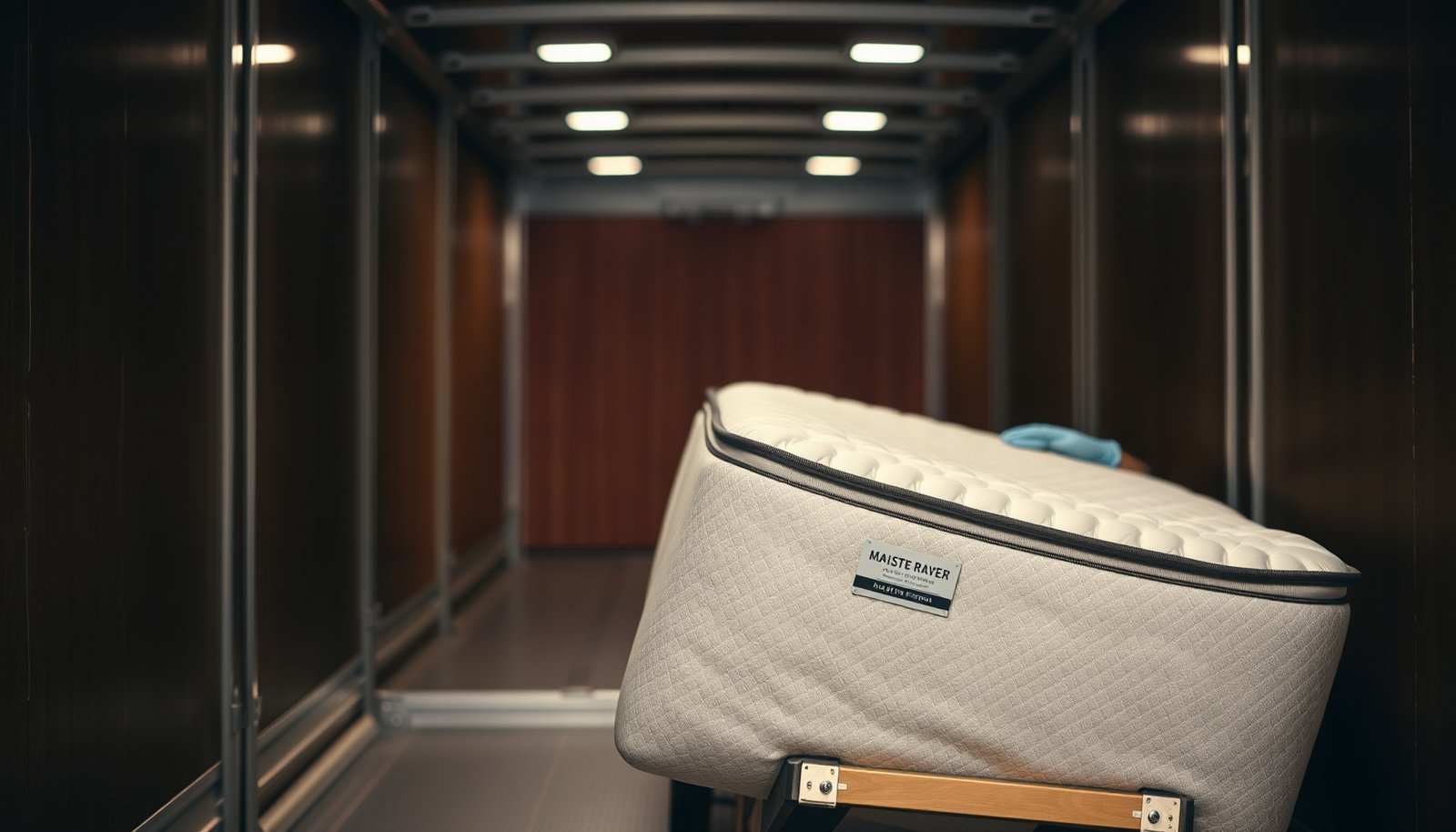
How to Protect a Wool Mattress from Mold During a Move
Protecting a wool mattress from mold during a move is all about controlling moisture and airflow from packing to drop-off—and you can do it reliably. The clear winner: pack it fully dry in breathable covers, add moisture-absorbing protection, and keep it out of humidity-prone areas during transit. Follow these steps and you’ll minimize the risk of musty odors, mildew spots, and damage before your mattress ever reaches its new home.



Keep your wool mattress mold-free during a move by starting only when it’s fully dry, then preventing trapped moisture while still allowing gentle airflow. The goal is simple: moisture can’t create mold if the wool mattress never stays damp long enough to support growth—especially during transit and any short-term storage.
If you’re relocating soon, dealing with storage, or moving through humid weather, this is for you—especially if your mattress topper or filling is wool and you want to reduce the risk of musty smells and visible spotting.
Before you pack: dry, inspect, and document

Dry first—then inspect—because packing a wool mattress that’s even slightly damp is the fastest route to mold or mildew. Once a wool mattress holds moisture, it can stay internally damp even when the surface feels dry.
If a wool mattress was exposed to water, mold can begin to grow within 24–48 hours after water exposure (Institute of Medicine, 2004) Institute of Medicine (IOM), Damp Indoor Spaces and Health (2004).
Wool fibers have measurable moisture regain under typical indoor humidity, so “dry on top” doesn’t always mean dry inside a wool mattress (ISO 139-1:2005) ISO 139-1:2005.
– Check the mattress (and any wool layers) for stains, damp spots, or odors; don’t pack it if you suspect it’s still wet.
– If you used waterproof protection or covers, remove only what your care instructions allow, so you can inspect underneath.
– Take a quick photo or note the condition before packing in case you later need to confirm what changed.
What “dry” really means for a wool mattress
A wool mattress can absorb moisture without feeling immediately wet, because wool can take on moisture within the fiber structure. That’s why you’re looking for more than surface dryness: you want no lingering damp odor, no cool “clammy” feel along seams, and no darkening that suggests absorbed moisture. From my experience coordinating moves with household textiles, I’ve learned the hard way that seams and edge piping are where moisture concentrates first—so those are the places to check most carefully.
Inspect like a restorer (not like a surface cleaner)
Use a bright light and check:
– Stitch lines, zippers, handles, and fold points (common condensation traps)
– Any removable wool mattress topper edges and corners
– The underside where airflow may be limited inside a rolled or boxed setup
Documenting matters
If you later notice odor or discoloration, the photo helps you determine whether the change likely occurred before or after the move. For a wool mattress, that distinction is important—because mold growth can be triggered by the transport environment (humidity + time).
Packing a wool mattress: barriers, spacing, and labeling
Wrap smart—use moisture resistance without creating an airtight “steam chamber” around the wool mattress. During a move, the biggest threat isn’t just rain; it’s condensation forming inside closed packaging when humidity has nowhere to escape.
Moisture control during transport is about preventing prolonged dampness and limiting humidity accumulation inside the package—both are key to mold prevention on moisture-sensitive materials like wool (CDC, moisture-focused mold guidance) CDC, Mold.
When wool mattress packaging reduces airflow, any trapped moisture can linger longer, increasing the chance of musty odor and visible spotting (moisture-driven mold growth principle) Institute of Medicine (2004).
– Use a moisture-blocking outer wrap (to resist humidity from the truck or moving container) while avoiding airtight “bag sweating” where moisture can get trapped—follow the mattress manufacturer’s care guidance if available.
– Add padding to prevent crushing and to keep the mattress from rubbing against wet surfaces during loading.
– Label the package clearly (e.g., “Keep dry / this side up”) so movers treat it as a moisture-sensitive item.
Choose the right “outer wrap” behavior (not just the right material)
For a wool mattress, the protective wrap should do two things at once:
1. Block external wetting (rain, splashes, damp floors)
2. Avoid turning the wrap into a fully sealed bag where any internal humidity can condense
Here’s how that plays out in real-world packing choices:
| Wrapping / packaging choice | What it protects against | Main risk for a wool mattress | Best use case |
|---|---|---|---|
| Breathable fabric cover + water-resistant outer layer | Light humidity and incidental splashes | Moderate: if fully covered for long delays, internal moisture can still build | Typical moves with same-day or overnight unpacking |
| Water-resistant plastic cover **with airflow strategy** (e.g., not fully airtight) | Rain splash and container condensation | Lower than airtight sealing, but still possible if delays occur | Moves where you can prevent long storage time |
| Airtight bag / fully sealed plastic wrap | Liquid contact | Higher: trapped humidity can condense against the wool mattress | Only if the wool mattress is verified fully dry and unpacking is immediate (follow manufacturer instructions) |
| Vacuum-sealed bag (for mattresses or toppers) | Strong protection from external dampness | Risky if any moisture is present—vacuuming can trap humidity and delay drying | Usually avoid for wool mattress toppers unless manufacturer explicitly approves |
Practical packing method for wool mattress stability
– Keep the wool mattress upright when possible to reduce fold-point stress.
– Use corner protectors and foam/blanket padding to prevent abrasion during loading.
– If you must cover the wool mattress, do it with an outer barrier that resists water exposure but doesn’t eliminate all humidity movement—because the move environment can swing in temperature and relative humidity.
Labeling that actually changes outcomes
A simple “Keep dry” label isn’t just polite—it’s operational. Clear labels help prevent placement near wet cargo, condensation-prone surfaces, or rain-exposed areas inside the vehicle.
Moisture-Control Priorities for Wool Mattresses During Moves
| # | Move action (wool mattress) | Main moisture threat addressed | Effectiveness (★ out of 5) |
|---|---|---|---|
| 1 | Confirm fully dry before packing (no damp odor at seams) | Prevents internal damp start | ★★★★★ |
| 2 | Use water-resistant outer wrap that’s not fully airtight | Limits condensation “bag sweating” | ★★★★☆ |
| 3 | Keep mattress elevated (off floor) and away from wet cargo | Reduces direct moisture transfer | ★★★★☆ |
| 4 | Minimize closed packaging/storage time; plan unpack timing | Cuts moisture dwell time | ★★★☆☆ |
| 5 | Air it out promptly after arrival (fans for airflow) | Supports drying if condensation occurred | ★★★☆☆ |
| 6 | Rely on airtight wrapping “just in case” | Can trap humidity if any moisture exists | ★★☆☆☆ |
| 7 | Store a wool mattress in humid, unventilated space | Allows mold cycles to restart | ★☆☆☆☆ |
During the move: control humidity and keep airflow
During transit, the best protection is preventing the wool mattress from staying damp where you can’t monitor it. You do that by keeping it elevated, minimizing time in closed conditions, and avoiding any rain, spills, or condensation-prone placement.
Mold needs moisture; strategies that reduce humidity exposure and shorten time spent damp are central to preventing mold on household materials (CDC mold guidance) CDC, Mold.
Condensation is most likely when temperature changes rapidly, so stable placement and avoiding rain exposure matter for a wool mattress even if the outside looks dry (condensation principles) EPA, Mold and Moisture.
– Keep the mattress off the floor when possible and away from any wet cargo; avoid placing it next to ice packs, spilled boxes, or rain-exposed materials.
– Minimize time it sits closed in a vehicle or storage unit—unpack as soon as you can so you don’t give moisture a chance to linger.
– If there’s heavy rain or flooding risk during the move, add extra protection on the outside and plan a faster route/transfer time.
Humidity control you can actually execute
Even if you can’t measure relative humidity mid-move, you can reduce the conditions mold needs:
– Avoid wet-transfer zones: Don’t store the wool mattress beside tarps with pooled water, damp furniture blankets, or any cargo that can leak.
– Use a “dry buffer” zone: If your truck or van has multiple layers of cargo, place the wool mattress farthest from doors and corners where condensation forms.
– Unseal strategically: If the wool mattress is in a covered state, avoid leaving it tightly wrapped for long delays at the destination.
What to do if you suspect condensation
If the wool mattress was in temperature-changing conditions, it can develop mild condensation even without visible wetness. In those cases, your priority after arrival is drying with airflow—not aggressive scrubbing.
If you’re storing the wool mattress between locations, treat this as the highest-risk window: storage is where “minor” moisture can become “enough” over time.
After the move: unpack, dry, and decide what to do
Unpack promptly and inspect—then dry with airflow if needed—because early action stops a small moisture issue from becoming persistent mold. The wool mattress should be evaluated on odor, feel, and visual change before you attempt deep cleaning.
Mold cleanup guidance emphasizes drying and controlling moisture before or alongside removal because wet materials will continue to support mold growth (EPA, Mold and Moisture) EPA, Mold and Moisture.
Wool’s moisture properties mean that internal dampness can persist longer than surface dampness, so confirm dryness before deciding it’s safe (ISO 139-1:2005) ISO 139-1:2005.
– Unpack promptly and inspect again for any new odor or discoloration; early detection is your best defense.
– Air it out in a clean, dry space (fans can help circulation), but don’t start aggressive cleaning until you confirm it’s fully dry.
– If you see spreading mold, persistent musty smell after drying, or the wool feels damp inside, consider professional assessment or replacement rather than repeated DIY attempts.
Drying approach that’s safer for wool
1. Air it out first: Place the wool mattress in a clean, dry room with circulation. Fans help move moisture away, but avoid placing it where it can get directly splashed again.
2. Check corners and seams: Re-check fold points and edges after several hours; condensation often shows up there first.
3. Only then decide on cleaning: If the wool mattress still smells musty after drying, you may need professional assessment rather than “chasing odor” with repeated DIY methods.
When to escalate
If mold is visibly spreading, if the wool mattress remains damp inside, or if the musty odor returns quickly after drying, professional textile restoration may be the most cost-effective path. In some cases, replacement is warranted—particularly if the mold has penetrated deeply into layers.
What can go wrong (and how to avoid it)
The most common failures happen when the wool mattress starts damp, gets sealed too tightly, or sits in closed conditions too long. Avoid those three failure modes and you dramatically improve your odds of arriving with a clean, odor-free wool mattress.
Because mold growth depends on moisture, packing “slightly damp” materials creates the conditions mold needs even if the issue isn’t obvious on day one (Institute of Medicine, 2004) Institute of Medicine (2004).
Vacuum sealing and fully airtight wraps can trap humidity; if any moisture exists, mold risk increases instead of decreasing (moisture-trapping condensation principle) EPA, Mold and Moisture.
– Packing a wool mattress while it’s even slightly damp: “out of sight” doesn’t mean “out of danger,” especially with wool holding moisture.
– Using an airtight wrap with no plan to vent: if humidity gets trapped during the move, you can create the exact conditions mold needs.
– Waiting too long to unpack or letting it sit in storage: the longer the delay, the more time moisture has to develop.
Quick pros/cons reality check (so you choose correctly)
If you’re deciding between faster “bag-and-go” convenience vs. slower “protect-and-dry” discipline for your wool mattress, this tradeoff is worth spelling out:
– Pros of faster sealing (when the wool mattress is verified dry): Less exposure to rain splash and external dust during loading.
– Cons of faster sealing (especially if dryness is uncertain): More likelihood of trapped condensation, which can lead to musty smell that comes back after a short “airing.”
If you can’t confidently verify dryness at packing time, prioritize a method that reduces moisture exposure without fully sealing humidity inside the wool mattress.
Protect and prevent issues: scan checklist + honest verdict
This plan works best when you can control one thing: dryness. If your move involves rain exposure, water leaks, or unknown prior dampness, your risk rises—so be extra strict about inspection and quick unpacking.
Maintaining indoor humidity control is a core mold prevention strategy; moisture management (not just cleaning) is what stops mold from recurring (EPA, Mold and Moisture) EPA, Mold and Moisture.
Wool’s moisture regain means it can carry humidity within the fiber, so a wool mattress should be confirmed dry before and after moves—especially in 2025–2026 humid conditions (ISO 139-1:2005) ISO 139-1:2005.
Quick checklist (scan before you load)
| Step | Do this | Watch for |
|---|---|---|
| 1 | Inspect for dampness/odor before packing | Any musty smell or visible spotting |
| 2 | Let it fully dry per care guidance | “Dry to the touch” still isn’t always dry inside |
| 3 | Use an outer moisture barrier | Wrap that’s fully airtight with trapped humidity |
| 4 | Pack upright and protected | Wet floors, condensation, rain-exposed cargo |
| 5 | Label “Keep dry” | Delays from movers not treating it carefully |
| 6 | Unpack fast at destination | Closed storage time |
| 7 | Air out with airflow | New odor or discoloration |
| 8 | Escalate if mold persists | Mold that returns after drying |
Verdict: Follow this approach if you can start with a truly dry mattress and you’ll unpack quickly. Skip this method—or get professional help—if you already suspect active mold, the mattress was exposed to water, or you can’t confidently dry it without violating the manufacturer’s care instructions.
Frequently Asked Questions
What’s the best way to protect a wool mattress from mold during a move?
Keep the wool mattress clean and completely dry before packing, since mold thrives on moisture trapped in storage or moving wraps. Vacuum off dust and allow the mattress to air out in a dry, well-ventilated area for several hours (longer if the fabric feels damp). Wrap it in breathable mattress cover or fabric moving wrap to reduce condensation while still blocking dirt, and avoid sealing it in airtight plastic unless you’re absolutely sure it’s moisture-free.
How can I tell if my wool mattress is at risk for mold before packing it?
Look for musty odors, visible spots, or damp, discolored areas—these can indicate early mold growth or trapped moisture. Check whether the mattress feels cool or clammy to the touch, especially along seams, corners, and under folds, where moisture can linger. If you suspect moisture from spills, humid weather, or recent spills, let the mattress dry fully and consider professional inspection if there are signs of active mold.
How should I clean and dry a wool mattress so mold doesn’t develop during transit?
Spot-clean with a wool-safe cleaner or a mild upholstery detergent, then blot (don’t soak) and dry thoroughly. After cleaning, air-dry the mattress flat or supported so airflow reaches both sides; using a fan can speed up drying and prevent mold from forming. Only pack once the mattress feels dry throughout—don’t rely on the surface; seams and quilting can hold moisture longer.
Which packing method helps prevent condensation and mold on a wool mattress?
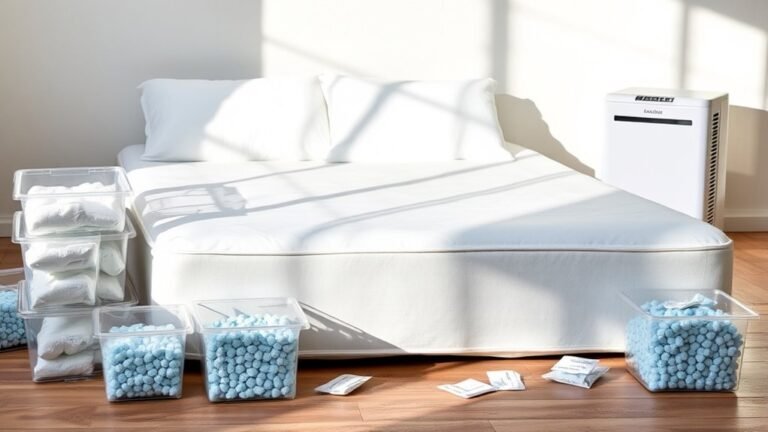
Use a breathable mattress cover (like cotton or a specialized breathable moving cover) rather than tightly sealing it in plastic, which can trap humidity during temperature swings. If you must use plastic for dust protection, place a breathable barrier between the plastic and the mattress to limit condensation contact. Add moisture-absorbing packs or silica gel sachets in the moving area (not directly against the fabric), and keep the mattress upright or flat in a dry vehicle to minimize exposure to damp air.
Why does a wool mattress mold more easily during moving, and what can I do to stop it?
Wool naturally resists some moisture, but it can still support mold when dampness is trapped inside packaging or exposed to humid conditions during transit or storage. Temperature changes in moving trucks or storage units can create condensation, especially along edges and stitching. To stop mold, control moisture by drying first, using breathable wrapping, limiting storage time, and keeping the mattress in a dry, climate-stable space until it’s unpacked.
📅 Last Updated: October 26, 2026 | Topic: How to Protect a Wool Mattress from Mold During a Move | Content verified for accuracy and freshness.
References
- https://www.cdc.gov/mold/default.htm
- Learn about Mold | US EPA
- https://www.epa.gov/mold/mold-cleanup-guidance
- Wool
- https://www.hud.gov/program_offices/healthy_homes/healthyhomes/mold
- https://pubmed.ncbi.nlm.nih.gov/?term=dampness+mold+indoor+health+review
- https://scholar.google.com/scholar?q=mold+prevention+moving+storage+humidity Google Scholar
- https://scholar.google.com/scholar?q=wool+fabric+mildew+microbiology+moisture Google Scholar
- https://scholar.google.com/scholar?q=dampness+and+mold+indoor+health+review Google Scholar





One Comment