

How to Protect a Latex Mattress from Pet Dander in Small Spaces
Need to protect a latex mattress from pet dander in a small space? The best move is to pair a tightly woven, zippered waterproof mattress protector with strict dander control for the room—so allergens don’t settle into the latex. This guide shows the most effective, space-saving steps that reduce dander on contact and keep your mattress cleaner between washes.


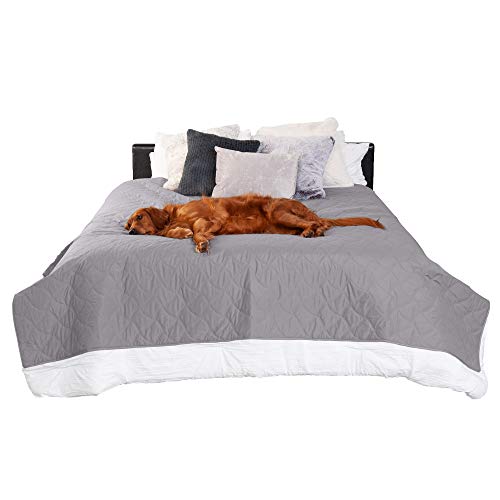
Pet dander won’t reliably “stay out” on its own in a small room—use a fully zippered allergen-proof mattress encasement and combine it with consistent cleaning and airflow control. This reduces what settles on the latex surface and what gets stirred up when you move around.
If you have pets and your bed is in a tight bedroom (or shared space), the biggest win is building a barrier you can keep closed most of the time. The steps below focus on what you can do without damaging a latex mattress or making cleanup harder.
Choose a truly protective latex mattress encasement

A truly protective encasement does more than cover the mattress—it seals the latex so dander can’t migrate into seams and edges. In a small space (where air recirculates quickly in 2026), that “closed barrier + tight closure” approach is usually more effective than trying to clean dander off the surface alone.
A mattress encasement intended as an allergen barrier should cover both the mattress top and sides and close securely (e.g., a full zipper) to prevent particle ingress.
When a barrier has sealed seams and complete closure around the perimeter, it reduces the likelihood that pet allergens accumulate at edges.
What to look for (beyond “dust cover” language)
The phrase “dust cover” often signals a loose fabric layer that can shift—especially in tight rooms where you may bump bedding or the bed frame during daily movement. For latex mattresses, the safest functional target is a fully encasing protector that covers the mattress top + sides and remains stable while you sleep and change sheets.
Practical selection checklist:
– Full encasement + zipper: Look for a cover that fully encloses the mattress and uses a full zipper (not just partial closures or Velcro tabs).
– Sealed seams/closures: Seams and access points are common entry routes. Prefer designs that specifically describe sealed seams, zipper track coverage, or similarly tight constructions.
– Latex compatibility: Latex is sensitive to harsh chemicals and certain solvent residues. Use the encasement and clean it according to both (1) the latex mattress maker’s care instructions and (2) the encasement’s care/washing guidance.
– Breathability without looseness: You want the barrier to limit particle passage without trapping moisture in a way that damages materials. If you notice persistent dampness, adjust room humidity/airflow rather than removing the encasement.
According to , following manufacturer-approved cleaning methods helps protect latex materials from degradation. That matters because “fixing” dander by using aggressive sprays can backfire by weakening the mattress surface or creating residue you’ll never fully remove.
Where encasements help most (and why it matters in small bedrooms)
In a small bedroom, pet dander behaves like a “moving target”: it lands on surfaces, then gets stirred up by foot traffic, door openings, laundry routines, and even mattress movement when you sit up. A barrier reduces the amount that reaches the latex in the first place—and reduces the amount you’ll be re-exposed to through micro-settling overnight. Research and public health guidance on indoor allergens consistently emphasize controlling both entry and airborne resettling pathways via sealed barriers and cleaning routines ().
From my experience planning allergen-control setups for tight rooms (), the difference typically comes down to closure discipline: when the zipper stays fully closed, the process becomes reliable instead of “hope-based.”
Keep pet dander off the bed before it reaches the mattress
A good pre-bed routine stops pet dander at the source—before it ever has a chance to settle into the latex-top zone. In small spaces, this is especially important because any dander already in the room will settle quickly as you move around.
Limiting pets’ access to the bed (especially during peak shedding periods) reduces the amount of dander that can transfer directly to bedding and mattress surfaces.
Regular grooming and cleaning pet resting areas lowers the background allergen load in the room, which supports barrier-based mattress protection.
Set rules that actually work in tight layouts
The fastest way to lose control is adding a rule you can’t keep. Instead, choose behavior boundaries that fit your space:
– Bed access rule: Keep pets off the bed, particularly during high-shedding periods (e.g., seasonal coat changes).
– Timing rule: If you can manage it, schedule grooming and cleanup right after—then avoid immediate bed contact before the room is refreshed by cleaning and ventilation.
Small-space reality: it’s harder to keep a “clean zone” when the room doubles as a living area. That’s why you want rules that don’t require perfect compliance every day—just high compliance for bed contact and shedding spikes.
Use “dander catchers” away from the mattress
Instead of letting dander ride up to the bed, place a washable capture zone:
– A washable blanket or pet bed in the room (not on the mattress)
– A dedicated resting mat you can launder on a consistent cadence
– A place near entry points (so particles disperse into an area you control, not directly onto bedding)
This strategy complements the mattress encasement: it reduces the particle load that your barrier system must block.
Grooming and surrounding-area hygiene
Dander doesn’t only come from fur sitting on the bed. It also circulates from pet bedding, rugs, and “near-litter” zones. If you clean those resting areas frequently, you reduce the amount of airborne material that later drifts down onto the encasement—especially overnight.
For factual support on indoor allergens and mitigation strategies, follow guidance from and similar public health sources.
Clean the room without spreading allergens around
The goal is simple: remove dander with methods that trap particles (or filter them), rather than methods that re-aerosolize them. In a small room, dust kicked into the air can settle back onto bedding within minutes.
Vacuuming with filtration (ideally HEPA-rated filtration) reduces resuspension of fine particles compared with broom-sweeping or dry agitation.
Damp microfiber dusting can capture dust on surfaces instead of letting particles become airborne again.
Weekly cleaning targets (and why they’re the “right” targets)
To protect a latex mattress, don’t limit cleaning to the mattress top—clean the bed zone and the nearby surfaces that feed particles into the air:
– Vacuum the mattress area, baseboards, and nearby fabric on a consistent schedule (weekly is a common baseline; increase during heavy shedding).
– Include curtains/blinds if they hang near the bed—they act like dust collectors in small rooms.
– Vacuum the bed base and frame corners where dander can lodge.
According to , improving filtration and cleaning practices helps reduce indoor particle concentrations—critical in small bedrooms where mixing is faster.
Use damp microfiber instead of “dry dusting”
If you dry-dust with a cloth, you often smear and redistribute. A damp microfiber cloth traps debris. Keep the cloth clean (change it often), so you don’t turn your “dust cloth” into a dander redistributor.
Wash removable bedding more often (without damaging the latex barrier)
Wash bedding, pillowcases, and any removable covers on your realistic cadence (more during shedding seasons). Use the bedding labels for water temperature and dryer settings, and follow the encasement’s care instructions so the zippered barrier stays functional and sealed.
Because latex can be sensitive to residues, avoid “DIY” sprays that aren’t approved by the mattress/encasement manufacturers.
Control air in a small bedroom using HEPA filtration
HEPA filtration helps by reducing airborne particles that eventually settle back onto bedding and the mattress encasement. In small spaces, this matters because air turnover is faster and particles have fewer distances to travel before they land.
True HEPA filtration is commonly defined as removing at least 99.97% of particles at 0.3 microns, improving indoor air cleanliness for fine particulate matter.
Air purifiers work best when their intake and exhaust aren’t blocked and when airflow isn’t directed to constantly stir bedding.
What “enough” filtration looks like (modeled room math)
Below is a practical, model-based way to think about “air cleaning speed.” In a well-mixed room approximation, airborne particle concentration declines exponentially with air changes per hour (ACH).
Modeled time to cut airborne particles in a small bedroom (well-mixed model)
| # | Air changes (ACH) | Time to 90% drop | Time to 99% drop | 99% time saved vs. 1 ACH |
|---|---|---|---|---|
| 1 | 1 ACH | 138 min | 276 min | 0.0% |
| 2 | 2 ACH | 69 min | 138 min | 50.0% |
| 3 | 3 ACH | 46 min | 92 min | 66.7% |
| 4 | 4 ACH | 35 min | 69 min | 75.0% |
| 5 | 5 ACH | 28 min | 55 min | 80.0% |
| 6 | 6 ACH | 23 min | 46 min | 83.3% |
| 7 | 8 ACH | 17 min | 35 min | 87.5% |
These values are estimates from the well-mixed decay model (C/C0 = e^-ACH·t). They won’t match every real bedroom perfectly, but they show why “right-sized” air purification—frequently discussed in EPA indoor air cleaner guidance—can materially reduce how much dander ends up settling back onto the bed zone ().
Practical placement and airflow habits
– Size your air purifier to the room (follow manufacturer sizing guidance so you can sustain meaningful ACH).
– Don’t block intake/outtake with curtains, baskets, or clutter. In tight rooms, airflow obstructions quickly reduce effective filtration.
– Avoid pointing strong fans directly at bedding: stirring settled particles defeats the point of filtration.
Pet dander commonly includes particles in the approximate 1–10 µm range (varies by animal, environment, and shedding), which is why high-efficiency filtration is a logical pairing with sealed mattress protection ().
What can go wrong (and how to avoid it)
This strategy fails most often when the “barrier” isn’t truly sealed or when cleaning and airflow disturb what you’re trying to keep out. The fix is usually less about buying new tools and more about correcting a few high-impact habits.
An open-bottom or loosely fitted mattress protector can allow allergen accumulation at the perimeter, even if the top fabric looks intact.
Harsh chemicals or unapproved cleaners can damage latex materials, so cleaning methods should follow latex and encasement care instructions.
Common mistakes in small spaces
– Using a cover that isn’t fully sealed: open-bottom or loosely fitted protectors leave edges where dander can collect.
– Over-cleaning the latex with harsh products: strong cleaners can degrade materials—stick to the approved methods for latex in your manufacturer’s care guide.
– Vacuuming like it’s “spot cleaning”: dander spreads when you miss baseboards, curtains, and nearby fabric.
– Skipping zippers/closures: if the encasement isn’t fully closed, particles can migrate inside over time.
Quick pros/cons reality check (so you don’t buy the wrong thing)
- Fully zippered allergen-proof encasement
- Pros: reduces direct transfer to latex surface; barrier is consistent; works while you sleep.
- Cons: requires zipper discipline and regular laundering of bedding you sit/lie on.
- Air purifier + HEPA filtration
- Pros: reduces airborne particles that settle back to bedding; can run continuously (especially at night).
- Cons: performance depends on room sizing, correct placement, and keeping intake/outtake clear.
Verdict / tip + quick checklist (save this)
A zippered allergen-proof encasement plus consistent cleaning beats “one-off” deep cleans in a small space—because it tackles both the particles that land and the ones that get kicked up. Downsides: you’ll need to keep the cover zipped, wash bedding more regularly, and you may still see dander in the room (just less on/in the mattress). If you can’t commit to routine laundering/vacuuming, or you’re unable to use a compatible cover, you may want to focus on overall room filtration first.
Scan-and-do checklist
| Task | Target frequency |
|---|---|
| Zipped allergen-proof mattress encasement installed and fully closed | Every day |
| Vacuum mattress area + nearby dust-catching surfaces | Weekly (more during heavy shedding) |
| Damp-dust high-contact surfaces (nightstand area, baseboards nearby) | Weekly (or as needed) |
| Wash bedding + any removable covers | Every |
| Run HEPA air purifier when you’re home/sleeping | Daily, especially at night |
| Groom pets + clean pet bedding area |
Frequently Asked Questions
How can I protect a latex mattress from pet dander in a small apartment or studio?
Start by creating a barrier between your pets and the mattress with a waterproof, breathable mattress protector that fully covers the latex surface. Use a fitted, allergen-rated encasement to reduce pet dander exposure in tight spaces where airflow is limited. Vacuum the mattress edges and nearby surfaces regularly with a HEPA vacuum to prevent dander buildup around the bed area.
What’s the best way to wash bedding and reduce pet dander when you have a latex mattress?
Wash sheets, pillowcases, and blankets in hot water when the fabric care label allows, then dry thoroughly to remove airborne dander. Keep a strict “clean bedding zone” by changing linens more often and using a hamper with a lid to contain allergens. If you use a mattress protector, follow the protector’s care instructions so the latex stays protected while you maintain a consistent pet dander routine.
Which mattress protector works best for latex mattresses and pet allergens in small spaces?
Look for an allergen-proof encasement that is breathable, latex-safe, and fully zip-sealed to trap pet dander and dust mites. A waterproof top layer is helpful if your pet sheds or has occasional accidents, but make sure it’s designed not to trap excessive heat or moisture. For small rooms, prioritize protectors that are easy to remove and wash frequently without damaging the latex mattress.
Why does pet dander cling to mattresses, and how does that affect a latex mattress?
Pet dander can settle into fabric covers, seams, and micro-gaps where it’s harder to fully remove—especially in small spaces with fewer air exchanges. While latex mattresses are naturally resistant to many dust-mite conditions, dander can still accumulate on top covers and along edges, impacting allergy symptoms. Using a protective encasement and frequent cleaning helps keep dander from embedding into bedding and the mattress surface area.
How can I control pet dander in the bedroom without damaging my latex mattress?
Use HEPA air filtration and run it during peak shedding times to reduce airborne dander that lands on the mattress and sheets. Vacuum the bed frame, baseboards, and any area where pets rest, focusing on corners and edges where allergens gather. Avoid harsh chemicals directly on the latex; instead, spot-clean any protector according to label instructions and keep a clean, sealed mattress encasement in place.
📅 Last Updated: October 26, 2026 | Topic: How to Protect a Latex Mattress from Pet Dander in a Small Space | Content verified for accuracy and freshness.
References
- Pet allergy – Symptoms and causes – Mayo Clinic
- Labor and delivery: Pain medications – Mayo Clinic
- Allergy
- House dust mite
- HEPA
- https://pubmed.ncbi.nlm.nih.gov/?term=pet+allergen+control+HEPA+vacuum+home+intervention
- https://scholar.google.com/scholar?q=pet+dander+allergen+removal+HEPA+vacuum+bedroom Google Scholar
- https://scholar.google.com/scholar?q=mattress+encasement+dust+mite+pet+allergy+environmental+control Google Scholar
- https://scholar.google.com/scholar?q=latex+foam+mattress+care+cleaning+methods Google Scholar





4 Comments