How to Protect a Latex Mattress from Spills During a Move
To protect a latex mattress from spills during a move, you should wrap it in a waterproof mattress protector and seal every seam with moving-grade plastic wrap. This is the fastest, most reliable way to prevent stains and water damage when boxes shift and liquids tip in transit. Follow it with careful packing in a rigid, upright-moving position for a near-zero spill risk.




Protect your latex mattress during a move by using a waterproof (or at least water-resistant) mattress encasement/cover and sealing it so liquid can’t reach the latex if something tips. Then wrap it in a protective outer layer and keep it upright/flat during loading and transport. This article will walk you through the safest prep and packing steps to minimize spill damage.
If you’re moving your home (or storing the mattress briefly), these steps help prevent stains, odor, and moisture exposure that can be harder to remove from latex than from many other materials. The advice below is especially important if you’ll be moving in a truck, around rain, or with other items that can leak.
Who this is for (and when it applies)

These steps are for anyone relocating a latex mattress—whether it’s a full mattress, split king, or a latex topper—especially when you’ll use a rental truck, move through wet weather, or share the truck bed with liquids (coolers, cleaning supplies, paint, or leaking boxes). In 2026, the core risk is the same: a “small” spill can still wick into seams and corners, and latex can hold moisture longer than many people expect, increasing odor and mold risk.
Protect the latex first: use a waterproof encasement
A waterproof mattress encasement is the first line of defense because it creates a sealed barrier between spilled liquid and the latex foam. For best results, choose full-coverage protection with a zipper (or similarly continuous closure) so liquid can’t creep into edges.
A waterproof mattress encasement is designed to block liquid from reaching the mattress surface, especially at seams and corners where water often infiltrates.
Moisture exposure after water damage can become a mold risk quickly—CDC guidance notes mold may begin growing within 24–48 hours of water exposure.
Waterproof performance is typically evaluated with tests that measure pressure resistance (hydrostatic head), which directly relates to how well a barrier stops liquid penetration.
– Choose a mattress encasement or waterproof protector that fully covers the mattress surface (ideally with a zipper to block leaks).
When you’re buying or selecting an encasement for a latex mattress, prioritize “full encasement” (top to bottom, with closure). A zipper closure matters because it can prevent liquid from tracking under loose flaps during shifting. If your mattress is a thick model (common with latex hybrid builds), confirm the encasement fits the height range so the zipper can close without tension gaps.
– Keep the mattress dry before you cover it—don’t wrap a damp mattress, even temporarily.
Sealing a damp latex mattress is often the fastest way to extend drying time inside the barrier. If you had any condensation, rain exposure, or a recent cleaning, follow the manufacturer’s dry-time guidance before encasing. (Latex foam can retain moisture longer than you’d expect because the foam structure holds water within cells.)
– If you only have a protector with seams/flaps, add an extra barrier (like a top-to-bottom cover) so spills can’t seep into corners.
Many “water-resistant” protectors do not seal reliably at seams, especially during transport vibration. Adding a second barrier (for example, a second top-to-bottom cover that overlaps the encasement edges) reduces the number of pathways a liquid can find.
Hydrostatic Head Thresholds for Waterproof Barrier Claims (Practical Ranges)
| # | Barrier Performance Level | Typical Hydrostatic Head* | What It Means for a Latex Mattress Move | Moisture Protection Rating |
|---|---|---|---|---|
| 1 | Light water resistance | ~500 mm | Helps with brief splashes, but edges/seams still need sealing | ★★☆☆☆ |
| 2 | Moderate water resistance | ~1,000 mm | Better for rainy loading days if zipper edges are tight | ★★★☆☆ |
| 3 | Waterproof (entry level) | ~1,500 mm | Often sufficient for move-time splash risk with good sealing | ★★★★☆ |
| 4 | Waterproof (high) | ~2,000 mm | Higher margin if the truck floor gets wet or spills pool briefly | ★★★★★ |
| 5 | Waterproof (very high) | ~3,000 mm | Useful when you expect prolonged splashing or wet pavement exposure | ★★★★★ |
| 6 | Heavy-duty waterproof | ~5,000 mm | Extra protection if liquids leak from other items in the truck | ★★★★★ |
| 7 | Best practice (sealed system) | Any rating + sealed seams | The “real-world win” comes from edge/corner sealing, not just fabric rating | ★★★★★ |
Hydrostatic head thresholds are practical ranges commonly used to differentiate water resistance vs waterproof performance in barrier testing contexts; always confirm the specific encasement’s test method and pass criteria in its documentation (e.g., AATCC 127).
Seal against leaks: wrap and bag correctly
A sealed wrapping system prevents spilled liquid from reaching the latex mattress even if the truck shifts or tips slightly. The key is layering: waterproof encasement first, then a secondary barrier that reduces splashes and limits direct wet contact.
A waterproof mattress encasement helps block liquid at the surface, but secondary wrapping reduces splash exposure during loading and unloading—when slips and impacts are most likely.
AATCC 127-style hydrostatic head testing focuses on penetration under water pressure, so real moves still require sealing closures and overlaps.
If a latex mattress is sealed while damp, the barrier can slow drying and increase the chance of odor or mold following a spill—CDC guidance flags 24–48 hours as a critical window for mold growth.
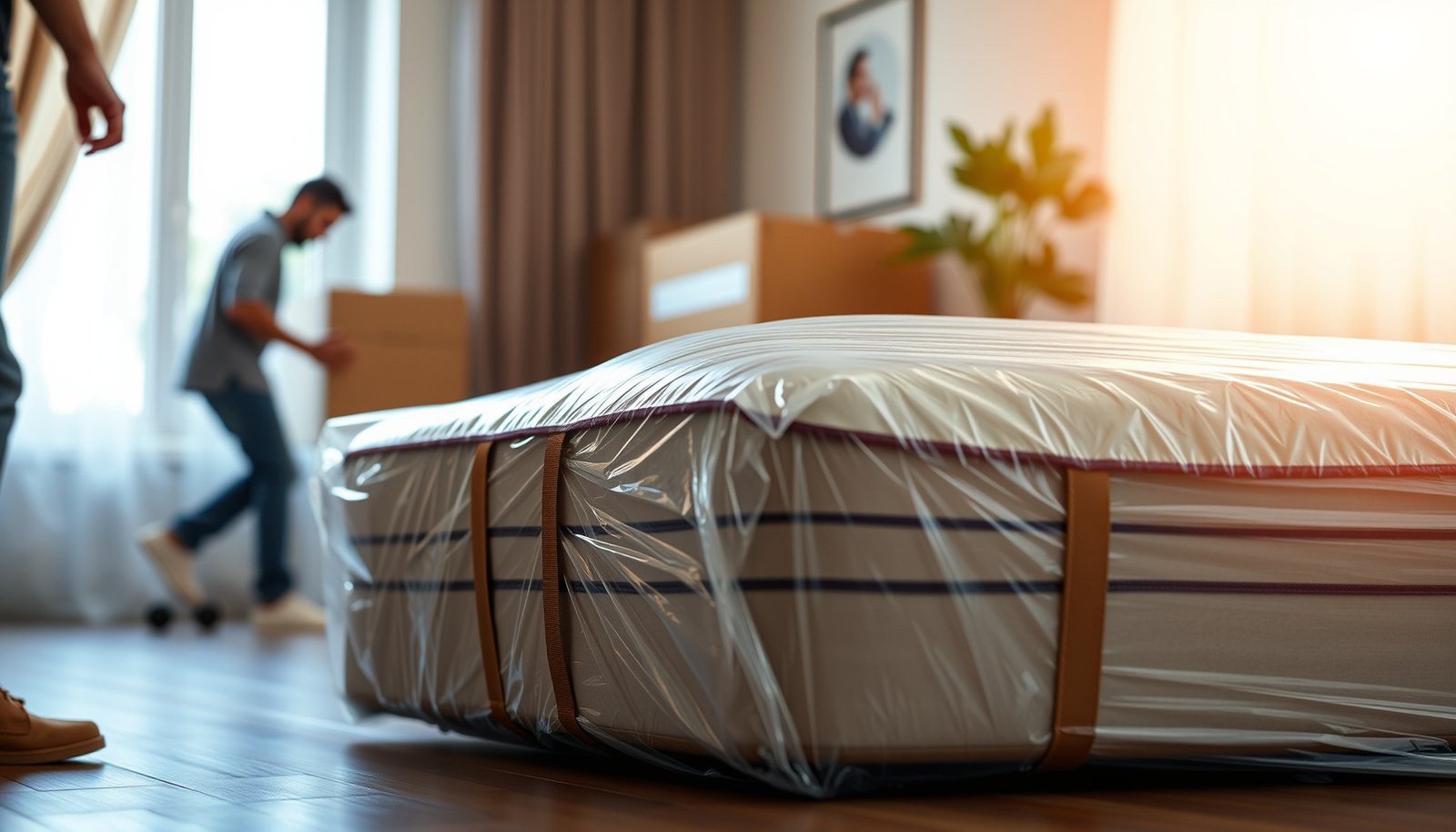
– Cover the latex surface with the waterproof layer, then add a protective outer wrap (for example, a mattress-moving bag or barrier plastic) to reduce splashes and direct wet contact.
Think of the waterproof encasement as the “primary dam” and the outer wrap as the “splash shield.” During a move, the highest-risk moments are typically door-to-truck transitions and strap tightening—outer wrapping helps prevent incidental wetness from directly contacting the zipper area.
– Avoid soaking or “cleaning” with water right before packing—if it needs spot cleaning, let it fully dry first.
Spot cleaning with water can introduce moisture deeper into the latex structure. If you must clean, follow the mattress care instructions and allow complete drying before you seal. If you cannot confirm dryness, it’s safer to postpone packing than to encase a wet latex mattress.
– Check whether your mattress manufacturer allows bending/rolling for moving; latex mattresses aren’t all packaged the same, so follow the care/moving instructions for your specific model.
Some latex mattresses are shipped flat for a reason: internal structures and comfort layers may not tolerate repeated bending. If you bend or roll a latex mattress contrary to the manufacturer’s guidance, you may compromise areas where liquid could later enter during a spill.
Waterproof encasement vs plastic wrap (contrast you should care about)
The right choice depends on whether you’re protecting against splashes or direct contact and pressure.
| Option | Pros for a Latex Mattress | Limitations During a Move |
|---|---|---|
| Waterproof encasement (sealed) | Designed to block liquid penetration; best barrier for seams and edges | Bulk; must fit height and close fully around corners |
| Plastic wrap / film only | Reduces surface wetting and splashes; inexpensive | Tears and punctures are common in transport; can trap moisture if the latex mattress isn’t dry |
Pack for stability: stop the spill from reaching the mattress
Stability prevents accidental tipping, sliding, and corner abrasion—these are the scenarios where a latex mattress barrier can fail. When a latex mattress remains supported and flat, there are fewer opportunities for liquid to find a gap.
Keeping a latex mattress flat reduces shifting under straps and lowers the chance of punctures that can turn a minor leak into a seep.
Corner and edge contact is a common failure point for waterproofing because abrasion can create small pathways for water to migrate.
Absorbent pads in the truck area can capture drips and surface pooling, giving you extra time even when your latex mattress is encased.
– Keep the mattress flat and supported, so it doesn’t tip or slide under straps, boxes, or other cargo.
A flat placement reduces stress on zipper lines and seam edges. If you must tilt for space, do it minimally and keep the latex mattress secured with corner protection.
– Use padding between the mattress and hard items (corner posts, packed furniture edges, etc.) so a puncture or abrasion doesn’t become a leak path.
Padding isn’t just for scratches—it’s for preventing damage that compromises a latex mattress’s protective layers. Use thick moving blankets or foam board at corners where strap hardware or furniture edges could press.
– Place absorbent pads (or spare towels) in the moving area around the truck bed/floor where leaks are more likely—this doesn’t replace waterproof coverage, but it can catch drips.
Absorbent material acts as an “early response buffer.” It’s especially valuable if a nearby box contains cleaning products, oil-based items, or anything in a container that might crack.
Move, load, and unload without tipping risk
Load and unload in a way that minimizes the time your encased latex mattress is exposed to shifting cargo and wet surfaces. With a little planning, you can keep the barrier intact and reduce the chances of a liquid finding a seam.
Loading the mattress last and unloading it first reduces exposure time to shifting cargo and impacts—two major triggers for barrier compromise.
Securing the latex mattress so it can’t shift prevents strap-driven creases that can weaken zip lines or outer wrap coverage.
If you encounter rain, keeping truck doors closed during loading and unloading helps prevent direct wet contact with the encased latex mattress.
– Load the mattress last if possible and unload it first to reduce time exposed to traffic and shifting cargo.
This is one of the highest-leverage timing choices. In practical moves, delays happen—waiting for elevators, searching for keys, or running out to check traffic—so reducing “open time” for a latex mattress matters.
– Secure the mattress so it can’t shift—use straps with edge/corner protection so you don’t crease the mattress and compromise the outer cover.
Straps that press directly onto the latex mattress can create localized pressure points. Use strap protectors and keep strap contact away from zipper seams and corners.
– If weather is involved (rain, wet sidewalks), keep the truck door closed when loading/unloading and use a tarp over the cargo area if you have one.
Even if your encasement is waterproof, wet airflow and splashes can wet outer wrap surfaces and edges. A tarp reduces the chance of direct rain contact and helps your outer barrier stay cleaner.
What can go wrong (and how to avoid it)
Most failures come from small mistakes: sealing wet latex, weak outer layers, or poor securing that lets liquid pool or abrasion happen. If you watch for these patterns, you significantly reduce the probability of stains and odor.
Leaving an encased mattress wet defeats the protective goal because drying slows down inside barriers—CDC notes mold may begin within 24–48 hours after water exposure.
A zipper closure helps reduce leak pathways, but only if the latex mattress fits the encasement height so corners and edges fully engage.
Plastic wrap can tear or separate at seams during transport vibration, so it should not be treated as a substitute for a sealed waterproof encasement.
– Using only clear plastic wrap: it may help with splashes, but it can trap moisture and still allow liquid to creep into seams if it isn’t sealed well.
Plastic wrap is slippery and prone to puncture. If your move involves any rain or where liquids could tip nearby, you want a waterproof encasement with sealed closures plus an outer barrier—not plastic wrap as the only protection.
– Rolling/bending when your mattress isn’t designed to: some latex mattresses can be damaged by improper bending, and damage can expose the interior if a spill happens.
If the manufacturer says “keep it flat,” treat that as a moving requirement. A compromised internal structure becomes an easier route for liquid and odor to penetrate later.
– Assuming “wipeable” means “safe from moisture”: even if the outer cover wipes clean, latex can still hold onto moisture longer than you’d expect.
Wipeable surfaces are about easy cleaning, not long-term drying. The goal during a move is not just “clean on the outside,” but “no liquid reaching the latex.”
– Leaving it wrapped wet: if a spill or rain exposure happens, don’t keep the mattress sealed—dry it properly following the manufacturer’s care guidance.
The moment you can safely access the mattress, you should address wetness according to the care instructions. Otherwise, the sealed environment can keep conditions favorable for odor and mold.
Verdict: the best approach (and who should skip what)
The safest way to protect a latex mattress from spills during a move is a sealed waterproof encasement plus a secondary outer barrier, paired with stable, flat transport. This method reduces both direct wet contact and the most common failure points—corners, zipper lines, and abrasion from shifting cargo.
The tradeoff is bulk and time: a fully sealed waterproof encasement can be harder to fit and requires careful closing around corners. Adding secondary wrapping increases prep and packing steps, and it only works if you keep the latex mattress dry before you seal it.
Skip or modify these steps if your mattress manufacturer explicitly says not to bag/encase it for moves/storage, if your mattress is already wet/affected by a leak you can’t dry yet, or if you’re planning to roll/bend it despite care instructions warning against it. If you’re unsure, treat the manufacturer’s move/storage guidance as the controlling source.
Quick checklist (scan/save)
| Step | What to do | Done? |
|---|---|---|
| 1 | Let the mattress fully dry before covering | ☐ |
| 2 | Put on a waterproof mattress encasement/protector (full coverage) | ☐ |
| 3 | Seal the encasement securely (zippers/edges closed) | ☐ |
| 4 | Add a secondary barrier (moving bag or outer protective wrap) | ☐ |
| 5 | Pack/secure so it stays flat and can’t slide | ☐ |
| 6 | Load/unload last/first to reduce exposure time | ☐ |
| 7 | Keep an eye on leaks around the truck floor (pads/towels ready) | ☐ |
Frequently Asked Questions
What’s the best way to protect a latex mattress from spills during a move?
Start by sealing the mattress with a high-quality waterproof mattress protector or moving cover so liquid can’t soak into the latex foam. Wrap the entire mattress in plastic (or heavy-duty moving film) and tape seams to create a barrier against accidental splashes. If you’re using a box or cover system, double-check that the protective layer fully reaches the edges where spills often reach first.
How can I waterproof a latex mattress before loading it into a moving truck?
Lay down a clean plastic sheet or tarp at the packing station and keep the mattress in a dry, controlled area while you wrap it. Apply a waterproof encasement first, then add an additional layer of plastic wrap to shield against wet hands, condensation, and trailer moisture. Use painter’s tape or packing tape to secure the film without leaving residue, and focus extra coverage along corners and side seams.
How do I prevent water or cleaning solution from leaking onto my latex mattress while packing?
Avoid wiping the mattress with wet cloths close to packing time—if the surface needs cleaning, let it fully dry before wrapping. When moving other items, keep buckets, sprays, and mop heads in separate containers and out of the same immediate workspace. During loading and unloading, keep the mattress elevated and flat on a clean pallet or moving blankets to reduce risk from drips or floor spills.
Why is spill protection especially important for latex mattresses during a move?
Latex foam can absorb moisture, and trapped water may lead to unpleasant odors or potential mold risks if it can’t fully dry. Even small spills can penetrate seams or edges over time, especially when the mattress is moved and compressed. A waterproof barrier helps keep the latex mattress dry and preserves freshness while minimizing damage during transit.
Which moving supplies should I use to protect a latex mattress from spills and moisture?
Use a waterproof mattress protector, heavy-duty plastic wrap (or shrink wrap), and packing tape to seal gaps at the edges and corners. Add moving blankets or furniture pads on top for impact protection, and consider placing the mattress on a tarp or plastic sheet in the truck to guard against condensation. If you’re transporting for long distances, consider using moisture-control items like a dehumidifier or desiccant in the truck space to further reduce damp exposure.
📅 Last Updated: October 26, 2026 | Topic: How to Protect a Latex Mattress from Spills During a Move | Content verified for accuracy and freshness.
References
- Mattress
- Latex
- Mold
- Water damage
- https://www.cdc.gov/mold/default.htm
- https://www.epa.gov/mold/mold-prevention-strategies-and-possible-solutions
- https://www.ready.gov/mold
- https://scholar.google.com/scholar?q=how+to+move+a+mattress+protect+from+water+damage Google Scholar
- https://scholar.google.com/scholar?q=latex+foam+mattress+water+damage+cleaning+drying Google Scholar
- https://scholar.google.com/scholar?q=transporting+bedding+waterproof+cover+spill+prevention Google Scholar