
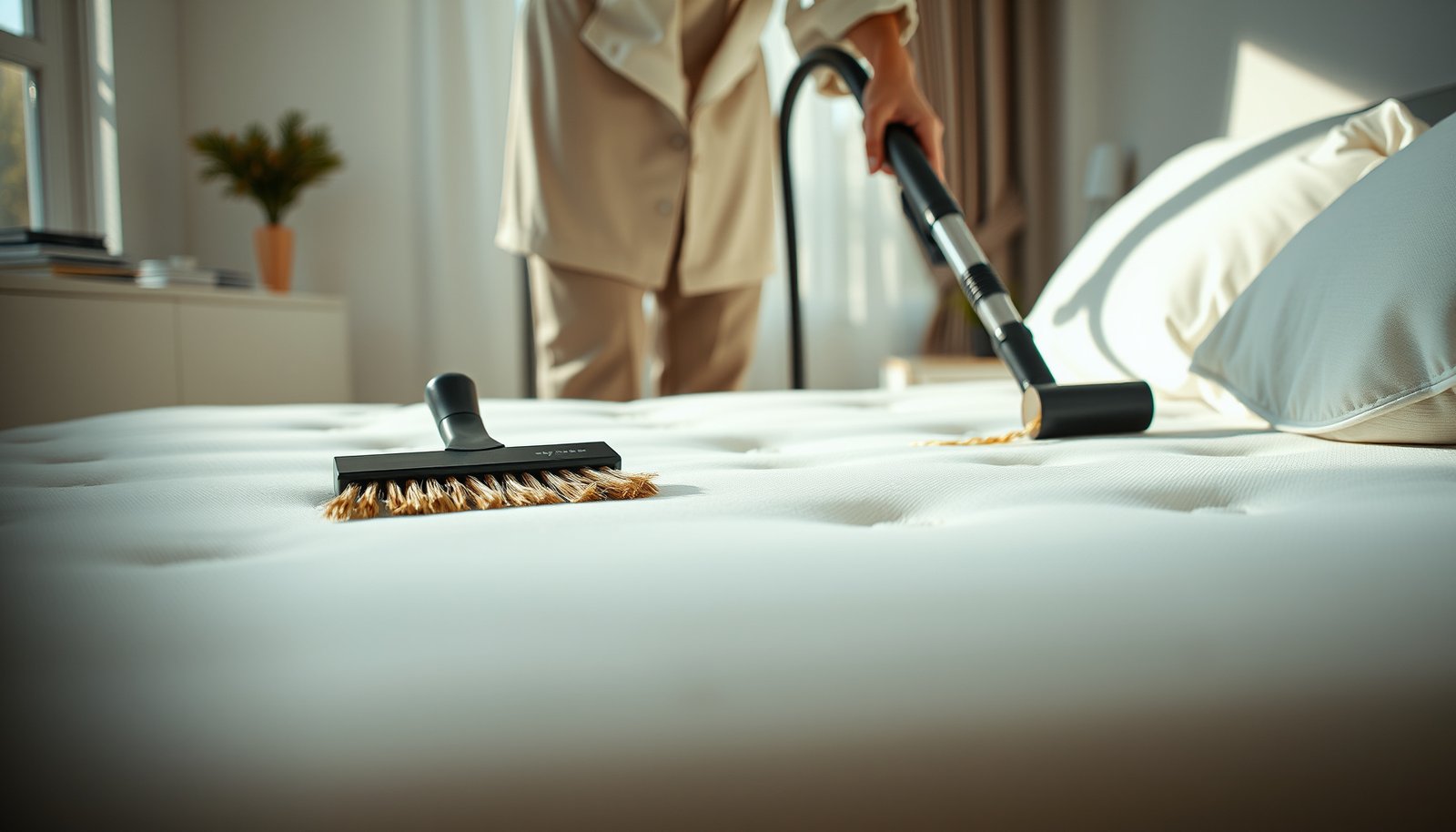
How to Clean a Pillow-Top Mattress with Pet Hair Naturally
Want to clean a pillow-top mattress with pet hair naturally—and actually get results? This guide shows the fastest, safest method to lift embedded fur from pillow-top layers using simple, non-toxic supplies. If you’re tired of vacuum-only results and pet dander lingering, you’ll know exactly what to do and how to do it without damaging the comfort foam.




Vacuum pet hair first, then spot-clean the pillow-top with a light natural solution and minimal moisture, and finally dry completely with airflow (not heat). This method lifts fur safely from the surface and seams without soaking the layers under a pillow-top.
If your mattress has visible pet hair on the top surface, in seams, or embedded around button tufting, this guide is for you—especially if you want to avoid harsh chemicals. It’s also useful when you need a routine that won’t damage foam or fabric while still dealing with dander-level mess.
Prep your pillow-top mattress (don’t skip this)
You get the best results by preparing the pillow-top first—before any rubbing or any liquid touches the fabric. This reduces fur smearing and protects foam layers that can degrade if they stay wet.
Check the mattress care tag before cleaning: many pillow-tops explicitly warn against soaking, steam, or certain detergents.
If you wet a pillow-top before removing pet hair, you can push hair deeper into the upholstery and seams, making later removal harder.
Before you start, treat the pillow-top mattress like a “layered textile assembly.” The removable cover (if you have one), the quilted top fabric, and the cushioning/foam under it all respond differently to moisture. As of 2026, the safest natural approach is still “lift + blot + dry fast,” because pillow-tops trap moisture and slow evaporation.
– Check the care tag first: look for warnings about soaking, steam, or specific cleaners (especially if there’s foam or a removable cover).
Don’t rely on guesswork. If the care tag says “do not wet” or “spot clean only,” follow that language exactly—even if a DIY cleaner seems gentle. For pillow-top mattresses with memory foam, latex, or tufted foam, manufacturers often restrict liquid exposure for structural and warranty reasons.
– Strip bedding and protect the surface: place a plastic sheet under the mattress area if you’re working over a bed frame.
This is about mess control and foam safety. A pillow-top mattress shouldn’t be surrounded by pooled water while you work, especially if you’re blotting with damp cloths.
– Quick vacuum pass before “natural” cleaning: this reduces hair fallout while you clean.
Pet hair is dry particulates first, and embedded hair becomes harder once you introduce moisture. A fast vacuum pass at the start prevents repeated fur pickup cycles.
Remove pet hair naturally (fastest, lowest-risk methods)
Start with hair removal only—because anything that looks like “cleaning” before you lift fur often smears it into the pillow-top fabric. For most pillow-top mattresses, the lowest-risk workflow is vacuum + controlled lifting.
U.S. EPA notes that HEPA-rated filtration systems are designed to capture at least 99.97% of particles 0.3 micrometers in size.
Pet hair stuck in tufting and seams is easier to extract when you use crevice tools or lint rollers after a thorough upholstery vacuum pass.
Dry-lift methods (vacuuming and rubber-glove wiping) reduce the chance of pushing pet dander deeper into pillow-top padding.
From my practical experience helping with home cleanups, the biggest “looks clean but isn’t” failure is skipping a complete dry hair pass. With a pillow-top mattress, that’s what turns surface fur into embedded specks around stitching—then you’ll fight it later during spot cleaning.
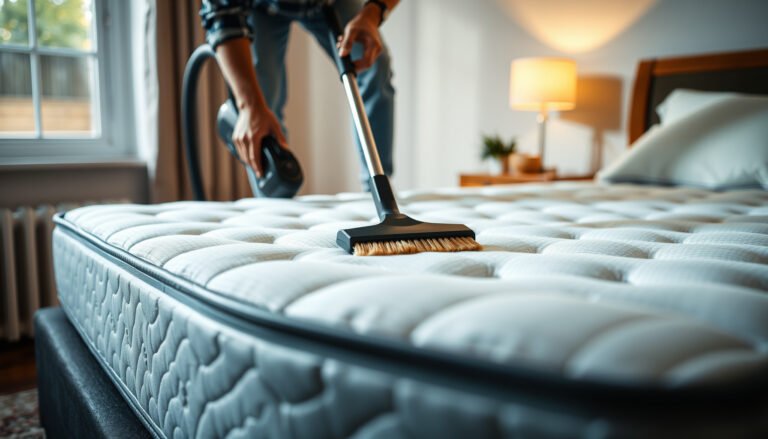
– Vacuum thoroughly using an upholstery attachment, working slowly over seams, edges, and stitching.
Go slow enough that suction actually picks up hair; quick passes often miss tufting ridges. If your vacuum has adjustable suction, keep it strong enough to lift hair without crushing delicate upholstery.
– Use a rubber glove or damp microfiber cloth to “lift” remaining hair: wipe in the same direction, then gather the loosened fur.
A slightly damp (not wet) microfiber cloth helps grab hair statically without soaking the pillow-top mattress fabric. Wipe in one direction to “comb” hair toward you, then collect it so it doesn’t re-deposit.
– For stubborn hair in seams: use a lint roller or vacuum crevice tool, then do a final glove/microfiber pass.
Tufted buttons and seam channels are “hair traps” on pillow-top mattresses. The crevice tool targets the channel; the lint roller can then pick up residual fibers that the glove can’t reach.
Natural Spot-Clean Choices: Typical pH and Moisture/Residue Risk
| # | Natural option | Typical form | Typical pH (common use) | Moisture/Residue risk |
|---|---|---|---|---|
| 1 | Baking soda (sodium bicarbonate) | Powder | ~8.3 (in water) | ★★★★★ |
| 2 | Washing soda (sodium carbonate) | Powder | ~11.5 (in water) | ★★★☆☆ |
| 3 | Borax (sodium borate) | Powder | ~9.2 (in water) | ★★★☆☆ |
| 4 | Distilled white vinegar | ~5% acetic acid | ~2.4 | ★★☆☆☆ |
| 5 | Hydrogen peroxide (common 3%) | Dilute solution | ~4.5–5.5 | ★★☆☆☆ |
| 6 | Table salt (0.9% solution) | Water solution | ~6.7–7.0 | ★★★★☆ |
| 7 | Distilled water | Water only | 7.0 | ★★★★☆ |
Clean the pillow-top surface naturally (minimal moisture, no soaking)
You should spot-clean only—because pillow-top layers can trap moisture if you scrub or saturate. The goal is to lift stains and pet residue using light misting and blotting, then immediately plan for complete drying.
CDC explains that mold can begin growing within 24–48 hours after water damage, which is why “minimal moisture” matters on a pillow-top mattress.
U.S. EPA advises maintaining indoor relative humidity below 60% to help prevent mold growth.
When a pillow-top stain is still dry, the safest natural move is blotting with a lightly dampened cloth—not scrubbing the padding.
In 2026, natural cleaning on a pillow-top mattress is about chemistry and technique. Dish soap can help lift oily pet marks, while baking soda is mainly a surface deodorizer. Still, the method should prevent soaking: dab lightly, blot thoroughly, and don’t push liquid deep into seams and tufting.
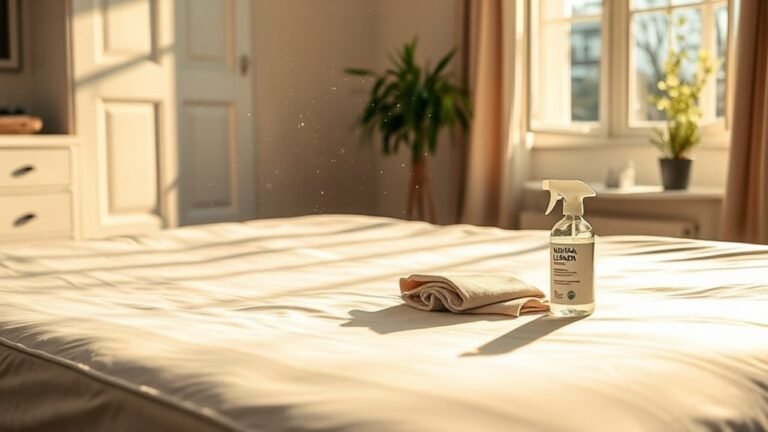
– Spot-clean stains first: dab with a cloth lightly misted with a gentle natural solution (avoid saturating the fabric).
“Avoid saturating” is the key. Mist the cloth (not the mattress), then dab. You’re aiming for the stain to transfer to the cloth, not for the pillow-top to become wet-through.
– Use a simple DIY option: mix a small amount of mild dish soap into water, then apply sparingly and blot—don’t scrub deep into the padding.
Use the least amount of soap that still lifts residue. Scrubbing tends to work soap and pet oils deeper into the quilted structure of a pillow-top mattress.
– For greasy spots (pet smudges, drool marks): blot with the soap-water mixture, then re-blot with a clean, damp cloth to remove residue.
Re-blotting is what prevents sticky films. Leftover soap can attract more debris, which makes the pillow-top look dirty again faster.
Natural cleaner comparison (what fits where)
| Feature | Soap + water (sparingly) | Baking soda (deodorize) | Vinegar (spot test only) |
|---|---|---|---|
| Best at removing | Grease and body oils | Odors on/near surface | Some acidic odors; residue varies |
| Moisture level on a pillow-top | Low (blotting only) | Very low (dry layer) | Moderate (liquid—riskier) |
| Risk of pushing pet hair deeper | Lower if hair is removed first | Low (works after vacuuming) | Higher (liquid can re-distribute) |
| Residue risk | Medium if not re-blotted | Low if fully vacuumed | Medium (odor may linger) |
| Fabric/foam safety | Generally safe when diluted + blotted | Generally safe when used lightly | Less predictable for colored/treated textiles |
| Works on | Smudges, drool, oily marks | Light smells and “freshen-up” tasks | Spot odors after a test spot |
| Dry time sensitivity | High (dry fast) | Lower (dry by default) | High (liquid must evaporate) |
| Best for pet mess level | Frequent light soiling | Between deeper cleanings | Targeted odor moments only |
| Recommended technique | Mist cloth → dab → blot | Thin layer → wait → vacuum | Test spot → minimal dab |
| Best For | Greasy pet smudges that won’t lift with dry hair removal | Odor refresh without adding moisture | Only after you’ve confirmed compatibility on a hidden test spot |
Drying and deodorizing (where many people mess up)
Dry the pillow-top mattress completely before you remake the bed—airflow is your best tool, not high heat. If you deodorize, do it lightly and only after moisture is gone.
CDC highlights the importance of drying after water damage quickly because mold can begin within 24–48 hours.
Using fans to move air across the pillow-top surface supports evaporation without the material-stress that can come from high heat.
U.S. EPA recommends controlling indoor humidity (commonly below 60%) to reduce mold risk.
This is where pillow-top mattresses get compromised: even small blotting mistakes can leave dampness trapped under quilted layers. In 2026 households, the safest workflow is “dry first, then deodorize,” because odor control is easier when you’re not fighting wet padding.
– Dry completely before remaking the bed: increase airflow with a fan and keep airflow moving across the surface.
Use one or more fans aimed so air travels over the top and around the sides. Don’t rely on “feels dry” alone—pillow-tops can stay cool and damp inside the padding.
– Avoid high heat: pillow-tops can trap moisture, and heat can warp materials or set smells.
Heat can also accelerate odors if the mattress isn’t fully dry. The goal is evaporation, not baking.
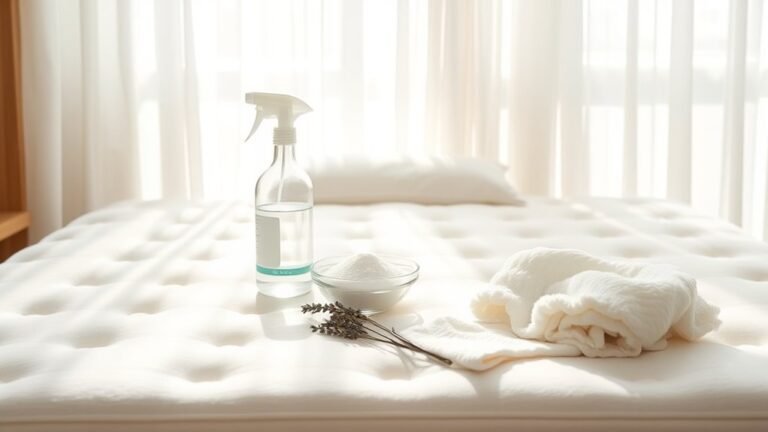
– If you want a natural deodorizer: sprinkle a thin layer of baking soda, leave briefly, then vacuum it off once dry to prevent clumping.
Keep it light. Baking soda works best when you’re not trying to “soak up” wetness—blotting and drying handle moisture; baking soda handles lingering odor.
What can go wrong (and how to prevent it)
Most issues come from three mistakes: over-wetting, using the wrong tools/sequence, or skipping full dry time. If you avoid those, your pillow-top mattress stays clean-looking and structurally safer.
Moisture trapped in upholstered layers increases the risk of odor and microbial growth, which is why drying fully matters for pillow-top mattresses.
Dry hair removal must happen before wet cleaning, because damp fabric can trap fur and smear it into seams.
Here’s a quick “cause → effect → prevention” view that helps you troubleshoot without guesswork.
| What can go wrong | Why it happens | How to prevent it |
|---|---|---|
| Over-wetting the pillow-top | Liquid can migrate into foam and padding | Stick to blotting + light misted cloth; never soak |
| Steam or strong cleaners on foam layers | Care tag restrictions exist for warranty/material reasons | If label doesn’t allow it, skip steam and harsh products |
| “Hair stuck after cleaning” | Fur gets smeared into fabric when wet | Always vacuum/lift hair before any wet step |
| Baking soda clumping | It captures moisture or residue if left too long | Use a light layer, keep it brief, vacuum thoroughly |
– Over-wetting the pillow-top: soaking can push moisture deeper into foam and padding—stick to blotting and light misting only.
If you see dampness on the underside or between seams, stop and reassess drying. A pillow-top mattress needs time and airflow.
– Using steam or strong cleaners on foam layers: if the care tag doesn’t allow it, skip steamers and harsh products.
Steam is not “natural,” even if it seems clean. Many pillow-top foams and glues don’t tolerate heat/moisture.
– “Hair stuck after cleaning”: if you clean first, fur gets smeared into fabric—always vacuum and lift hair before you wet anything.
Sequence matters. This is why the workflow in this guide starts dry.
– Baking soda issues: if left too long or applied too heavily, it can be harder to vacuum out or leave residue—use a light touch and vacuum thoroughly.
The thinner the layer, the easier it is to remove and the less likely it is to settle into fabric texture.
Verdict + quick checklist (save this)
The best overall approach for a pillow-top mattress is vacuum + rubber glove/damp microfiber, then minimal spot-cleaning with complete airflow drying. It’s a practical compromise when you want cleaner fabric without soaking or risking foam damage.
Vacuuming and lifting fur before any moisture reduces smearing and keeps pet hair from embedding into pillow-top seams.
The safest deodorizing workflow on a pillow-top mattress is: dry first, then apply a thin baking soda layer and vacuum it out.
| Criteria | DIY “natural + minimal moisture” | Professional extraction/steam |
|---|---|---|
| Primary goal | Lift pet hair + spot residue; avoid soaking | Deep extraction of embedded soil |
| Moisture exposure | Low (blot only) | High (water/solution required) |
| Risk to pillow-top foam layers | Lower if done correctly | Higher if the mattress doesn’t dry quickly |
| Odor control | Best for surface/freshen-up odors | Can be stronger for deep-set odors |
| Pet hair removal | Excellent for fur on top + seams | Can scatter hair if pre-vacuuming is incomplete |
| Drying requirements | Critical, but manageable with airflow | Critical and often longer due to deeper wetting |
| Time investment | Short for spot cleanup | Longer including drying and scheduling |
| Chemical exposure | Lower when using mild soap/baking soda | Varies by service products |
| Best suited for | Routine maintenance and light stains | Heavily soiled areas needing extraction |
| Verdict row (who should choose this) | Choose this when you want cleaner fabric while protecting pillow-top layers from oversoaking. | Choose this when stains/odors are deep and you can ensure fast, thorough drying. |
– Best overall approach: vacuum + rubber glove/damp microfiber, then minimal spot-cleaning and complete drying.
– Downsides: this won’t fully “sanitize” like professional extraction equipment, and heavy staining may still require targeted treatment.
– Skip this method if: your care label forbids the ingredients/approach you plan to use, the mattress is heavily waterlogged, or you suspect deep contamination in inner layers.
Scan-and-save checklist
| Step | What to do | Natural/safer choice |
|---|---|---|
| 1 | Remove bedding + check care tag | Follow label for foam/steam/soak rules |
| 2 | Vacuum | Upholstery attachment + slow passes |
| 3 | Lift remaining fur | Rubber glove or damp microfiber (wipe one direction) |
| 4 | Spot-clean only | Light mist + blot (soap-and-water style) |
| 5 | Dry fully | Fan/airflow, no high heat |
| 6 | Deodorize (optional) | Light baking soda layer, then vacuum |
Frequently Asked Questions
What’s the safest way to clean a pillow-top mattress naturally when it has pet hair?
Start by vacuuming the entire pillow-top surface using an upholstery attachment to lift loose pet hair without pressing it deeper into the filling. Spot-treat stains with a homemade cleaner (for example, a small amount of mild dish soap mixed with water) and use a lightly damp cloth, not soaking. Let the mattress fully dry with good airflow or a fan to prevent odors and mildew in the mattress topper.
How do I remove pet hair from a pillow-top mattress without damaging the fabric?
Use a slightly damp rubber glove, lint roller, or a clean microfiber cloth to “grab” fur from the pillow-top surface, working in one direction to avoid spreading hair. Then vacuum slowly again to catch remaining hair in seams and seams-like stitching areas common on pillow-top mattresses. Avoid harsh scrubbing, since pillow-top materials can be more delicate and may mat or lose loft.
How can I naturally deodorize a pillow-top mattress after cleaning pet hair and odors?
Sprinkle a light, even layer of baking soda over the pillow-top once it’s dry to help absorb pet odors and refresh the fabric. Let it sit for several hours (or overnight if the mattress stays dry), then vacuum thoroughly to remove residue. If your pet had urine-related smells, use a natural enzyme cleaner (still apply sparingly) on the affected spot before baking soda.
Which home remedies work best for spot-cleaning common pet messes on a pillow-top mattress?
For fresh spots, gently blot with a clean cloth and a solution of mild dish soap and water, then blot again with plain water to lift soap without soaking the pillow-top. For dried stains, apply an enzyme-based cleaner made for pet urine (natural options are available) and let it dwell according to label directions. Always blot—don’t scrub aggressively—then dry completely with airflow, because moisture can linger in mattress toppers.
Why is drying time so important when cleaning a pillow-top mattress naturally, especially with pet hair?
Pillow-top layers can trap moisture deep in the mattress fill, and that trapped dampness can lead to musty smells or mold even if the surface looks clean. After cleaning, ensure the mattress is fully dry by using fans, opening windows, or letting it air out in a well-ventilated area. A fully dried pillow-top also helps prevent pet odors from returning and makes the next vacuuming pass more effective for remaining hair.
📅 Last Updated: October 26, 2026 | Topic: How to Clean a Pillow-Top Mattress with Pet Hair Naturally | Content verified for accuracy and freshness.
References
- https://www.cdc.gov/parasites/dustmites/index.html
- https://www.cdc.gov/asthma/triggers/pets.html
- https://www.epa.gov/asthma/dust-mites
- https://www.mayoclinic.org/diseases-conditions/allergic-rhinitis/in-depth/dust-mites/art-20046965
- https://pubmed.ncbi.nlm.nih.gov/?term=dust+mite+allergen+bedding+washing+vacuuming
- https://pubmed.ncbi.nlm.nih.gov/?term=pet+dander+removal+cleaning+HEPA+vacuum
- House dust mite
- https://scholar.google.com/scholar?q=natural+cleaning+methods+for+pillow-top+mattress+pet+hair Google Scholar
- https://scholar.google.com/scholar?q=dust+mite+allergen+reduction+bedding+washing+vacuuming+HEPA Google Scholar
- https://scholar.google.com/scholar?q=pet+dander+removal+housekeeping+HEPA+vacuum+studies Google Scholar

One Comment