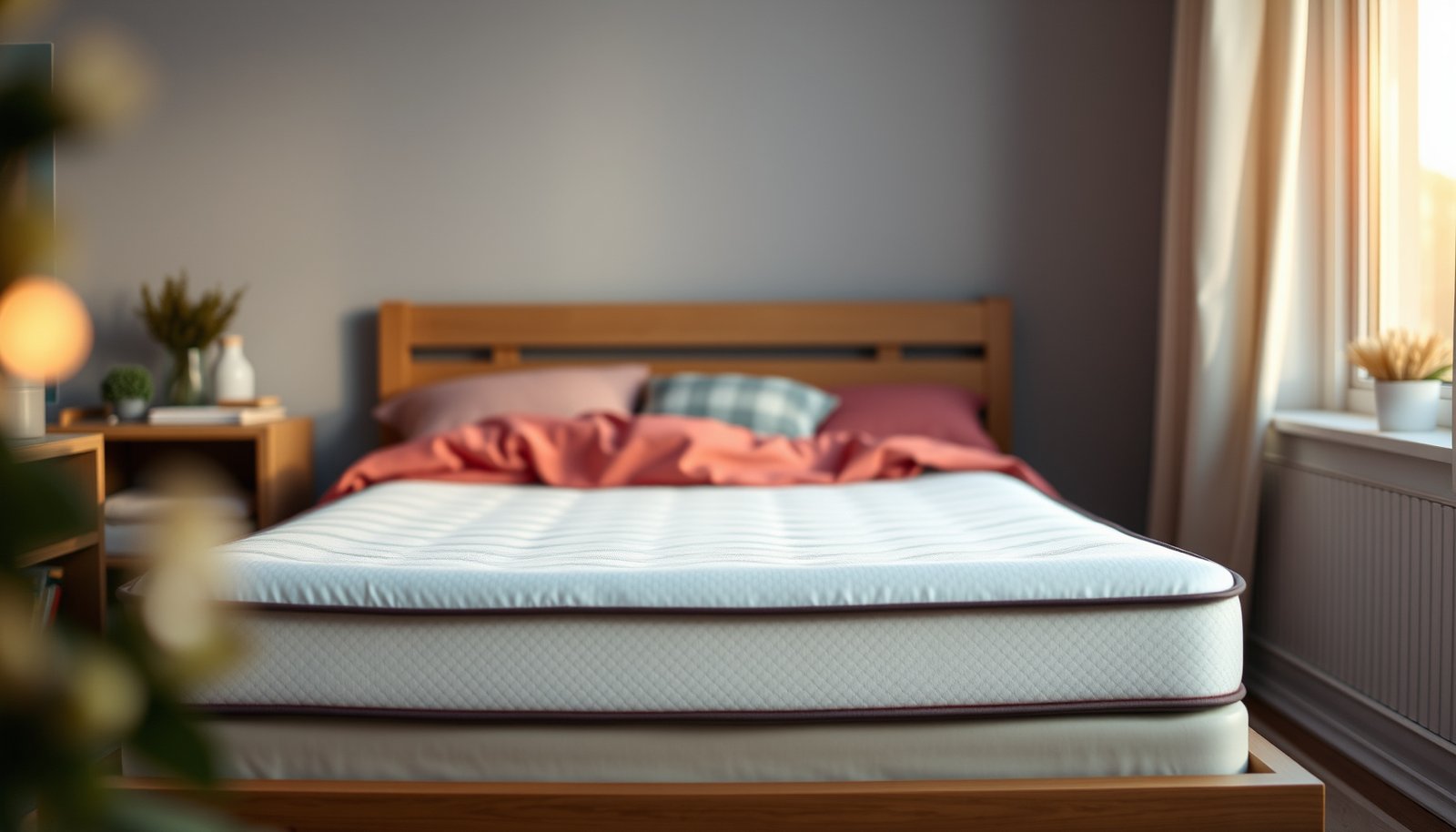
How to Choose a Memory Foam Mattress for Kids with Eczema Comfort
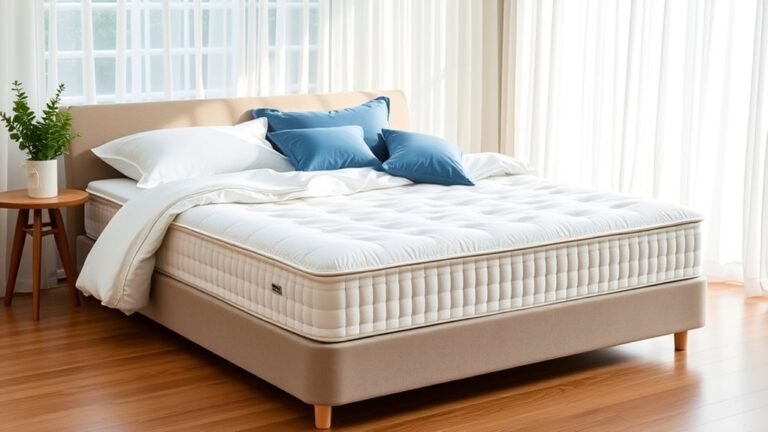
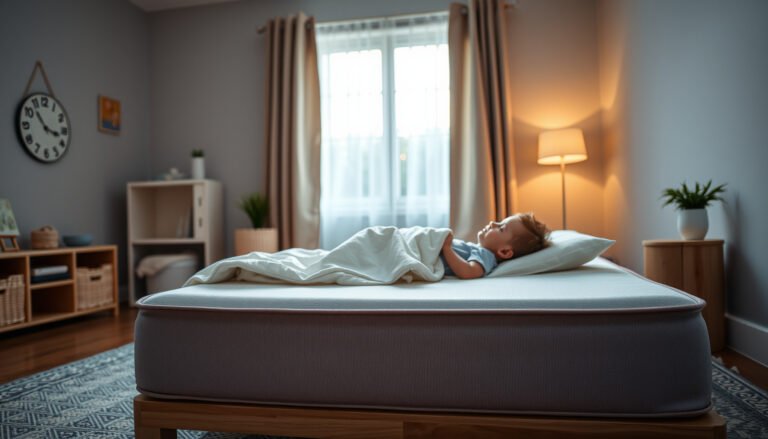
Choosing a memory foam mattress for kids with eczema comes down to one question: which mattress materials and features will best reduce irritation and heat while keeping pressure off sore skin. If you want the clearest “best pick,” look for a memory foam mattress with an eczema-friendly cover, low-toxin certifications, and breathable, washable layers that won’t trap moisture. The right choice can make flare-ups less likely and sleep more comfortable—without locking your child into a mattress that’s too warm or too firm.




A kids’ memory foam mattress can help with eczema comfort if you control heat, allergens, and irritants—rather than relying on “eczema” labels alone. Focus on a low-emission foam (look for verified certifications), a removable washable cover, and a bedding setup that reduces dust-mite exposure. In this guide, we’ll walk through exactly what to check before you buy.
If your child has eczema (and you notice flares after sleep, sweating, or contact with certain fabrics), this is for you. It’s also useful if you’re choosing between memory foam options and want a practical, eczema-aware checklist—not just marketing claims.
Focus on eczema-friendly comfort needs first
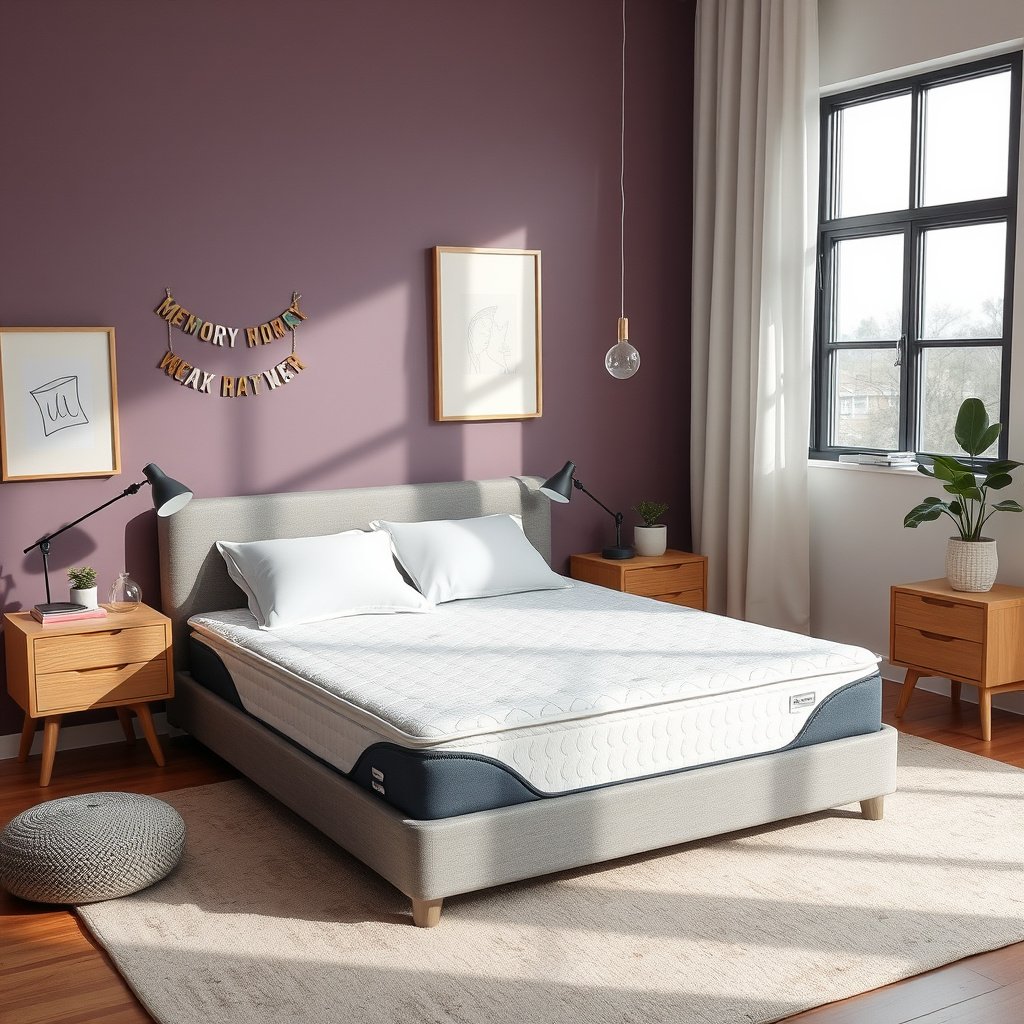
A memory foam mattress helps kids with eczema only when comfort factors (especially warmth and skin contact) are tuned for sensitive, easily irritated skin. In practical terms: aim for a sleeping surface that feels smooth, doesn’t overheat, and is easy to keep clean.
According to the U.S. EPA, dust mites are strongly associated with bedding and indoor humidity, so controlling the “bedroom environment” can reduce exposure over time. U.S. EPA (Dust Mites guidance)
When bedding gets warmer and stays damp from sweat, skin barrier stress can increase itch—so mattress heat management matters as much as “eczema-friendly” branding. American Academy of Dermatology (Eczema basics & flare triggers)
A removable cover is a key control point because it lets you reduce irritants and allergens that accumulate with use—without replacing the entire memory foam mattress.
– Choose materials that won’t trap too much heat; higher warmth can worsen itch and sweating for some kids.
Memory foam is “hugging” by design, which can be cozy for some children—but it can also feel warmer than a more breathable surface. If your child runs hot, prioritize covers and top layers that are known for airflow (breathable knit covers, ventilated designs) and avoid thick fabrics that trap warmth.
– Prioritize a smooth, skin-friendly surface (and avoid scratchy seams or rough fabrics that can irritate).
For eczema, the goal is friction reduction: smooth seams, soft top fabric, and no stiff borders rubbing during the night. In my own household routine, I’ve learned that “small” surface textures (like a raised seam) can become a bigger problem once your child’s skin is flaring—.
– Plan for easy cleaning: mattresses with covers you can remove and wash make routine care more realistic.
A memory foam mattress becomes much easier to manage when the cover is washable and the attachment method (zippers/encasements) doesn’t turn “cleaning” into a major project you skip. As of 2024–2026, most reputable brands clearly state whether the cover is removable—use that as a decision checkpoint, not a guess.
Check the foam: certifications and “low-odor” expectations
The best eczema comfort outcomes from a memory foam mattress usually start with verified emissions performance—not vague “hypoallergenic” claims. That means checking for trusted foam certification and having a realistic plan to manage any new-mattress odor before your child sleeps on it.
CertiPUR-US is a foam certification intended to limit certain emissions-related concerns; it is one of the most widely used third-party standards for polyurethane foam used in mattresses. CertiPUR-US (Program overview & requirements)
Even products marketed as “low-odor” can off-gas initially, so following the manufacturer’s first-use airing instructions helps reduce exposure during the earliest period. CertiPUR-US (Guidance on emissions/testing context) + Manufacturer care instructions
– Look for a trusted foam certification such as CertiPUR-US (it’s designed to limit certain harmful emissions, including VOC-related concerns).
“VOC” (volatile organic compounds) are part of the reason new foams can smell. Third-party certification matters because it’s tied to test methods and limits, rather than brand optimism. If you’re comparing memory foam mattresses for kids with eczema in 2024–2026, certifications posted in the product documentation are the most objective starting point.
– Be cautious with strong new-mattress odors: even “low-odor” products can off-gas initially, so you’ll want a plan for airing out before the child uses it.
If your child’s eczema is sensitive to contact irritants, treating initial odor as a potential trigger is reasonable. That doesn’t mean you must delay indefinitely—but you should not rush.
– If the manufacturer provides spec sheets for emissions and materials, use those documents as your decision anchor rather than vague “hypoallergenic” wording.
Look for clarity on: foam type, whether the mattress uses certified foam layers, any additional treatments, and care instructions that address initial odor/off-gassing.
Bedding targets that reduce dust-mite exposure (EPA guidance-based)
| # | Eczema-relevant control step | EPA-stated condition / target | Operational frequency | Eczema exposure control score |
|---|---|---|---|---|
| 1 | Wash bedding in hot water | ≥ 130°F / 54.4°C | Weekly | ★★★★★ |
| 2 | Dry bedding on high heat | High-heat drying | With each wash | ★★★★☆ |
| 3 | Reduce indoor humidity | Below ~50% RH | Ongoing | ★★★★☆ |
| 4 | Use allergen-proof covers for mattress/pillows | Encasement/barrier concept | Replace if damaged | ★★★☆☆ |
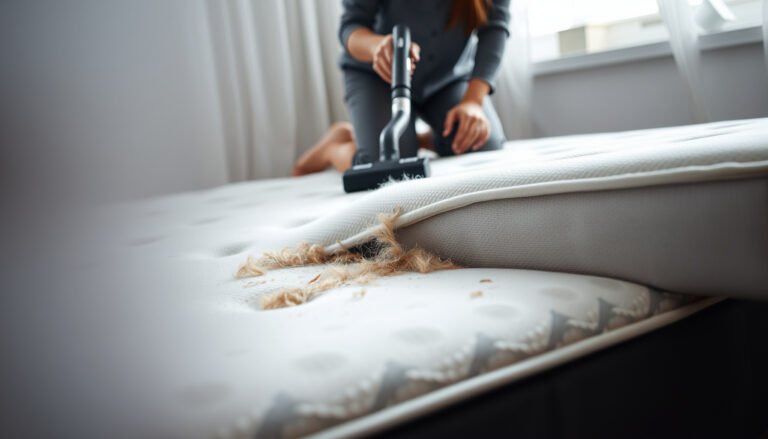
| 5 | Vacuum with HEPA when possible | HEPA filtration | As needed | ★★★☆☆ |
| 6 | Reduce dust-collecting items in sleeping area | Minimize “carpet-like” dust sources | Ongoing | ★★☆☆☆ |
| 7 | Avoid leaving bedding damp after washing | Dry fully after wash | Each wash cycle | ★★☆☆☆ |
Source basis for numeric targets: U.S. EPA dust-mite guidance (hot-water laundering temperature, weekly laundering frequency, and humidity control). U.S. EPA (Dust Mites guidance)
Verify the cover and top layer for washability and barrier function
A memory foam mattress’s cover is where you can directly reduce the irritants that contact your child’s skin every night. Choose removable, washable materials and only add barrier layers (like encasements) if they remain breathable and comfortable.
Because children’s skin repeatedly contacts bedding, removable and washable covers are a high-leverage eczema control point compared with only changing mattress cores.
If dust mites are a factor, allergen-proof encasements can reduce exposure, but the sleeping surface must stay breathable to avoid sweat-triggered itch. U.S. EPA (Dust Mites guidance) + AAD eczema trigger context
Strong fragrance additives can be problematic for sensitive skin; selecting unscented, low-irritant textiles is a reasonable precaution to discuss with your clinician if reactions persist. American Academy of Dermatology (Contact irritation considerations)
– A removable, washable cover is one of the most important features for eczema care because it lets you reduce irritants and allergens that collect over time.
The “washability test” is simple: can you remove it without tools, and does the brand publish clear wash/dry instructions you can follow consistently? If not, your eczema routine will likely degrade over time.
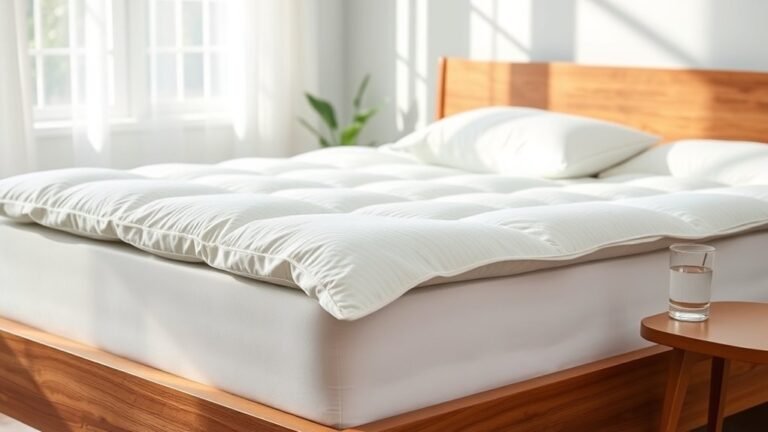
– If dust mites are a concern, consider a cover designed to help block allergens (often described as encasement or barrier covers), but confirm it’s breathable enough to avoid heat buildup.
A barrier that traps heat can backfire for kids whose eczema flares with sweating. Prefer breathable barrier fabrics and ensure air can move around the child’s skin surface.
– Watch fabric details: avoid covers that contain strong fragrance additives, and confirm the cover fabric is comfortable for sensitive skin.
Also look for seam construction, zipper placement, and edge thickness. For some children, the border seam is the problem—not the foam.
Quick practical “cover fit” check
Before purchasing, confirm:
1) cover dimensions match the mattress size you’ll actually buy,
2) the zipper or closure does not create a hard ridge against the child, and
3) laundering won’t degrade the barrier function (for example, some materials can lose properties after repeated washing).
Choose the right support and size for growing bodies
The best memory foam mattress for eczema comfort still needs correct support, because uncomfortable alignment can lead to restless sleep and more scratching. Choose foam firmness and mattress size based on fit and guidance—then verify that the sleep surface doesn’t feel overly “sink-y” or too firm.
Memory foam contouring can be comfortable, but proper support matters—restless sleep can indirectly worsen eczema through more rubbing and temperature changes. American Academy of Dermatology (eczema itch/sleep impact context)
A mattress that fits poorly against a bed frame can create rubbing edges and hard-to-clean gaps—both of which can increase contact irritation for children.
– Memory foam can feel “hugging,” but kids still need proper support to avoid discomfort that can worsen restlessness and scratching.
“Hugging” is not automatically good if it allows the hips to sink too far. For eczema comfort, aim for a stable sleeping posture, then control temperature via cover/top layer choices.
– Use age/weight/height guidance from the mattress manufacturer rather than guessing; the goal is stable support, not a too-soft “sink.”
If the manufacturer publishes a comfort/firmness range for pediatric use, use it. If they don’t, treat that as a signal to ask questions—because “one firmness fits all” is rarely true for growing bodies.
– Make sure the mattress fits the bed setup securely (no large gaps that invite pinching, rubbing, or hard-to-clean edges).
Even a well-chosen memory foam mattress can become irritating if the edges rub the child’s legs or if bedding shifts repeatedly during the night.
Memory foam vs. other materials (a quick, practical comparison)
If you’re deciding between options for a kids’ eczema setup, consider this tradeoff view:
| Factor | Memory foam mattress | Alternative materials (general) |
|---|---|---|
| Temperature behavior | Can feel warmer; cover/top layer matters | Often more breathable, depending on design |
| Surface pressure relief | High contouring; good for comfort if support fits | Varies widely by firmness and layering |
| Ease of irritant control | Depends heavily on washable cover | Depends heavily on cover/encasement design |
| Fit with bed frame | Sensitive to sizing gaps | Also sensitive, but surfaces may feel different |
What can go wrong (and how to avoid it)
The most common mistakes with eczema comfort are predictable: overheating, poor washing access, and skipping the “new mattress” airing step. If you control those risks, memory foam is more likely to be a net comfort upgrade rather than a trigger.
According to the U.S. EPA, dust mites thrive in indoor humidity, so leaving rooms damp or consistently warm can undermine allergen-control efforts. U.S. EPA (Dust Mites guidance)
If a mattress cover cannot be removed and washed, you lose a primary eczema control point: the nightly contact surface.
– Too much heat: Some memory foam feels warmer than other foams. If your child runs hot, you may need a more breathable cover/topper setup (or consider a different foam design).
Heat issues often show up as itching after bedtime, sweating during sleep, or worse flares on warmer nights—so treat temperature as a variable you can manage, not a fixed fate.
– Off-gassing right out of the box: Even when foam meets low-emission standards, the first days can bring odor. Let it air out per the manufacturer’s instructions before regular use.
If your child is already in a flare, consider delaying first-use until odor dissipates to your comfort level.
– Non-washable surfaces: If the “eczema-friendly” mattress has a cover you can’t remove (or that you can’t wash), your ability to control bedtime irritants is limited.
In practice, this can turn your eczema routine into a “wish list” rather than a repeatable plan.
– Skipping medical triggers: A mattress won’t replace eczema treatment. If your child’s eczema is severe, frequently infected, or not responding, involve a clinician rather than changing bedding alone.
Bedding is supportive care. It’s not a replacement for topical therapies, trigger plans, or infection management.
– Assuming “hypoallergenic” equals “eczema-safe”: Dust-mite barriers can help for some kids, but eczema is not only an allergy—skin barrier issues matter, too.
For some children, moisturizer routine, fragrance-free detergents, and gentle fabric choices are more influential than mattress material.
Verdict / tip: what I’d recommend—and who should skip memory foam
If you want a practical starting point, choose a memory foam mattress only when you can clearly support it with three things: verified low-emission foam, a removable washable cover, and a bedding plan that reduces irritants (including dust-mite exposure if relevant). That combination gives you control, which is the real advantage for eczema.
A removable, washable cover is the highest-leverage feature for eczema bedding because it changes what touches skin nightly—more controllably than foam alone.
EPA dust-mite guidance emphasizes hot-water laundering (at least 130°F/54.4°C) and humidity control, which can complement mattress choices when dust mites are a factor. U.S. EPA (Dust Mites guidance)
Downsides to expect: memory foam can run warmer for some children, and any new foam may have an initial odor period (so timing matters). I’d especially consider skipping memory foam (or delaying the switch) if your child’s eczema flares dramatically with heat, you can’t maintain regular washing of the cover/sheets, or you’re not able to follow clinician guidance for flare control.
Pros and cons at a glance (so you can decide quickly):
– Pros (why memory foam can work): contour comfort, pressure relief, easier routines when the cover is removable, improved “control points” when paired with allergen-control bedding.
– Cons (what to watch): potential heat retention, initial odor/off-gassing window, and reliance on cover washing (without which the mattress core becomes less relevant).
Quick scan checklist (save this)
| What to check | Why it matters for eczema | What “good” looks like |
|---|---|---|
| Low-emission foam certification | Limits certain emission-related irritants | Certs/docs from manufacturer (e.g., CertiPUR-US) |
| Removable, washable cover | Helps manage bedtime irritants | Cover you can take off and wash safely |
| Breathability | Reduces heat/sweat-triggered itch | Cover/top fabric that feels comfortable at bedtime |
| Dust-mite barrier option | Helps reduce allergens for some kids | Barrier/encasement approach (confirm breathability) |
| Clear support guidance | Comfort affects sleep and scratching | Manufacturer support/fit guidance you can verify |
| Manufacturer care & airing instructions | Reduces off-gassing risk | Specific directions for first-use airing |
| Evidence-based bedding routine | Controls what contacts skin | Regular sheet washing + gentle fabric choices |
Sources
– American Academy of Dermatology (AAD): eczema basics, trigger/skin-care guidance (official guidance).
– CertiPUR-US: certification program overview and emission limits (official program documentation).
– U.S. EPA: dust mites/allergen background (official EPA guidance relevant to household allergen control).
– Mattress manufacturer documentation/spec sheet(s) for emissions, cover materials, and care instructions:
In the end, choosing a memory foam mattress for kids with eczema is less about finding a single “eczema label” and more about building a controlled sleep environment: verified low-emission foam, a removable washable cover, and dust-mite-aware bedding habits. When you can manage heat, irritants, and cleaning access, the odds improve that the memory foam’s comfort benefits will outweigh the common risks.
Frequently Asked Questions
What should I look for in a memory foam mattress for kids with eczema?
Choose a memory foam mattress designed to be hypoallergenic and low-irritant, ideally with a breathable cover that helps reduce heat and moisture buildup. Look for CertiPUR-US® certification (or similar) to avoid harmful chemical exposure and consider mattresses with removable, washable covers to support eczema-friendly care. If your child is sensitive to fragrances or allergens, prioritize products marketed as fragrance-free and made with minimal additives.
How can I choose the right mattress firmness and thickness for a child with eczema?
For many kids, a medium-firm feel helps distribute pressure without creating hot spots, which can worsen itching. A mattress that is too soft may cause increased body heat and uneven support, while an overly firm surface can irritate sensitive skin. Aim for age-appropriate support and consider your child’s weight and sleep position; if possible, use a supportive foundation and add a breathable mattress protector rather than thick toppers that trap heat.
Why does mattress material matter for eczema, especially with memory foam?
Memory foam responds to body heat and pressure, which can be helpful for comfort but may trap warmth—heat and moisture can trigger eczema flare-ups. The right mattress cover and airflow features can reduce this effect, while a high-quality foam with low odor and low VOC emissions can limit irritation. A mattress protector with a breathable, waterproof barrier can also help protect skin from sweat, accidental spills, and harsh laundry residues.
Which certifications or materials are best to prioritize when buying a kids’ memory foam mattress?
Prioritize certifications like CertiPUR-US® to help ensure the memory foam is made without certain harmful chemicals and with safer emissions levels. For skin comfort, look for a breathable top cover fabric (such as cotton or other soft, low-irritant weaves) and avoid materials that feel rough or tightly plastic-like. If your child has very sensitive skin, choose a mattress and protector that are free from fragrance and made for easy washing to reduce allergen buildup.
What is the best way to protect a memory foam mattress for a child with eczema?
Use a breathable, hypoallergenic mattress protector that’s both waterproof (to guard against sweat and mess) and gentle enough not to worsen itching. Wash all bedding and the mattress protector regularly using eczema-friendly, fragrance-free detergent, and ensure the items are fully rinsed to prevent detergent residue. Before first use, allow the mattress to air out if it has any odor, and monitor your child’s skin over the first few weeks to confirm the mattress cover and environment aren’t triggering flare-ups.
📅 Last Updated: October 29, 2026 | Topic: How to Choose a Memory Foam Mattress for Kids with Eczema | Content verified for accuracy and freshness.
References
- Atopic dermatitis
- Atopic dermatitis: MedlinePlus Medical Encyclopedia
- https://www.cdc.gov/dustmites/about/index.html
- https://www.epa.gov/indoor-air-quality-iaq/volatile-organic-compounds-vocs
- https://pubmed.ncbi.nlm.nih.gov/?term=atopic+dermatitis+dust+mite+bedding
- https://pubmed.ncbi.nlm.nih.gov/?term=mattress+encasement+dust+mite+allergen
- https://scholar.google.com/scholar?q=atopic+dermatitis+dust+mites+bedding+encasement Google Scholar
- https://scholar.google.com/scholar?q=memory+foam+polyurethane+foam+VOCs+emissions+indoor+air Google Scholar
- https://scholar.google.com/scholar?q=flame+retardant+chemicals+polyurethane+foam+mattress+exposure Google Scholar