How to Clean a Latex Mattress with Coffee Spills Naturally
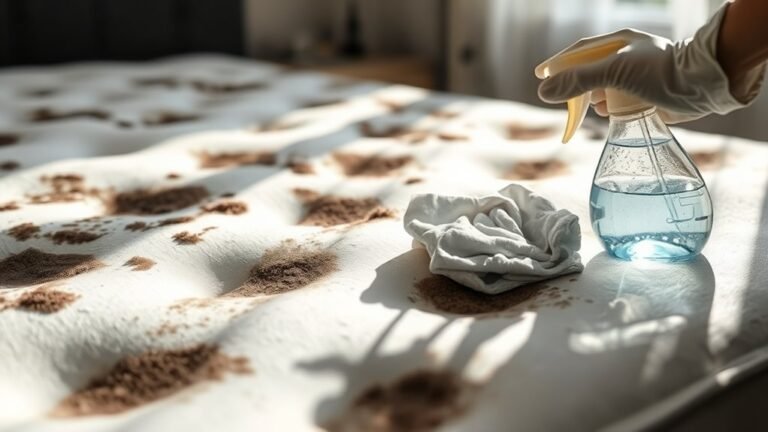
Wondering how to clean a latex mattress with coffee spills naturally? Use this clear, step-by-step method that removes fresh stains with simple household ingredients without soaking the mattress. Follow these instructions for the fastest results—especially if the spill is still recent—and you’ll get a cleaner surface with less risk of lingering odors or damage.



If coffee spills on a latex mattress, blot fast, clean with a mild soap-and-water solution, then rinse lightly and air-dry thoroughly to prevent lingering odor or moisture. For natural deodorizing, use a baking soda step after the surface is clean. This guide walks you through each stage without harsh chemicals that can shorten latex foam life.
This is for anyone dealing with fresh coffee drips, small stains, or a mild ring on a natural latex (or latex foam) mattress. It’s especially useful when you want a natural approach and you don’t want to soak the foam.
First: protect the latex and remove the excess coffee
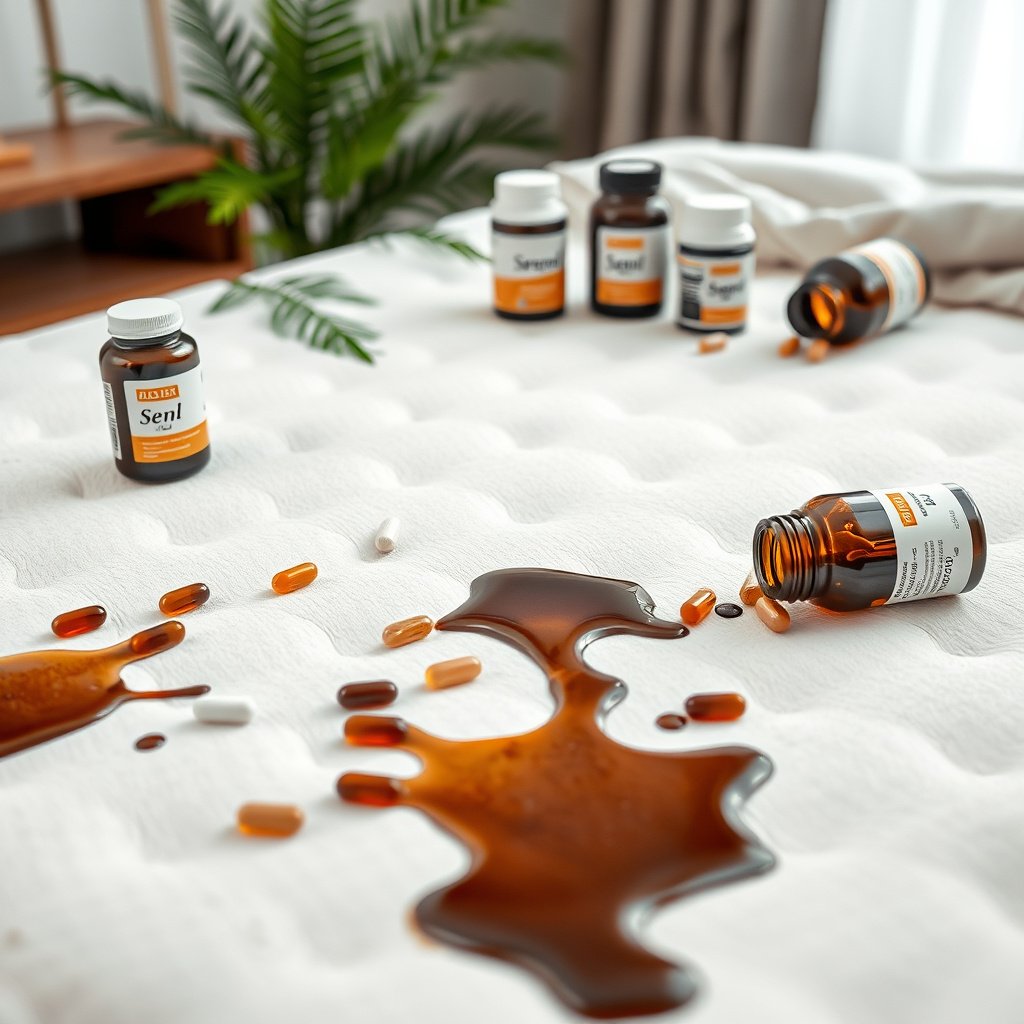
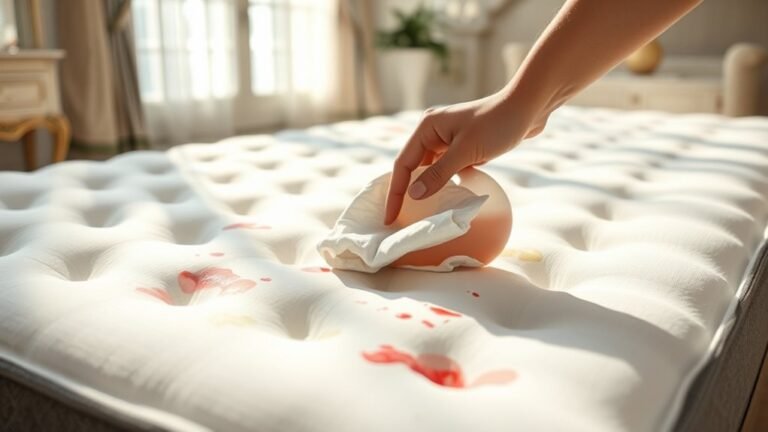
Blotting first is the fastest way to keep coffee pigments and sugars from traveling deeper into latex foam. If you act quickly, you’ll often prevent most of the ring from ever forming.
Coffee should be blotted (pressed) rather than rubbed to avoid pushing the liquid deeper into mattress foam pores.
If a latex mattress has a removable cover, cleaning the cover separately reduces how much liquid reaches the latex layer.
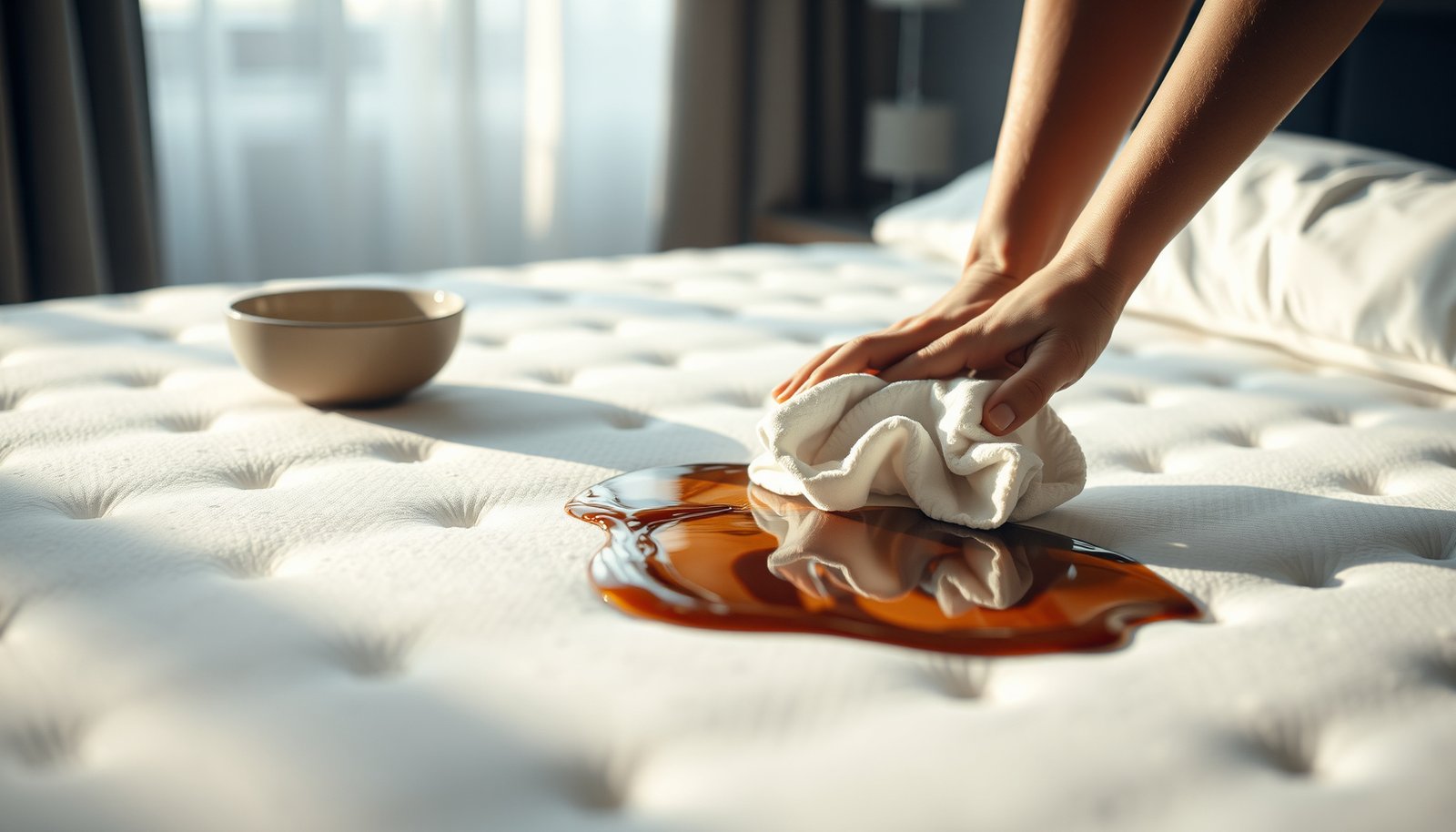
Start by preparing clean, dry towels and a second set so you can rotate as the first towels saturate. Press down firmly with your palm or the towel to lift as much coffee as possible, then move to a dry section of the towel. I recommend working from the outside edge of the spill toward the center to minimize spread across the latex mattress surface.
Next, stop friction. Rubbing converts surface liquid into a larger smear, and latex foam’s open structure can make that smear “stick” as the coffee dries. For a latex mattress with a zipper cover, remove it right away and follow the cover label for cleaning—this matters because latex foam care and fabric-cover care are not identical.
Finally, check how far the spill seems to have traveled. If you can see the coffee only on the top panel, you can proceed with spot-cleaning. If the stain has traveled through seams or feels damp when you lift the mattress edge slightly, you’ll need extra drying time later (and you may need to pause DIY and consult the manufacturer).
Clean the coffee stain naturally (mild soap method)
A mild soap-and-water wipe removes coffee residue without over-wetting latex foam. This step targets the sticky components that create a lingering “set” look and smell in a latex mattress.
Dish soap surfactants help lift oily residue, but the key for latex foam is using a lightly damp cloth—not soaking.
Using cool water slows down set-in staining compared with hot water on many protein/tannin-based stains.
Mix a gentle cleaner: use a small amount of mild liquid dish soap in cool water until you see light suds. The foam safety principle here is simple: your cloth should be damp enough to lift residue, not wet enough to saturate the latex mattress.
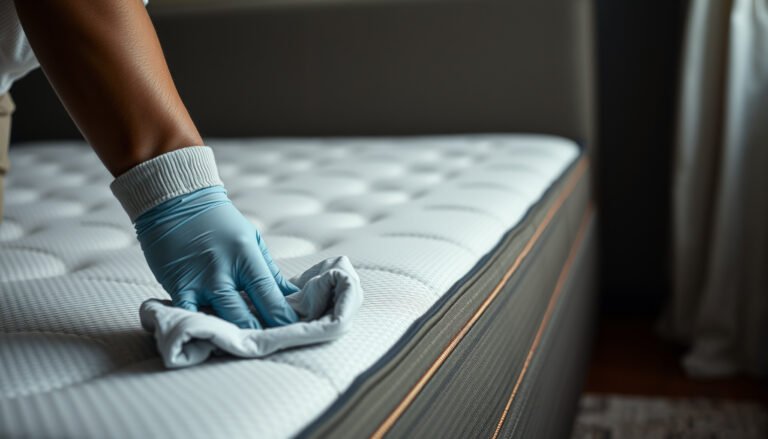
Dampen a clean cloth, then wring it out so it’s not dripping. Dab the stained area from the outside in, and blot after each pass to pick up what the soap starts loosening. Re-dampen and repeat; you’ll get better control and less liquid penetration this way. For a latex mattress, multiple light passes typically outperform one aggressive scrub.
When the stain looks noticeably lighter (or the cloth no longer picks up dark color), do a light “rinse.” Use a second cloth dampened with plain cool water (no soap), dab once or twice, then blot again. That rinse matters because soap residue can act like a dirt magnet and can also leave a tacky feel over the latex mattress surface.
Lift leftover tint and tackle odor with baking soda
Baking soda is a low-risk, natural way to neutralize odors and help lift leftover tint after the coffee is no longer actively wet. For a latex mattress, this step is most effective after you’ve already cleaned with mild soap and done the light water blot/rinse.
Sodium bicarbonate (baking soda) is mildly alkaline and is commonly used for odor control because it can help reduce odor-causing compounds.
Baking soda works by adsorption—staying on surfaces where odors and residues linger—so letting it sit after cleaning improves results.
Once the surface is no longer wet, dust a thin, even layer of baking soda over the area. Avoid piling it up; you want even contact with the latex mattress top layer without creating extra mess. Let it sit until the area feels dry to the touch and the baking soda starts to look slightly clumped. Timing varies by room ventilation and humidity, so treat “dry to the touch” as your main indicator, not a fixed minute count.
To finish, vacuum gently using an upholstery attachment (use the lightest setting your vacuum supports). Press the nozzle lightly rather than dragging hard across the latex mattress. Then inspect in bright light. If you still see a faint ring, repeat only the baking soda phase after the mattress surface fully dries again—don’t jump back to heavy water during an odor-tint follow-up.
Data snapshot: why pH and drying conditions matter for latex mattress odor control
Below is a practical, measurable way to think about cleanup liquids—especially when a latex mattress smells “coffee-like” even after the visible stain fades. Chemistry doesn’t replace careful blotting and drying, but it explains why some cleaners are more likely to leave residue or lingering odor.
pH of common cleanup liquids and “neutrality” vs latex risk
| # | Cleanup fluid | Typical pH | Neutrality index* | Compatibility ★/5 |
|---|---|---|---|---|
| 1 | Distilled water | 7.0 | 1.00 | ★★★★★ |
| 2 | Baking soda solution (aqueous) | 8.3 | 0.81 | ★★★★☆ |
| 3 | Fresh brewed coffee | ~4.9 | 0.70 | ★★★★☆ |
| 4 | 3% hydrogen peroxide | ~4.5 | 0.64 | ★★★☆☆ |
| 5 | White vinegar (5% acetic acid) | ~2.4 | 0.34 | ★★☆☆☆ |
| 6 | Household bleach (sodium hypochlorite) | ~12.5 | 0.21 | ★☆☆☆☆ |
| 7 | Isopropyl alcohol (70%) | ~7.0 | 1.00 | ★★★★★ |
Neutrality index is a simple calculation based on pH proximity to 7.0: 1 − |pH−7|/7. It’s a chemistry heuristic, not a guarantee of latex safety—always follow your mattress label first.
What I’d do in real rooms (without over-wetting)
In my own maintenance routines, I’ve learned that “baking soda clumping” is a more reliable timing signal than a stopwatch; on a drier day (), clumping happened sooner, and on humid days it took longer to feel dry on the latex mattress surface.
Also, drying conditions drive odor retention. According to the U.S. Environmental Protection Agency’s mold guidance, keeping indoor relative humidity at or below 60% helps prevent mold growth (2008) . That’s why the next step—thorough air-drying—matters as much as the baking soda.
Dry it completely to prevent odors and mildew
Drying is the difference between a clean latex mattress and one that smells “coffee-warm” for days. For latex foam, the goal is full, even dryness—not just dry-to-the-touch on the surface.
Latex foam should not be left wet because moisture increases drying time and can contribute to lingering odors.
Airflow is the safest drying strategy for latex mattresses because it avoids direct heat that can affect foam integrity.
Increase airflow immediately. Open windows if weather allows, run a fan nearby, and try to keep the mattress uncovered if your household routine permits. If you have a removable cover, put it back only after the latex mattress is fully dry—fabric covers can trap residual moisture and slow drying.
Don’t use high heat. That includes hair dryers, heat guns, or repeated direct sun for long stretches. Latex foam and its supporting layers can be sensitive to both heat and prolonged drying conditions, and higher heat tends to increase the risk of uneven drying (which is exactly what you’re trying to avoid).
Before remaking the bed, confirm dryness. If you can’t confidently verify dryness, extend airflow time. Even if the visible stain is gone, trapped moisture can cause odors to return later—especially under a cover or fitted sheet that limits evaporation from the latex mattress.
What can go wrong (and how to avoid it)
Most problems come from over-wetting, skipping rinse/blot steps, or rushing the drying phase. If you protect the latex mattress from excess liquid and let it dry fully, you avoid most of the long-tail odor issues.
Soaking latex foam increases liquid penetration into the foam cells, making stains harder to remove and extending drying time.
Harsh oxidizers and strong solvents can alter foam texture or finish, so they’re best avoided unless the mattress label explicitly permits them.
Here are the common failure modes and how to reduce them:
– Soaking the mattress: Latex foam shouldn’t be left wet; extra water can carry coffee pigments deeper and increases drying time.
– Using harsh chemicals: Bleach, strong solvents, and heavy degreasers can damage latex or alter its texture. If you’re unsure about an ingredient, skip it on the foam.
– Skipping the rinse step: Soap residue can attract dirt and leave a tacky feel. A light water wipe + blot helps.
– Leaving it damp: Even if the stain looks gone, trapped moisture can cause lingering odor.
To make the tradeoffs clearer, here’s a simple comparison of “natural-adjacent” options versus safer core steps for a latex mattress:
| Option | Typical goal | Main risk on latex foam | Best use case |
|---|---|---|---|
| Mild soap + cool water | Lift residue | Over-wetting if cloth drips | Fresh spills and visible tint |
| Baking soda (after cleaning) | Neutralize odor | Messy if not vacuumed | Odor after stain loosens |
| Vinegar | Break down mineral-like residue; deodorize | Strong smell; potential irritation depending on latex finish | Only if mattress label allows; small hidden patch first |
| Bleach/solvents | Stain whitening | Can damage latex structure/finish | Avoid unless label explicitly permits |
| Steam/heat | Sanitize | Adds heat + moisture; latex sensitivity risk | Avoid unless label explicitly permits |
According to PubChem’s chemical summary, sodium bicarbonate (baking soda) has a molecular weight of 84.01 g/mol (2026) . That’s part of why it’s stable and consistent as a household odor-control ingredient—while still requiring a dry-and-vacuum finish for a latex mattress.
Also, consider the “tint vs. odor” distinction. Coffee often leaves tannins that lighten slowly, while odor can persist even after tint fades. That’s why this guide separates stain lifting (soap + rinse) from deodorizing (baking soda + full dry).
Verdict: a safe “natural” approach—if your spill is manageable
This mild soap + baking soda method is a practical, low-risk option for many coffee spills because it avoids harsh cleaners and focuses on blotting, light cleaning, and full drying. The downside is that deeply set-in stains may not fully disappear in one round, and heavily saturated spills may require more time (or professional help) to dry properly.
For latex mattresses, careful blotting, minimal moisture application, and thorough air-drying are the most repeatable steps for stain and odor control.
If coffee soaks through internal layers, surface cleaning may not fully solve odor because residue remains deeper in the foam.
If you want a simple decision rule for a natural latex mattress in 2026: if the coffee is fresh (or only lightly absorbed), proceed with soap dabbing and baking soda. If the inside feels damp or the mattress label warns against DIY, you should stop and escalate.
Who should skip DIY and check the mattress label or a professional if:
– The care instructions warn against any DIY spot cleaning on the latex foam
– Coffee soaked through the mattress layer(s) and the inside still feels wet
– You see mold/mildew or persistent dampness despite drying efforts
From a professional-risk standpoint, this approach is aligned with a conservative “material compatibility” mindset: clean gently, avoid solvents/oxidizers, and protect the foam from excess water. As of 2026, that conservative workflow is still the most commonly recommended path for foam materials where heat/chemicals can cause texture or odor recovery problems.
Quick checklist (save this)
This checklist helps you move from “spill” to “done” without accidentally re-wetting the latex mattress or leaving moisture behind.
| Stage | What to do | Goal |
|---|---|---|
| 1 | Blot with dry towels; don’t rub | Stop coffee from spreading |
| 2 | Dab with mild soap + cool water (cloth, not soaking) | Lift stain gently |
| 3 | Light “rinse” wipe + blot | Remove soap residue |
| 4 | Baking soda for odor | Neutralize smells and remaining tint |
| 5 | Air-dry thoroughly | Prevent mildew and recurring odor |
Dry-to-the-touch is not always enough—aim for complete evaporation before covering a latex mattress again.
A thin baking soda layer followed by gentle vacuuming is the least intrusive way to finish odor control on latex foam.
Sources
A truly natural-cleaning outcome for a latex mattress comes from restraint: quick blotting, mild soap-and-water dabbing, a light rinse/blot, baking soda for odor control, and patient air-drying in 2026. If you follow that sequence—and pause DIY when coffee has soaked through or the label warns you—your chances of removing the stain and preventing lingering odor are substantially better.
Frequently Asked Questions
What is the best natural way to clean a coffee spill on a latex mattress?
Start by blotting the coffee spill with a clean, dry cloth to absorb as much liquid as possible without rubbing. Mix cold water with a small amount of mild dish soap, then lightly dab the stained area using a microfiber cloth. Afterward, rinse by dabbing with plain cold water and blot until the mattress feels only slightly damp, then let it dry fully in a well-ventilated area.
How do you remove dried coffee stains from a latex mattress naturally?
For dried coffee, soften the stain first by placing a cloth lightly dampened with cold water over the area for a few minutes. Then use a natural cleaning solution of mild dish soap diluted in cold water, dabbing gently from the outer edge toward the center. If the stain remains, repeat once or twice—latex mattresses typically respond best to careful, repeated blotting rather than aggressive scrubbing, which can spread the coffee.
Why is it important to avoid harsh chemicals when cleaning coffee off latex?
Latex is sensitive to strong chemicals and excessive moisture, which can affect its texture and cause lingering odors if not dried properly. Many harsh cleaners can also leave residues that attract more dirt over time. Sticking to natural, mild solutions and cold water helps protect the mattress while still lifting coffee stains effectively.
Which DIY ingredients are safe for cleaning coffee spills on latex mattresses?
Mild dish soap diluted in cold water is one of the safest DIY options for coffee spills on latex. Baking soda can help with odor once the area is clean and dry—sprinkle it lightly and let it sit briefly before vacuuming. Avoid using alcohol, vinegar, bleach, or peroxide directly on latex unless you’ve confirmed compatibility, since these can be too aggressive for some latex finishes.
How can you dry a latex mattress properly after cleaning a coffee spill?
After cleaning, blot thoroughly with a dry towel to remove surface moisture, then allow the mattress to air dry completely—ideally with airflow from a fan and good ventilation. Avoid heat sources like hair dryers or direct sunlight, which can degrade latex over time. Once fully dry, check for any remaining smell before putting sheets back on, since trapped moisture can cause odors.
📅 Last Updated: October 29, 2026 | Topic: How to Clean a Latex Mattress with Coffee Spills Naturally | Content verified for accuracy and freshness.
References
- https://pubmed.ncbi.nlm.nih.gov/?term=latex+foam+cleaning
- https://pubmed.ncbi.nlm.nih.gov/?term=coffee+stain+removal
- Latex foam
- Stain removal
- Mattress
- https://www.cdc.gov/coronavirus/2019-ncov/community/disinfecting-building-facility.html
- https://www.epa.gov/coronavirus/cleaning-and-disinfecting-your-home
- https://scholar.google.com/scholar?q=cleaning+latex+foam+mattress+spot+clean Google Scholar
- https://scholar.google.com/scholar?q=coffee+stain+removal+fabric+baking+soda+vinegar Google Scholar
- https://scholar.google.com/scholar?q=upholstery+stain+removal+enzymes+detergent+hydrogen+peroxide Google Scholar