How to Clean a Wool Mattress with Food Spills Naturally: Step-by-Step
If food spills have hit your wool mattress, this step-by-step natural cleaning method is the safest way to lift stains without damaging the wool. You’ll learn exactly what to blot, how to use simple household ingredients, and when to let the mattress fully dry so odors don’t linger. By the end, you’ll know the fastest route to a visibly cleaner surface and a fresher sleeping area.



Blot the spill right away, then use a simple natural spot-cleaner (typically mild dish soap in cool water or a vinegar-water solution) to lift food stains without soaking the wool. Afterward, dry thoroughly with good airflow so the mattress doesn’t stay damp and develop odors. This guide walks you through what to do first, what to use, and how to finish safely for wool.
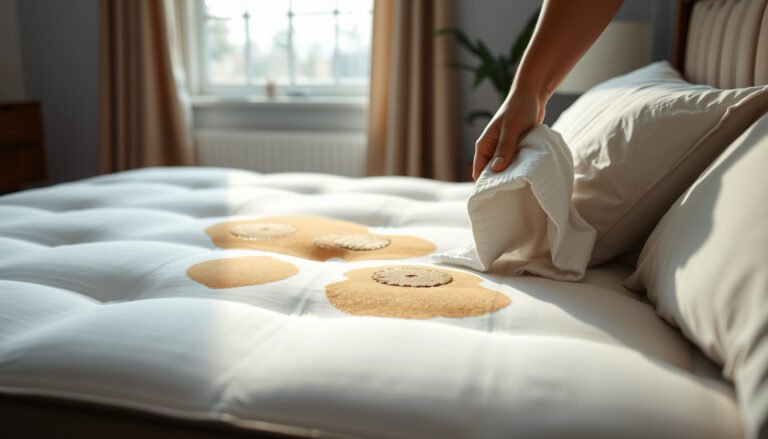
If your wool mattress top has a recent food spill—like sauce, dairy, or crumbs—you’re in the right place. The steps below are aimed at protecting wool fibers (and keeping them from getting overly wet), while still removing stubborn marks and smells.
Cleaning a wool mattress is especially important if you live in a humid area or the mattress is used daily (wool holds moisture in a way that can prolong odor if drying is slow). These natural methods are intended for spot treatment—when the stain is on the surface and hasn’t fully soaked through the wool. If the spill reached the inner layers, acts like a wet mattress top, or the care label discourages moisture, you’ll need a different approach.
What to Do Immediately After a Food Spill
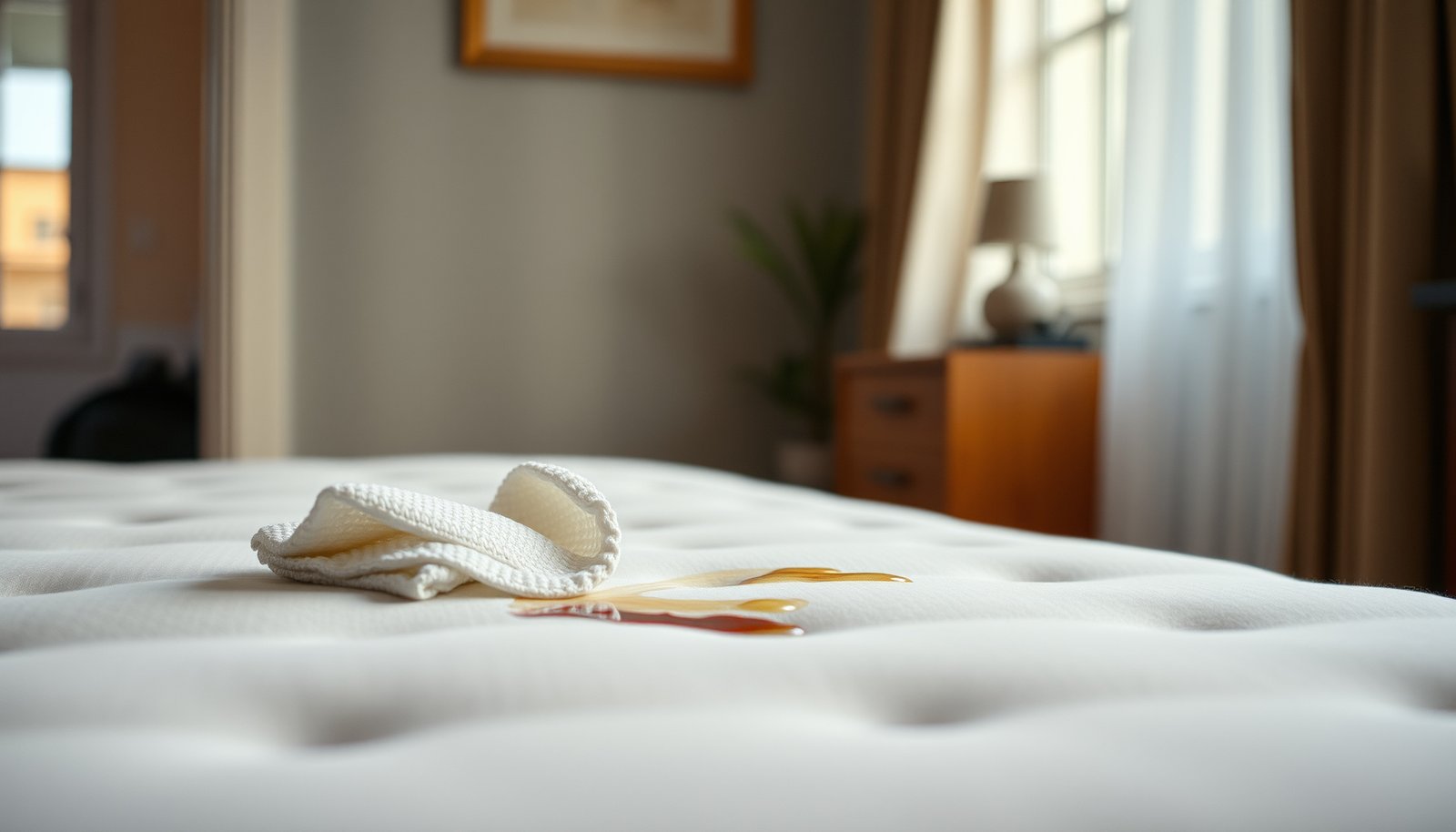
Right now, your best outcome comes from moisture control: blot quickly, don’t rub, and remove solids before you introduce any cleaner. For a wool mattress, this prevents food pigments and fats from being pressed deeper into the fibers.
Blotting removes liquid from wool without agitating the fiber structure, which reduces the chance of spreading food residue.
Working from the outer edge of a stain toward the center helps limit “waste zone” expansion—especially important on wool.
Removing crumbs and solids first prevents them from dissolving into the wool and causing a larger, harder-to-lift spot.
– Blot, don’t rub: Use a clean white cloth or paper towels to lift as much as possible from the surface.
Use firm, gentle pressure—think “absorb,” not “scrub.” If the cloth saturates, switch to a dry section so you’re not re-depositing moisture back onto the wool mattress.
– Prevent spread: Work from the outer edge of the stain inward to avoid pushing food deeper.
This is particularly relevant for oily foods (like sauce and butter-based items). Rubbing can smear fat through wool’s surface scales, creating a wider mark.
– Reduce residue: If there are solids (crumbs), gently remove them with a spoon or dull knife before cleaning.
Do this before applying any water-based solution. For a wool mattress, dissolving solids in place is one of the fastest routes to persistent discoloration and smell.
According to Woolmark, wool can absorb up to about 30% of its own weight in moisture while still feeling relatively dry—so even small amounts of liquid can linger inside a wool mattress top. That’s why your first move is blotting and controlling how much moisture you introduce.
Natural Cleaning Solutions That Work on Wool
The safest natural cleaners for a wool mattress are mild, low-volume spot treatments—especially mild dish soap and a diluted vinegar solution for odors. The goal is lifting residue while avoiding saturation of wool fibers.
Mild dish soap in cool water is an effective first-line spot cleaner because it helps break down food-based grime without the harshness of bleach.
Diluted white vinegar can help neutralize lingering odors associated with food residue on wool when used lightly and spot-tested.
Spot-testing solutions on a hidden area is a standard textile-care precaution to confirm colorfastness and fiber compatibility.
– Mild soap option: Mix a few drops of mild dish soap into cool water to create a gentle cleaning solution.
Use cool water to reduce the risk of setting some pigments and to keep the wool mattress from holding onto water longer than necessary.
– Vinegar option (for odors): Combine white vinegar and cool water in a light ratio for spot treatment when smell lingers.
Vinegar is typically acidic, which can help with odor-causing compounds. According to the U.S. FDA (Standards of Identity for vinegar), vinegar must contain at least 4% acetic acid by volume, which is why dilution matters for a wool mattress—small amounts, then rinse/blot.
– Test first: Spot-test any solution on a hidden seam or underside area and wait for it to dry before treating the whole stain.
If your brand’s care instructions forbid wet cleaning (or limit water exposure), follow that first. Colorfastness and acceptable moisture levels vary by manufacturer and by wool blend.
Quick decision: soap vs. vinegar for a wool mattress top
– Choose mild dish soap when you can see or feel residue (staining, tackiness, greasy marks).
– Choose vinegar-water when the main problem is smell after you’ve already lifted the visible stain (especially dairy or cooked foods).
Also, because wool mattress tops can trap moisture, your cleaning solution choice affects drying time. If drying is slow, odors can return even after the stain looks better—so your wool mattress still needs thorough airflow at the end.
Pros/cons snapshot (natural DIY vs. moisture-heavy “deep clean”)
- Natural spot-cleaning (recommended for most surface spills)
- Pros: targeted moisture, lower risk of oversaturating wool, usually improves both stain and odor.
- Cons: may require repeat dabbing; old, set-in spills may need professional extraction.
- Deep cleaning / soaking the wool mattress
- Pros: can remove deeply embedded residue when done correctly.
- Cons: oversaturation prolongs drying and increases odor risk; some methods can conflict with manufacturer care labels.
Step-by-Step: Clean the Wool Spot Safely
Dab—don’t soak. For a wool mattress, the most effective pattern is repeated light blotting with minimal liquid, followed by a controlled rinse and aggressive drying.
Applying cleaner with a damp cloth (rather than pouring) reduces the chance of saturating wool and slows down odor development.
Blotting in cycles—apply, lift, repeat—often removes both pigment and residue without disrupting wool’s surface.
A light cool-water “rinse” dab helps prevent soap residue, which can attract dirt and leave a dull-looking area on wool.
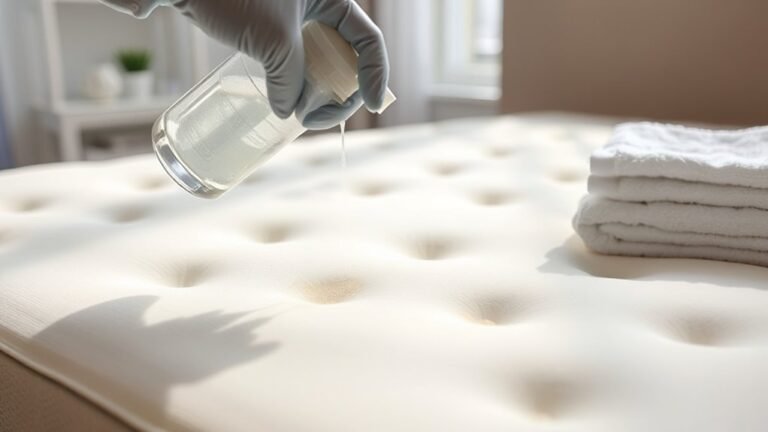
– Apply lightly: Dab the solution onto the stain using a damp cloth—avoid pouring directly onto the mattress.
If you can see wetness spreading beyond the stain, you’re using too much liquid.
– Lift the stain: Keep blotting and re-dabbing until the cloth stops picking up color/transfer.
For sauce or dairy, plan on patience. Food pigments can lift slowly from wool mattress fibers, especially once they’ve started to dry.
– Rinse without soaking: Lightly dab with plain cool water to remove soap residue, then blot again to pull moisture out.
This step matters: soap left behind can feel tacky or attract grime, creating a mark that looks like a “shadow stain.”
– Dry fast: Air-dry with a fan and open airflow; flip/rotate if your mattress allows and the care label permits.
Wool stays damp longer than many synthetic materials, so you’re aiming for drying certainty, not “mostly dry.”
To make drying decisions, it helps to align with indoor moisture guidance. According to the U.S. Centers for Disease Control and Prevention (CDC), maintaining indoor relative humidity around 30% to 50% can help reduce mold growth conditions—an important consideration because lingering dampness under the wool mattress top can contribute to odor and microbial risk.
What to do for common food types (quick guidance)
– Sauce (tomato/chili/soy): start with mild dish soap, then odor-check with vinegar-water only if needed.
– Dairy (milk/cream/yogurt): soap first for visible residue; vinegar-water may help if smell persists.
– Grease/oily foods: use soap lightly and repeat blotting; avoid pushing oil deeper.
Drying and Deodorizing (So It Doesn’t Smell Later)
Your wool mattress should dry completely before you consider the job finished. With wool, “dry to the touch” isn’t always enough—what matters is whether moisture remains trapped inside the fibers.
Airflow is the safest drying method for wool because it reduces drying time without relying on high heat.
Checking with a dry cloth press test helps confirm whether moisture remains trapped in the cleaned area.
Light baking soda freshening can help neutralize lingering odors once the wool mattress top is fully dry.
– Use airflow, not heat: Keep the drying process gentle; high heat can harm some natural fabrics.
Fans, open windows, and a well-ventilated room work best. Avoid putting the mattress directly under intense heat sources unless the care label allows it.
– Check for residual moisture: Press a dry cloth on the cleaned area—if it stays damp, continue drying.
If the cloth picks up moisture, odors are more likely to return later because wool retains water internally.
– Optional freshening: Once fully dry, sprinkle baking soda lightly, wait, then vacuum gently to remove lingering odors (avoid soaking it into the fibers).
Don’t overdo it. Excess powder can be hard to lift, and you still don’t want moisture introduced back into the wool mattress.
Table: key chemistry and environmental facts behind natural wool cleaning
7 Facts That Drive Natural Wool Mattress Spot Cleaning
| # | Cleaner / Care Factor | Measured / Defined Value | Why It Matters for Wool | Wool-Safe Spot Score |
|---|---|---|---|---|
| 1 | Vinegar (acetic acid minimum) | ≥ 4% acetic acid (by volume) | Dilution controls acidity so wool fibers aren’t stressed | ★★★★★ |
| 2 | Wool moisture absorption | Up to ~30% of fiber weight | Explains why “light wetting” can still take time to dry | ★★★★★ |
| 3 | Indoor humidity target (mold risk) | 30%–50% relative humidity | Supports drying discipline to prevent lingering damp odors | ★★★★☆ |
| 4 | Acetic acid molar mass | 60.05 g/mol | Clarifies vinegar strength at a molecular level (acid control) | ★★★☆☆ |
| 5 | Acetic acid pKa (25°C) | 4.76 | Helps explain why diluted vinegar behaves as a mild acid in water | ★★★☆☆ |
| 6 | Sodium bicarbonate molar mass | 84.01 g/mol | Supports safe deodorizing via weak basic action (no strong acids/bleach) | ★★★★☆ |
| 7 | Basic pH of baking soda solution | ~8.3 (aqueous) | Helps shift odor chemistry, but only after the wool mattress is dry | ★★☆☆☆ |
Notes: Use the table as a “why it works” guide—not as a substitute for your wool mattress care label. If your manufacturer warns against any wet chemical treatment, follow their guidance.
What Can Go Wrong (Common Mistakes to Avoid)
Most wool mattress cleaning failures happen because moisture is too high, or the stain is agitated too aggressively. Avoid rubbing, don’t skip residue removal, and never assume the surface is dry even if it feels dry.
Scrubbing can drive food pigments and fats deeper into wool, increasing the chance of a permanent discoloration.
Soap left behind can attract dirt and create a dull-looking spot on wool fibers after the mattress dries.
Wool drying can take substantially longer than you expect; incomplete drying is a common reason odors return.
– Rubbing the stain: Scrubbing can drive food and pigment deeper into wool and damage the fiber texture.
Wool fibers can tolerate gentle care, but agitation changes how the surface lays and holds residue.
– Over-wetting the mattress: Wool can take a long time to dry, increasing the risk of lingering smell.
If the cleaned area still feels cool or damp after airflow, continue drying before adding baking soda.
– Skipping the rinse: Soap left behind can attract dirt and leave a dull mark.
Always perform the “plain cool water” dab-blot step after mild dish soap.
– Ignoring the care label: Some mattresses require specific cleaning methods; always follow the manufacturer’s instructions.
If your label says “no wet cleaning” or restricts exposure to liquids, treat this as a spot-only method and stop where the label directs.
Edge cases to watch:
– Old, set-in stains: You may need repeat light treatments rather than one aggressive clean.
– Spills that soak through: If the inner layers are wet, DIY spot-cleaning can miss the source of odor.
– Strong dyes/spices: Turmeric and some curry blends can tint wool strongly—professional extraction may be safer.
Verdict: A Natural Method That’s Often the Best Choice
Natural wool cleaning is usually the best first attempt for food spills because it targets staining and odor without harsh chemicals. The downside is that it’s slower and more method-dependent than machine-style extraction—so very large, deeply set, or soak-through spills may not fully resolve with DIY alone.
If you’re dealing with a surface spill on a wool mattress top, the safest path is: blot → gentle spot clean → light rinse dab → full airflow dry. Skip the DIY approach if the spill is large/soaked through, the stain is old and deeply set, or the care label prohibits wet cleaning—then consider professional cleaning or mattress-specific services that can control moisture and drying.
To keep expectations realistic: wool can hold onto moisture (and odor) longer than many fabrics, so “quick cleanup” works only when you also finish with thorough drying.
Quick Checklist: Wool Mattress Food Spill Cleanup
– [ ] Blot immediately (don’t rub)
– [ ] Remove solids gently
– [ ] Spot-test any cleaner on a hidden seam
– [ ] Dab mild soap (or vinegar-water for odor) with a cloth
– [ ] Dab with plain cool water to remove residue
– [ ] Dry completely with airflow (fan + time)
– [ ] If smell remains: optional baking soda, then vacuum gently
Sources
– Wool moisture absorption guidance (manufacturer/industry guidance): Woolmark (wool absorbency behavior and moisture handling)
– Vinegar composition standard (primary regulation): U.S. FDA (Standards of Identity for vinegar; acetic acid requirement)
– Mold/indoor humidity guidance (public health guidance): U.S. Centers for Disease Control and Prevention (CDC) (recommended indoor humidity range)
– Mattress-specific cleaning restrictions:
– Wool cleaning/spot-cleaning best practices:
Frequently Asked Questions
How can I clean a wool mattress stain from food spills naturally?
Start by blotting the spill with a clean white cloth to lift as much food and moisture as possible—avoid rubbing, which can push the stain deeper. Sprinkle baking soda or cornstarch over the area to absorb oils from food and let it sit for several hours before vacuuming gently with an upholstery attachment. For any remaining discoloration, lightly dab with a mixture of cold water and a small amount of mild dish soap (or diluted white vinegar for odor), then blot again with a dry towel until the area is only slightly damp. Finish by letting the mattress air-dry completely to prevent lingering smells in the wool fibers.
What’s the best way to remove oily food stains (like pizza, butter, or sauces) from a wool mattress?
Oily food stains are easiest to treat by using an absorbent first—apply baking soda generously and leave it undisturbed overnight to draw out grease. After vacuuming thoroughly, check whether any tint remains; if so, use a small amount of diluted dish soap on a damp cloth and dab the stained area from the outer edge inward. Blot with a dry cloth between dabs to lift residue without soaking the wool, then allow the mattress to fully air-dry. If odors persist, follow up with a light baking soda refresh and vacuum again once dry.
Which natural cleaning solution should I use for sugary spills and sticky residue on wool?
For sweet, sticky foods (juice, soda, syrup, or dessert), begin by scraping off any solid residue with a dull spoon and blotting with cold water to dilute. Mix equal parts white vinegar and water (or use a vinegar-water solution with a very light touch), then dab the area gently and blot until the stickiness begins to lift. Rinse by blotting with a cloth dampened with plain cold water, then dry the wool mattress thoroughly using airflow (fan, open windows) and a breathable cover if needed. Avoid over-wetting; wool retains moisture and can develop musty odors if it doesn’t dry fast.
Why should I avoid soaking or using harsh chemicals when cleaning a wool mattress naturally?
Wool fibers are resilient, but they can trap moisture and odors if a mattress gets too wet, leading to lingering smells or mildew risk. Harsh chemicals and heavy detergents can damage the natural lanolin in wool, making the fabric less water-resistant and more prone to future staining. Natural methods like baking soda for absorption and diluted vinegar or mild soap for spot cleaning are gentler while still effective. Always blot rather than scrub and ensure the wool mattress dries completely between steps.
How do I remove food odors naturally after cleaning a wool mattress?
After you’ve cleaned the spill, let the area dry fully, then deodorize by sprinkling a thin layer of baking soda over the spot and around it. Leave it for at least a few hours (overnight is best) so it can absorb remaining smells from food residue in the wool mattress. Vacuum gently with an upholstery attachment to avoid flattening fibers, and repeat once if the odor lingers. For stubborn smells, you can lightly mist the area with a vinegar-water solution (lightly, not soaking), blot, and then air-dry completely.
📅 Last Updated: October 29, 2026 | Topic: How to Clean a Wool Mattress with Food Spills Naturally | Content verified for accuracy and freshness.
References
- Wool
- Stain removal
- Enzyme
- https://www.britannica.com/science/wool-fiber
- https://pubmed.ncbi.nlm.nih.gov/?term=wool+fabric+stain+removal+enzymatic
- https://pubmed.ncbi.nlm.nih.gov/?term=wool+fiber+cleaning+detergent+effects
- https://pubmed.ncbi.nlm.nih.gov/?term=protease+lipase+stain+removal+wool
- https://scholar.google.com/scholar?q=cleaning+wool+stains+enzymatic Google Scholar
- https://scholar.google.com/scholar?q=spot+removal+food+stains+from+wool+fabric Google Scholar
- https://scholar.google.com/scholar?q=vinegar+%28acetic+acid%29+textile+spot+cleaning+wool Google Scholar