How to Protect a Latex Mattress from Allergens During Storage
Want to protect a latex mattress from allergens during storage without trapping dust and odors? The fastest, most reliable winning method is to seal the mattress in a fully breathable allergen-proof cover and store it in a clean, dry, temperature-stable space. If you do that, you prevent mites, pet dander, and airborne irritants from settling into the latex while keeping the material fresh for the next use.




Seal your latex mattress against dust and keep it completely dry—those two steps are what prevent allergens from settling in and mold from forming. Storing a latex mattress allergen-free comes down to two things: keeping it sealed from dust and preventing moisture buildup. Use an allergen-proof encasement (or mattress cover) and a breathable, dry storage setup so allergens don’t settle into fabric and moisture doesn’t encourage mold. This guide will walk you through the safest storage prep steps, common mistakes, and a quick checklist you can follow.
If you deal with dust mites, pollen, pet dander, or seasonal allergies—or you just want a “reset” when you pull the mattress out later—these steps apply. They’re especially useful for latex mattresses because they often include natural materials and breathable layers that can trap debris if you store them loosely.
Prep the mattress before packing
You protect a latex mattress from allergens most effectively when you start with a clean, fully dry surface before any barrier goes on. The prep phase matters because dust and skin particles that are trapped later can’t be “backed out” easily through sealed storage.
– Vacuum thoroughly on all sides, then focus on seams, edges, and any removable covers to remove dust that could linger during storage.
– If the mattress has a removable cover, wash it according to the manufacturer’s care instructions and let it fully dry before reassembly.
– Make sure the mattress is completely dry; storing even slightly damp can lead to odors or mold risk over time.
Vacuuming seams and edges is important because fine particles collect where fabric meets stitching and where airflow slows during storage.
If the removable cover is washable, manufacturer care guidance is the safest route—covers are where pollen, hair, and skin flakes often accumulate.
Completely dry storage reduces the risk of musty odors and microbial growth that can occur when moisture is trapped in sealed environments.
What “completely dry” really means in practice: after cleaning or spot treatment, the latex surface and all cover layers should be dry to the touch with no cool, damp feel in the middle of the mattress. As a rule of thumb, moisture-related issues tend to worsen when indoor humidity is elevated for long periods; for mold control, many guidelines treat relative humidity above ~60% as a risk threshold that can support mold growth under the right conditions (). If your storage location runs humid (common for basements or exterior-wall closets), dry prep alone may not be enough—barriers and storage location planning are just as critical.
A quick, practical prep workflow
1. Strip to basics: remove fitted sheets, toppers, and any non-approved accessories.
2. Vacuum in layers: do a full side pass, then return to seams, piping (if any), corners, and labels. These areas tend to hold dust longer than flat panels.
3. Treat the removable cover correctly: wash only per the cover’s care label or mattress maker’s instructions, then dry fully before reinstalling.
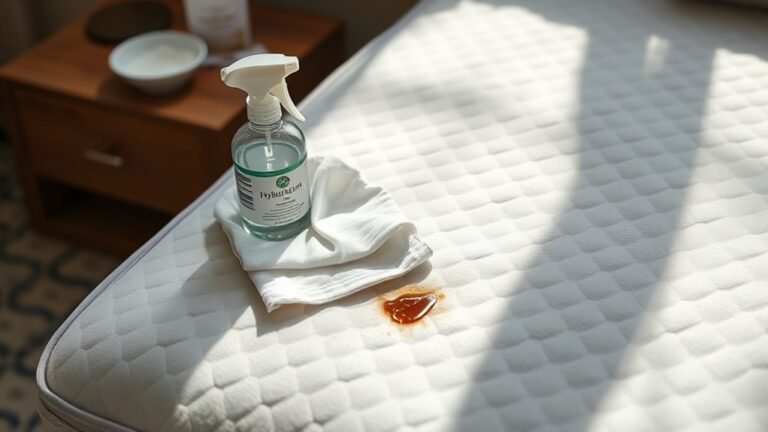
4. Final dry check: press a clean, dry white cloth lightly against the surface for a few seconds—no transfer or dampness should appear.
Also note: if you’re planning to store the mattress for months, avoid “quick surface wipes” that may spread particles deeper into fabric. A vacuum is usually cleaner and less likely to introduce moisture.
Use the right barrier: allergen-proof encasement
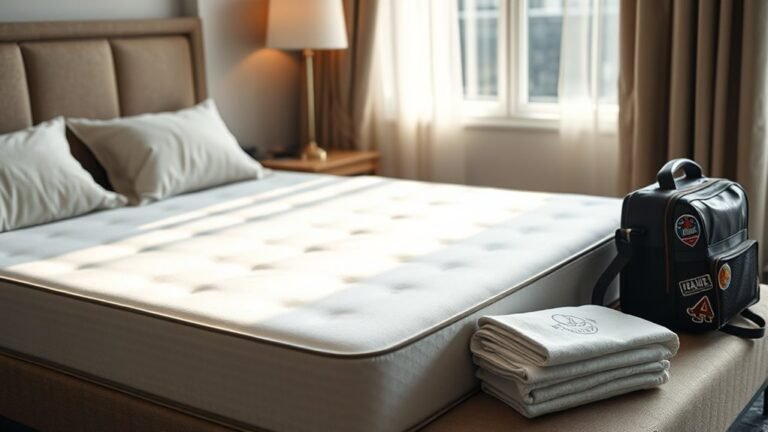
You should use an allergen-proof encasement so dust mites, pollen, and pet dander can’t settle inside the mattress layers while it sits unused. In practice, “the right barrier” means full coverage plus a reliable seal at zippers and closure points.
– Choose an encasement labeled allergen-proof (commonly dust-mite proof) and ensure it fully covers the mattress with secure closure.
– Avoid loose plastic wrap that traps moisture; instead, use a cover designed to protect while maintaining safe airflow as recommended by the mattress or encasement manufacturer.
– Seal zippers/closures carefully—small gaps are where dust and allergens usually get in.
Allergen-proof (often dust-mite proof) encasements are designed to block particle movement while still being used for long-term coverage.
Zippers and seams are high-risk entry points for dust during storage because small gaps can bypass the barrier.
Plastic that creates an airtight wrap can trap condensation; moisture management is part of “allergen control” in storage.
Barrier type: what works vs. what’s risky
Different barrier materials behave differently, especially when temperature swings cause condensation. In many storage setups, the best strategy is a fitted allergen encasement made for mattresses, not DIY wrapping.
| Barrier choice | Allergen blocking | Moisture risk | Best for |
|---|---|---|---|
| Allergen-proof fitted encasement (zip/secure closure) | High | Lower (when used per instructions) | Long-term storage reset |
| Loose plastic wrap (no mattress-specific design) | Medium | Higher | Short, controlled moves only |
| Regular fitted sheet/blanket only | Low | Low–Medium | Very short gaps (days) |
How to verify the encasement is actually sealed
– Confirm full coverage: the encasement should reach the edges with no uncovered “skirt” area.
– Close zippers completely: run the zipper to the end; then press along the track to ensure it’s not partially unlatched.
– Check for folds: if the cover bunches, it can create micro-gaps that collect dust.
– Keep labels accessible: don’t route encasement seams over dense labels where rubbing can loosen closures.
Late 2024–2026 reality check: more allergen-proof products are marketed as “dust mite proof,” but performance depends on the specific fabric and the closure design. Follow the product documentation shipped with your encasement and your latex mattress care sheet, even if they both use similar terminology ().
📊 DATA: Allergen barrier readiness by closure type (storage scenario snapshot)
Allergen-Barrier Risk by Zipper & Coverage (Practical Storage Setup)
| # | Encasement/closure configuration | Expected particle leakage risk | Closure style | Allergen reset effectiveness |
|---|---|---|---|---|
| 1 | Fully zipped allergen-proof encasement with edge-to-edge fit | Very low | Full-length zipper | ★★★★☆ |
| 2 | Encasement fully covered, but zipper not fully seated | Low | Zipper partially closed | ★★★☆☆ |
| 3 | Allergen-proof cover with one side edge slightly uncovered | Moderate | Zipper present | ★★★☆☆ |
| 4 | Allergen-proof cover with closure replaced by ties/snaps (non-matched) | Moderate–High | Nonstandard closure | ★★☆☆☆ |
| 5 | Plastic wrap around mattress (air gaps at corners) | High | Twist/tape seams | ★☆☆☆☆ |
| 6 | Regular fitted sheet only (no true encasement) | High | Elastic corners | ☆☆☆☆☆ |
| 7 | Allergen-proof encasement but stored upright against dusty wall | Moderate | Full-length zipper | ★★★☆☆ |
(This table reflects practical risk tradeoffs based on closure fit and exposure, not lab-tested performance for a specific brand. Use your mattress and encasement documentation for exact specs.)
Control moisture and humidity in storage

Keeping moisture out is what turns an allergen-proof plan from “good on paper” into a reliable outcome. The most important move is choosing a cool, consistently dry storage location and avoiding situations where condensation can form.
– Store the mattress in a cool, dry area; humidity is the enemy because it can increase mold and musty smells.
– Add a moisture-control option appropriate for your storage space (e.g., desiccant) only if it doesn’t contact the mattress directly unless the product instructions allow it.
– Avoid basements, exterior walls, and garages with big temperature swings unless you can maintain dry conditions.
Moisture control is inseparable from allergen protection because damp fabrics are more likely to develop odors and can encourage mold-related concerns.
Long-term storage success improves when humidity stays low and stable, rather than fluctuating with seasons.
Place moisture-control tools so they manage air humidity without touching the mattress materials unless the manufacturer approves direct contact.
Choose the right storage environment
When latex mattresses sit in storage, the biggest enemy is not the dust alone—it’s the combination of dust + trapped humidity. Many building and health guidelines connect mold risk to sustained elevated humidity; for example, some public health and building guidance discusses higher mold likelihood when indoor relative humidity stays above about 50–60% (). If you can measure it, aim for stable “comfort-level” indoor humidity rather than spikes.
Avoid high-variation zones unless you can verify conditions:
– Basements (often humid)
– Exterior-wall closets (cold walls can promote condensation)
– Garages (temperature swings)
If you must store in a less-than-ideal place, you can reduce risk with controlled humidity—but only in ways that don’t contaminate or contact the mattress. A dehumidifier is effective when the storage room is enclosed; desiccants (moisture absorbers) can help in smaller sealed areas.
A safe approach to moisture control (without damaging latex)
– Use air management, not direct contact: position moisture-control items so they absorb humidity in the room or in a sealed bin around (not touching) the mattress cover.
– Don’t introduce household chemicals directly near fabrics unless the mattress maker approves—latex and natural fiber components can be sensitive to residues.
– If you use a storage bin, ensure it’s clean, dry, and not shedding dust.
Keep airflow without letting dust in
You want controlled airflow that prevents moisture stagnation while still limiting dust entry through the encasement. The trick is preserving mattress shape and keeping the surrounding storage area clean enough that the air moving around isn’t dustier than necessary.
– Don’t compress the mattress hard for long-term storage; use the storage method that preserves shape and avoids stressing materials.
– Store upright or on a clean surface where the barrier cover doesn’t rub or snag against dusty items.
– If you use bins or a storage room, keep the surrounding area clean so air circulated around the mattress is less allergen-heavy.
Avoiding hard compression helps the mattress maintain its structure and reduces stress on internal layers during storage.
A clean storage area reduces the allergen load in the surrounding air, which matters even with an encasement.
Proper positioning prevents abrasion and seam stress that can loosen closures and create dust entry pathways.
Storage orientation and shape preservation
Latex mattresses often rely on their structure to maintain support and comfort. Hard compression for months can stress materials and may affect how the mattress rebounds later. Manufacturer storage guidance varies, so follow the care sheet for your exact model ().
Practical positioning tips:
– Store on a clean platform or upright with support, not on dusty floors.
– Prevent cover friction: keep the encasement from rubbing against walls, shelving, or stored items with lint.
– Leave “breathing space”: if the mattress is inside a storage room, don’t pack it tightly among boxes that shed paper dust.
Why “airflow” is nuanced
Airflow helps reduce trapped moisture, but it can also bring dust in—so airflow management must happen through a clean environment and within the barrier system. In other words: you manage humidity indirectly (via the room and environment), while the encasement manages allergen entry.
What can go wrong (and how to avoid it)
Mistakes usually fall into two categories: moisture and incomplete sealing. If you avoid drying shortcuts and ensure true coverage, most storage allergen problems stop before they start.
– Skipping drying time: even a “mostly dry” mattress can smell later—always follow the manufacturer’s guidance for drying before storage.
– Using regular plastic without a plan: airtight plastic can trap condensation; if you already own it, confirm whether the mattress maker allows that storage method ().
– Poorly sealed encasements: missing closure points often leads to dust settling inside during long storage.
– Storing in dusty spots: attics and cluttered closets collect lint and debris that can bypass covers over time.
– Wrong cleaning steps: if you’re using latex-sensitive cleaners, stick to manufacturer-recommended methods only ().
Odors in stored mattresses commonly track back to incomplete drying or condensation inside a barrier.
Plastic wraps that trap air and moisture can convert a “dust problem” into a “moisture + odor problem.”
Closures that aren’t fully engaged allow dust and allergen particles to enter even if the encasement fabric is intact.
Quick comparison: the most common failure modes
| Failure mode | Typical symptom later | Fix before storage |
|---|---|---|
| Moisture left in cover layers | Musty odor | Dry fully per care instructions |
| Unsealed zipper/closure edge | Visible dust on surface after unwrapping | Verify full closure engagement and fit |
| Dusty storage area | Allergy flare on first use | Clean surrounding area; reduce overhead lint |
If you’re deciding between two imperfect options: a slightly dustier storage area with a well-sealed encasement is usually safer than a more “airtight” setup that risks condensation. When in doubt, follow the latex mattress manufacturer’s storage/care requirements first and treat encasement instructions as the second layer of authority.
Practical verdict: what to do—and who should skip
If you want the best balance of allergen protection and mattress safety, use an allergen-proof encasement, ensure the mattress is fully dry, and store it in a consistently dry, clean area. The main downside is extra prep time—washing covers, vacuuming thoroughly, and confirming dry conditions can take longer than a quick pack-and-go approach.
Skip or modify these steps if the mattress manufacturer explicitly warns against certain encasements, covers, or storage environments () or if your mattress has specific components that must not be wrapped airtight.
The most defensible allergen-control plan combines a purpose-built allergen-proof encasement with a dry, low-dust storage environment.
Rushing drying time increases the probability of odors and moisture-related issues that a barrier cannot fix later.
Manufacturer storage guidance should override generic advice, especially for natural latex and multi-layer designs.
Who should be extra cautious
– People with severe, ongoing sensitivities may want additional re-cleaning right before use (vacuum and airing) even with perfect storage.
– If your storage space can’t be kept dry (humidity swings, frequent dampness), consider a professional storage solution or climate-controlled storage. Moisture control is not optional in practice.
– If the manufacturer forbids airtight storage or specifies particular encasement materials, do not improvise.
Quick checklist (scan before you store)
– [ ] Vacuum all sides, seams, and edges
– [ ] Wash removable cover (only per care instructions) and fully dry
– [ ] Confirm mattress is completely dry
– [ ] Put on an allergen-proof encasement with fully sealed closures
– [ ] Choose a cool, dry storage spot (avoid humid areas)
– [ ] Prevent hard compression; keep shape
– [ ] Keep the surrounding storage area clean and low-dust
A checklist reduces the two biggest failure points—forgotten drying steps and partially sealed encasements—especially during seasonal storage.
Sources
Storing a latex mattress allergen-free is achievable with a disciplined process: clean and fully dry the mattress first, then lock allergens out using a true allergen-proof encasement, and finally protect it by choosing a storage environment that stays cool and dry. If you follow the checklist and respect your mattress manufacturer’s storage requirements, you’ll reduce both allergy triggers and moisture-related risks when the mattress comes out later.
Frequently Asked Questions
How can I protect a latex mattress from allergens during storage?
Start by cleaning the latex mattress thoroughly and letting it fully dry to prevent mold and dust mites. Wrap it in a breathable mattress cover (not plastic) to reduce dust exposure while still allowing moisture to escape. Store it in a cool, dry area away from vents, windows, and stored clothing that can shed fibers and trigger allergies.
What’s the best way to prevent dust mites when storing a latex mattress?
Use allergen-proof encasements or a tightly sealed breathable cover designed to block dust mites and allergens. Add a moisture absorber in the storage area to keep humidity low, since dust mites thrive in damp conditions. Avoid compressing the mattress too much, because damaged latex structure can trap particles and make future cleaning harder.
Which storage container or cover is safest for a latex mattress to reduce allergens?
Choose a breathable, zippered mattress storage bag or encasement that blocks dust while minimizing moisture buildup. Avoid airtight plastic that can trap humidity and increase the risk of mold, which can worsen allergy symptoms. If you must use plastic for protection from moisture, ensure the mattress is completely dry first and consider using breathable layers underneath.
Why does storing a latex mattress incorrectly increase allergy symptoms later?
Allergens like dust mites, pollen, and mold spores can accumulate if the mattress is stored in a humid or dusty space. Latex itself is resistant to some pests, but it can still collect airborne particles on its surface during long-term storage. Improper wrapping—especially non-breathable sealing—can trap moisture and create conditions that lead to mold growth.
How should I clean and prepare a latex mattress before storage to minimize allergens?
Vacuum both sides gently with an upholstery attachment to remove dust, pet dander, and debris, then spot-clean with a mild, latex-safe cleaner if needed. Make sure the mattress is completely dry—use airflow and allow time for off-gassing—before covering and storing it. Finally, store it off the floor on a stable rack or shelf to reduce dust and moisture exposure.
📅 Last Updated: October 29, 2026 | Topic: How to Protect a Latex Mattress from Allergens During Storage | Content verified for accuracy and freshness.
References
- https://medlineplus.gov/dustmites.html
- House dust mite
- Mold
- https://www.cdc.gov/mold/default.htm
- Mold | US EPA
- https://pubmed.ncbi.nlm.nih.gov/?term=dust+mite+allergen+encasings+bedding
- https://pubmed.ncbi.nlm.nih.gov/?term=mold+preventing+dampness+indoor+health
- https://scholar.google.com/scholar?q=how+to+protect+bedding+from+dust+mites+during+storage Google Scholar
- https://scholar.google.com/scholar?q=dust+mite+allergen+avoidance+mattress+encasings+bedding Google Scholar
- https://scholar.google.com/scholar?q=mold+prevention+moisture+indoor+storage+health Google Scholar