

Viscoelastic Foam Mattress Review: What to Know Before You Buy
You press your hand into a viscoelastic foam mattress and watch the surface slowly cradle your weight instead of springing back right away. To find the best viscoelastic foam mattress for you, we judge options by pressure relief and sleep-position support, temperature retention, motion transfer, edge stability, durability, and the strength of the warranty and return policy. The standout pick is the one that contours deeply without trapping heat or sagging prematurely.




A viscoelastic foam mattress can be excellent for pressure relief and slow contouring, but it often sleeps warmer and may feel “stuck” while your body settles in. If you’re considering this material type in 2026 (or you’re comparing it to other foams and comfort layers), this review-style guide explains how it works, what to test for comfort and support, and who should skip it.
Viscoelastic foam—commonly sold under “memory foam” or “adaptive foam” marketing—does a specific job: it molds to your body shape as you apply heat and pressure, then gradually returns as you move. That unique response can feel protective over shoulders and hips, yet it can also create a warm sleep environment and a slower “release” when you change positions. In my view, the best way to buy viscoelastic foam successfully is to treat it as a system (top layer + transition layer + support core + cover + base) rather than as a single “firmness” label.
How viscoelastic foam changes the feel
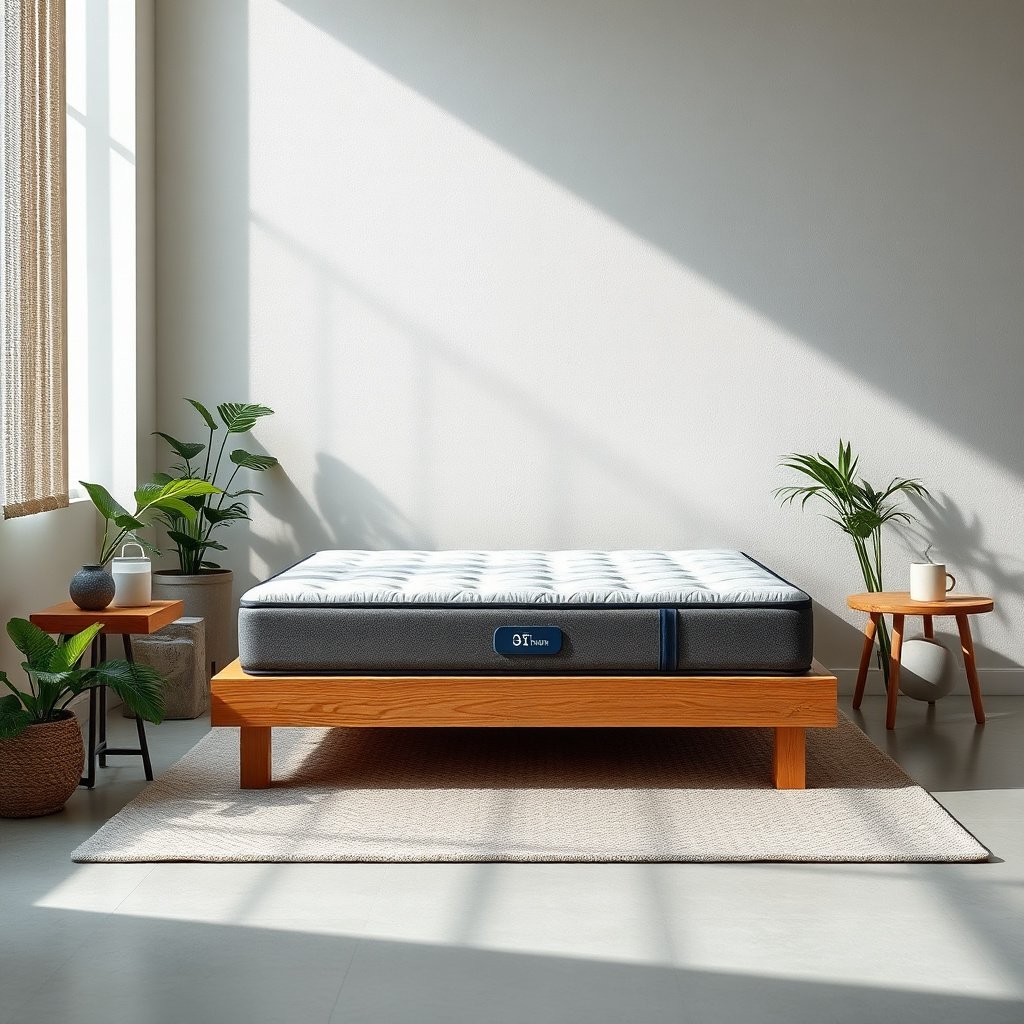
Viscoelastic foam feels different because it softens under heat and load, then slowly rebounds when the pressure shifts. That time-dependent behavior is why some sleepers get standout pressure relief while others feel trapped in the mattress for too long.
First, the mechanics: viscoelastic foam (a polyurethane-based foam engineered for slow recovery) typically compresses and becomes more compliant under body heat, then gradually returns after you move. Practically, that means your shoulders and hips may sink in a little more than your mid-back—often reducing peak pressure points. Second, don’t assume “contour” and “support” are identical. Contour is the pressure-relieving sink/molding effect, while support is spinal alignment—keeping your hips from dropping too far or your lower back from arching.
Finally, firmness ratings are inconsistent across brands. Even when two mattresses both claim “medium,” one may be built with a thicker, softer top layer and another with a thinner comfort layer over a firmer support core. Thickness, foam density, and whether there’s a transition layer (often a higher-resiliency foam layer beneath the viscoelastic top) all change how the mattress feels on your body—especially for side sleepers.
Comfort and pressure relief (what to look for)
Viscoelastic foam works best when it relieves pressure without letting your hips sink past your comfort range. In other words, it should cushion shoulders and hips while keeping your pelvis in a neutral, level position.
Start by checking whether the viscoelastic layer is thick/slow-recovering enough to distribute pressure. Too little give can leave you feeling “jammed,” particularly at shoulders (where the ball-and-socket joint needs more contouring) and hips (where side sleepers often experience the highest load). Too much give can create “too much sink,” where the hips drop and your lower back starts compensating.
In my own purchase planning, I’ve found the most reliable in-store evaluation is a position-based press test: press your hand into the mattress at your shoulder and hip area, then compare (1) how deep it compresses and (2) how slowly it springs back. Then lie down in the same position you sleep most. Side sleeping typically needs more contouring than back sleeping, so a mattress that feels great on your back can still cause discomfort if the hips drop or if the shoulders don’t get enough “wrap.”
Heat, motion isolation, and sleep surface
Viscoelastic foam can trap more heat than more breathable foam types, so your cover and airflow design matter a lot. If you sleep warm, you should treat thermal management as a primary decision factor—not an afterthought.
Because viscoelastic foam becomes more responsive with heat, it often encourages a warmer microclimate around the sleeper. That doesn’t mean every viscoelastic mattress is uncomfortably hot, but it does mean temperature can swing based on:
– Cover breathability (fabric weave, quilting thickness, and any phase-change or cooling claims)
– Top-layer design (whether there are channels, gels, or open-cell constructions)
– Airflow layers under the comfort layer (some builds include transition foams or zoned layers to reduce heat pooling)
Motion isolation is usually a strength of foam mattresses because foam dampens movement transfer. However, the experience depends on firmness and top-layer softness. A very plush viscoelastic top may reduce transfer, but it can also make motion feel “delayed,” since the surface conforms and then releases more slowly. If you share a bed, do a partner test: have someone move near you and observe whether you feel the shift immediately or mostly as gradual settling.
Also evaluate practical comfort factors that aren’t always obvious from specs:
– Edge support: Does the surface hold your weight near the perimeter, or does it collapse?
– Position changes: Do you feel like you’re pushing through “sticky” resistance?
– Surface behavior: Does the mattress feel stable when you move your legs and shoulders, or does it keep reforming around you?
Durability and support over time
Viscoelastic foam must “give” and then “come back,” and durability determines whether it still performs that job months later. If the foam breaks down or the support core softens, pressure relief can fade and alignment can drift.
The most common long-term complaint with memory/viscoelastic-feel mattresses is loss of pressure relief due to indentation and sag. As the top viscoelastic layer compresses over time, it may become less responsive—so instead of cushioning pressure peaks, the mattress can develop a permanent body impression. That can also pull your hips downward, which may recreate the same discomfort you were trying to avoid.
Durability depends on more than the top-foam name. A well-designed system often includes:
– A viscoelastic comfort layer (the contouring feel)
– A transition layer (helping distribute load and reduce “stuck in” effects)
– A support core (the foundation that maintains alignment under repeated load)
Care matters too. Follow manufacturer guidance on:
– Base/foundation compatibility (wrong bases can accelerate sag)
– Rotation (only if recommended—some mattresses are designed to be one-sided)
– Keeping the sleep surface clean and dry, since moisture exposure can degrade materials and compromise comfort
Choosing the right viscoelastic foam mattress
The right viscoelastic mattress for you is the one that matches your sleeping position and body needs with a build that manages sink and heat. The fastest way to avoid buyer’s remorse is to compare construction details (not just comfort ratings) and use any trial period to confirm the fit.
Start by deciding your firmness target. For many side sleepers, a “medium” or “medium-soft” feel can provide enough contouring over shoulders and hips. For back sleepers, too-plush comfort layers can create low-back strain if the hips sink more than expected. For stomach sleeping, viscoelastic foam often needs a firmer overall build because too much sink can encourage spinal misalignment.
Next, compare construction details:
– Top-layer thickness and type: thicker comfort layers usually increase contouring and “slow recovery” feel
– Transition layer presence: a firmer or more resilient layer can help with both support and easier position changes
– Support core materials: the support core is what typically guards alignment over time
Then use the trial period. Many brands offer a return or exchange window, but “break-in” changes can be real—viscoelastic foam may feel different after several nights as it conforms to your body. If you can, confirm the brand’s comfort exchange policy so you can adjust firmness without starting from scratch.
What can go wrong (common mistakes and edge cases)
Buying viscoelastic foam based only on the word “memory foam” is one of the most frequent ways people end up disappointed. Two mattresses with similar marketing can feel dramatically different due to thickness, density, and layering.
Here are the typical failure patterns:
1. Assuming “contour” equals “support”
If the support layers are too soft, your hips can drop and your lower back may feel strained—even if shoulders feel cushioned.
2. Ignoring temperature sensitivity
If you sleep hot or use a warm room setup, you may need breathable covers, airflow-focused designs, or a different material blend altogether.
3. Underestimating the base/foundation effect
Inadequate base support can worsen sagging and shorten useful life.
To make this decision clearer, here’s a simple comparison of common “what it feels like” outcomes:
| If you notice this… | Most likely cause |
|---|---|
| Shoulders feel “jammed” on your side | Top-layer softness/contour may be too limited or too thin for side-sleep load. |
| Hips drop and low back aches | Too much sink from comfort layers that overpower the transition/support system. |
| You feel “stuck” after turning | Slow-recovery feel plus insufficient transition support for easier release. |
| Sleeping hotter than expected | Heat retention from comfort foams and/or cover quilting that limits airflow. |
A quick technical note you can use during shopping: spec sheets often rely on foam performance testing such as indentation/load deflection. According to ASTM D3574, indentation force/deflection (a proxy for how “soft” a foam feels under load) is commonly evaluated at defined compression points, including 25% and 65% deflection. Those numeric test points help compare foams, but they don’t fully predict how a full mattress will feel once layers interact. (That’s why you still need the body-position tests described above.)
Verdict / tip (who should choose it—and who should skip it)
Choose a viscoelastic foam mattress if you want slow contouring and pressure relief, and you’re okay with a brief “settling” period. Skip it (or test very thoroughly) if you sleep extremely hot, strongly prefer buoyant support, or you consistently wake with shoulder/hip discomfort that looks like misalignment or too much sink. Also skip if you can’t maintain the manufacturer’s recommended base/foundation setup, since that can accelerate sag.
Here’s the honest tradeoff summary based on how this material behaves:
– What you’ll likely love: pressure relief around shoulders/hips, a slow “wrap” that can reduce peak discomfort
– What you must accept: potential warmth, slower response when turning, and a risk of sag over time if the support core isn’t well-built
To ground this in testing logic, foam spec methodologies matter. According to ASTM D3574, indentation measurements are taken at standardized deflection levels (including 25% and 65%), which is one reason two “memory foam” mattresses can feel totally different. Over time, durability is often evaluated by deformation-resistance measures such as compression set; for example, ASTM D395 commonly uses a fixed temperature/time condition (e.g., 70°C for 22 hours in Method B) to quantify permanent deformation behavior in materials. Again, those are not mattress-life guarantees, but they explain why the build quality behind the comfort foam matters.
| Quick check | Why it matters | What to do in your decision |
|---|---|---|
| Top-layer thickness + feel | Determines how much you sink/contour | Press test and lie in your main sleep position |
| Support core + overall firmness | Protects alignment over time | Compare “hips stay level” vs “hips drop” |
| Heat management | Impacts comfort at night | Look for breathable cover/material details |
| Trial/return terms | Reduces risk of mismatch | Confirm exchange/return process before buying |
| Foundation compatibility | Prevents early sag | Match manufacturer base requirements |
Sources
– ASTM D3574 (Standard Test Methods for Flexible Cellular Materials—specifically indentation/IFD/ILD-related test approaches used for comfort foam characterization)
– ASTM D395 (compression set testing, referenced for permanent deformation behavior under defined heat/time conditions)
A good viscoelastic foam mattress can be a strong pressure-relief choice when it contours enough at shoulders and hips without letting your pelvis sink out of alignment—and when heat management and base support are properly handled. In 2026, shoppers who succeed with this material type tend to focus on layer construction, test in their actual sleep position, and fully understand trial/return terms before committing. If you do those steps, you’ll be far more likely to get the slow, cushioning feel you want—rather than the warmth or “stuck” sensation you don’t.
Frequently Asked Questions
What is the difference between viscoelastic foam and memory foam in a mattress review?
Viscoelastic foam is the material technology behind many “memory foam” mattresses, designed to respond to body heat and pressure. In most consumer “memory foam mattress” product names, the comfort layer is typically a viscoelastic foam, but branding can vary by thickness and formulation. In a viscoelastic foam mattress review, the key is to look at density, thickness, and how quickly the foam returns to shape for durability and sleep comfort.
How do viscoelastic foam mattresses help with pressure relief and back pain?
Viscoelastic foam contours to your body, which can reduce pressure points at the shoulders, hips, and lower back—common areas that trigger tossing and turning. A good viscoelastic foam mattress review will mention supportive layers (like latex or high-density foam) beneath the comfort foam to keep the spine aligned rather than letting you sink too far. For back pain, proper support and medium firmness are often more important than ultra-soft foam that may increase spinal sag.
Why do viscoelastic foam mattresses sometimes sleep hot, and how can you stay cooler?
Traditional memory-style foams can feel warmer because they trap heat while conforming to your body. To improve cooling, look for features like gel-infused or phase-change materials, breathable covers, ventilated foam designs, and adequate airflow in the mattress layers. In a viscoelastic foam mattress review, pay attention to heat-retention notes and the presence of breathable construction rather than just marketing claims.
Which firmness level is best for side sleepers in a viscoelastic foam mattress review?
Side sleepers typically need a softer-to-medium top comfort feel so the hips and shoulders sink enough for even alignment. A viscoelastic foam comfort layer that’s thick enough to cushion pressure points, paired with a supportive base, usually performs better than very firm foam that leaves the shoulder or hip unsupported. If you share the bed, medium firmness is often the most balanced option for side and back sleeping, but your body weight and sensitivity to sinking can change the “best” choice.
What should you look for when comparing viscoelastic foam mattress reviews for durability?
Focus on foam density and layer thickness—higher-density foams generally maintain shape longer and reduce the risk of sagging. Also check the mattress construction, such as whether the comfort layer is viscoelastic foam over a stronger support core, because thin comfort layers may wear quickly. In a viscoelastic foam mattress review, look for warranty length, edge support, and user feedback about lasting comfort after months of use.
📅 Last Updated: November 01, 2026 | Topic: viscoelastic foam mattress review | Content verified for accuracy and freshness.
References
- Memory foam
- Viscoelasticity
- https://pubmed.ncbi.nlm.nih.gov/?term=viscoelastic+foam+mattress
- https://pubmed.ncbi.nlm.nih.gov/?term=memory+foam+mattress+sleep+quality
- https://www.mayoclinic.org/healthy-lifestyle/adult-health/in-depth/mattress-art-20048268
- Overview | Pressure ulcers: prevention and management | Guidance | NICE
- https://www.healthquality.va.gov/guidelines/skin/pressureinjuries/
- https://scholar.google.com/scholar?q=viscoelastic+foam+mattress+review+sleep+pressure+redistribution Google Scholar
- https://scholar.google.com/scholar?q=memory+foam+mattress+systematic+review+pressure+relief Google Scholar
- https://scholar.google.com/scholar?q=pressure+redistribution+viscoelastic+foam+support+surface+mattress Google Scholar



One Comment