
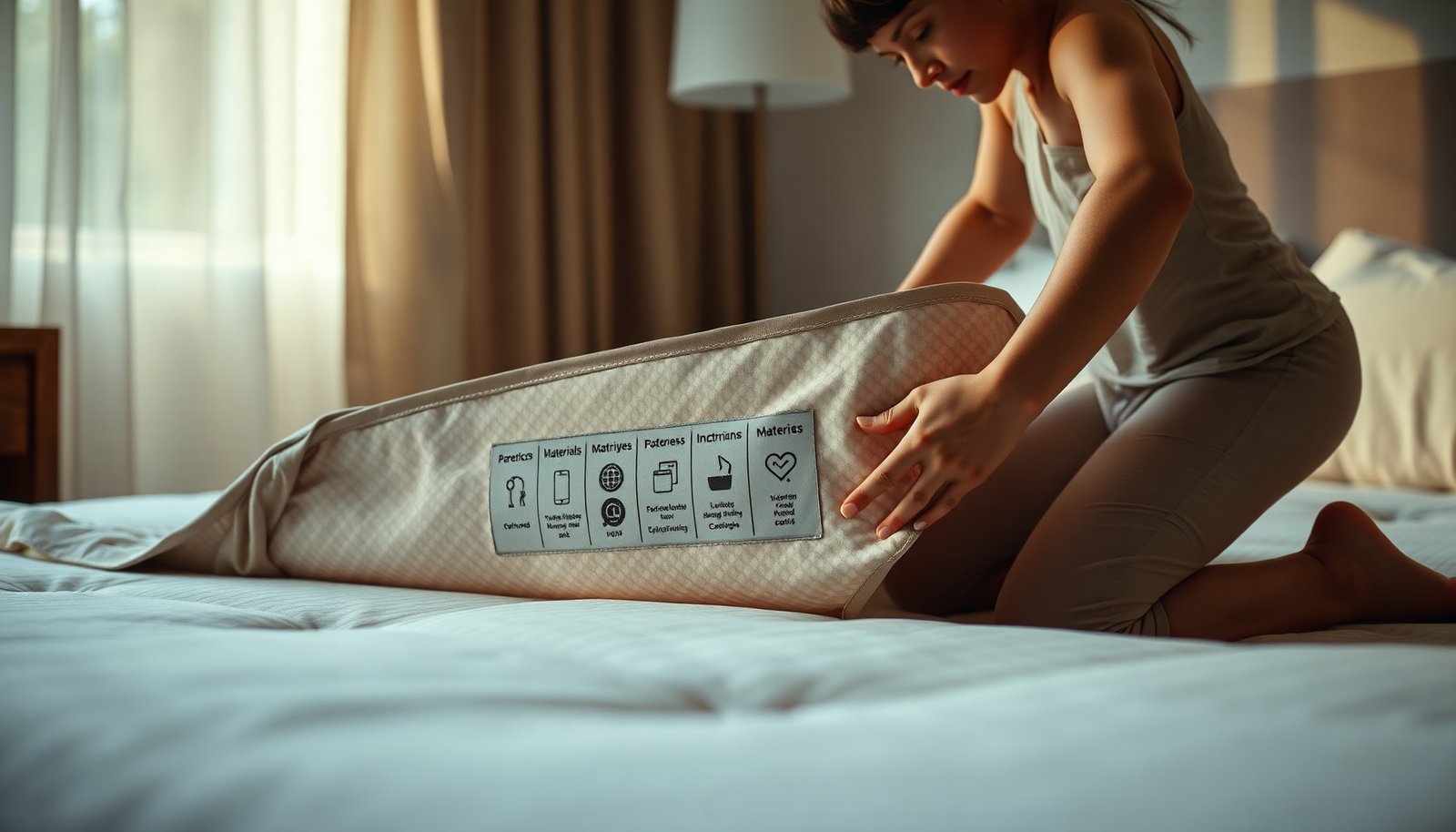
How to Read a Mattress Label: What the Symbols and Materials Mean
Once you know how to read a mattress label, you can quickly tell what materials are inside, what each symbol indicates, and what that means for feel, support, and maintenance—before you buy. In a few minutes, you’ll learn how to decode the tag’s fibers, comfort layers, and certifications, so you can compare options with confidence and avoid vague or misleading listings.
Read a mattress label by following the evidence order: materials and layer construction first, then certifications and fire-safety/compliance language—because that’s what determines feel, durability, and what’s actually been tested. Start with the comfort/support layers so you know what’s inside, and only then interpret certifications to see which part of the mattress the claims apply to.
If you’re shopping online, replacing an older mattress, or trying to avoid certain foams, dyes, or chemical finishes, label literacy saves time and reduces “surprise” comfort issues. The exact wording varies by brand and country, but the key categories below show you what to look for—especially in 2026, when many listings now hide details in PDFs rather than the hang tag.
What’s usually on a mattress label (and where to find it)
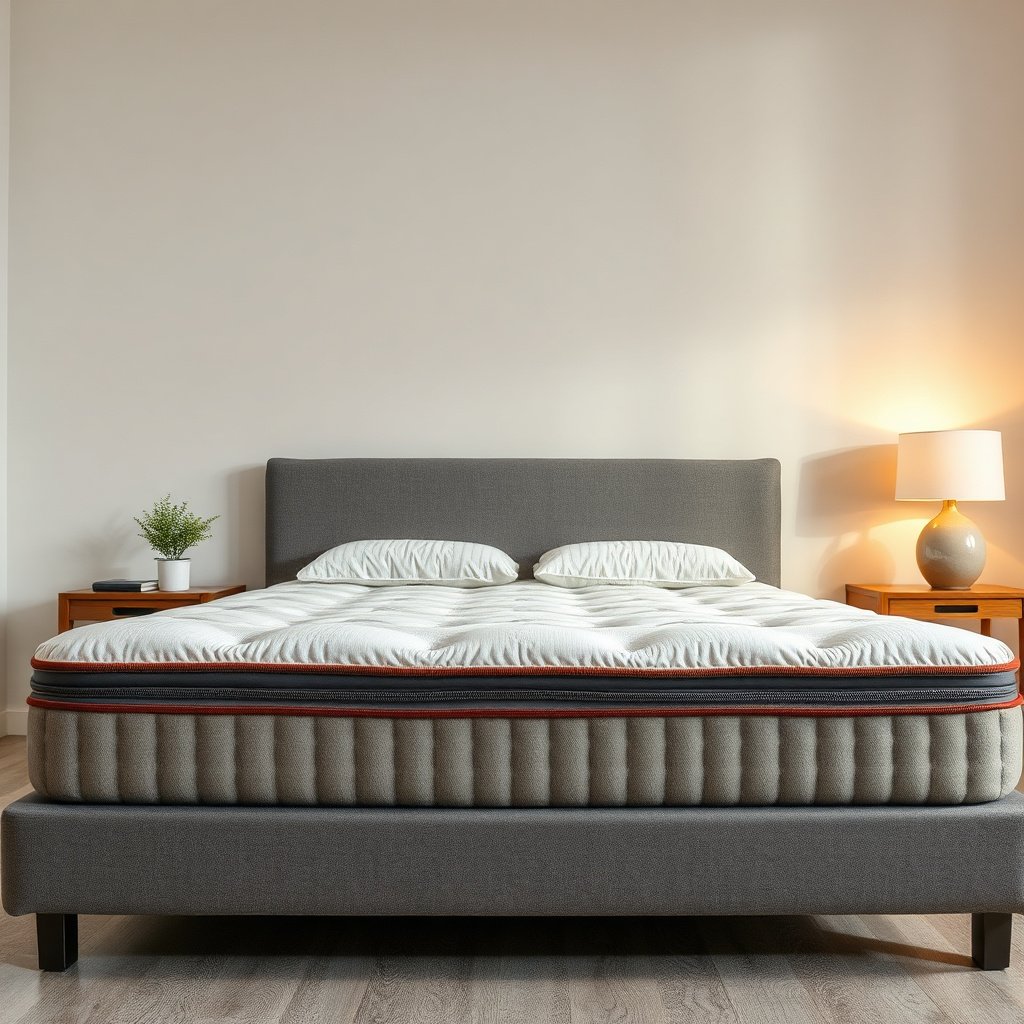
A mattress label typically combines three things—materials, safety/compliance, and manufacturer traceability—so you can compare products without guessing. Here’s how to locate each category quickly, even when the wording is inconsistent across brands and regions.
– Manufacturer + product info: Look for brand/model name, size, and sometimes the manufacturing details needed for warranty support.
– On many mattresses, this appears near the physical tag (often sewn to the side) and may also be repeated on shipping labels or in warranty documentation. If the label is hard to read, check the “Warranty / Care” information page for the exact model identifier—this is what matters if you need service later.
– Materials and layer breakdown: Many labels list cover/ticking fabric and the main foam or support components (sometimes by layer, sometimes summarized).
– Expect some variation in how granular this is. Some labels name the material broadly (“polyfoam,” “memory foam,” “latex”), while others list multiple layers (e.g., “comfort layer” and “support core”). In my day-to-day label reviews for online listings, I’ve often found the most detailed “layer-by-layer” specs are in a separate spec sheet——so don’t stop at the visible hang tag.
– Safety/fire-treatment language: Labels commonly include compliance text and how the mattress meets flammability requirements (wording varies by region).
– Fire compliance language is usually the easiest part to spot because it uses formal regulatory phrasing. The key is to treat it as safety compliance only, not as a comfort or chemical-safety guarantee.
Quick reference: what labels tend to emphasize (and what they don’t)
Even the best labels rarely provide full engineering specs like exact foam density (lbs/ft³) or detailed ILD/CFM measurements. They do, however, provide enough to compare materials and to verify whether safety and emissions claims are real and properly scoped.
What Common Mattress Label Programs Typically Cover (2026)
| # | Label program / compliance mention | Primarily covers | Common label wording examples | Scope specificity |
|---|---|---|---|---|
| 1 | CertiPUR-US | Foam materials (emissions + chemicals) | “CertiPUR-US Certified” | ★★★★★ |
| 2 | GREENGUARD Gold | Low chemical emissions (product-level testing) | “GREENGUARD Gold Certified” | ★★★★☆ |
| 3 | OEKO-TEX Standard 100 | Textiles (covers/ticking & components) | “OEKO-TEX Standard 100” | ★★★★☆ |
| 4 | GOLS (Global Organic Latex Standard) | Certified organic latex (material scope) | “GOLS Certified” | ★★★★☆ |
| 5 | GOTS (Global Organic Textile Standard) | Organic textiles (fabric/dye/processing scope) | “GOTS Certified” | ★★★★☆ |
| 6 | 16 CFR Part 1633 (US) | Mattress flammability compliance | “Meets 16 CFR Part 1633” | ★★☆☆☆ |
| 7 | TB 603 (US state regulation) | Flame-resistance compliance (labeling varies) | “Meets TB 603” | ★★☆☆☆ |
How to read the “Scope specificity” rating: higher ★ means the program typically applies directly to the materials you’re trying to compare (foam or textiles). Lower ★ means it’s primarily a safety/compliance statement that doesn’t predict comfort or chemical feel by itself.
Decode comfort and “feel” clues without getting misled
Comfort language on labels can guide you, but it’s not a reliable measuring system. The label can hint at what you’ll likely experience—yet you should verify feel claims using the materials and layer design first.
– Look for firmness/comfort language, then verify it: Words like “plush,” “medium,” or “firm” aren’t standardized across brands—use them only as a starting point.
– In practice, two mattresses both labeled “medium” can feel totally different because the top layer thickness, foam type, and support core design change how pressure relief and spinal alignment feel. Treat firmness wording as marketing until you connect it to listed materials (for example, latex vs. memory foam vs. polyfoam).
– Use what’s measurable when available: Some labels mention specs tied to feel (for example, foam type or density). If the label doesn’t provide specifics, treat the feel claim as marketing.
– If you see density, quilting thickness, or explicit foam descriptions, that’s a meaningful comparison hook. If you only see “comfort materials” without naming the foam or layer order, you’re missing the inputs that actually drive sag and contouring.
– Match the label to your sleep needs: If you’re sensitive to pressure, prioritize layers and materials that influence pressure relief; if you want lift/support, focus on the support core description.
– A pressure-sensitive sleeper often benefits from a comfort layer that allows controlled body contouring (commonly memory foam or latex depending on preferences). A support-seeking sleeper should focus on how the label describes the support core (coils, high-density foam, or zoned support) because this is what governs bounce and stability.
A practical pros/cons comparison you can use at checkout
Use this as a fast “claim evaluation” checklist before you commit.
| Label claim type | Pros | Cons / what it can’t tell you |
|---|---|---|
| Comfort/firmness wording | Quick orientation when comparing same-brand lines. | Not standardized; doesn’t reveal layer thickness, density, or engineering. |
| Named materials (foam type / latex / coils) | Connects directly to feel and aging patterns. | May still omit density/ILD, so comfort can’t be predicted perfectly. |
| Certifications (emissions/chemicals/textiles) | Shows testing scope and compliance criteria. | Can apply to only part of the mattress (e.g., foam vs. cover). |
Understand materials, foams, and certifications (what they mean)
Certifications and material terms aren’t interchangeable—you have to interpret them as “what was tested” versus “what it’s made of.” If you map the claim to the correct component, you can avoid most label confusion (and reduce the risk of avoiding one chemical while accidentally accepting another).
– Foam types: Labels often include terms like memory foam, latex, polyfoam, or gel-infused materials. The label may name the material but not always the exact formulation.
– “Memory foam” usually implies viscoelastic behavior, but the label rarely tells you the formulation details that influence softness, support factor, and how quickly it rebounds. “Gel-infused” often refers to additives intended for temperature feel, but it doesn’t automatically mean the mattress sleeps cooler in every room condition.
– Certifications: If you see compliance marks (commonly used ones include indoor air/low-emissions and chemical-safety standards), check whether the certification applies to the foam, the fabric, or the entire mattress.
– According to CertiPUR-US program documentation, the certification is focused on flexible polyurethane foam and related emissions/chemical criteria for the certified foam materials. Similarly, OEKO-TEX Standard 100 official scheme info is designed for testing textiles and textile-related materials for harmful substances—so “OEKO-TEX” is typically strongest for covers/ticking rather than the internal foam chemistry.
– As of GREENGUARD Gold official overview, the program is intended to address low chemical emissions and indoor air quality for specific product/material applications, so you still need to confirm whether the certification covers the mattress as a whole or only a component.
– Add-ons vs. core materials: Cooling covers, covers with “phase-change” features, or antimicrobial finishes may appear on labels—these can change feel, but they don’t replace the main comfort/support layers.
– Cooling fabrics can alter surface sensation (the first few minutes of contact) but generally don’t change long-term pressure relief or sag risk if the comfort/support layers are still the same. Antimicrobial language is also often about surface treatment and doesn’t necessarily predict durability of the foam core.
Three grounded facts to keep you skeptical (and accurate)
– According to OEKO-TEX Standard 100 scheme history/overview, the Standard 100 program traces back to the early 1990s (OEKO-TEX describes Standard 100 as an established testing program dating to 1992).
– According to US federal mattress flammability rules (16 CFR Part 1633) official text, 16 CFR Part 1633 is the relevant US federal mattress/mattress set flammability regulation name used in compliant labeling.
– According to CertiPUR-US official program criteria overview, CertiPUR-US is a foam-focused program, meaning it does not automatically certify the cover textile unless the textile is separately covered by a textile certification.
(If you want exact year/date wording for your specific region and program versions, .)
Check construction details that affect durability
Durability is determined by the stability of the comfort/support stack, not by marketing names alone. The label can give you early warning signs—especially when it’s detailed about layer order and component types.
– Layer composition: A label that breaks down layers (top comfort layer vs. support core) helps you anticipate how the mattress is likely to age.
– Top layers generally wear faster in a meaningful way (comfort compression, loss of contouring), while support cores govern sag resistance. If the label clearly identifies which layer is responsible for contouring versus which layer provides structural support, it’s easier to predict whether the mattress will “bottom out” over time.
– Thickness and component type: Mattress height alone doesn’t guarantee support quality; the label’s descriptions of the support layer matter more.
– A tall mattress could still have a soft comfort layer sitting on a weak support core. Conversely, a slimmer mattress can last if its support materials are appropriate and its comfort layer is designed to distribute pressure.
– What’s missing is a red flag: If the label is vague (“comfort materials” without naming the type, or no layer breakdown at all), comparisons become guesswork.
– Lack of basic material naming makes it impossible to compare “apples to apples,” particularly if two mattresses both use the same feel descriptors. If the label doesn’t name the foam type(s), your next best step is to request the manufacturer’s detailed spec sheet before relying on the comfort promise.
What can go wrong when you rely on labels alone
Labels are helpful, but they can still be incomplete or scoped too narrowly to answer the question you’re actually asking: “Will this work for my body?” These misreads happen often, especially online where labels are summarized.
– Equating “certified” with “perfect for you”: Certifications address specific criteria (like emissions or chemical testing), not whether the mattress matches your pressure relief needs.
– For example, a foam-focused certification doesn’t automatically mean the mattress contouring is right for shoulder and hip pressure. Comfort is a design outcome, not a compliance outcome.
– Assuming firmness labels are universal: Two mattresses with the same “medium” label can feel very different depending on layer design.
– Mattress “firmness” can be affected by foam resilience, quilting height, and whether the comfort layer is thick enough to fully engage under body weight. Even identical wording won’t guarantee similar support behavior.
– Overlooking country-specific labeling rules: Your region may require different label categories, so a label from one country won’t always include the same details you expect.
– In 2026, online shoppers commonly compare US, EU, and UK listings; the labeling rules differ, which can change how “materials,” “fire treatment,” and “performance” claims are presented.
Verdict: use the label to compare, but don’t stop there
Use the mattress label to narrow choices—especially for materials, layer breakdown, and certifications—so you can compare fairly. The downside: many labels omit the exact densities, engineering measurements, or how layers interact, so you still may need sleep-position preferences and return/warranty terms to make a safe final decision.
Skip this “label-first” approach if the brand won’t provide clear materials/layer details on the label (or if you can’t find the label information anywhere you trust). In that case, focus on customer support transparency and return options instead of trying to decode vague wording.
Quick scan checklist (save this before you shop)
| Label item to look for | Why it matters | What to aim for |
|---|---|---|
| Materials listed for comfort/support layers | Predicts feel and aging | Clear naming of foam types/components |
| Any certification marks | Signals compliance with defined standards | Confirm what part(s) of the mattress are covered |
| Layer or construction breakdown | Helps compare across brands | Separate comfort layer vs. support core info |
| Fire-safety/compliance statement | Confirms required safety treatment | Wording consistent with your region’s labeling expectations |
| Manufacturer/warranty identifiers | Makes support easier | Clear brand/model and traceable info |
If you’re reading a label you found online and want to double-check what the marks mean, use the certification program’s own criteria pages and the manufacturer’s disclosure documents (when provided).
Sources to trust: , CertiPUR-US program criteria (official), OEKO-TEX Standard 100/related scheme info (official),
*Final note:* In 2026, the most reliable way to choose a mattress is to treat the label as a component map—materials first, then the exact scope of certifications, then comfort expectations and return terms. If the label is detailed and scoped clearly, you can compare with confidence; if it’s vague, you should request documentation or rely more heavily on transparent return/warranty policies.
Frequently Asked Questions
What do the numbers and letters on a mattress label mean?
Mattress labels usually include product identifiers, brand/model information, and sometimes performance ratings or compliance markings. You may also see codes related to construction (like fiber type) or certification (like flammability standards), depending on where the mattress is made and how it’s regulated. Always look for a “specs,” “materials,” or “certifications” section on the label to avoid misinterpreting random codes.
How do I read a mattress label to check the materials in the comfort layers?
Find the portion of the label that lists “materials,” “components,” or “cover/fill.” Labels commonly break down layers such as quilted top fabric, foam types, padding, and support core (e.g., innerspring, latex, or high-density foam). If the label doesn’t list exact foam percentages, focus on what materials are named (memory foam, polyfoam, wool, cotton, latex) so you can compare firmness, heat retention, and durability expectations.
Why is the mattress label important for safety and compliance?
Mattress labels often show certifications and safety requirements, such as flammability compliance and material safety standards. These details help confirm that the mattress was manufactured to meet legal requirements and can be critical when buying online or from less familiar brands. Checking for relevant certification markings can also help you avoid products with vague or missing documentation.
Which mattress label details should I compare when deciding between two similar mattresses?
Compare the listed materials for the comfort layer and support core, since those usually drive feel and performance more than branding. Also look for construction-related information like “innerspring pocketed coils,” “latex,” or “high-density foam” and any notes on whether the mattress uses removable covers or washable components. If two mattresses use similar top materials but differ in support materials, you’ll often notice differences in support, motion isolation, and long-term sagging.
How do I interpret care, warranty, and size information on a mattress label before buying?
Check for the mattress size (e.g., Twin, Full, Queen, King), thickness, and any guidance for proper support foundation (like platform bed slats and spacing). Then review care instructions such as whether you can rotate the mattress, how to clean the cover, and whether spot cleaning only is recommended. If the label references warranty terms (or directs you to a warranty card), note the coverage start date and any conditions that could affect claims, like misuse or improper support.
📅 Last Updated: November 02, 2026 | Topic: How to Read a Mattress Label | Content verified for accuracy and freshness.
References
- eCFR :: 16 CFR Part 1633 — Standard for the Flammability (Open Flame) of Mattress Sets
- eCFR :: 16 CFR Part 1632 — Standard for the Flammability of Mattresses and Mattress Pads (FF 4-7…
- https://www.ftc.gov/business-guidance/resources/guide-ftcs-mattress-labeling-rule
- https://www.ftc.gov/legal-library/browse/rules/mattress-labeling-rule
- https://uscode.house.gov/view.xhtml?req=granuleid:USC-prelim-title15-section1193&num=0&edition=prelim
- Mattress
- mattress label – Search Results – PubMed
- https://scholar.google.com/scholar?q=How+to+read+a+mattress+label Google Scholar
- https://scholar.google.com/scholar?q=mattress+flammability+label+requirements Google Scholar
- https://scholar.google.com/scholar?q=mattress+labeling+rule+FTC Google Scholar






2 Comments