How to Find the Best Mattress for Stomach Sleepers on a Budget
Budget mattresses often fail stomach sleepers because shoppers confuse plush feel with proper spinal support. We narrowed options by looking for a firmness level that keeps hips from sinking, supportive materials that reduce pressure without letting the midsection collapse, and practical value signals like warranties, trial periods, and cooling. By prioritizing those factors, you can spot the standout type—typically a medium-firm mattress with targeted support—that delivers comfort while staying within budget.




For stomach sleepers on a budget, the best path is a medium-firm mattress that keeps your hips from sinking while still staying comfortable enough to sleep through the night. Focus on a supportive core (often coils or firmer foam) and a comfort layer that’s not overly thick, then confirm alignment during a home trial—especially as of 2026, when many budget mattresses are “hybrid + medium-firm” by default.
If you sleep primarily on your stomach (most nights or when you can’t seem to stay on your side/back) and you’re trying to keep costs down, this is for you. It’s especially useful if you’ve tried softer beds before and felt your lower back getting stiff.
Start with the right firmness (budget-friendly sweet spot)
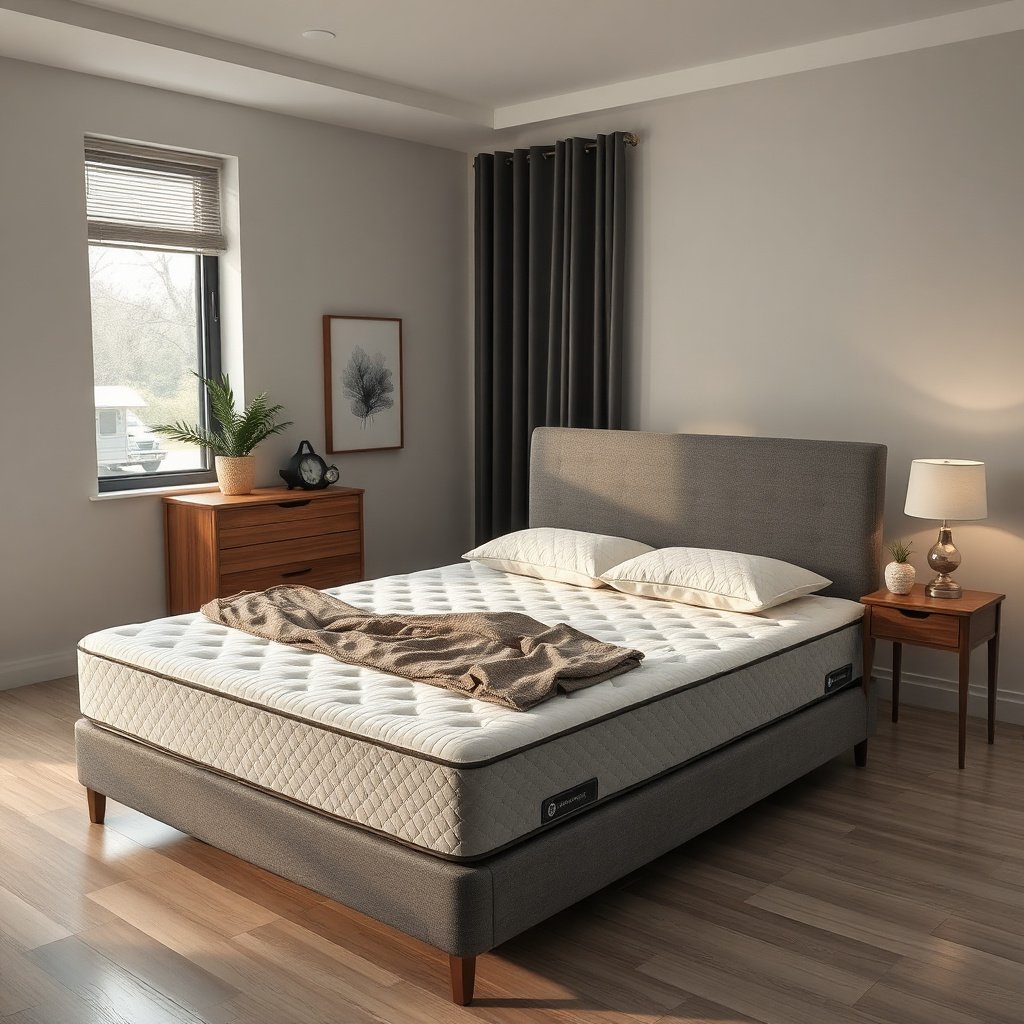
For stomach sleepers, firmness is the fastest knob to turn, and medium-firm is the budget-friendly sweet spot. The goal is simple: keep your hips from dropping, because hip sink usually increases lumbar flexion and can lead to lower-back stiffness.
Here’s how to shop for stomach sleepers without getting misled:
– Choose medium-firm rather than “plush” or very soft, since softness lets the hips drop.
– If a mattress’s firmness range is unclear, prioritize support over “pressure relief” messaging. Pressure relief language is often aimed at side-sleepers and shoulder comfort.
– Plan for stomach sleepers to often need more stability through the middle than side sleepers do. Even if a mattress feels “okay” at first, a comfort layer that’s too yielding can let the torso contour too deeply.
– If you tend to vary positions, look for a mattress that stays stable when you move from stomach to side. Instability tends to return once you settle back face-down.
Practical way to sanity-check firmness: if the seller only provides “feel” descriptors (“cloud-like,” “buttery,” “hugging”) but can’t explain layer performance, that’s a risk for stomach sleepers on a budget.
Pick support layers that won’t sag under you
For stomach sleepers, the mattress’s support core matters as much as (sometimes more than) the comfort surface. The best budget approach is to buy construction that resists shape loss—so your alignment doesn’t change after a few months.
Key shopping targets:
– Consider innerspring/coil hybrids or firmer-foam cores, which typically hold their shape better under stomach-sleep loading.
– If you’re comparing foams, look for the brand’s support/comfort breakdown (often listed as “core” vs “comfort” layers). Stomach sleepers need the core to do most of the structural work.
– For latex options, check whether the manufacturer provides ILD/IFD or other measurable support specs (use those instead of marketing terms).
Why ILD/IFD specs help stomach sleepers (and how to interpret them): ILD/IFD (Indentation Load Deflection / Indentation Force Deflection) describes the force needed to compress foam to a set indentation. According to ASTM D3574, ILD/IFD is commonly expressed in force units required to compress a foam sample to a specified percentage indentation (for many test protocols, 25% indentation is a common reference point).
Comparison table: mattress constructions for stomach sleepers on a budget
| Construction | Why it can work for stomach sleepers | Common budget downside | What to look for in specs |
|---|---|---|---|
| Coil or hybrid | Typically maintains mid-body stability when hips are the main support point. | Some budget coils pair with very soft comfort layers that still allow hip sink. | Clear “comfort layer” thickness + a firmer “core” description. |
| All-foam (firmer core) | Can feel stable if the support foam is denser/firmer than the comfort foam. | Some foams soften faster, changing alignment over time. | Support/comfort layer breakdown and measurable firmness metrics (when available). |
| Latex | Often responsive and stable for stomach sleepers when the latex feel is medium-firm. | Some budget latex models still use a thick softer comfort layer. | Published ILD/IFD numbers and layer thicknesses. |
For stomach sleepers on a budget, the “right” construction is the one where the core does the supporting and the comfort layer doesn’t steal the job.
Control comfort-layer thickness to keep your spine aligned
For stomach sleepers, comfort should be enough to rest comfortably—but not enough to let your pelvis sink. If your comfort layer is too thick or too soft, stomach sleeping can pull you into an unnatural curve that stiffens your lower back.
What to do while comparing mattresses:
– A thick, soft comfort layer can “sink” you too much when you sleep face-down.
– Look for a mattress where the comfort layer provides smoothing without letting you disappear into it.
– If you’re between sizes/weights, err toward slightly firmer support—and then manage neck comfort with your pillow setup (rather than choosing an overly soft mattress).
Neck reality check for stomach sleepers: even when the spine aligns, the neck still tends to rotate during stomach sleeping. That means mattress shopping is only half the equation—pillow height and firmness are the other half.
Evaluate value the smart way: trial, warranty, and construction details
For stomach sleepers on a budget, “value” is less about sticker price and more about risk control—trial period, warranty terms, and how clearly the brand explains materials. If a mattress can’t be evaluated at home and its layers can’t be verified, alignment issues are more likely to show up after you’ve already spent.
Prioritize:
– A return policy/trial period (even a budget mattress should let you test alignment at home).
– Check the warranty for coverage length and what counts as defects. Long coverage doesn’t help if the threshold for a “defect” is vague or hard to prove.
– Compare construction transparency: choose brands that clearly describe materials and layer functions (core vs comfort).
Also, treat sleep quantity as part of the equation: according to American Academy of Sleep Medicine (AASM), adults generally need at least 7 hours of sleep per night on average (a mismatch in sleep quality can amplify perceived aches and stiffness). If stomach sleepers are cutting sleep short, they’re more likely to interpret discomfort as “the mattress” even when sleep duration is compounding the issue.
Quick reference: mattress sizes that minimize budget waste
If you’re trying to avoid “overspending,” getting the correct size is one of the most controllable decisions. Below are common U.S. mattress sizes and their surface area, based on standard nominal dimensions (surface area can help you compare value across sizes). According to International Sleep Products Association (ISPA) bedding-size conventions, these nominal dimensions are widely used in the market.
Common U.S. Mattress Sizes: Nominal Surface Area (Nominal Dimensions)
| # | Mattress size | Width (in) | Length (in) | Surface area (sq in) |
|---|---|---|---|---|
| 1 | Twin | 38 | 75 | 2,850 |
| 2 | Twin XL | 38 | 80 | 3,040 |
| 3 | Full | 54 | 75 | 4,050 |
| 4 | Queen | 60 | 80 | 4,800 |
| 5 | King | 76 | 80 | 6,080 |
| 6 | California King | 72 | 84 | 6,048 |
| 7 | Split King (2× Twin XL) | 76 | 80 | 6,080 |
This doesn’t replace firmness evaluation for stomach sleepers—it just prevents budget waste from choosing the wrong size for your sleeping habits and room constraints.
What can go wrong (and how to spot it fast)
For stomach sleepers on a budget, the main problems show up as misalignment symptoms within days: hip sink, stiffness, heat buildup, or persistent neck discomfort. If you can identify the pattern early, you can return the mattress before “comfort” turns into recurring pain.
Common failure modes:
– Hips sinking too low: You’ll often feel lower-back strain or wake with stiffness—avoid very soft beds. During a trial, stomach sleepers should feel their hips closer to neutral, not “dropped.”
– Overheating: Some budget foams can trap heat; if you run warm, consider breathable covers/airflow designs and avoid extra-thick insulating comfort layers.
– Durability surprises: Mattress firmness that felt fine at first can soften later—look for clearer specs and reputable warranty terms. If the brand can’t explain layer functions, the warranty logic may be harder to navigate.
– Neck/shoulder mismatch: Even if alignment improves, stomach sleeping can irritate the neck; use the right pillow height/shape and reassess comfort.
Fast spot-check: try the same mattress in your typical stomach-sleep position and pay attention to what changes first—lower back comfort, then neck comfort. Stomach sleepers often fix one while sacrificing the other if they only evaluate surface feel.
Verdict / tip: what to buy (and who should skip this approach)
If you’re on a budget, the best bet is a medium-firm mattress with a supportive core and a not-too-thick comfort layer, ideally with coils or firmer foam. Downsides: these mattresses may feel less “cushy” than soft models, and stomach sleeping still has inherent neck challenges even with a good bed.
Skip this approach if you regularly sleep in ways that require more contouring (e.g., you’re often a side sleeper) or you have a condition where your clinician has specific mattress/posture guidance—then prioritize their recommendations over general advice.
Quick checklist (scan before you buy)
| Check | What you want for stomach sleeping | Red flag |
|---|---|---|
| Firmness | Medium-firm feel that resists hip sinking | Plush/very soft feel |
| Support core | Clear support-focused core (coils or firmer foam) | Vague specs / “all comfort” claims |
| Comfort layer | Noticeable but not thick “sink” | Deep contouring that swallows you |
| Trial/returns | A real home trial + easy returns | No trial, hard-to-use return terms |
| Warranty clarity | Coverage details you can interpret | Short coverage or unclear defect criteria |
– During your home trial: spend time in your usual stomach position and check whether your hips feel lifted/aligned, not pulled down.
– Take notes on lower-back comfort first, then neck comfort—stomach sleepers usually need both checked.
FAQ
1. What firmness is best for stomach sleepers on a budget?
Usually medium-firm to prevent hip sink; very soft mattresses tend to create poor alignment for many people.
2. Do coils or foam work better for stomach sleepers?
Either can work if the mattress has a supportive core, but many shoppers find hybrids/coils easier to keep stable.
3. How do I tell if a mattress is too soft for stomach sleeping?
If your hips sink and you feel lower-back strain/stiffness, it’s likely too soft (or the comfort layer is too thick/forgiving).
4. Can a pillow fix the neck problem on a stomach-sleeping mattress?
It can help—use a lower-profile option and reassess during your trial, but posture/comfort may still be limited with stomach sleeping.
In the end, stomach sleepers on a budget don’t need a luxury bed—they need alignment control. Choose medium-firm, prioritize a supportive core, keep the comfort layer from “swallowing” your torso, and validate everything with a real home trial. If your hips drop or your lower back tightens early, return it quickly and focus on the construction details that keep stomach sleepers stable night after night.
Sources:
– American Academy of Sleep Medicine (AASM) — recommended sleep duration guidance for adults (for general sleep quality context).
– ASTM D3574 — standard test methods for flexible cellular materials; ILD/IFD measurement methodology (including indentation-based force reporting).
– International Sleep Products Association (ISPA) — commonly used nominal mattress size conventions (dimensions for size/value comparisons).
Frequently Asked Questions
What mattress features matter most for stomach sleepers on a budget?
Stomach sleepers typically need a mattress that prevents their hips from sinking too deeply, which can strain the lower back. Look for medium-firm support (often around 5–7/10), responsive foam or pocketed coils, and a surface that doesn’t “hug” too much. Budget-friendly options with zoned support or a firmer core can help keep your spine aligned without paying premium prices.
How can I choose the right firmness level if I’m a stomach sleeper and shopping cheap?
Start by targeting medium-firm to firm support, since a mattress that’s too soft can cause hips to drop. If you’re between sizes or unsure, choose the firmer option in the same model line rather than going softer. You can also read return-policy details and use the trial period to confirm comfort—stomach sleepers should feel pressure relief at the chest without losing support under the hips.
Why do some inexpensive mattresses feel worse for stomach sleepers, and how do I avoid that?
Budget mattresses often use softer upper layers or weak support cores, which can lead to excessive sink and back misalignment. Prioritize a sturdy support base (such as higher-density foam or pocketed coils) and avoid models marketed primarily as “plush” or “cloud-like.” Checking user reviews for “hips sinking,” “back pain,” or “too soft” is a practical way to spot problems before you buy.
Which mattress types are best for stomach sleepers under $500?
Many stomach sleepers do well with hybrid mattresses (pocketed coils plus a comfort layer) because coils offer better lift and airflow while staying supportive. High-quality innerspring or firmer all-foam mattresses can also work if the support core is dense enough to prevent sagging. If you’re on a tight budget, compare materials and focus on support performance rather than brand names—firmer coils or firmer foam cores often deliver better value.
Best way to test a mattress for stomach sleeping before committing—what should I look for?
When you lie on your stomach (or in the sleep position you actually use), your hips should stay level with your torso, not sink noticeably. If you feel pressure building at the waist or your lower back feels compressed, the mattress is likely too soft. Use the mattress trial period if available, and keep notes about comfort after a few nights—good budget mattresses for stomach sleepers should improve spinal alignment, reduce restlessness, and limit discomfort.
📅 Last Updated: November 02, 2026 | Topic: How to Find the Best Mattress for Stomach Sleepers on a Budget | Content verified for accuracy and freshness.
References
- Mattress
- Sleep position
- https://www.britannica.com/topic/mattress
- mattress firmness sleep quality – Search Results – PubMed
- stomach sleeping spine alignment – Search Results – PubMed
- back pain sleeping position stomach – Search Results – PubMed
- mattress support pressure redistribution sleep – Search Results – PubMed
- https://scholar.google.com/scholar?q=best+mattress+for+stomach+sleepers+budget Google Scholar
- https://scholar.google.com/scholar?q=mattress+firmness+spinal+alignment+stomach+sleeping Google Scholar
- https://scholar.google.com/scholar?q=sleep+position+stomach+sleeper+sleep+quality+study Google Scholar