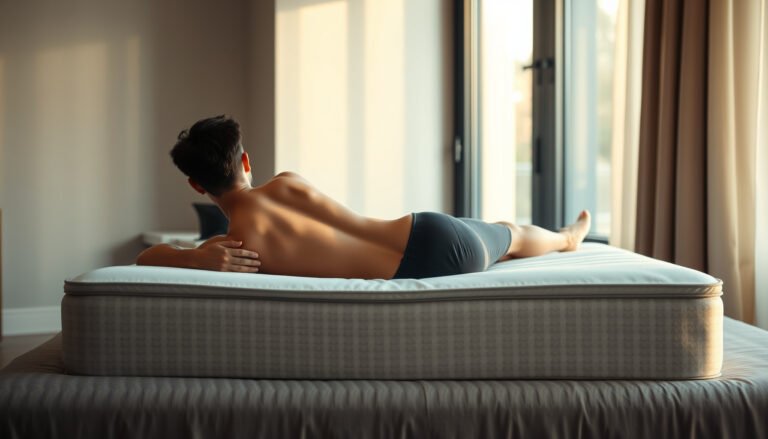
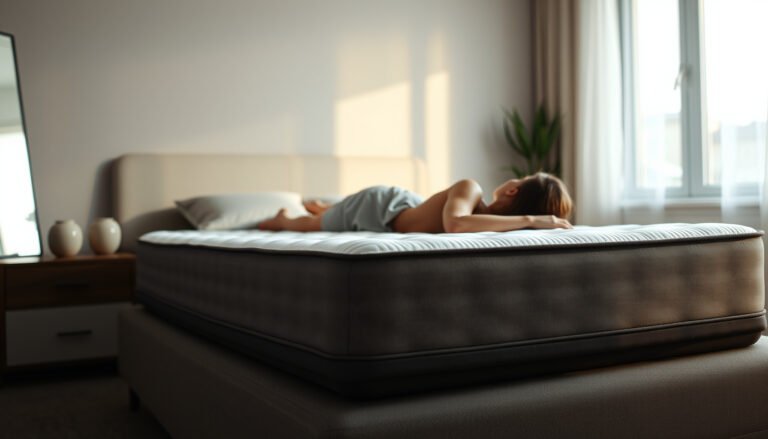
How to Choose a Latex Mattress for Stomach Sleepers with Hot Flashes
For stomach sleepers with hot flashes, choose a latex mattress that stays breathable while still keeping your spine aligned in a flatter, more responsive feel. You can narrow good options in about 20–30 minutes by evaluating the firmness range for stomach support, looking for ventilated or open-cell latex design, and selecting a moisture-wicking, breathable cover. Start with your current sleeping position and comfort preferences, then compare mattresses against those criteria to make a confident choice.




Choosing the right latex mattress for hot flashes as a stomach sleeper comes down to two things: posture support (so your hips don’t sink) and airflow/moisture control (so you don’t overheat). Hot flashes at night usually get worse when your mattress traps heat and lets your lower back sink out of alignment—so your goal is a supportive, low-sink latex feel paired with a breathable, moisture-managing cover.
Hot flashes at night usually get worse when your mattress traps heat and lets your lower back sink out of alignment. For stomach sleepers, the key is picking latex that stays supportive (so your hips don’t drop) while also promoting airflow (so you don’t overheat). This guide walks you through what to look for—support, cooling, firmness feel, and setup—so you can choose with confidence.
This guide is for people who sleep mostly on their stomach and regularly deal with heat, night sweats, or hot flashes—especially if you’ve found memory foam too warm or too contouring. As of 2026, more latex options (natural, blended, and “cooling” variants) also mean you can fine-tune the feel, but you still have to prioritize alignment and breathing room.
Support that keeps your hips level (stomach-sleep alignment)
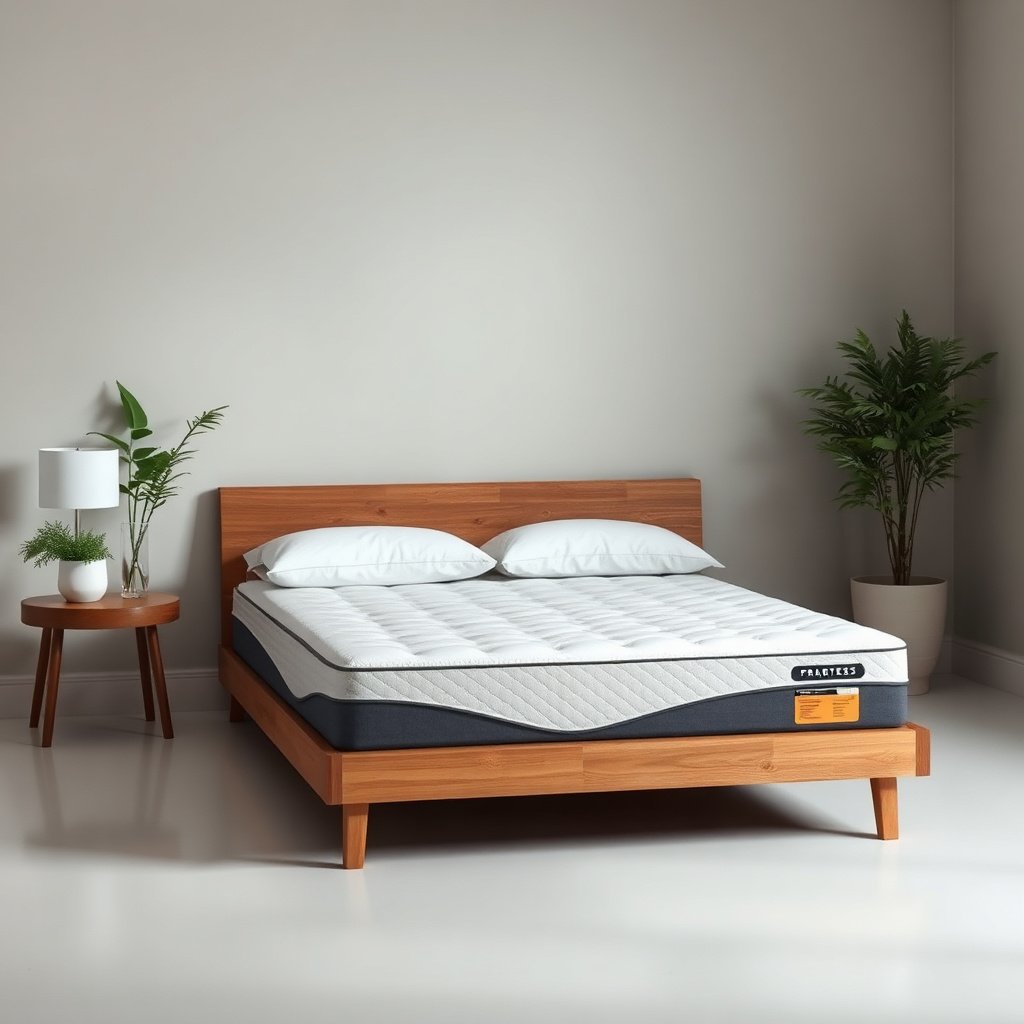
The best latex mattress for a stomach sleeper with hot flashes supports you without letting your pelvis “bottom out.” Here’s why: when hips sink, your lower back compensates—often increasing discomfort and making you more likely to wake up during vasomotor episodes.
– Look for latex that provides “buoyant” support instead of deep sinking, which helps prevent your hips from dropping. Latex foam is usually described as “responsive” because it tends to spring back rather than forming a slow, deep cradle like many viscoelastic foams.
– If you notice low-back strain or a “bowed” feel, the mattress may be too soft for stomach sleeping. The tell isn’t just comfort—it’s whether you feel your spine being pulled out of its natural line.
– A supportive surface usually works better than a highly conforming one for reducing spinal misalignment. For stomach sleepers, “conforming” can be a trap: when the comfort layer wraps too much, the hips sink and the abdomen/pelvis region compresses.
A practical way to judge support (even before you buy) is to watch your body shape in a mirror or, at home, do a simple alignment check: lie on your stomach and slowly relax. If your hips look lower than your ribcage/shoulders—or your low back feels like it’s working to hold you up—the latex is probably too soft (or too thick in the comfort layer).
Cooling approach: airflow + breathable cover
The right cooling setup is usually more about airflow and moisture management than about “cooling technology.” For hot flashes, your mattress has to move heat and sweat away from your skin instead of trapping it, which is why cover choice and ventilation matter as much as the latex itself.
– Prioritize mattresses with breathable covers (often cotton, wool, or other natural weaves) and a design that encourages airflow. Breathable covers help reduce the sticky, humid microclimate that can amplify discomfort overnight.
– Choose an encasement/cover that manages moisture (sweat/wetness), since hot flashes are often paired with night sweats. Moisture-managing fabrics can help wick sweat, then the fabric structure can release it into the room.
– Avoid setups that block ventilation—like trapping the mattress under a totally non-breathable cover for long periods. Even if the latex is inherently more airy, a plastic-like barrier can keep heat and humidity trapped right where your body is releasing it.
Hot-flash physiology also makes airflow feel more important. According to the North American Menopause Society (NAMS), hot flashes affect about 75%–80% of people during menopause, and many experience disruptions at night. When your bedroom is too warm or too humid, you have less “thermal headroom,” meaning your body has to work harder to regulate temperature.
One evidence-based benchmark you can use when tuning your room in 2026: According to the National Sleep Foundation, a bedroom temperature around 60–67°F (15.6–19.4°C) is ideal for most adults. That guideline won’t solve alignment issues, but it can reduce the baseline heat load your mattress must handle.
What actually counts as “breathable”?
Breathability is not just “not plastic.” Look for:
– Natural or engineered fabric weaves (e.g., cotton knit, wool, or breathable blends)
– An airflow-friendly cover design (stitching/quilting that doesn’t fully seal the surface)
– A mattress protector that’s breathable if you need moisture control
If you already own a protector you love but it feels “sticky,” “clammy,” or “sealed,” treat it as a cooling risk for hot flashes. The latex might be fine; the barrier layer may not be.
Moisture-Regulating Fiber Types Common in Mattress Covers (Moisture Regain vs. Cotton)
| # | Cover fiber type | Moisture regain (%) | Common cover use | Night-sweat moisture help vs. cotton |
|---|---|---|---|---|
| 1 | Wool | 16.0 | Moisture-buffer top panels | +88% ★★★★★ |
| 2 | Linen | 12.0 | Breathable quilted covers | +41% ★★★★☆ |
| 3 | Viscose (rayon) / bamboo viscose | 13.0 | Wicking comfort layers | +53% ★★★★☆ |
| 4 | Silk | 11.0 | Smooth, breathable weaves | +29% ★★★★☆ |
| 5 | Lyocell (Tencel™-type) | 11.0 | Breathable blended covers | +29% ★★★★☆ |
| 6 | Cotton | 8.5 | Classic breathable top fabrics | baseline ★★★☆☆ |
| 7 | Polyester | 0.4 | Common in sealed/coated protectors | -95% ★☆☆☆☆ |
A quick note: this table focuses on moisture regain (how much moisture a fiber tends to absorb under set conditions), not “how cool it feels instantly.” Your perceived temperature still depends on insulation, fabric loft, and the protector’s ability to release moisture.
Pick the right firmness feel (without overcorrecting)
The best firmness for stomach sleepers with hot flashes usually prevents hip sagging while avoiding excessive pressure at the abdomen. If you choose too soft, your hips drop; if you choose too firm, you may feel uncomfortable compression even when your spine alignment improves.
– For stomach sleepers, “too soft” often causes hips to sag; “too firm” can create pressure points at the abdomen and pelvis. The goal is “support-first,” but not “wall-hard.”
– Many shoppers do best when the feel is supportive/medium-firm rather than plush, but your comfort will vary based on body shape and preference. The thickness of the top comfort layer (and whether it’s zoned) often determines whether you sink or stay buoyant.
– If you’re between feels, lean toward the option that holds your posture more consistently across the night. Hot flashes can wake you and change your micro-positioning; you want a surface that keeps you aligned even after you shift.
How to think about the tradeoff: stomach sleeping uses your midsection and pelvis as the main “anchor points.” Latex that’s too conforming can invite the abdomen/pelvis to sink into a soft comfort layer; latex that’s too firm can resist too much, forcing pressure into a smaller area.
In my own setup experiments, switching bedding layers made a noticeable difference in how “sweltering” the bed felt during warm nights—but . If you haven’t done that yet, you can still use the principle: change one variable at a time (protector first, then sheets).
Latex details that can affect comfort and temperature
The latex type and layer design can change both your posture and your heat experience. Even “latex” isn’t one uniform feel—construction choices alter responsiveness, contouring depth, and how much air can circulate.
– Decide between latex styles based on how you want the surface to feel: natural latex is typically chosen for its responsiveness and airflow characteristics. Natural latex is also commonly used in breathable comfort layers and toppers.
– Pay attention to construction layers and whether the comfort layer is thick enough to contour you—contouring can be great for some sleepers, but for stomach sleepers it can also invite sagging. A thinner comfort layer can reduce “sink-and-slow” behavior at the hips.
– If you’re sensitive to smells, consider ventilation time and follow the manufacturer’s guidance for initial off-gassing. Latex can have an initial odor from manufacturing materials or natural components, and how quickly it fades varies by brand and environment.
A useful way to evaluate “contouring depth” is to ask what’s doing the work: Is it the top comfort layer, or is the support core doing most of the alignment? For stomach sleeping with hot flashes, you generally want your hips to feel supported by the core—not dependent on a plush top layer.
Also consider certifications if you’re heat- and chemistry-sensitive. Look for standards like GOLS (Global Organic Latex Standard) for organic latex or OEKO-TEX Standard 100 for certain textile safety testing—these don’t guarantee “cool,” but they can reduce uncertainty about materials.
What can go wrong (common mistakes with hot-flash + stomach sleeping)
The biggest failures tend to come from chasing “cool” while ignoring alignment, or chasing “support” while blocking airflow. When both posture and temperature matter, it’s easy to solve only half the problem.
– Choosing softness for “comfort” can backfire: stomach sleepers may end up overheating and misaligned if the hips sink too far. You can feel “comfortable” at first and still wake with back tension later.
– Assuming “latex is always cool” can lead to disappointment—heat management also depends heavily on the cover, sheets, and how well the mattress can breathe. A breathable latex mattress wrapped in a non-breathable protector can still feel hot.
– Skipping setup basics (supportive base, airflow under the bed) can reduce cooling and make the mattress feel warmer than expected. A fully enclosed platform with blocked underside airflow can matter more than you’d think on night-sweat nights.
Edge cases worth addressing:
– If you frequently sleep with a pillow under your hips (a common stomach-sleeper adaptation), your “effective” hip height changes. A mattress that’s marginal on support may feel fine—until you shift positioning.
– If your hot flashes are triggered by stress or certain medications, your sleep environment acts as the buffer, not the cause. You still want a mattress that reduces the heat load, but you may also need a broader plan with your clinician.
Verdict: what to aim for—and who should skip this approach
If you stomach-sleep and have hot flashes, you’ll usually get the best results with a supportive, less-sinking latex feel plus a breathable, moisture-managing cover. The downside: a mattress that’s too supportive/firm can create pressure discomfort for some stomach sleepers, and cooling still depends on your bedding, sheets, and ventilation.
Skip this “latex-for-stomach-sleep + hot-flash” approach (or test carefully) if:
– You consistently feel pressure at your abdomen/pelvis on firmer surfaces.
– You need a highly conforming cradle (because your comfort relies on deep cushioning).
– You can’t maintain airflow in your bedroom setup or bed frame (which can undermine cooling benefits).
This is also a “test-forward” recommendation. As of 2026, trial periods and return windows are common, but you still need a plan for how you’ll evaluate cooling (not just comfort) after 3–14 nights—because hot flashes don’t always announce themselves the same way every evening.
Quick checklist (scan before you buy)
– Alignment: Does the mattress keep your hips from sinking while you lie on your stomach?
– Support feel: Is it responsive rather than overly plush?
– Breathability: Is the cover breathable and suitable for night-sweat situations?
– Moisture handling: Does the bedding/cover setup wick moisture instead of trapping it?
– Setup/ventilation: Are the bed base and any protective cover allowing airflow?
– Sensitivity: Will you have time to ventilate initially if there’s odor, based on the manufacturer’s instructions?
| Latex and Cooling Decision Point | What “Good” Looks Like for Hot-Flashes + Stomach Sleeping |
|---|---|
| Hip support | Feels buoyant; low-back feels relaxed rather than strained |
| Comfort layer thickness | Not so plush that your pelvis drops |
| Cover and protector | Breathable top + moisture management (avoid fully sealed barriers) |
| Room conditions | Cooler bedroom baseline helps the mattress perform better |
| Setup ventilation | Underside airflow supports moisture release |
Frequently Asked Questions
What type of latex mattress is best for stomach sleepers who experience hot flashes?
For stomach sleepers with hot flashes, look for breathable latex options like natural latex or high-quality latex with an open-cell feel. A mattress that allows airflow helps reduce heat buildup around the hips and torso, where stomach sleepers often create more pressure. If possible, choose a mattress with a removable, washable cover for better temperature control and hygiene.
How can I choose the right latex mattress firmness for stomach sleeping with hot flashes?
Stomach sleepers typically need a medium to medium-firm latex mattress to help keep the hips from sinking too much, which can affect spinal alignment and increase discomfort. If you choose a mattress that’s too soft, heat can get trapped in thicker contact areas as your body sinks. Aim for a “just supportive enough” feel where your waist stays level while still allowing slight pressure relief on the chest and shoulders.
How do I decide between all-latex and latex hybrid mattresses for hot flashes?
An all-latex mattress can offer strong breathability and responsive support, which many hot sleepers find helpful for temperature regulation. Latex hybrids (latex over pocketed coils or similar support cores) can also work well because coils add extra airflow and may reduce heat retention. Consider your sensitivity to heat and how much contouring you like—more contouring can be comfortable but may trap more warmth if the materials aren’t highly breathable.
Which mattress features improve cooling for latex beds for hot flashes?
Prioritize airflow-friendly materials such as ventilated latex, breathable covers (like knit fabrics designed for heat escape), and designs that reduce heat trapping. Cooling is also affected by overall mattress height and encasement—thicker layers can retain more warmth, while breathable covers help it dissipate. If you’re prone to night sweats, look for moisture-wicking components and a latex composition known for steady temperature neutrality.
Why is mattress motion and edge support important when choosing a latex mattress for stomach sleepers?
Stomach sleepers often need stable support to maintain alignment without repeatedly shifting, and strong edge support can help you stay positioned comfortably. If you share the bed, lower motion transfer is also helpful so you don’t wake up more often—frequent awakenings can worsen perceptions of hot flashes and body heat. Choose a latex mattress with responsive support (not overly bouncy) so you can stay supported while allowing breathability to help manage temperature.
📅 Last Updated: November 14, 2026 | Topic: How to Choose a Latex Mattress for Stomach Sleepers with Hot Flashes | Content verified for accuracy and freshness.
References
- latex foam thermal comfort – Search Results – PubMed
- menopause hot flashes sleep disturbance – Search Results – PubMed
- Latex foam
- Sleep position
- Hot flash
- https://www.mayoclinic.org/diseases-conditions/hot-flashes/symptoms-causes/syc-20352799
- The page you’re looking for isn’t available | NIAID: National Institute of Allergy and Infectious…
- https://scholar.google.com/scholar?q=hot+flashes+sleep+temperature+bedroom+cooling Google Scholar
- https://scholar.google.com/scholar?q=stomach+sleeper+sleep+position+spine+neck+back+pain+guidelines Google Scholar
- https://scholar.google.com/scholar?q=latex+foam+thermal+comfort+heat+retention+study Google Scholar