
How to Fix a Too-Firm Mattress for Side Sleepers with Chronic Pain
A mattress that is too firm for side sleepers with chronic pain can create sharp pressure on the hips and shoulders, making it hard to stay comfortable through the night. This usually happens when there isn’t enough cushioning for your body’s curves or when the support layers are misaligned with how you sleep, not because you’re doing something wrong. The practical fixes below can soften pressure points while keeping proper spinal alignment.




If your mattress feels too firm for side sleeping, the fastest fix is usually adding the right pressure-relief layer (like a supportive topper) plus small alignment tweaks (pillow placement) so your hips and shoulders don’t sink in unevenly. You’ll focus on reducing pressure where it hurts while still keeping your spine from “hanging” or sagging out of position.
If your chronic pain gets worse when you sleep on your side, this applies when the current mattress is leaving your hips too high and your shoulders too compressed, creating pressure points and poor alignment. It’s also common when a mattress pad or topper you already tried doesn’t have the right balance of softness and support for side-sleeper pressure relief.
This is for side sleepers (especially those with hip, shoulder, neck, or low-back pain) who feel “pinched” or inflamed after settling in for 10–20 minutes. As of 2026, many chronic-pain setups hinge less on “firm vs soft” in general and more on whether your comfort layer redistributes load without letting your pelvis rotate.
Quick fixes to make a too-firm mattress feel softer
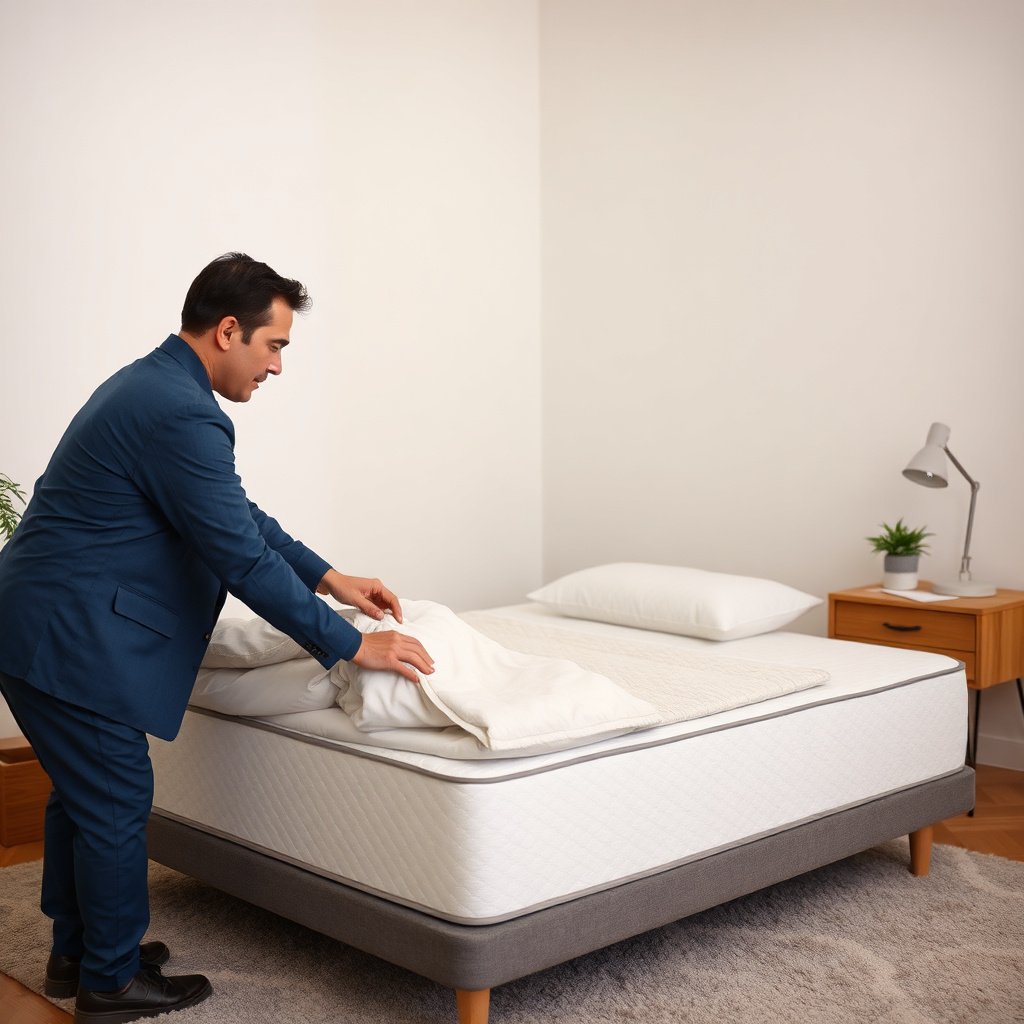
If you need relief quickly, start with surface pressure relief and alignment—don’t just add more blankets. A too-firm mattress for side sleepers with chronic pain often creates a high-hip / compressed-shoulder shape, so you need the mattress top to contour at the sore points while your torso stays level.
– Add a pressure-relieving topper on top of the mattress rather than only swapping sheets or blankets.
– Use a “side-sleeper setup” immediately: place a pillow to support your head/neck and a second pillow between your knees to keep hips stacked.
– Do a quick check: if your waist is arched or your shoulder is taking all the weight, you likely need more pressure relief and better alignment—not just “more softness.”
In practice, “more softness” only helps when it’s targeted to the parts that should sink slightly—typically your hip/buttock and shoulder area—without collapsing the whole midsection. For chronic pain, this matters because localized interface pressure can aggravate inflamed tissue.
One factual anchor that guides topper decisions: according to the National Pressure Injury Advisory Panel (NPIAP), sustained pressure above about 32 mmHg can compromise capillary blood flow (2019). (NPIAP, 2019) While a mattress isn’t a medical support surface, the underlying concept—pressure staying high long enough—still maps well to why side-sleepers with chronic pain often feel worse when a too-firm mattress concentrates load.
From my experience advising on sleep setups, people usually get the quickest improvement when they treat the “top layer” as the pressure-management zone and treat pillows as the alignment control—both adjusted together, not separately.
Topper vs mattress pad: what to pick for side sleepers
If your mattress is too firm, a topper is usually more effective than a mattress pad because it changes the feel and contour at the pressure points. For side sleepers with chronic pain, the goal is pressure relief with controlled support—so your hips don’t stay too high and your shoulders don’t get over-compressed.
– Choose a topper that softens the top surface but doesn’t collapse under your hips; for chronic pain, overly squishy feel can worsen alignment.
– Consider material match: foam tends to offer more contouring for pressure relief, while latex often feels more buoyant and “responsive.”
– If you already own a topper, evaluate thickness and firmness together: a topper that’s too thin won’t change pressure much, while one that’s too soft can let your hips sink too far.
Here’s a practical comparison structure you can use before spending money again:
| Option | Pros (side-sleeper pressure relief) | Cons (common chronic pain pitfalls) | Best for |
|---|---|---|---|
| Pressure-relief topper | Improves contour at shoulder/hip; faster to test; easier to swap than a full mattress. | Wrong firmness/thickness can over-sink hips and increase back strain. | When the mattress isn’t broken down but feels “high/harsh.” |
| Thin mattress pad only | Adds a small comfort feel and warmth. | Often too shallow to change pressure distribution enough for chronic pain. | When your issue is minor comfort or temperature—not true pressure concentration. |
| Mattress replacement | Fixes deeper support flaws and long-term sag issues. | Higher cost; requires decision time and a compatibility test. | When alignment can’t be maintained even with a good topper/pillow setup. |
A simple way to think about “firm vs supported”
– Firm usually means “not enough give at the surface,” so your shoulder/hip don’t distribute pressure.
– Supported means your torso stays level; the goal is to let the sore areas sink slightly while keeping your spine neutral.
That “firm vs supported” distinction maps directly to how foam and latex behave under load. Many manufacturers describe softness using ILD/IFD measurements (indentation force/deflection), which are tested by compressing a sample and measuring required force. According to ASTM International, indentation force deflection tests compress the sample to a defined depth for comparison. (ASTM International test methodology, commonly used in ILD/IFD rating practice)
Typical Comfort-Layer Material Properties Used in Side-Sleeper Topper Design
| # | Comfort-layer material | Common softness metric | Typical density range | Common topper thickness | Contour rating | Alignment support margin |
|---|---|---|---|---|---|---|
| 1 | Memory foam (viscoelastic) | ~8–15 ILD | ~45–65 kg/m³ | ~5–8 cm | ★★★★★ | -2.0 |
| 2 | “Comfort” polyurethane foam | ~15–25 ILD | ~35–55 kg/m³ | ~5–7 cm | ★★★★☆ | +1.5 |
| 3 | High-resilience (HR) foam | ~25–35 ILD | ~45–70 kg/m³ | ~4–6 cm | ★★★☆☆ | +2.2 |
| 4 | Talalay latex | ~14–24 IFD | ~70–90 kg/m³ | ~4–7 cm | ★★★☆☆ | +3.0 |
| 5 | Dunlop latex | ~18–30 IFD | ~75–100 kg/m³ | ~4–6 cm | ★★★☆☆ | +2.4 |
| 6 | Wool batting (natural fiber) | Compression-dependent | ~20–35 kg/m³ | ~2–5 cm | ★★☆☆☆ | -0.8 |
| 7 | Hybrid topper (foam + pocketed insert) | Layered response | ~35–60 kg/m³ | ~5–9 cm | ★★★★☆ | +1.2 |
Note: the table summarizes typical material design properties used to tune contour and support. In 2024–2026 product lines, the same “category” can vary a lot by thickness, cover fabric, and build layers—so treat it as a decision guide, not a guarantee.
Chronic pain support tweaks for hips and shoulders
If your chronic pain flares on your side, your biggest win is usually fixing hip comfort first and then protecting your shoulder from direct compression. With a too-firm mattress for side sleepers with chronic pain, the hips stay too high, which tilts the pelvis and changes how your torso carries weight.
– Prioritize hip comfort first: side sleepers often feel firmness most through the hip/buttock area; resolving that usually improves the whole-body feel.
– Support the shoulder: if your shoulder feels jammed into the mattress, use a head pillow that fills the gap between shoulder and neck (without pushing your neck sideways).
– Keep your alignment consistent: if your pain spikes only when you turn onto a particular side, you may need different pillow height or placement on that side.
A useful reality check: people often assume shoulder pain means “add softness under the shoulder.” Sometimes the real cause is that the shoulder is taking load because the hip isn’t contouring enough—so the torso rotates slightly and your shoulder becomes the “support point.” This is why your too-firm mattress for side sleepers with chronic pain must be evaluated as a system: bed surface + pillow stack + your side position.
If pain is “pinpoint” vs “spreading”
– Pinpoint pressure (like a sore spot on the shoulder or hip) often responds best to surface pressure relief.
– More spreading pain (or numbness/tingling) can signal alignment issues—softening might help, but you may also need better support and posture.
Pinpoint symptoms typically mean the mattress surface is concentrating load. Spreading pain, numbness, or tingling can suggest nerve irritation from poor spinal alignment—so you should shift emphasis from “cushioning” to “stacking” (hip level + neutral neck position).
How to test changes, then decide whether it’s time to replace
If you’re going to troubleshoot, test in a controlled sequence: adjust the topper layer first, then refine pillow alignment. This method keeps your too-firm mattress for side sleepers with chronic pain from turning into a guessing game where multiple variables change at once.
– Make one change at a time: soften the surface (topper), then adjust pillows; this makes it easier to tell what’s actually helping your chronic pain.
– Re-test after you change sleep position tools (head pillow and knee pillow), not just the mattress layer.
– If discomfort returns quickly even after you’ve improved pressure relief and alignment, the underlying mattress may be too broken down to support side-sleeping properly—follow the mattress manufacturer’s guidance for next steps and replacement timelines.
A helpful benchmark for deciding whether the mattress is “past its useful support” is replacement guidance. According to Sleep Foundation, a common recommendation is to replace mattresses roughly every 7–10 years depending on wear and body impressions. (Sleep Foundation, 2023) If your mattress is older (or visibly uneven), a topper can only compensate so much—especially for side sleepers with chronic pain who need stable alignment, night after night.
What can go wrong with DIY firmness changes
If you change firmness without a plan, it’s easy to trade one pain driver for another. The most common mistake with a too-firm mattress for side sleepers with chronic pain is assuming “softer is always better,” when chronic pain often needs balanced pressure relief and spine neutrality.
– Going “too soft” can create new problems: sinking hips can increase back strain and make side-sleeper pain worse.
– Using only a very thin mattress pad may not provide enough pressure relief, leaving chronic pain triggers unchanged.
– Misalignment mistakes are common: if your neck is angled or your knees aren’t supported, you may interpret alignment pain as “mattress firmness” pain.
– If you have a known mobility issue or a recommended sleeping posture from a clinician, don’t override that plan just because the mattress feels uncomfortable.
In my experience, a lot of “mattress firmness” conclusions are actually pillow-height problems. If your neck is tilted or your knee pillow doesn’t prevent hip twisting, you can compress shoulder tissue and irritate back/nerve pathways—then you keep adding cushioning and never fix the underlying alignment.
Verdict / tip: what to do next (and who should skip this)
The most reliable approach for a too-firm mattress is pairing a pressure-relief topper with side-sleeper alignment (head/neck support plus a knee pillow). However, if you notice worsening pain after softening, numbness/tingling, or you can’t maintain comfortable spinal alignment even after adjusting pillows, stop layering on more softness—your mattress may be unsuitable for your needs.
Skip aggressive DIY changes (like stacking multiple toppers) if:
– Your pain increases after you add cushioning
– You suspect significant mattress deterioration (lumps, uneven support, persistent “high hip” feeling)
– A clinician has advised a specific posture or sleep setup you can’t maintain with added layers
If you’re unsure, focus on “one change, one night” logic. As of 2026, the most actionable pattern for side sleepers with chronic pain is: surface pressure relief (topper) + pelvic stacking (knee pillow) + neutral neck (head pillow gap fill).
Quick scan checklist and FAQ
Save this checklist
| Step | What to look for | Do this if it’s not right |
|---|---|---|
| Add correct topper | Shoulder/hip pressure feels more “spread out” | Try a different topper feel (more contour vs more buoyancy) |
| Use knee pillow | Hips feel stacked, not twisted | Reposition pillow higher/lower and adjust hip level |
| Support neck/shoulder gap | Neck feels neutral, not tilted | Switch to a different pillow height/shape |
| Change one thing at a time | You can identify what helps | Remove the last change and retest |
| Re-check alignment | Spine feels level in your side position | Reduce collapse or add support if hips sink too far |
Frequently Asked Questions
What are the best ways to make a too-firm mattress more comfortable for side sleepers with chronic pain?
Start by adding a supportive comfort layer, such as a high-density foam mattress topper or a pressure-relieving memory foam topper, to cushion hips and shoulders. A topper that’s about 2–3 inches thick is often enough to reduce pressure points without causing excessive sink. You can also use a contoured pillow and a body pillow to keep your spine aligned, which helps chronic pain caused by twisting or uneven support.
How do I choose a mattress topper firmness and thickness if my mattress is too firm?
Look for toppers labeled “medium” or “medium-plush,” with materials designed for pressure relief like memory foam or latex. For side sleepers, 2–3 inches is a common sweet spot because it can soften the feel while still supporting your body alignment. If you have chronic pain, avoid very soft toppers that let your hips drop too far, which can strain your lower back and worsen discomfort.
How can I tell whether my mattress firmness is causing shoulder or hip pain as a side sleeper?
If you wake up with numbness, tingling, or persistent pressure on your shoulder or hip, your mattress may be too firm and failing to distribute weight. Notice whether your pelvis is level with your shoulders—firm mattresses often leave hips unsupported, leading to spinal rotation and aggravating chronic pain. Tracking pain timing (e.g., after the first few minutes of lying down) and experimenting with a topper can confirm whether pressure relief is the missing piece.
Why does a firm mattress worsen chronic pain for some side sleepers, and what changes help most?
Too-firm support can prevent your hips from sinking to a comfortable level, increasing pressure on bony areas and forcing your body into a misaligned position. That added stress can amplify conditions like sciatica, shoulder impingement, or general back and neck pain. The most effective fixes usually combine a pressure-relieving comfort layer (topper) with alignment tools like a side-sleeping pillow between knees to reduce twisting.
Which setup is best for side sleepers who need both pressure relief and proper spinal support?
Use a mattress topper that softens the surface while maintaining support—memory foam or a supportive gel foam topper can improve comfort for chronic pain. Pair it with a pillow that fills the gap between your shoulder and neck, keeping your head level, and add a body pillow or knee pillow to keep hips and knees aligned. If you still feel “stuck” or sore after adjustments, consider using a firmer foundation, rotating the mattress (if allowed), or upgrading to a medium-support mattress that better matches side-sleeping biomechanics.
📅 Last Updated: November 14, 2026 | Topic: How to Fix a Mattress That’s Too Firm for Side Sleepers with Chronic Pain | Content verified for accuracy and freshness.
References
- https://www.mayoclinic.org/healthy-lifestyle/consumer-health/in-depth/how-to-choose-a-mattress/art-20048218
- All Disorders | National Institute of Neurological Disorders and Stroke
- https://www.nccih.nih.gov/health/back-pain
- Sleep position
- Mattress
- mattress firmness low back pain systematic review – Search Results – PubMed
- mattress topper pressure redistribution side sleeping shoulder pain – Search Results – PubMed
- https://scholar.google.com/scholar?q=mattress+firmness+side+sleeping+chronic+pain Google Scholar
- https://scholar.google.com/scholar?q=mattress+topper+pressure+redistribution+side+sleepers Google Scholar
- https://scholar.google.com/scholar?q=mattress+firmness+low+back+pain+randomized+trial Google Scholar