

How to Select a Gel-Infused Mattress for Back Sleepers With RLS
You reach for a gel-infused mattress because your legs start tingling and restless when you settle into a back-sleep position, and you need comfort without overheating. In the next few minutes, you’ll learn exactly how to evaluate firmness, pressure relief for your hips and lower back, and real cooling coverage that helps limit heat buildup. You’ll also know what to avoid so your mattress supports your sleep posture while keeping RLS symptoms from flaring.




Yes—you can often improve comfort and reduce heat-related restlessness with the right gel-infused mattress, but you still need firm spinal support and true pressure relief for back sleeping. A gel-infused mattress can help you stay cooler and more comfortable, but for restless legs (RLS) you still need the right support and pressure relief for back sleeping. When you shop, prioritize a breathable, supportive feel (not overly soft), strong motion isolation, and materials that don’t trap heat. This guide walks you through what to look for and what to avoid so your bed supports restful, still sleep.
If you’re a back sleeper with RLS, your mattress choice matters because small discomforts—pressure points, heat buildup, or bed “wobble”—can make restlessness feel worse. Use the checklist below to narrow options to the features most likely to support calmer nights.
Pick the right firmness and spinal alignment for back sleeping
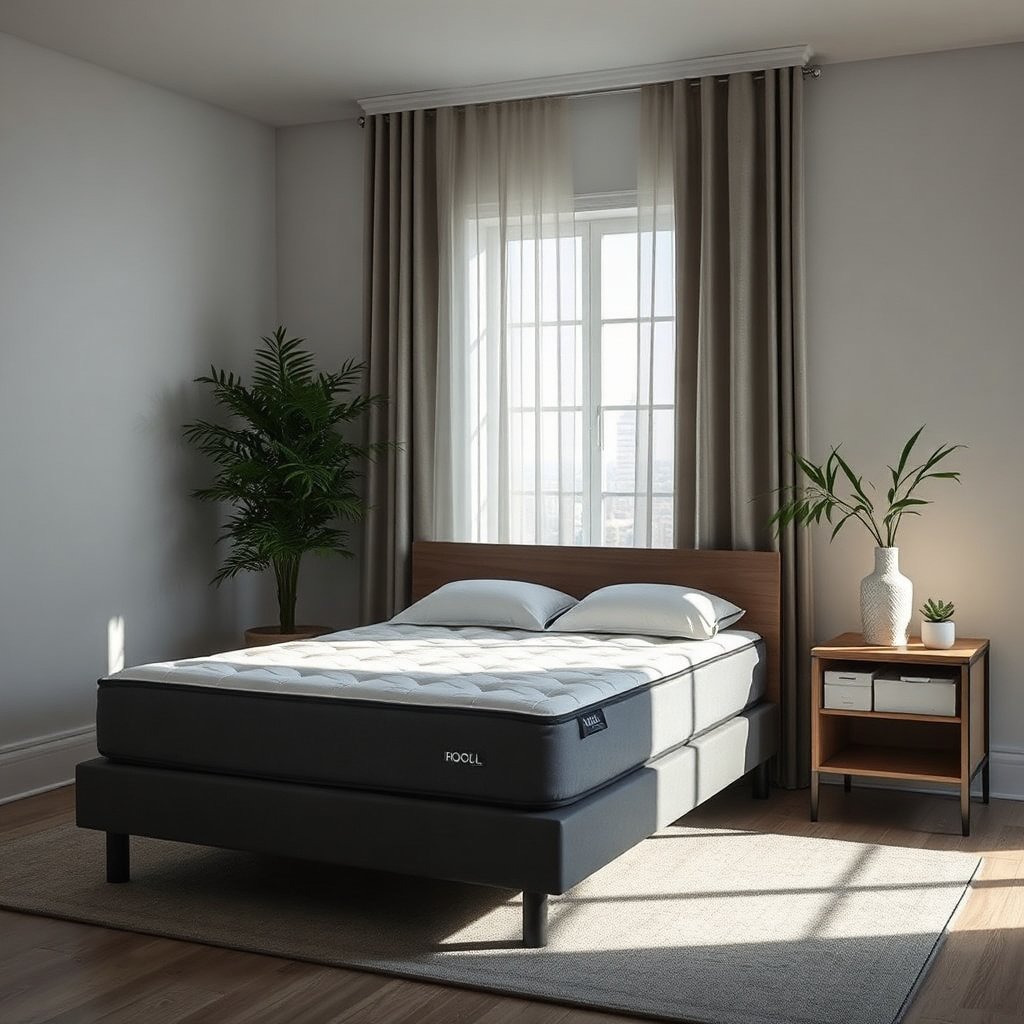
For back sleepers with RLS, the best gel-infused mattress is usually one that prevents hip sink while still cushioning your lower back. When your pelvis drops, the spine can subtly arch, and that mismatch can turn “almost comfortable” into an itch-to-move feeling during the night.
– Look for “medium” or “medium-firm” support that keeps your hips from sinking while still relieving pressure on your lower back. In practice, this often means you should feel support under the hips without needing to press yourself upward to “find” neutral alignment.
– Avoid very plush top layers if you notice your pelvis drops when you lie on your back (that can create strain and restlessness). Plush layers can be relaxing for some sleepers, but RLS can be sensitive to even mild, localized discomfort—especially when you’re still.
– If the mattress uses a multi-layer build, confirm the top comfort layer is pressure-friendly while the support core is firm enough to maintain alignment. Gel infusion is only part of the comfort stack; the support core determines whether the gel layer stays “comforting” rather than becoming a trampoline.
In 2026, many brands also use zoned support foams (firmer under the hips, softer under shoulders). That can help back sleepers, but only if the zoned design truly supports your specific body shape and weight range. I recommend doing a “real back-sleep check” during testing: lie down for long enough to feel whether your hips settle into a stable position within a few minutes, not just whether the surface feels cool at first.
Choose gel infusion for cooling—without losing support
A gel-infused mattress should improve temperature management, but it shouldn’t replace the fundamentals of comfort and airflow. For RLS, the goal is to reduce heat-triggered discomfort while keeping your spine supported—because a “cool” surface that lets you sink can still provoke restlessness.
– Gel-infused comfort layers are mainly about temperature management, so treat them as a cooling assist, not a complete solution for RLS. Gel can conduct and move heat away from skin, but the mattress can still trap that heat if the cover and internal layers don’t breathe.
– Pay attention to airflow/breathability too (covers, quilting, and internal airflow channels matter), because gel alone can’t fix heat trapped by the sleep system. Look for breathable covers, open-cell structures, and designs that allow heat and moisture to escape.
– Be cautious if the mattress is marketed as “cooling” but uses thicker, non-breathable covers—your body can still overheat. “Cool to the touch” isn’t the same as “stays cool,” and with RLS, the difference matters late at night.
A useful way to think about gel comfort is: gel changes how heat moves; breathability changes where heat goes. If your room and bedding are already warm, even a high-performing gel layer may not noticeably reduce the heat trigger.
- Where gel-infused mattresses can help (pros)
- Better surface temperature comfort for many sleepers; more even feel across pressure zones; potential reduction in “warmth-triggered” restlessness when the sleep system breathes.
- Where they can disappoint (cons)
- Some designs feel cool briefly but retain heat overall; overly soft quilted layers can increase hip sink; motion transfer may still be high if the support core is bouncy.
To ground expectations with real material behavior, here’s how common cooling-layer materials compare on thermal conductivity (how readily they conduct heat). Higher conductivity generally supports faster heat transfer—though actual comfort still depends on airflow, thickness, and foam structure.
Thermal Conductivity of Common Cooling-Layer Materials (25°C)
| # | Material | Thermal conductivity | Typical mattress role | Heat transfer vs trapped air |
|---|---|---|---|---|
| 1 | Trapped air (in foam/quilting) | 0.024 W/m·K | Insulates; limits heat flow | 1.0× |
| 2 | Polyurethane foam (typical) | 0.030 W/m·K | Support/comfort cushioning | 1.25× |
| 3 | Memory foam (typical) | 0.040 W/m·K | Pressure relief; can trap heat | 1.67× |
| 4 | Paraffin PCM (typical) | 0.20 W/m·K | Absorbs heat during phase change | 8.33× |
| 5 | Water-based gel (representative) | 0.60 W/m·K | Conducts heat away from skin faster | 25.0× |
| 6 | Copper (heat-spreading mesh) | 385 W/m·K | Transfers heat rapidly; paired with airflow | 16,041.7× |
| 7 | Graphite (in-plane) | 1500 W/m·K | Very fast heat spreading in engineered inserts | 62,500.0× |
These numbers explain why gel and conductive materials can improve heat movement, but your comfort still depends on the full gel-infused mattress build—especially breathability and support.
RLS-friendly comfort: pressure relief, reduced irritants, and calmer feel
For RLS back sleepers, comfort is less about “cushion at any cost” and more about stable, evenly supported pressure. If your gel-infused mattress creates hot spots, uneven pressure, or micro-sink, your nervous system can interpret the sensation as an urge-to-move cue rather than simple soreness.
– RLS often feels more triggered by discomfort and heat than by “pain” in the usual sense—so aim for even pressure distribution across shoulders, hips, and lower back. Back sleeping should feel supported, not bunched up or pressed into a single spot.
– Choose a top layer that feels supportive when you stay still; if you feel “bottoming out,” you may get micro-adjustments that can escalate restlessness. A bottoming-out sensation often appears as a delayed “collapse” after you settle—something you can detect by staying in position for a few minutes.
– If you’re sensitive to odors or materials, give the mattress time to air out per the manufacturer guidance before sleeping on it. Many foam mattresses release initial odors; ventilation reduces that first-night sensitivity for some people.
A clinical reality also matters: RLS is not only a mattress comfort problem. According to the National Institute of Neurological Disorders and Stroke, RLS affects about 10% of people in the United States (NINDS). If you already know your symptoms are frequent, a clinician’s workup—often including iron status—should run alongside your sleep environment improvements.
When you shop gel-infused mattresses, remember the RLS “trigger threshold” differs by person. Your best approach is to reduce pressure and heat without sacrificing spinal alignment—because the gel layer can only help if the rest of the comfort system behaves.
Motion isolation and edge support (important if you share the bed)
For RLS, partner movement can make symptoms feel worse even if your side of the bed is “fine.” A gel-infused mattress that isolates motion and holds its edges better can reduce the tiny shifts that prompt restlessness in back sleepers who wake easily.
– For RLS, partner movement can be a hidden trigger—so prioritize strong motion isolation (less bounce transfer across the mattress). If your side ripples when someone sits or turns, your nervous system may register that movement as an “off” sensation.
– If you sit up or get in/out frequently, check edge stability so the mattress doesn’t “collapse” under you; unstable edges can increase overnight shifting. A firm edge can help you change positions without the whole surface moving underneath.
– Consider your sleep position transitions: back sleepers who roll may benefit from a mattress that doesn’t create a “deep cradle” that forces repeated settling. That repeated settling—especially near the lower back—can mimic the sensations that trigger RLS urges.
I recommend a simple in-store check: push down near the center, then push near the edge, and watch how quickly the surface returns. Even small bounce can matter for a gel-infused mattress if you share the bed or if you wake and reposition overnight.
What can go wrong when shopping gel-infused mattresses
Most shopping mistakes come from treating “gel” as a complete solution rather than one component of a stable sleep system. If the gel-infused mattress solves heat but introduces sink, wobble, or irritants, your RLS comfort can still worsen.
– You choose softness for comfort only: a mattress that feels great at first can still sink too much at night, especially for back sleepers. Softer setups can increase lumbar arching and pressure redistribution, which may provoke micro-movements.
– You assume gel = cooler all night: gel can help, but overall heat management depends on cover breathability, layer design, and your room temperature. Bedroom temperature matters; According to the National Sleep Foundation, a comfortable range is often cited as about 60–67°F for many people (National Sleep Foundation).
– You ignore sleep surface basics: pillow height, bedding thickness, and a warm duvet can overwhelm any mattress cooling feature. Even a well-chosen gel-infused mattress can feel “too warm” if the rest of the system blocks airflow.
– You buy without a trial plan: if the feel or temperature isn’t right for your body, you’ll need an easy return path to avoid being stuck with a mismatch. For RLS, a mismatch isn’t always obvious on day one.
– You over-focus on mattress and miss medical factors: RLS often has contributors (commonly iron-related issues, medication side effects, or other health conditions). A mattress can support sleep comfort, but it’s not treatment. For example, clinical guidance commonly emphasizes checking iron stores; AASM guidance discusses iron evaluation and treatment thresholds such as ferritin levels (often cited around ≤75 ng/mL) (AASM clinical practice guidance).
The core limitation: no gel-infused mattress can correct underlying RLS physiology. It can only reduce comfort triggers—heat and pressure—so your body spends more time asleep and less time negotiating sensations.
Verdict: a good option for comfort + temperature, but not a guaranteed RLS fix
A gel-infused mattress is worth considering if your RLS is worsened by feeling warm, if you struggle with pressure discomfort as a back sleeper, or if your current mattress has noticeable bounce or alignment issues. In 2026, many designs also incorporate breathable covers and improved foam structures, which can reduce the “background discomfort” that fuels restless micro-movements.
That said, skip this approach (or narrow your search) if you know you react strongly to certain mattress materials or strong initial odors, if you consistently sink into your lower back on softer models, or if your room is already very cool and the added gel layer doesn’t meaningfully change your comfort. And if your RLS is severe or escalating, talk with a clinician—mattress comfort should support your sleep, not replace medical care.
Quick scan checklist (plus FAQ)
Use this to compare mattresses quickly in-store or from specs online.
Gel-Infused Mattress RLS Back-Sleeper Checklist
– Firmness/alignment: hips supported; lower back not “hanging” or arching.
– Pressure relief: comfort layer reduces pressure without deep sink.
– Cooling strategy: gel + breathable cover/quilting, not gel-only.
– Motion isolation: minimal partner-movement transfer.
– Heat control whole setup: bedding and room temp won’t negate cooling.
– Trial/return: a clear window to confirm comfort and temperature.
– Material sensitivity: confirm cover/foams are compatible with your sensitivities.
Frequently Asked Questions
What firmness level should a gel-infused mattress have for back sleepers with restless legs syndrome?
For back sleepers with Restless Legs Syndrome (RLS), look for a medium to medium-firm gel-infused mattress that supports the lumbar spine without sinking too deeply. Too-soft foams can increase pressure and micro-movements that may worsen restlessness. Testing for even spinal alignment—especially in the lower back—helps reduce tossing and turning during the night.
How do I choose the right gel-infused mattress materials if I have restless leg syndrome?
Prioritize a gel-infused foam design that focuses on pressure relief and temperature regulation, since overheating can trigger more RLS symptoms. Memory foam with a breathable cover and gel cooling layer can help keep your back comfortable while minimizing pressure points. If you tend to get restless from heat buildup, also consider mattresses with gel technology plus airflow features like pocketed coils or breathable comfort layers.
Why does cooling matter for RLS, and what should I look for in gel cooling features?
Restless legs often flare when your body feels warm, so cooling comfort can be an important factor when selecting a gel-infused mattress. Look for mattresses that clearly market cooling performance—such as gel infusion, breathable covers, and materials designed to dissipate heat. Avoid vague claims; instead, confirm whether the cooling layer is built into the mattress comfort system and whether it helps you maintain a stable sleep temperature.
Which mattress construction is best for back sleepers with restless legs syndrome—gel memory foam, hybrid, or latex?
Many back sleepers with RLS do well on a gel-infused hybrid mattress because coils add responsive support while the comfort layer provides pressure relief. Gel memory foam can be effective if it’s not overly soft and includes cooling features to prevent heat retention. Latex can also help by offering buoyant support and airflow, but you’ll still want the mattress to keep your hips from sinking and maintain proper back alignment.
Best way to test a gel-infused mattress for restless legs before buying?
Try the mattress for at least 10–15 minutes in your normal back-sleep position, and pay attention to lumbar support and whether your legs feel “locked” or overly compressed. If the store offers a sleep trial, use it to evaluate nighttime symptom changes over several days, since RLS can be affected by comfort, temperature, and movement. Choose a mattress with a return policy, and make sure the gel cooling layer feels supportive—not just cool—so you reduce both heat and restless motion.
📅 Last Updated: November 14, 2026 | Topic: How to Select a Gel-Infused Mattress for Back Sleepers with Restless Leg Syndrome | Content verified for accuracy and freshness.
References
- Restless Legs Syndrome | National Institute of Neurological Disorders and Stroke
- https://medlineplus.gov/restlesslegssyndrome.html
- https://www.mayoclinic.org/diseases-conditions/restless-legs-syndrome/symptoms-causes/syc-20377133
- Restless legs syndrome – NHS
- restless legs syndrome treatment algorithm 2021 updated – Search Results – PubMed
- mattress firmness low back pain systematic review – Search Results – PubMed
- cooling mattress gel thermoregulation sleep systematic review – Search Results – PubMed
- https://scholar.google.com/scholar?q=gel+infused+mattress+restless+legs+syndrome+temperature+sleep Google Scholar
- https://scholar.google.com/scholar?q=cooling+bedding+restless+legs+syndrome+sleep Google Scholar
- https://scholar.google.com/scholar?q=gel+mattress+thermoregulation+sleep+quality+back+sleepers Google Scholar




3 Comments