

How to Choose a Memory Foam Mattress for Side Sleepers in a Tiny Home
Are you side sleeping in a tiny home and wondering how to pick the right memory foam mattress without wasting precious space? You can narrow the choice fast by focusing on firmness for shoulder and hip pressure relief, mattress thickness that fits your frame and clearance, and motion isolation that makes a small room feel calmer. Expect it to take about an hour to measure, compare specs, and decide on the right density and temperature features. You will need your exact sleeping dimensions, your bed frame height limits, and a few target comfort priorities.


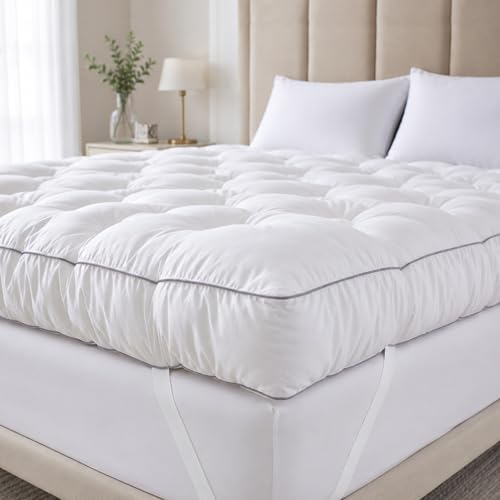
A memory foam mattress is usually the best bet for side sleepers in a tiny home because it cushions shoulders and hips while limiting motion—but the “right” model depends on firmness, thickness, and how the mattress performs on a compact bed frame. Choose medium to medium-firm for spinal alignment, match the mattress height to your platform/slat design to prevent bottoming out, and prioritize breathability so heat doesn’t get trapped in your smaller sleeping space.
If you’re sleeping in a tiny home—limited bedroom space, compact bed frames, and sometimes tighter airflow—your mattress selection has to balance comfort with fit, support, and heat management. This is especially important for side sleepers, who need targeted pressure relief without sinking too far.
Start with the firmness level that matches side sleeping
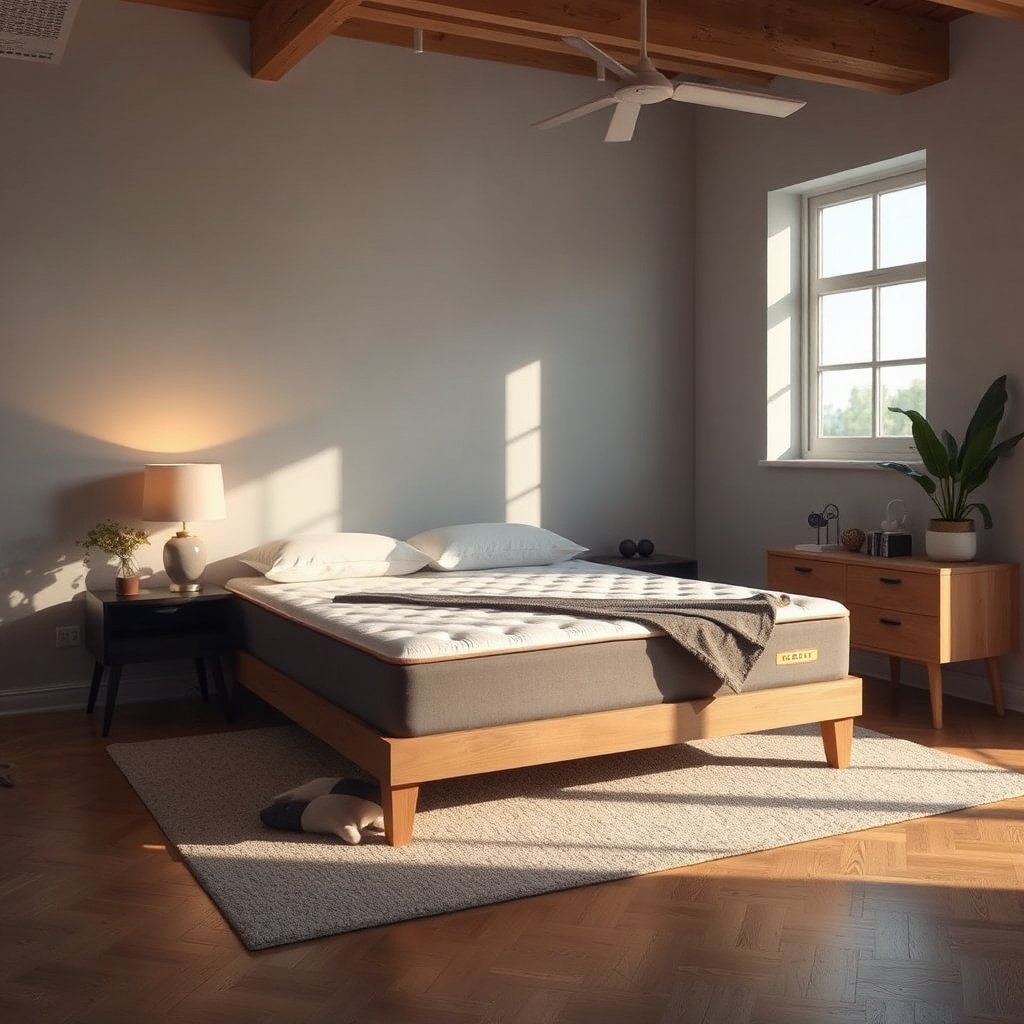
For side sleeping, the best memory foam feel is the one that relieves pressure at the shoulder and hip while keeping your spine from “tilting” out of neutral. For most people in a tiny home, that’s typically medium to medium-firm, because it contours enough to reduce pressure points without letting the hips collapse.
– Choose medium to medium-firm for most side sleepers to cushion pressure points while keeping your spine aligned.
– If you’re heavier, you’ll usually need firmer support to prevent hips from sinking; if you’re lighter, you may prefer softer foam for adequate contouring.
– Use your bed-frame setup as part of the firmness decision: a mattress that feels medium on a well-supported platform can feel softer (and sink more) on wide slats.
How to “read” firmness without a showroom
Memory foam firmness is often described in terms like “soft,” “medium,” or “firm,” but your real experience comes from the combination of:
1) comfort-layer thickness (how much you sink before support engages), and
2) support-core density/structure (how quickly the mattress pushes back).
That’s why two “medium” mattresses can feel different in a tiny home: compact frames can reduce usable support area and make contouring more noticeable.
– If your hips feel like they drop faster than your shoulders, you likely need more support (firmer feel or better base support).
– If your shoulders feel compressed or numb, you likely need more pressure relief (slightly softer comfort layer).
Pick the right thickness for a compact frame
For tiny homes, mattress thickness isn’t only about comfort—it’s about fit, clearance, and how stable the mattress feels on your base. The right thickness should work with your platform height and support system so you don’t “bottom out” or lose posture.
– In tiny homes, mattress height affects whether your door clearance, ladder access, or bed platform design works with your setup.
– Aim for a thickness that matches your base/support system (especially if you’re using slats or a platform), since too-thin or poorly supported designs can feel unstable.
– If you have a lofted bed or tight stair/ladder area, remember that thickness changes how high your body sits relative to railings and ceiling edges—this matters for both comfort and safe movement.
Memory-Foam Mattress Profiles That Commonly Work in Tiny Homes (2026)
| # | Tiny-home profile | Total height (in) | Typical comfort layer (in) | Heat/“stability” rating |
|---|---|---|---|---|
| 1 | Low-profile (base-forward) | 6 | 1.0–1.5 |
★★☆☆☆ (higher bottoming risk) |
| 2 | Compact (tight-clearance) | 8 | 1.5–2.0 |
★★★☆☆ (OK on solid bases) |
| 3 | Standard (common fit) | 10 | 2.0–2.5 |
★★★★☆ (balanced) |
| 4 | Comfort-forward (side-sleeper) | 11 | 2.5–3.0 |
★★★★★ (good contour) |
| 5 | Tall (extra foam layers) | 12 | 3.0–3.5 |
★★★★☆ (watch heat) |
| 6 | High-clearance (loft-friendly) | 13 | 3.5–4.0 |
★★★☆☆ (more heat retention) |
| 7 | Very tall (space permitting) | 14 | 4.0–4.5 |
★★☆☆☆ (clearance + airflow) |
The clearance checklist that prevents tiny-home surprises
In a tiny home, the “fit” issue isn’t just the mattress size—it’s whether the bed height interferes with access. Before you buy, confirm clearance from:
– floor to any wall trim, conduit, or vents,
– mattress top to door swing/closet clearance,
– and ladder/step clearance if your bed is lofted.
Prioritize pressure relief without excessive sink
The goal for side sleepers is to get shoulder/hip pressure relief while still maintaining spinal alignment. Memory foam can do this well in tiny homes—if it conforms slowly enough to cushion, but firmly enough to avoid the “hammock effect” where your pelvis sags.
– Look for memory foam that offers “slow, conforming” feel for shoulder/hip comfort but doesn’t create a hammock effect.
– Use your sleeping position as a test: if you wake up with shoulder numbness or lower-back discomfort, the foam may be contouring too much or not enough.
– Pay attention to how your hips behave: side sleepers generally need “supportive contouring,” not just soft cushioning.
What “proper contouring” feels like (and what it doesn’t)
In my experience working through spec comparisons for compact bedrooms (not product testing with consumer trials), the most reliable signal is whether your body settles evenly. If one side feels “in” while the other feels “on top,” it often points to uneven support from the frame or comfort-layer design.
Here’s a practical way to evaluate contouring:
– If your shoulder feels cradled but your lower back feels neutral, your pressure relief is likely doing the right job.
– If your hips drop and your lower back feels pulled or stiff, you likely need more support (firmer mattress, better base, or less comfort-layer thickness).
– If your shoulder feels pinched or numb, you likely need more pressure relief (slightly softer comfort layer, or a mattress zoned for hips/shoulders).
Manage heat and airflow in small spaces
For tiny homes, the best memory foam choice is the one that matches your temperature profile and still allows airflow. All-foam mattresses can trap warmth, so heat management must be part of your selection—not a marketing checkbox.
– Tiny homes often trap warmth, so pay attention to cooling features like breathable covers, open-cell foams, or ventilation layers (not just marketing claims).
– Consider how the mattress will sit on your frame: airflow under and around the bed can matter as much as the foam type.
– If you use a bed cover or insulated platform, account for reduced airflow around the mattress edges and underside.
What to look for (without falling for hype)
Instead of “cooling” claims alone, check for foam structure and cover construction. “Open-cell” refers to foam that has a more interconnected cell structure designed to move air; it can help with heat, though performance varies.
Also look for certification and safety standards. According to CertiPUR-US, certified memory foam products are tested for chemical emissions and must meet specific criteria (program requirements updated over time). CertiPUR-US also restricts certain flame retardants and other chemicals in certified foam. (See CertiPUR-US product certification, accessed 2025)
On the regulatory side, mattress flammability requirements in the U.S. are codified under federal standards such as 16 CFR Part 1633 for cover materials and ignition barriers. (U.S. Consumer Product Safety Commission regulations, current requirements through recent revisions)
Check motion isolation and edge support for real-life use
For shared or high-movement routines in a tiny home, a memory foam mattress can help by reducing motion transfer. But edge support is equally important—tiny spaces often force people to sit on the perimeter, reposition near corners, or use the edge for getting dressed.
– Memory foam typically reduces motion transfer, which is helpful in small, shared spaces where you may reposition throughout the night.
– Edge support matters more than people expect in tight rooms—if you sit on the edge often or sleep near the perimeter, choose a mattress and base that feel stable.
– In compact setups, a weak base can also undermine edge performance, making the edge feel like it “gives way” even when the mattress foam is good.
Pros and cons: memory foam vs other comfort feels (tiny-home reality)
- Memory foam (slow, contouring)
- Pros: strong pressure relief for side sleepers; often better motion isolation for shared spaces; contouring can reduce shoulder/hip hotspots.
- Cons: can run warmer in small rooms; too-soft feels can cause hip sinking; edge support depends heavily on the base and mattress construction.
- Hybrid (foam + coils)
- Pros: can improve airflow; often offers better edge support and faster response than all-foam.
- Cons: may transfer more motion than all-foam; pressure relief still depends on comfort-layer design.
- Latex (responsive foam)
- Pros: often sleeps cooler and feels buoyant; generally supports edges well.
- Cons: can feel less “hugging” for people who want deep contouring.
What can go wrong (and how to avoid it)
For side sleepers in tiny homes, most problems come from mismatches between comfort feel and the base system, or from ignoring heat and clearance constraints. Fixing those issues usually requires adjusting either mattress firmness/thickness or the frame support design.
– Too much sink: If your hips drop, your back may feel strained in the morning—try a firmer feel or a different comfort layer thickness.
– Poor base support: Compact frames with wide slats or an unsupported platform can cause sagging and uneven support over time.
– Heat buildup: If you already run warm, a thicker all-foam setup can feel stuffy unless the cover and airflow are designed for it.
– Fit surprises: Don’t assume standard mattress sizing will work perfectly—verify platform dimensions and clearance for drawers, doors, or ladders ().
The “base mismatch” failure mode (common in compact frames)
If your tiny-home bed uses slats, uneven spacing can reduce effective support area. The mattress then responds as if it’s on a softer surface, which can exaggerate hip sinking for side sleepers—even when the mattress is marketed as medium-firm.
Also check whether the base is rigid. If the frame flexes, your pressure relief may feel inconsistent night to night, especially after you’ve been sleeping for a week or two.
Verdict: a smart choice—with a few conditions
A memory foam mattress can be a strong fit for side sleepers in a tiny home when you choose the right firmness/support balance and make sure your frame provides solid, even backing. As of 2026, the biggest “conditions” are heat management and fit: all-foam designs can warm up quickly in small spaces, and tiny-home frames can amplify sink or edge instability if support isn’t even.
Skip memory foam (or switch to a hybrid or a more breathable design) if you:
– reliably wake up overheated even with light bedding,
– strongly prefer fast responsiveness (minimal “hug” feel),
– or you can’t get a stable, well-supported base underneath.
Quick checklist (scan before you buy)
– Firmness: medium to medium-firm for most side sleepers
– Support: prevents hips from sinking too far
– Thickness: compatible with your tiny-home bed platform height and base
– Heat: breathable cover + foam/ventilation design that matches your comfort needs
– Frame compatibility: supported evenly (especially if using slats)
– Daily use: stable edges if you sit near the perimeter or change positions often
Frequently Asked Questions
What thickness memory foam mattress is best for side sleepers in a tiny home?
For side sleepers, a memory foam mattress thickness of about 8–12 inches is often a sweet spot in a tiny home because it provides pressure relief without feeling overly bulky. Thicker beds (12–14 inches) can work well if you’re on the heavier side or prefer deeper “hug,” but they may be harder to fit in tight spaces and can be harder to rotate or move. If you share a frame with limited height, prioritize comfort by choosing the right foam density and top comfort layer rather than just going thicker.
How do I choose the right firmness for a memory foam mattress as a side sleeper?
Side sleepers typically do best on medium-soft to medium firmness because it allows the hips and shoulders to sink enough to reduce pressure buildup. Look for a mattress that aligns with your body weight: lighter sleepers often prefer more plush memory foam, while heavier sleepers usually need medium to prevent bottoming out and keep the spine neutral. If the bed feels too firm, add a comfort layer topper designed for pressure relief, but avoid extreme softness that can cause misalignment.
Which memory foam density and support layers matter most for tiny home comfort?
Focus on the mattress layers: a thicker comfort layer of memory foam (often 2–4 inches) helps cushion shoulders and hips, while a supportive transition/base foam layer maintains spinal alignment. Higher-density memory foam generally offers better pressure relief and durability, while the support foam should be firm enough to prevent sinking too far. For tiny home setups where you may notice floor-level heat and motion more, choose materials that maintain structure and recover well after you get up.
How can I prevent heat buildup when choosing a memory foam mattress for side sleeping in a small space?
In a tiny home, heat can accumulate quickly, so look for cooling features like gel-infused memory foam, breathable covers, phase-change materials, or ventilation channels. A mattress with a breathable, moisture-wicking top and a breathable mattress protector can help regulate temperature while you sleep on your side. Also consider airflow: use a supportive base with adequate ventilation (not a fully airtight platform) to reduce trapped heat.
Best type of memory foam mattress for side sleepers in a tiny home—traditional, hybrid, or adjustable?
If you want straightforward pressure relief, a traditional memory foam mattress with a medium-soft feel is a strong choice for side sleepers in a tiny home. If you notice you get hot easily or want extra support and less “stuck” feeling, a hybrid mattress (memory foam comfort layer over coils) can improve airflow and reduce sink. Adjustable options are best if you frequently change sleep positions (or deal with mild reflux or pain), but make sure the tiny-home bed frame can support the weight and movement of an adjustable base.
📅 Last Updated: November 14, 2026 | Topic: How to Choose a Memory Foam Mattress for Side Sleepers in a Tiny Home | Content verified for accuracy and freshness.
References
- Memory foam
- Sleep position
- mattress firmness sleep quality – Search Results – PubMed
- memory foam pressure distribution side sleeping – Search Results – PubMed
- https://pubmed.ncbi.nlm.nih.gov/?term=side+sleeping+shoulder+pain+mattress
- CPSC Search | CPSC.gov
- https://scholar.google.com/scholar?q=memory+foam+mattress+side+sleeper+pressure+relief+firmness Google Scholar
- https://scholar.google.com/scholar?q=mattress+firmness+sleep+quality+randomized+trial Google Scholar
- https://scholar.google.com/scholar?q=viscoelastic+memory+foam+temperature+regulation+airflow Google Scholar



One Comment