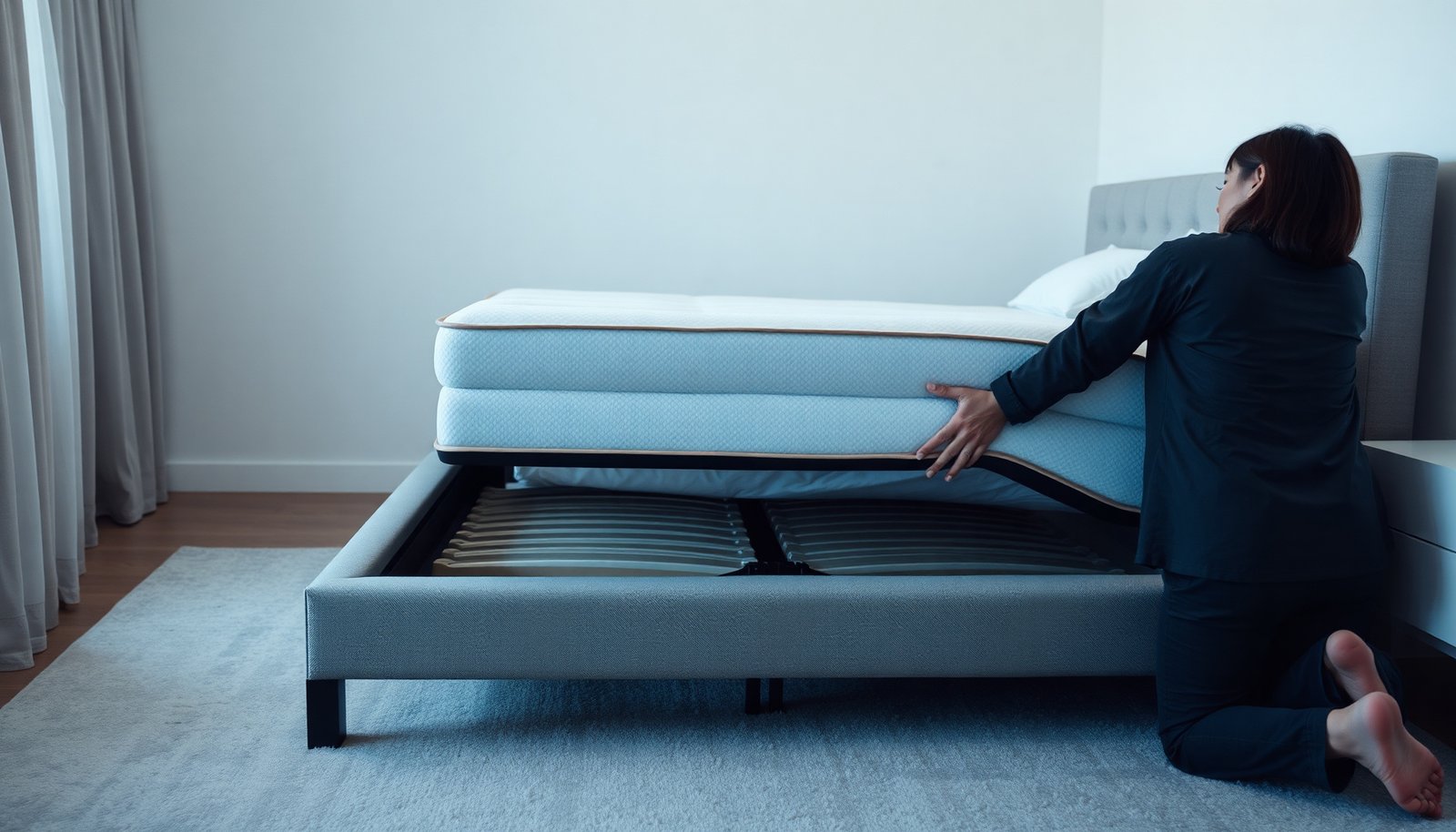
How to Fix a Sagging Adjustable Mattress for Stomach Sleepers
If your adjustable mattress sags under your stomach when you’re lying flat or mid-lift, you’re not alone—and it usually isn’t the way you sleep. Most often it comes from worn or misaligned support rails, a mattress that has lost its internal structure, or a setup that doesn’t fully engage the frame’s adjustable sections. Follow the steps below to pinpoint the weak area and restore even support for stomach sleeping.




Fix a sagging adjustable mattress by first ruling out adjustable base and frame problems (loose hardware, misaligned supports, uneven foundation), then re-seating and leveling everything before you add any comfort-layer reinforcement. For stomach sleepers, keep the base as close to flat as possible and prevent your hips/chest from sinking deeper than your ribs so your spine doesn’t form a “hammock” dip. If the dip persists after base checks and compatible reinforcement, the issue is often inside the mattress itself.
If you sleep mostly on your stomach and notice a hammock-like dip when you get up (or you feel pressure on your hips or chest), this guide is for you. It also applies when your adjustable base settings no longer feel like they used to—even when the mattress top “looks fine.”
Diagnose why it’s sagging (mattress vs. adjustable base)
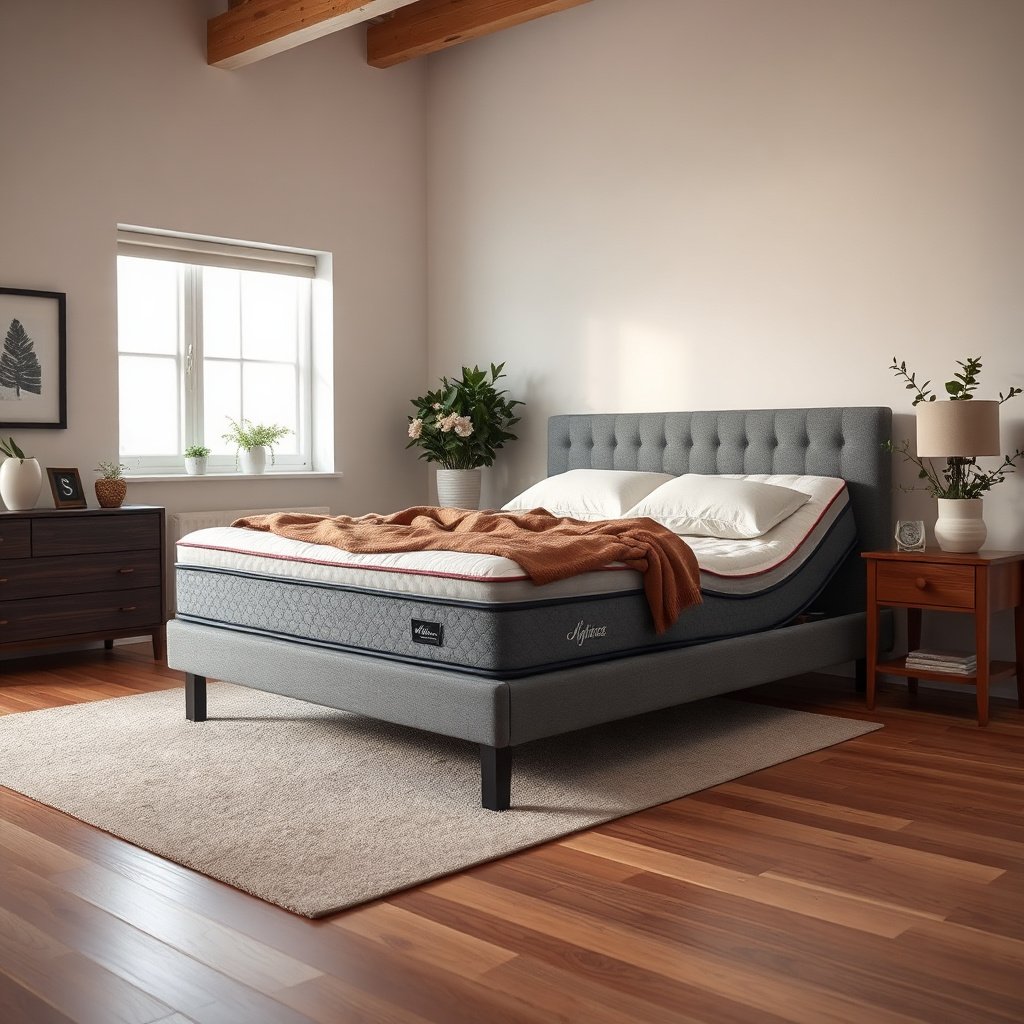
The fastest way to fix a sagging adjustable mattress is to determine whether the dip changes with base position or stays the same. Here’s the key: adjustable base problems usually show up across more than one setting, while mattress comfort-layer failure often reveals itself most clearly on the flat-to-slightly-raised range stomach sleepers typically use.
Start by observing when the adjustable mattress sags:
– Check whether the sag happens only when the base is raised, or even when it’s fully flat. If the dip is present when the adjustable bed base is flat, the cause is more likely the foundation/frame/support layer or the mattress’s internal structure. If it only happens when raised, the adjustable base hinges/rails, center support, or slat engagement may be the culprit.
– Inspect the underside and middle area for visible failure. Look for broken slats, missing center support, sagged support fabric, or damage to internal mattress layers through any inspection panels or seams.
– Confirm the mattress is seated correctly on the adjustable base. Many adjustable bases rely on precise placement so the mattress doesn’t “float” on uneven edges. This is especially important with platform frames, slat systems, and model-specific mounting rails.
In 2026, many adjustable bases still rely on a combination of center rails, side deck supports, and moveable segments that must remain properly seated as the base lifts and repositions. If any segment isn’t fully engaged, the adjustable mattress will feel like it sinks into a trough—exactly what stomach sleepers notice when they push up their hips to change positions.
Tighten and level the adjustable base
The next best step is to stabilize the adjustable bed base so you’re not treating a mechanical alignment issue like a comfort-layer problem. Tightening and leveling won’t “repair” failed mattress internals, but it can eliminate the uneven load that creates a hammock effect.
Do this in order:
– Tighten accessible bolts/brackets and re-seat the mattress evenly. Even a small shift can create a dip where you land most often while stomach sleeping. Re-seat the mattress so it sits flush across the base surface, not diagonally or bunched near a corner.
– Verify the adjustable base is level on the floor. Uneven flooring can exaggerate sag over time by forcing more load onto one deck area. If your adjustable base has adjustable feet, set them so the frame doesn’t rock.
– Check center support engagement and side rail fit. Some adjustable bases loosen after moving, cleaning, or rotating accessories (including head/foot attachments). Ensure the center support and side rails are fully seated on their mounting points.
A practical mental model: if the adjustable bed base is slightly out of level, your body weight doesn’t distribute evenly across the mattress. Over time, stomach sleepers typically concentrate pressure around the pelvis and lower rib area, which can make a minor support defect feel dramatic—especially when you push up to change positions.
7 Common Causes of “Hammock” Feel on Adjustable Beds (Stomach-Sleeper View)
| # | Failure point to inspect | Typical sag pattern | What to do first | Sag impact after correction |
|---|---|---|---|---|
| 1 | Loose side rails or deck brackets | Dip shifts slightly when you move | Re-seat deck + tighten hardware | High |
| 2 | Uneven floor / unlevel feet | One zone stays deeper on flat | Level frame; adjust feet | High |
| 3 | Center rail not fully engaged | Middle trough appears at raised angles | Check center locking/attachment points | High |
| 4 | Broken or sagged slats (if present) | Local dip under a landing zone | Replace/restore slat support | High |
| 5 | Torn/worn support fabric under the mattress | Soft “bottoming” even on flat | Inspect seams; follow warranty rules | Low |
| 6 | Collapsed comfort layer (foam/gel/innerspring) | Hammocking persists across settings | Consider replacement (not just topper) | Low |
| 7 | Incorrect mattress fit on base | Edge drift + uneven load | Verify size and seating system | Medium–High |
Reinforce support without blocking adjustability
The best reinforcement is the kind that fixes the dip while still letting the adjustable bed base move as designed. In practice, stomach sleepers need “support where the hips settle,” not a hard platform that locks the torso into an uncomfortable contour.
If the sag is mostly one area (often where your hips land), consider a supportive layer—but keep it compatible:
– Use a supportive, breathable topper or a correctly sized support board/causeway only if it won’t interfere with base motion. The adjustable base often changes the mattress deck geometry as it bends; reinforcement that spans across moving joints can create new pressure points.
– Look for the compatibility sweet spot. The goal is to reduce the hammock depth without turning the comfort layer into a stiff shelf under your ribcage or pelvis.
– Avoid permanent modifications that void coverage. If your mattress or base is under warranty, confirm what’s allowed before you add boards, spacers, or non-approved supports.
A useful guideline: if you add reinforcement, it should redistribute pressure rather than eliminate the mattress’s ability to contour. Adjustable beds are engineered to flex; your fix should support that flex.
Quick comparison: reinforcement options for adjustable beds
| Option | Pros | Cons / watch-outs |
|---|---|---|
| Breathable mattress topper (compatible size) | Often smooths minor comfort-layer softness and reduces pressure on hips/chest. | May not fix collapsed internal layers; too-thick toppers can increase “sink” if placed over weak support. |
| Support board/causeway (model-compatible) | Can limit localized sag if the dip is tied to a single unsupported zone. | If too rigid or in the wrong locations, it can prevent base flex and worsen pressure or create new dips. |
| Replacing damaged slats/rails (base-side repair) | Targets the structural source of hammocking when dips persist across settings. | Requires correct parts and may be more involved than a topper. |
Dial in stomach-sleeper positioning on an adjustable base
The main positioning fix for stomach sleepers is keeping the adjustable bed base near-flat and preventing the pelvis from sinking deeper than the ribcage. Because stomach sleeping naturally creates an arch, even a small hammock dip can amplify hip/chest pressure and strain the lower back.
Use a setup that minimizes torso bending:
– Keep the base low/near-flat. Stomach sleeping usually does better when you’re not creating a strong waist fold. If you notice the “hammock” feeling increases as you raise the head, return closer to flat.
– Use a thinner pillow setup (or adjust pillow placement). The goal is to support the neck without forcing your upper body upward while your hips sink.
– If you’re sinking through the hips, shift where your support is applied. For example, aim reinforcement/support under the pelvis region rather than stacking extra thickness under your chest. This can keep the spine from forming a deep center dip.
As of 2026, many people also report adjusting posture using quick “reset” routines (flat base + small pillow changes) rather than immediately buying replacement mattresses. That makes sense because many adjustable mattress issues are load distribution problems, not only comfort material failures.
What can go wrong (and when you should stop)
The most common mistake is treating sagging adjustable mattress support like a purely comfort issue when it’s actually structural. When you stop the problem early, you save money and avoid trading one discomfort for another.
Common failure modes:
– Adding a support board that’s too stiff or sized wrong can block base flex. That can prevent the adjustable bed base from moving correctly and create new pressure points—or even make the dip worse elsewhere.
– Tightening everything but skipping mattress-layer inspection can miss the real cause. Collapsed foam or weakened coils often need replacement, not reinforcement. If the mattress continues to bottom out in the same spot after base stabilization, that’s a strong signal the mattress’s internal support is gone.
– If the sag is tied to a specific broken component, toppers may only mask it temporarily. Slats, center rails, actuators, or internal mattress support structures can’t be reliably “topped away.”
When to stop troubleshooting and move to replacement:
– The adjustable mattress sags the same way on flat and raised settings.
– You can see or feel structural failure (e.g., collapsed comfort core, broken internal support, or damaged base components that can’t be safely corrected).
– Your body feels pressure in the same region night after night despite proper near-flat stomach-sleeper positioning.
Also, don’t ignore broader sleep factors while you troubleshoot. The CDC notes that about one-third of adults don’t get enough sleep (CDC, 2016), and inadequate rest can amplify pain sensitivity and recovery time. In other words: even if you fix the base, you’ll still want to support your sleep basics while you evaluate results.
Verdict + quick scan checklist
If you want the best chance of fixing a sagging adjustable mattress without wasting time: check the adjustable base first, then reinforce support carefully, and finally dial in a stomach-sleeper setup that prevents your torso from forming a deep bend. The downside to know is that reinforcement can void warranties, and toppers won’t correct sag caused by failed internal mattress support.
This approach is practical, but it’s not for every situation: if your adjustable bed base has a broken/unsafe component (or you discover internal mattress structural damage), replacement is usually the most reliable path rather than repeated layering.
Quick checklist (save/scan):
– [ ] Confirm sag happens on flat and/or raised settings
– [ ] Inspect base underside: slats/rails/center support for damage or looseness
– [ ] Tighten hardware and verify the frame sits level
– [ ] Re-seat the mattress evenly on the base
– [ ] Add only compatible reinforcement (don’t block base motion)
– [ ] Adjust stomach-sleep posture toward near-flat positioning
Frequently Asked Questions
What causes an adjustable mattress to sag when you sleep on your stomach?
Stomach sleeping places extra pressure on the midsection, which can accelerate wear in areas where your body repeatedly contacts the mattress. Over time, sagging can also be caused by worn support slats, loose internal components, insufficient bed frame support, or an adjustable base that isn’t level. If the head or foot sections are frequently adjusted, uneven tension can further contribute to dips in the sleep surface.
How do I fix a sagging adjustable mattress step by step?
Start by checking the adjustable base: ensure all support slats or center braces are properly secured and that the base is level on the floor. Next, remove the mattress and inspect for damaged seams, broken internal supports, or worn foam/innerspring areas. Rotate or flip the mattress if it’s compatible, then add a supportive mattress topper or firm, breathable foam board cut to fit (avoid blocking vents). Finally, tighten any straps, replace worn slats, and test different positions to confirm the adjustable mattress sag problem is corrected.
Which parts of an adjustable bed should I inspect first for sagging and dips?
Begin with the adjustable base structure—look for loose slat connections, missing center support, bent rails, or sagging legs that can cause uneven load distribution. Then inspect the mattress for abnormal compression patterns, body impressions that don’t recover after sitting, or any “hammock” effect when the bed is raised. If the mattress uses springs or a transition layer, check for separation of layers or broken stitching that may indicate internal failure.
How can I prevent future sagging if I’m a stomach sleeper on an adjustable mattress?
Use an appropriate support layer: a medium-firm mattress topper can reduce pressure buildup and slow down compression in the areas stomach sleepers hit most. Keep the adjustable bed flat when possible for daily comfort, and avoid leaving the bed in extreme flexed positions for long periods. Rotate the mattress regularly if the manufacturer allows it, and make sure the base remains level with all components tightened to maintain even support.
What’s the best way to confirm whether the mattress or the adjustable base is causing the sag?
Press and compare the mattress recovery in different zones: if the sag returns slowly or stays indented even when the mattress is fully unloaded, the mattress layers may be worn. Next, test the adjustable base by placing the mattress off the frame temporarily (or checking the base slats/center support) to see if the structure dips in the same spots. If the sag aligns with a specific region of the base when unloaded, the base support is likely the culprit; if sag persists across the mattress regardless of base position, you may need mattress repair or replacement.
📅 Last Updated: November 14, 2026 | Topic: How to Fix a Sagging Adjustable Mattress for Stomach Sleepers | Content verified for accuracy and freshness.
References
- Sleep position
- Mattress
- https://medlineplus.gov/sleepingpositions.html
- https://www.mayoclinic.org/healthy-lifestyle/adult-health/in-depth/sleep/art-20048360
- https://www.nhlbi.nih.gov/health-topics/sleep-hygiene
- https://www.niams.nih.gov/health-topics/low-back-pain
- mattress firmness low back pain – Search Results – PubMed
- mattress sagging pressure distribution – Search Results – PubMed
- https://scholar.google.com/scholar?q=sagging+mattress+pressure+distribution Google Scholar
- https://scholar.google.com/scholar?q=stomach+sleeping+low+back+pain+cervical+spine Google Scholar