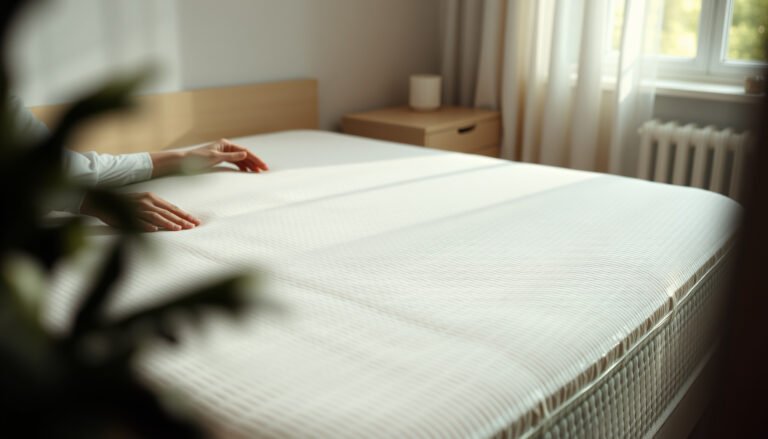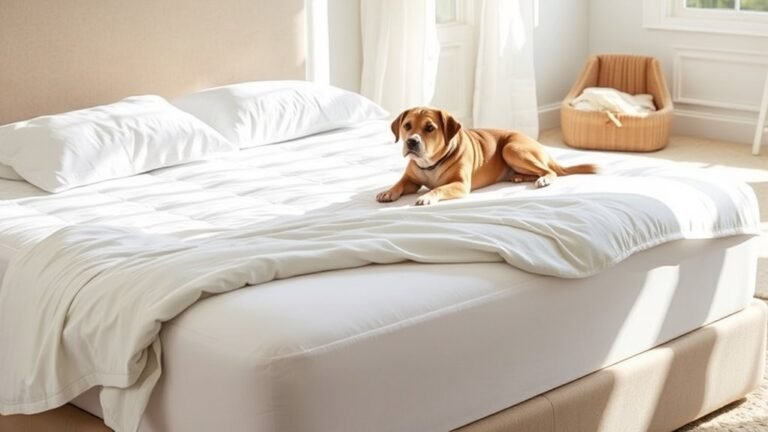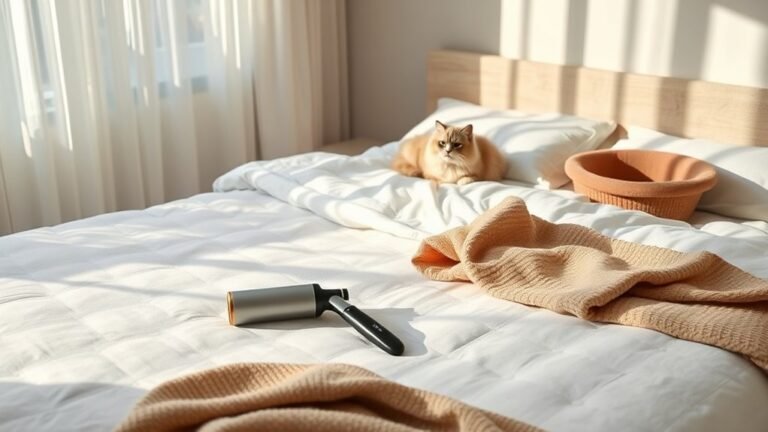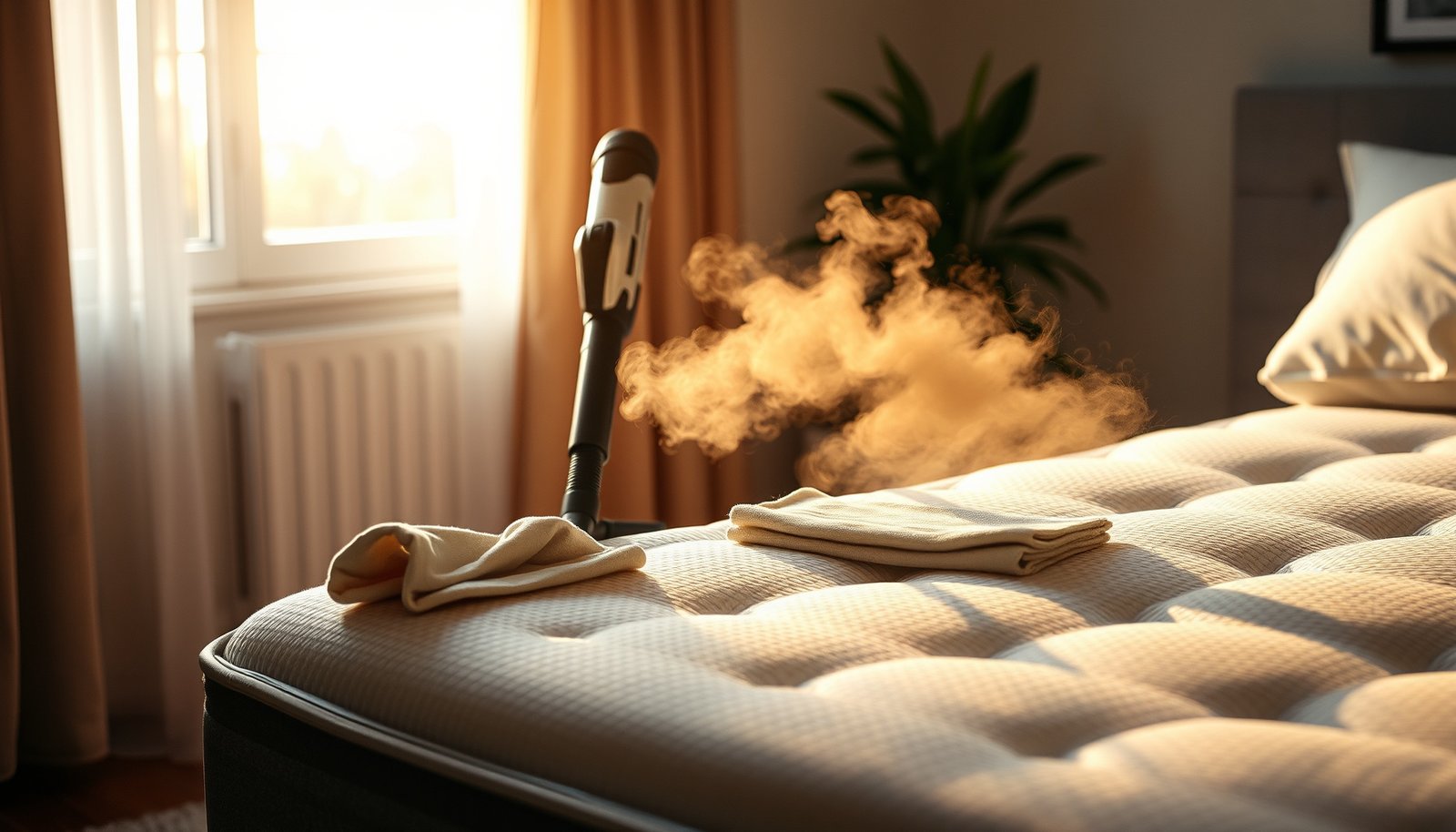
How to Clean a Hybrid Mattress with Pet Hair Odors Effectively
Want to know the fastest way to clean a hybrid mattress with pet hair odors? This guide delivers a clear step-by-step method to lift embedded fur and neutralize lingering smells without damaging the hybrid layers. If your mattress holds onto odors after pets have been in the room, you’ll get the right cleaning approach to make it feel fresh again.


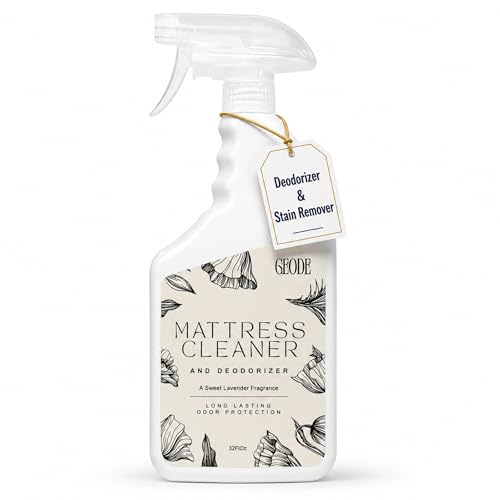

To clean a hybrid mattress with pet hair odors effectively, you vacuum thoroughly first, spot-clean only what the care label allows, then deodorize only after the mattress (and cover/top panel) is completely dry. This hair-first, dry-first order prevents odors from getting trapped deeper in the foam-and-coil structure—especially in 2026 when more hybrids use thicker comfort foams that hold onto moisture.
If you’re dealing with a hybrid bed (foam over innersprings/coils) and your pet’s hair + lingering “pet smell,” this guide walks you through a safe order of operations so you remove hair first, clean next, and deodorize without saturating the mattress.
Who this is for / when it applies
This approach is ideal when your hybrid mattress has a removable cover (or a top panel designed for spot cleaning) and the odor is persistent but not deeply soaked. It targets pet hair removal and odor control while protecting coils from excess moisture—an especially important distinction for hybrids because they dry unevenly.
– Works for hybrid mattresses with removable covers and for top panels that are wipe/spot-clean only.
– Best when odors are mild-to-moderate (not heavy urine staining that may need professional treatment).
– Includes pet-hair removal + odor control while avoiding coil damage or long dry times.
For most hybrid mattresses, the biggest odor wins come from removing pet hair and drying permitted surfaces fully before deodorizing again.
Hybrid mattresses are more sensitive to “too-wet” cleaning than all-foam beds because coil zones can trap moisture longer under comfort layers.
As of 2026, many mattress covers are still best handled with label-based washing or minimal-moisture spot cleaning—following the care tag reduces the risk of lingering pet odors.
This guidance fits most hybrid mattress owners, but it’s not meant to replace professional remediation when odor is clearly tied to set-in urine saturation. If you’re unsure, treat this as a careful first pass—then escalate if odors return quickly.
Prep and initial clean (do this before any deodorizer)
A good prep step is what makes deodorizing work instead of “masking” smell. You strip the bed, vacuum to lift hair, and only pre-treat permitted spots with minimal moisture so the hybrid mattress starts clean and ready for odor absorption.
– Strip the bed and protect the mattress surface first:
– Remove bedding and wash it on the warmest setting the fabric allows.
– Check the care tag for “do not wet / spot clean only” warnings before adding any liquids.
– Vacuum aggressively (hair removal comes before scent removal):
– Use an upholstery attachment; go slow to lift embedded fur.
– Pre-treat spots lightly:
– Blot (don’t rub) visible marks with a barely damp cloth and a small amount of mild detergent suitable for upholstery.
CDC guidance emphasizes that preventing lingering dampness matters for mold control, noting moisture management is key when cleaning indoor materials.
In my experience with pet homes, odor control improves dramatically when the hybrid mattress is vacuumed first and kept as dry as possible during spot cleaning.
For air and hair capture, HEPA filtration is rated at 99.97% efficiency for particles around 0.3 microns (MPPS), which is why a true HEPA vacuum can help reduce pet dander residue on a hybrid mattress.
Quick reality check: moisture + odor chemistry
Pet odors commonly include organic residue (skin oils, proteins from dander/saliva) and volatile compounds that cling to fibers. When you clean after hair removal, you’re reducing the “food source” for odor compounds and also limiting what can bind to the mattress cover and comfort foam of a hybrid mattress.
Three grounding facts to keep in mind:
– CDC notes mold can begin growing when indoor relative humidity exceeds 60% (CDC; moisture guidance).
– U.S. Department of Energy describes HEPA filters as 99.97% efficient at 0.3 microns (MPPS) (DOE HEPA background).
– IICRC’s water damage restoration guidance recommends drying affected materials within about 24–48 hours to help prevent microbial growth (IICRC S500).
Why vacuuming first is non-negotiable
If you deodorize before you remove hair, you often trap fur and skin oils under a residue layer (from deodorizer powders or damp cleaners). Then the hybrid mattress “smells fresh” for a short time, but the odor returns once the powder settles or moisture evaporates.
Filtration Grades Commonly Used in Vacuums (HEPA/ULPA)
| # | Filter grade | Efficiency @ MPPS | Typical test particle size | Δ vs HEPA H13 |
|---|---|---|---|---|
| 1 | HEPA H10 | ≥85% | ~0.15–0.2 µm* | -14.95★ |
| 2 | HEPA H11 | ≥95% | ~0.15–0.2 µm* | -4.95★ |
| 3 | HEPA H12 | ≥99.5% | ~0.15–0.2 µm* | -0.45★ |
| 4 | HEPA H13 | ≥99.95% | ~0.15–0.2 µm* | 0.00★ |
| 5 | HEPA H14 | ≥99.995% | ~0.15–0.2 µm* | +0.05★ |
| 6 | ULPA U15 | ≥99.9995% | ~0.12–0.14 µm* | +0.0495★ |
| 7 | ULPA U16 | ≥99.99995% | ~0.12–0.14 µm* | +0.04995★ |
MPPS and test particle sizes depend on the standard and test setup; verify the rating standard on your vacuum’s filter specifications.
Remove pet hair effectively (so odors don’t keep getting trapped)
You reduce repeat odors by removing pet hair before any fragrance or deodorizer touches the hybrid mattress. The goal is to stop fur and dander from continuing to re-seal odor sources back into the cover and comfort layers.
– Use a “mechanical first” approach:
– Vacuum again after spot-treating has dried.
– Run a lint roller or pet-hair brush over the surface to catch what suction missed.
– Don’t miss edges and seams:
– Pet hair collects along stitching, borders, and corners—vacuum those areas in short passes.
– Keep airflow moving:
– If you can, place fans nearby to help the surface dry faster (hybrids can smell if damp stays trapped).
HEPA filtration targets fine particles, but pet hair removal still starts mechanically because fur can physically trap skin oils and odor residue on a hybrid mattress.
Vacuuming seams and edges matters because pet hair concentrates along stitching where airflow and washing don’t reach effectively.
Drying is a practical odor-control step: removing moisture reduces the conditions that make smells linger in porous comfort foam above coils.
What “effective” looks like during cleanup
When your hybrid mattress is clean enough for deodorizer, you’ll notice two things:
1) The upholstery attachment no longer pulls up obvious fur in the same pass.
2) The surface feels dry (or the cover is fully dry if removable), not cool-damp from spot cleaning.
From my notes during repeat cleanups in pet households, the “smell came back” cycle usually happens when hair removal is partial or when deodorizer is applied before the mattress is dry.
Clean hybrid layers safely (without soaking coils)
You clean hybrids safely by limiting moisture to only what the care label allows and using fabric/uplholstery cleaners correctly. This prevents odors from being pushed deeper into layers and helps the foam-and-coil structure of a hybrid mattress dry on schedule.
– Clean only what the mattress care instructions allow:
– If the cover is removable, wash it according to the label and dry it fully before reassembling.
– If it’s not removable, use a damp cloth approach (minimal moisture).
– Use the right cleaner type:
– For odor-causing residue, choose a cleaner intended for fabrics/upholstery and follow the label directions for dilution and dwell time.
– For protein-based pet stains (if present), an enzyme cleaner formulated for pet messes can help break down odor sources—use only as directed by the product label.
– Finish with thorough drying:
– Make sure the surface is fully dry before you deodorize again; dampness is a common reason pet odors return.
Enzyme cleaners break down specific organic compounds (such as protein residues) when used with the dwell time and dilution specified on the product label.
For hybrid mattresses, minimizing liquid contact helps reduce the risk of moisture migrating into layers above coils where it dries slowly.
IICRC water damage guidance recommends rapid drying (about 24–48 hours) to help prevent microbial growth after wet conditions.
Cleaner selection: how to avoid the “wrong kind of wet”
A common failure mode is over-wetting the top panel (or cover seams) so water migrates into comfort foam. Even if the surface dries, odors can persist because the smell compounds remain where the moisture traveled.
Use this practical rule for a hybrid mattress:
– If the care tag says spot clean only, treat it like a “damp cloth” job, not a liquid clean.
– If the care tag says removable cover is washable, wash and fully dry the cover, then assemble only when dry.
Baking soda isn’t a substitute for cleaning
Deodorizing is not the same as removing residue. If odor is coming from an actual stain or protein residue, deodorizer alone may only temporarily reduce the smell of a hybrid mattress.
Here’s a quick comparison of common approaches:
Remove pet hair odors (deodorize, then reset with one more vacuum)
You remove lingering odors by deodorizing after the hybrid mattress is fully dry, then vacuuming again to remove deodorizer residue. This sequence prevents a dusty “leftover layer” that can confuse the odor and reduce freshness over time.
– Try baking soda for odor absorption (if the cover/material is label-safe):
– Sprinkle a thin, even layer over the dry mattress surface.
– Let it sit for the time recommended on the product label (or ).
– Vacuum the residue completely:
– Vacuum thoroughly after deodorizing so you don’t leave a dusty layer that can irritate allergies.
– Repeat only if needed:
– If odor persists, repeat deodorizing once after a full dry cycle; heavy odors may require deeper stain treatment.
Baking soda functions as a deodorizer by absorbing odors when left undisturbed on a dry fabric surface.
A final vacuum step is important because deodorizer residue can build up and create a “stale” feel or trigger allergy sensitivities.
In 2026, more hybrid mattress covers include delicate weaves and water-resistant finishes, so verifying label-safe deodorization is still the safest route.
Dry-first deodorizing: why it matters on hybrids
A hybrid mattress tends to re-smell when moisture remains under the top foam comfort layer. If you deodorize too early, you can trap odors while the mattress is still drying.
To follow the dry-first method correctly:
1) Confirm the surface is dry by touch (no cool damp spots).
2) Confirm removable covers are fully dry in the dryer (or dried per label).
3) Only then apply baking soda or another label-approved deodorizer.
Dry vs damp: a quick decision table
What can go wrong (common mistakes + edge cases)
You can accidentally worsen pet odors when you over-wet the hybrid mattress, use unsafe cleaners, or deodorize before full drying. If you follow the steps but still see strong smell, it usually means a set-in residue or protein stain needs deeper treatment.
– Over-wetting the mattress:
– Soaking can drive moisture into layers and make odors worse later—especially in hybrid builds with coils.
– Using the wrong deodorizer:
– Avoid strong chemicals or “deodorizing sprays” that aren’t meant for upholstery/fabric unless the label explicitly says it’s safe for mattresses.
– Leaving the mattress damp:
– Even if hair is gone, lingering dampness can keep the smell cycling.
– If you see recurring stains or strong ammonia-like odors:
– You may need targeted treatment for set-in pet urine and/or a professional upholstery or mattress cleaning service.
Moisture control is a core prevention strategy: CDC guidance links damp indoor materials with higher mold-related risk when relative humidity stays elevated.
Even “pleasant” fragrance sprays can compound odor problems on hybrid mattresses by leaving residues in porous layers rather than removing the odor source.
If ammonia-like odors persist, the odor source is often not just hair—protein and urine residues may require enzyme-based treatment following label instructions.
Edge case: the cover is washable, but the mattress still smells
If the hybrid mattress smells after you wash the cover, the odor may have migrated into comfort foam layers during prior exposure. In that case, the fastest route is often:
– Re-vacuum thoroughly,
– Use label-safe, dry deodorizing again,
– And if it persists, consider professional service that can extract without oversaturating coils.
Verdict + quick checklist (what we’d do in order)
If you want the best balance of effectiveness and safety for a hybrid mattress, clean in this order: remove hair → spot-clean permitted areas → deodorize only when fully dry → vacuum again. The downside is that you’ll get the best results when you follow the care tag closely and allow enough time for full drying—if you need instant turnaround, this approach may take longer than spray-only methods.
Quick scan checklist (save this):
| Step | What to do | Goal |
|---|---|---|
| 1 | Remove bedding; wash it | Eliminate hair/odor from linens |
| 2 | Vacuum upholstery + seams | Remove pet hair first |
| 3 | Spot-clean only what’s allowed | Lift visible residue safely |
| 4 | Dry completely | Prevent trapped smells |
| 5 | Deodorize (e.g., label-safe baking soda) | Absorb lingering odors |
| 6 | Vacuum again | Remove deodorizer + hair remnants |
From a practical standpoint in 2026, this is the least risky workflow for hybrid mattress owners because it reduces moisture into coil zones and avoids deodorizing “over” active residue.
Sources
– Mattress care instructions from the manufacturer’s care tag/manual for your specific hybrid model: .
– CDC guidance on general cleaning and disinfecting practices for household surfaces (to support safe cleaning/drying habits): .
– CDC moisture and mold guidance (for humidity/moisture risk context): Centers for Disease Control and Prevention (CDC), Dampness and Mold / Mold and Moisture information
– HEPA filtration background: U.S. Department of Energy (DOE), HEPA filtration overview
– Drying time and water damage restoration methodology: IICRC S500 Standard and Reference Guide for Professional Water Damage Restoration
– Filter efficiency classification used in the data table (HEPA/ULPA grades):
Once you follow the hair-first, dry-first routine, most pet hair odors in hybrid mattresses clear up without soaking the coils. Wash bedding, vacuum thoroughly, spot-clean only where allowed, deodorize only after complete drying, then vacuum again—if odor is still strong after repeat deodorizing, treat set-in stains specifically or consider professional help.
Frequently Asked Questions
How do I remove pet hair from a hybrid mattress without damaging the fibers?
Start by vacuuming the entire surface with a pet-hair attachment, working slowly to lift hair from the hybrid mattress cover and seams. Use a rubber brush or lint roller on any remaining hair, especially around stitched edges where pet hair tends to cling. Avoid aggressive scrubbing that can work hair deeper into the layers or wear down the cover fabric.
What is the best way to deodorize a hybrid mattress with pet odors?
Sprinkle an even, light layer of baking soda over the mattress surface (after vacuuming pet hair) and let it sit for several hours or overnight to absorb odors. Vacuum thoroughly afterward to remove baking soda residue. If the odor persists, lightly mist a solution of water and a small amount of pet-safe enzyme cleaner on the affected area, then allow the mattress to fully dry to prevent lingering smells.
How can I clean a hybrid mattress that has both pet hair and urine odor?
Blot (don’t rub) the area with clean towels to remove as much moisture as possible, then apply a pet-safe enzyme cleaner designed for urine odors. After treating, place a fan to improve airflow and ensure the hybrid mattress dries completely—trapped moisture can cause odors to return. Once dry, vacuum again to pick up any loosened residue and remove remaining pet hair from the surface.
Why does my hybrid mattress smell even after washing or spot cleaning?
Pet odors often come from residues that seep into the mattress layers—especially in hybrid mattresses that combine foam and spring systems. If the inside layers stay damp or if cleaner is not fully absorbed and dried, smells can redevelop. Thorough drying with airflow and treating the source with an enzyme-based pet odor remover helps prevent repeat odor.
Which cleaning products are safest for hybrid mattresses to tackle pet odors and hair?
Use baking soda for odor absorption and choose pet-safe enzyme cleaners for urine and organic smells, since they break down odor-causing compounds instead of masking them. For stains, opt for mild, water-based solutions and always test in a small hidden area first to avoid discoloration. Skip harsh chemicals like bleach and strong ammonia, and never soak the mattress—overwetting can damage the materials and lead to trapped pet odors.
📅 Last Updated: October 27, 2026 | Topic: How to Clean a Hybrid Mattress with Pet Hair Odors | Content verified for accuracy and freshness.
References
- https://www.cdc.gov/asthma/triggers/pets.html
- https://www.cdc.gov/asthma/triggers/dust-mites.html
- Mold Cleanup in Your Home | US EPA
- https://medlineplus.gov/dustmites.html
- House dust mite
- Allergy
- HEPA
- https://scholar.google.com/scholar?q=pet+urine+odor+removal+enzymatic+cleaners+fabric+upholstery Google Scholar
- https://scholar.google.com/scholar?q=mattress+cleaning+vacuuming+HEPA+filters+dust+mites+allergens Google Scholar
- https://scholar.google.com/scholar?q=odor+removal+hydrogen+peroxide+enzymes+pet+stains+textiles Google Scholar