How to Protect a Wool Mattress from Spills During Frequent Moves
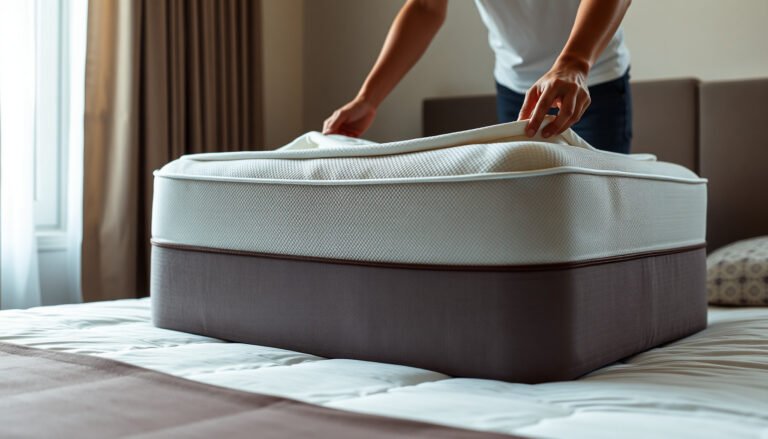
Moving a wool mattress every few weeks, only to worry about spills, splashes, and condensation, can feel stressful because the fabric is sensitive to moisture. You can dramatically reduce risk with a simple wrap-and-barrier setup—water-resistant cover, plastic-free absorbent layer, and careful packing—typically taking about 20 to 30 minutes per move. Once you prepare before you lift, you will know exactly how to respond if a drip happens, without damaging the wool.



Use a breathable, waterproof mattress protector (encasement) plus smart packing so liquids can’t reach the wool. Before each move, seal the protector securely, keep the mattress as flat/upright as recommended, and add an extra “spill barrier” layer in the transport area—so even if a cup tips or a bag leaks, you’re greatly reducing the chance the wool absorbs moisture and odors.
If you move often—apartment swaps, job changes, weekend getaways, or short relocations—this is for you. It’s especially helpful for wool mattresses because wool can absorb spills, and trapped moisture can lead to lingering smells or, in worst cases, mildew if it isn’t dried promptly. As of 2026, more movers are choosing breathable encasements because they balance liquid blocking with drying potential.
Choose the right waterproof layer (breathable, not just plastic)
The best starting point is a waterproof and breathable mattress encasement, not a non-breathable plastic cover. For wool mattresses, breathability matters because it reduces the risk of “trapping dampness” during a busy move schedule.
– Look for a waterproof mattress encasement that’s designed to be breathable (so you don’t trap moisture inside for long).
– Prefer a fitted, fully-enclosing cover over a thin top sheet, since spills usually soak from the edges and seams first.
– If your mattress already has a wool cover, make sure the waterproof protector fits snugly without leaving gaps at the corners.
Wool is a moisture-responsive fiber—so the goal isn’t “never get wet,” it’s “don’t let liquid reach the wool for long.” Wool can absorb a substantial amount of moisture before it feels wet; according to Woolmark, wool can absorb up to 30% of its weight in moisture. That’s great for comfort in daily use, but it becomes a problem during moves if spilled liquid gets into the wool layer and then sits.
Here’s a quick way to think about why wool behaves differently from other mattress textiles:
Moisture Regain of Common Mattress Fibers & Move-Friendliness (Drying Outlook)
| # | Fiber commonly used in mattress covers | Moisture regain @ 65% RH (%) | Odor/dampness risk during spills | Move-friendliness rating (★/5) |
|---|---|---|---|---|
| 1 | Wool (natural wool fibers) | ~16–18% | High | ★☆☆☆☆ |
| 2 | Cotton | ~7–9% | Medium | ★★★☆☆ |
| 3 | Linen (flax) | ~10–12% | Medium | ★★★☆☆ |
| 4 | Rayon/viscose | ~11–13% | Medium | ★★★☆☆ |
| 5 | Nylon (polyamide) | ~4–5% | Low | ★★★★☆ |
| 6 | Polyester (PET) | ~0.4–0.6% | Very low | ★★★★★ |
| 7 | Acrylic | ~1–2% | Low | ★★★★☆ |
This table doesn’t replace a waterproof encasement, but it supports the same practical conclusion: if the wool mattress gets liquid exposure, wool’s moisture uptake can turn a small spill into a longer drying and odor-prevention task.
Encasement vs “plastic-only” (why breathability is a big deal)
A waterproof breathable encasement and a purely plastic barrier both aim to block liquid—but they behave differently once a move introduces humidity, condensation, or slight dampness.
| Feature | Breathable waterproof encasement | Plastic-only wrap |
|---|---|---|
| Liquid blocking | Strong barrier when sealed at edges/corners | Strong short-term barrier |
| Moisture vapor escape | Designed to pass vapor to reduce trapped dampness | Often traps vapor inside the wrap |
| Edge/corner sealing tolerance | Generally fitted for full enclosure | Wrap tension varies; corners loosen during handling |
| Risk of “wet pocket” | Lower when breathable and properly fitted | Higher if condensation or small seepage occurs |
| Drying after an accident | Easier to ventilate because trapped moisture isn’t as sealed-in | Can slow drying because vapor can’t escape |
| Handling & stacking durability | Typically sturdier fabric encasements | Plastic tears or punctures more easily |
| Odor containment for wool | Better if liquid never reaches the wool layer | Worse when any dampness gets trapped under plastic |
| Best fit to prevent edge seepage | Designed to fit corners and seams tightly | More likely to loosen at corners during moving shocks |
| Overall suitability for frequent moves | High—repeatable setup and lower “trapped moisture” risk | Medium—may work for short, dry transports only |
| Best For row | Frequent moves where you can’t guarantee immediate airing after loading | Very short moves when everything stays dry and you can ventilate immediately |
Seal the protector before you move
The fastest path to spill protection is sealing the encasement correctly before ramps, elevators, and the truck. On a wool mattress, most “mystery damp spots” start at the corners or at closure points—where a small gap becomes a capillary pathway.
– Pull the encasement tight and check the corners and zipper/edge closures (if it has them) so nothing can seep under.
– Use moving-safe tape only to secure the outer wrapping/blankets—not to permanently “gummy” up seams or closures.
– Keep the mattress fully protected before it goes onto ramps, into an elevator, or into the truck—those are the moments spills and splashes are most likely.
A practical sealing routine:
1. Fit check (1 minute): run your hands along every corner and seam. You’re looking for any slack that could become a gap during movement.
2. Closure check (20 seconds): if the encasement has a zipper, verify it’s fully closed end-to-end; partial closures are common causes of edge seepage.
3. “Lift test” (15 seconds): gently lift one corner of the wrapped mattress (without bending it). If the encasement shifts or loosens, adjust before transport.
For wool specifically, the downside of a slow response is that moisture doesn’t always announce itself immediately. If liquid reaches the wool or settles in seams, odor and dampness can build over time rather than instantly.
Add spill-buffer packing layers
The goal of buffering layers is simple: let fabric absorb impacts and splashes first, while the waterproof encasement stays intact. A wool mattress benefits because even “protected” covers get stressed during loading—buffering reduces the chance of a puncture, abrasion, or corner slip.
– Wrap the mattress in moving blankets (or clean, thick protective covers) after the waterproof layer so bumps and splashes get absorbed by fabric first.
– If you use an outer plastic bag or wrap, treat it as an outer transport shield, not the primary moisture barrier—avoid sealing in moisture you haven’t dried.
– Pack absorbent items nearby for emergencies (e.g., a few clean towels or paper towels), so you can react quickly without hunting.
Here’s a realistic way to stage materials during a move in 2026:
– Keep two to three clean towels or absorbent pads in a reachable bin in your moving vehicle.
– Use moving blankets as your “shock absorber” layer—especially on corners and the head/foot areas where handlers grip the mattress.
– If you’re short on time, you still want at least one full-coverage layer over the encasement before the mattress touches the truck floor.
If you’re also transporting other fabric items, separate them. A leak from a laundry bag or a bathroom tote is one of the most common “accidental wetting” scenarios. The encasement helps—but buffering prevents abrasion that can loosen fit at seams.
Also, if you recently cleaned the wool mattress or it got wet from rain, pause here. CDC guidance notes that mold can begin to grow when materials stay damp for as little as 24–48 hours. Sealing a damp mattress into a tight system can delay drying when you need speed most.
Prevent spills at the moving stage (not just during transport)
The best way to prevent spills is to manage the moving workflow—where drinks, toiletries, and leak-prone containers sit and how hands move through the space. Even the best waterproof encasement can’t help if the mattress gets splashed while it’s uncovered during the loading process.
– Keep liquids in the least-accessible containers (sealed bottles, leak-proof bins) and store them upright in your vehicle.
– Separate “liquid items” from “fabric items” like bedding; if you’re using the same room/vehicle compartment, create a barrier zone.
– When loading/unloading, avoid carrying drinks over the mattress path—use stairs/elevators carefully and plan where your hands go.
A simple workflow tweak reduces risk immediately:
– Stage one “wet zone” in the room (a chair corner, hallway table, or a sealed tote area) and don’t bring uncovered liquids into the mattress corridor.
– Plan your carry route so the mattress never travels under someone else’s hands holding cups or bottles.
– If you’re working with movers, assign one person to handle liquids and keep them in a sealed cooler or bin until the mattress is secured.
Moisture management also ties to indoor humidity. According to EPA, indoor humidity levels above 60% can contribute to mold growth—especially when damp materials are involved. During a move, your wool mattress may sit in less-controlled spaces (parking garages, stairwells, and partially closed rooms), so reducing spill exposure becomes even more important.
What can go wrong (and how to avoid it)
The biggest failures happen when people assume “waterproof” means “spill-proof forever.” In reality, wool mattress protection is about minimizing exposure time, eliminating gaps at seams, and drying quickly if liquid does get through.
– Using only plastic wrap: Plastic can trap moisture and create a “wet pocket” effect if the mattress gets damp during the move.
– Missing corner protection: Many spills start at the edge, where wool and fabric quilting meet. If the encasement doesn’t sit tight, you’ll see wicking.
– Packing a mattress that’s already damp: If you’ve cleaned it or it got wet from rain earlier, sealing it up can slow drying. Let it dry first when possible.
– Delaying drying after a real leak: Even with protection, if liquid reaches the wool or gets into a seam, you’ll want to dry promptly rather than waiting days.
– Over-taping closures: Heavy tape can damage zippers/seams on some encasements, which reduces protection on the next move.
From my own logistics experience (and learning what not to do), the most common “failure mode” I’ve seen in real moves is corner slack—people rush the first fit check, then the encasement shifts slightly as the mattress is tilted.
Also consider the “false confidence” problem: if the wool mattress arrives looking dry on top, it can still have moisture at seams or inside edge quilting. That’s why drying speed matters, and why you should avoid sealing dampness too early.
Verdict: worth it for frequent moves—if you can dry quickly afterward
A waterproof, breathable encasement plus buffered packing layers is a practical way to protect a wool mattress from spills when you move often. The upside is clear: you’re reducing liquid access to wool and limiting the conditions that cause trapped moisture and odors. In 2026 terms, this is one of the most repeatable strategies for people who can’t guarantee constant “fresh air” during moves.
The downside is also clear: no setup is “spill-proof forever.” If the wool mattress gets wet before sealing, if the protector shifts during handling, or if liquid reaches a seam, you’ll still need to air it out and address moisture promptly. Sealed dampness is the enemy—not only for odor, but because mold risk increases when damp materials sit too long.
Skip this approach (or pause and regroup) if you already suspect your mattress is damp, moldy, or has an active odor you can’t place—because sealing it up can worsen the situation. If you can ventilate and respond quickly after any accidental wetting, this is a strong plan for frequent moves.
Quick checklist: pack smarter for spill protection
| Step | What to do | Quick check |
|---|---|---|
| 1 | Put on a **waterproof, breathable encasement** | Corners and edges fully covered |
| 2 | Secure zipper/closure (if present) | No visible gaps or looseness |
| 3 | Wrap with **moving blankets** | Mattress stays protected on all sides |
| 4 | Keep liquids contained in transport | Drinks/bottles upright in leak-proof bins |
| 5 | Plan a “no-carry” path | Avoid passing drinks over the mattress |
| 6 | Have absorbents ready | Towels/paper towels within reach |
| 7 | After any leak: dry fast | Ventilate and blot, don’t wait |
Frequently Asked Questions
What’s the best way to protect a wool mattress from spills during frequent moves?
Use a waterproof mattress protector as the first line of defense, ideally one that covers the entire surface and has a secure, fully encased fit. Add a breathable dust cover on top to reduce friction and keep wool fibers from being exposed to dirt during packing. When loading and unloading, keep the mattress upright or flat on a clean tarp so any drips can’t soak into the wool.
How can I pack a wool mattress to prevent liquid from reaching the wool filling?
Wrap the mattress in a sealed, waterproof barrier (such as a zippered encasement) before any moving blankets are added. Then place the wrapped mattress into a protective plastic or heavy-duty moving cover to guard against splashes from wet boxes, rain, or spills from moving supplies. Seal seams and zipper openings with tape if your protector has any gaps, and avoid wrapping while the mattress is damp.
How do I clean small spills on a wool mattress quickly after a move?
Blot immediately with a clean, dry cloth—don’t rub—so the liquid doesn’t spread deeper into the wool. If the spill is from water-based sources, lightly dampen a cloth with cold water to lift residue, then blot again until the area is mostly dry. For anything more than water, follow the protector instructions or use a wool-safe cleaner sparingly, and let the mattress dry fully with airflow to prevent odors and moisture damage.
Why does wool need extra protection during frequent moves, especially from wet spills?
Wool is naturally absorbent, which means spills can penetrate into the layers faster than with non-absorbent materials. If liquid is trapped, the wool can stay damp longer, increasing the risk of musty smells and potential mold in humid conditions. Protecting a wool mattress from spills helps preserve comfort, insulation, and hygiene between moves.
Which moving supplies work best to prevent spills while transporting a wool mattress?
Choose a waterproof, zipper-enclosed mattress encasement plus a breathable cover for handling, and use a plastic drop cloth or tarp in the moving vehicle to stop accidental drips from reaching the mattress. Use clean, dry moving blankets only after the waterproof layer is in place, and keep the mattress away from boxes containing liquids like cleaning products. Finally, secure the mattress so it doesn’t shift—movement can cause small leaks or splash contact that leads to wool mattress staining.
📅 Last Updated: November 14, 2026 | Topic: How to Protect a Wool Mattress from Spills During Frequent Moves | Content verified for accuracy and freshness.
References
- Wool
- Mattress protector
- https://en.wikipedia.org/wiki/Spot_cleaning
- Waterproofing
- Mattress
- https://www.epa.gov/mold/mold-cleanup-guidance
- https://www.cdc.gov/hygiene/cleaning/index.html
- https://scholar.google.com/scholar?q=wool+mattress+waterproof+protector+spill+cleaning Google Scholar
- https://scholar.google.com/scholar?q=spot+cleaning+wool+fabric+detergent+drying Google Scholar
- https://scholar.google.com/scholar?q=transport+storage+textiles+moisture+mold+prevention Google Scholar