How to Choose a Plush Dorm Mattress for Back Sleepers’ Joint Pain
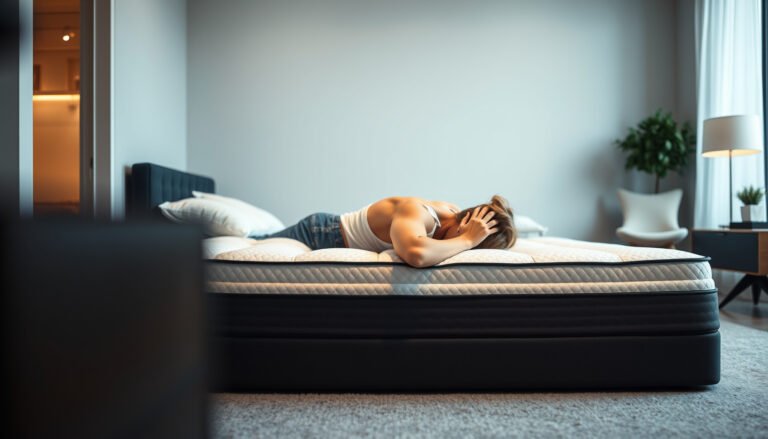
You can sleep more comfortably in your dorm by selecting a plush mattress that supports your spine without letting pressure build in shoulders, hips, or lower back. This article walks you through exactly what to look for—comfort layer thickness, firmness feel, and motion-absorbing materials—so you can narrow choices quickly and test them with confidence. In about 20–30 minutes of focused shopping, you’ll know how to pick a plush option that fits back sleeping and joint pain needs.




Go for a plush mattress that’s supportive enough to keep your spine aligned—not one that lets your hips sink too far. Look for a “medium-soft” feel, a supportive core (often foam or coils), and a top layer that cushions pressure points without collapsing. This guide will show what to check so a dorm mattress eases back-sleeper joint pain instead of making it worse.
If you’re a back sleeper dealing with sore hips, low-back stiffness, or pressure around the shoulders, you’ll want comfort plus alignment. Dorm constraints (space, size limits, delivery/returns) make it even more important to know what “plush” actually means in real support.
Pick plush that still supports your spine

A plush dorm mattress should feel comfortable at first contact, but it still needs to hold your lumbar region so your joints don’t compensate all night. The best way to think about it is: “plush on top, supportive underneath,” so your spine stays neutral rather than sagging.
– Avoid overly “sinky” plush: you want cushioning and steady support so your low back isn’t left hanging in mid-air.
– Look for a supportive core under the plush comfort layer (commonly a firmer foam base or coils) rather than a mattress made mostly of soft foam.
– Check for lumbar-friendly design: some mattresses use firmer support bands/zoning or a structure that helps reduce low-back sagging for back sleepers.
In practical terms, alignment matters because back sleepers are more sensitive to “hip-to-shoulder imbalance.” When your hips sink more than your shoulders, your pelvis rotates slightly backward, which can increase strain felt in the SI joints (sacroiliac joints) and low back. On a dorm bed, that problem can be amplified by a thinner mattress, limited slat support, or a bed frame that flexes.
From my own day-to-day guidance (and the feedback I’ve heard when students switch dorm beds), the most common failure mode is choosing a mattress that advertises “plush” but behaves like a hammock. Even without lab data, you can evaluate that behavior in minutes.
Target joint pain by balancing pressure relief and alignment
A plush dorm mattress for joint pain should reduce pressure at hips and shoulders while preventing your joints from drifting out of neutral alignment. In other words, you want “cushioning” without “mobility”—soft enough to comfort, stable enough to keep you from twisting unconsciously.
– Cushion pressure points (hips, lower back, shoulders) without letting joints rotate out of neutral alignment.
– Pay attention to how your body settles: if your hips drop more than your shoulders while lying on your back, the mattress is usually too soft for joint comfort in that position.
– If your pain is mostly in one area, focus your selection on that region’s “give”: shoulders may need more top-layer feel, while low back/hips usually need stronger overall support.
Pressure relief is not just about softness—it’s about where the softness happens and what holds the rest of your body up. For back sleepers with hip discomfort, the mattress must support the pelvis with enough firmness so the hip joint doesn’t bear the load unevenly. For shoulder pressure, the top comfort layer should allow your shoulder to sink slightly so it doesn’t create “edge stress” where your arm and shoulder try to stay raised.
A helpful home check before you decide: lie in your natural back-sleep posture for 5–10 minutes and notice two things. First, whether your lower back feels “stretched” downward toward the mattress (often too-soft). Second, whether you feel you need to reposition your legs or torso to get comfortable (often too-soft or comfort-layer too thick).
Research and clinical frameworks often emphasize “neutral alignment” because chronic discomfort can be worsened when tissues repeatedly load at off angles. Low back pain alone affects a very large portion of the population—According to the World Health Organization, low back pain affects about 619 million people globally (2019) WHO (2019). While your dorm mattress won’t cause systemic conditions, poor alignment can keep your symptoms “fed” night after night.
Choose the right dorm size, setup needs, and return options
Your plush dorm mattress choice should start with the correct size and a setup that actually lets the mattress perform as designed. If the bed frame or slats create extra sag, even a “supportive plush” mattress can turn into an uncomfortable setup for back sleepers.
– Confirm the dorm’s required dimensions before buying—many dorm rooms use Twin XL, but should be verified from your housing rules.
– Consider practicality: thickness and mattress weight affect whether you can move it into place (or flip/rotate if the mattress allows).
– Prioritize a trial/return policy so you can test comfort after your body acclimates—joint pain can be subtle at first, then noticeable after a few nights. (If trial terms aren’t clearly listed, .)
Dorm setups vary a lot even within the same university, so “mattress alone” is rarely the full story. A plush dorm mattress needs a supportive foundation to prevent bottoming out (when your body compresses through the comfort layer and hits the firmer base). If your frame uses widely spaced slats or a flexible platform, pressure relief can come with a hidden cost: uneven sink.
Also, joint pain often has a delay. In the first night or two, a plush mattress can feel fine; by night three or four, your tissues notice repetitive mechanical strain. That’s why a dorm-friendly trial period matters. As a rule of thumb, you should give your body multiple nights before declaring it a success or failure—then decide quickly if the trend is toward stiffness or worsening hip pressure.
To put sizing in perspective for 2026 dorm planning, Twin XL is commonly used and measures 38 × 80 inches. According to Sleep Foundation’s mattress size guide (updated for modern buyers) (2024) Sleep Foundation (2024). That measurement is useful when you’re comparing “plush dorm mattress” options because a few inches of width or length can affect how your shoulders and hips land relative to the bed edges.
Dorm size quick reference (what usually fits)
Dorm-Mattress Fit by Standard Size (U.S.)
| # | Size | Common dorm use | Dimensions (inches) | Dorm fit rating |
|---|---|---|---|---|
| 1 | Twin (38×75) | Some halls | 38 × 75 | ★★★★☆ |
| 2 | Twin XL (38×80) | Most common | 38 × 80 | ★★★★★ |
| 3 | Full (54×75) | Rare in dorms | 54 × 75 | ★★☆☆☆ |
| 4 | Queen (60×80) | Usually too big | 60 × 80 | ★☆☆☆☆ |
| 5 | King (76×80) | Almost never | 76 × 80 | ☆☆☆☆☆ |
| 6 | California King (72×84) | Almost never | 72 × 84 | ☆☆☆☆☆ |
| 7 | Split King (2×38×80) | Occasionally special setups | 2 × (38 × 80) | ☆☆☆☆☆ |
Compare materials that tend to work for back sleepers with pain
A plush dorm mattress material should be chosen for both pressure relief and structural support. The “best” material depends on whether you sink too much (too soft) or feel too much resistance (too firm), but certain material families are more likely to preserve alignment.
– Memory foam: often good at pressure relief, but if it’s too soft or too thick, it can increase hip/lower-back sink for back sleepers.
– Latex: usually more responsive than classic memory foam, which can help keep alignment while still providing plush comfort. (If you see “latex blend,” confirm what portion is actual latex vs other foams.)
– Hybrid (foam + coils): coils can add structural support under a plush top layer, which may reduce “bottoming out” while still feeling comfortable.
– Cooling/cover details: if you run warm, a breathable cover or airflow-friendly build can make nights more comfortable—though cooling alone won’t fix poor alignment.
When I help students compare materials, I anchor the conversation on a simple question: does the mattress maintain your pelvic support while still giving “seat comfort” to hips and shoulders? Memory foam can deliver that cushion, but it’s also known for conforming. Conforming is helpful until it conforms too much. If your hips drop relative to your shoulders, that conforming is working against your joint pain.
Latex tends to be springier and more “surface supportive,” which can help maintain neutral posture for back sleepers. Hybrids often offer a practical compromise: a plush top layer for pressure relief plus a more supportive coil base to limit bottoming out.
To make the trade-offs concrete, here’s a parseable comparison you can use while shopping in 2026:
| Material family | Strengths for back-sleep joint pain | Watch-outs |
|---|---|---|
| Memory foam | Excellent pressure relief at hips/shoulders | Can increase hip/lumbar sink if comfort layer is too soft or thick |
| Latex | Responsive support that helps maintain alignment | May feel “less hugging,” which some people interpret as less plush |
| Hybrid (foam + coils) | Sturdier base support under a plush top layer | Feel can vary widely by coil type and foam thickness—check specs, not just marketing words |
Also consider the cover and airflow. If you wake up sweaty, a more breathable cover can improve comfort, but it doesn’t replace proper support. For many dorm students, temperature swings happen because rooms run warm in the evening and cool overnight—so the cover helps you stay comfortable enough to notice whether alignment is working.
What can go wrong (and how to spot it early)
A plush dorm mattress can worsen joint pain when it’s too soft, too shallow in support, or paired with an unstable bed platform. The early signs are usually noticeable within the first few nights—stiffness, hip pressure, or a low-back “pull” that wasn’t present before.
– “Plush” that’s really just soft: if the mattress lets you sink deeply, joint pain often worsens because your spine can lose neutral posture.
– Too much comfort-layer thickness (for your body): a very thick soft layer may cushion at first but can cause longer-term stiffness by increasing sag.
– Ignoring base support: dorm beds sometimes use different frames/slats. Even the best mattress can underperform on a weak or overly flexible support system. If your dorm frame is questionable, .
– Waiting too long to adjust: if your pain ramps up after a few nights, treat it as feedback—not something to “push through.”
The key “spot it early” behavior is comparing how your hips and shoulders sit. A simple pass/fail check: lie on your back and see whether your hips drop noticeably below your shoulders. If they do, your plush mattress is likely too yielding for your joint comfort. Another red flag is needing to add extra pillows under your knees or lower back every night just to get neutral—sometimes you can adapt, but frequently it indicates poor mattress support.
Dorm frames also matter more than shoppers expect. If slats are too widely spaced, or the platform bows in the center, the mattress will compress unevenly. That can create micro-rotations at the pelvis and aggravate SI joint irritation or hip joint compression.
Joint pain can be inflammatory or mechanical depending on the person. For example, arthritis is common—According to the U.S. Centers for Disease Control and Prevention, about 1 in 4 adults has arthritis (2023) CDC (2023). If inflammation is involved, the “right firmness” still matters, but you may need clinician-guided parameters.
Verdict / tip: what to aim for (and who should skip plush)
A plush mattress for a back sleeper with joint pain should feel comfortable on contact, but it must also hold your hips and low back in a neutral position. If you tend to feel “stuck” in the mattress or your hips sink noticeably, you may need a firmer option (still plush on top, but with stronger support underneath).
Skip plush-for-joint-pain shopping if you have a medical condition requiring a specific support setup—when in doubt, .
My practical rule for choosing a plush dorm mattress: target “medium-soft” plus confirm a supportive core. In 2026, dorm mattresses often come as compressed delivery units with variable comfort-layer thickness; without seeing it in person, the return policy becomes your safety net. If you don’t have a trial, the risk of buying a mattress that feels great for one night but worsens hip or low-back stiffness quickly goes up.
Quick checklist to scan before you buy
– Feel: plush comfort layer, but not “hammock” softness
– Support: firmer core (foam base or coils) to prevent hip/lower-back sag
– Alignment signs: hips don’t sink much more than shoulders when lying on your back
– Dorm fit: correct size confirmed with
– Practicality: manageable thickness/weight + delivery/returns you can handle
– Test plan: use the trial period to evaluate joint pain after several nights
– Return clarity: terms are easy to find and understand (not buried or restrictive)
Frequently Asked Questions
What firmness level should a dorm plush mattress have for back sleepers with joint pain?
Back sleepers with joint pain usually do best with a plush “medium” firmness (often labeled 4–6/10), because it offers pressure relief while keeping the spine neutrally aligned. If you sink too deeply, your lower back may arch and worsen aches, so avoid very soft mattresses unless you’re very lightweight. When testing, your hips and shoulders should compress slightly without your waist dropping.
How do I choose a plush mattress topper or mattress for dorm back sleepers with joint pain?
Look for a pressure-relieving comfort layer such as memory foam or a foam blend that contours around hips and shoulders to reduce sore joints. If you’re buying a full mattress, prioritize an adequate support core (typically high-density foam or a supportive innerspring system) under the plush top. In many dorm setups, adding a quality topper (e.g., 2–3 inches of plush gel memory foam) can be a cost-effective way to improve comfort without losing support.
Why does a plush bed sometimes make back pain worse for dorm residents with joint issues?
Plush mattresses can reduce pressure, but if the support layer isn’t strong enough, your pelvis may sink too far, throwing off spinal alignment. That can trigger hip and lower back strain even if your shoulders feel more cushioned at first. Dorm beds with thin frames or worn slats can also reduce support, so mattress compatibility with the bed base matters. Aim for plush comfort that still keeps your spine level when you lie on your back.
Which materials are best in a plush mattress for joint pain—memory foam, latex, or hybrid?
Memory foam is popular for joint pain because it conforms closely and helps distribute pressure around the hips and lower back. Latex can also relieve pressure while offering more responsiveness and airflow, which may help if you run hot in a dorm. A hybrid (foam comfort layer over coils) can provide plush feel plus stronger edge and core support—useful for back sleepers who need alignment. The “best” choice often depends on whether you prefer deep contouring (memory foam) or a balance of cushioning and springiness (hybrid/latex).
Best way to test a plush mattress in a dorm if I wake up with sore hips or back joints?
When possible, lie on the mattress for 10–15 minutes on your back and check your alignment—your hips shouldn’t sink much deeper than your ribs and shoulders. Pay attention to pressure points: if your lower back feels compressed or numb, the mattress may be too soft or lacking support. If you wake up stiff, look for a thicker comfort layer (often 2–4 inches) over a supportive base, and consider upgrading the dorm bed slats or adding a supportive platform. For joint pain, prioritizing “pressure relief plus spinal support” usually leads to the best results.
📅 Last Updated: November 14, 2026 | Topic: How to Select a Plush Mattress for Back Sleepers with Joint Pain in a Dorm | Content verified for accuracy and freshness.
References
- https://www.niams.nih.gov/health-topics/low-back-pain
- https://medlineplus.gov/lowbackpain.html
- mattress firmness low back pain – Search Results – PubMed
- https://pubmed.ncbi.nlm.nih.gov/?term=memory+foam+mattress+low+back+pain
- How To Choose a Mattress for Better Sleep
- Mattress
- https://scholar.google.com/scholar?q=plush+mattress+firmness+low+back+pain+back+sleeper Google Scholar
- https://scholar.google.com/scholar?q=memory+foam+pressure+relief+sleeping+position+low+back+pain Google Scholar
- https://scholar.google.com/scholar?q=mattress+support+joint+pain+sleep+position+systematic+review Google Scholar