Adjustable Mattress Selection for Back Sleepers with Hot Flashes in Tiny Homes
Back sleepers in tiny homes often buy an adjustable mattress for heat relief first, only to discover the support and pressure alignment still fail during leveling and head/leg adjustments. The result is more discomfort and easier night sweats than necessary. You can fix this in about 30–45 minutes by matching your sleep position needs with the mattress’s adjustable range, pressure-relieving firmness, breathable layers, and a size that truly fits your space.




If you’re a back sleeper with hot flashes in a tiny home, pick a compatible adjustable base + a cooling mattress that lets you keep your spine neutral while gently elevating your head/upper body for airflow. The key is making sure the mattress support system stays stable when tilted—because comfort and temperature control only matter if your lumbar support remains consistent.
If you’re dealing with hot flashes at night, you’re also dealing with disrupted sleep, overheating, and the temptation to “solve it” with position changes. A well-matched adjustable mattress setup can reduce heat retention and improve breathability—while helping your back maintain alignment. This guide breaks the decision into practical checks you can complete before you commit, especially in tight tiny-home layouts where bed access and power management are often the real bottlenecks.
Who This Is For (and When It Applies)
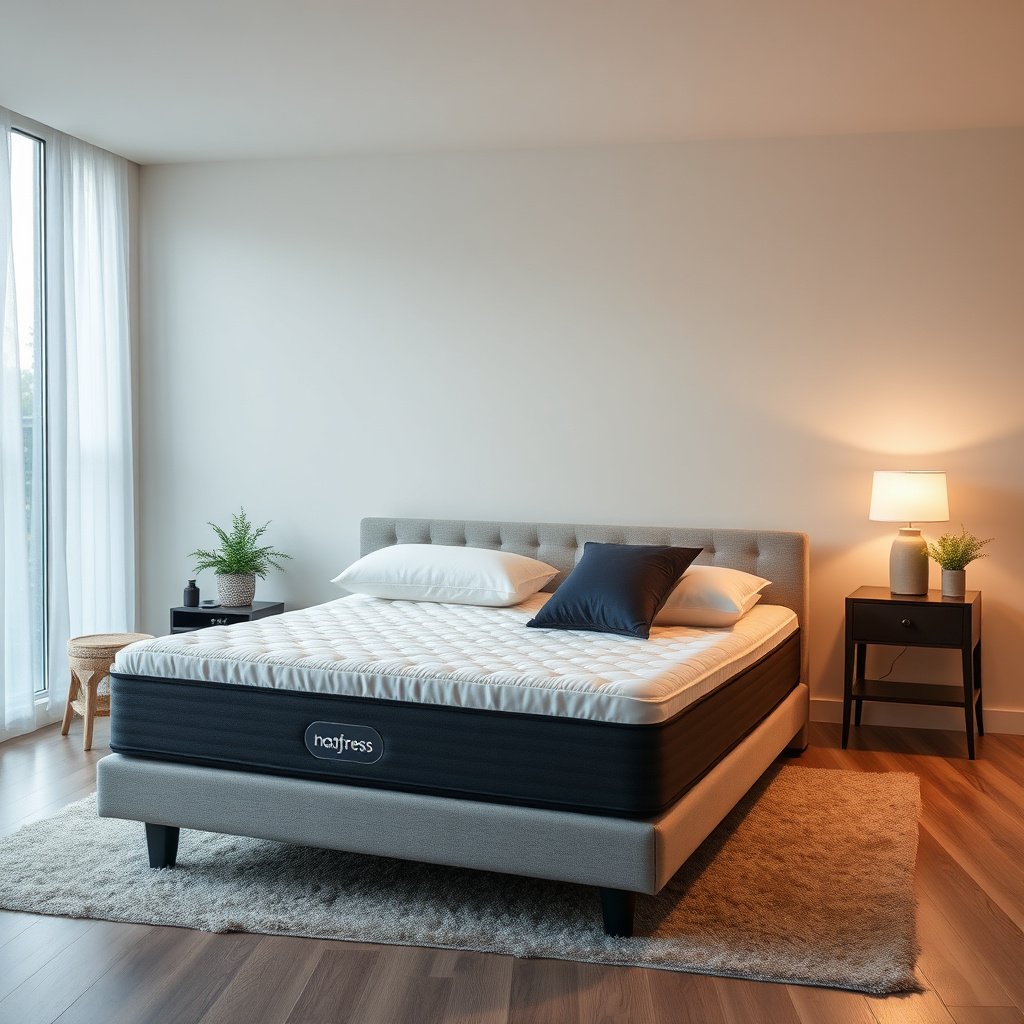
An adjustable mattress setup is most useful when you need airflow without sacrificing lumbar support, and when a tiny home limits your ability to make frequent physical adjustments. This is ideal for back sleepers who wake up sweaty and want a small head/torso elevation that helps ventilation—without forcing their hips into a strained angle.
It’s especially relevant in tiny homes because bed footprint, access for swapping components, and outlet placement can determine what’s actually feasible. Whether you’re starting from scratch or replacing only one part (base or mattress), the adjustable mattress selection you make has to account for both comfort and real-world constraints: clearance, cable reach, and the way the mattress behaves during tilt.
Start With the Right Adjustable Base Features
The right adjustable base is what makes the rest of the system “work together” instead of shifting or collapsing when you change angles. For back sleepers with hot flashes, the goal is stable head/upper-body elevation paired with consistent lumbar support as the base tilts.
– Prioritize stable adjustment: look for solid construction and reliable head/upper-body positioning so you don’t feel “off” when you increase elevation during a hot-flash episode.
– Check control usability: simple presets/remote operation matters in tiny spaces where you may be half-asleep; quick adjustments are often better than complicated settings.
– Confirm compatibility: mattress thickness and support design must match the base’s intended use. If the mattress was designed only for flat sleeping, an adjustable mattress setup may still feel fine—but support can become uneven under tilt.
For tiny-home buyers, “stability” should be treated as a functional spec, not a marketing phrase. If you can, verify the base’s behavior at the angles you’ll actually use. In practice, you want to see whether the lumbar area stays supported when the head portion rises.
Choose a Cooling-Friendly Mattress Layer Setup
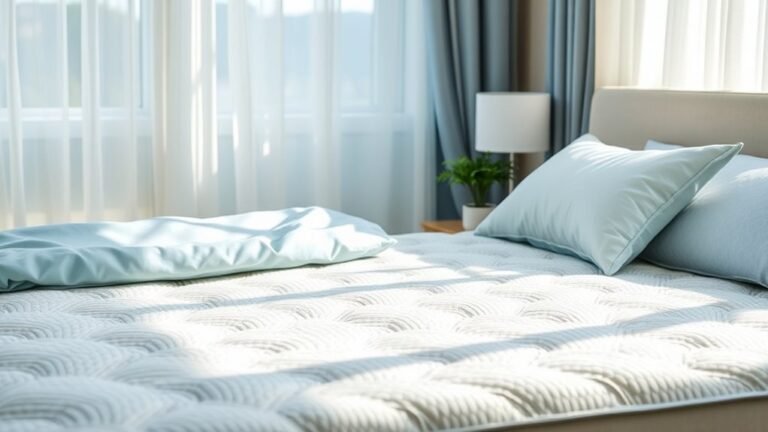
A cooling-focused mattress is the part of the adjustable mattress selection that most directly impacts hot-flash comfort. Even if you elevate your head slightly, a heat-trapping comfort layer can keep you uncomfortable, because overheating often comes from the layers above your back—not only from the room.
– Focus on heat management first: breathable covers (and fabrics that don’t trap heat) usually make the biggest difference for hot-flash comfort.
– Consider how the comfort layers behave: some foam and quilted comfort systems sleep warmer than others. Choose designs built for airflow rather than heat retention.
– Match support to back sleeping: a medium-firm comfort feel with a supportive transition layer is often a good starting point to keep the lower back comfortable when you elevate slightly.
Sleep temperature matters because comfort is strongly tied to heat dissipation. According to ASHRAE Standard 55-2017, thermal comfort depends on factors such as air temperature and airflow, and small changes can shift someone from comfortable to overheated. For sleep, that’s why even a “mild” elevation in an adjustable mattress setup can feel dramatically different if the top layers breathe well.
Heat and hot-flash context you can use while shopping
Hot flashes aren’t a niche issue—your mattress comfort strategy should be built around it.
Hot-Flash & Menopause Statistics Useful for Sleep Comfort Planning
| # | Clinical datapoint | Value | Timing / definition | Impact magnitude |
|---|---|---|---|---|
| 1 | Women who experience hot flashes | ~75% | Across menopausal transition | 75 |
| 2 | Menopause definition | 12 months | Without a menstrual period | 12 |
| 3 | Average age of natural menopause | 51 years | United States population average | 51 |
| 4 | Typical hot-flash duration | 7–10 years | From onset for many women | 10 |
| 5 | Early menopause threshold | Before 45 | Clinically classified as early | 45 |
| 6 | Average start of perimenopause | 47 years | Often begins before menopause | 47 |
| 7 | Perimenopause duration (typical) | ~4 years | Transition window for many | 4 |
These numbers help frame why an adjustable mattress setup is worth treating as a long-term sleep comfort solution. For hot-flash prevalence and menopause definitions, see North American Menopause Society (NAMS) and National Institute on Aging (NIA) public health materials.
Dial in Back-Sleeper Support in a Tiny Home
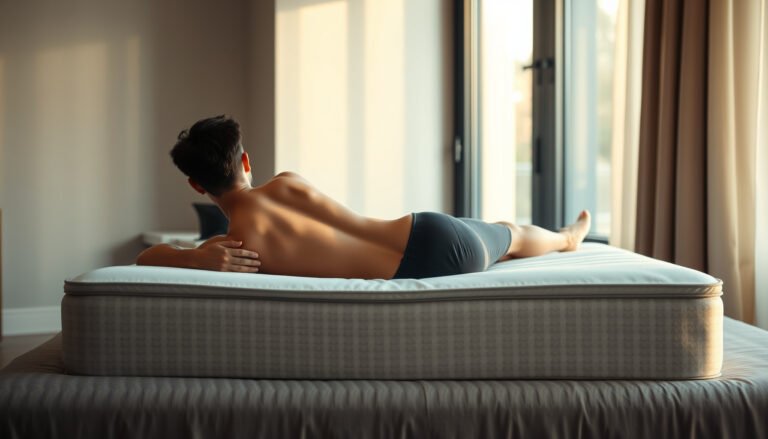
The most effective back-sleeper adjustment is the one that keeps your spine neutral while improving airflow, not the one that raises you the most. If you elevate too aggressively, you can unintentionally create hip flexion that stresses the lower back—especially on an adjustable base where the whole geometry changes.
– Aim for neutral alignment: the “right” adjustment reduces strain, not one that forces your hips into an awkward angle.
– Use small changes before big tilts: hot flashes often respond best to mild elevation because it improves air movement without destabilizing your posture.
– Validate pressure relief at the lumbar area: back sleepers typically feel problems first in the lower back if the mattress is too soft, too thin, or too thick for the base.
In tiny homes, tiny changes matter more because there’s less room to reposition later. That “start low and iterate” approach is especially important with adjustable mattress setups because the comfort experience can shift with every angle.
Fit, Ease of Use, and Power-Saving in Tight Spaces
An adjustable mattress setup in a tiny home should be evaluated as much for access and practicality as for comfort. If you can’t easily operate it—or can’t safely plug it in—you’ll avoid using the positions that help during hot flashes.
– Measure before you buy: confirm the bed’s full footprint, including clearance for the adjustable range, plus doorway access for bringing components inside.
– Plan outlet placement and cable routing: in tiny homes, you want power/cord access reachable without snagging or blocking movement.
– Think about day-to-day handling: weight, setup complexity, and how often you’ll adjust the position matter more when space is limited.
A practical framework is to do a “motion audit.” With the base powered off, simulate the movement with the mattress off (or with a similar template) to see if the bed corners clear trim, doors, and nearby furniture. Then do a second pass with the mattress in place to check whether the adjustable mattress setup shifts or binds during tilt.
Also note: thermal comfort can depend on airflow. According to ASHRAE Standard 55-2017, air movement can influence perceived comfort; in tiny homes, airflow paths can be shorter and more variable, which makes mattress breathability and head/torso elevation even more important in practice.
What Can Go Wrong (and How to Avoid It)
Most problems come from heat-trapping materials, mismatched mattress-to-base support, or over-aggressive positioning. An adjustable mattress setup fails when either the temperature strategy or the mechanical support strategy is incomplete.
– Choosing heat-trapping comfort layers: a warmer mattress design can keep hot flashes from improving even if you elevate your head.
– Mismatch between mattress and base: if the mattress isn’t built for adjustable use, you can get uneven support or pressure points when tilted.
– Over-adjusting angles: too much elevation can throw off spinal alignment for back sleepers—start conservative and adjust gradually.
Here’s a quick way to compare the “best-case” adjustable mattress setup versus the “simpler cooling-first” route:
- Pros of a matched adjustable mattress setup
- Improves airflow during hot flashes; supports back-sleep alignment when tuned correctly; can reduce nighttime repositioning.
- Cons of a matched adjustable mattress setup
- Requires compatibility planning; more moving parts and power considerations; may feel less stable if the mattress wasn’t designed for tilt.
- Pros of a non-adjustable cooling mattress
- Simpler setup in tight spaces; fewer compatibility issues; often easier to maintain.
- Cons of a non-adjustable cooling mattress
- You lose the option to change airflow/geometry mid-night; hot flashes may still prompt frequent waking.
Verdict: What to Pick (and Who Should Skip It)
If you want the best chance of staying cool without sacrificing your back, pick a compatible adjustable base + a mattress with a breathable cover and supportive feel (often medium-firm as a starting point). The upside is a sleep system that can maintain a back-sleeper-friendly alignment while offering mild head/upper-body elevation for airflow—exactly what many hot flashes need overnight.
The downside: adjustable setups can cost more, require planning in small spaces, and add complexity versus a simple cooling mattress. You may want to skip this approach if you have limited mobility for setup/access, a tight budget for a full system, or you find adjustable positions aggravate your pain—then a cooling-first mattress (non-adjustable) may be a better fit.
Quick scan checklist (save this):
| What to check | What “good” looks like |
|---|---|
| Adjustable base stability | Feels steady when you change positions |
| Controls | Easy remote/presets for fast relief |
| Compatibility | Mattress thickness/support works with the base |
| Cooling cover | Breathable, not heat-trapping |
| Comfort/support balance | Supportive for back sleeping (often medium-firm starting point) |
| Neutral alignment | Lower back feels supported when elevated |
| Tiny-home fit | Clearance for footprint and adjustable range |
| Setup practicality | Doorway access + reachable power setup |
Frequently Asked Questions
What features should I look for in an adjustable mattress for back sleepers with hot flashes in a tiny home?
Prioritize an adjustable mattress with strong lumbar support, multiple lift positions (especially for slight head elevation), and a responsive comfort layer that won’t trap heat. Look for breathable materials like cooling gel, ventilated foams, or natural fibers (e.g., Tencel) plus a breathable cover to help manage hot flashes. Because you’re in a tiny home, also confirm the mattress fits your exact frame size and that the base can recline without adding bulky clearance requirements.
How do I choose the right firmness level if I sleep on my back and get night sweats?
Back sleepers typically do best with medium-firm or firm support that keeps the spine aligned while preventing pressure buildup around the lower back. To reduce overheating, choose a firmness/combo that doesn’t require thick heat-trapping layers—thinner, breathable top comfort can help. If you’re unsure, use a mattress return policy and test for comfort at the angle you’ll actually use most in your adjustable setting (often a slight elevation).
How high should I elevate my head on an adjustable mattress to help reduce hot flashes while sleeping on my back?
Many people find relief with a gentle elevation—often around 2–6 inches at the head—because it can improve airflow and reduce the sense of overheating. Start low and adjust gradually based on comfort and whether you notice increased strain in your neck or mid-back. In a tiny home where space is limited, also ensure the base doesn’t require extra clearance to recline safely.
Which cooling materials and cover types work best for hot flashes on an adjustable mattress?
Look for cooling mattress covers and comfort layers designed for airflow and moisture management, such as breathable knit covers, gel-infused foam, latex, or phase-change materials (PCMs). Ventilated foam or pocketed support systems can help prevent heat from pooling, which is especially important when you’re using adjustable positions that may increase body contact points. Avoid overly dense, heat-retaining layers if you’re prone to night sweats, and consider a removable, washable cover for hygiene and freshness.
Why is choosing the correct adjustable base size and weight capacity important for tiny homes with back sleepers?
In a tiny home, the adjustable mattress must fit your space constraints—both the mattress footprint and the clearance needed for the base to raise and lower smoothly. Weight capacity matters too: an under-rated base can wear faster or limit movement, which affects comfort and alignment for back sleepers. Check the base’s range, bed frame compatibility, and recommended mattress thickness so your cooling comfort layers stay functional without compromising support.
📅 Last Updated: November 14, 2026 | Topic: How to Select an Adjustable Mattress for Back Sleepers with Hot Flashes in a Tiny Home | Content verified for accuracy and freshness.
References
- https://medlineplus.gov/hotflashes.html
- https://www.mayoclinic.org/diseases-conditions/menopause/symptoms-causes/syc-20353431
- Sleep tips: 6 steps to better sleep – Mayo Clinic
- About Sleep | Sleep | CDC
- hot flashes sleep night sweats bedroom temperature – Search Results – PubMed
- mattress firmness low back pain systematic review – Search Results – PubMed
- Mattress
- https://scholar.google.com/scholar?q=adjustable+bed+mattress+back+sleeping+recommendations+back+sleepers Google Scholar
- https://scholar.google.com/scholar?q=menopause+hot+flashes+sleep+bedding+cool+environment Google Scholar
- https://scholar.google.com/scholar?q=mattress+firmness+low+back+pain+randomized+trial+systematic+review Google Scholar