How to Choose a Mattress Topper for Stomach Sleepers: Key Tips
Which mattress topper will keep your spine aligned when you sleep on your stomach? Choose a thinner, firmer option that adds pressure relief without letting your hips sink, typically around 1–2 inches, and match it to your mattress size with a secure, washable cover. With a tape measure and a few preferences, you can narrow the right fit in about 20 minutes.
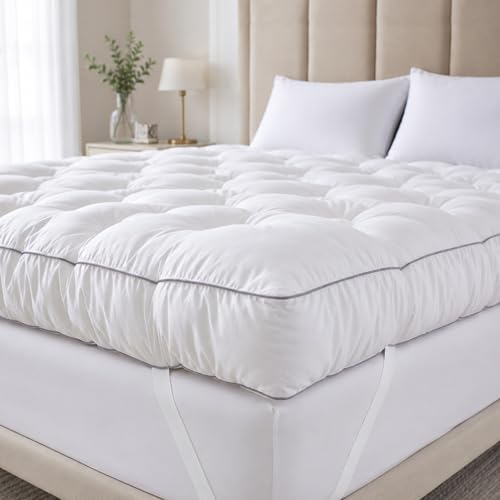



Choose a stomach-sleeper mattress topper that stays low-profile and medium-firm so your hips don’t sink and pull your spine out of alignment. The goal isn’t to make your bed softer—it’s to keep your torso supported while adding just enough comfort to reduce neck and back tension.
If you regularly sleep on your stomach (or you do when you fall asleep later in the night) and you wake with neck or upper-back tightness, this guide helps you compare topper thickness, firmness, materials, and fit so you don’t accidentally worsen alignment—something people often only notice after a few nights. As of 2026, the most reliable “support-first” approach is still the same: flatter under the midsection, responsive enough to resist hip drop, and securely anchored to prevent shifting.
Prioritize alignment over plush comfort
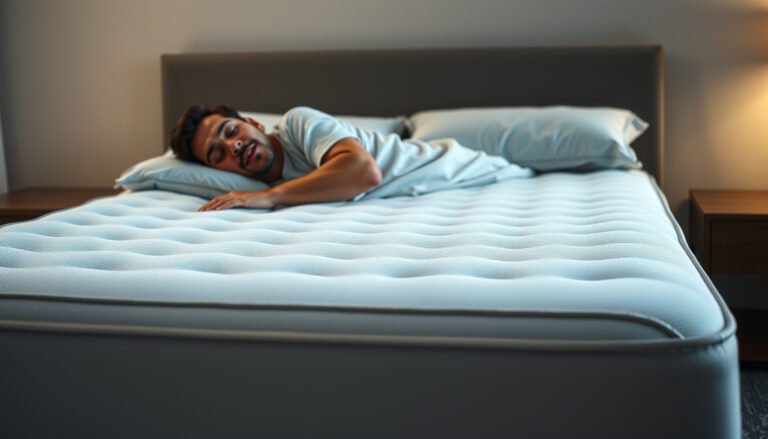
A stomach-sleeper topper should prioritize spinal alignment over softness because stomach posture is most sensitive to hip sinking. When your hips drop below your ribs, your lower back arches more, which can increase the feeling of strain the next morning.
– Stomach sleeping is most sensitive to hip sinking—so your topper should maintain a flatter feel under your torso.
– Aim for “support-first” comfort: gentle pressure relief where needed, but enough resistance to keep your midsection from dropping.
– If your current mattress already feels too soft, a topper that adds softness will usually make the alignment problem worse.
In my view (and based on how toppers behave by design), the biggest “false comfort” trap is choosing a topper that feels great in the first 60–120 seconds of lying down—but doesn’t hold that support after your body warms the material. Stomach sleepers often need the surface to stay stable as pressure increases, especially around the pelvis and lower abdomen. If you already have a mattress that forms deep body impressions, a plush topper can amplify that indentation instead of correcting it.
A stomach-sleeper target: “flatter torso, not sinking midsection”
The most practical way to think about topper comfort for stomach sleepers is “pressure relief without a tilt.” You want your shoulders to feel supported, but your hips shouldn’t become the lowest point of your body. That’s why “medium-firm” is usually the starting point rather than “soft.” In 2026, many reputable topper constructions still follow this exact principle: responsive layers that resist progressive sink.
A quick self-check at home (no special tools)
– Lie on your stomach for a minute and notice your hips: if they feel like they drop below your ribs, you need more support.
– Pay attention to neck comfort: stomach sleepers often need a topper that doesn’t force the shoulders too far down.
If your hips drop quickly—within a minute—you’ll likely feel that “morning stiffness” connection later, even if you fall asleep comfortably at first. That symptom pattern usually points to insufficient support (or excessive topper thickness), not pillow choice alone.
Match thickness and firmness to your current mattress
A good stomach-sleeper topper changes your mattress’s feel as little as possible while improving support. In most cases, that means low-profile height and medium-firm firmness so your pelvis stays level.
– Start by evaluating your base mattress: if it already sags or you feel your hips dip now, choose a firmer topper rather than a thicker one.
– Keep the topper low-profile (commonly around 1–2 inches) to reduce the chance you’ll sink through and twist your spine.
– When choosing firmness, think “medium-firm for most stomach sleepers,” then adjust based on how your body feels after a full night.
Thickness can be the deciding factor for stomach sleepers because even a 1–2 inch change can noticeably affect how pressure distributes under your midsection. For context, according to NIST, 1 inch equals 2.54 cm (1959) NIST; that means a “low-profile” 1–2 inch topper is about 2.54–5.08 cm NIST. In other words, the range that gets recommended for alignment is still enough to matter—so you should treat thickness as an alignment variable, not just a comfort add-on.
A quick self-check for “posture drift” over the night
– If you wake up feeling like you’re sleeping “folded” into the bed, your topper is likely too soft or too thick for stomach alignment.
– If you notice you’re repositioning your body more than usual, look at both firmness and how securely the topper stays flat.
How to adjust if your base mattress is already too soft
If your mattress already forms deep impressions, a topper may help partially but often can’t correct a structural problem. In 2026, many sleep product guides still recommend upgrading the support system when the base mattress is clearly broken down, because a topper can only add surface support—it can’t restore mattress foundations that have lost their ability to resist compression.
Pick materials that support without trapping heat
A stomach-sleeper topper should use materials that resist excessive sink while remaining comfortable under higher pressure. You’ll generally have the best chance with responsive support materials (such as latex or higher-density foam) rather than slow, sink-prone layers.
– Latex tends to offer responsive support that helps resist excessive sinking, which can be helpful for stomach alignment.
– High-density foam can add targeted support, but softer or low-density foams may let you sink more than you want.
– Very slow “body-conforming” memory-foam styles can be comfortable for some sleepers, but thick, ultra-soft versions may increase the risk of hip drop for stomach sleepers.
From a practical standpoint, this is where material behavior matters more than marketing labels. “Memory foam” doesn’t automatically mean “bad for stomach sleeping,” but slow contouring + extra thickness often equals progressive sink—exactly what stomach sleepers typically need to avoid.
A comparison that’s easy to use
Below is a quick “support behavior” comparison you can use while shopping online or in-store:
| Material behavior (how it feels under pressure) | Likely upside for stomach sleepers | Likely downside if you’re alignment-sensitive |
|---|---|---|
| Responsive latex (springy, quick recovery) | Resists hip drop; keeps the torso flatter | Can feel less “hugging” if you prefer a very plush surface |
| High-density support foam (more resistant than comfort foam) | Adds stability with less sink | May feel firmer at shoulders/ribs at first |
| Softer comfort foam (lower density, more give) | Softer landing and easier entry | Higher risk of hips sinking over the night |
| Thick, slow memory foam (deep contouring) | Can reduce pressure points | Often increases “stuck-in-place” sinking that tilts posture |
| Ventilated/airflow-designed foams | Better temperature control | Not all “cooling” foams resist sink equally—check firmness |
If you sleep hot
– Choose breathable covers and materials known for airflow (for example, latex or ventilated designs).
– Check the topper’s cover fabric and whether it’s designed for heat management; avoid setups where the cover feels overly insulating if you already run warm.
Heat retention can indirectly affect alignment because as a topper warms, it can soften slightly and conform more. That means a topper that feels supportive at bedtime could become more sink-prone after several hours—particularly with slow-recovery foams. As of 2026, many shoppers report better results when they pair responsive materials (like latex-like constructions or higher-density foams) with breathable, airflow-friendly covers.Size, fit, and care details to check before committing
A stomach-sleeper topper only works as intended if it stays in place. Even a “perfect” firmness choice can fail if the topper shifts, creates uneven support zones, or makes you toss and turn.
– Confirm your mattress size (twin/full/queen/king) and whether the topper has deep pockets or straps—slippage is more common when a topper is thicker.
– Make sure the topper height won’t interfere with sheets easily; a topper that’s hard to keep aligned can undo the comfort benefits fast.
– Look for care guidance you can actually follow (washable cover vs. spot-clean only) and make sure the materials are durable enough for daily use.
Why fit matters more for stomach sleepers than side sleepers
If you sleep on your side, small shifts may still feel tolerable because your shoulder and hip can “absorb” changes. Stomach sleeping is different: uneven support under the torso can rotate your spine. If the topper migrates even slightly, you may end up with asymmetrical pressure—often showing up as one-sided neck or shoulder tightness.
If you’re buying in 2026, pay extra attention to cover design and attachment system. Topper corners with straps should be snug enough to stay aligned under movement, but not so tight that they create lumps. Those lumps become pressure points quickly when you’re lying prone.
Topper Material “Sink Resistance” Guide for Stomach Sleepers (2026)
| # | Material / feel profile | Stomach fit (stars) | Recommended topper height | Expected hip-sink risk | Alignment support score |
|---|---|---|---|---|---|
| 1 | Responsive latex (quick recovery) | ★★★★★ | 1–2 in | Low | 5/5 |
| 2 | Densified “support foam” (high-density) | ★★★★☆ | 1–2 in | Low–Medium | 4/5 |
| 3 | Gel-infused latex-like foam (responsive hybrid) | ★★★★☆ | 1–1.5 in | Medium | 4/5 |
| 4 | Memory foam (medium density, faster response) | ★★★☆☆ | 1–1.5 in | Medium–High | 3/5 |
| 5 | Classic comfort foam (softer top layer) | ★★☆☆☆ | ≤1 in | High | 2/5 |
| 6 | Thick slow memory foam (deep contouring) | ★☆☆☆☆ | Avoid for stomach alignment | Very High | 1/5 |
| 7 | Air/ventilated support insert (structured) | ★★★☆☆ | 1–2 in | Medium | 3/5 |
Note: This table uses guideline scoring based on typical material recovery and sink behavior (not lab-measured equivalencies across brands). In 2026, even “latex” and “high-density foam” can vary by formulation and layering, so always confirm the topper’s firmness rating and intended topper height.
What can go wrong (and how to avoid it)
A stomach-sleeper topper can make you feel better—or worse—depending on how closely it matches your current support needs. The most common problems come from selecting softness, excess thickness, or a setup that doesn’t stay anchored.
– Choosing too soft: If the topper feels “pillowy” or you notice your hips sink more than before, return to a firmer or thinner option.
– Choosing too thick: Extra height increases how much the topper changes your mattress’s feel—often a bad trade for stomach sleepers.
– Ignoring the base mattress: If your mattress is already worn out (noticeable sagging or persistent body impressions), a topper may not fully fix alignment.
– Bad cover fit: If it bunches or shifts, you’ll likely end up sleeping in uneven support zones.
– Expecting one topper to solve everything: If you have ongoing back/neck issues, a topper is only one part of comfort; pillow height and sleep posture still matter.
A key edge case is when your mattress is “soft but still feels even.” The topper might restore comfort at the shoulders while still allowing hip sinking below your ribs. That can improve how you fall asleep while worsening how you wake up. If that pattern happens, focus on firmness and sink resistance first, and only then revisit pillow height.
Also, if you move between sleeping positions (stomach some nights, side or back other nights), a stomach-optimized topper may not be the best feel for those positions. It’s not “wrong,” but it’s a trade-off you should expect.
Verdict: what to look for (and who should skip a topper)
A good stomach-sleeper mattress topper is usually supportive, low-profile, and not overly soft—think “helps maintain alignment” more than “turns your bed into a cloud.” We’d generally steer stomach sleepers toward latex or higher-density supportive foams and away from very plush, sinky layers that could pull your hips downward.
Downsides to be aware of:
– Too much firmness can feel uncomfortable at the shoulders or rib area, especially if you prefer a softer surface.
– Even the right topper can’t fully compensate for a seriously worn or sagging mattress.
– If you frequently switch to side/back sleeping, a “stomach-optimized” topper may not be the best feel for those positions.
Skip a topper (or talk to a clinician first) if:
– You have a medical condition where alignment/support changes could aggravate symptoms.
– Your mattress is already clearly failing (major sagging/body impressions), because you may need replacement rather than an added layer.
If you’re considering a change in 2026 and want to minimize risk, prioritize return policies and “trial-by-feel” checks: confirm hip level under stomach posture, confirm you don’t wake with more neck tension, and confirm the topper stays flat over time.
Scan this checklist before you buy
Use this quick table to filter options fast:
| What to check | What works best for stomach sleepers | Red flag |
|---|---|---|
| Topper profile | Low-profile that doesn’t change bed height much | Thick topper that makes hips feel like they drop |
| Firmness | Medium-firm support that resists sinking | Plush/soft feel that “catches” your body unevenly |
| Material behavior | Responsive support (e.g., latex-like bounce) or higher-density foam | Very slow, sinky body-conform memory foam (especially if thick) |
| Heat & cover | Breathable cover / airflow-friendly materials | Overly insulating cover if you sleep hot |
| Fit | Secure corners/straps; stays put under sheets | Slips, bunches, or shifts during the night |
Frequently Asked Questions
What mattress topper thickness is best for stomach sleepers?
Stomach sleepers usually need a thinner mattress topper—often around 1 to 2 inches—to prevent their hips from sinking too deeply. Too much thickness can create an “alignment dip” that strains the lower back and worsens discomfort. A medium-firm feel is typically a safer choice because it supports the hips while still offering some cushioning for the torso.
How do you choose the right mattress topper firmness for stomach sleeping?
Look for a topper labeled medium-firm to firm, since stomach sleeping requires keeping the spine more neutral. If your hips sink below your shoulders, you’ll likely feel lower-back pain, so choose materials with strong support like high-density foam or latex. When in doubt, prioritize support over plushness and consider a topper with zoned support or a firmer core.
Why do stomach sleepers need a supportive mattress topper instead of a soft one?
Soft toppers often allow your hips to sink, which can tilt your pelvis and increase pressure on the lumbar spine. That misalignment can lead to waking up with back tightness or numbness in the shoulders. A supportive topper helps maintain proper spinal alignment and reduces pressure points, helping stomach sleepers feel more balanced throughout the night.
Which materials are best for mattress toppers for stomach sleepers?
Latex and high-density memory foam (especially firmer or “support” styles) are popular options for stomach sleepers because they provide pressure relief without excessive sink. Gel or cooling features can help if you sleep hot, but don’t choose based on cooling alone—support and firmness matter most. If you want a more responsive feel, a latex mattress topper is often easier to move on and helps reduce overheating compared to softer foams.
What’s the best mattress topper for stomach sleepers with back pain?
The best mattress topper for stomach sleepers with back pain is usually one that’s medium-firm to firm and minimizes hip sink—commonly latex or supportive high-density foam. Consider toppers with thicker, supportive layers under the hips and less “give” around the midsection to keep your spine aligned. If you’re unsure, look for a topper with a washable cover and a return policy so you can test comfort and alignment in your own sleeping position.
📅 Last Updated: November 02, 2026 | Topic: How to Choose a Mattress Topper for Stomach Sleepers | Content verified for accuracy and freshness.
References
- mattress firmness low back pain – Search Results – PubMed
- sleeping position low back pain stomach – Search Results – PubMed
- pressure distribution mattress foam sleep – Search Results – PubMed
- Sleep position
- Mattress
- https://www.mayoclinic.org/healthy-lifestyle/adult-health/in-depth/mattress/art-20048333
- Back pain – NHS
- https://scholar.google.com/scholar?q=stomach+sleeping+mattress+topper+spinal+alignment Google Scholar
- https://scholar.google.com/scholar?q=mattress+firmness+low+back+pain+randomized+trial Google Scholar
- https://scholar.google.com/scholar?q=pressure+relief+memory+foam+sleeping+position Google Scholar