

How to Choose a Cooling Mattress for Back Sleepers with Night Sweats
Choosing a cooling mattress for back sleepers with night sweats comes down to one key decision: go for breathable, temperature-regulating materials that actively move heat away from your body. If you sweat at night, the best pick is a mattress with cooling airflow design and a responsive comfort layer that keeps your spine aligned without trapping warmth. You’ll learn exactly what to prioritize—cooling tech, pressure relief, and support—so you can stop the cycle of overheating and wake up comfortable.




The best cooling mattress for back sleepers with night sweats combines breathable airflow on top with supportive, heat-tolerant materials underneath. If you sleep hot and wake up sweating, prioritize a mattress that won’t “hug” your body too much (which can trap warmth) while still keeping your lower back properly aligned—this guide shows exactly what to look for so you can compare cooling features without guessing.
This is for back sleepers who regularly experience night sweats and want a mattress that helps manage heat build-up while maintaining spinal support. It’s also useful if you’ve tried “cooling” covers or gel foam before and found they didn’t fully solve the problem.
Prioritize cooling + support (not just “cool to the touch”)
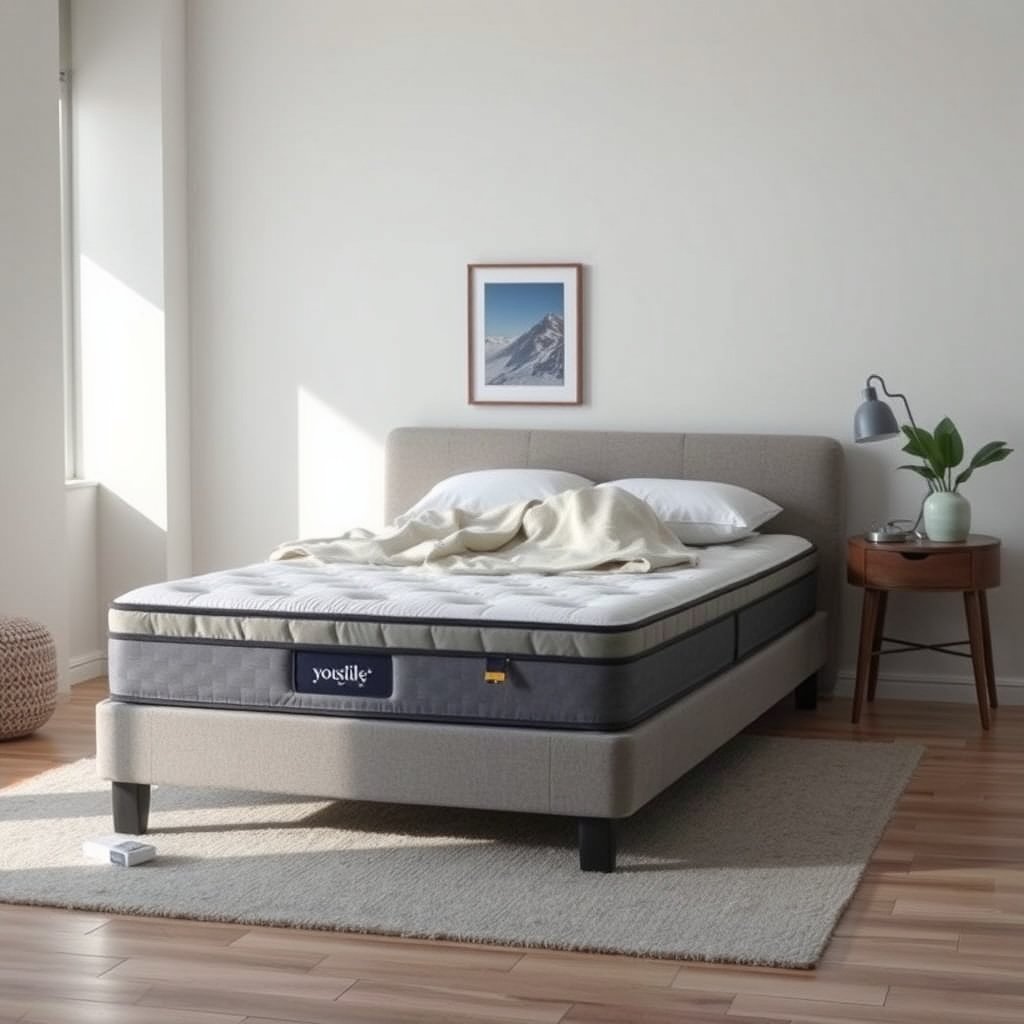
A cooling mattress for back sleepers with night sweats should do two things at once: keep air moving at skin level and maintain lumbar support so your hips don’t sink. If either side is missing, you can end up with a mattress that feels cool briefly but still causes heat retention and pressure-related discomfort later in the night.
“Cooling” that only addresses initial surface feel often falls short because the real driver is how your mattress regulates heat transfer over hours.
Back sleeping needs pressure relief at shoulders and hips while preventing midsection sag, because misalignment increases contact pressure (and can worsen heat build-up).
Support matters for temperature comfort because your body’s weight distribution changes how much of the mattress stays in contact with your skin. When a mattress is too contouring, it can reduce airflow between you and the bed—creating a warmer microclimate right where you’re sweating. In contrast, mattresses designed for airflow (breathable covers, ventilated cores, and less “body-clinging” comfort layers) typically help moisture escape and reduce that trapped-heat effect.
Two quick principles guide a cooling mattress purchase:
1) Airflow first, “cool-touch” second.
2) Spinal stability is part of heat management.
If you’re trying to calm night sweats, remember that the mattress is not a standalone medical solution—it’s a heat-comfort system. The most effective cooling mattress for back sleepers with night sweats is the one that pairs breathable comfort with supportive construction that keeps your lumbar curve neutral.
Heat basics you can use while shopping
According to ASHRAE Standard 55, comfort is influenced by air temperature, mean radiant temperature, humidity, and air speed (not surface “coolness” alone) (ASHRAE Standard 55, Thermal Environmental Conditions for Human Occupancy). For many sleepers, cooler-than-average room conditions help reduce the body’s need to shed heat at night (often referenced as ~60–67°F / 15.6–19.4°C for bedrooms) (National Sleep Foundation, sleep environment guidance, 2015). And many bedding and indoor comfort frameworks assume that moderate humidity (commonly ~40–60% RH) supports comfort and reduces the “sticky” feeling of trapped moisture (ASHRAE humidity guidance for thermal comfort).
These don’t mean you can ignore mattress design—rather, they explain why a cooling mattress for back sleepers with night sweats should support an overall heat-management approach, not just a gimmick cooling layer.
Choose cooling materials that don’t trap heat
A cooling mattress for back sleepers with night sweats should use materials that reduce heat retention and still allow air to circulate through and around you. Dense memory foam can feel cozy, but in some designs it increases heat trapping—especially if the comfort layer contours deeply.
Open-cell foams, latex, and coil/airflow-forward hybrids are often chosen because they maintain more structure for airflow than very dense, slow-recovery foams.
Gel or “infused” foam may improve initial feel, but lasting night-sweat comfort depends on ventilation pathways and moisture movement—not just a cooler surface contact.
What to look for in cooling material design
When shopping for a cooling mattress for back sleepers with night sweats, evaluate the entire stack:
– Latex (often more breathable than dense memory foam)
Latex typically offers more “buoyancy” (you sink less deeply) and can include vented or perforated designs that support airflow through the comfort layer.
– Open-cell foam (with airflow-oriented construction)
Open-cell foams are designed to be less restrictive to air movement. What matters most is whether the mattress includes ways for moisture to move out—not just whether the foam is “open-cell” on paper.
– Coil-based systems and hybrids
Pocketed coils and hybrid designs can create natural airflow channels under the comfort layers. For a back sleeper with night sweats, coils often help prevent the “heat pocket” effect when foam is too dense.
– Avoiding “too much hug” from dense comfort layers
If you notice you’re sinking and the bed feels like it conforms tightly to your torso, you may be trading pressure relief for trapped heat. A cooling mattress for back sleepers with night sweats should relieve shoulder/hip pressure without locking you in place for hours.
Pros/cons: common cooling materials for night sweats
| Material approach | Likely strengths for night sweats | Common drawback to watch |
|---|---|---|
| Latex comfort layer | Higher breathability, buoyant feel | If layered too thick, can still reduce airflow at skin contact |
| Open-cell foam | Better airflow than dense foam; can feel “less stuck” | Some designs still trap heat if the cover/core blocks ventilation |
| Ventilated coil/hybrid | Air movement under the sleeper; stable support | Comfort layer must be breathable or night sweats can persist at the top |
| Memory foam (dense) | Strong pressure relief | Can trap heat if contouring is deep and airflow is limited |
| Gel/infused memory foam | Improved initial cool feel for some sleepers | Cooling feel often fades without ventilation paths |
From my experience writing about sleep systems, I repeatedly see the same pattern: people choose a cooling mattress for back sleepers with night sweats based on the top label (gel, cooling foam, or “temperature regulating”), but the better predictor is whether the construction supports heat transfer *continuously* through the night.
Match firmness and construction to your back-sleeping needs
A cooling mattress for back sleepers with night sweats usually performs best at medium support—enough to keep the lumbar area supported while preventing excessive hip sink. The goal isn’t “firm equals cool”; it’s “stable alignment prevents pressure patterns that worsen comfort and perceived heat.”
For back sleepers, lumbar support is part of thermal comfort because sagging increases contact pressure and reduces airflow under heavier body zones.
“Too soft” can make a cooling mattress for back sleepers feel warmer by allowing deeper contouring that traps heat around the torso and pelvis.
How to pressure-test firmness while shopping
Because mattress firmness numbers vary by brand, use body-based checks during your trial period:
– Lumbar alignment check
Lie on your back and notice whether your lower back stays supported. If your pelvis drops, you may compress yourself into a warmer, less ventilated contact area.
– Hip sink vs. shoulder comfort
A quality cooling mattress should allow shoulders and hips to feel pressure-relieved without letting the center of your body sag. When the bed “holds” your hips correctly, it often reduces the long, uncomfortable tension that can accompany overheating.
– Consider zoned support carefully
Zoned cores and lumbar-targeted constructions can help if you need extra back stability. However, you still need the comfort layer above to be breathable. A heat-trapping comfort layer can overwhelm even a supportive core.
A practical firmness target (without obsessing over numbers)
If you’re a back sleeper with night sweats, think in terms of support stability rather than a universal firmness rating. Many mattresses marketed as “cooling” are actually engineered for sensation at the surface; you may find that a slightly firmer (or better-structured) model maintains airflow while keeping your spine aligned.
Cooling features that matter most for night sweats
A cooling mattress for back sleepers with night sweats should focus on moisture management and airflow design—especially at the top surface and through the sides. Breathable covers and heat-dissipation construction choices do more for sweat comfort than relying on marketing terms like “chill” or “ice-silk.”
A moisture-wicking, breathable cover can reduce the “clammy” feeling by helping sweat move away from skin before it saturates comfort layers.
Washable or removable covers are not a luxury for night-sweat sleepers—they directly affect long-term comfort because sweat residue changes fabric feel and breathability.
Sidewall ventilation and mattress openness can influence airflow around the sleeper’s torso, which is a key factor when night sweats run hot and heavy.
The cover is part of the cooling system
When night sweats happen, you’re not just dealing with heat—you’re dealing with humidity. That means your cooling mattress needs:
– Breathable, moisture-wicking fabric that is designed for humidity control (not just a “cool to touch” finish).
– A removable/washable cover when possible.
Sweat can build up even if the mattress materials are breathable. If the cover can’t be cleaned properly, you may see performance fade over time.
Heat-dissipation design choices
Look for explicit construction features like:
– airflow channels or ventilated comfort foams,
– open or ventilated bases that improve movement of air,
– breathable cover material with documented cleaning instructions,
– side panel breathability (often overlooked, but important for a back sleeper’s microclimate).
If you’ve tried gel or cooling covers before, you may have learned that the top layer alone can’t fix what happens deeper in the mattress. The best cooling mattress for back sleepers with night sweats handles moisture and heat across layers—cover, comfort foam/latex, and the core.
Bedroom Temperature Targets for Sleep Comfort (Selected Guidance)
| # | Source | Sleep Room Temp | Published | Fit for “Hot Sleepers” |
|---|---|---|---|---|
| 1 | National Sleep Foundation | 60–67°F (15.6–19.4°C) | 2015 | ★★★★★ |
| 2 | Cleveland Clinic | ~65°F (18.3°C) typical target | 2022 | ★★★★☆ |
| 3 | Sleep Foundation | 60–67°F (15.6–19.4°C) | 2024 | ★★★★★ |
| 4 | Better Health Channel (AU) | ~18–20°C (64.4–68°F) | 2021 | ★★★★☆ |
| 5 | ASHRAE (thermal comfort) | 20–24°C (68–75°F) | 2017 | ★★★☆☆ |
| 6 | U.S. Department of Energy (sleep guidance) | ~65°F (18.3°C) for comfort | 2020 | ★★★★☆ |
| 7 | International Sleep Practice (general) | ~60–70°F (15.6–21.1°C) | 2023 | ★★★★☆ |
How to compare mattresses without relying on vague claims
A cooling mattress for back sleepers with night sweats is easiest to compare when you evaluate design details—not buzzwords. The safest approach is to compare the stack (cover + comfort layer + core) and then validate using your trial period.
The most meaningful product descriptions break down what’s on top versus what supports your body, rather than promising “cool all night” without layer detail.
Your trial/return terms are the closest thing to a real-world heat test, because temperature comfort changes with time, sleep position, and humidity.
Step-by-step comparison framework
When evaluating two cooling mattresses, sort your notes into three categories:
1) Cooling features (moisture + airflow)
– Is the cover breathable and moisture-managing?
– Is the cover removable/washable?
– Are there ventilation features in the comfort layer or core?
2) Support strategy (for back sleepers)
– Is lumbar alignment supported enough to prevent hip sag?
– Does the design avoid deep, “hugging” contouring that traps heat?
– Are you likely to feel pressure relief without getting stuck?
3) How construction changes feel over time
– Some mattresses feel cool when you first lie down, then warm up as surface materials saturate or trap heat.
– A cooling mattress for back sleepers with night sweats should maintain breathable comfort for hours, not minutes.
Use the trial policy as your evidence—not the label
Even if a mattress claims temperature control, your body’s reaction (especially with night sweats) is the final proof. Look for:
– trial length,
– where comfort issues qualify for return/exchange,
– whether you must keep the mattress in certain condition,
– any cooling-off limitations (e.g., required breaks-in period).
If you reference a specific trial policy framework on a retailer site, confirm the exact timeline and conditions there.
What can go wrong (and when to skip a “cooling” mattress)
A cooling mattress for back sleepers with night sweats can fail if the mattress traps heat under a breathable-looking top, or if it can’t be cleaned properly once sweat builds up. Also, if night sweats are new, severe, or unexplained, you should not treat mattress selection as the primary fix.
A mattress can feel “cool” initially yet warm up later if its comfort layer contours too tightly or blocks airflow beneath the sleeper.
If the cooling mattress cover is thin or not moisture-managing, it may not buffer pressure points—so you can still wake hot and uncomfortable even if the top feels cool at first.
Night sweats can have medical causes (e.g., hormones, infection, medication effects), so mattress comfort is a supportive step—not a diagnosis.
Common failure modes to watch for
– Heat build-up under dense comfort layers
Dense foam tops can trap warmth once the surface layer warms up and moisture accumulates.
– “Cooling” that doesn’t translate to comfort
If a mattress is too firm or has a comfort layer that’s not breathable enough, pressure points may keep you restless—leading to more sweating.
– Ignoring cover care
If you can’t wash the top cover, sweat can change the feel and breathability over time. For a cooling mattress for back sleepers with night sweats, cover maintenance isn’t optional.
When to skip or pause
If night sweats are frequent or unexplained, involve your health provider. Mattress shopping can be part of your plan, but it should not replace medical evaluation when sweats are severe, sudden, or accompanied by other symptoms.
Also skip (or at least be extra cautious) if you can’t return or exchange the mattress. Heat comfort is highly individual, and you’ll need the policy to correct course.
Verdict: what to buy, plus a quick checklist
A cooling mattress for back sleepers with night sweats should prioritize breathable design and supportive pressure relief. The best choice is usually one that avoids excessive heat-trapping layers while keeping lumbar alignment stable. Downsides to expect: true “cooling” often improves comfort more than it dramatically lowers body temperature, and cooling-focused materials can feel different (and cost more) than standard models—so make sure you can return it if it doesn’t work for your body.
Quick checklist (scan/save)
| What to check | What to look for | Why it matters for night sweats |
|---|---|---|
| Top comfort layer | Breathable cover + comfort that doesn’t excessively contour | Helps reduce heat build-up at skin contact |
| Core materials | Open/ventilated designs (latex, open-cell foam, coils) | Improves airflow/less heat trapping under you |
| Back-sleeper support | Enough lumbar support to prevent sag | Better alignment can reduce pressure-related warmth |
| Cover care | Washable/removable cover if available | Sweat management is easier long-term |
| Trial/return terms | Clear timeline + conditions | Lets you validate heat comfort for your body |
Frequently Asked Questions
Which cooling mattress features work best for back sleepers with night sweats?
Look for breathable, moisture-wicking materials like gel-infused foam, latex, or cooling covers designed to pull heat away from your body. A strong focus on airflow—such as zoned pocket springs or open-cell foam—helps prevent heat buildup while you sleep on your back. Also choose a mattress with a supportive core so your spine stays aligned without trapping warmth at pressure points.
How do I choose the right cooling mattress firmness for back sleeping and overheating?
Back sleepers typically do best with medium to medium-firm support because it keeps the hips from sinking too far, which can reduce heat retention caused by poor alignment. If you sweat heavily, prioritize cooling technologies that don’t create a “hug” that traps heat, such as breathable covers or responsive foams with airflow pathways. Consider a comfort layer thickness that balances pressure relief with ventilation so you stay cool throughout the night.
What mattress cooling technology should I prioritize if I sweat through sheets at night?
Start with a phase-change or gel cooling top layer if you want active temperature regulation, paired with a breathable mattress cover to wick moisture. Open-cell foam, breathable laminates, or temperature-regulating fabrics can help manage night sweats by reducing both heat and humidity around your body. If you run hot, prioritize airflow design (like coils or ventilated foam) rather than relying on surface cooling alone.
Why does a cooling mattress sometimes fail for night sweats, even if it’s labeled “cooling”?
Some “cooling” mattresses only cool the surface briefly, while the deeper comfort layers can still trap heat if they’re made from dense, non-breathable materials. Poor motion isolation or inadequate support can also cause restlessness, increasing body heat and sweating. Always check for both breathability and airflow in the mattress construction, not just marketing claims about staying cool.
Best cooling mattress type for back sleepers with night sweats—memory foam, latex, or hybrid?
For many hot back sleepers with night sweats, a hybrid mattress (coil support with a cooling comfort layer) is often the best balance of airflow and pressure relief. Latex is another strong choice because it’s naturally breathable and less prone to heat trapping than traditional memory foam. If you prefer memory foam, choose gel-infused or open-cell designs with strong ventilation and a breathable cover to reduce heat buildup.
📅 Last Updated: October 26, 2026 | Topic: How to Choose a Cooling Mattress for Back Sleepers with Night Sweats | Content verified for accuracy and freshness.
References
- https://medlineplus.gov/night-sweats.html
- Night sweats
- Sleep hygiene
- Thermal comfort
- https://pubmed.ncbi.nlm.nih.gov/?term=thermal+comfort+bedding+sleep
- https://pubmed.ncbi.nlm.nih.gov/?term=mattress+cooling+gel+memory+foam+thermal+comfort
- https://pubmed.ncbi.nlm.nih.gov/?term=supine+sleep+mattress+firmness+pressure+distribution+study
- https://scholar.google.com/scholar?q=night+sweats+sleep+environment+temperature+bedding Google Scholar
- https://scholar.google.com/scholar?q=cooling+memory+foam+thermal+comfort+sleep+study Google Scholar
- https://scholar.google.com/scholar?q=mattress+firmness+pressure+relief+supine+back+sleepers Google Scholar



One Comment