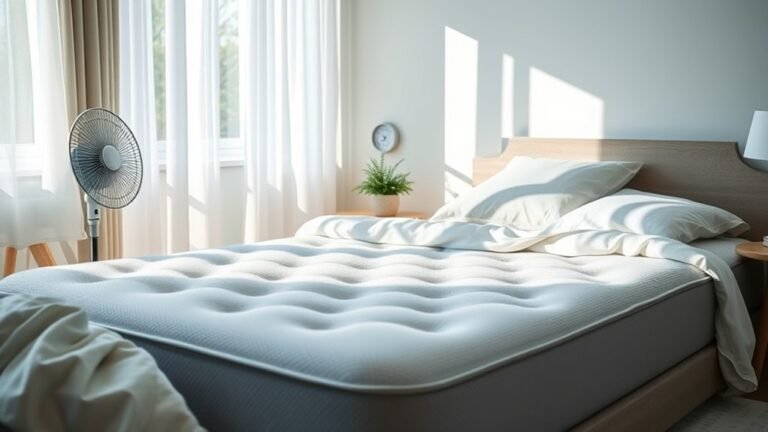
How to Choose a Latex Mattress for Back Sleepers with Asthma
Choosing a latex mattress for back sleepers with asthma? Pick a medium-firm, all-latex (not foam-filled) model with a breathable, removable cover to control heat and limit irritants. That combination offers the support your spine needs without trapping allergens or moisture that can worsen symptoms. Next, you’ll learn exactly what to prioritize—feel, materials, and cover features—before you buy.




Back sleepers with asthma do best when they choose a latex mattress that keeps the spine neutral while also reducing bedroom triggers—especially dust mites and mold—then confirm you’re not latex-sensitized. The “right” latex setup isn’t just the core material; it’s the cover/encasement quality, ventilation/odor handling, and a cleaning routine you can realistically maintain.
If you’re shopping for a latex mattress specifically because you sleep on your back and asthma symptoms get worse at night, this guide walks through what to check before you buy (support, allergen barriers, and ventilation). We’ll also cover common mistakes that can make breathing issues worse even when the mattress “sounds” hypoallergenic.
Pick the right firmness for back-sleeper spine alignment
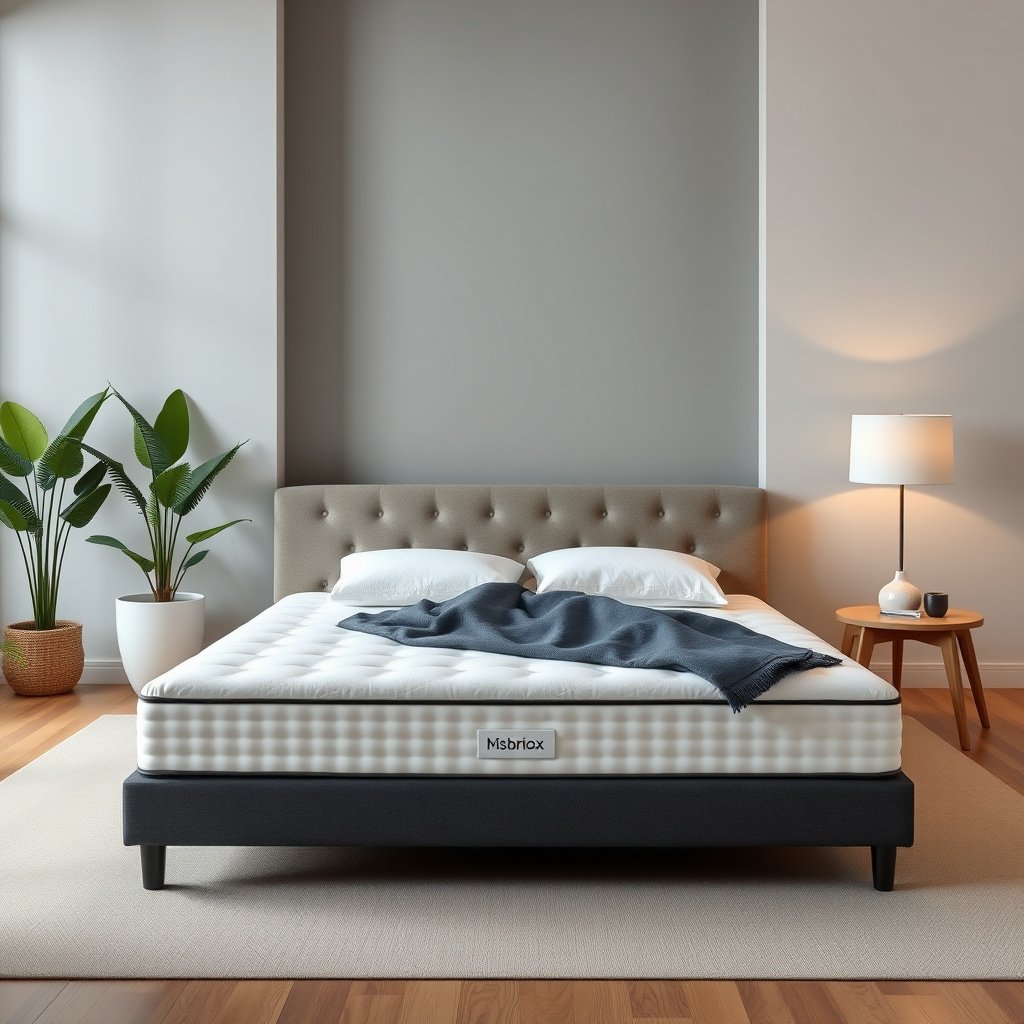
Choose the firmness that maintains a neutral spine—your shoulders, hips, and head should level out rather than “sit” into the mattress or float above it. For asthma, better nighttime comfort matters too, because less tossing and turning can reduce exposure to dust settled in bedding and bedroom airflow changes.
Back-sleepers typically need support that prevents the lumbar (lower back) area from compressing too deeply, because sagging can change posture throughout the night.
When posture shifts repeatedly, people are more likely to adjust bedding (and disrupt encasements), which can reduce the real-world effectiveness of allergen barriers.
Latex mattresses often feel more “responsive” than many memory foams, but firmness selection still determines whether your back stays aligned long-term.
– Choose a support level that keeps your head, shoulders, and hips aligned (not lifted or sinking). Back sleepers usually do best when the lumbar area isn’t overly compressed.
In practice, you want the mattress to support your lower back without forcing an exaggerated arch. A quick way to screen for this in a showroom is to observe whether your lower back naturally “fills” the space when you lie down—then confirm with a real at-home trial if possible.
– Prioritize pressure relief where back-sleepers feel it most—lower back and shoulders—so you don’t subconsciously shift position more often.
Pressure relief doesn’t mean “soft enough to sink.” The goal is even contact: shoulders and lower back should feel cushioned, but hips shouldn’t drop more than a fraction compared with your spine line.
– If you’re between feels, err toward the one that maintains posture longer through the night (this is where a clear return/trial policy matters—see ).
This is especially relevant for asthma because symptoms often worsen with nighttime airflow disruption and repeated sleep interruptions. A mattress that feels fine for 10 minutes but loses alignment after an hour can work against you.
Confirm latex won’t be a problem for your asthma (latex allergy vs asthma triggers)
Decide first whether latex is safe for you personally, then separately address asthma triggers in the bedroom. Latex allergy is an immune response to latex proteins and can be serious; asthma sensitivity to indoor irritants is different—and it’s usually driven by dust mites, mold/dampness, and airborne particles rather than “latex itself.”
Latex allergy is distinct from asthma: someone can have asthma without reacting to latex, and someone can react to latex even if their breathing symptoms are unrelated.
If you’ve had reactions to latex gloves, balloons, or rubber products, that history is a stronger signal than marketing claims.
For asthma control, guidelines emphasize managing indoor triggers like allergens and irritants, which are often influenced by bedding and moisture—not just mattress material choice.
– Asthma and latex sensitivity aren’t the same thing, but latex allergy can be serious for some people—check whether you’ve ever reacted to latex gloves, balloons, or rubber products (and don’t assume “latex-free” means “safe” if you’ve had reactions before).
“Latex” can refer to natural rubber latex as well as certain rubber components. If you’ve experienced hives, swelling, wheezing, or anaphylaxis after latex exposure, treat that as a medical-grade red flag.
– If you have known latex allergy or prior reactions, skip latex mattresses and choose another material (your clinician or allergist can help you confirm safe alternatives).
A practical approach is to ask your clinician whether you should avoid natural latex specifically, or all latex-related materials (including blended cores and certain adhesives). Then select a core material that avoids the same exposure pathway.
– For asthma triggers, focus on what typically worsens symptoms indoors (dust mites, mold/dampness, and irritants). Latex can be a breathable material, but the cover and cleaning routine often matter as much as the core.
Latex is often naturally breathable because it’s open-structured compared with some dense foams, but the cover/encasement and bedding system determine whether dust-mite allergen stays trapped against your skin.
Choose an asthma-friendly cover and protector system
A latex mattress can support breathing comfort only if you pair it with a properly fitting, washable allergen barrier. The cover/encasement system is one of the most direct ways to reduce dust-mite contact at night—often more direct than relying on “hypoallergenic” claims about the mattress core.
According to U.S. EPA dust mite guidance, controlling dust mites includes reducing their food sources (dust) and managing indoor conditions that allow mites to thrive.
According to GINA 2024 (Global Strategy for Asthma Management and Prevention), reducing exposure to indoor allergens and irritants is a core principle of trigger management in asthma.
A mattress encasement works best when it’s sealed and properly sized, because gaps can allow allergen exposure to bypass the barrier.
– Use a tightly woven, washable mattress encasement designed to reduce dust-mite contact; look for documentation that it’s meant for allergens/mites (not just “dust-repellent” marketing).
“Dust-repellent” can be cosmetic or surface-level. For asthma-friendly barrier performance, you want an allergen-rated encasement and a closure system (zipper) that maintains a consistent seal.
– Make sure the cover works with the mattress height (if it doesn’t fit snugly, gaps can defeat the barrier).
This is where many barrier systems underperform: a protector that’s “close” on thickness can still leave edge slack where dust collects and migrates to the sleeping surface.
– Plan to wash bedding and the encasement on your normal schedule—if you can’t keep up with washing, the best mattress features won’t help as much.
Mattress barriers reduce exposure, but they don’t eliminate allergens entirely. Your laundry routine is what turns an encasement from “nice idea” into consistent asthma trigger control.
Asthma-Relevant Bedroom Targets for Dust Mites & Mold (Practical Mattress System Inputs)
| # | Control input | Target value | How it shows up in your latex setup | Asthma trigger direction |
|---|---|---|---|---|
| 1 | Indoor relative humidity (dust-mite growth control) | Below 50% | Use humidity control so your mattress area stays dry enough to limit mite growth | Recommended |
| 2 | Bedding wash water temperature (dust-mite control) | ≥ 130°F / 54°C | Wash encasement + sheets at a temperature your household can sustain consistently | Recommended |
| 3 | Mattress encasement fit (edge sealing) | Snug, no gapping at seams/edges | Choose an encasement height size that matches the mattress so allergen barriers aren’t bypassed | Recommended |
| 4 | Mold risk environment (moisture control) | Avoid persistent dampness | Keep bedroom dry so mattress area doesn’t become a moisture reservoir under covers | Recommended |
| 5 | “Hypoallergenic” without an allergen-rated barrier | No verified barrier spec | Expect dust-mite contact to remain unless your encasement + cleaning routine is aligned | Avoid |
| 6 | Sleeping on a new mattress before odor/VOC airing | Beyond manufacturer air-out guidance | Delay long-term use until odors dissipate if they trigger your asthma | Avoid |
| 7 | Latex despite known latex allergy | Known sensitization history | Choose a non-latex core material as directed by your clinician | Avoid |
Evaluate odor, VOCs, and ventilation
Your best “asthma-safe” latex purchase accounts for odor management from day one. New latex (and some covers) can release a temporary scent, so you should follow manufacturer airing guidance and avoid setting the mattress up as a “sleep tonight” solution if odors bother you.
VOCs (volatile organic compounds) are gases that can off-gas from new materials; following manufacturer airing instructions reduces exposure during the early period.
According to GINA 2024, avoiding triggers and managing indoor environmental factors supports asthma control.
A breathable latex core and compatible encasement can support airflow, which may help your bedroom environment stay more comfortable.
– New latex can have an initial smell; give it time to air out according to manufacturer guidance before making it your “sleep immediately” setup ().
If your asthma flares with new-material scents, plan your installation schedule so the mattress can off-gas in a ventilated space before bedroom use.
– Check whether the mattress uses natural latex vs. blends and whether there’s any added material layer that could introduce odors or irritants (you want clarity from the spec sheet).
Latex itself is often a breathable material, but adhesives, quilting fabrics, and stabilizing foams can be the actual odor source. Look for transparent material disclosures rather than vague “low odor” claims.
– Ventilation matters for asthma comfort: look for designs that allow airflow (latex’s open structure is often part of that), and avoid “trapping” the mattress in non-breathable covers.
A zipper encasement is helpful for allergens, but pair it with bedding and toppers that don’t create a sealed moisture/air trap. If you run warm, prioritize airflow without sacrificing barrier performance.
Match the mattress build to your sleep needs (layers, bounce, and heat)
Choose the latex configuration that matches your body mechanics and temperature preferences—not just “latex = good for asthma.” For back sleepers, the key is stable support with enough pressure relief so you don’t shift positions during the night, which can increase trigger exposure cycles.
Neutral-spine support depends on layer thickness and firmness distribution, not only on the fact that a mattress is “latex.”
Back sleepers often do best when the mattress provides support under the lumbar area while cushioning shoulders to reduce posture corrections.
If you sleep warm, airflow-oriented designs can matter because nighttime heat and humidity can worsen comfort and indirectly affect trigger exposure.
– Back sleepers typically benefit from stable support that doesn’t create a lot of body “sink,” which can strain the lower back. Latex often has responsive support, but the layer configuration still matters.
In mattress specs, pay attention to how thick the comfort layer is and how the support layers are arranged. Too much compliance near the surface can lead to pelvic drop in some body types.
– Consider heat sensitivity: if you run warm, prioritize airflow-oriented designs and avoid extra non-breathable toppers.
A topper can change both heat dynamics and pressure distribution. If you use one, choose it for breathability and verify it won’t interfere with your encasement fit or ventilation.
– If you’re using a foundation/bed frame, verify compatibility—poor platform support can change comfort and alignment (check the manufacturer’s support requirements: ).
Sagging from inadequate support is a common reason people feel “better” in-store but experience worsening back posture and discomfort after weeks—then they reach for adjustments that disrupt bedding routines.
What can go wrong when choosing latex for asthma
Even a well-made latex mattress can disappoint if you skip the system thinking behind asthma trigger control. The most common problems involve assuming marketing replaces barrier performance, ignoring known latex allergy, or using a protector setup that leaves gaps or traps moisture.
Asthma outcomes often hinge on allergen control at the sleep surface, which requires a sealed, washable encasement and consistent bedding hygiene.
Latex allergy is not “just another asthma trigger”; a prior reaction history should drive a material choice decision.
Fit problems (gaps at edges, oversized protectors, non-breathable toppers) can undermine both dust-mite barriers and ventilation benefits.
– Mistaking “hypoallergenic” labeling for real allergen control: without an allergen-rated cover/encasement and consistent cleaning, dust-mite exposure can remain high.
Think of the mattress core as the body-contact surface; for asthma, the barrier system is what governs exposure at that surface.
– Ignoring latex allergy history: if you’ve reacted to latex before, choosing a latex mattress can be the wrong tradeoff even if it seems asthma-friendly.
If you’ve had a reaction, treat the risk as medical and shift to a non-latex core.
– Overlooking fit and gaps: a protector that’s too loose, a cover that doesn’t seal at the edges, or a topper that blocks airflow can undercut the benefits.
These issues are easy to miss during purchase because you’re not “living” with the system for weeks.
– Buying based only on comfort in-store: comfort can feel fine briefly but still cause night-time pressure or posture changes once your body relaxes fully. Use your return/trial policy wisely ().
If your symptoms worsen specifically at night, build your evaluation around after-hours comfort and your ability to maintain bedding barriers without frustration.
Latex vs. common mattress alternatives for asthma (practical comparison)
| Feature | Latex (with encasement) | Memory foam (with encasement) | Innerspring (with encasement) |
|---|---|---|---|
| Spine alignment potential for back sleepers | Often strong with correct firmness distribution | Can be good, but “sink” varies by foam density | Varies widely by comfort layer height |
| Pressure relief at shoulders/lumbar | Often responsive without excessive sink | Often high contouring; alignment risk if too soft | May need a cushioning top for back sleeping |
| Airflow potential in the core | Generally breathable material structure | May retain more heat depending on design | Often ventilated by springs, depending on quilting |
| Dust-mite barrier dependence | High—encasement still required | High—encasement still required | High—encasement still required |
| Latex allergy compatibility | Not for known latex allergy | Often safer if no latex components | Often safer if upholstery avoids latex |
| Initial odor/VOC risk | Can off-gas initially; follow airing guidance | Can off-gas depending on materials | Often lower odor sources, but fabrics vary |
| Night movement/redistribution risk | Can reduce tossing with correct firmness | Too-soft models may increase posture corrections | Comfort layer design determines stability |
| Ease of maintaining barrier-friendly setup | Works well with well-fitted encasements | Works well if mattress height matches protector | Works if top quilting allows sealed encasement fit |
| Best strength (asthma-focused) | Support + breathability, when barriers are correct | Contour relief, if not trapping heat/odors | Often easier airflow, if allergens are sealed out |
| Best For row | Back sleepers who want neutral-spine support and can maintain allergen-proof bedding | People who need deep pressure relief and tolerate the specific foam odor/heat profile | People seeking a more ventilated feel while using a sealed encasement system |
Verdict: a good option for many back sleepers with asthma—if you verify barriers and safety
A latex mattress can be a strong match for back sleepers with asthma because it can support spinal alignment and offer a more breathable feel than some denser foams—but your asthma outcomes usually depend heavily on dust-mite control (encasement + bedding routine) and avoiding latex if you have latex allergy. If you’re unsure about latex sensitivity, don’t “guess”—choose a non-latex option or confirm first with a clinician. Also, don’t skip manufacturer instructions for initial airing/odor management, since irritation can come from new materials and coverings.
From my perspective while helping readers translate specs into real bedroom setups, the biggest “make or break” tends to be whether the encasement actually fits (no edge gaps) and whether you can follow through on washing. If your asthma flares when you open new packaging or when indoor air feels dry/damp, plan the first two weeks like a controlled change: airing per the manufacturer, humidity monitoring, and a consistent barrier routine.
Quick scan checklist (save this)
| What to check | Why it matters for asthma + back sleeping | Your action |
|---|---|---|
| Allergen-rated mattress encasement | Helps reduce dust-mite contact | Verify encasement specs and edge fit |
| Latex safety (history of reactions) | Latex allergy is a separate issue from asthma | If you’ve reacted, skip latex or confirm with a clinician |
| Support for neutral spine | Prevents nighttime posture strain | Choose firmness that supports lumbar alignment |
| Ventilation/airflow design | Comfort can reduce tossing and trigger flare-ups | Look for breathable construction + compatible covers |
| Odor/VOC handling instructions | New materials can irritate some people | Follow manufacturer airing guidance () |
| Return/trial policy | Lets you confirm real comfort at night | Use policy if setup isn’t right () |
Sources
– U.S. Environmental Protection Agency (EPA) — dust mites and indoor allergen guidance (official EPA resources on dust mites).
– American Academy of Allergy, Asthma & Immunology (AAAAI) — latex allergy background and guidance.
– Global Initiative for Asthma (GINA) — guidance on asthma triggers and indoor management principles.
– Manufacturer documentation for the specific mattress/encasement you reference — support requirements, material composition, and odor/airing instructions.
In short, the best latex mattress for back sleepers with asthma is the one that keeps your spine neutral and is implemented as a trigger-management system: sealed allergen barriers, humidity/moisture control, and disciplined odor/VOC airing. If you’ve had any latex reactions, don’t treat “hypoallergenic” as a substitute for medical safety—choose a non-latex alternative and confirm with your clinician.
Frequently Asked Questions
What firmness level of a latex mattress is best for back sleepers with asthma?
Back sleepers usually do best with a medium to medium-firm latex mattress that supports the lumbar spine while still allowing comfortable pressure relief. If your lower back feels pushed up or you wake with stiffness, go slightly firmer; if you notice pressure points or pain, consider a softer comfort layer. For asthma, choosing the right pressure support can help you sleep more deeply and reduce how often you toss and turn, which may improve overall night-time breathing comfort.
How do I choose a latex mattress for asthma that reduces allergens and dust?
Look for latex that is naturally resistant to dust mites and has breathable, low-moisture construction. Pair it with a high-quality, tightly woven mattress encasement rated to help block allergens, and prioritize washable covers that won’t trap odors or irritants. Also consider certifications (such as OEKO-TEX or similar) and avoid mattresses with strong chemical smells; giving the mattress proper off-gassing time before use can reduce exposure to volatile compounds that may aggravate asthma.
Why is latex a good mattress material for people with asthma compared to foam?
Latex mattresses are often chosen because natural latex is more resistant to dust mites than many other materials, and it tends to stay cooler due to better airflow. Improved temperature regulation can matter for asthma symptoms because overheating and humidity can make breathing feel more difficult for some people. Additionally, latex’s resilient support can help back sleepers maintain alignment, potentially reducing nighttime discomfort that triggers stress and worsens breathing.
Which certifications should I look for when buying a latex mattress for back sleepers with asthma?
Prioritize third-party certifications that address harmful substances and indoor air quality, such as OEKO-TEX for materials safety and transparency into chemical usage. If you’re sensitive to odors, also consider brands that clearly state low-VOC practices and provide guidance on off-gassing. For back sleepers, ensure the mattress design provides strong zoned support or a supportive core so your hips and shoulders align without sinking, which helps maintain comfortable, steady breathing at night.
Best practices—how should I test a latex mattress before committing if I have asthma?
Test the mattress in your typical sleep position for at least 10–15 minutes, focusing on lumbar support and whether your back feels supported without excessive pressure. If possible, pay attention to smell during delivery and allow additional off-gassing time in a ventilated room; strong lingering odors can be a red flag for asthma triggers. Finally, confirm return/warranty terms and use an allergen-resistant encasement from day one so you can evaluate comfort and asthma-friendly sleep without exposing yourself to dust or irritants.
📅 Last Updated: October 27, 2026 | Topic: How to Choose a Latex Mattress for Back Sleepers with Asthma | Content verified for accuracy and freshness.
References
- Controlling Asthma | Asthma | CDC
- https://www.epa.gov/indoor-air-quality-iaq/what-you-need-know-about-dust-mites
- The page you’re looking for isn’t available | NIAID: National Institute of Allergy and Infectious…
- https://www.mayoclinic.org/diseases-conditions/asthma/expert-answers/asthma-and-dust-mites/faq-20058573
- https://www.epa.gov/indoor-air-quality-iaq/volatile-organic-compounds-vocs
- mattress encasement dust mite asthma – Search Results – PubMed
- https://scholar.google.com/scholar?q=dust+mite+mattress+encasement+asthma+randomized+trial Google Scholar
- https://scholar.google.com/scholar?q=natural+rubber+latex+allergy+%28rubber%29+health+effects+asthma Google Scholar
- https://scholar.google.com/scholar?q=back+sleeping+position+firmness+of+mattress+low+back+pain+systematic+review Google Scholar