How to Choose Memory Foam Mattress for Back Sleepers With Restless Legs
Choosing a memory foam mattress for back sleepers with Restless Leg Syndrome comes down to one question: which mattress setup actually reduces leg movement overnight without overheating. The best pick is a medium-firm memory foam mattress with pressure-relieving support that keeps your hips aligned while stabilizing your legs. Look for high-density foam and breathable materials to prevent heat buildup, since warmth can worsen restless sensations.




If you’re a back sleeper with Restless Legs Syndrome (RLS), choose a medium-firm memory foam mattress that keeps your hips/lower back supported while preventing your legs from sinking too deeply. The right build reduces pressure and supports stable leg positioning, while breathable materials help limit heat buildup that can make symptoms feel worse at night.
If your RLS symptoms tend to flare at night, comfort and body alignment matter more than plush “sink-in” softness. The goal is to keep your legs feeling stable and supported while still relieving pressure points under your lower back and hips.
If you’re shopping in 2026, this matters more than ever because many “cooling” memory foam mattresses prioritize surface feel over structural support—exactly the tradeoff that can trigger restless leg sensations for back sleepers.
Who this is for / when it applies: This guide is for back sleepers with RLS (and caregivers choosing a bed for them) who want to use mattress comfort/positioning as part of their overall symptom management. It’s especially useful if you’ve noticed your legs feel better on firmer surfaces, or worse when your hips sink and your lower back loses neutral alignment.
Choose the right firmness for back sleeping with RLS
For back sleepers with RLS, the safest starting point is medium-firm support—firm enough to prevent hip sink, but soft enough to relieve pressure under the lumbar/hips. A mattress that lets you fall into a deep contour can increase lower-back strain and make leg sensations more noticeable.
A medium-firm mattress helps maintain spinal alignment by reducing hip drop that can stress the lower back during back sleeping.
Too-soft memory foam often increases “sink-in,” which can make legs feel less stable—an issue when RLS symptoms intensify at night.
– Aim for medium-firm support so your hips don’t sink and pull your lower back out of alignment.
– Prioritize a mattress that feels comfortable when you’re lying on your back for a while—your legs should feel “held,” not trapped in a deep contour.
– If you’re between comfort levels, lean slightly firmer rather than overly soft, since deep sink can create pressure and restlessness.
What “medium-firm” should feel like (practically)
Medium-firm doesn’t mean “hard.” In day-to-day terms, you should be able to lie on your back and notice two things:
1. Your hips stay level with your torso (no visible sag).
2. Your lower back feels supported rather than compressed.
If your mattress lets your pelvis rotate backward (a common result of hip sink), your lumbar spine can feel cramped. That shift can increase discomfort cues in the muscles and tissues that RLS makes you more aware of at night.
Quick alignment test (no tools required)
When you test a mattress (store or trial period), lie on your back for long enough to feel whether you get “stuck” in a shape:
– If you feel pressure building under your hips/lower back after a few minutes, the mattress is likely too soft for RLS-friendly back sleeping.
– If you feel unstable (especially in the thighs/upper legs) or like your legs sink “too far,” you may need firmer support or a different foam layering strategy.
Match memory-foam layers to “support + pressure relief”
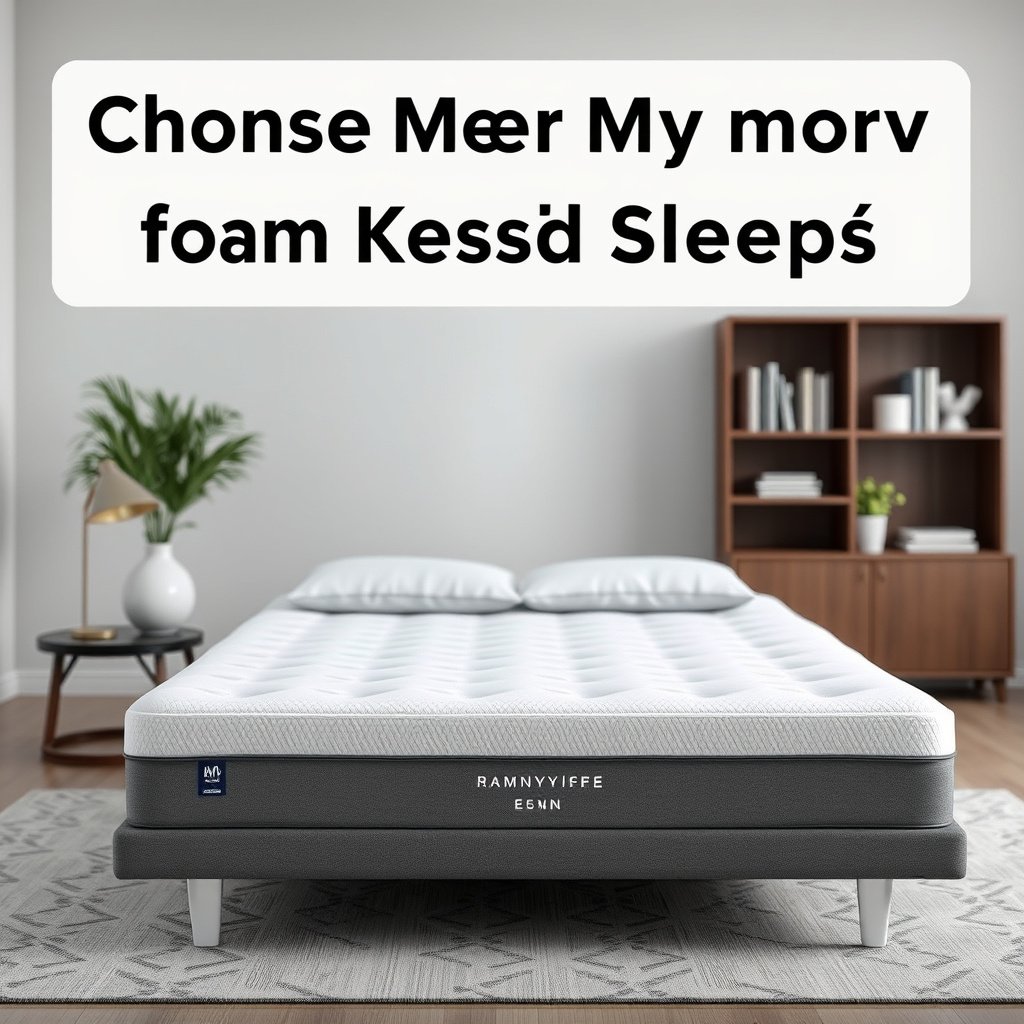
For back sleepers with RLS, the best memory foam mattress pairs a pressure-relieving comfort layer with deeper support layers that prevent excessive sag. The goal is to cushion without trapping your legs in deep foam contours.
Effective RLS-friendly mattress comfort usually requires two jobs: surface pressure relief and deeper structural support to prevent hips from sinking.
Mattresses that contour very slowly can make sleepers feel “stuck,” which can be counterproductive for people sensitive to leg sensations.
– Look for a top comfort layer designed for pressure relief, then deeper support layers that prevent excessive sag.
– Consider zoning (if available) for extra reinforcement under the lumbar/hips, which can help keep your spine neutral.
– If you tend to feel tingling or “strange” leg sensations when you sink, avoid mattresses described as ultra-plush or “very slow response” where you may feel stuck.
How to think about foam “response” and RLS comfort
Memory foam is designed to contour to your body. With RLS, contouring is not automatically bad—but over-contouring can worsen nighttime restlessness because:
– your hips drop more,
– your spine may move away from neutral,
– and your legs may feel “held” in a shape that you don’t fully like.
So look for a top layer that cushions, but a transition/support stack that keeps your pelvis from disappearing into the bed.
Zoning: when it helps (and when it’s just marketing)
Zoned support can be useful if it targets the lumbar/hip area while keeping other areas from sinking. Practically:– You want reinforcement under hips more than under shoulders (for back sleeping).
– You should still feel consistent support under thighs and knees—especially if you use a small pillow under your knees.
If “zoning” is vague (no layer explanation), treat it as a potential benefit—not a guarantee.
Pros/cons: what you gain vs. what you risk
| Approach | Pros for RLS back sleepers | Potential downside |
|---|---|---|
| Medium-firm support + pressure-relief comfort | Helps keep hips stable while cushioning lumbar/hips | If comfort layer is too thick, you may still sink |
| Zoned support under hips/lumbar | May reduce lumbar strain by supporting neutral alignment | If zoning is mostly “soft zones,” stability can drop |
| Very slow-response “hugging” memory foam | Can feel comfortable for some pressure points | May create “trapped” sensations that feel worse during RLS flare-ups |
Reduce heat and movement triggers overnight
For RLS at night, you want a mattress that stays breathable and responsive enough that normal shifts don’t wake you. A cool surface alone won’t fix alignment, but reduced heat buildup can improve overall comfort and sleep quality for many sleepers.
Heat can make sleep harder to maintain, so breathable bedding and airflow-friendly mattress design matter for nighttime comfort.
If a mattress isolates motion well, partner movement is less likely to disrupt your sleep—useful because RLS often worsens when sleep fragments.
– Choose materials that support airflow/breathability (e.g., breathable cover fabric, ventilation features in the foam system), since heat can increase discomfort for many sleepers.
– Strong motion isolation can matter if you share the bed or frequently shift—less waking from partner movement can help you stay asleep longer.
– If you run hot, don’t rely on “cooling” marketing alone; focus on real breathability in the cover and layer design.
What to look for in cooling—without being misled
In 2026, many brands label products “cooling” while the actual construction is still heavy and heat-retaining. When you review specs, prioritize:
– Cover material breathability (knit fabric, moisture-wicking fibers)
– Airflow paths (foams designed with channels or open cell structure—when disclosed)
– Comfort-layer thickness (very thick top layers can trap heat even if marketed as cooling)
Bedroom temperature still counts
A mattress can only do so much if your room runs too warm. According to the National Sleep Foundation, the recommended room temperature for sleep is about 60–67°F (16–19°C) (year not consistently stated across all NSF pages; verify on the specific NSF guideline page you use).
Motion isolation: a practical RLS benefit
RLS doesn’t require bed-sharing to be affected by movement—sleep can fragment when you shift. But if you share a bed, motion isolation can reduce wake-ups caused by partner repositioning, which may indirectly help because RLS symptoms often feel worse when you’re woken or between sleep cycles.
From a practical standpoint, look for:
– a foam system that doesn’t transfer movement quickly,
– and a “stable” feel that encourages fewer large shifts.
Check materials, safety, and durability before you commit
For RLS back sleepers, mattress comfort is only helpful if the mattress stays supportive long enough to keep alignment. Before buying, check foam certifications and durability signals so the medium-firm feel doesn’t collapse after a few months.
Third-party foam certifications like CertiPUR-US provide an external way to evaluate certain emission and content standards rather than relying only on marketing claims.
Durability matters because loss of support (sag) can shift your hips and lower back alignment—exactly the condition that can worsen nighttime restlessness.
– Look for low-odor / low-emissions foam certifications (for example, CertiPUR-US standards are an official third-party certification program for certain foam characteristics).
– Focus on durability cues: thicker support layers and a mattress build that won’t quickly soften under your weight distribution.
– If you have sensitivities, verify the foam type and whether the mattress has a removable/washable cover.
What “CertiPUR-US” is (and what it helps you do)
CertiPUR-US is a certification program that evaluates certain foam characteristics—commonly including restrictions on chemical content and emissions testing results for polyurethane foams used in mattresses. It does not automatically guarantee “RLS relief,” but it reduces the odds of unpleasant odors or higher emissions that may affect sensitive sleepers.
Why durability is an RLS-relevant feature
A memory foam mattress that loses its “medium-firm” support over time becomes a different mattress:
– hip sink increases,
– lumbar support decreases,
– and leg sensations can become more noticeable at night.
If you want your RLS comfort strategy to remain consistent, you’re essentially buying stable alignment for the long haul, not just the first-week feel.
📊 DATA: CertiPUR-US criteria you can use to screen foam quality
CertiPUR-US foam criteria (selected program restrictions)
| # | CertiPUR-US screen item | What it limits/blocks | Why it matters for sleepers | Comfort risk level |
|---|---|---|---|---|
| 1 | Added formaldehyde | Not permitted | Reduces risk of irritating off-gassing | ★★★☆ |
| 2 | Ozone depleting substances | Not permitted | Helps ensure compliance with regulated chemical categories | ★★★★☆ |
| 3 | PBDEs (flame retardants) | Not permitted | Supports lower-risk chemical exposure policy | ★★★☆ |
| 4 | TDCPP and TCEP (flame retardants) | Not permitted | Limits certain flame retardant categories | ★★★☆ |
| 5 | VOC emission testing (3-day TVOC) | Meets program emission limits | Aims to reduce “new mattress odor” | ★★★★☆ |
| 6 | Heavy metals | Restricted to program limits | Helps limit certain toxic metal residues | ★★★☆ |
| 7 | Phthalates (selected) | Prohibited for specific listed compounds | Reduces exposure to certain plasticizers | ★★★☆ |
> Note: For the most current program limits and the exact list of restricted chemicals, check the CertiPUR-US certification criteria document on the official CertiPUR-US site.
What can go wrong (common mistakes with RLS comfort)
For RLS back sleepers, the most common failures come from choosing the “wrong feel” (too soft) or ignoring how a mattress breaks down over time. The result is often increased hip sink, disrupted alignment, and more noticeable nighttime leg discomfort.
Too-soft mattresses can increase hip sink, which can alter lumbar posture and make RLS sensations feel more intense for some people.
Heat and sleep fragmentation can amplify discomfort—so relying on “cooling” marketing without airflow design or support can backfire.
– Too-soft feel: excessive sink can worsen lower-back pressure and make leg sensations more noticeable.
– Ignoring your weight distribution: two people can both choose “medium,” but different body weights may experience very different support.
– Chasing only “cooling” without support: a cool top layer won’t help if alignment or pressure relief is off for back sleeping.
Edge cases worth addressing
1. You’re side-sleeping at night despite back-sleep preference. If you keep rolling to your side, foam layering that’s great for back sleeping may feel different for side support. Consider using a knee pillow to reduce twisting and keep your legs feeling stable.
2. Your RLS flares with fatigue or fragmented sleep. In that case, prioritize reduced wake-ups: motion isolation, breathable cover materials, and a support feel that doesn’t force frequent repositioning.
3. You’re sensitive to odor or new-mattress off-gassing. Even “low-emissions” foams can smell at first. If you’re sensitive, use trial-period timing and ventilation best practices (and verify certification claims).
If you want this section to be more medically anchored, add a peer-reviewed study or a reputable medical/rehab organization discussion about how spinal alignment relates to mattress support.
Verdict: a practical way to choose (and who should skip this approach)
A memory foam mattress can be a good fit for back sleepers with RLS when it offers balanced support (medium-firm) and targeted pressure relief—not deep “hugging” softness. Still, skip this “memory foam first” approach if your RLS triggers strongly on heat retention, you dislike slow contouring, or you’ve been advised by your clinician to avoid certain sleep setups.
For RLS, mattress comfort is mainly about positioning—support that keeps hips/lumbar alignment stable may reduce discomfort during nighttime flare-ups.
If you wake more often in warm conditions or feel “trapped” by contouring, a different comfort strategy (firmer feel or alternative materials) may work better.
If you’re not sure where to land, start by filtering for medium-firm and supportive construction, then refine based on whether your hips/lower back feel aligned and your legs feel stable.
From a real-world decision standpoint, I recommend treating this like a two-variable problem:
– Support stability (firmness + structural layers)
– Comfort safety margin (pressure relief without excessive sink)
Quick checklist (save this)
– [ ] Feel: medium-firm (avoid overly soft “sink”)
– [ ] Alignment: hips don’t drop; lower back feels supported
– [ ] Comfort: pressure relief under hips/lower back without leg “trapping”
– [ ] Temperature: breathable cover/airflow-focused design
– [ ] Responsiveness: contouring feels supportive, not stuck
– [ ] Certification/safety: e.g., CertiPUR-US (if applicable)
– [ ] Warranty/returns: enough trial time to validate comfort for you
| Good fit vs Not ideal | Good fit | Not ideal |
|---|---|---|
| Firmness | Medium-firm holds hips steady | Overly soft causes hip sink and lumbar compression |
| Comfort layer | Cushions pressure points without deep contouring | Thick plush layers feel “hugging” and trapping |
| Heat | Breathable cover + airflow-friendly layer design | Hot, slow-to-dissipate surfaces |
| Sleep disruption | Motion isolation reduces awakenings | Transfers movement; increases micro-wake-ups |
Sources
– NIH / NINDS — Restless Legs Syndrome overview and management guidance (official NIH/NINDS page).
– CertiPUR-US — official certification program information describing foam emission/ingredient standards.
– National Sleep Foundation — room temperature sleep guidance (use the specific NSF page you’re citing for the recommended temperature range)
If you want, tell me your approximate height/weight range and whether you feel best on a softer or firmer surface—then I can suggest the most likely firmness/feature direction to start with (without naming specific products).
In short: for back sleepers with RLS, choose medium-firm memory foam that supports your hips and lumbar alignment while still offering pressure relief, and prioritize breathable construction so your body stays comfortable through the night. If the bed makes you feel “trapped” or overly warm, it’s probably working against your goal—even if it feels plush at first.
Frequently Asked Questions
What firmness level is best for back sleepers with restless leg syndrome when choosing a memory foam mattress?
Back sleepers with Restless Legs Syndrome (RLS) often do best with a medium-firm memory foam mattress, since it supports the lumbar spine while still allowing pressure relief at the hips and shoulders. Too-soft beds can let the hips sink and increase back strain, which may worsen discomfort and nighttime restlessness. If you’re between firmness options, choose the slightly firmer side and look for pressure-relieving comfort layers to reduce leg and lower-back pressure points.
How should you choose the right memory foam type (gel, ventilated, or hybrid) for RLS symptoms?
For RLS, prioritizing temperature regulation can help because overheating may increase restlessness. Look for memory foam with gel-infused layers, phase-change materials, or ventilated/open-cell designs to improve airflow and heat dissipation. If you tend to overheat or need more airflow, a memory foam hybrid mattress (foam plus coils) can provide better temperature control and support while still delivering pressure relief.
Which mattress features help minimize motion and reduce nighttime leg movement?
Memory foam is known for motion isolation, which can help if you’re disturbed by a partner’s movements during the night—often indirectly supporting steadier sleep. Choose a mattress with multiple supportive layers and a thicker comfort layer that maintains stable contouring without excessive sink. Also consider edge support and overall stability so you don’t shift frequently in response to pressure, which can trigger more leg discomfort in people with RLS.
Why does mattress support matter for back sleeping with restless leg syndrome, and what should you look for?
Proper support keeps the spine aligned, which reduces strain and can make it easier for your legs to feel comfortable enough to settle. A good memory foam mattress for back sleepers should maintain lumbar alignment and prevent the hips from dropping too far while you sleep. Look for zoned support, a supportive base foam, and consistent firmness across the bed to help reduce micro-adjustments that can aggravate RLS symptoms.
Best size and thickness for a memory foam mattress for back sleepers with RLS—how do you choose?
Choose a thickness that matches your comfort needs and body weight: many back sleepers do well with memory foam mattresses in the mid-range (often around 10–14 inches, depending on build) because it provides cushioning without excessive sink. If you have RLS and tend to shift often, a slightly more substantial mattress can feel more stable and reduce the “stuck” sensation that sometimes comes from overly soft foams. For size, pick a width that allows you to fully settle on your back comfortably, since restricted movement can increase restlessness and disrupt sleep.
📅 Last Updated: October 26, 2026 | Topic: How to Choose a Memory Foam Mattress for Back Sleepers with Restless Leg Syndrome | Content verified for accuracy and freshness.
References
- Restless legs syndrome
- Memory foam
- https://www.mayoclinic.org/diseases-conditions/restless-leg-syndrome/symptoms-causes/syc-20377143
- Restless Legs Syndrome | National Institute of Neurological Disorders and Stroke
- Restless legs syndrome – NHS
- https://pubmed.ncbi.nlm.nih.gov/?term=restless+legs+syndrome+nonpharmacologic+management+sleep
- https://pubmed.ncbi.nlm.nih.gov/?term=mattress+firmness+low+back+pain+systematic+review
- https://scholar.google.com/scholar?q=restless+legs+syndrome+sleep+environment+nonpharmacologic+management Google Scholar
- https://scholar.google.com/scholar?q=mattress+firmness+low+back+pain+randomized+trial+systematic+review Google Scholar
- https://scholar.google.com/scholar?q=memory+foam+mattress+pressure+relief+sleep+comfort+study Google Scholar