How to Clean a Cotton Mattress with Ink Odors Naturally
Ink odor clinging to a cotton mattress usually lingers because the ink has soaked into fibers and dries back into them. Many people try to mask it with air freshener or saturate the fabric, which can spread the smell and leave stains. With a simple vinegar-and-baking-soda routine, basic supplies, and a few hours of drying time, you can lift the odor safely and restore a fresher sleeping surface.




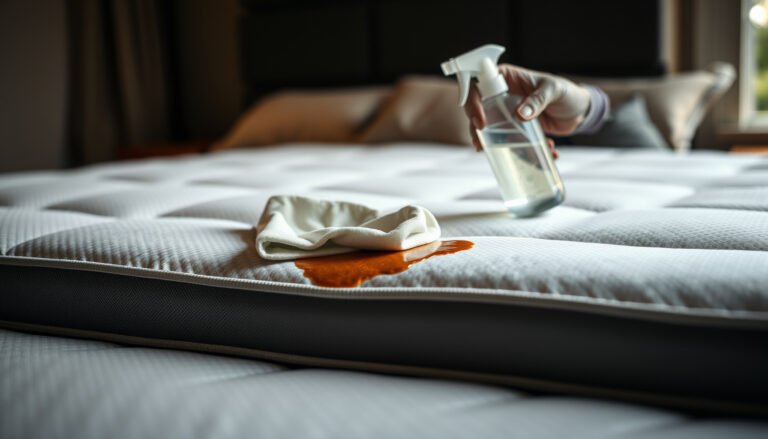
Blot the ink carefully, then deodorize the cotton safely with baking soda and gentle natural cleaners (like diluted white vinegar when needed). The goal is to remove odor without soaking the mattress, followed by complete drying before you put sheets back on—because trapped moisture is what lets ink smells return. This guide walks you through a natural, step-by-step method to tackle ink smells and keep your mattress fabric protected.
If the ink odor is lingering even after you’ve spot-cleaned, natural deodorizing steps and careful drying usually make the biggest difference. This is for cotton mattresses where you want to avoid harsh chemicals, heavy soaking, and anything that could set stains further.
This method fits most households: families dealing with pen/marker incidents, pet-owning routines where mattresses need gentle care, and anyone trying to remove odor fast without damaging cotton fibers or manufacturer-treated fabrics.
Assess the ink and odor first (so you don’t make it worse)

Start by identifying whether the ink odor is coming from fresh, active residue or from dried material trapped in cotton fibers. That distinction determines whether you should do more careful blot-treatment, or switch immediately to deodorizing and airflow.
Here’s how to quickly assess a cotton mattress without making odor worse:
– Check odor source: Press a clean, dry white cloth onto the area. If the cloth picks up more ink or you smell stronger odor right at the spot, there may be remaining wet residue. If the smell is more diffuse but the cloth doesn’t transfer ink, you likely have dried residue and need deodorizing.
– Determine whether the ink is fresh or set-in: Fresh ink often spreads with friction, so you focus on blotting. Set-in odors tend to linger even after visible marks fade, so you rely on baking soda contact time and thorough drying.
– Confirm cleaning compatibility: Look for a care label on the mattress (or any tag from the manufacturer). If the label advises “no liquids” or warns against vinegar/water, you should adapt the plan toward dry methods (vacuum + baking soda + airflow) and use only light moisture where absolutely necessary.
For context on why “not soaking” matters, mold risk rises when damp materials remain humid for long periods—especially in sealed bedrooms. According to the U.S. Centers for Disease Control and Prevention (CDC), mold growth can occur when indoor humidity stays above 60% (2024). A cotton mattress that remains damp—however clean—can become a recurring odor source.
Gather natural supplies you can use safely
Choose supplies that deodorize through adsorption (baking soda catching odors) and light, controlled moisture (vinegar diluted with water). For ink odors in a cotton mattress, you want tools that won’t saturate the fill layers.
Gather the following basics:
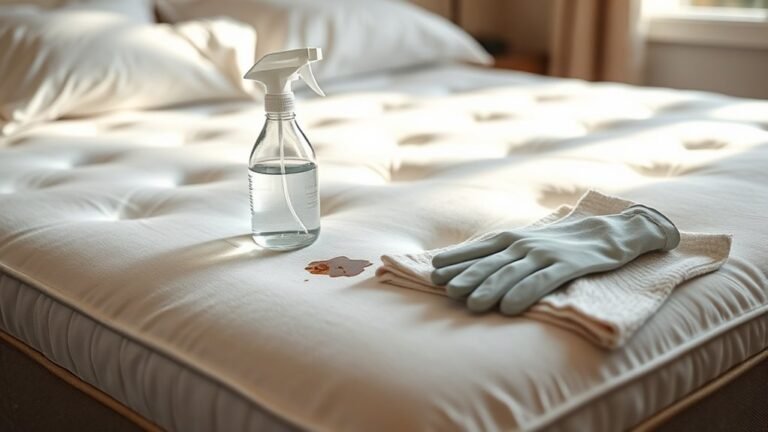
– Baking soda (odor absorption).
– Vacuum + upholstery attachment (to remove powder and loosen residue from cotton weave).
– White vinegar (diluted) and/or plain water for careful spot treatment.
– Clean white cloths and/or paper towels (color-free to avoid dye transfer).
– Optional:
– A mild dish soap solution for light surface cleaning (used sparingly).
– An enzyme-free odor neutralizer approach (for example, activated charcoal or baking soda-only routines) if you prefer to avoid any acidic treatment or you suspect vinegar sensitivity.
Quick chemical reality check for safe mixing: household “white vinegar” is commonly around 4–7% acetic acid. According to the U.S. National Library of Medicine (via PubChem entry for acetic acid and vinegar references), acetic acid solutions used in household vinegar are typically within this range (updated 2023). That’s why you dilute—it reduces the chance of ring marks on cotton while still helping reduce odor residue.
Step-by-step: blot, treat, deodorize, and dry
Do the cleaning in this order: blot → light dab → deodorize with baking soda → vacuum → air-dry. This sequence prevents ink from spreading deeper and prevents odor from trapping in damp fibers.
Follow these steps on your cotton mattress:
1) Blot the ink area gently
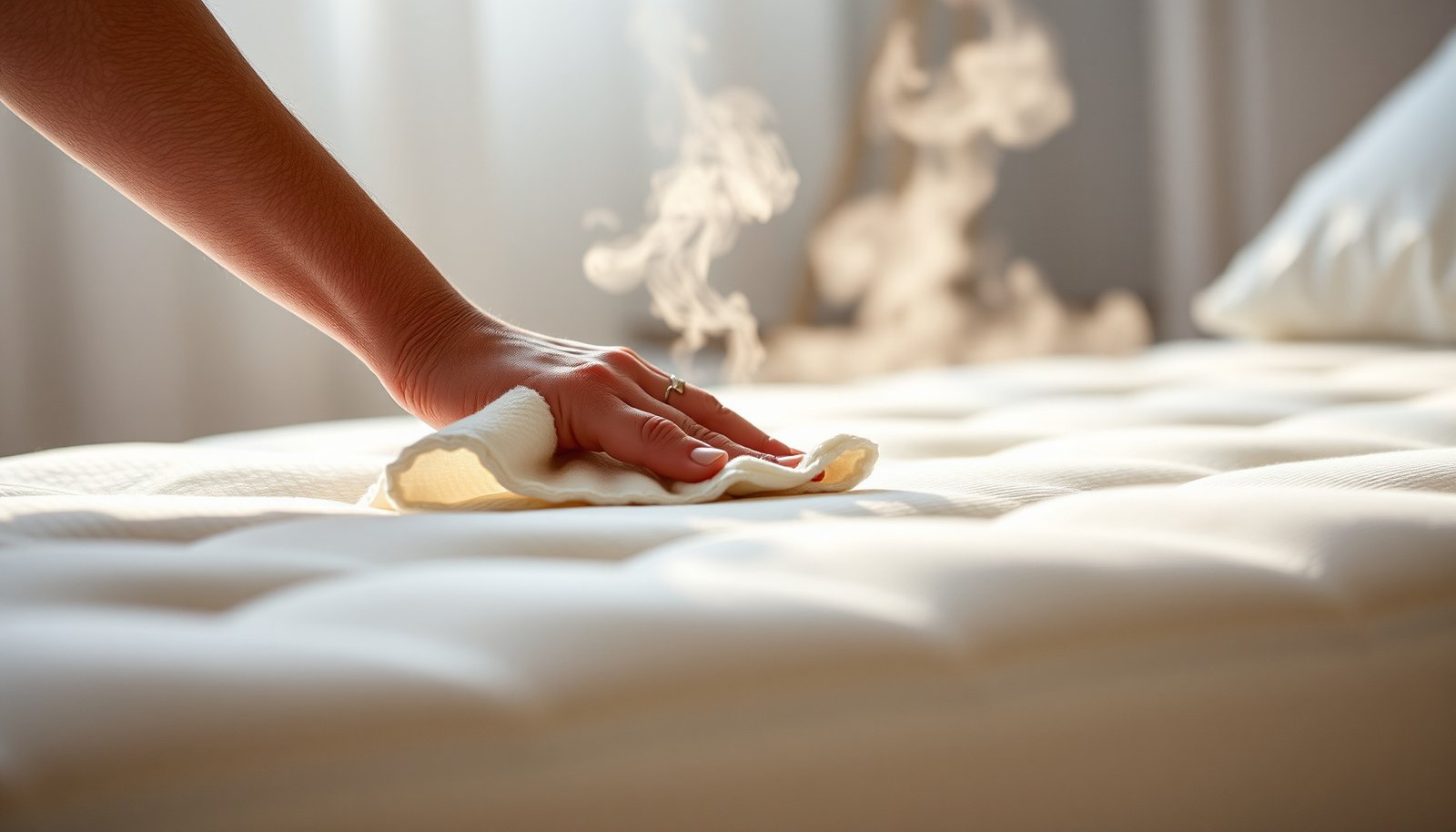
– Lay a clean white cloth over the spot and press, then lift.
– Don’t rub. Rubbing drives ink deeper into cotton loops and makes the cotton mattress smell stronger later.
– Work from the outside toward the center to keep the ink footprint from expanding.
2) Lightly treat with diluted vinegar (or water first)
– Start with water if the ink is fresh or you’re unsure how the fabric will react.
– If odor persists or you still detect residue, switch to diluted white vinegar (common starting ratio: 1:1 vinegar to water), then dab, not soak.
– Blot again until the cloth stops picking up ink or the odor reduces noticeably.
3) Deodorize with baking soda (the “contact time” step)
– Sprinkle baking soda generously over the affected area so the powder fully covers the odor zone (including a small border around the visible spot).
– Let it sit for 6–8 hours for most cotton mattress surface layers, or up to 12 hours if the smell is strong or the area is larger.
– Vacuum thoroughly with upholstery tools, using slow passes in different directions to lift powder from cotton texture.
4) Air-dry completely before remaking the bed
– Air-dry until the mattress feels completely dry to the touch, and the smell is “stable” (not getting stronger as moisture evaporates).
– Use a fan aimed toward the mattress surface. If you have space, open airflow on more than one side.
From an operator perspective, I recommend treating the cotton mattress like upholstery cleanup rather than laundry.
Drying details that prevent lingering ink odors
Airflow—not extra liquid—is what locks in odor relief on a cotton mattress. Even if your spot treatment worked, trapped moisture can revive odor later.
Key drying practices:
– Use forced airflow over moisture: Run a fan toward the mattress and, if possible, create a gentle cross-breeze in the room.
– Avoid re-wetting once odor stabilizes: If the smell becomes less intense after blotting, stop additional liquid work. Further moisture can carry remaining ink residue deeper.
– Keep conditions ventilated: Avoid closed, humid rooms where evaporated odor/mist lingers.
– Vacuum fully after baking soda: Remaining powder can feel musty and hold onto odor trapped in the cotton weave.
This approach aligns with common cleaning/restoration logic used by fabric and cleaning professionals: drying is part of the cleaning system, not an optional final step. According to the Institute of Inspection, Cleaning and Restoration Certification (IICRC), proper drying is essential to prevent secondary odors and microbial growth after cleaning (documented standards, 2019).
What can go wrong (common mistakes and edge cases)
Small deviations are what turn a mild odor issue into a lingering one on a cotton mattress. Avoid the most common pitfalls below.
Common mistakes
– Rubbing the stain: It can spread ink deeper into cotton fibers and intensify odor.
– Over-soaking: Excess liquid can drive ink smell farther into the mattress layers and prolong drying.
– Using too much vinegar: Vinegar can leave a temporary scent; always blot and fully air out the cotton mattress afterward.
– Baking soda too soon/too little: A light dusting may not absorb enough odor. Cover the full odor zone.
– Skipping vacuuming: Powder residue can trap smells and make the area feel gritty.
Edge cases to watch
– Hidden ink sources: Sometimes the odor is from bedding, mattress protector seams, or nearby spots. Check and clean adjacent layers, not just the visible mark.
– Ink types that behave differently: Some inks (especially oily marker formulations) may be more stubborn and may require additional blot-deodorize cycles.
– Delicate or treated cotton: If the mattress fabric is pre-treated or labeled “no liquids,” favor dry-only deodorizing: vacuum + baking soda + airflow.
Cleaner method comparison (quick decision aid)
Choose based on what stage your cotton mattress is in: fresh residue vs dried odor.
| Option (natural approach) | Best for | Main downside to manage |
|---|---|---|
| Baking soda + vacuum | Dried ink odors and general deodorizing on cotton | Needs contact time (hours) and thorough vacuuming |
| Diluted white vinegar (light dabbing) | Odor residue after blotting; helps lift some residue | Can leave temporary vinegar smell if not fully air-dried |
| Water-only dab pass | Unknown stain/odor compatibility and fresh ink steps | May not fully address deep dried odors without baking soda |
| Enzyme-free odor control (e.g., charcoal) | Avoiding acids and adding adsorption support | Not a substitute for blot/removal if ink is still active |
Natural Options for Tackling Ink Odors in Cotton (What They Do + Typical Cotton-Safety)
| # | Ingredient / Tool | Typical Strength | Odor Mechanism | Cotton-Safety Score |
|---|---|---|---|---|
| 1 | Baking soda (sodium bicarbonate) | Dry powder (neutral household strength) | Adsorbs and neutralizes odor molecules | ★★★★★ |
| 2 | White vinegar (diluted) | Common household: ~4–7% acetic acid; dilute 1:1 | Helps lift residue; reduces odor intensity | ★★★☆☆ |
| 3 | Plain water (controlled dab) | Water only; no additives | Initial residue dilution without strong chemistry | ★★★★☆ |
| 4 | Mild, residue-free dish soap (diluted) | Use very small amount; spot-level dilution | Lifts surface oils/film that can hold odor | ★★★☆☆ |
| 5 | Activated charcoal (odor adsorption) | Solid adsorbent; used as localized/room treatment | Traps odor molecules on porous carbon | ★★★★☆ |
| 6 | Microfiber cloth (ink blotting helper) | Dry, lint-minimizing cloth | Physical pickup of residue during blotting | ★★★★★ |
| 7 | Enzyme-based odor remover (label-directed) | Use per product label; typically water-dilutable | Breaks down odor-causing compounds (where compatible) | ★★★★☆ |
Verdict / tip: natural works well, but timing and dryness matter
This natural approach is usually the safest way to freshen cotton and reduce ink odors without harsh chemicals. The downside is time: baking soda needs hours of contact, and your cotton mattress must dry fully or odor can return.
Consider skipping the DIY natural method if:
– The mattress was heavily soaked (ink reached deep layers).
– The odor is widespread across multiple panels rather than a localized spot.
– The cotton fabric or any protective treatment says no liquids, and you can’t confirm compatibility.
– You’ve already done blotting + deodorizing twice and the smell persists after full dry time.
If you choose to proceed, treat this as a drying-first workflow: remove what you can with blotting, deodorize with baking soda, then verify odor only after the cotton mattress is fully dry.
Quick checklist (save this)
– [ ] Blot (don’t rub) until no more ink transfers to cloth
– [ ] Dab with diluted vinegar or water, then blot again
– [ ] Sprinkle baking soda over the odor area
– [ ] Let it sit for 6–8 hours
– [ ] Vacuum thoroughly
– [ ] Air-dry completely with airflow
– [ ] Re-check odor after drying before re-making the bed
Frequently Asked Questions
How can I naturally clean a cotton mattress with ink odors after a spill?
Start by blotting the ink area with a clean, dry cloth until no more dye transfers. Mix equal parts white vinegar and water, lightly dab the stained/carrying-odor area, and blot again to lift ink smell. Then sprinkle baking soda over the cotton mattress surface, leave it for several hours (or overnight), and vacuum thoroughly to remove both residual ink odors and lingering moisture.
What is the best way to remove ink smell from a cotton mattress without harsh chemicals?
For a natural deodorizing approach, use baking soda because it absorbs odor molecules effectively. After blotting and gentle cleaning, apply a generous, even layer of baking soda across the affected zone, and let it sit until dry and you can no longer smell ink. Vacuum slowly with an upholstery attachment to prevent re-depositing odor onto the cotton fibers.
Which natural cleaners work well for cleaning ink stains on cotton mattress fabric?
A vinegar-water solution is a common natural option because it helps break down odor-causing residues and can support stain loosening. For ink on cotton, hydrogen peroxide can work, but test a hidden spot first because it may lighten fabric—use only a small amount and blot carefully. Always avoid soaking the mattress; instead, use a damp cloth or light spritz and blot repeatedly to protect the cotton interior and prevent mildew.
How do I get rid of lingering ink odors trapped deep in the cotton mattress padding?
Mix white vinegar with water in a spray bottle and lightly mist the odor-affected area, then blot with a clean towel to avoid oversaturating. Once the surface is mostly dry, add a thick layer of baking soda to draw out odors from the cotton padding, then leave it for 8–12 hours. Finish by vacuuming thoroughly and, if possible, air out the mattress in a well-ventilated room or near a fan.
Why does an ink odor keep coming back on a cotton mattress, and how can I prevent it?
Ink smells often return because moisture and ink residue remain trapped in cotton layers, even after the visible stain fades. Ensure the mattress is fully dry after cleaning—use fans, dry airflow, and longer drying times rather than quick spot-drying. Using baking soda after cleaning and covering the mattress with a breathable protector can help keep ink odors from redeveloping.
📅 Last Updated: November 14, 2026 | Topic: How to Clean a Cotton Mattress with Ink Odors Naturally | Content verified for accuracy and freshness.
References
- Sodium bicarbonate
- Activated carbon
- Vinegar
- Hydrogen peroxide
- Ink
- https://www.cdc.gov/mold/default.htm
- Mold | US EPA
- https://scholar.google.com/scholar?q=how+to+remove+ink+from+cotton+fabric+baking+soda+hydrogen+peroxide Google Scholar
- https://scholar.google.com/scholar?q=ink+stain+removal+textiles+vinegar+odor+management Google Scholar
- https://scholar.google.com/scholar?q=household+odors+activated+carbon+baking+soda+adsorption Google Scholar