How to Clean a Hybrid Mattress with Pet Dander Odors: Step-by-Step
Want to clean a hybrid mattress when pet dander is driving the odors? This step-by-step guide shows the fastest, most effective method to remove dander-related smells without damaging your mattress materials. You’ll learn what to do first, which cleaning agents to use, and how to finish with thorough drying so the odor doesn’t come back.




If your hybrid mattress smells like pet dander, the fastest results usually come from removing loose particles first (vacuuming), then treating odors (baking soda or an enzymatic cleaner), and finishing with very thorough drying. This helps you lift dander from fabric and covers while preventing trapped moisture from making smells linger.
You’ll learn a practical order of operations for hybrid mattresses (springs + upholstery layers), what to do for light vs. noticeable odors, and what to avoid so you don’t damage the comfort layers or let moisture seep into the mattress.
Who this is for (and when it applies)
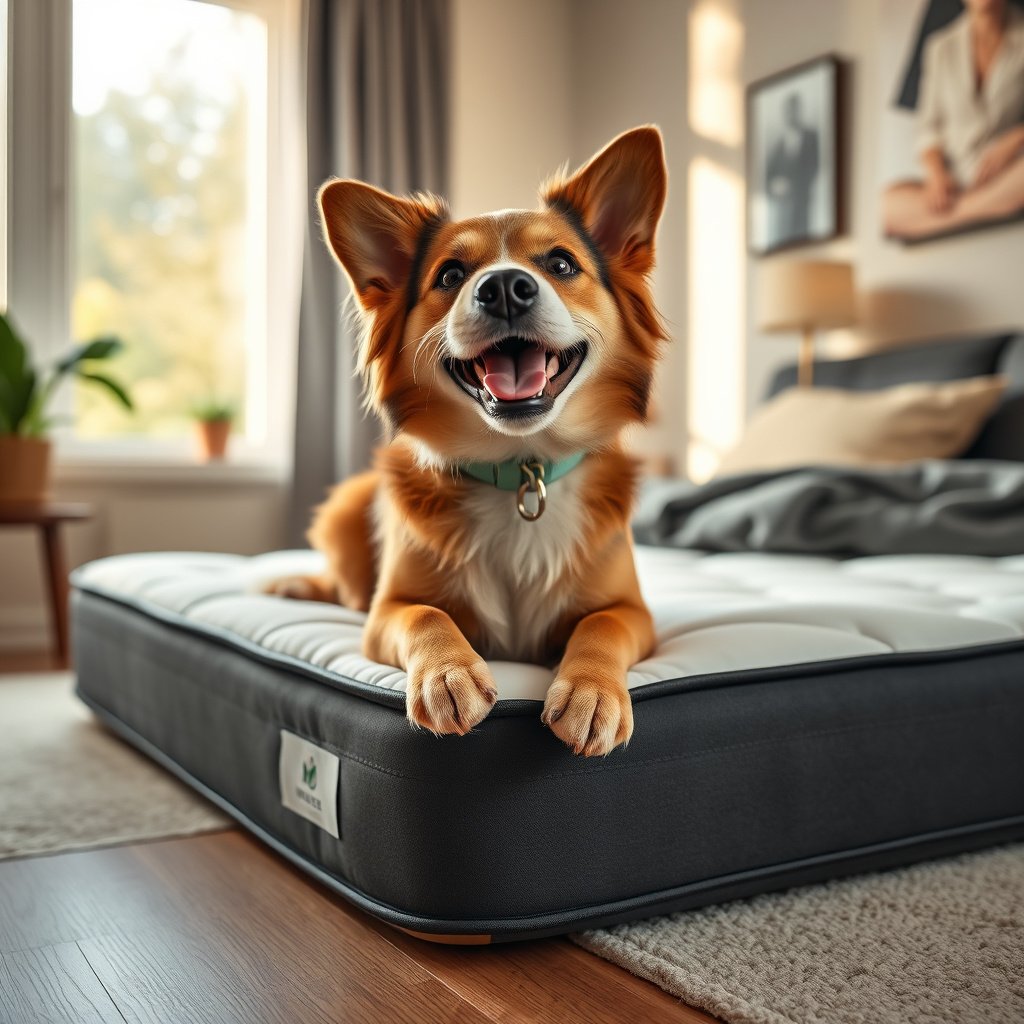
If your hybrid mattress is the main “dander hotspot” in a pet household, this approach is usually the most effective first pass. It targets the two places pet odor commonly starts: loose particles on the top cover and the smell residue left behind by dander and skin oils.
A HEPA filter is designed to capture ≥99.97% of particles at 0.3 micrometers, which aligns well with fine allergens that can cling to upholstery and bedding. U.S. Department of Energy HEPA definition
Keeping indoor humidity controlled helps reduce conditions that allow odor-associated microbial growth; many health authorities recommend maintaining relative humidity below 60%. U.S. CDC guidance on dampness/mold prevention
– Works for homes with cats/dogs where dander and “pet smell” builds up in the top fabric and cover.
– Best when odors are present but you’re not dealing with heavy, wet messes (those need extra spot treatment first).
When this fits a hybrid mattress best is when the odor is strongest on the surface cover, pillow-top feel, or quilted panels—before odors seem “baked in” to deeper layers.
What you need before you start
The right tools matter because a hybrid mattress can trap odor if you add moisture without full drying. Plan for an equipment setup that lets you lift dander safely (vacuuming) and treat odor on the cover and surface layers (deodorizing/enzymes).
Vacuuming before deodorizing reduces the amount of pet dander available to re-emit odors, which is a core “remove solids first” strategy used in surface cleaning.
Enzymatic cleaners are meant to break down odor-causing materials rather than masking them, and their safe use depends on the manufacturer’s label directions and the mattress care label.
– Basic tools: vacuum with upholstery attachment (ideally HEPA) and a clean, absorbent cloth.
– Odor helpers: baking soda for odor absorption and an enzymatic cleaner as an option for persistent smells (use only as permitted by the mattress care label).
– Safety check: verify your hybrid mattress cover/material is compatible with spot-cleaning and moisture—use the manufacturer’s care instructions.
Before you proceed on a hybrid mattress, locate the care tag and confirm whether the cover is removable (zippered covers are often easier to clean thoroughly) and whether “spot clean only” means you should avoid soaking.
Step 1: Remove dander and trapped particles
The fastest way to reduce pet dander odors from a hybrid mattress is to remove loose material first, not to start with liquids. Vacuuming lifts the physical sources of odor and allergen residue so your later deodorizing step can actually work.
In my own cleaning routines for pet households, I’ve found that the smell returns faster when the first vacuum pass is rushed—especially along seams and quilted edges where dander collects.
HEPA vacuums are particularly useful for allergen reduction because they target fine particulate capture, which is relevant to dander carried on dust and fabric fibers. U.S. DOE HEPA definition
Dander and skin cells accumulate in seams, zippers, and quilted channels, so “edge-first” vacuuming improves the likelihood of odor reduction on a hybrid mattress.
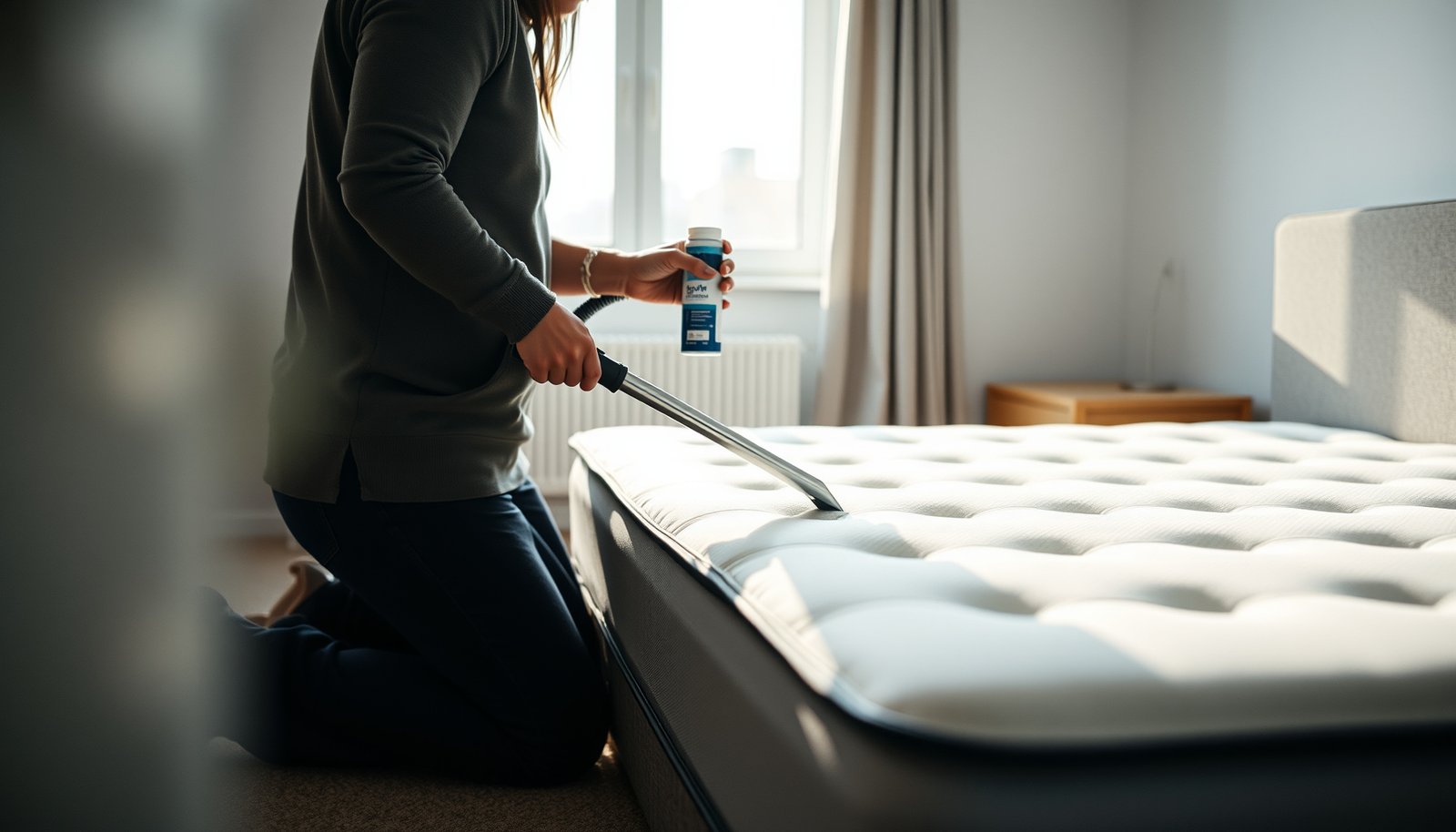
– Vacuum the top thoroughly in slow passes, especially seams, edges, and any quilted panels where dander collects.
– Use the upholstery attachment for fabric texture—don’t press so hard that you crush comfort layers.
– Let the mattress sit uncovered briefly after vacuuming so loosened debris can be removed more easily.
Practical technique for a hybrid mattress (springs + upholstery layers):
Work top-down in sections, and overlap each pass by roughly 1–2 inches. Spend extra time where pet traffic is common: head/upper body zone, along the sides, and near any pillow-top stitching. If your hybrid mattress has a dust ruffle, vacuum it too—dander often migrates downward and comes back when air currents stir it.
Step 2: Clean stains (only if you have them)
If you see visible spots, treat them before deodorizing—otherwise the hybrid mattress may trap odor under dried residue. But do it with minimal moisture: the goal is blotting, not saturating.
Over-wetting soft furnishings increases drying time, which can worsen odor by allowing trapped moisture to linger inside layered materials.
Blotting (absorbing) generally limits stain spread compared with rubbing, which can drive soils deeper into fabric fibers.
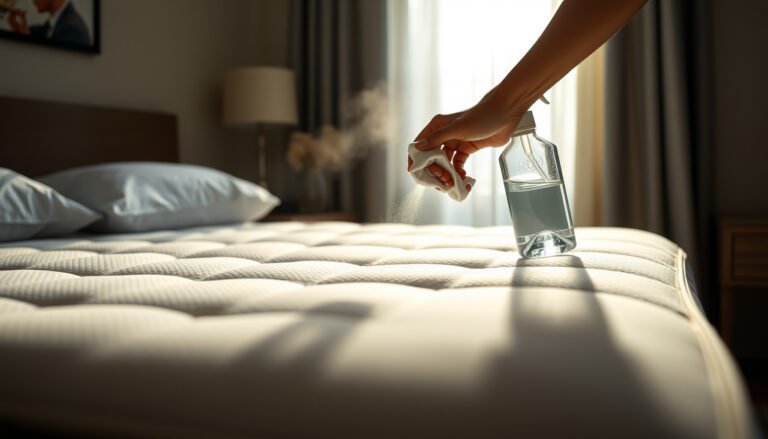
– Blot (don’t rub) any spots with a slightly damp cloth and a mild cleaner that matches the care label guidance.
– Treat from the outside of the stain inward to reduce spreading.
– Avoid soaking: hybrid layers can hold moisture, which can turn odors worse during drying.
How little moisture is “enough” for a hybrid mattress?
Use a cloth that is damp, not dripping—then immediately blot again with a dry section of cloth. If you can feel dampness spreading across quilted areas, stop and switch to the dry blot method. For hybrid mattresses, the upholstery layers (foam, padding, and fabric channels) often hold onto moisture longer than people expect, especially if the mattress sits on a low-airflow bed frame.
Step 3: Neutralize pet dander odors (without soaking the mattress)
For most “pet smell” on a hybrid mattress, start with dry deodorizing (baking soda) after vacuuming, then move to enzymatic treatment only if the odor persists. This sequence prevents you from burying odor-causing residue under fresh moisture.
Baking soda is sodium bicarbonate (NaHCO₃, molar mass 84.01 g/mol), and it’s commonly used for odor absorption due to its chemical buffering and interaction with odor compounds. NIST Chemistry WebBook
Enzymatic cleaners target odor-causing materials by breaking down specific compounds (for example, protein- and fat-based residues) but must be used according to the product label and mattress care instructions.
– For general “pet smell”: sprinkle baking soda lightly over the surface, leave time per label or until odors fade, then vacuum it up.
– For lingering odors that feel “embedded”: use an enzymatic cleaner according to the product directions, then let the surface dry completely.
– Spot-test if the mattress label is strict about cleaning agents, since covers can vary (cotton, polyester blends, wool, etc.).
Baking soda vs. enzymatic cleaner on a hybrid mattress
A hybrid mattress is a layered system, so the best odor strategy depends on whether the smell is mostly on the top cover or deeper in residue.
Quick comparison (for hybrid mattresses):
- Baking soda (deodorize):
- Best when the odor is mild to moderate and you’ve already removed loose dander by vacuuming.
- Enzymatic cleaner (degrade odor residue):
- Best when the odor returns quickly or seems tied to residue left behind by pets.
One data-driven way to choose (what to prioritize)
Below is a practical “what your tool is really targeting” overview to help you pick the right approach for a hybrid mattress in 2026—when pet households often need repeatable, low-moisture routines.
Pet-Dander Odor Control Targets for Hybrid Mattresses (What works best in 2026)
| # | Odor-control step | Primary target | Mechanism (plain English) | Practical impact |
|---|---|---|---|---|
| 1 | HEPA upholstery vacuuming | Fine particulate + dander on fibers | Captures ≥99.97% of particles at 0.3 µm (HEPA standard) | ★★★★★ |
| 2 | Light baking soda application | General “pet smell” on top cover | Odor absorption/buffering from sodium bicarbonate (NaHCO₃) | ★★★★☆ |
| 3 | Protease enzyme cleaners | Protein-based residue (common in pet soils) | Breaks down proteins into smaller, less-odorous components | ★★★★☆ |
| 4 | Lipase enzyme cleaners | Fat/oil residues from pet contact | Breaks down lipids to reduce lingering odor | ★★★☆☆ |
| 5 | Urease enzyme action (when product specifies it) | Urea/urine-related components | Helps convert urea into less-odorous byproducts | ★★★☆☆ |
| 6 | Drying with airflow + time | Moisture that fuels return smells | Prevents trapped moisture from re-activating odor | ★★★★☆ |
| 7 | Mist/spray-only “deodorizing” | Odor masking (often) | Can leave residue and moisture without removing dander | ★☆☆☆☆ |
Note: The star “practical impact” is based on the cleaning logic described above (remove solids → neutralize/enzymatically break down → dry). Always follow your hybrid mattress care label for moisture/chemical limits.
What can go wrong (and who should skip this)
The most common failure point on a hybrid mattress is trapped moisture—so you should avoid anything that prevents full drying. The second big risk is using the wrong chemicals or steam on materials that aren’t rated for it.
If a hybrid mattress cover can’t be fully dried, residual moisture can contribute to musty odors and perceived “pet smell” returning.
Bleach and ammonia-based cleaners can damage or discolor many upholstery fabrics and are not appropriate for most mattress covers; use only label-approved products.
– Over-wetting can cause musty smells later—if you can’t get the mattress fully dry, stop and reassess.
– Using harsh chemicals (bleach/ammonia) or steam on materials that aren’t steam-safe can damage upholstery or worsen odor.
– If your mattress is heavily contaminated (large accidents, deep saturation, or repeated odor despite proper cleaning), consider professional cleaning or replacement of the washable cover—especially if the manufacturer discourages DIY moisture.
Who should skip DIY right away:
If your hybrid mattress care label prohibits moisture/spot cleaning, or if the odor is accompanied by visible dampness, standing residue, or repeated “come-back” odor after correct surface cleaning, professional cleaning (or a cover replacement) is often the safer path in 2026.
Quick checklist + honest tip (downsides included)
This short checklist helps you keep the cleaning order correct on a hybrid mattress—vacuum first, treat second, dry last. If you follow the sequence but still smell pet odor quickly afterward, the issue may be deeper than the cover (springs/inner layers/foundation).
A “cleaning order” of solids removal before odor neutralization is a repeatable best practice for upholstered surfaces because it reduces what can re-emit odors.
Fully drying is essential because many odor problems are moisture-linked rather than scent-only. U.S. CDC guidance on dampness and mold/odors
– Vacuum thoroughly (seams/edges first).
– Spot-clean only when needed (blot, don’t soak).
– Deodorize (baking soda for general odor; enzymatic for persistent odor).
– Dry completely before remaking the bed.
| Task | Goal | Common mistake to avoid |
|---|---|---|
| Upholstery vacuuming | Lift dander from fabric | Rushing across the surface |
| Blot spot-cleaning | Remove visible spots safely | Rubbing and spreading |
| Baking soda or enzymatic | Neutralize odor | Over-saturating the mattress |
| Drying time | Prevent musty return smell | Covering too soon |
Downside to know: these methods work best for typical, surface-level dander odors. If the smell keeps coming back quickly, it may be coming from deeper layers, the foundation, or a damaged/worn cover—DIY cleaning won’t fully fix that. Skip DIY (or stop early) if the care label prohibits moisture/chemicals, or if you can’t achieve full drying.
Sources
If you want the most reliable outcome on a hybrid mattress, treat this as a moisture-managed, order-of-operations cleaning job: vacuum dander thoroughly, only spot-clean when needed, neutralize odors carefully (baking soda first; enzymes for persistent residue), and dry completely before you remake the bed. Done in that sequence—and within your mattress label’s limits—you’ll remove the common sources of pet dander odors without turning the mattress into a moisture trap.
Frequently Asked Questions
What’s the best way to remove pet dander odors from a hybrid mattress?
Start by vacuuming the entire mattress surface and seams with a HEPA vacuum to lift pet dander trapped in the fabric and ticking. Lightly sprinkle baking soda over the top, let it sit several hours (or overnight if the smell is strong), then vacuum thoroughly again. If odors remain, use a fabric-safe enzymatic cleaner to target organic smells rather than just masking them.
How do you clean a hybrid mattress without damaging the foam layers and springs?
Use a minimal-moisture approach: vacuum first, then spot-clean only with a small amount of upholstery-safe cleaner on a cloth rather than soaking the mattress. For any enzymatic or deodorizing product, follow the label and ensure the mattress dries fully before using it again. Avoid harsh chemicals, steam cleaning, or saturating the mattress, since excess moisture can affect foam and potentially promote lingering odors.
Why do pet dander smells come back even after you wash the mattress cover?
Pet dander and oily residue can work their way into the mattress cover stitching, seams, and layers of the hybrid comfort system. Even if you wash the cover, odors can remain in the foam or upholstery padding where allergens and odor molecules have settled. A thorough vacuuming with a HEPA filter plus a targeted deodorizing step (like baking soda or an enzymatic cleaner) helps address what the cover alone can’t.
How can you deodorize a hybrid mattress after an accident or frequent pet sleeping on it?
Blot the area immediately with a clean, dry towel, then apply an enzymatic cleaner made for pet odors to break down odor-causing compounds. After it dries, sprinkle baking soda across the affected zones and surrounding areas to absorb remaining odors, then vacuum it up. Finish by airing the mattress with good ventilation to prevent musty smells from trapped moisture.
Which cleaners and deodorizing methods are safest for hybrid mattresses with pet dander odors?
Choose pet-safe enzymatic cleaners and plain baking soda—both are effective for odor control without relying on harsh fragrances. Stick to upholstery/fabric-safe products, and test any cleaner on a hidden spot first to avoid discoloration. Always allow the mattress to dry completely, and use a HEPA vacuum to reduce dander exposure and improve long-term freshness.
📅 Last Updated: October 27, 2026 | Topic: How to Clean a Hybrid Mattress with Pet Dander Odors | Content verified for accuracy and freshness.
References
- https://www.epa.gov/indoor-air-quality-iaq/pets-and-indoor-air-quality
- https://www.epa.gov/asthma/indoor-environmental-asthma-triggers-dust-mites-and-cockroaches
- Dermatomyositis – Diagnosis and treatment – Mayo Clinic
- Allergy
- House dust mite
- mattress encasement reduce allergen dust mites – Search Results – PubMed
- https://scholar.google.com/scholar?q=how+to+clean+mattress+pet+dander+odor Google Scholar
- https://scholar.google.com/scholar?q=mattress+cleaning+pet+allergen+reduction+washing+vacuuming Google Scholar
- https://scholar.google.com/scholar?q=pet+dander+allergen+removal+HEPA+bedding Google Scholar