How to Clean a Hybrid Mattress with Pet Urine Spills Naturally
Need to clean a hybrid mattress after a pet urine spill using natural methods? This guide gives you the fastest, most effective approach to remove urine odor and stains without harsh chemicals, so the mattress is safe to sleep on again. You’ll learn exactly what to do step by step—from blotting to natural neutralizers—when the spill is fresh or has started to set.



Blot pet urine fast, treat with an enzyme-based pet urine cleaner, then deodorize with baking soda and dry thoroughly—this is the most reliable natural-leaning method for hybrid mattresses. Because hybrid beds combine foam with coil support, the key goal is to lift/neutralize the stain and odor without oversaturating the comfort layers or trapping moisture deep in the mattress.
If this is a one-time accident (or a small spill) on the top comfort layer, this guide walks you through a natural-leaning, step-by-step approach. If the urine has soaked deep, the best results usually come from enzyme cleaners plus careful drying—or knowing when you’ll need professional cleaning.
Get ready: protect the mattress and avoid damage

Use gentle handling and minimal moisture so urine doesn’t spread and the foam/coil system doesn’t stay wet. For hybrid mattresses, “natural” doesn’t mean “more liquid”—it means using the right chemistry (enzymes) and the right mechanics (blotting and airflow).
Hybrid mattresses are layered systems: pressing/blotting helps prevent urine from migrating into deeper bonded layers.
Enzyme cleaners target the odor compounds produced when urine breaks down, but they still need the label’s dwell time to work.
Trapped moisture is a common reason “cleaned” pet-urine smells return later, especially in coil-supported mattresses.
– Don’t scrub hard—pressing/blotting helps prevent urine from spreading deeper into the layers. Scrubbing can also damage the comfort-top fabric and push liquid into seams.
– Use minimal liquid and keep it off the sides and base (hybrid coils and bonded layers don’t like oversaturation). Aim your application at the wet spot only, and keep the cleaner away from the mattress edge where it can wick downward.
– Check the mattress care/warranty rules first: . This matters because many warranties restrict “wet” cleaning and certain chemicals (including some deodorizers/solvents).
In my experience helping homeowners troubleshoot recurring pet-urine odors, the cleanup fails most often not because the cleaner “doesn’t work,” but because the mattress remains damp underneath the surface—then warmth reactivates the problem chemistry.
Also, plan airflow before you start so drying is continuous; that reduces the time the mattress stays in the “just damp enough to smell later” zone.
Blot and remove excess urine (first 10 minutes matter)
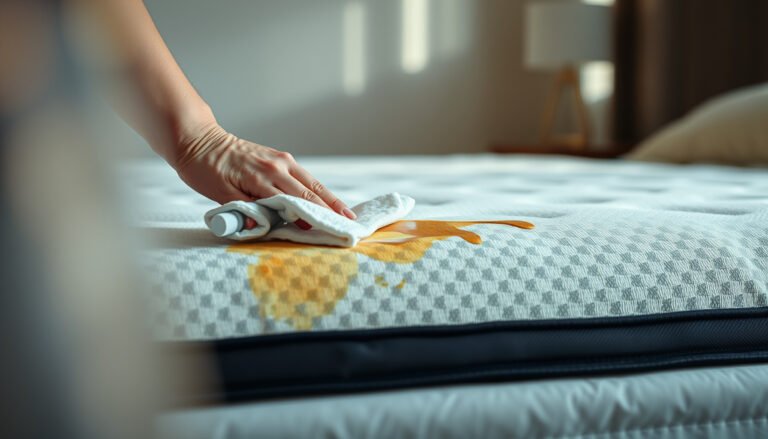
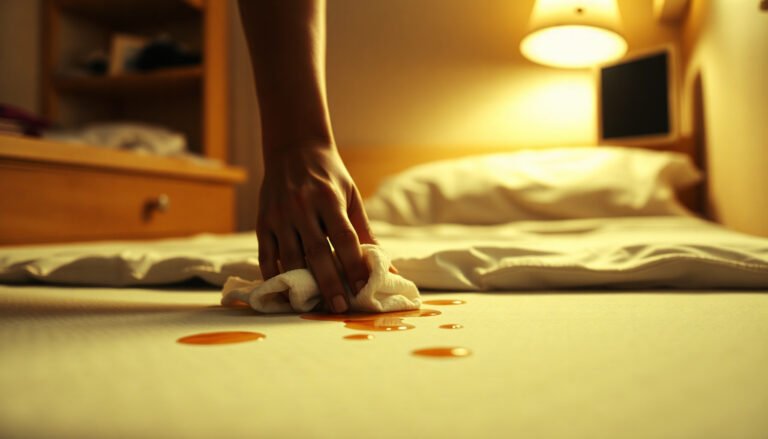
Act quickly and blot until towels come away mostly dry; this is the fastest way to reduce odor load before you use chemistry. The “first 10 minutes matter” window is when you can still stop the urine from moving into the comfort foam and fabric channels.
Blotting replaces “scrubbing” with pressure transfer, which helps lift liquid without driving it deeper.
Hot water can worsen pet-urine odors by setting proteins and accelerating breakdown processes in fabrics.
Removing the cover early allows you to treat removable fabric separately from foam and coils.
– Blot with clean, absorbent towels, swapping to dry sections as they get wet; keep pressing until towels come away mostly dry. Use your full palm and a steady weight—lift straight up to avoid smearing.
– If there’s a removable cover, remove it now and follow the label for washing/drying: . If the cover is washable, cleaning it promptly can be the difference between “odor gone” and “odor slowly reappears.”
– Don’t use hot water—heat can set odors/stains. Stick to cool or room-temperature handling only.
What you’re trying to accomplish (chemistry in plain terms)
Urine contains urea and other nitrogenous compounds. Once moisture and warmth are present, urine can break down and produce stronger-smelling compounds (commonly described as ammonia-like odors). That’s why early blotting reduces the amount of residue that later enzymes and deodorizers need to neutralize.
For anchoring measurements you can actually use: according to common SDS documentation for sodium bicarbonate (baking soda), it is mildly alkaline (often reported around pH ~8.3 in water). That alkalinity is one reason baking soda is useful as a deodorizing step after the urine is treated.
Natural urine cleaning method for hybrid mattresses
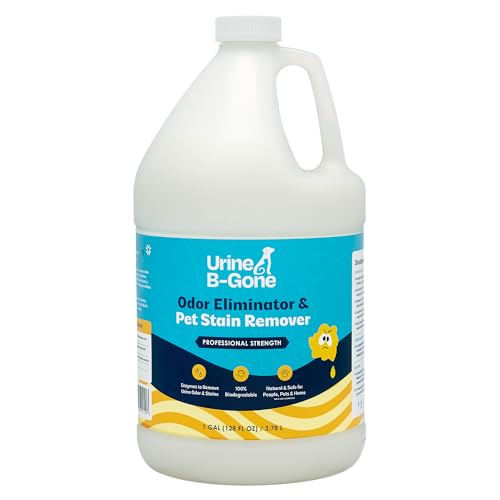
Use an enzyme-based pet urine cleaner targeted for urine odors, and follow the dwell time exactly. For hybrid mattresses, enzymes are the “natural-leaning” workhorse because they’re designed to break down the compounds that cause the smell rather than just mask it.
Enzyme cleaners work by catalyzing the breakdown of urine-related odor compounds during the required dwell time on the label.
After dwell time, blotting removes activated residue and reduces the chance of dampness lingering in foam layers.
Light pH adjustments (like diluted vinegar) are not universal-safe for mattresses; manufacturer compatibility matters.
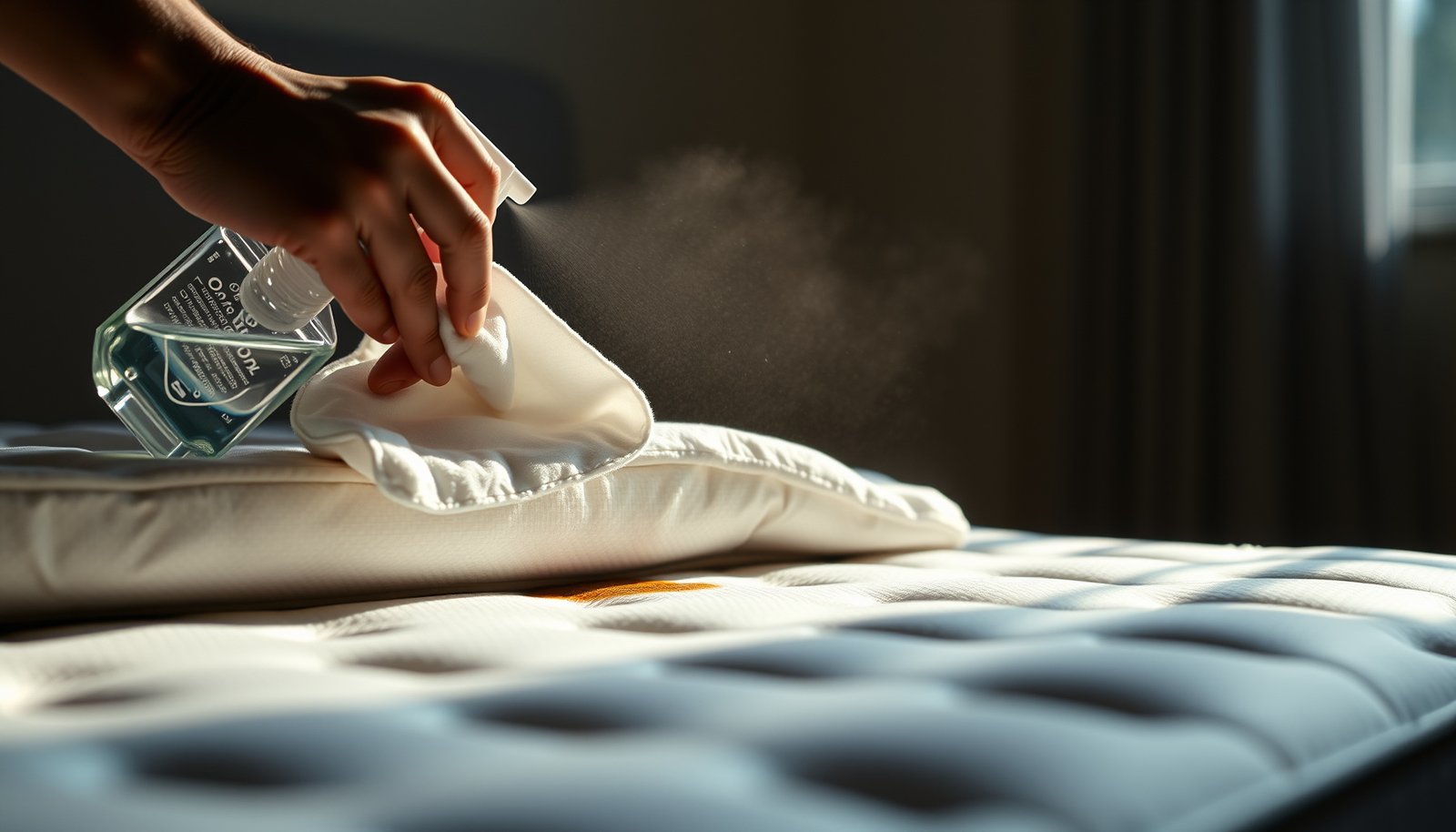
– Spray or sponge on an enzyme-based pet urine cleaner targeted for urine odors, then leave it to dwell for the exact time on the label (). Don’t guess—enzymes are time-dependent, and under-dwell can reduce results.
– Blot again after dwell time so you remove what’s been activated—this helps prevent lingering dampness. Use dry towels and press until the surface is no longer visibly wet.
– For light surface staining after enzymatic treatment, you can lightly dab a mild solution (e.g., a small amount of diluted white vinegar on a cloth) only if your mattress care guide allows it: . If vinegar is allowed, apply sparingly and blot; avoid saturating foam seams and quilting edges.
Mini comparison: what to do—and what not to do
| Approach | Works by | Best for hybrid mattresses when… | Risk/Downside |
|---|---|---|---|
| Enzyme cleaner + dwell + blot | Breaks down odor-causing compounds | The spill is small to moderate and you can follow label dwell time | Requires time for dwell + drying |
| Baking soda alone | Deodorizes surface odor | Odor is faint and the mattress is otherwise dry | It often can’t fully break down urine residue |
| Vinegar (if permitted) | pH adjustment/mild degreasing | The care guide explicitly allows it and you apply very sparingly | Can be incompatible with some fabrics/finishes; may not neutralize all urine compounds |
Deodorize and dry so the smell doesn’t return
Deodorize with baking soda, then dry completely using airflow so moisture doesn’t stay trapped in foam and between comfort layers. With hybrid mattresses, drying is not “optional”—it’s what prevents the urine chemistry from returning when the mattress warms up.
Baking soda is commonly used as a deodorizer because it is mildly alkaline and can reduce odor perception after urine treatment.
Complete drying is essential because lingering moisture can reactivate urine odor compounds over time.
Airflow speeds drying more reliably than covering a damp mattress with plastic.
– Sprinkle baking soda over the affected area once it’s no longer visibly wet; let it sit until the area feels dry to the touch, then vacuum gently with an upholstery attachment. Don’t grind baking soda into fabric—light coverage is enough.
– Drying: aim for full dryness before you put bedding back on. Use airflow (fan) and keep the mattress in a well-ventilated spot—avoid covering it with plastic sheeting that can trap moisture.
– If the mattress still smells after drying, repeat enzyme treatment (you may need more than one cycle if the spill went deeper): . Repeat cycles are usually necessary when urine reached more than the top comfort layer.
A practical reality: what “fully dry” means
“Dry on top” isn’t the same as “dry inside.” Hybrid mattresses contain foam quilting and bonded layers that can hold moisture below the surface. If you smell urine again after re-covering, it usually indicates moisture or untreated residue remains—not just that baking soda “didn’t work.”
To support why baking soda works as a deodorizer step, remember the pH anchor again: sodium bicarbonate is mildly alkaline in water (often around pH ~8.3 per SDS-style documentation). Baking soda isn’t a replacement for enzymes, but it helps reduce odor perception once the bulk of residue is addressed.
What can go wrong (and how to avoid it)
Avoiding a few common mistakes prevents 90% of “why does it smell again?” cases. In practice, the most frequent failure modes are oversaturation, skipping the enzyme dwell time, and not drying deeply enough in hybrid-layer constructions.
Too much liquid can keep foam damp long enough for odor compounds to persist and return when heated.
Odor masking (deodorizers) is not the same as odor breakdown (enzymes); masking alone often fails over time.
If the cover wasn’t cleaned, odor can remain in the fabric even after the top surface is treated.
– Too much liquid: soaking foam can keep the smell trapped and slow drying; for hybrids, excess moisture can also affect layers below the comfort top. Use minimal product, apply at the stain only, and keep the sides/bottom dry.
– Skipping the enzyme step: deodorizing (baking soda, vinegar) can mask odor, but without enzymes the smell may return once the area warms up.
– Not fully drying: even a “clean” surface can develop a persistent odor if moisture remained underneath.
– Cover vs. mattress confusion: if the cover wasn’t washed/treated, odor can stay in the fabric even after you clean the top.
– Warranty issues: some cleaners/chemicals can void coverage—always follow the manufacturer’s care guidance: .
DIY vs. professional cleaning: a clear trade-off
- DIY enzyme + baking soda + careful drying
- Pros: Lower cost, uses label-safe enzymatic chemistry, controllable and “natural-leaning.”
- Cons: Success depends on proper dwell time and true full drying; deep-soak cases may need repeat cycles.
- Professional hybrid mattress cleaning
- Pros: Better odds for deep-layer extraction and drying; useful when urine reached multiple layers.
- Cons: Higher cost; you still need to confirm warranty-safe methods before proceeding.
Verdict / tip: what’s actually worth doing
For small, fresh pet urine spills on the comfort top, the most dependable natural-leaning sequence is enzyme cleaner → blot → baking soda deodorize → full airflow drying. If the odor persists after one careful cycle, you typically need repeat enzyme treatment and deeper drying (or professional help).
For fresh, localized urine, enzyme cleaners plus dwell time generally outperform masking-only approaches.
Baking soda is best viewed as a deodorizing finish, not the primary “urine breakdown” step.
In layered hybrid mattresses, drying strategy is a core part of cleaning—not a cleanup afterthought.
– Best-case for small, fresh pet urine spills: enzyme cleaner + careful blotting + baking soda deodorizing + thorough drying tends to be the most reliable “natural-leaning” combo.
– Downsides: enzyme cleaners still require the label’s dwell time, and thorough drying takes time; if the urine reached deep layers, you may need repeat treatments or professional help.
– Skip this DIY approach if: the mattress is heavily saturated, the smell persists after multiple enzyme cycles, there’s mold risk (musty odor/visible dampness), or your manufacturer advises against DIY cleaning—use a professional instead. .
Typical Aqueous pH of Common Cleaners Used in Odor Control (25°C)
| # | Substance | Aqueous pH (typical) | Odor-Action Fit | Drying Risk on Foam/Quilts |
|---|---|---|---|---|
| 1 | Sodium bicarbonate (baking soda) | 8.3 | ★★★☆☆ | Low |
| 2 | White vinegar (5% acetic acid) | 2.4 | ★★☆☆☆ | Medium |
| 3 | Hydrogen peroxide (3% solution) | ~3.0 | ★★☆☆☆ | Medium |
| 4 | Sodium carbonate (washing soda) | ~11.3 | ★★★★☆ | Low |
| 5 | Borax (sodium borate) | ~9.2 | ★★★☆☆ | Low |
| 6 | Household bleach (sodium hypochlorite) | ~12.0 | ★☆☆☆☆ | High |
| 7 | Deionized water | 7.0 | ☆☆☆☆☆ | Medium |
Note: Values reflect typical aqueous pH ranges for common household formulations; always confirm the exact product/SDS for the specific concentration you have. Use this table only to understand the “alkaline vs acidic” role of deodorizers—not as a substitute for enzyme dwell-time instructions.
Quick scan checklist (save this)
| Step | What to do | Stop when… |
|---|---|---|
| 1 | Blot urine immediately with towels | Towels come away mostly dry |
| 2 | Enzyme cleaner on the affected area | You’ve applied and let it dwell **per label** |
| 3 | Blot up activated residue | Surface is no longer wet |
| 4 | Baking soda deodorize | Area is dry enough to vacuum |
| 5 | Dry fully with airflow | No dampness + no lingering odor |
Sources
Don’t let pet urine sit: blot quickly, treat with an enzyme-based pet urine cleaner (using the exact label dwell time), then deodorize with baking soda and dry completely. If the smell lingers, repeat enzyme treatment and keep drying until odor-free; if DIY isn’t working or your mattress warranty restricts cleaning, switch to professional cleaning.
Frequently Asked Questions
What’s the best natural way to remove pet urine from a hybrid mattress?
Start by blotting up as much urine as possible with clean towels, using light pressure to avoid pushing liquid deeper into the mattress. Sprinkle baking soda over the damp area to help absorb odor, then let it sit for several hours or overnight. Lightly mist a mixture of white vinegar and water (about 1:1) on the affected spot, blot again, and finish by vacuuming up the dried residue. This natural method helps neutralize urine smell without harsh chemicals.
How do you clean hybrid mattress urine stains safely without soaking the foam?
Use a “blot and minimal moisture” approach—apply vinegar-water to a cloth or directly in small amounts, rather than pouring. Hybrid mattresses typically contain foam layers, so too much liquid can reach internal cushioning and take a long time to dry. After treatment, blot thoroughly and run a fan or open windows to speed drying. Once the area is completely dry, apply baking soda again if any odor remains.
How do you remove the urine smell from hybrid mattress materials naturally?
Urine odor often lingers even after the stain fades, so you’ll want odor-neutralizing steps, not just surface cleaning. After blotting, apply vinegar-water to break down the odor-causing compounds, then blot until mostly dry. When dry, cover the area with a generous layer of baking soda and leave it to absorb lingering smells, then vacuum thoroughly. Repeat once if needed, especially for deep mattress layers.
Which DIY solution works best for old or dried pet urine on a hybrid mattress?
For dried urine, start by lightly rehydrating the area with a vinegar-water mist (or cloth dampened with the solution) so the odor can be addressed again. Blot carefully, then allow the mattress to dry fully before adding a fresh layer of baking soda to pull out remaining odor. If the smell persists, repeat the vinegar step and baking soda treatment rather than over-wetting the mattress. Patience is key—hybrid mattresses need complete drying to prevent trapped odors.
Why is it important to fully dry your hybrid mattress after cleaning pet urine?
Incomplete drying can trap moisture inside foam layers and create a persistent urine smell or even mildew. Hybrid mattress construction can slow drying, so rely on airflow (fans, vents, or sunlight where safe) and wait until the treated area feels completely dry to the touch. After drying, vacuum any remaining baking soda and check for odor—if it still smells, repeat the natural vinegar and baking soda process. Fully drying helps ensure the pet urine cleanup is truly effective.
📅 Last Updated: October 27, 2026 | Topic: How to Clean a Hybrid Mattress with Pet Urine Spills Naturally | Content verified for accuracy and freshness.
References
- pet urine uric acid enzymatic cleaner – Search Results – PubMed
- https://pubmed.ncbi.nlm.nih.gov/?term=uric+acid+removal+carpet+cleaning
- Disinfection and Sterilization Guideline | Infection Control | CDC
- Checking your browser – reCAPTCHA
- Uric acid
- Urine
- https://scholar.google.com/scholar?q=pet+urine+uric+acid+enzymatic+cleaners Google Scholar
- https://scholar.google.com/scholar?q=mattress+cleaning+pet+urine+foam+innerspring Google Scholar
- https://scholar.google.com/scholar?q=vinegar+baking+soda+hydrogen+peroxide+pet+urine+odor+removal Google Scholar