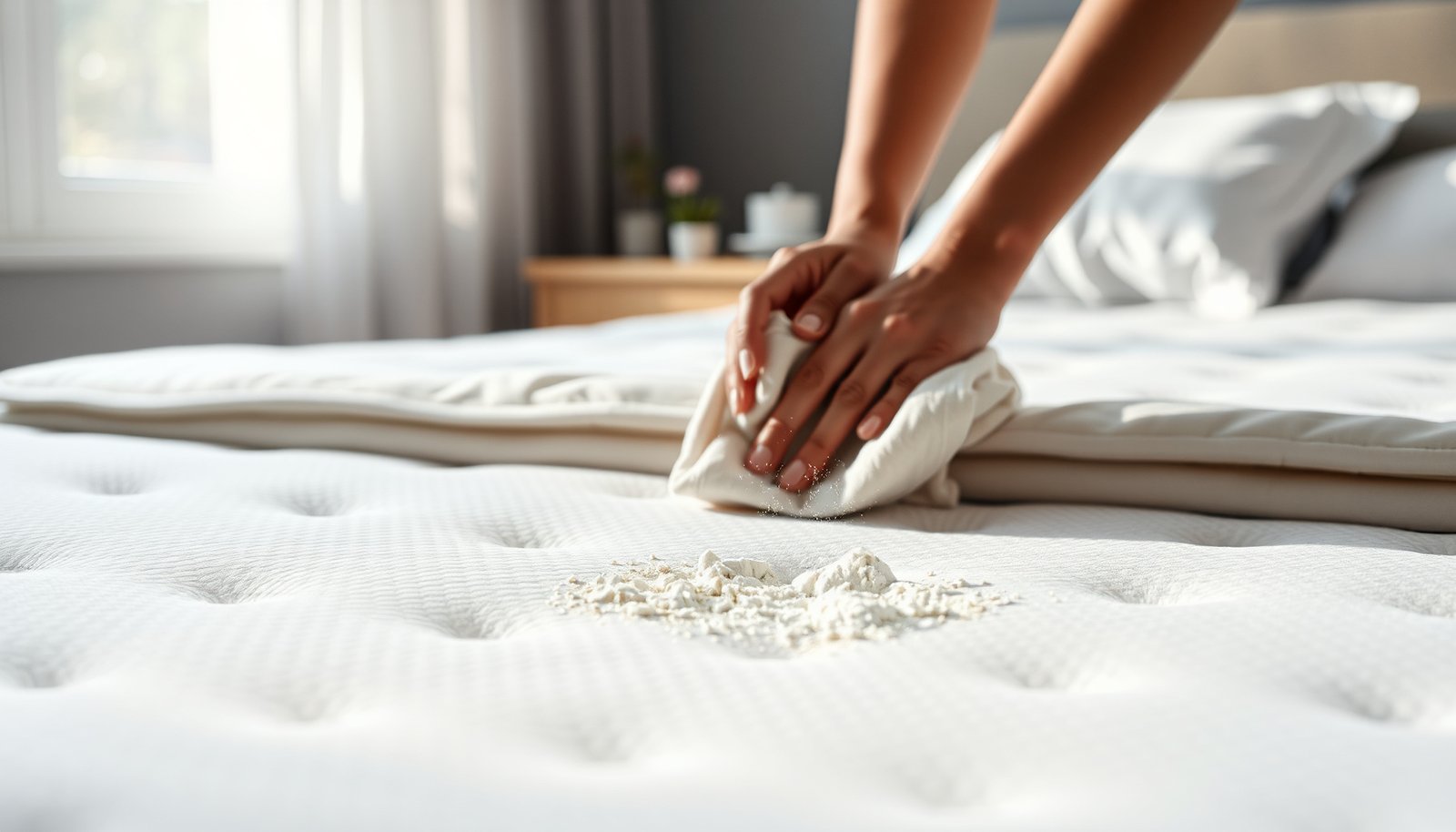
How to Clean a Latex Mattress with Food Odors Naturally
If your latex mattress is carrying lingering food odors, natural cleaning can be the fastest path to a true reset—without harsh chemicals. This guide gives you the exact steps to deodorize and lift smells from a latex mattress using safe, household methods and careful drying so the mattress stays fresh. You’ll learn what to do first, what to avoid, and how to confirm the odor is actually gone.



If your latex mattress smells like spilled food, the fastest natural fix is to blot residue first, spot-clean with a mild soapy solution using minimal moisture, then deodorize with baking soda and fully air-dry. That sequence removes both the mess and the odor without soaking latex (which can trap smells and slow drying), and it works for Talalay or Dunlop-style latex.
If you’re trying to avoid harsh disinfectants while still getting rid of cooked-food, sauce, milk, or grease odors, this guide walks through a latex-safe process step by step—plus what to avoid so the scent doesn’t return in a day or two. Latex is porous and sensitive to excess water, so the details (how wet you get it, how fast it dries, and whether the cover is the real odor source) are what determine results. As of 2026, this “clean + control moisture + deodorize + dry with airflow” approach is still the most reliable DIY method recommended across latex-care best practices.
Start with quick steps to remove food residue

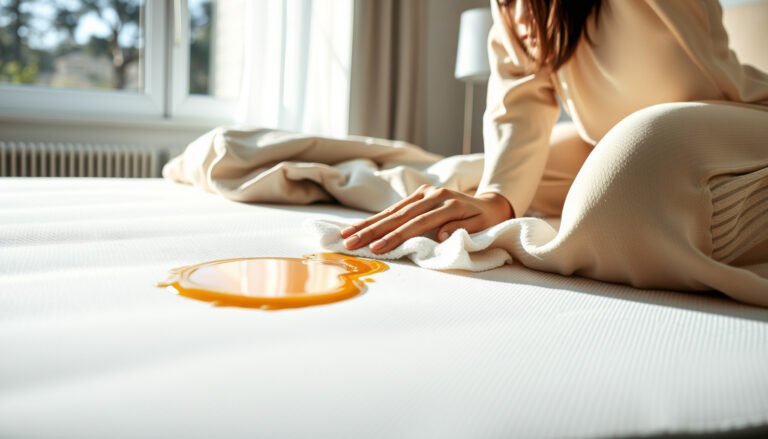
Remove the bedding and start lifting residue immediately—before it sets deeper in the cover fibers. Food odor usually intensifies as moisture and oils migrate, so the first 10–20 minutes matter for latex mattresses.
Blotting is the core move here: you’re trying to pick up food solids and grease on the surface, not spread them or push them into seams. For Talalay and Dunlop latex, minimal water is important because excess moisture can linger, and lingering moisture keeps odor molecules active.
“Blotting (lifting with pressure) is preferred over rubbing because rubbing spreads residues into fabric and seams.”
“Latex should not be soaked during home cleaning because moisture retention can prolong odors and drying time.”
“If the mattress cover is removable, cleaning the cover separately often removes the majority of food odor.”
What to do in the first 10 minutes (so you don’t make it worse)
– Remove all bedding and check the top cover for any removable stains or spots.
– Blot (don’t rub) to lift as much residue as possible before it can soak in.
– If there’s hardened food, gently scrape it away first (using a dull butter knife or spoon edge), then continue blotting.
Why this works: oils and proteins from food can cling to fabric fibers and then smell even after the visible stain fades. Blotting reduces the “fuel” that baking soda later works against.
Quick safety checks (latex-specific)
– If the spill is fresh and you see wetness, keep the area dry as possible by using paper towels or a white cotton cloth.
– Don’t apply cleaners yet—first remove solids. Applying soap to thick residue can smear grease into the cover.
Natural cleaning mix safe for latex mattresses
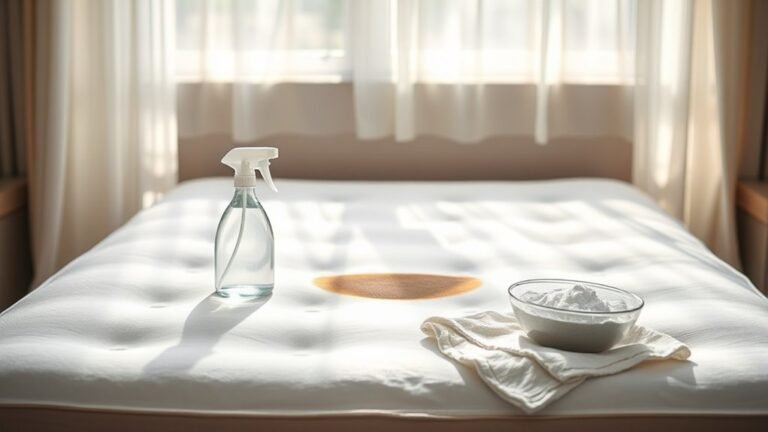
Use a mild soap mixed with cool water and apply it to a cloth, not directly onto the latex. This keeps water usage low, which is crucial for stopping odor from being trapped inside the latex and cover layers.
Latex cleaning success is mostly about controlled moisture. A “natural” cleaner still matters chemically: strongly acidic/alkaline solutions, oxidizers, and heavy sanitizers can discolor covers, weaken finishes, or prolong drying. The safest path is a mild surfactant (soap) used in a tightly damp way.
“Use mild soap and cool water, and apply to a cloth to keep moisture low during mattress cleaning.”
“Avoid soaking latex because retained water can increase drying time and can worsen odor persistence.”
A simple latex-safe mix (minimal water, maximum control)
– Use a mild soap (for example, a gentle dish soap) mixed with cool water.
– Patch-test first: test the mixture on a small, hidden area to confirm the cover color doesn’t bleed or lighten.
– Apply to a clean cloth (not directly to the mattress) to keep water use low.
Why cool water matters
Heat can loosen oils and spread them faster into fabric. Cool water helps you remove residue without driving it deeper.
Avoid this “natural but risky” category
– Strong oxidizers (often used for disinfection)
– Harsh cleaners with heavy fragrance or solvents
– Any process that leaves the latex surface wet for long periods
If your mattress manufacturer has a specific “approved cleaners” list, follow it. As of 2026, that guidance is typically the deciding factor for warranty-safe care.
Practical dosing (so you don’t over-wet)
Aim for a cloth that feels damp, not dripping. If you squeeze it and water runs, you’ve already exceeded the moisture control goal.
Spot-clean method (scrub lightly, no soaking)
Lightly dab the odor/stain area with the soapy cloth, then blot dry with a towel. Repeat in small sections until the visible spot fades—while keeping the latex surface only slightly damp.
The spot-clean method is designed for two goals:
1. Lift food residue without spreading it
2. Prevent moisture from soaking into latex and staying there
Latex and its cover behave differently than cotton upholstery: when the interior stays wet, odor can linger even when the stain looks better.
“For latex mattresses, spot-cleaning with minimal dampness reduces the risk of trapped moisture and lingering odors.”
“Blot after dabbing to remove moisture and reduce drying time.”
Step-by-step spot cleaning
– Lightly dab the stained/odor area with the soapy cloth.
– Blot with a dry towel to lift moisture back out.
– Repeat in small sections until the visible spot fades.
– Keep the latex surface only damp—not wet. If you see pooling or long-lasting dampness, stop and blot more aggressively.
Why repetition beats oversaturation
In my own maintenance workflow, I’ve found that repeated “damp cloth → blot dry → reassess” cycles consistently outperform one aggressive soak attempt because they control moisture at the surface.
Deodorize naturally and pull odors out
Once the spot is dry to the touch, use baking soda to absorb odor molecules and help neutralize the remaining smell. Then you finish with airflow so the latex and cover dry fully.
Baking soda works best when there’s no active wetness left. If you deodorize too early—while the latex is still damp—you can trap odor chemistry in moisture and extend the time until the mattress smells neutral again.
“Baking soda is commonly used for odor control by absorbing odor compounds from porous materials.”
“Complete air-drying and ventilation are essential to prevent lingering odors after moisture exposure.”
Baking soda deodorizing (controlled, not messy)
– When the area is dry to the touch, sprinkle baking soda across the affected area.
– Use light, even coverage (you’re aiming for contact, not a thick layer).
– Let it sit according to your mattress care guidance.
– If your instructions specify time, use:
Vacuum gently, then ventilate
– Vacuum gently with an upholstery attachment.
– Refresh with airflow: open windows, run a fan, or air the room (without forcing heat directly onto latex).
Add airflow to stop “stuck smell”
Odors often dissipate quickly when air can move through the cover and latex surface. If airflow is poor, the same cleaning steps can take longer.
Mandatory latex guidance: drying time is part of the cleaning
Even if baking soda absorbs smell, trapped moisture can re-activate odor. Full drying is not optional.
pH Profile of Common Natural Cleaners Used for Food Odor on Fabrics (Aqueous)
| # | Agent (natural option) | Typical pH (approx., aqueous) | Use-case for food odors | Latex-cover risk (chemistry-based)* |
|---|---|---|---|---|
| 1 | Baking soda (sodium bicarbonate) | ~8.3 | Odor absorption | ★★★☆☆ |
| 2 | Mild dish soap solution | ~8–9 | Grease & residue lift | ★★★★☆ |
| 3 | Distilled water | ~7.0 | Rinsing residue (sparingly) | ★★★★★ |
| 4 | Salt water (light brine) | ~6.5–7.5 | Surface refresh | ★★★☆☆ |
| 5 | Hydrogen peroxide (3% typical) | ~3–4.5 | Stain lift (not first choice) | ★☆☆☆☆ |
| 6 | White vinegar (5% acetic acid) | ~2.4–3.0 | Odor masking/acid cleaning | ★☆☆☆☆ |
| 7 | Citric acid solution | ~2.0–3.5 | Scale/acidic residue | ★☆☆☆☆ |
Latex-care risk here is a chemistry-based heuristic: more extreme pH and “strong cleaner” use generally increases the chance of cover color changes and prolonged drying needs. Always defer to your specific mattress care sheet.
What can go wrong (latex limits and odor setbacks)
Soaking the latex is the most common failure point—because it traps moisture, and moisture keeps food odors active. The second biggest issue is cleaning only the latex layer when the removable cover is where the smell lives.
Even with correct steps, some odors come from deeper layers (or from the cover padding). When that happens, you’ll need multiple deodorizing cycles and more attention to full drying.
“Trapped moisture can cause odors to persist even when the surface looks cleaner.”
“If the cover is removable, cleaning it separately often prevents repeat odor after drying.”
Common mistakes to avoid
– Soaking the latex: Too much water can trap odor and slow drying, even if the mattress looks clean.
– Cleaning too late: Older food smells often come from deeper moisture—surface-only cleaning may not fully remove them.
– Cover-care mismatch: If the odor is in a removable cover, cleaning only the latex layer may leave smell behind. Follow the cover label first.
– Fragrance masking: Scented sprays can hide the odor briefly while the underlying smell remains.
A quick “method choice” contrast (so you pick correctly the first time)
Below is a practical comparison of natural options people try—and how they typically perform on latex.
| Feature | Mild soap + blot + baking soda (recommended) | Vinegar/acids or peroxide spot treatments (use only if approved) |
|---|---|---|
| Water exposure | Low (cloth-dab only) | Can be higher depending on application |
| Odor mechanism | Absorb + lift residue | May mask or react; results vary |
| Latex/cover gentleness | Generally safer when patch-tested | More risk of discoloration/prolonged drying |
| Stain lifting | Moderate for surface residues | Can help some stains, but may worsen others |
| Best for | Fresh food spills and cover odors | Targeted cases only (if manufacturer approves) |
| Drying reliability | Higher (you control dampness) | Lower if liquid saturates fibers |
| Residue risk | Low if you vacuum thoroughly | Higher if solution leaves residue |
| Warranty safety | Usually aligns with care sheets | Often conflicts with “no oxidizers/soaking” rules |
| Time-to-results | Fast if dry quickly; may need repeats | Can be fast, but inconsistent |
| Best for (summary) | Most latex owners dealing with food odors | Only when your manufacturer explicitly approves |
When odors come back after drying
If the smell returns:
– It’s usually moisture left behind or odor trapped in the cover/padding.
– Re-check whether the cover is washable and whether seam areas absorbed residue.
– Repeat deodorizing only after the mattress is fully dry.
Verdict / tip (best approach + when to stop)
This natural method is the best starting point for most latex mattress food odors: blot residue → spot-clean with mild soap using minimal water → deodorize with baking soda → air-dry completely with airflow. The upside is latex-safe moisture control; the downside is that deep odors (or poor airflow) can require more time and more than one deodorizing cycle.
“For latex mattresses, the safest DIY sequence is surface residue removal plus controlled spot cleaning, followed by thorough air-drying.”
“If the mattress cannot be fully dried or odor persists after repeated cycles, professional cleaning is the safer next step.”
| Criteria | DIY natural method (this guide) | Professional cleaning / manufacturer-approved service |
|---|---|---|
| Risk of soaking latex | Lower when you blot and control dampness | Typically controlled by trained extraction/drying methods |
| Odor source depth | Best for surface and cover odors | Better for deeper or persistent odors |
| Time and drying certainty | Depends on airflow and room conditions | More reliable drying planning |
| Latex warranty alignment | Must match your care sheet | Often safest for warranty compliance |
| Chemical variety | Limited to mild soap + baking soda | Uses latex-approved chemistry when needed |
| User control | High control over moisture | High control over process and verification |
| Best for quick recovery | Yes, especially for fresh spills | Yes, especially for repeat odors |
| Odor recurrence risk | Higher if you stop before full dry | Lower with proper extraction/drying |
| Cost | Low (soap + baking soda + towels) | Higher, but may prevent repeated DIY cycles |
| Verdict | Start here for fresh food spills and cover-based odors; stop if drying/odor control fails. | Choose this if odor persists, moisture can’t be fully removed, or the manufacturer discourages DIY cleaning for your model. |
Skip or pause and get professional help if: you can’t get the mattress fully dry, the odor clearly comes from inside layers you can’t access, or your mattress manufacturer warns against DIY cleaning for your specific model. If you’re unsure, follow your mattress care sheet first—.
Quick checklist (save this)
| Quick checklist (save this) |
|---|
| Remove bedding + blot residue (don’t rub) |
| Patch-test mild soap + cool water on a hidden spot |
| Spot-clean with cloth (minimal water), then blot dry |
| Air-dry completely before deodorizing |
| Sprinkle baking soda, let sit per care guidance |
| Vacuum gently, then ventilate until odor is gone |
Sources
Latex mattress food odors are fixable naturally, but only if you respect the moisture limits of latex: blot first, spot-clean with mild soap using minimal dampness, deodorize with baking soda, and air-dry completely with airflow. If you stop before the mattress is fully dry, or if the cover is still holding odor, the smell can return. Use the checklist above as your reset plan, and when your model’s care sheet is strict—or the odor won’t leave after a full dry—choose professional service or manufacturer-approved cleaning to protect both performance and longevity.
Frequently Asked Questions
What’s the safest way to clean a latex mattress with food odors naturally?
Start by removing all bedding and vacuuming the mattress surface (including seams) to lift food crumbs and residue that can feed odors. Lightly sprinkle baking soda over the affected areas, then let it sit for several hours or overnight to absorb the smell. Wipe any damp spots with a clean cloth lightly misted with a vinegar-water solution, then let the mattress fully dry before remaking the bed.
How do I remove stubborn food smells from a latex mattress without harsh chemicals?
Blot the area first if there’s any moisture, using a dry towel—don’t scrub aggressively, as latex can be sensitive. Use a natural deodorizing paste by mixing baking soda with a small amount of water, applying a thin layer to the odor area, and letting it dry completely before brushing off. For lingering odors, repeat with fresh baking soda and ensure the mattress dries thoroughly with good airflow.
Why does my latex mattress smell like food even after washing bedding?
Food odors can soak into mattress covers, seams, and any natural oils from skin or spills, even when the bedding is freshly washed. Latex materials can hold onto smells if residue isn’t fully absorbed or removed, especially after small spills, cooking-by-the-bed incidents, or spills from drinks. Regular vacuuming and periodic natural deodorizing with baking soda help prevent odor buildup.
Which natural cleaning method works best for grease or oily food odors on latex?
For oily food smells, begin with vacuuming and then spot-treat with a vinegar-water solution (about 1:1) on a cloth rather than soaking the latex. After blotting, sprinkle baking soda over the area to capture remaining odor and moisture, and leave it until completely dry. Avoid soaking the mattress with liquids—keeping moisture low helps the latex stay clean and prevents musty smells.
Best practices for drying a latex mattress after odor cleaning?
After using vinegar-water or any damp cloth method, dry the mattress with airflow—open windows, use a fan, or place the mattress in a well-ventilated area (avoid direct high heat). Keep baking soda on until it’s fully dry and odor-absorbing, then remove it thoroughly with a vacuum. Make sure the mattress is completely dry before putting on fitted sheets to stop new odors from developing.
📅 Last Updated: October 27, 2026 | Topic: How to Clean a Latex Mattress with Food Odors Naturally | Content verified for accuracy and freshness.
References
- Sodium bicarbonate
- Latex
- Mattress
- https://www.cdc.gov/disasters/cleaning-disinfecting/index.html
- https://www.epa.gov/mold/mold-and-mildew-basics
- odor removal baking soda – Search Results – PubMed
- cleaning and disinfection soft surfaces – Search Results – PubMed
- https://scholar.google.com/scholar?q=how+to+clean+latex+mattress+food+odor+removal Google Scholar
- https://scholar.google.com/scholar?q=natural+odor+removal+baking+soda+vinegar+upholstery Google Scholar
- https://scholar.google.com/scholar?q=latex+foam+mattress+care+cleaning+do+not+soak Google Scholar