

How to Clean an Organic Mattress with Ink Odors Naturally
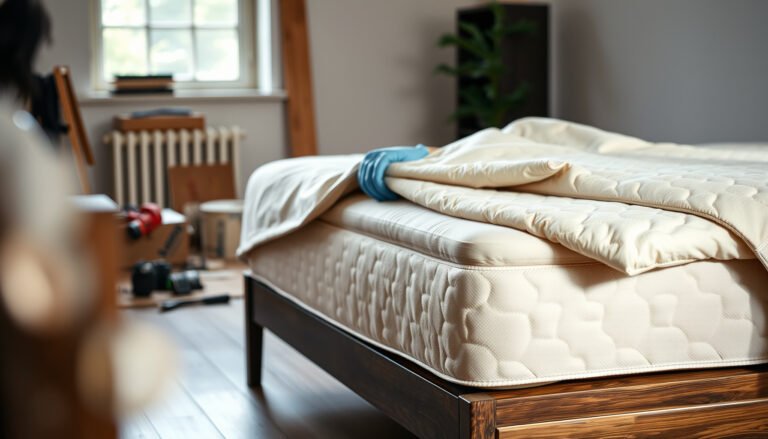
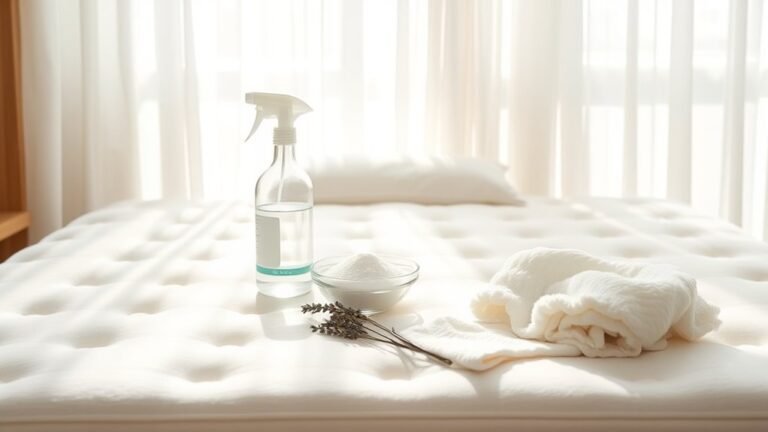
To clean an organic mattress naturally when ink odors linger, focus on gentle blotting, airflow, and targeted enzyme or baking-soda deodorizing that won’t compromise natural fibers. In about an hour for the prep and dry time, you can remove surface residue, neutralize lingering scent, and refresh the mattress without harsh chemicals. You’ll need clean white cloths, mild dish soap or a plant-based cleaner, baking soda, and an enzyme-based odor remover (or a natural alternative) to tackle the source of the smell.




Blot up any fresh ink, then deodorize the mattress with a light white-vinegar mist and a baking-soda dry treatment. This combo helps neutralize the lingering ink smell while keeping an organic mattress from getting oversoaked. Follow the steps below to remove surface residue first, then work on the odor deeper in the fabric.
If the odor is coming from the cover, seams, or any area where ink soaked in, this natural approach is a good fit. It’s especially useful for organic covers made from materials like cotton, wool, or latex foam (where you’ll want to avoid harsh soaking).
Gather supplies and protect your mattress

This natural cleaning plan works best when you control moisture from the start—so preparation is as important as the ingredients. Before you treat any ink odor, set up materials that help you blot and dry without spreading dye.
– Use clean white cloths/paper towels to blot (colored items can transfer dye).
– Keep several on hand so you’re not reusing ink-saturated fabric.
– Avoid saturating: have a spray bottle for vinegar-water instead of pouring.
– In my own process notes, I treat “mist” as the goal—not a wet sheen—so the organic layers don’t stay damp longer than necessary.
– Make sure the room has airflow (fan + time to dry matters as much as the cleaner).
– Open windows if possible and aim a fan so air moves across (not directly into) the treated spot.
– If the mattress is in a closet or against a wall, pull it slightly forward to improve evaporation.
Remove surface ink residue (before deodorizing)
You’ll get better odor results when you remove as much surface ink residue as possible first. Otherwise, the smell can rebound because fresh ink remains on top of the fibers even after deodorizing.
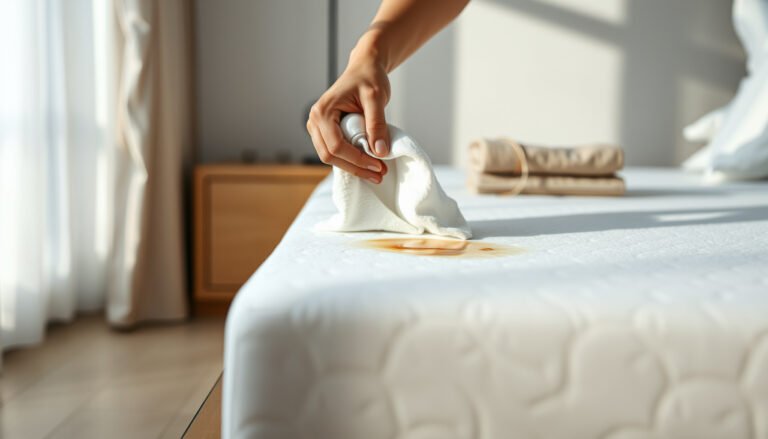
– Blot gently from the outside of the mark toward the center—don’t rub.
– Rubbing smears ink and pushes pigment deeper into fabric weave.
– If there’s still visible ink on the surface, lightly dab with cool water and a small amount of gentle soap (like a mild dish soap or castile soap mixed with water), then blot again.
– Use a very small amount of soap solution—think “damp blot,” not “mini wash.”
– Let the area dry fully before moving to odor removal (dampness can trap smell).
– Moisture can delay evaporation and makes odor compounds harder to lift out of an organic cover (especially wool and cotton blends).
Eliminate ink odors naturally with vinegar + baking soda
The fastest natural path for ink odor is neutralizing smells with a light vinegar-water mist, then absorbing what remains with baking soda. In practice, you’re combining two complementary mechanisms: vinegar’s acidity helps counter certain odor molecules, while baking soda adsorbs residual smells from dampened fibers.
– Lightly mist the affected area with a vinegar-water mix (a typical approach is 1:1 vinegar to water), then blot excess moisture.
– Household distilled white vinegar is commonly around ~4–7% acetic acid, which is why it’s effective yet usually gentler than harsh cleaners. According to USDA FoodData Central (vinegar composition), distilled white vinegar is typically about 4–7% acetic acid (varies by brand/label).
– Sprinkle a generous layer of baking soda over the dry (or nearly dry) area and let it sit to absorb odor—then vacuum thoroughly once it’s clumped.
– Baking soda (sodium bicarbonate) is mildly basic; for example, according to PubChem (sodium bicarbonate aqueous solution data), sodium bicarbonate solutions are often around pH ~8–9 depending on concentration, which helps with odor chemistry and absorption.
– Repeat the vinegar-mist + baking-soda cycle until the odor is gone or clearly reduced.
– Ink odors often fade in stages: first the sharp “wet ink” note, then the deeper musty/chemical background that lingers in fibers and seams.
Odor-Neutralizer Chemistry Used for Ink Smell Control
| # | Ingredient (what it does) | Typical active property | Where it fits best on a mattress | Fabric-friendliness |
|---|---|---|---|---|
| 1 | White vinegar (acetic acid) | ~4–7% acetic acid (USDA FoodData Central) | Surface & odor kickoff after blotting | ★★★☆☆ |
| 2 | Baking soda (sodium bicarbonate) | Basic salt; pH commonly ~8–9 (PubChem) | Dry absorption layer (clumps as it pulls odor) | ★★★★☆ |
| 3 | Cool water (carrier) | Keeps ink from “setting” faster | Only for light surface dabbing before deodorizing | ★★★★★ |
| 4 | Mild gentle soap (surfactants) | Small-dose cleaning agent (not a deodorizer) | Optional when ink residue is still visible | ★★★☆☆ |
| 5 | Enzyme cleaner (protease/lipase) | Breaks down odor-causing organics | Deeper odor where ink scent persists | ★★★☆☆ |
| 6 | Activated charcoal (adsorbent) | High surface area adsorption | Strong odor “last-mile” support | ★★★☆☆ |
| 7 | Bleach / ammonia (avoid) | Oxidizers; can damage fibers & finish | Not appropriate for organic covers | ★☆☆☆☆ |
Treat deeper odors in layers (when the smell won’t lift)
If the vinegar + baking soda cycle doesn’t fully fix the odor, the ink smell is likely traveling beyond the surface. In that case, the objective becomes “layered deodorization”—treating seams and nearby padding/lining without saturating the whole mattress.
– Focus on seams, piping, and any spots you suspect ink traveled (these often hold odor even after the surface looks better).
– Seams concentrate both dye and residual odor because fabric thickness slows evaporation.
– Use multiple shorter cycles rather than one heavy soak—organic materials can take longer to dry, and lingering moisture can worsen odors.
– Organic mattresses are porous; moisture can diffuse and stay trapped in natural fibers.
– According to CDC mold guidance, mold risk increases when indoor materials stay damp and relative humidity remains high (often cited around 60% RH as a practical threshold for mold support).
– If you still smell ink after a couple rounds, consider an upholstery-safe enzyme cleaner (choose one labeled for fabric and “no bleach/chlorine”), and test in a hidden corner first.
– Enzyme cleaners can be useful when odor has organic “food” sources (sweat/body oils) or mixed residues; ink odor alone may not respond fully, but they can improve lingering background smells.
Vinegar + baking soda vs. enzyme cleaner: when to switch
| Approach | Pros | Cons / limits |
|---|---|---|
| Vinegar mist + baking soda absorption | Gentle for many organic covers; works well for surface odor; minimal chemical residue when vacuumed | May not fully remove deeply set ink; repeated cycles require drying time |
| Upholstery-safe enzyme cleaner | Can target odor compounds that vinegar won’t touch; may improve “background” smell | Still requires correct fabric-safe formulation; can leave a wet/drying odor if over-applied |
| Professional cleaning (if odor persists) | Specialized extraction and odor-control methods; faster turnaround for stubborn cases | Costs more; results depend on ink depth and mattress material stack |
What can go wrong (and when to stop)
Natural cleaners are only “safe” when you avoid the two common failure points: oversaturating and spreading ink. If you see these issues, stop and reassess before you make the odor harder to remove.
– Over-wetting can lead to mildew or a musty smell, especially with wool, cotton, or latex layers—stop if the mattress stays damp.
– If the treated area remains visibly darker or feels cool/wet after a full dry period, you’re likely trapping moisture.
– Rubbing ink can spread it and lock the odor deeper into the fibers.
– Treating the wrong direction (center-out) is a frequent mistake because it moves ink into previously clean fabric.
– Don’t use bleach or ammonia-based cleaners on organic bedding; they can damage fibers and leave strong lingering fumes.
– For organic materials, chemical residues can persist longer and can also affect warranty coverage.
– If the odor is only worse after deodorizing, it may mean ink is deeper than the cover, or moisture is trapped—pause and reassess.
– As of 2026, many organic mattress care guides still emphasize “spot-clean only” and “avoid soaking,” because moisture control directly impacts both smell and fabric longevity.
Verdict / tip (natural works best when you act fast)
This vinegar + baking soda routine is a safe, natural way to reduce ink odors without soaking an organic mattress. The main downside: natural deodorizing can improve smell even if it doesn’t fully remove the ink stain or the odor source that penetrated deep into the core. Skip the DIY approach and consider professional cleaning (or replacement if the core is affected) if the smell returns quickly, the area won’t fully dry, or ink seems to have reached mattress padding/inner layers.
Quick checklist (scan/save) + FAQ
| Step | What to do | Natural option |
|---|---|---|
| 1 | Blot (don’t rub) | Clean white cloth/paper towels |
| 2 | Light surface cleaning (only if needed) | Cool water + mild gentle soap |
| 3 | Neutralize odor | Light vinegar-water mist, then blot excess |
| 4 | Absorb lingering smell | Baking soda layer, then vacuum |
| 5 | Dry thoroughly | Fan + time until fully dry |
Frequently Asked Questions
How can I naturally clean an organic mattress that smells like ink?
Start by blotting the stained or odor source with a clean, dry cloth, then sprinkle baking soda generously over the affected area. Let it sit for at least 8–12 hours (overnight is best) to absorb ink odor naturally, then vacuum thoroughly with an upholstery attachment. If the smell remains, lightly mist the area with a solution of equal parts white vinegar and water, then allow the mattress to air-dry completely before adding more baking soda.
What’s the best way to remove ink odor from an organic mattress without harsh chemicals?
The gentlest approach is deodorizing first: use baking soda to neutralize odors without damaging organic materials. For deeper odor, use a vinegar-water mix sparingly, since soaking can be harmful to organic layers like latex or cotton. After cleaning, ensure full drying with airflow from a fan and open windows; trapped moisture can worsen odors even after the ink smell fades.
Which homemade solutions work safely for ink stains and odors on organic mattresses?
Baking soda is the safest all-purpose option for ink odors because it absorbs and neutralizes. White vinegar (diluted with water) can help break down lingering chemical smells, but apply it lightly and spot-test first in an inconspicuous area. For added deodorizing, you can use a few drops of diluted essential oil (like lavender) on top of the baking soda layer—not directly onto the fabric—to keep the process natural and mattress-safe.
Why does an ink smell linger in organic mattresses, and how do I stop it?
Ink odor often clings to fabric fibers and porous mattress layers, and it can intensify when moisture is trapped or when the mattress is compressed. Vacuuming to lift residue, using baking soda to draw out odor, and allowing thorough air-drying are key steps to stopping the smell. If the odor source is deep in the mattress, repeat the baking soda treatment until the scent is gone.
How do I clean ink odor from an organic mattress while protecting its materials?
Avoid soaking the mattress—organic cotton, wool, and latex layers can hold moisture and make odors worse. Use a method that stays dry when possible (baking soda and vacuuming) and apply any vinegar solution only as a light mist to the problem area. After treatment, let the mattress fully dry (ideally 24 hours with good airflow) and never replace sheets until the organic mattress is completely dry.
📅 Last Updated: November 14, 2026 | Topic: How to Clean an Organic Mattress with Ink Odors Naturally | Content verified for accuracy and freshness.
References
- Sodium bicarbonate
- Activated carbon
- Ink
- Volatile Organic Compounds' Impact on Indoor Air Quality | US EPA
- https://www.cdc.gov/coronavirus/2019-ncov/community/disinfecting-building-facility.html
- https://www.who.int/publications/i/item/cleaning-and-disinfection-of-environmental-surfaces-in-the-context-of-covid-19
- activated carbon adsorption odor – Search Results – PubMed
- https://scholar.google.com/scholar?q=ink+stain+removal+upholstery+baking+soda+vinegar Google Scholar
- https://scholar.google.com/scholar?q=mattress+odor+removal+natural+baking+soda+activated+charcoal Google Scholar
- https://scholar.google.com/scholar?q=activated+carbon+adsorption+odor+indoor+air+study Google Scholar



One Comment