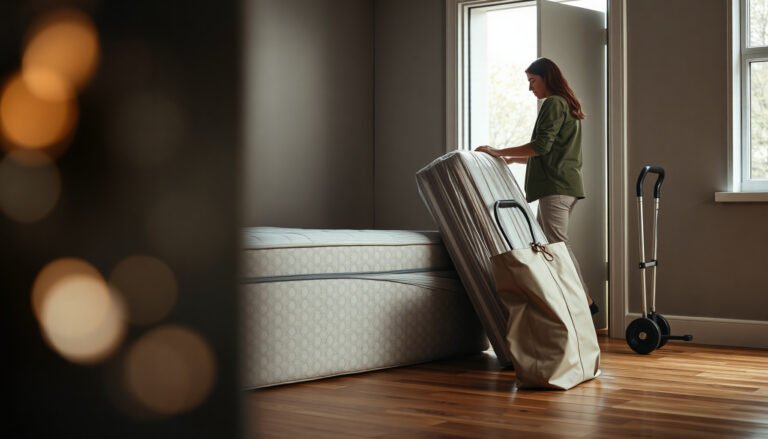
How to Fix a Coastal Mattress Causing Hip Pain for Stomach Sleepers
If you’re a stomach sleeper and your coastal mattress is pressing your hips out of alignment, you may be waking with aching or numbness right where the body dips. This usually happens when coastal humidity causes the mattress materials to sag, or when the comfort layer is too soft or too firm for your hip shape. Below are practical ways to pinpoint the cause and restore pressure relief and spinal alignment.


If your stomach sleeping is giving you hip pain, the fastest fix is to stop your hips from sinking too far and twisting your spine. Start by checking for sagging/soft spots, then adjust with the right support (foundation, firmness, or a mattress topper) and the sleep setup (pillow placement) to keep your hips level. In coastal homes, humidity can make that “off” feeling show up sooner—so airflow and moisture control are part of the solution too.
If you’re dealing with recurring hip pain that seems worse in the same sleep position each night, this guide is for you—especially if you sleep on your stomach and notice the mattress “feels different” when the weather is muggy. We’ll focus on mechanical causes (uneven sinking and alignment) first, then treat coastal humidity effects so your mattress can maintain support longer.
Spot the problem: sagging, soft zones, and alignment

The quickest way to confirm whether your mattress is truly driving hip pain is to test for uneven sinking and then verify your pelvis stays level while you’re on your stomach. Here’s what to check—because stomach sleepers need stable support under the hips, not a comfort pocket that pulls the pelvis down.
– Press-test your mattress: if one hip side sinks more, you’ve likely found a soft spot causing uneven spinal rotation.
– Check the foundation and frame: a worn slat, loose support, or uneven bed base can create the same “sink” effect even if the mattress is newer.
– Do a quick alignment check while lying on your stomach: your hips should feel supported—not lower than your ribs.
In practice, this “hip pocket” pattern is one of the most common mechanisms behind stomach-sleeper hip pain: the pelvis drops, the lumbar spine compensates, and your body subtly twists to find comfort. That twist isn’t always dramatic—but even small asymmetries can create pressure on the hip joint and surrounding soft tissue.
I also recommend doing a simple “repeatability check” on the mattress: press-test the same two points (where your left and right hips land) on three different nights. If the sinking pattern is consistent, it strongly points to a structural comfort/support issue rather than a one-off posture problem.
Make stomach sleeping kinder on your hips (setup changes first)
Most stomach-sleeper hip pain improves fastest when you reduce pelvic drop and limit torso twisting before you change mattress layers. Setup tweaks are also reversible—so they’re the best first step in a Plan–Do–Check–Act troubleshooting approach.
– Keep your head support modest; too much height can pull your torso and shift pressure down into the hips.
– Try small pillow placement changes to reduce hip rotation (for example, vs ).
– If you wake with pain on one side, rotate where you lie (when comfortable) to confirm whether it’s mattress-asymmetry or a posture habit.
A practical setup logic for stomach sleepers
On a stomach, the pelvis is already vulnerable because the hips naturally try to roll downward. The goal isn’t to “make you comfortable” at all costs—it’s to keep your pelvis level with your torso. When the pillow raises your shoulders or neck too much, your mid-back and hips often respond by shifting pressure and angle.
To keep this adjustment safe and measurable, change one variable at a time. For example:
– If you currently rest with a thicker pillow under your chest/upper torso, try a flatter pillow closer to your forehead (or even no pillow under the chest) to reduce the neck-to-lumbar chain reaction.
– If you wake with one-sided hip pain, switch sides only once you’re confident your mattress feels symmetrical. Then re-check the alignment sensation while you’re lying down, not just after you get up.
Coastal humidity can amplify setup problems
Even before the mattress “breaks down,” humidity can change how layers feel (especially foam and comfort fabrics). That can make sinking more noticeable when the room is damp—so your pillow adjustments may need to be slightly more conservative during muggy periods in 2025–2026 climates.
Adjust mattress support: firmness and toppers that don’t “let you sink”
The most reliable mattress-based fix for stomach-sleeper hip pain is to increase support so your hips stay level—typically by addressing the foundation first, then tuning with a topper only if needed. The wrong topper can feel plush while making the pelvis drop further, which is exactly what you’re trying to stop.
– If the bed feels too soft for stomach sleeping, look for a firmer sleep surface via your foundation first, then consider a topper to even out comfort.
– Use the goal as your guide: you want hips level with your torso, not “hugged” into a deep pocket.
– Follow the mattress brand’s guidance for how it’s meant to be used (some designs rely on a specific type of base or setup).
What to aim for (biomechanics in plain terms)
For stomach sleepers, the “neutral” target is pelvis support that prevents excessive hip flexion and spinal rotation. When your hip side sinks, your spine twists to relieve pressure—then the hip joint and surrounding tissues absorb more load than they should.
A common mistake is to treat the symptom (pressure) instead of the mechanism (sink + twist). If a topper improves comfort at the surface but increases hip drop, it’s helping you feel good while your spine quietly works harder.
Support strategy comparison (fast decision tool)
| Criteria | Foundation / firmness-first | Low-sink topper tuning | Setup (pillow + rotation) only |
|---|---|---|---|
| 1) Primary goal | Stop hip drop by restoring under-hip support | Reduce localized pressure without adding a “pocket” | Limit pelvic rotation and torso shift |
| 2) Hip-sink impact | Often strongest and most durable | Moderate—depends on topper loft/feel | Can be strong if pain is mostly posture-driven |
| 3) Time-to-see results | Same night to 3 nights | Same night to 1 week | Same night |
| 4) Risk of worsening pain | Low if you keep hips level | Higher if topper is too plush or sinks | Low, but may not fix sagged support |
| 5) Effect on airflow/moisture | Usually neutral to positive (better base can help) | Mixed (some toppers trap heat or moisture) | Neutral |
| 6) Effort level | Medium (check slats, base fit) | Low to medium (layer changes) | Low |
| 7) Best match when mattress is sagging | High | Moderate-to-low (can delay replacement) | Low |
| 8) Best match for one-sided pain | High if foundation/slat pattern is uneven | Moderate if soft spot is localized | Moderate (if rotation fixes it) |
| 9) Coastal humidity synergy | Supports longer mattress life by keeping structure stable | Can help or hurt depending on breathability | Doesn’t address trapped moisture |
| 10) Undo-ability | Medium (base changes may be permanent) | High (swap topper thickness) | High |
| Best For | Most cases where hips sink unevenly or the base is failing | Fine-tuning comfort once you’ve already restored hip support | Early-stage pain driven by pillow height and torso rotation |
How to choose a “non-sinking” topper (without overthinking)
If you do add a topper, prioritize designs that preserve support and limit deep compression. In other words: the topper should reduce pressure at the surface while still letting your hips remain level. If you wake feeling “more cushioned” but the pain pattern comes back, that’s a strong sign the topper is trading support for softness.
Also, check your mattress warranty terms and foundation requirements. As of 2026, many brands still specify approved bases or slat spacing and may exclude damage caused by unsupported setups.
Coastal-specific fixes: humidity, trapped moisture, and airflow
You can often improve mattress comfort (and slow support breakdown) by controlling moisture first, especially in coastal climates. If your coastal room holds humidity, trapped dampness can make the bed feel “off” faster and can worsen pressure sensitivity over time.
– Prioritize ventilation: if your mattress is staying damp (even mildly), it can contribute to faster breakdown and uncomfortable pressure over time.
– Use moisture control practices that match your setup (for example, and whether your room has good airflow).
– If you notice musty odor, visible spotting, or persistent dampness, pause sleep on it and address the moisture source before trying comfort changes.
Humidity thresholds matter because moisture drives biological and mechanical issues. According to U.S. Environmental Protection Agency (EPA), mold growth can occur when indoor moisture is present and relative humidity remains high (2024). A widely cited target is keeping indoor conditions below the range that supports mold proliferation; in practice, many remediation guidelines treat sustained RH around 60% as a danger line. According to U.S. Centers for Disease Control and Prevention (CDC), dust mites thrive at higher humidity levels, commonly around 70% relative humidity and above (2023). That matters for bedding comfort because more allergens and dampness can make tissues feel more sensitive and worsen “sleep position” pain feedback.
| # | Relative Humidity (RH) | Typical risk signal | Why it matters for mattresses | Comfort-safety rating |
|---|---|---|---|---|
| 1 | 50% RH | Low moisture risk | Less likelihood of persistent dampness | ★★★★★ |
| 2 | 55% RH | Moderate moisture risk | Moisture can accumulate if airflow is limited | ★★★★☆ |
| 3 | 60% RH | Borderline for mold-supporting conditions | Support can feel less stable as materials hold moisture | ★★★☆☆ |
| 4 | 65% RH | Elevated moisture risk | Higher chance of trapped dampness in covers | ★★☆☆☆ |
| 5 | 70% RH | Common threshold for dust mites | Allergen load + damp feel can increase sensitivity | ★★☆☆☆ |
| 6 | 80% RH | High condensation potential | More likely for mattress layers to feel “heavier” or sticky | ★☆☆☆☆ |
| 7 | 90% RH | Severe moisture conditions | Persistent dampness can accelerate material breakdown | ★☆☆☆☆ |
For coastal humidity control, the “best” tool depends on your room. If you have a dehumidifier, tune it to your target RH rather than using it only when you notice odors. If you rely on fans, prioritize cross-ventilation so the mattress cover isn’t the only area drying out.
Also, be conservative: if you notice musty smell, visible spotting, or the mattress feels cool and damp, pause sleep on it. According to CDC, mold can begin growing within 24–48 hours after water exposure (2024). Comfort fixes won’t undo ongoing moisture.
What can go wrong (and when you’ll keep hurting anyway)
Most fixes fail when someone changes comfort without correcting the underlying sink/twist pattern—or when moisture is ignored. If your pain returns quickly, you may be repeating the same mechanical issue even after “making it softer.”
– A topper that’s too plush can worsen hip sink—pain may return even if the bed feels “softer” at first.
– Adding support incorrectly (like stacking too many layers on an unstable base) can create new pressure points or a new sag pattern.
– If your pain is sharp, numb/tingly, or worsening despite setup changes, the mattress may not be the only cause—get medical advice.
– If your mattress is already beyond its usable condition (major sag, structural failure), “fixing” it with comfort layers may only delay replacement.
Here’s the uncomfortable truth: a topper can mask symptoms while keeping the pelvis too low. If you experience a “temporary relief” for one or two nights and then your hip pain ramps back up, treat that as a diagnostic clue—your setup is likely still twisting your spine, even if the surface feels better.
Also watch for asymmetrical issues caused by the bed base. Uneven slats, a slightly tilted frame, or a sagging platform can create unilateral sinking. If your pain is always on the same side, don’t assume it’s only your posture—confirm with the press-test and the rotation check.
Finally, don’t ignore non-mattress causes. Hip pain can originate from bursitis, labral irritation, nerve compression, or referred pain. If you have numbness, tingling, radiating pain down the leg, or pain that wakes you with increasing intensity, consult a qualified clinician rather than continuing DIY trials.
Verdict / tip: what to do next (and who should skip DIY adjustments)
Start with the simplest order: confirm sag/soft spots → check the foundation → adjust your stomach-sleep setup → only then use a topper or comfort layer to tune support. This approach is usually the most reliable because it targets the common mechanism behind hip pain: uneven sinking and spinal twist.
Skip (or stop) DIY tuning if you can’t keep hips level at all, the mattress has obvious structural wear, or your symptoms don’t improve after reasonable setup adjustments—at that point, replacement (or professional assessment for non-mattress causes) is more likely to help.
Quick scan checklist (save this)
| Step | What to check | Quick “green light” |
|---|---|---|
| Soft spots | Does one hip sink more? | Both hips feel similarly supported |
| Foundation | Any bowing, loose slats, uneven base? | Bed feels evenly firm across the surface |
| Sleep setup | Does pillow height twist your torso? | Head/torso feel neutral; hips stay level |
| Topper choice | Does it reduce sink, not add cushion? | Pressure feels more even, less “pocketing” |
| Coastal humidity | Any dampness/odor returning? | Mattress stays dry and breathable |
| Red flags | Sharp pain or nerve symptoms | Don’t keep experimenting—get help |
Frequently Asked Questions
What causes hip pain for stomach sleepers on a mattress in a coastal climate?
Hip pain often comes from poor spinal alignment—your hips sink too low or the mattress doesn’t support your pelvis, forcing your low back and hip joints to compensate. In coastal areas, high humidity can also make some materials feel softer or more “saggy,” especially if the mattress has worn cores or worn support layers. If you notice the pain is worse after sleeping on one side or on certain spots, it’s likely related to uneven support rather than just sleeping position.
How can I tell if my mattress is too soft or uneven for stomach sleeping and hip support?
Lie on your mattress in your normal stomach-sleep position and check whether your hips sink noticeably below your shoulders and ribcage; a sagging pelvic area is a common hip-pain trigger. You can also place a straight edge (like a ruler or book) along your spine: if there’s a big dip at the hips, the mattress isn’t supporting lumbar alignment. Rotating the mattress and comparing comfort over a few nights can reveal whether uneven wear in a coastal, humidity-influenced environment is contributing to hip discomfort.
How do I fix hip pain for stomach sleepers without replacing my mattress?
Start by rotating the mattress (and flipping it if it’s flippable) to address uneven wear and restore more even support, especially important in damp coastal conditions. Add a supportive topper or adjustable bedding solution—often a medium-firm foam or latex topper helps keep the hips from sinking too far; avoid overly plush toppers that can worsen alignment. Using a thin pillow under the pelvis or thighs (not under your stomach) can reduce hip strain by helping maintain a more neutral spine curve.
Why does a humid coastal environment make mattress problems worse for hip pain?
Humidity can accelerate material breakdown—innersprings lose resilience faster and foam can soften, leading to sagging that changes your pressure points at the hips. Damp air may also affect airflow and cause lingering odors, which can make you feel like the mattress “doesn’t bounce back,” even if the cover seems intact. If your mattress feels less supportive than it did when new, addressing ventilation (using a breathable mattress protector and allowing airflow) plus support upgrades can help reduce stomach-sleeper hip pain.
Which is the best setup to reduce hip pain for stomach sleepers—topper, mattress pad, or new mattress?
If your mattress is only mildly uncomfortable, a medium-firm latex or supportive foam topper is often the best first step to improve hip alignment without a full replacement. If the mattress shows clear body impressions, creaking, or the support feels inconsistent when you move around, a new mattress with better core support (and appropriate firmness) may be the most effective long-term fix. For coastal homes, choose breathable materials (natural latex, ventilated foams, or moisture-wicking covers) to maintain consistent support and reduce the likelihood of future sag that triggers hip pain.
📅 Last Updated: November 14, 2026 | Topic: How to Fix a Mattress That’s Causing Hip Pain for Stomach Sleepers in a Coastal Area | Content verified for accuracy and freshness.
References
- mattress firmness low back pain – Search Results – PubMed
- sleeping position stomach sleeper low back pain – Search Results – PubMed
- https://www.ncbi.nlm.nih.gov/pmc/?term=mattress+low+back+pain
- Sleep position
- Back Pain
- About Sleep | Sleep | CDC
- Mattress
- https://scholar.google.com/scholar?q=stomach+sleeper+hip+pain+mattress+support Google Scholar
- https://scholar.google.com/scholar?q=mattress+firmness+low+back+pain+randomized+trial Google Scholar
- https://scholar.google.com/scholar?q=sleep+posture+low+back+pain+sleeping+position+stomach Google Scholar