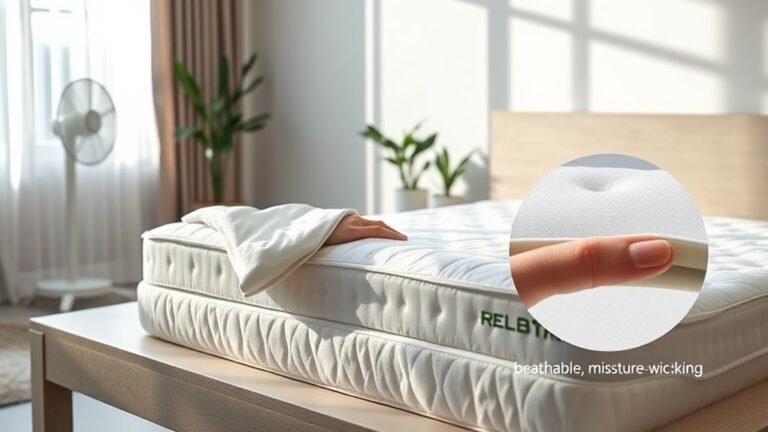
How to Fix a Too-Soft Tiny-Home Mattress for Back Sleepers’ Neck Pain
You lie down on your tiny-home mattress, but by morning your neck feels kinked and sore because the bed lets your shoulders sink too far. That usually happens when a soft foam top compresses, the mattress lacks enough support in the torso area, or your pillow height no longer matches the new sleep surface. Use the practical adjustments below—starting with support and pressure relief—so your spine stays aligned while you back sleep.



If your tiny-home mattress feels too soft, the neck pain is usually caused by your shoulders and hips sinking out of alignment—not by “needing more comfort.” The most effective fix is to stop the slow sink with targeted support under/within the mattress stack, then pair it with a pillow that keeps your head level with your spine.
If your neck pain shows up mainly when you sleep on your back, you’re in the right place. This also fits tiny-home beds where frames can be lighter, slats may be farther apart, and mattress “feel” can change dramatically when you add layers.
Diagnose why your mattress feels too soft (and where)

The fastest way to fix back-sleeper neck pain is to identify where your body is dropping first—shoulders or hips—because that determines what “support” must change. When a mattress is too soft, the spine stops resting on a uniform support plane, so the cervical (neck) area compensates to keep your head from tipping.
– Notice where you sink most: hips (often causing low-back issues) or shoulders (often pushing the head/neck out of alignment).
– If your shoulders sink more: your head often tilts forward or your chin tucks slightly, increasing strain on the upper cervical muscles.
– If your hips sink more: your lower back may arch, which can indirectly rotate the ribcage and change how the neck rests against your pillow.
– Use the “neutral spine check” when you lie down: if your lower back arches or your head tilts forward/back, the support underneath is uneven for back sleeping.
Practical way to do this: lie on your back and ask a simple yes/no question—do you feel like your spine is being “pulled” into a curve by the mattress surface? If you do, the mattress is likely bottoming out at a predictable point.
– Think about your build: back sleepers typically need enough firmness to resist “bottoming out,” but not so much that your spine stays forced upward.
In other words, you want resistance under pressure, not a hard stop. For many people, “too soft” shows up as progressive sinking over minutes (not instant comfort at the beginning of the night).
Add support the tiny-home way: topper layering that targets sinking
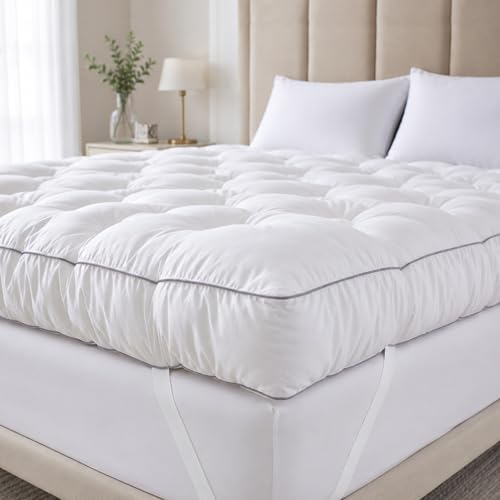
A topper can help, but only if it adds resistance where your body collapses—not if it simply adds plush height. Soft mattresses often fail by slowly letting the core compress; a too-thick comfort layer can make that slow sink worse, especially under the shoulders.
– Choose a topper or comfort layer that adds “resistance,” not just plushness—too-thick foam can worsen the slow sink.
Look for a topper design that maintains shape under load (firmer density foam, latex blends, or a sturdier support layer under a thin comfort layer). If the topper is mostly plush, your shoulders will still “fall” into the mattress.
– Focus on where the mattress collapses: if it’s shoulder-heavy, you may need different surface feel than if it’s hip-heavy.
Back-sleeper neck pain commonly tracks shoulder sinking. If your shoulders drop first, aim to firm the top zone around the shoulder area rather than globally hardening the whole mattress.
– Keep thickness and weight realistic for tight spaces (lifting and swapping bedding in a tiny home is part of the workflow), and avoid setups that don’t fit your fitted sheet properly.
In tiny homes, your bedding and bed frame clearance can limit how much you can stack. A topper that shifts or doesn’t seat correctly can create uneven pressure points that feel “supportive” for 10 minutes and then become uncomfortable once you settle.
Support “gap targets” that influence back-sleeper sink (slat spacing)
| # | Base condition (tiny-home common) | Slat gap (in) | Slat gap (cm) | Neck-pain risk for soft toppers | Back-sleep sink tendency | Support gap allowance (higher=more flex) |
|---|---|---|---|---|---|---|
| 1 | Full solid platform (no gaps) | 0.0 | 0.0 | ★ ★ ★ | Low | 0.0 cm |
| 2 | Tight slats (denser grid) | 1.5 | 3.8 | ★ ★ ★ ★ | Low–Moderate | 3.8 cm |
| 3 | Common “tight” spacing | 2.0 | 5.1 | ★ ★ ★ ★ | Moderate | 5.1 cm |
| 4 | Borderline spacing for foam comfort layers | 3.0 | 7.6 | ★ ★ ★ ★ ★ | Moderate–High | 7.6 cm |
| 5 | More flexible slat support | 3.5 | 8.9 | ★ ★ ★ ★ ★ ★ | High | 8.9 cm |
| 6 | Wide slat spacing | 4.0 | 10.2 | ★ ★ ★ ★ ★ ★ ★ | High–Very High | 10.2 cm |
| 7 | Very wide gaps (flexible base) | 5.0 | 12.7 | ★ ★ ★ ★ ★ ★ ★ ★ | Very High | 12.7 cm |
Upgrade under the mattress: firm support beneath (often the real fix)
The quickest path to reducing back-sleeper neck pain is often to fix what’s under the mattress, because a “too-soft” feeling is frequently caused by base flex and sagging. If your mattress sits on slats or a platform, extra give below the mattress can override any topper changes above.
– If your mattress sits on slats or a platform, check whether the slat spacing or sagging base is amplifying softness—support problems can look like “the mattress is too soft.”
In practical terms: if the slats flex under your shoulders, your topper can’t “hold” alignment. You’ll feel pressure and neck strain even if the mattress surface initially feels fine.
– Add a rigid, stable layer under the mattress to reduce bottoming out (for example, a properly sized supportive board or panel), making sure it lies flat without rocking.
For tiny homes, this is usually a simple, reversible test: use a rigid panel (like a properly cut supportive sheet) that spans the frame evenly. Avoid partial support that creates a “hinge” where the board ends.
– Confirm your bed frame can handle the change: a tiny home often has simpler frames, so stability matters more than with a heavy, built-in foundation.
When the frame itself rocks, you introduce micro-tilts during sleep—exactly the kind of instability that turns “neutral neck” into morning stiffness.
Anchoring data points to guide your measurements:
According to Tempur-Pedic’s foundation guidance, slat spacing for support systems should generally be no more than 3 inches (≈7.6 cm) apart for compatible mattress performance (Tempur-Pedic support guidance, accessed 2025). If your tiny-home slats are wider than that, bottoming-out (and shoulder sink) becomes much more likely, especially with foam or hybrid comfort layers.
Also: 3 inches = 7.6 cm (exact conversion), which makes it easy to measure with a tape measure and quickly decide whether you’re in a “tight” versus “flexible” support range.
Fix the neck pain pairing: pillow height + back-sleep alignment
Even when you fix the mattress, pillow loft (height) determines whether the neck stays neutral. Back sleepers need the head supported so the cervical spine doesn’t drop into a bend or lift into a forward-tilt posture.
– Aim for a neutral neck: your head should neither drop downward into the mattress nor sit too high so your chin points up.
If your shoulders sink, your pillow may unintentionally be “too high” relative to your actual head position—even if the pillow feels comfortable when you’re sitting upright.
– Match pillow loft to your mattress feel: when a mattress is soft, your head may need slightly different loft than it would on a firmer surface.
A common pattern is: soft mattress + standard loft pillow = head tilt + morning neck soreness. When the mattress firming improves resistance, your required loft may reduce by a small amount.
– If you wake stiff, test small adjustments (one change at a time): pillow height first, then mattress support—back sleepers can be very sensitive to combined effects.
Keep changes incremental. For example, adjust only pillow loft for a couple of nights before you add under-mattress support. This makes it much easier to tell whether you’re solving the mattress sink or the pillow mismatch.
From my own setup troubleshooting for tiny-home beds, I’ve seen how a “comfort layer that feels right for 5 minutes” can still allow shoulders to settle deeper by morning—then the pillow becomes the scapegoat.
What can go wrong with “soft mattress” fixes
The most common failure mode is stacking more comfort on top when the real issue is bottoming out at the core or flex under the bed. When you address symptoms (surface softness) instead of causes (uneven support plane), neck pain can persist or even worsen.
– Adding plush layers on top when the real issue is bottoming out can make neck pain worse by increasing sink at the shoulders.
Plush layers can soften pressure points initially, but they can also deepen the “settle” phase as your body weight redistributes over time.
– An under-mattress support piece that isn’t fully stable can create new pressure points or a “ridge” effect.
If a rigid panel rocks, the bed becomes uneven. That unevenness often shows up as a unilateral shoulder/neck sensation (one side feels worse first).
– If the mattress is already breaking down internally (not just feeling soft), surface fixes may only help temporarily—eventually the comfort materials may need replacement.
Signs of internal degradation include body impressions that don’t recover and a mattress that feels uneven across the bed even after you adjust the base.
– If symptoms are severe or worsening, don’t keep experimenting with sleep hacks as the only solution.
Neck pain accompanied by numbness, weakness, or pain that radiates down the arm is a red flag for professional evaluation.
Verdict: the most reliable path (plus a scan-save checklist)
The most reliable fix is usually a two-part approach: improve support so you stop sinking, then fine-tune pillow loft so your neck stays in line. In a tiny home, you’ll also want a solution you can actually manage day-to-day (swapping layers, fitting bedding, and keeping the bed stable).
Downsides to know:
– Under-mattress support can feel firmer than you expect and may increase pressure at hips or shoulders if you’re too sensitive to firmness.
– Some topper and panel setups can shift, especially on frames that aren’t perfectly level—if your layers “creep,” reassess stability.
Who should skip this approach:
– Anyone with an unstable base, visible structural damage, or ongoing significant neurologic symptoms (tingling, weakness) should prioritize professional guidance rather than trial-and-error.
– If your mattress is clearly worn out (hammocking, deep body impressions that don’t recover), plan for replacement rather than stacking layers indefinitely.
| Approach | Best for | Tradeoffs |
|---|---|---|
| Support-first (base + targeted layers) | Back-sleeper neck pain tied to shoulder/hip sink, especially on slatted tiny-home frames | Can feel less plush; if overdone, may increase pressure on hips/shoulders |
| Pillow-first (loft + shape) | Neck pain that improves when the surface feels stable but alignment still tilts | Less effective if the mattress is actually bottoming out—your head will chase a moving support plane |
Quick checklist (save this):
| Step | What you’re looking for | If it fails, try… |
|---|---|---|
| Target the sink | Shoulders/hips stop “dropping” | Add support under the mattress (stable + flat) |
| Don’t just add plush | Top layers don’t increase slow sinking | Use a firmer surface topper or thinner comfort layer |
| Stabilize the base | Mattress doesn’t rock or create ridges | Re-check base/slat spacing and alignment |
| Set neck neutral | Head/neck feel level on your back | Adjust pillow loft before changing anything else |
| Re-test after one change | You can tell what helped | Keep one variable at a time |
In 2026, many tiny-home owners are taking a “modular troubleshooting” approach—small, reversible changes instead of replacing everything at once. That method is especially useful here because mattress comfort is a stack problem: surface layers and under-support behave like one system.
Frequently Asked Questions
How can I tell if my mattress is too soft for back sleeping and causing neck pain?
If you notice your hips sink too far or your lower back feels unsupported, a mattress may be too soft—this can force your spine out of alignment and irritate your neck. Common signs include waking with a stiff neck, feeling “stuck” in the mattress, or needing to stack pillows to keep your head comfortable. A quick test is to lie on your back and check whether your shoulders and hips level out or if the middle dips noticeably.
What are the quickest ways to make a soft mattress firmer in a tiny home?
Start by adding a supportive layer like a thin firm topper (e.g., latex or high-density foam) or a mattress reinforcement board to reduce sink. If you don’t have space for large changes, try a firmer pillow arrangement first—use a supportive neck pillow and keep your head level with your spine. In a tiny home, even small upgrades like rotating the mattress regularly and tightening any slats or bed frame support can significantly improve back sleeper support and reduce neck pain.
Why does a too-soft mattress worsen neck pain for back sleepers?
When the mattress is overly soft, your torso sinks unevenly and can create a slight curve in the upper spine, which often pulls your neck muscles into a compensating position. That misalignment can increase pressure points and strain the cervical area, leading to stiffness and discomfort when you wake. For back sleepers, proper spinal alignment means the head, neck, and spine should stay in a neutral line—soft support can disrupt that alignment.
Which firmness and topper thickness are best for back sleepers with neck pain in small spaces?
Many back sleepers do best with a medium-firm feel—enough to prevent hip sink while still allowing some contouring. A topper around 1–3 inches can help, but choose high-support materials like latex or high-density foam rather than very plush cushioning. If you’re using a topper in a tiny home, prioritize support over softness and look for designs that maintain spinal alignment to relieve neck pain.
Best how-to steps should I follow to fix a sagging or overly soft mattress without replacing it?
First, inspect the foundation: replace or tighten broken slats, and ensure the bed surface has even support to stop mattress sagging. Next, place a solid support insert or reinforcement board under the mattress (without bending it), then add a supportive topper if needed to achieve medium-firm alignment. Finally, adjust your pillow height—your neck should be neutral, not tilted up or down—so back sleeping supports your cervical spine and helps reduce morning neck pain.
📅 Last Updated: November 25, 2026 | Topic: How to Fix a Mattress That’s Too Soft for Back Sleepers with Neck Pain in a Tiny Home | Content verified for accuracy and freshness.
References
- https://www.who.int/news-room/fact-sheets/detail/low-back-pain-and-neck-pain
- Back Pain Symptoms, Types, & Causes | NIAMS
- mattress firmness low back pain systematic review – Search Results – PubMed
- sleep position neck pain systematic review – Search Results – PubMed
- https://pubmed.ncbi.nlm.nih.gov/?term=pillow+support+cervical+alignment+neck+pain+randomized
- Sleep position
- Mattress
- https://scholar.google.com/scholar?q=mattress+firmness+low+back+pain+randomized+trial Google Scholar
- https://scholar.google.com/scholar?q=neck+pain+pillow+support+back+sleeper Google Scholar
- https://scholar.google.com/scholar?q=cervical+alignment+sleep+position+neck+pain Google Scholar