How to Protect a Latex Mattress from Spills in a Small Apartment
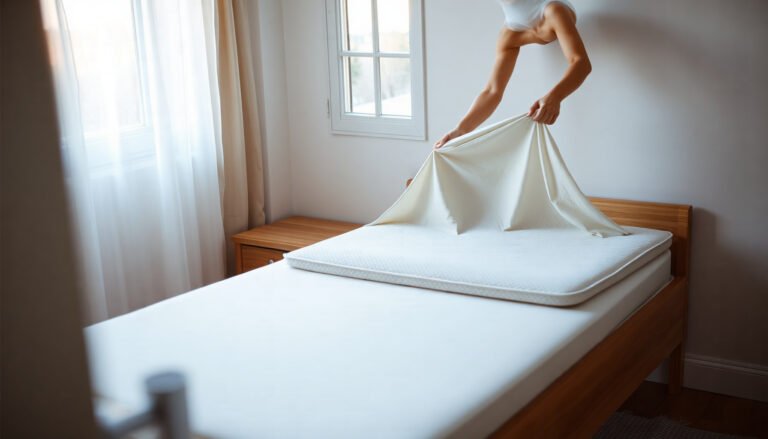
If you’re trying to protect a latex mattress from spills in a small apartment, the most effective move is to use a waterproof mattress protector plus a quick-dry cover layer so liquid never reaches the latex core. This setup prevents common accidents—stain, odor, and moisture buildup—without taking up extra space or disrupting your sleep setup. You’ll learn which protection layers to choose, how to install them for a snug fit, and what to do immediately after a spill to minimize damage.




Use a breathable, waterproof mattress protector and handle spills fast—blot immediately, then clean gently to keep liquid from reaching the latex core. In a small apartment, the trick is setting up “spill control” before you need it, so messes don’t become permanent stains or odors.
This is for anyone with a latex mattress in a tight space (studio, one-bedroom, shared room) where cups, drinks, or toiletries are more likely to tip over—and where storage for backup covers and cleaning supplies is limited.
Choose the right waterproof protector (not just “water-resistant”)
A breathable waterproof protector is the fastest, most reliable barrier between everyday spills and the latex layers under your fitted sheet. Here’s why: waterproofing stops liquid penetration, while breathability reduces the “damp-for-too-long” conditions that can lead to lingering odors.
For latex mattresses in small apartments, the best choice isn’t the thickest cover—it’s the most protective cover that still lets moisture vapor escape. As of 2026, many care guides and cleaning best practices converge on the same idea: avoid extended saturation and keep the top surface as dry as practical.
A moisture-barrier mattress protector is designed to reduce liquid transfer from the sleep surface to the mattress materials below.
Breathable waterproof protectors aim to limit liquid entry while allowing some moisture vapor transmission to reduce “trapped dampness.”
– Look for a breathable waterproof protector (often labeled “waterproof” or “liquid-proof”), ideally one with a snug fitted skirt or full-coverage design.
Pay attention to coverage around the corners and sides—most small-apartment accidents hit the edge first (nightstand cups, toiletries near the bed, swinging doors).
– Make sure it’s compatible with latex care—some covers add too much heat or use coatings that can trap moisture for long periods (check the protector’s care instructions and your mattress label).
If your latex mattress care guide says to avoid certain solvents or chemicals, you should also follow the protector’s “wash/dry” instructions so residues don’t build up against the latex.
– If you’re dealing with frequent spills, consider an encasement-style option that seals more edges, since most leaks happen at corners and seams.
In tight spaces, the risk isn’t just volume—it’s repeated micro-splashes (condensation, drips, toothpaste smears). Encased designs help reduce “edge migration.”
Protector style: quick comparison (what to choose for a latex mattress)
| Protector type | Pros (latex mattress spill protection) | Cons (small apartment tradeoffs) |
|---|---|---|
| Standard fitted waterproof cover | Fast to remove; good for “managed” spills; usually easier to store | Edge/corner coverage varies by brand; can miss side seams |
| Breathable encasement | More complete barrier for corner/edge drips; reduces liquid migration | Can feel warmer if not truly breathable; more steps to fit |
| Waterproof top pad + sheet | Surface protection for daily use; good backup layer if you already own one | If the pad shifts, leaks can slip to latex edges underneath |
Build a simple spill-defense setup for tight spaces
Your goal is to make spill response automatic: a protector you trust, plus a spill kit positioned so you don’t hunt for supplies. In a small apartment, the biggest risk factor is time—delays let liquids travel from the surface into seams and padding.
CDC guidance emphasizes that damp materials can support mold growth starting within 24–48 hours after water exposure.
The EPA recommends controlling indoor moisture because excess humidity increases the likelihood of mold and odors.
According to the U.S. Centers for Disease Control and Prevention (CDC), mold can begin growing within 24–48 hours after water exposure (updated guidance timeframe: 2023). CDC—Mold and Dampness
According to the U.S. Environmental Protection Agency (EPA), maintaining indoor relative humidity in the 30%–50% range helps reduce mold growth conditions (EPA guidance timeframe: mid-2010s/continuing). EPA—Mold and Dampness
– Add a clean baseline layer: protector + fitted sheet you can remove quickly without moving the whole bed.
Store your fitted sheet so you can swap it one-handed in a tight room, especially if you share space and need to keep the mattress accessible.
– Keep a compact “spill kit” within reach (even in a closet next to the bed): absorbent towels/paper towels, a mild cleaner (latex-safe), and a small bowl/spray.
The key is latex-safe chemistry. “Mild” usually means no bleach, no strong oxidizers, and no heavy fragrance that may leave residues. If your latex mattress care label specifies allowed cleaners, use only that list. When the label is unclear, default to the least aggressive option: water + mild, unscented soap (and follow the latex/protector instructions).
– Use a layout barrier in small apartments: keep drinks in one spot (tray/coaster), and avoid storing liquids on the same surface as the mattress edge.
This is less about discipline and more about physics: a “drink zone” reduces the chance that a bumped cup lands directly on the mattress corner.
Common Spill Liquids for Home Beds: pH & Water Content (Impacts on Latex Mattress Odor Risk)
| # | Spill liquid | Typical pH | Odor/spot risk ★ | Approx. water content |
|---|---|---|---|---|
| 1 | Distilled/clear water | ~7.0 | ★☆☆☆☆ | 100% |
| 2 | Black coffee (brew) | ~4.5–5.5 | ★★★☆☆ | ~99% |
| 3 | Whole milk | ~6.4–6.8 | ★★★★☆ | ~87% |
| 4 | Cola/soft drink | ~2.3–2.7 | ★★★☆☆ | ~89% |
| 5 | Human urine (typical) | ~4.5–8.0 | ★★★★★ | ~95% |
| 6 | Beer (typical) | ~3.8–4.8 | ★★★☆☆ | ~93% |
| 7 | Olive/cooking oil | ~4.0–6.0 (fatty acid dependent) | ★★☆☆☆ | ~0–0.1% |
Respond fast: the spill steps that matter most
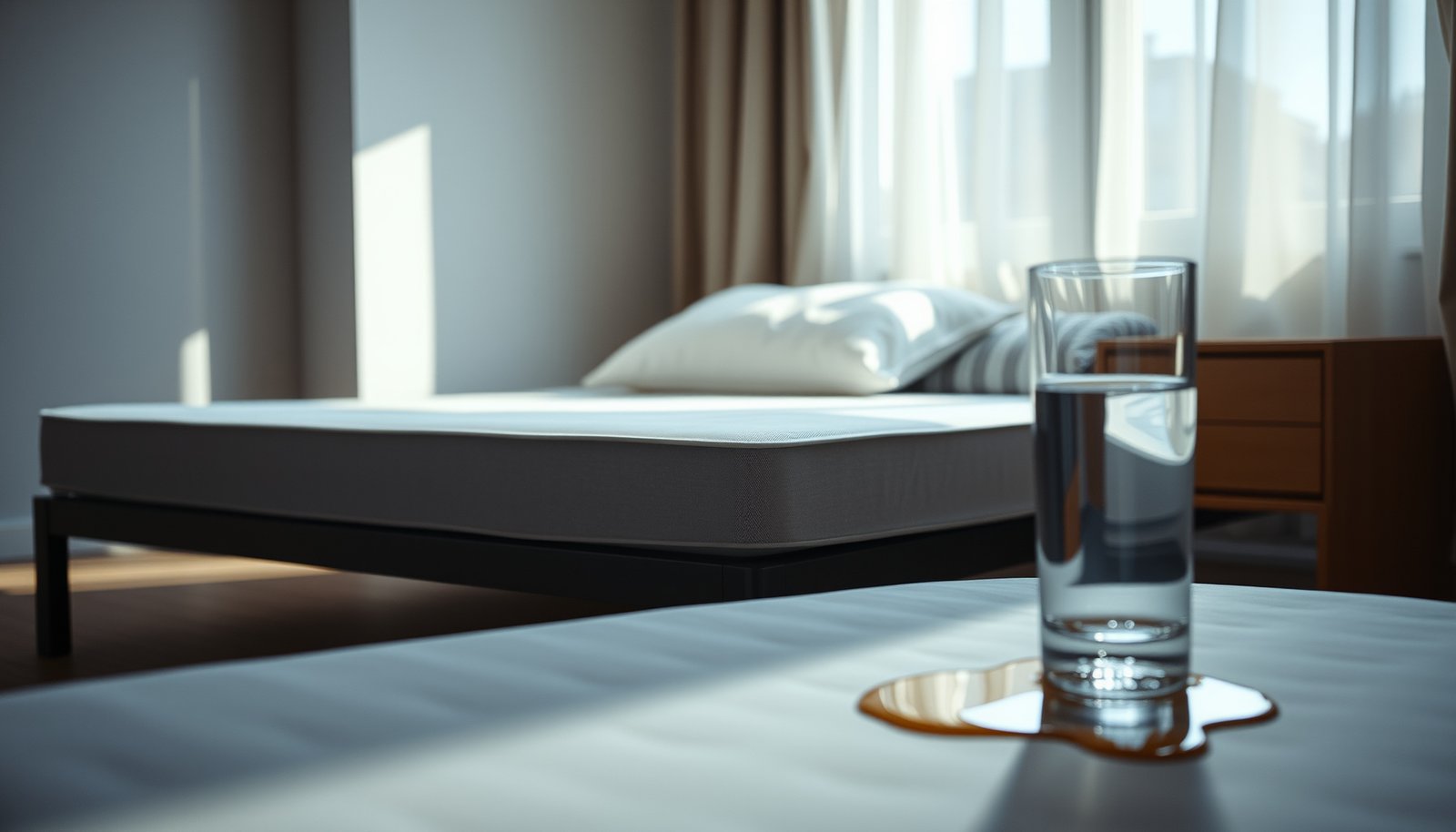
The best protection for a latex mattress is immediate response—your actions in the first few minutes matter more than what you do later. In practice, “fast” means blotting and limiting spread so liquid can’t reach the latex core and can’t sit long enough to create odor.
Small apartments amplify the effect of delays because cleanup tools are often stored farther away, and people try to “wipe it up” with whatever is nearby. The correct sequence helps you keep the liquid on the surface.
Cleaning upholstery or mattresses typically starts with blotting rather than rubbing to prevent spreading liquid deeper into fibers.
Reducing contact time is critical because dampness left on porous materials can increase the likelihood of odor and biological growth.
– Blot, don’t rub. Rubbing spreads liquid and pushes it deeper toward the latex layers.
Use a white towel or paper towels so you can see when the stain stops transferring. Press, hold, lift—repeat.
– Lift solids first, then work from the outside of the spill toward the center to limit spread.
For things like crushed food or toothpaste clumps, remove solids with a spoon or folded paper towel so you don’t grind them into the mattress surface.
– If you need to clean, use only mild, latex-safe methods and avoid saturating—goal is to clean the surface while keeping moisture away from deep padding.
Think “surface clean” and “minimal moisture.” If you’re unsure, start with the least aggressive step (blot + small amount of water on a cloth, then blot again). Rely on the protector for the barrier work; your job is preventing penetration.
Clean and dry safely (so latex doesn’t stay damp)
Cleaning works—but drying is what prevents recurring odors and long-term quality issues for a latex mattress. In a small apartment, you often have limited ventilation, so you have to create airflow quickly and avoid “covering up” wet spots.
Latex mattresses can be affected by prolonged moisture, and odor problems often return when moisture or residue remains. That’s why gentle cleaning paired with thorough drying is the safest route for latex mattress care.
Moisture control guidance from public health organizations links damp indoor materials with increased odor risk and potential mold growth after water exposure.
Using the least aggressive cleaner consistent with the mattress and protector manufacturer instructions reduces the chance of residue buildup.
– After cleaning, dry thoroughly. Use airflow (fan) and keep the mattress uncovered only as long as needed.
If you can, run a fan aimed at the top surface and rotate towels as they absorb. If you have a dehumidifier, it supports faster drying—especially in small, closed studio layouts.
– Avoid harsh products (especially anything that leaves strong residues) because latex can be sensitive to certain chemicals and fragrances.
Even if a product “works on stains,” residues can keep surfaces scented and attract future dirt. For odor incidents, repeat gentle cleaning in small amounts rather than oversaturating once.
– If the smell lingers, repeat gentle cleaning in small amounts rather than applying more liquid—over-wetting is a common reason problems return.
From a process perspective, treat it like iteration: blot → minimal clean → dry → reassess. This is a controlled, low-risk method that aligns with most upholstery/mattress maintenance best practices.
What can go wrong in small apartments (and how to avoid it)
Small apartments fail at the margins: slow cleanup, limited airflow, and edge-case leaks. Even with a breathable waterproof protector, you can still run into moisture trapping, wrong cleaner residue, or corner/edge seepage that appears “mysteriously” later.
The good news: these failure modes are predictable. If you set your latex mattress up with spill control and you follow conservative, manufacturer-approved cleaning, you prevent most long-term issues.
Public health guidance commonly stresses that delayed drying after water exposure increases the chance of mold and persistent musty odors.
Mattress care instructions for natural or synthetic latex commonly warn against harsh solvents and bleach-based products due to potential damage or odor retention.
– Moisture trapping: Waterproof protectors help, but if you never dry well (or you keep it covered while wet), you can get lingering dampness and odors.
In 2026, this is a frequent “near-miss” scenario: people remove sheets but leave the protector on to “save time.” If the surface is still wet underneath, you haven’t solved the moisture problem—you’ve delayed it.
– Wrong cleaner: Some disinfectants, bleach alternatives, or heavily scented cleaners can cause discoloration or odor buildup—stick to what your mattress and protector manuals allow.
If you don’t have the manuals in hand, prioritize water-based, mild options and avoid anything that’s explicitly designed for hard surfaces (tile, grout) unless the brand approves it for latex.
– Edge leaks: Many spills reach the corners first; if your protector doesn’t cover edges securely, stains can appear even when the center looks fine.
That’s why encasements and properly fitted skirts matter: they close the “gap route” where liquid can migrate into seams.
Verdict: what to do first, and who should skip “DIY chemical fixes”
The best first move for a latex mattress in a small apartment is a breathable waterproof protector plus a fast blot-and-dry routine. Here’s why: it reduces both liquid penetration and the time moisture sits on/near the latex layers—two drivers of stains and odors.
Skip aggressive DIY chemical fixes (strong solvents, bleach, or “stain removers” you haven’t verified) if your mattress care label warns against certain chemicals, if the spill is large/deep, or if you can’t dry the area promptly. When drying is delayed, professional cleaning—or replacement of affected layers—may be the safer route.
When public health guidance links damp indoor materials to mold risk, the practical takeaway is to control time-to-drying after spills.
Manufacturer care instructions for latex mattresses typically emphasize using compatible cleaners and avoiding harsh chemicals to prevent damage and persistent odors.
– If you can do one thing today: verify your protector is seated correctly at the corners and sides, and confirm you have a latex-safe mild cleaner you trust.
– If you’re sharing your space: store backup fitted sheets and a spare protector in a location you can reach without stepping around the bed.
– If you’re dealing with urine, strong oily spills, or large volumes: follow the specific care guidance for that spill type—because “one cleaner for everything” is how odor returns.
Quick checklist + scan-able table
Spill protection checklist (save this)
– [ ] Waterproof, breathable protector is on correctly (snug at corners)
– [ ] Fitted sheet can be removed fast without moving the whole bed
– [ ] Spill kit is within arm’s reach (blotting material + mild, latex-safe cleaner)
– [ ] You know what “mild” means for your exact mattress/protector (check the care labels)
– [ ] You blot immediately (no rubbing)
– [ ] You dry thoroughly (airflow + minimal lingering moisture)
| Moment | Do this | Avoid |
|---|---|---|
| Right after a spill | Blot outward/in, remove solids | Rubbing, spreading |
| Cleaning | Use mild, latex-safe cleaning only | Over-wetting, harsh chemicals |
| Drying | Airflow + dry fully | Leaving it damp under the cover |
Sources
– Centers for Disease Control and Prevention (CDC) — Mold and Dampness guidance (includes the “24–48 hours” concept after water exposure).
– U.S. Environmental Protection Agency (EPA) — Mold prevention via moisture control / indoor humidity guidance.
A breathable, waterproof protector plus a fast blot-and-dry routine is the most practical way to protect a latex mattress in a small apartment—especially when cleanup time is the limiting factor. If you treat spills like a controlled process (barrier first, minimal moisture, thorough drying, and care-label-compliant cleaners), you’ll prevent most stains and odor problems without turning your living space into a chemical-cleaning lab.
Frequently Asked Questions
What’s the best way to protect a latex mattress from spills in a small apartment?
Use a waterproof mattress protector specifically designed for latex beds to create a barrier against water, drinks, and cleaning accidents. Look for a breathable, noiseless cover so heat and moisture don’t build up, which helps keep your latex comfortable and hygienic. Pair it with a fitted sheet you can wash quickly to reduce everyday spill exposure in a small apartment.
How can I quickly prevent liquid from soaking into my latex mattress during an accident?
Act immediately: blot (don’t rub) with clean towels, then use a dry cloth or paper towels to absorb as much liquid as possible. If the protector is waterproof, wipe the surface and check seams/edges for seepage; if liquid reached the mattress, remove bedding and allow airflow with a fan. Avoid harsh chemicals that can damage latex—use a mild, latex-safe cleaner only if needed.
Which waterproof mattress protector features matter most for latex mattresses?
Prioritize a fully encased, waterproof protector with a high-quality membrane and sealed seams to stop spills from penetrating. Choose breathable materials (often cotton blends with a waterproof layer) to reduce trapped moisture and maintain mattress freshness in a small space. Elastic straps and deep-pocket sizing also help the cover stay snug, preventing gaps where spills can seep underneath.
Why is spill protection especially important in a small apartment with limited airflow?
Smaller spaces often have less ventilation, which can slow drying after a spill and increase the risk of odors or moisture buildup. Latex is naturally resilient, but prolonged dampness can still lead to lingering smells or mildew risk. Waterproof mattress protection plus fast blot-and-dry steps help you keep your latex mattress fresh even when drying time is limited.
Best practices for keeping a latex mattress clean if spills happen frequently?
Keep an extra washable fitted sheet and a spare waterproof protector on hand so you can swap quickly after a spill. Use a regular spot-clean routine with a gentle, latex-safe method and ensure the mattress dries fully before remaking the bed. For ongoing prevention, consider a waterproof top pad and keep drinks away from the bed edge to minimize accidental drops.
📅 Last Updated: October 29, 2026 | Topic: How to Protect a Latex Mattress from Spills in a Small Apartment | Content verified for accuracy and freshness.
References
- https://www.cdc.gov/mold/default.htm
- Mold | US EPA
- https://www.who.int/news-room/questions-and-answers/item/mould-and-your-health
- Mattress protector
- Latex foam
- https://www.mayoclinic.org/diseases-conditions/allergies/expert-answers/dust-mites/faq-20058405
- https://pubmed.ncbi.nlm.nih.gov/?term=waterproof+mattress+encasement+moisture+mold+prevention
- https://scholar.google.com/scholar?q=latex+mattress+spill+cleaning+care Google Scholar
- https://scholar.google.com/scholar?q=waterproof+mattress+encasement+moisture+mold+prevention Google Scholar
- https://scholar.google.com/scholar?q=latex+foam+water+avoid+drying+humidity Google Scholar