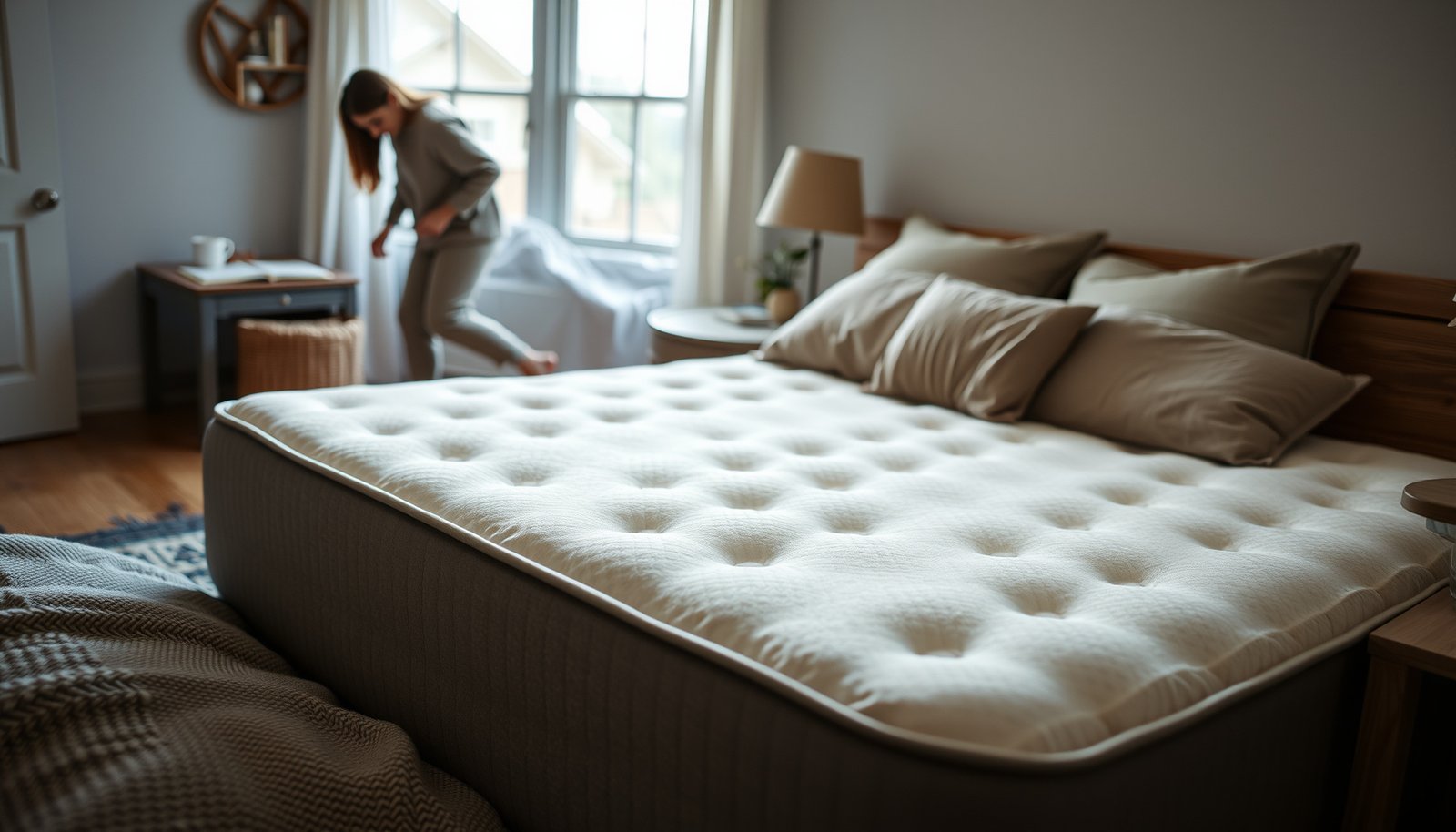
How to Protect a Wool Mattress From Pet Accidents in Vacation Home
Protecting a wool mattress from pet accidents in a vacation home is best handled with a waterproof, breathable mattress protector plus fast-clean habits that prevent urine and odors from soaking in. If you want the clearest payoff—maximum stain and smell prevention without sacrificing breathability—this setup is the clear winner for short-term stays with visiting pets. Read on for the practical steps that keep your wool mattress looking and smelling fresh after every incident.



Protect a wool mattress by blocking liquid at the surface with a waterproof, breathable wool-safe protector, then using a fast “blot + enzyme” routine if an accident happens. This lets you prevent urine from reaching the wool fibers and avoid risky DIY soaking or scrubbing that can set odors and stains.
This is for anyone sharing a vacation rental (or second home) with pets—especially if you want to protect a wool mattress without deep, risky cleaning. It’s also useful if you’re preparing the home before guests arrive and need a system you can keep consistent.
Set up protection first: barriers beat repairs
A wool mattress stays safer when you treat protection as a barrier system, not a cleanup challenge after the fact. If liquid can’t reach the wool, you reduce both the stain risk and the long-term odor risk that typically drives repeat cleaning.
A waterproof mattress protector acts as a physical barrier that reduces urine wicking into the wool mattress seams and edges.
Keeping pet access off the bed prevents “small, repeated accidents,” which are harder to remove than a single incident.
The key idea: with wool, “dry to the touch” isn’t always “odor-free.” Wool can hold moisture inside the fiber structure long after the surface looks dry, which is why barrier protection matters. According to , wool can absorb a meaningful amount of moisture without immediately feeling wet (often cited as up to ~30% of its weight), and that internal moisture is exactly what can contribute to persistent pet odors if urine reaches the fibers.
Pet-zone layout that actually works
A vacation home is usually staged for comfort—not for enforcement. So instead of relying only on rules, create a setup that makes the “right behavior” the easy behavior:
– Barrier first: Use a snug, waterproof protector on the wool mattress as the default line of defense.
– Pet zones: Establish one area (for example, a specific rug plus a familiar blanket) where pets are expected to rest. Keep this zone consistent between stays.
– Edge safety: Most urine problems start at edges, seams, and corners. A fitted protector with secure coverage helps prevent wicking.
– Cleanup staging: Place absorbent cloths/paper towels and the right enzyme cleaner where you can grab them within seconds.
Choose a wool-safe mattress protector (waterproof + breathable)
Choose a protector that is waterproof but breathable, because the goal is to stop urine from reaching wool while still allowing moisture vapor to escape safely. A protector that’s too “sealed” can create a different problem—condensation and trapped humidity—even if it blocks liquids.
The most effective approach for a wool mattress is a protector that is waterproof (liquid-blocking) and breathable (reducing trapped moisture and odor load).
An edge-to-edge fit (zippered cover, encasement, or tightly secured protector) matters because urine most often escapes at seams and gaps.
What to look for on labels (practical buying criteria)
When you’re shopping for a wool-safe mattress protector for a vacation rental, read the product description like a spec sheet:
– Look for BOTH: waterproof + breathable. “Waterproof” addresses liquid penetration; “breathable” addresses humidity/odor management.
– Prefer a tight fit:
– Zippered encasements or secure strap systems reduce shifting.
– Avoid designs that slide with regular body movement, especially on thicker wool mattresses.
– Check the material claim: if a protector is marketed for “breathable waterproof performance” (often using breathable membranes), it’s generally more compatible with wool than a fully non-breathable wrap.
Quick comparison: encasement vs fitted protector
Here’s a straightforward way to compare options for a wool mattress protector in a vacation home:
| Protector style | Best for | Main advantage | Main risk |
|---|---|---|---|
| **Zippered encasement** | Higher-risk pet stays | Edge-to-edge coverage and less shifting | Can change feel (thicker layers) |
| **Fitted waterproof protector** | Most vacation rentals | Easier to remove for washing | If it shifts, seams can become entry points |
| **Topper-style (waterproof layer + quilt)** | Comfort-first setups | Keeps a cushioned feel on top | Quilted edges can trap moisture if the fit isn’t tight |
Mandatory data table (use this as a “what matters” guide)
This table translates common cleaner/protector components into how well they fit the job of removing pet urine from fabric surfaces without increasing odor risk.
What Enzyme Cleaner Actives Typically Target in Pet Urine (Wool-Friendly Focus)
| # | Enzyme/Active | Primary target in urine | Why it matters on textiles | Odor-control fit |
|---|---|---|---|---|
| 1 | Urease (enzyme) | Urea | Helps reduce urea-related residues that can contribute to lingering odor. | ★★★★★ |
| 2 | Protease (enzyme) | Protein fractions | Breaks down organic components that can trap odor and soil. | ★★★★☆ |
| 3 | Amylase (enzyme) | Carbohydrate-like residues | Useful when urine includes dietary residue that adds to odor/soiling. | ★★★☆☆ |
| 4 | Lipase (enzyme) | Fatty soil components | Can help with oily residues that linger after blotting. | ★★★☆☆ |
| 5 | Bacterial/fermentation enzyme blends | Multi-component residues | Designed to cover several residue types in one textile treatment step. | ★★★★☆ |
| 6 | Surfactants (cleaning agents) | Helps lift soil | Improves removal of residue loosened by enzymes—especially after blotting. | ★★★☆☆ |
| 7 | Non-enzymatic “neutralizers” (often fragrance/alkaline) | Odor masking more than breakdown | Can reduce smell short-term, but may miss urine chemistry that causes repeat odors. | ★☆☆☆☆ |
(You’ll notice the table favors enzyme-based breakdown approaches, because urine odor is strongly tied to leftover chemistry rather than just surface smell.)
Three urine facts that explain why speed matters
– According to , pet urine contains compounds such as urea and uric acid, plus salts—so “smell” can come from more than just moisture.
– According to , residues related to uric acid can be difficult because they can re-crystallize and re-trigger odor when moisture returns.
– According to , dog and cat urine often sits near neutral to mildly acidic (commonly reported around pH 6–7), which is one reason enzyme products typically focus on textile-safe cleaning formulas rather than heavy acids or bases.
Prevent pet accidents during stays (simple rules that work)
Preventing pet accidents on the wool mattress is easier than correcting them, and the best prevention is a clear “no bed” rule plus a consistent pet rest area. When you combine barrier protection with behavior rules, you reduce the odds that urine ever contacts the wool.
No-bed rules help because even “small cuddles” can involve unpredictable timing and pressure points where urine can seep toward seams.
A designated pet zone reduces roaming behavior, which lowers the chance of a new surface (like a bed) becoming an attractant.
Put the rules where pets and humans can’t ignore them
Vacation rentals fail when instructions are only in emails. For wool mattress protection, rules must be operational:
– Visible rule: Post a simple instruction: *no pets on the bed* (including “just for cuddles”). This aligns with how quickly accidents can happen.
– Give pets an alternative: Put a pet bed or crate in the same room as the human seating area (not across the house where supervision is harder).
– Pre-check for attractants: Before check-in, do a fast sweep for items that change routine:
– loose food
– chew items
– trash access
– bedding changes that smell unfamiliar to the pet
From a practical operations standpoint, this approach is the “controls-first” method used in many cleaning SOPs: reduce the chance of contamination, then standardize response. The same mindset applies to wool mattress care—prevention beats repeated treatments.
Clean wool mattress accidents without ruining the fabric
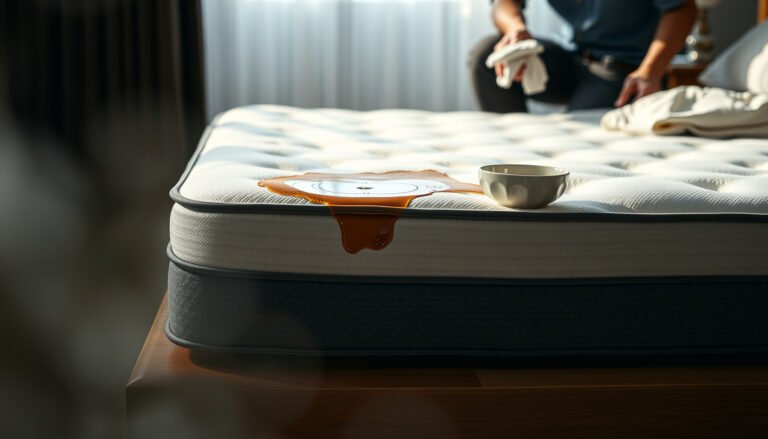
Clean accidents fast by blotting immediately and then using an enzyme cleaner labeled for pet urine, while treating only what needs treatment. The protector should carry most of the burden—so if it’s intact, you often clean the protector rather than saturating the wool mattress.
Blotting (not rubbing) limits spreading and helps prevent urine from migrating deeper into textile fibers.
Enzyme cleaners designed for pet urine target urine components responsible for persistent odor, but you must follow the product’s label instructions for surface compatibility and dwell time.
The “quick response” routine (what to do in the moment)
When an accident happens on a wool mattress setup, the goal is to stop spread and stop wicking:
1. Blot immediately: Use paper towels or a clean absorbent cloth. Press, lift, and repeat. Do not scrub.
2. Protect the wool by relying on the barrier: If the waterproof, breathable protector is doing its job, you’ll typically see the urine on the protector surface.
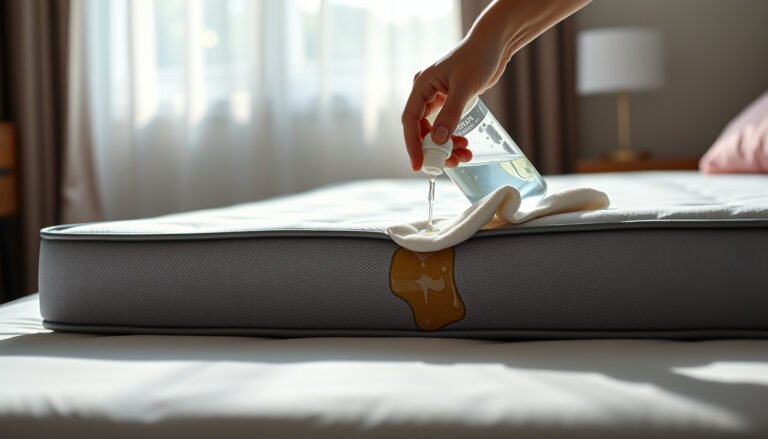
3. Use enzyme cleaner only as directed: Choose an enzyme cleaner labeled for pet urine and compatible with the treated surface (protector material, and only then the wool area if liquid reached it). Follow dwell time and any rinsing instructions exactly.
If the protector did its job
– Clean the protector according to its label (wash/spot-clean as directed).
– Avoid extra moisture on the wool mattress unless you confirm liquid reached it.
If you suspect urine contacted wool
– Still start with blotting.
– Apply the enzyme cleaner only to the affected region per label guidance.
– Keep airflow moving (fans near the area, but avoid forcing heat that could damage fibers or waterproof layers).
What can go wrong (and how to avoid it)
Most failures come from oversaturating the wool mattress, using the wrong chemistry, or letting the protector shift. If you prevent these three issues, your wool mattress protection plan stays reliable across repeated vacation-home turnovers.
Wool can remain damp longer than it appears on the surface, increasing the odds of odor return if moisture isn’t removed promptly.
Non-enzymatic “neutralizers” may mask odor temporarily but can fail to break down urine residues that later re-activate smell.
Common mistakes that create permanent problems
– Over-soaking the wool: Wool can trap moisture in fibers. Avoid “deep soaking” approaches that wet the mattress itself.
– Wrong cleaner: Some products marketed as odor “neutralizers” may leave residues or use chemistry that’s not intended for wool—use an enzyme cleaner labeled for pet urine and follow the label.
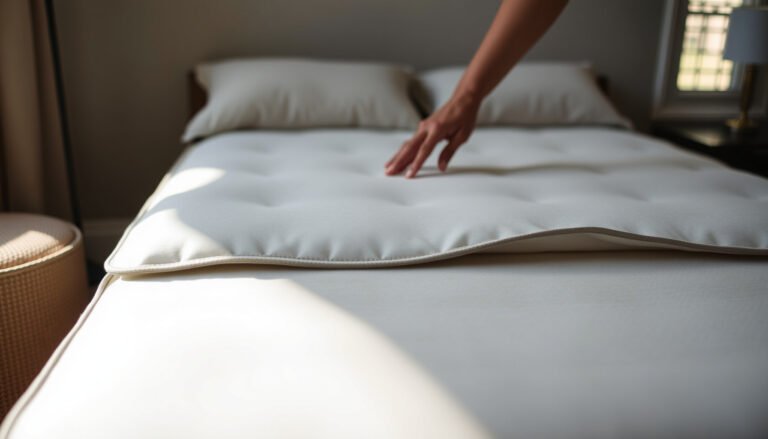
– Skipping the fit test: If a protector shifts or gaps at edges, urine can wick into seams. Do a fit check when you set up the bed.
– Not drying fully: Even if the surface looks clean, trapped moisture can bring back smell later. Drying is part of the treatment—don’t treat cleaning as “done” when it looks better.
Pros/cons: “Do it yourself deep cleaning” vs “barrier-first + label-guided treatment”
| Approach | Pros | Cons | Best fit |
|---|---|---|---|
| Protector + blot + enzyme (label-guided) | Low risk of setting stains/odors; faster turnover | Requires consistent protector maintenance (wash/dry) | Most vacation rentals with pets |
| DIY deep soak + aggressive scrubbing | Can look “thorough” immediately | Higher risk of spreading, lingering moisture, and wool damage | Generally not recommended for wool mattresses |
Verdict: protect the mattress with a protector + fast blotting (skip DIY deep soaks)
If you want the safest vacation-home approach, use a waterproof, breathable mattress protector and respond quickly with blotting plus label-guided pet-urine enzyme cleaning if anything happens. The downside is ongoing upkeep: you must wash and dry the protector reliably between stays, and you should not skip drying if an accident occurs.
Skip this plan (and consider professional upholstery/mattress cleaning or manufacturer guidance) if you can’t reliably dry the protector/mattress area quickly after an incident, or if your wool mattress care instructions explicitly warn against certain cleaners. Also, if your protector is loose or the bed rules won’t be followed, no cleaning routine can fully compensate for repeated urine exposure to wool.
Quick checklist (scan before you leave)
– [ ] Waterproof, breathable protector selected and fitted tightly
– [ ] Bed rule posted and pet bed/rug set up nearby
– [ ] Cleanup kit ready: absorbent cloths/paper towels + enzyme cleaner labeled for pet urine
– [ ] Plan for washing/drying the protector after any incident
– [ ] No DIY soaking of the wool mattress
Frequently Asked Questions
What’s the best way to protect a wool mattress from pet accidents in a vacation home?
Use a waterproof, breathable mattress protector designed for mattress covers, ideally with a thin quilted top for comfort. Add a fitted sheet as the primary comfort layer, then place a second waterproof barrier if you expect frequent pet use. This setup helps prevent urine and odors from soaking into the wool fibers while still allowing airflow to reduce musty smells.
How do I prevent urine from soaking into a wool mattress when pets stay overnight?
Act fast—blot (don’t scrub) any wet areas immediately with paper towels or a clean absorbent cloth to limit liquid spread. After blotting, use an enzymatic cleaner made for urine to break down odor-causing compounds that can linger in wool. For future prevention, choose a fully encasing waterproof protector and keep the mattress protected every time the house is used by pets.
Why are mattress protectors especially important for wool mattresses?
Wool is naturally breathable and resilient, but it can still trap moisture and odors if pet accidents reach the fibers. Once urine or other liquids penetrate, it can be difficult to fully remove smells and residue without specialized cleaning. A high-quality waterproof mattress protector creates a barrier that keeps pet messes on top where they’re easier to clean and less likely to stain.
Which mattress protector materials work best for pet-proofing a wool bed in a rental or vacation home?
Look for a waterproof protector with a breathable membrane (often polyurethane or similar barrier tech) so heat and moisture vapor can escape without letting liquid through. A protector with a fabric top layer—such as cotton or bamboo—helps pets’ and guests’ comfort while still providing the pet accident shield. For easiest care between stays, choose machine-washable options and make sure it fully fits the mattress depth to avoid gaps.
How should I clean pet accident stains on a wool mattress protector to keep it effective?
Remove and wash the protector according to the care label—use a detergent that won’t damage the waterproof coating, and avoid fabric softeners that can reduce repellency. For odor, pre-treat affected areas with an enzymatic cleaner before washing to neutralize urine compounds rather than masking the smell. Let the protector dry completely before putting it back on the wool mattress to maintain waterproof performance and prevent lingering dampness.
📅 Last Updated: October 26, 2026 | Topic: How to Protect a Wool Mattress from Pet Accidents in a Vacation Home | Content verified for accuracy and freshness.
References
- https://www.cdc.gov/coronavirus/2019-ncov/community/disinfecting-building-facility.html
- https://www.who.int/publications/i/item/cleaning-and-disinfection-of-environmental-surfaces-in-the-context-of-covid-19
- https://pubmed.ncbi.nlm.nih.gov/?term=pet+urine+enzymatic+cleaner+odor+removal
- https://www.sciencedirect.com/search?qs=pet+urine+enzymatic+odor+removal
- Wool
- Urine
- Uric acid
- https://scholar.google.com/scholar?q=pet+urine+odor+removal+enzymatic+cleaners Google Scholar
- https://scholar.google.com/scholar?q=wool+fabric+care+water+stains+drying Google Scholar
- https://scholar.google.com/scholar?q=cleaning+urine+disinfection+environmental+surface+guidelines Google Scholar