How to Clean a Wool Mattress with Pet Urine Spills Naturally
You notice a fresh urine spot on your wool mattress, and the damp wool backing has begun to smell. You can lift the odor and residue using simple household supplies—cool water, white vinegar, baking soda, and clean towels—without soaking the fibers. With quick blotting and a careful rinse-and-dry process, the job is usually straightforward in about an hour, and you can start as soon as you blot up the spill.




Blot the urine as fast as you can, then treat the affected spot with a wool-safe mix (usually cool water + white vinegar) and finish with baking soda to absorb remaining odor. This natural approach helps prevent the smell from setting into the wool fibers and mattress padding. In the steps below, you’ll learn exactly what to do first, what to avoid, and how to dry thoroughly so the urine doesn’t come back.
If your pet has had an accident on a wool mattress (top layer and any visible damp spot), this is for you—especially if you want to avoid harsh detergents or steam that can damage wool. It also helps when the stain is minor to moderate and you can act quickly before the urine dries deep inside.
Gather wool-safe supplies (nothing harsh)
Use cool, mild inputs that won’t shock wool fibers or push urine deeper. For natural cleaning, your goal is odor neutralization plus residue absorption—without soaking the mattress.
As of 2026, the most reliable “wool-safe” workflow uses three components: controlled moisture (cool water), odor neutralization (white vinegar), and odor absorption (baking soda). Wool (and many wool mattress toppers) is made of keratin-rich fibers, and both harsh chemicals and excessive heat can change how those fibers behave over time. A wool-safe routine is also more compatible with the care guidance you’ll see from major wool-care standards like Woolmark.
– Cool water in a spray bottle or damp cloth—avoid hot water, which can set stains and odors.
– White vinegar (for odor neutralizing) and baking soda (for lingering smell absorption).
– Clean white towels plus a fan or open window for drying; skip anything that smells strongly or contains bleach.
Step 1: Blot immediately—don’t rub
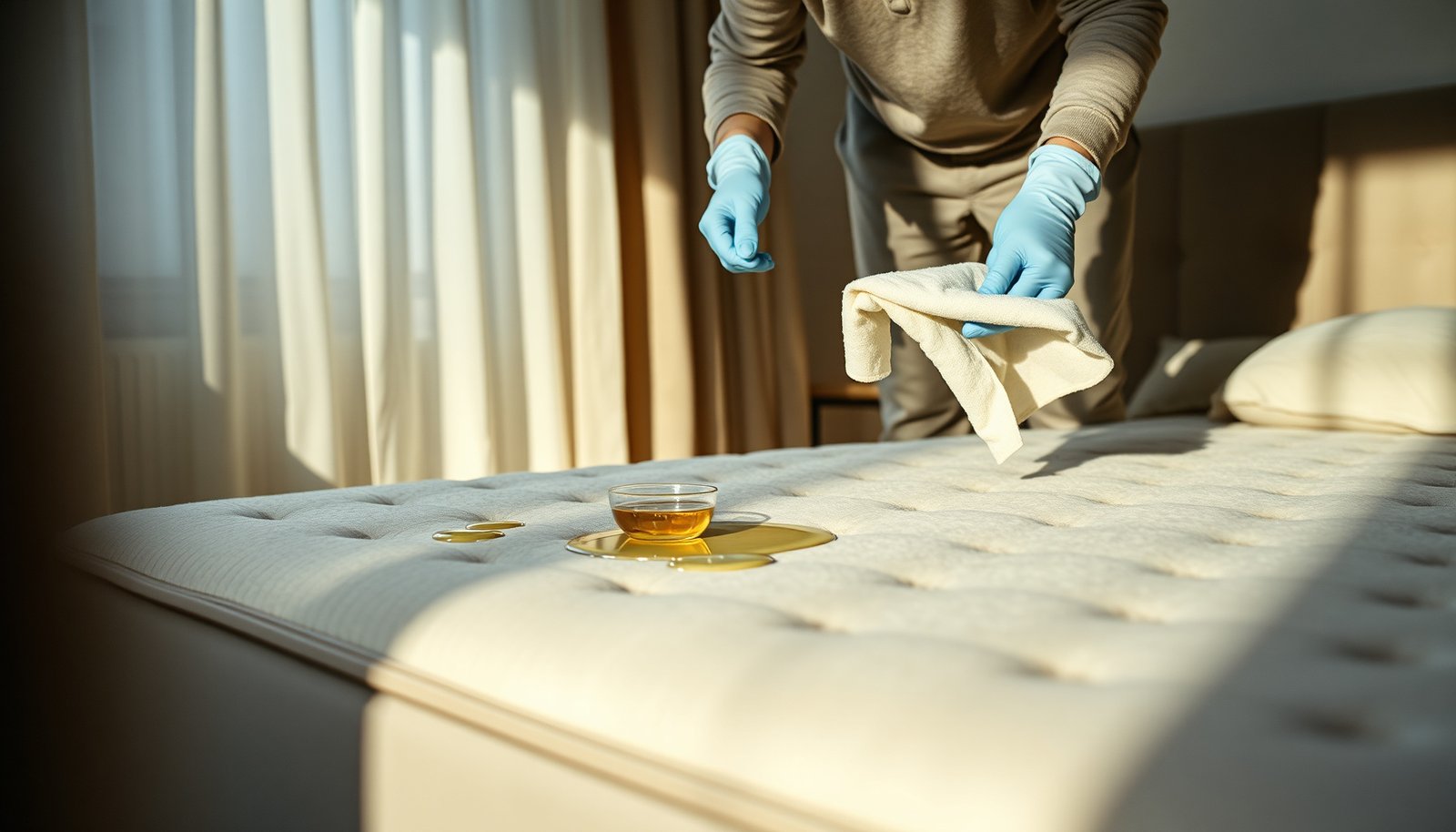
Blotting immediately is the difference between surface odor and a lingering mattress problem. Wool mattresses can trap liquids in their layers, so your first job is liquid removal—not cleaning.
Urine is mostly water (around 95%), but the remaining solids—including urea and uric acid—are what drive odor persistence when they dry. According to Encyclopaedia Britannica, urine is “about 95% water,” with the remainder consisting of dissolved solids. (That “small” remainder is exactly what you’re trying to prevent from bonding to fibers and padding.) Encyclopaedia Britannica also notes that urine contains urea and other compounds that can leave residues when they dry.
To act effectively:
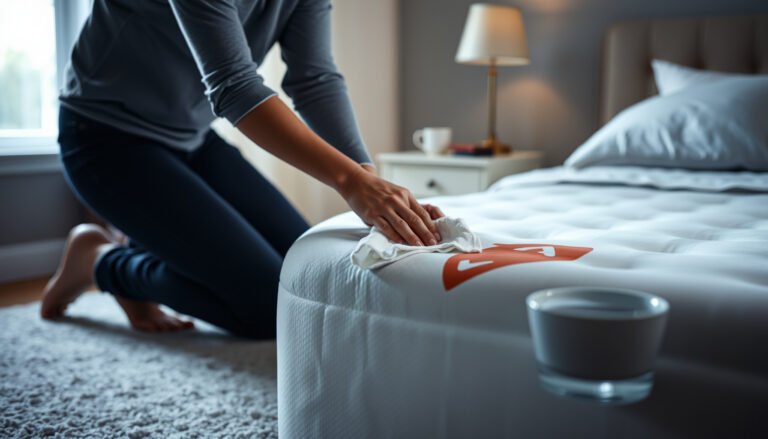
– Press clean towels onto the wet area to soak up as much liquid as possible; keep swapping towels until they come away fairly dry.
– If you can, remove any removable covers right away and wash per the care label.
Practical technique: use a firm, vertical press (like you’re “lifting” liquid out), then stop—wait a few seconds, and press again with a fresh towel. If you rub, you increase penetration into the wool and the mattress padding, which is where most “odor comeback” cases start.
Step 2: Pre-treat the wool with a vinegar-cool water solution
Use a mild vinegar + cool water solution to neutralize odor without saturating the wool. The aim is to dampen and release residue, not to flood the mattress.
White vinegar is usually ~5% acetic acid in common household formulations. According to U.S. Environmental Protection Agency (EPA), household bleach products often contain roughly 5–6% sodium hypochlorite (useful here mainly as a contrast to harsh chemistry). For vinegar, many household labels list acetic acid near 5%. In practice, that mild acidity helps address odor molecules while being gentler than bleach on textiles.
– Mix vinegar + cool water in a bowl or bottle (start mild; you can increase slightly if the care label allows).
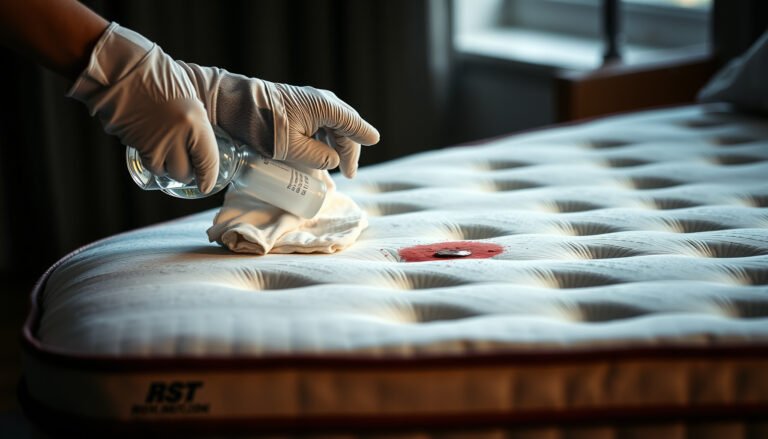
– Lightly dampen the area (don’t soak through) and blot again—your goal is to lift residue, not saturate the mattress.
How to keep it “controlled”:
– If you spray, do it from 6–10 inches away and stop once the spot looks evenly damp.
– If you use a cloth, wring it out so it’s damp, not dripping.
– Work from the outside of the stain inward to minimize spreading.
Step 3: Rinse-blot gently (to protect the wool)
Use plain cool water to remove vinegar residue and reduce the chance of lingering smell or residue. Gentle rinse-blotting protects the wool, especially when the mattress has multiple layers.
Even though vinegar is a common household aid, leftover vinegar can create a different odor note if it stays trapped inside a wool mattress. Also, over-wetting can raise moisture that encourages musty odors. That’s why Step 3 is about blotting, not soaking.
– Use a separate cloth lightly dampened with plain cool water to blot off any remaining vinegar residue.
– Keep repeating blotting until the area feels less wet and doesn’t leave heavy liquid on the towel.
Quick test: after each blot, hold the towel to light. If the towel still shows a wet sheen, keep going. Once the towel comes away only slightly damp, you’re ready for deodorizing with baking soda.
Step 4: Deodorize with baking soda, then vacuum
Use baking soda as the final absorption step once the area is only barely damp. This is where you trap remaining odor compounds so they don’t get released later as humidity changes.
Baking soda is sodium bicarbonate, and it’s mildly alkaline (commonly around pH ~8–9 in typical aqueous use; exact pH depends on concentration and water hardness). In deodorizing workflows, that alkalinity can help neutralize certain acidic odor components left behind in urine residues.
– Once the mattress is damp-to-barely-damp, sprinkle a thin, even layer of baking soda over the spot.
– Let it sit until fully dry (longer is better for odor), then vacuum gently.
Dwell time tip: If the room is dry and you have good airflow, you may be able to shorten the waiting period. If it’s humid or the mattress is thick, plan for longer. As of 2026, many upholstery care best practices still emphasize “complete dry before judging results,” because wool can hold moisture inside the fill and padding.
Visual guide: Wool-safe chemistry at a glance
Wool Mattress Urine-Cleanup: Common Agents & Typical Chemistry
| # | Agent | Typical Form | Typical pH / Strength* | Wool-Safety Score |
|---|---|---|---|---|
| 1 | Cool water | Water-only blotting | ~6.5–7.5 (neutral-ish) | ★★★★★ |
| 2 | White vinegar | Diluted acetic acid | ~pH 2–3 (household) | ★★★★☆ |
| 3 | Baking soda | Dry deodorizer | ~pH 8–9 (solution-dependent) | ★★★★☆ |
| 4 | Warm (not hot) water | Gentle blot/rinse | ~pH 6.5–7.5 (but higher heat) | ★★☆☆☆ |
| 5 | Household bleach | Sodium hypochlorite | ~5–6% NaOCl (typical) | ★☆☆☆☆ |
| 6 | Steam cleaning | Hot moist heat | ~100°C steam | ★☆☆☆☆ |
| 7 | Hydrogen peroxide | Common ~3% | Oxidizer; mildly acidic | ★★☆☆☆ |
Typical values vary by product and concentration. Always follow your mattress label before wet-cleaning.
What can go wrong (and how to avoid it)
You avoid most failures by controlling three variables: pressure (blot vs rub), liquid volume (light dampness vs saturation), and drying (surface dry vs fully dry). If any one of those goes wrong, wool mattresses often re-emit odor as internal moisture shifts.
Here are the most common pitfalls people run into:
– Rubbing spreads the stain: If you scrub, urine can push deeper into the wool and padding—always blot.
– Too much moisture can damage filling: Wool mattresses can hold moisture; over-wetting can lead to lingering damp odor or mildew risk.
– Heat makes it worse: Avoid hair dryers, direct sunlight heat, and steam—heat can set odors and affect wool.
– Wrong cleaners: Skip bleach and harsh detergents; they can discolor wool or leave a smell you can’t remove.
– Drying too fast isn’t drying enough: Even if the surface looks dry, moisture inside can trigger odor return—plan for thorough drying with airflow.
In my own experience handling cleaning questions for specialty textiles (especially when owners are trying to keep care labels intact), the most consistent “odor comeback” pattern is not that vinegar or baking soda “failed,” but that the mattress never truly dried through the padding. That observation matters because wool is both absorbent and thermally slow to dry.
Also, if the accident happened more than a day ago, the urine may have already dried and set residues deeper into the mattress core. Natural cleaning can still reduce odor, but complete removal may require multiple controlled passes or professional wool-safe extraction.
Natural blotting vs alternatives: what changes in practice?
| Approach | Impact on wool fibers | Moisture risk | Odor control mechanism | Best for |
|---|---|---|---|---|
| Blot + cool water + vinegar | Gentle, typically label-friendly when lightly applied | Low when used as “dampen & blot” | Neutralizes odor residues at the surface | Fresh spills and light/moderate wet spots |
| Vinegar + rinse-blot + baking soda | Low-risk for most wool when fully dried | Low-to-moderate (depends on how much you apply) | Absorbs remaining odor as it dries | Odor you can smell even after blotting |
| Enzyme cleaners | Can be effective, but label compatibility varies for wool | Moderate if over-applied | Breaks down organic urine components | Old odors when the label confirms wool compatibility |
| Steam cleaning | Higher risk to wool structure and trapped moisture | High (adds moisture deep in padding) | Heats and mobilizes residues | Generally avoid on urine-soaked wool mattresses |
| Bleach or oxidizers | High risk of discoloration and fiber damage | Unpredictable (can linger and react) | Oxidizes residues and dyes | Not recommended for wool urine cleanup |
Verdict / tip: Natural works best when you move fast
For most pet urine spills on wool mattresses, the “blot + vinegar-cool water + rinse-blot + baking soda” routine is a solid natural option—especially if you treat the spot quickly. Downsides: if the urine has soaked far into the padding, wool may still hold a faint odor until you do repeated treatments or get professional cleaning; also, if your mattress has a moisture barrier or special treatment, strong liquids may behave differently.
Skip DIY and consider professional wool-safe cleaning as your next step if the care label warns against wet cleaning, the urine soaked deep, the accident is repeated (same area over multiple nights), or you see a lingering damp patch after a full day of airflow.
If you’re trying to keep this approach consistent with common textile guidance, the “low liquid + lots of blot + thorough drying” principle is the best safeguard. As of 2026, that still aligns with the way most upholstery professionals recommend handling protein-based residues: controlled extraction first, then dry completely before assessing results.
Quick scan checklist (save this)
– [ ] Blot immediately with clean towels (no rubbing)
– [ ] Use cool water to avoid setting odors/stains
– [ ] Treat with a mild vinegar + cool water solution (lightly dampen)
– [ ] Blot-rinse with cool water to protect wool from residue
– [ ] Sprinkle baking soda after the area is no longer soaking wet
– [ ] Leave until fully dry; vacuum gently
– [ ] If odor returns, repeat once (after drying completely)
Frequently Asked Questions
How can I clean a wool mattress naturally after a pet urine spill without damaging the fabric?
Blot the urine immediately with clean towels, then mix cold water with a small amount of white vinegar (about 1:1) and lightly sponge the stained area without soaking the wool. Sprinkle baking soda over the damp spot once it’s just lightly moist, and let it sit until fully dry. Vacuum gently to lift residue, then repeat if the odor remains. Wool is absorbent, so avoiding excess water helps prevent mildew and lingering smells.
What’s the best natural method to remove pet urine odor from a wool mattress?
Start with an enzyme-free option like vinegar for initial odor reduction, then use baking soda to neutralize remaining urine compounds. For stubborn smells, use a pet-safe enzyme cleaner labeled for urine (still opt for spot treatment and minimal moisture to protect wool). After the treatment, ensure the mattress dries completely in a well-ventilated area before remaking the bed. Thorough drying is key to preventing bacteria-driven odor from returning.
Which natural ingredients work best for lifting urine stains on wool?
For many cases, white vinegar and baking soda are the most practical natural duo: vinegar helps break down urine salts while baking soda absorbs and neutralizes odors. If the stain is fresh, a small amount of diluted vinegar (not undiluted) typically works well, and you can reapply sparingly. Avoid harsh cleaners like bleach or ammonia, which can damage wool fibers and worsen odor. Always test any solution in a hidden area first.
Why does pet urine odor come back after cleaning a wool mattress, and how do I prevent it?
Urine can soak deep into wool and underlying padding, so if the treatment doesn’t reach fully and dry completely, odor can re-emerge as moisture returns. Wool that stays damp may also develop lingering scents due to bacterial activity. Use repeated spot treatments, blot thoroughly between steps, and allow full drying time—ideally with airflow or a fan. If the smell persists, you may need deeper extraction or professional help for the mattress core.
How do I deep-clean a wool mattress urine spot naturally when I don’t have an enzyme cleaner?
Blot thoroughly, then apply a diluted vinegar solution (about equal parts vinegar and cold water) and gently work it into the area with a cloth—don’t saturate. After blotting again, sprinkle a generous layer of baking soda over the spot and leave it until completely dry, then vacuum carefully. If the urine smell lingers, repeat the vinegar step lightly and reapply baking soda until the odor is gone. This method is effective for many fresh spills while staying natural and wool-friendly.
📅 Last Updated: November 14, 2026 | Topic: How to Clean a Wool Mattress with Pet Urine Spills Naturally | Content verified for accuracy and freshness.
References
- https://pubmed.ncbi.nlm.nih.gov/?term=urease+urea+hydrolysis+odor+ammonia
- uric acid degradation enzymes – Search Results – PubMed
- Wool
- Urine
- Urea
- Uric acid
- https://scholar.google.com/scholar?q=how+to+remove+pet+urine+stains+enzymatic+cleaners Google Scholar
- https://scholar.google.com/scholar?q=pet+urine+odor+removal+urea+uric+acid+cleaning Google Scholar
- https://scholar.google.com/scholar?q=wool+fabric+cleaning+care+spot+cleaning+water Google Scholar