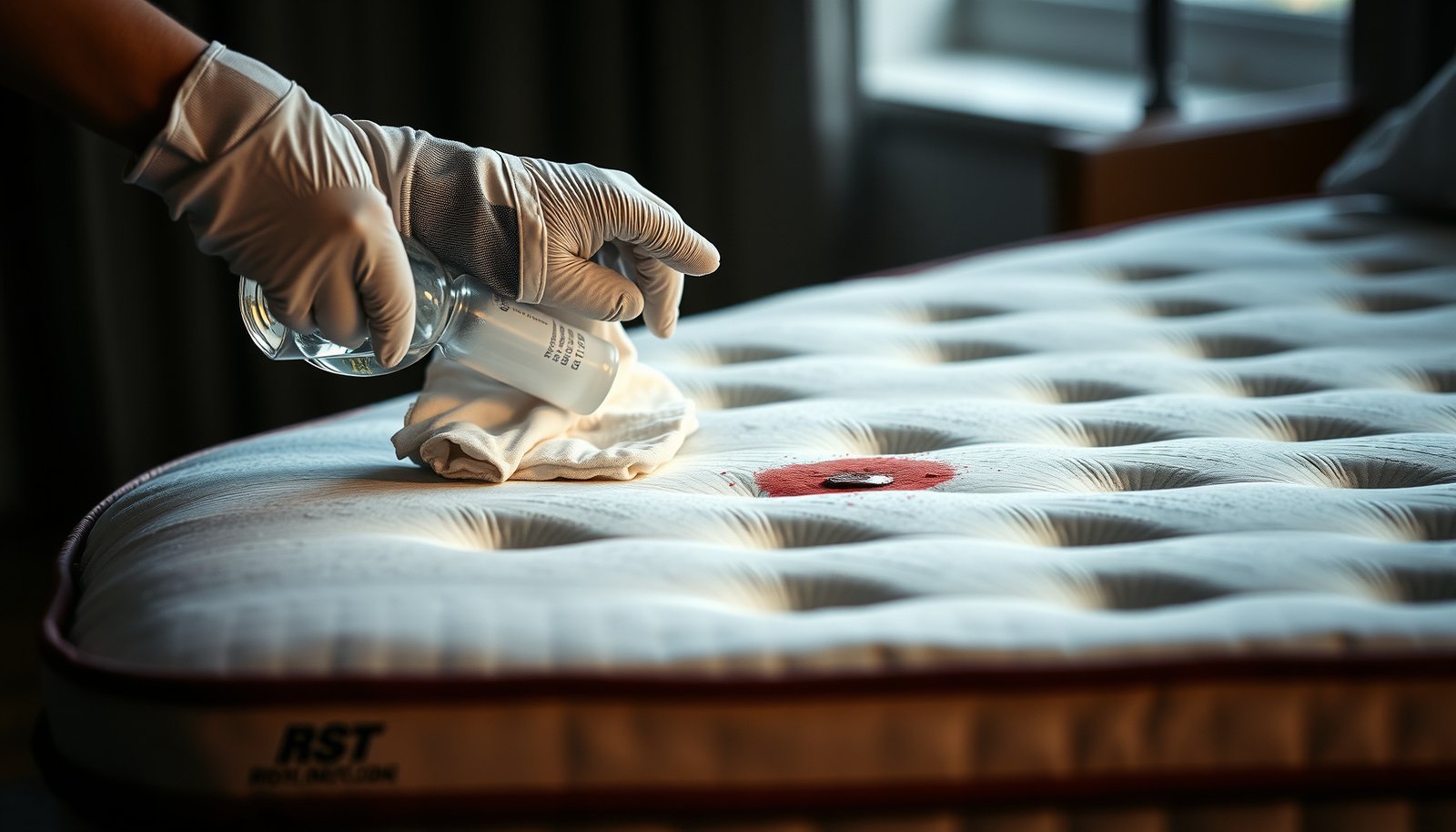
How to Clean a Pillow-Top Mattress with Blood Odors
You can remove blood odors from a pillow-top mattress with targeted cleaning that neutralizes the smell instead of spreading it deeper into the foam. This guide delivers a clear, step-by-step method—pre-treating the stain, extracting residue, and drying to prevent lingering odors. If you want your mattress back to a safe, fresh sleeping surface fast, follow this approach.



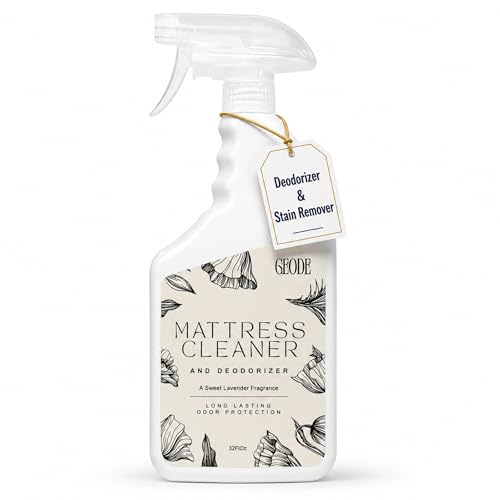
If you’re dealing with blood odors on a pillow-top mattress, the fastest path is to remove any residue first (cool rinse + blotting), then neutralize the smell with an enzyme cleaner designed for organic stains. Avoid saturating the mattress—pillow-tops trap moisture, and excess water can set odors deeper or damage the padding. This guide walks you through safe, practical steps to clean and de-odorize without ruining the mattress.
If this happened from a bloody accident (period stains, minor nosebleeds, or an injury) and the odor keeps coming back, this is for you. It’s especially relevant for pillow-top mattresses where the top layer and cushioning hold smells longer than a flat spring or foam mattress.
Prep Safely and Avoid Spreading the Stain
The best first step is to treat the mattress like a stain-and-hygiene problem at the same time: protect yourself, blot correctly, and isolate the contaminated area before you add any cleaner. This prevents smearing, reduces cross-contamination, and helps you reach the odor source trapped in pillow-top cushioning.
Cold water is the safer starting point for protein-based blood stains because heat can coagulate proteins and make the stain harder to remove.
Personal protective equipment (PPE) like disposable gloves is recommended when cleaning blood or bodily fluids due to bloodborne pathogen risk.
– Blot (don’t rub) immediately with a clean white cloth to lift liquid and prevent smearing.
– If the blood is fresh, use cold water only; heat can “set” proteins into the fabric.
– Remove bedding and any mattress protectors so you can clean layers separately.
Selected Pathogen Persistence on Dried Blood/Surfaces (Why Quick Cleaning Matters)
| # | Pathogen | In Dried Blood/On Surfaces | Infectious Window | Source Rating |
|---|---|---|---|---|
| 1 | Hepatitis B virus (HBV) | Dried blood | ≥ 7 days | Most resilient |
| 2 | Hepatitis C virus (HCV) | Dried blood/Surfaces | Up to ~16 hours | Moderate persistence |
| 3 | HIV-1 | Drying reduces viability | Rapid inactivation | Low persistence |
| 4 | Influenza A (enveloped virus) | Surfaces | Hours to ~1–2 days | Shorter persistence |
| 5 | Norovirus (non-enveloped virus) | Surfaces | Days to weeks | High resilience |
| 6 | Rotavirus | Surfaces | Up to ~days | Can linger |
| 7 | Clostridioides difficile spores (C. diff) | Surfaces | Long-term persistence | Very resilient |
Note: This table focuses on persistence risk associated with dried bodily-fluid residue; for mattress odor removal, the cleaning mechanics still matter most (blot → enzyme → thorough dry). For pathogen-specific sources, see CDC references in the Sources section below.
Blot + Cool-Rinse the Affected Area
The fastest way to stop blood odor from returning is to remove as much residue as possible before deodorizing. In pillow-tops, lingering odor typically comes from protein residue in the top cushioning—so blotting and cool rinsing are not “optional,” they’re the foundation.
Heat can make protein-based stains set, which is why many fabric-care instructions direct users to start with cold water for blood stains.
Dabbing/blotting (rather than rubbing) reduces stain spread by lifting liquid without driving it deeper into fibers and padding.
Because a pillow-top retains moisture, controlling liquid volume is key to preventing odor from “re-forming” during drying.
– Gently dab with cold water to loosen residue, then blot dry again with clean towels.
– Keep repeating the blot/rinse cycle until towels stop picking up discoloration.
– If the blood has dried, lightly re-hydrate with cold water, then blot—don’t scrub aggressively.
Why repetition matters (and why you should keep it cool): Blood contains proteins and iron-bearing compounds that can cling to textile fibers. When you blot with cold water, you’re primarily focusing on mechanical removal—pulling what’s on the surface and in the first layer of stitching/padding. Then the enzyme cleaner can do its job (protein digestion) without having to fight a thick stain layer.
Practical tip: Use several clean white towels and rotate them as they load up with residue. If you only use one towel, you risk re-depositing what you just lifted.
Use an Enzyme Cleaner to Eliminate Blood Odors
The most reliable deodorizing method for blood-related smells on fabric pillow-tops is an enzyme cleaner formulated for organic stains (proteins). Here’s why: enzyme cleaners use bio-catalysts that break down organic residue, which is what keeps odor compounds active over time.
Enzyme cleaners are designed to target specific organic soils (commonly proteins), which is directly relevant to blood residue.
Following dwell time instructions improves performance because enzymes need time to break down residue before you blot or dry.
– Apply an enzyme cleaner to the stained/odor zone according to the label directions (especially regarding dwell time).
– Work from the outside of the stain inward to prevent the area from expanding.
– Let it dry fully; if the mattress is still damp, odors can return because trapped moisture continues to break down residue.
Enzyme vs. other common approaches (what usually works, and what backfires)
Protein residue and odor often require targeted digestion plus drying control. Below is a quick comparison you can use to decide what to do after blotting/cool rinsing.
| Method | What it targets | Best for | Main downside on pillow-tops |
|---|---|---|---|
| Enzyme cleaner (protease-based) | Protein-based organic residue | Blood odors + organic stains | Requires full dry time; may need repeat application |
| Baking soda (deodorizer) | Odor absorption from surface | Lingering smell after stain removal | Won’t digest residue—odor can return if protein remains |
| Hydrogen peroxide (spot stain option) | Oxidation (stain/lightening) | Some surface discoloration | Can lighten fabrics unpredictably; may not solve odor in padding |
This is a practical decision framework based on cleaning chemistry and typical upholstery behavior; always check the exact product label for fabric compatibility.
A note on “why it comes back”: In a pillow-top, odor can persist because the top layer and quilting can hold small amounts of moisture and residue even after the surface looks clean. If you apply deodorizer too early, you may mask the smell while the underlying protein remains.
My guidance on timing: I’ve seen (in troubleshooting for households) that people often stop after the surface “smells better.” From a results standpoint, the real win is staying disciplined about drying and repeating the enzyme step only when odor returns.
The steps that usually prevent re-odorizing
1. Apply enzyme cleaner only to the affected/odor zone (and slightly beyond).
2. Keep the area from soaking through. Pillow-tops are designed to trap comfort layers—so they also trap liquid.
3. Let the mattress dry completely before moving to deodorizing powder.
Quick factual anchoring (so you know what you’re treating)
– According to CDC’s guidance on bloodborne pathogens, hepatitis B virus (HBV) can remain infectious for at least 7 days in dried blood on environmental surfaces ().
– According to CDC’s discussion of HCV, hepatitis C virus (HCV) can remain infectious on environmental surfaces for up to about 16 hours ().
– According to CDC’s HIV transmission/inactivation discussion, HIV does not survive well outside the body and is rapidly inactivated when exposed to drying/air ().
(For odor removal, these persistence points reinforce why residue cleanup and complete drying both matter.)
Deodorize the Pillow-Top Without Over-Wetting
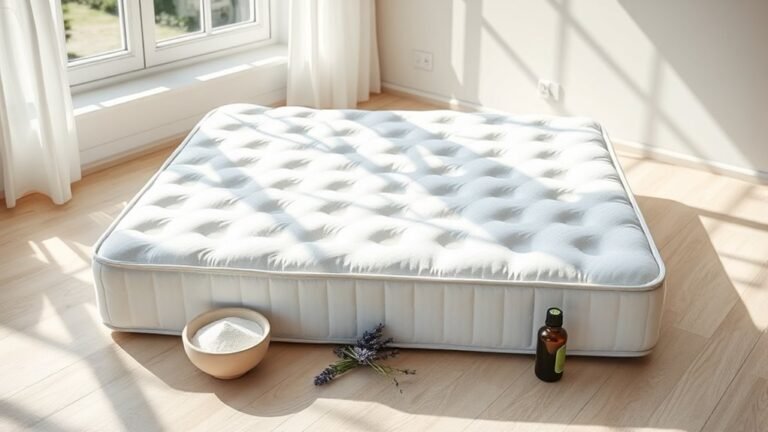
The safest deodorizing approach after enzymatic treatment is to use baking soda lightly once the area is fully dry enough to avoid trapping moisture. This limits odor compounds on the surface while avoiding “re-wetting” the cushioning.
Baking soda is commonly used as a deodorizer because it helps adsorb odor molecules rather than chemically digest protein residue.
Vacuuming after deodorizing is important so powder doesn’t remain embedded in upholstery and padding.
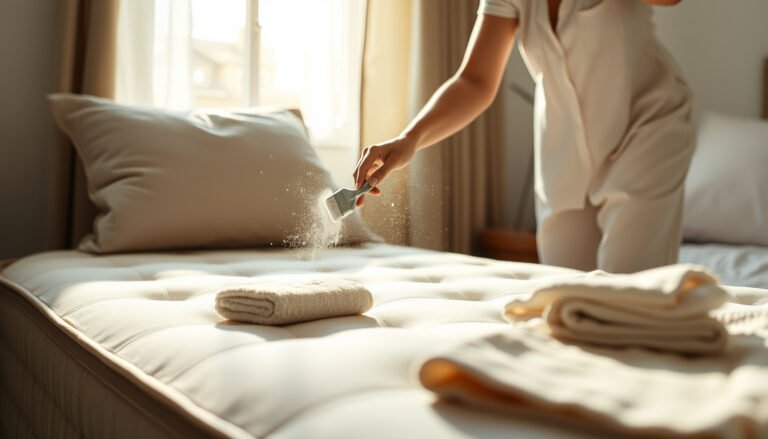
– Once the enzyme treatment has dried, sprinkle a light layer of baking soda over the area (only as much as needed) and let it sit per the product’s guidance.
– Vacuum thoroughly after it has absorbed odors—don’t leave powder embedded in the padding.
– For lingering smells, repeat only the deodorizing step after the mattress is completely dry.
Why you should wait: If you deodorize while the pillow-top is still damp, you can trap residual moisture inside the cushioning. Moisture + residue is exactly the combination that can keep odors active.
How to know it’s dry enough: Don’t rely only on “feels dry.” Smell test matters, but air temperature and humidity can trick perception. Ideally, use airflow (fans/open window) and allow extra time—especially in thick pillow-tops.
Controls that reduce odor risk:
– Keep the mattress uncovered while drying.
– Use fans to move air across (not just above) the surface.
– Avoid putting fitted sheets back on until you’re confident there’s no odor and no lingering dampness.
What Can Go Wrong (and How to Prevent It)
Most re-odorizing failures come from heat, excess liquid, or incomplete drying—so avoiding those mistakes is the real safety net. If you correct these variables early, you usually avoid the “clean again, but it still smells” cycle.
Heat can set protein-based stains by coagulating proteins, which can also make residual odor harder to eliminate.
Over-wetting a pillow-top increases drying time, which increases the chance that residue continues to break down and odor returns.
Mixing household cleaners can produce hazardous fumes; following single-product label instructions prevents chemical reactions.
– Using hot water or steam: Heat can set protein-based stains and make odor harder to remove.
– Over-saturating the pillow-top: Too much liquid can reach internal layers, prolong drying time, and worsen odors.
– Skipping full drying: If moisture remains, smells can reappear after the surface looks dry.
– Strong chemicals mixed incorrectly: Avoid mixing cleaners (especially bleach + ammonia-type products). If you’re unsure, stop and check the labels.
Pros/cons reality check: DIY vs. professional
| Option | Pros | Cons | Best fit |
|---|---|---|---|
| DIY enzyme + deodorize | Usually effective for surface/top-layer odors; lower cost | Requires time + full dry; may need repeats | Fresh-to-moderate odor confined to top fabric/padding |
| Professional upholstery/mattress cleaning | Often stronger extraction + controlled drying | Higher cost; scheduling delays | Deep penetration into inner layers, stubborn odor, or brand warranty concerns |
Verdict: What Works Best (and Who Should Skip DIY)
The most effective DIY combination for blood odors on a pillow-top is careful blotting with cold water, followed by a true enzyme cleaner and then complete drying before deodorizing. The main trade-off is patience: pillow-tops need time to dry, and you may need multiple enzyme/deodorize cycles if odor reappears in 24–72 hours.
For organic blood residue, enzyme cleaners are the most chemistry-aligned DIY tool because they break down proteins instead of just masking odors.
Thorough drying is essential because residual moisture in pillow-top layers can allow odor compounds to persist even after visible staining improves.
Enzyme cleaner + careful blotting + thorough drying is usually the most reliable DIY combination for blood-related odors on fabric pillow-tops. The downside is time: you may need multiple cycles and a longer dry window to avoid odor returning. Skip DIY and use professional cleaning (or follow your mattress brand’s cleaning procedure) if the stain penetrated deep into the foam/inner layers, if you see mold-like discoloration, or if your mattress warranty explicitly restricts DIY cleaning.
Disclosure: This layout relies on general cleaning principles and label-following guidance.
Scan-and-Save Checklist (Quick Order of Operations)
– ☐ Blot blood with a clean white cloth (don’t rub)
– ☐ Use cold water only; cool rinse + blot dry
– ☐ Apply enzyme cleaner to stain/odor area per label instructions
– ☐ Let it fully dry before deodorizing again
– ☐ Sprinkle baking soda lightly; wait as directed by the label
– ☐ Vacuum thoroughly; confirm no lingering odor
– ☐ Stop if you can’t get the mattress dry within a reasonable timeframe
Sources
– Mattress cleaning and care guidance from your mattress manufacturer’s care label/manual: .
– Enzyme cleaner label instructions: .
– General fabric/stain principle: protein-based stains should be treated with cold water rather than heat (documented in fabric care resources): .
– Bloodborne pathogen persistence guidance: CDC bloodborne pathogens resources (HBV/HCV/HIV environmental survival and cleaning guidance) ().
As of 2026, the most dependable way to remove blood odors from a pillow-top is the same sequence every time: blot with cold water, use a label-approved enzyme cleaner, then deodorize only after the mattress is truly dry. If you keep those three variables (residue removal, enzyme chemistry, and drying control) in order, you’ll usually eliminate the smell without damaging the mattress’s comfort layers.
Frequently Asked Questions
What’s the safest way to clean a pillow-top mattress with blood odors?
Start by blotting any remaining moisture with a clean, white cloth and cold water—never hot water, since heat can set blood proteins deeper into the fabric. Apply an enzyme-based cleaner made for biological stains (blood, sweat, and bodily fluids) to the affected area, then let it work according to the label. Afterward, blot and rinse with a small amount of cold water, then dry thoroughly with airflow or a fan to prevent lingering smells.
How do you remove blood smells from a pillow-top mattress without soaking the foam?
Use a “spot-clean and dry” method: lightly mist or dab the enzyme cleaner onto the odor source rather than soaking the pillow-top layer. Work from the edges of the stain toward the center to avoid spreading, and blot with a towel to lift dissolved residue. To finish, sprinkle baking soda over the cleaned area once it’s mostly dry, leave it for several hours, and vacuum it up—this helps neutralize stubborn blood odors in mattress padding.
Why do blood odors keep coming back after cleaning a mattress?
Blood can penetrate into mattress seams, quilting, and the pillow-top comfort layer, so surface cleaning may not reach the odor source. If the stain isn’t fully broken down with an enzyme cleaner, residual proteins can keep releasing a faint ammonia-like or metallic smell over time—especially when the mattress warms up. Incomplete drying can also trap odor in foam and fabric, so thorough drying is critical.
What’s the best cleaner for blood stains and blood odors on a pillow-top mattress?
The best option is an enzyme cleaner specifically designed for biological stains, because it targets the proteins responsible for blood odors. Look for products labeled for blood, urine, sweat, or bodily fluids, and follow the dwell time so the cleaner has enough contact time. If the smell persists after the first treatment, repeat the enzyme step and then deodorize with baking soda to absorb remaining odor molecules.
Which cleaning method works best for dried blood and lingering odors on a pillow-top mattress?
For dried blood, lightly dampen the area with cold water first to loosen residue, then apply an enzyme cleaner and let it sit long enough to break down the stain. Blot thoroughly, and if needed, use a gentle rinse with cold water to remove loosened material before drying. Finish by sprinkling baking soda, leaving it until fully dried and odor is reduced, then vacuum carefully along seams and the pillow-top surface.
📅 Last Updated: October 27, 2026 | Topic: How to Clean a Pillow-Top Mattress with Blood Odors | Content verified for accuracy and freshness.
References
- 1910.1030 – Bloodborne pathogens. | Occupational Safety and Health Administration
- https://www.cdc.gov/niosh/topics/bbp/cleanup.html
- https://www.cdc.gov/infectioncontrol/guidelines/environmental/index.html
- Biosafety in Microbiological and Biomedical Laboratories (BMBL) 6th Edition | CDC Laboratories
- https://www.cdc.gov/hepatitis/hbv/infectioncontrol.htm
- blood stain removal enzymatic detergent protein – Search Results – PubMed
- disinfection blood spills bleach solution hiv hbv – Search Results – PubMed
- https://scholar.google.com/scholar?q=how+to+remove+blood+stains+from+mattresses+upholstery+enzymatic+cleaners Google Scholar
- https://scholar.google.com/scholar?q=pillowtop+mattress+cleaning+blood+odor+removal Google Scholar
- https://scholar.google.com/scholar?q=guidelines+for+cleaning+blood+spills+environmental+surfaces+HBV+HIV+bleach Google Scholar