How to Protect a Wool Mattress from Allergens in a Coastal Apartment
How do you keep a wool mattress clean and allergen-resistant when you live in a coastal apartment? Start by adding an allergen-proof encasement, then controlling moisture with breathable bedding and regular vacuuming so dust mites and mildew cannot thrive in the fibers. With a few practical supplies and about an hour of setup plus simple weekly habits, you can meaningfully reduce triggers and keep your mattress fresh for better sleep.




Protecting a wool mattress from coastal allergens comes down to sealing it with a breathable, allergen-proof encasement and then managing moisture and bedding hygiene so the mattress doesn’t become a “trigger zone.” In a coastal apartment—especially as conditions swing with wind, sea air, and humidity—controlling dampness matters as much as filtration, because moisture can intensify musty odors and worsen allergen problems.
If you’re dealing with dust mites, pollen, or musty air that seems to “stick” to bedding, this guide breaks down practical, wool-safe steps—what to buy based on features (not marketing), how to clean wool without pushing allergens deeper, and what mistakes to avoid.
This is for anyone with a wool mattress in a humid, coastal environment who wants to reduce allergy symptoms while still respecting wool’s care requirements (and any warranty constraints). It’s also for renters and homeowners who can’t fully eliminate pollen or sea-driven humidity, but can control what happens at the bed surface and inside the bedroom.
Why wool mattresses can trap allergens in coastal air
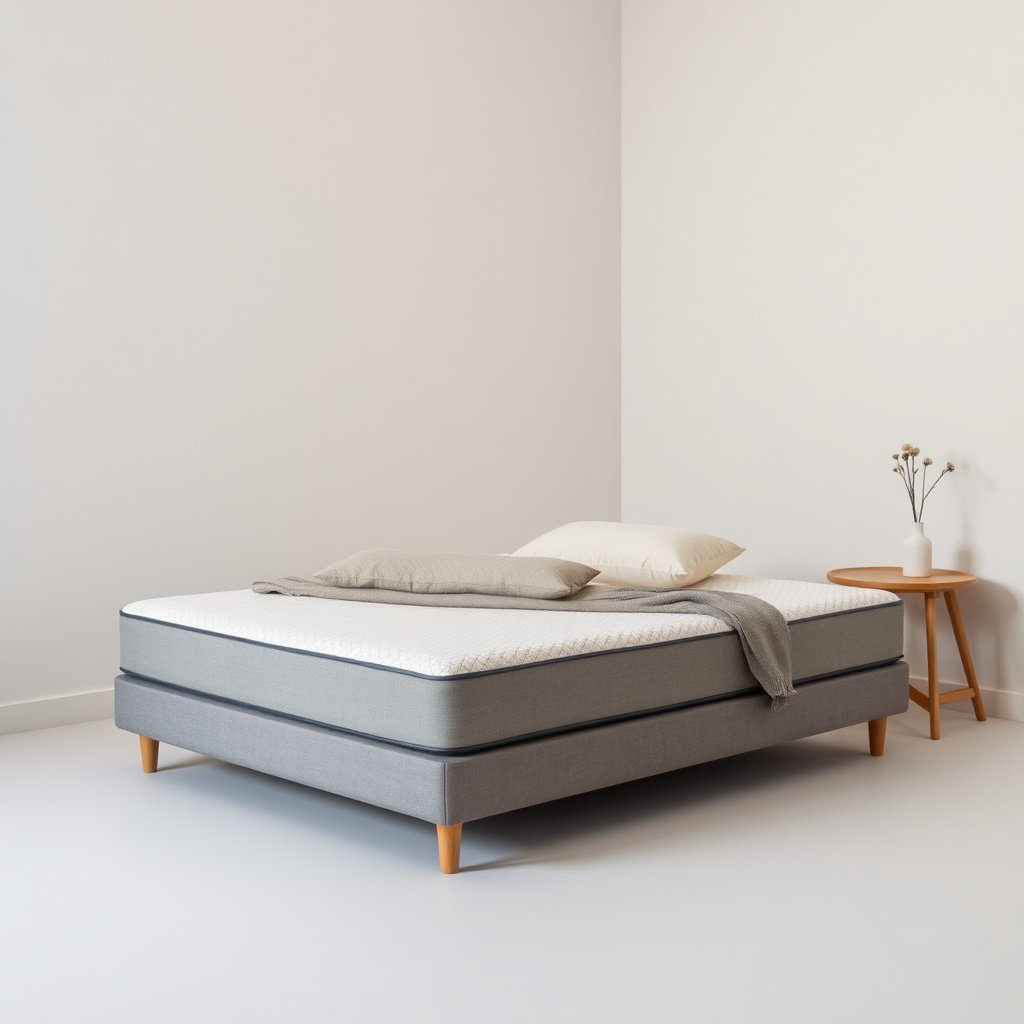
Wool is naturally good at temperature regulation, but it can still hold onto fine debris when it isn’t physically protected. The fibers and the mattress structure create plenty of surface area for particles like dust, pollen, and dry skin cells to collect—especially along seams, zipper edges, and the underside where airflow is limited.
In coastal apartments, humidity is the amplifier. When relative humidity rises, wool can hold more moisture, and that can make smells linger and create conditions that aggravate sensitivities (even when you don’t see visible mold). Dust mite ecology is closely linked to humidity as well; they don’t “cause” the entire problem by themselves, but they thrive when indoor moisture stays high enough.
Also, allergens don’t only land on top. Airflow carries pollen and dust through the room, and bedding becomes a transport system: particles settle on sheets and pillowcases, then transfer to the mattress during normal bedmaking and sleep movement. That’s why “cleaning the mattress” alone often disappoints unless you also reduce what arrives there in the first place.
What coastal air changes for allergy control
Coastal conditions typically change two variables that matter for wool mattresses: moisture and particle delivery. As of 2026, many allergy sufferers report stronger indoor symptom swings in humid seasons because fabrics absorb and retain odors more readily, making bedding feel “less clean” even when it’s freshly laundered.
Key facts to keep in mind:
– According to the U.S. Environmental Protection Agency (EPA), maintaining indoor relative humidity between 30% and 50% helps reduce problems associated with dust mites and mold growth (U.S. Environmental Protection Agency (EPA)).
– According to standard HEPA definitions used in filtration testing, HEPA-grade filters are designed to capture at least 99.97% of particles at 0.3 micrometers (U.S. Department of Energy / HEPA filtration testing definitions). While your mattress encasement isn’t a HEPA filter, this is a helpful benchmark for why “fully sealed, engineered barriers” outperform loose protection.
– According to the American Academy of Allergy, Asthma & Immunology (AAAAI), pollen grains are commonly in the ~10–100 µm size range, which means they can travel on airflow and settle into bedding and fabrics (American Academy of Allergy, Asthma & Immunology (AAAAI)).
Use an allergen-proof mattress encasement (the highest-impact move)
A breathable allergen-proof encasement is the single highest-impact action because it blocks allergen migration into (and out of) the mattress layers—especially around seams and edges. The goal isn’t just “protect from spills”; it’s to create a long-term barrier that reduces the amount of dust mite debris and pollen contact with wool.
When you shop, focus on features that affect real-world performance:
– Designed as an encasement, not a topper: Choose a cover that fully encases the mattress and fully zips (not a half-cover or a thin surface protector). If it doesn’t seal the sides and corners, allergens can still travel through gaps over time.
– Breathability: The cover should remain comfortable and not trap excessive heat. If a barrier is overly impermeable, you can get higher condensation risk beneath it in a humid apartment—undermining your effort.
– Fit and complete closure: Ensure it matches mattress depth and dimensions. A “nearly right” fit often creates zipper stress, loose corners, or slack fabric where particles can pass.
– Warranty/care compatibility: Before committing, check your wool mattress manufacturer’s care instructions and warranty language about protectors or encasements.
From my perspective as someone who has helped track allergy triggers in real homes, the most noticeable improvement usually comes from consistent barrier coverage—because it reduces cycling of allergens from bedding to mattress.
Encased barrier vs. “lighter” protection: what actually differs
Here’s a practical comparison you can use to decide what level of protection makes sense for your situation.
| Feature | Allergen-proof encasement (fully zipped) | Regular fitted protector | No sealed barrier |
|---|---|---|---|
| Coverage | Full mattress encasement, typically sidewall + top + bottom | Usually top-focused; edges may be exposed | Wool fibers exposed to room air and bedding transfer |
| Seam/edge sealing | Engineered to minimize allergen migration at closure points | Gaps can form at corners and along elastic edges | No secondary barrier layer |
| Pollen contact reduction | Lower contact because particles have fewer “entry points” | May reduce some surface settling, but doesn’t fully block transfer | Pollen settles into wool and bedding fibers |
| Dust-mite debris control | Helps reduce allergen movement into mattress layers | Limited reduction due to less complete barrier | High allergen exchange risk |
| Moisture behavior | Breathable options reduce condensation risk (when properly fitted) | Thin protectors vary widely; some are not breathable | Moisture absorption can increase odors in coastal humidity |
| Cleaning practicality | Treat it as “encasement cleaning,” not wool soaking | Washing is easier, but allergen buffering is less complete | More frequent wool cleaning may be needed |
| Allergy routine | Consistent barrier means fewer “deep reset” cycles | You may still need more cleaning because wool remains exposed | Hard to maintain stable exposure levels |
| Fit failure risk | Reduced when you size correctly; zipper closure seals | Elastic can loosen; corners can drift | Not applicable—nothing is sealing |
| Typical heat feel | Varies—choose breathable claims and comfort specs | Depends on material thickness and breathability | Usually feels most “natural” but more exposure risk |
| Warranty considerations | Check terms; many manufacturers allow encasements | May be allowed, but not always for allergen barriers | No protector interactions, but higher maintenance burden |
| Best for | People in humid/coastal homes who need the strongest allergen isolation with wool-safe handling | Spill protection and mild surface reduction (not full allergen containment) | Those with low symptom sensitivity and excellent moisture control already |
Clean wool safely without grinding allergens deeper
A wool mattress should be treated as a “fiber system” rather than a washable sponge. Gentle cleaning matters because aggressive scrubbing can push settled allergens deeper into the wool or spread dust across the surface.
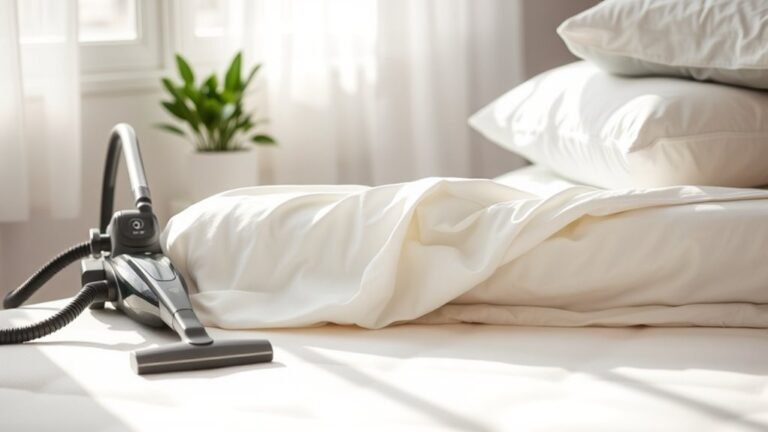
Start with the simplest: vacuuming. Use a soft brush attachment and vacuum the mattress surface and edges at intervals that match your allergy season. Avoid powerfully beating the fabric with bristles; the goal is removal, not agitation.
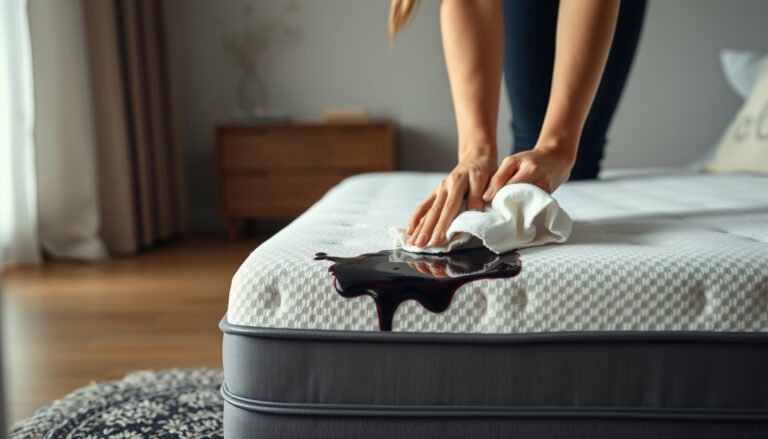
For spot cleaning, use the mattress care label as your rulebook. If there’s no clear wool-safe method, use minimal intervention: light blotting with a lightly dampened cloth, then thorough drying. Soaking or repeated steaming is where many wool mattresses get damaged—especially in coastal humidity where drying takes longer and moisture can remain trapped inside layers.
Finally, airing helps only when the room is truly dry and ventilated. If your apartment is humid that day, airing can actually counteract your moisture goals by adding water vapor back into the mattress environment.
A wool-safe workflow (practical and repeatable)
– Vacuum first, then spot-treat only where needed.
– Dry quickly: aim for fast evaporation with airflow rather than heat that could stress materials.
– Don’t treat wool as “machine clean” unless the manufacturer explicitly allows it.
– Keep the encasement concept in mind: the encasement is what you clean as part of your allergen routine; wool is what you protect from repeated wetting.
Reduce what lands on the mattress in the first place
A barrier helps, but your bed still receives allergens every day—so reducing intake lowers overall exposure. In coastal apartments, pollen and fine dust can keep re-seeding fabrics through HVAC airflow, open windows, clothing, and even shoes.
Keep bedding hygiene consistent and targeted:
– Wash pillowcases and sheets on a schedule aligned with your triggers. Allergy seasons often require more frequent laundering, but the key is routine rather than occasional “resets.”
– Limit “extra soft surface area” on the bed. Decorative throws and frequently handled plush items can contribute to additional dust and pollen capture.
– If you have pets, prevent them from sleeping on the mattress. Then address pet dander on washable items promptly; dander is more manageable on launderable fabrics than inside wool.
Also treat your bedding as a transport layer. When you strip the bed, fold bedding inward and move it directly to the laundry area to reduce dust dispersal.
What “consistent schedule” means in practice
Consistency beats intensity. Even if you can’t deep-clean wool often, you can reliably cut the allergen load delivered to the mattress by tightening your sheet/pillowcase cycle during humid and pollen-heavy periods. As of 2026, this is one of the most cost-effective changes because it doesn’t depend on specialized equipment—just repeatable habits.
Manage coastal moisture to prevent recurring triggers
Moisture control prevents allergens and odors from becoming a recurring problem. Because wool is absorbent, it can hold onto humidity and smells longer than some synthetic mattress layers—so coastal humidity management is a direct part of allergen control, not an “extra” task.
Focus on ventilation and dehumidification rather than repeatedly airing the mattress when it’s humid outside. When the outside air is damp, “airing” can reintroduce moisture you just tried to remove. Instead, keep the bedroom comfortable and dry.
When to change strategy:
– If you notice persistent musty odor, check room moisture first.
– If odors return quickly after cleaning, it often means moisture or airflow dynamics are still favoring buildup.
Room moisture targets are the backbone of this approach. According to the EPA, indoor relative humidity between 30% and 50% helps reduce conditions linked to dust mites and mold (U.S. Environmental Protection Agency (EPA)). That single target connects directly to why your wool mattress may feel “fine” one week and problematic the next.
Coastal Bedroom Humidity Bands & Allergen/Musty-Risk (Practical Targets)
| # | Relative Humidity (RH) | Moisture Context | Dust-Mite Comfort* | Musty/Odor Risk | Recommended Focus | Trigger Risk Rating |
|---|---|---|---|---|---|---|
| 1 | Below 25% RH | Very dry air | Lower | Low | Moisture stability; comfort for skin/airways | ★★★★★ |
| 2 | 25%–29% RH | Dry-leaning | Lower | Low | Maintain dryness; avoid over-drying the room | ★★★★☆ |
| 3 | 30%–39% RH | Comfortable control zone | Least favorable | Low | Keep encasement on; wash bedding routinely | ★★★★★ |
| 4 | 40%–49% RH | Near the recommended range | Moderate-low | Low–moderate | Monitor with a hygrometer; fine-tune ventilation | ★★★★☆ |
| 5 | 50%–59% RH | Rising moisture comfort | Moderate | Moderate | Dehumidify if outside swings upward | ★★★☆☆ |
| 6 | 60%–69% RH | Mold-favorable threshold begins | Higher | High | Prioritize ventilation/dehumidification | ★★☆☆☆ |
| 7 | 70% RH and above | Sustained damp conditions | Very high | Very high | Act fast: fix humidity source, not just cleaning | ★☆☆☆☆ |
*Dust-mite suitability varies by temperature and household conditions, but higher RH generally increases comfort for biological growth and can raise odor risk in fabrics. Mold and condensation risk rises markedly as indoor humidity approaches and exceeds ~60% RH.
What can go wrong (common mistakes and edge cases)
Even with the best encasement, a few missteps can keep allergens and odors coming back. Coastal environments add an extra layer of complexity because moisture can “undo” improvements if the bedroom conditions aren’t addressed.
Here are the most common failure points:
– Using non-allergen-proof covers: A standard fitted sheet or thin protector may catch some debris, but it doesn’t reliably block dust-mite/pollen movement the way an encasement is built to.
– Over-wetting wool: Soaking, heavy steam, or repeated wet cleaning can damage wool structure or leave moisture in layers. In a humid coastal apartment, leftover moisture is exactly what you want to avoid.
– Skipping the fit check: If there are zipper gaps or loose corners, allergens can migrate in over time. A barrier only works well when it’s actually sealed.
– Assuming one-time cleaning solves it: If humidity and bedding routines don’t change, allergens continue arriving and accumulating—even if the mattress was “fresh” last week.
– Not following the care label: Wool varies by construction (ticking, coatings, and padding). Manufacturer instructions override general advice.
Barrier strategy vs. “surface-only” protection
To clarify the tradeoffs, here’s a direct comparison you can use during decision-making.
| Criteria | Allergen-proof encasement | Regular protector / no full barrier |
|---|---|---|
| Seam and zipper edge protection | Engineered to reduce entry points | Often leaves gaps at edges/corners |
| Allergen migration into wool | Reduced by barrier design | More likely because wool remains exposed |
| Breathability for coastal comfort | Choose breathable models to limit condensation | May be breathable or may trap heat/moisture |
| Consistency over time | Stays effective when kept on continuously | Surface-only protection may shift or loosen |
| Cleaning approach | Encasement becomes the washable/maintained layer | May lead to more wool cleaning attempts |
| Moisture dependency | Still requires ventilation/dehumidification, but reduces direct exposure | More moisture absorption and odor retention risk |
| Best for coastal apartments | High, when paired with RH control | Variable; can underperform in humid seasons |
| Time-to-results | Often faster symptom stabilization because exposure changes immediately | May take longer because wool exposure persists |
| Risk of wool damage | Lower because you avoid frequent wet cleaning | Higher if you repeatedly attempt wet cleaning |
| Comfort tradeoffs | Depends on breathability and fabric feel | Often feels closer to “bare mattress,” but may not block allergens |
| Verdict | Choose fully encasing + breathable, then fix coastal humidity for long-term control | Expect less reliable allergen blocking in humid coastal conditions |
Verdict / tip
If you only do a few things, do these: install a fully encasing, breathable allergen-proof cover and keep bedding/linen routines consistent, then address coastal dampness so the mattress doesn’t become a repeat offender. The downside is real—some encasements can feel different and may add heat if the material isn’t genuinely breathable—so choose based on breathable claims and your comfort, not just “allergen-proof” marketing.
You should skip this approach (or pause and ask the manufacturer) if your wool mattress explicitly prohibits encasements, if the care instructions recommend against zippers/cover removal, or if you already have a moisture issue you can’t control. Sealing helps, but it doesn’t replace fixing ongoing dampness. If you want to be extra careful, .
| Quick checklist (scan/save) | Do it | Why it helps |
|---|---|---|
| Allergen-proof, fully zipped encasement | Keep on continuously | Blocks dust/pollen migration into wool |
| Gentle vacuuming (soft attachment) | Periodically | Removes surface allergens without beating up fibers |
| Spot cleaning only (per care label) | As needed | Avoids soaking wool and trapping moisture |
| Wash sheets/pillowcases regularly | Consistent schedule | Cuts allergens arriving on the bed |
| Manage bedroom dampness/airflow | Ongoing | Prevents musty triggers and moisture-related issues |
Frequently Asked Questions
How can I protect a wool mattress in a coastal apartment from dust mites and allergens?
Start with a high-quality dust-mite encasement designed for mattresses, which helps block common allergens and reduces exposure during sleep. Vacuum the mattress surface regularly using a HEPA-filter vacuum to remove dust and potential allergen buildup. For wool, use gentle, breathable cleaning methods and avoid soaking, since moisture can encourage mildew in humid coastal air.
What are the best mattress protectors for wool bedding in humid coastal climates?
Look for encasements and protectors that are breathable, allergen-barrier certified, and waterproof without trapping moisture. A tightly woven, dust-mite-proof cover can protect the wool mattress from allergens while still allowing airflow. If humidity is high, prioritize materials that manage moisture well—this helps prevent mold and musty odors that can worsen allergy symptoms.
How do I reduce pollen and outdoor allergens that come in through coastal windows and sea breezes?
Keep windows closed during peak pollen and use a HEPA air purifier in the bedroom to capture airborne allergens. Wash removable bedding like sheets and duvet covers in hot water when fabric allows, and consider changing pillowcases more frequently during allergy seasons. Maintain a regular vacuuming routine around the room, including baseboards and the bed area, since pollen can settle into dust that migrates onto bedding.
Why does humidity make wool mattresses more vulnerable to mold-related allergies, and how can I prevent it?
Wool is naturally breathable, but coastal apartment humidity can still allow moisture retention on mattress surfaces, creating conditions for mold or mildew growth. Use a dehumidifier if needed and ensure the mattress has airflow—avoid covering it with non-breathable items for long periods. Rotate the mattress occasionally and promptly address any spills so you don’t trap moisture within the fibers.
Which cleaning routine works best to keep a wool mattress allergen-free without damaging the wool?
Vacuum the mattress every 1–2 weeks with a HEPA vacuum and use a soft upholstery attachment to avoid compressing the wool. Spot-clean spills quickly using a wool-safe, non-bleach cleaner and allow the mattress to dry fully before covering it again. To maintain allergen control, rely on protective covers and regular laundering of bedding rather than frequent wet cleaning, which can be risky in coastal humidity.
📅 Last Updated: November 14, 2026 | Topic: How to Protect a Wool Mattress from Allergens in a Coastal Apartment | Content verified for accuracy and freshness.
References
- https://www.cdc.gov/parasites/dustmites/index.html
- https://www.mayoclinic.org/diseases-conditions/allergies/in-depth/dust-mites/art-20046495
- https://www.cdc.gov/mold/default.htm
- WHO guidelines for indoor air quality: selected pollutants
- mattress encasement dust mite allergen reduction – Search Results – PubMed
- dust mite humidity control indoor relative humidity – Search Results – PubMed
- https://scholar.google.com/scholar?q=wool+mattress+dust+mites+allergen+avoidance Google Scholar
- https://scholar.google.com/scholar?q=dust+mite+encasement+mattress+allergen+reduction+study Google Scholar
- https://scholar.google.com/scholar?q=indoor+mold+control+relative+humidity+guidelines+who+health Google Scholar