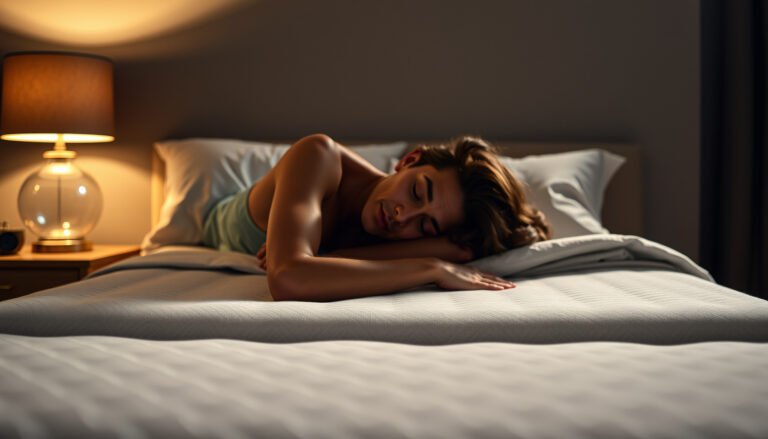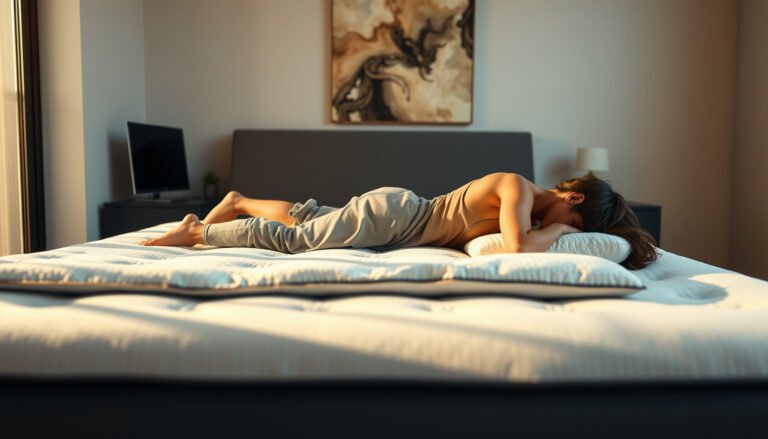
How to Select a Firm Mattress for Stomach Sleepers Who Snore
Finding a firm mattress for stomach sleepers who snore has a clear rule: prioritize a high-support feel that keeps the hips level to reduce airway collapse and bedtime noise. If you want the best chance of quieter sleep, choose a firm (not ultra-hard) mattress with strong edge support and minimal sink for your spine alignment. This guide will tell you exactly what firmness, support features, and materials to look for when stomach sleeping triggers snoring.




For stomach sleepers who snore, the best choice is a supportive firm mattress that prevents your hips from sinking and keeps your spine and neck more neutral—reducing “nose-down” positioning that can aggravate snoring for some people. The right firmness can also lower morning aches, but mattress tweaks aren’t a substitute for evaluating sleep apnea when symptoms suggest it. In this guide, you’ll learn what firmness, support, and testing steps matter most—plus what to avoid.
If you sleep primarily on your stomach (even if you sometimes shift), and your snoring is frequent enough to affect sleep quality, this is for you. It’s also useful if you’ve tried softer beds and noticed your lower back or neck feels worse—or your snoring seems louder.
Choose the right firmness: firm support without “board-like” comfort
A firm feel is the goal, but “board-like” usually isn’t—what you want is firm support that holds your midsection up while still allowing gentle contact at the shoulders and chest. For stomach sleepers who snore, this combination helps maintain a straighter torso and reduces the chance of awkward head/neck angles that can influence airway flow.
For obstructive sleep apnea (OSA) and related snoring, airway position during sleep matters, so mattress choices that limit harmful head/neck tilts can improve comfort even though they don’t cure OSA. American Academy of Sleep Medicine (AASM) clinical resources
In the STOP-Bang screening tool, “age > 50 years” and “BMI > 35 kg/m²” are objective risk thresholds (1 point each), illustrating how clinicians use specific cutoffs when evaluating sleep-breathing risk—not mattress feel alone. STOP-Bang questionnaire / validation literature
– Look for medium-firm to firm support so your torso doesn’t collapse around the midsection (a common stomach-sleeper problem). In practice, that means the comfort layers shouldn’t be so plush that your hips sink faster than your chest does—hips sinking is what tends to pull your lumbar spine out of neutral.
– Prioritize support over plush: you want pressure relief at points of contact, but not a mattress that allows your hips to sink. A good target is “firm enough to hold alignment” first, and only then “soft enough to prevent shoulder/chest pressure.”
– If you’re between sizes or weights, err toward firmer support (too-soft beds usually worsen spinal sag for stomach sleeping). Heavier stomach sleepers often need a bit more structural support; lighter sleepers can sometimes tolerate slightly softer comfort layers as long as the hip area stays elevated.
What “firm” should feel like (and what it shouldn’t):
– Should feel like: your pelvis doesn’t disappear into the mattress; your chest and shoulders can settle without your low back taking the punishment.
– Shouldn’t feel like: you’re lying in a bowl or hammock, or that you must “work” to keep your hips up.
Micro-check while you shop (quick practical cue): when you lie on your stomach, imagine a straight line from collarbone to hips. If your midsection dips first, the mattress is likely too forgiving for stomach sleep—even if it’s marketed as “supportive.”
Keep your spine aligned (hips up, head neutral)
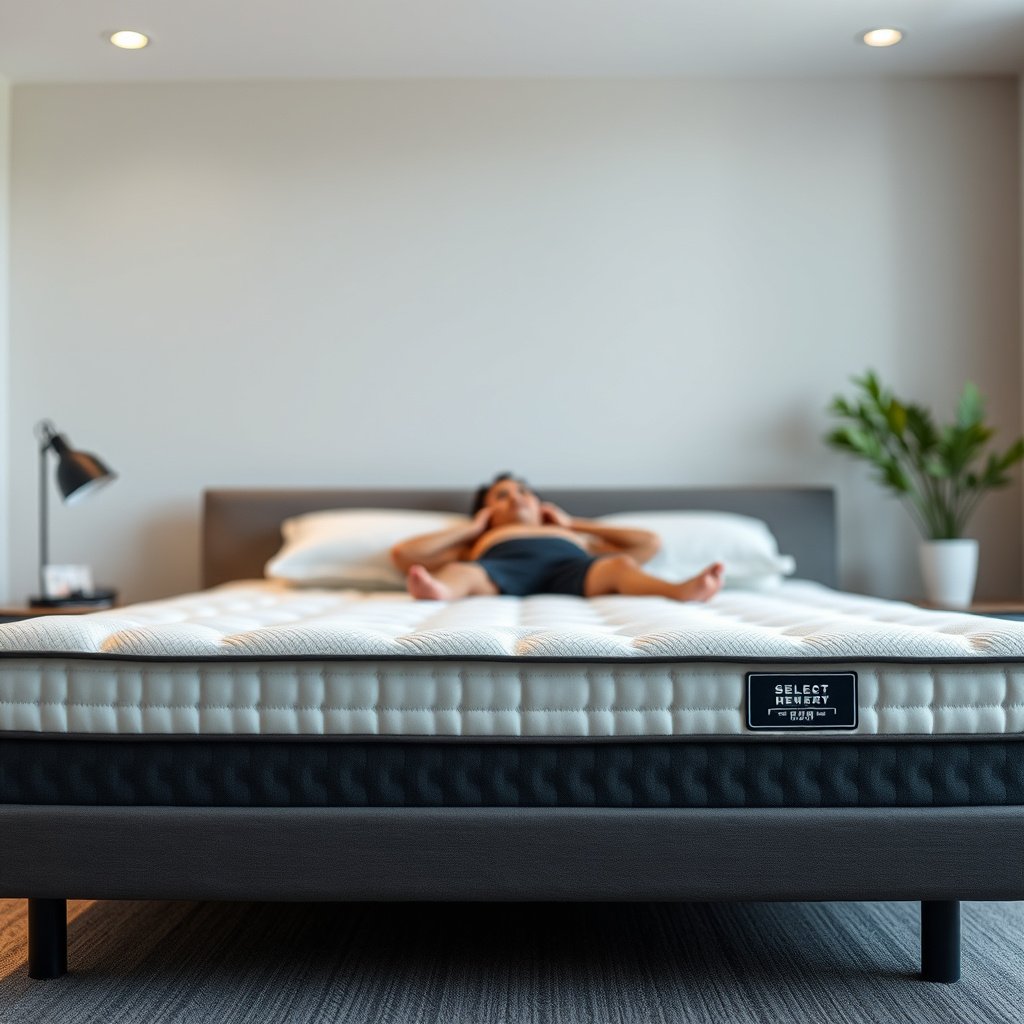
Your priority is alignment: a firm mattress should help keep your hips up and your neck from over-extending. When stomach sleeping who snore, even small alignment errors can increase “nose-down” head positioning—one of the positioning patterns that can worsen snoring for some people.
A clinical definition used in sleep medicine is that OSA severity is based on the number of breathing events per hour (AHI); AHI ≥ 5 events/hour is a common diagnostic threshold, reinforcing that snoring risk is tied to breathing physiology, not mattress firmness alone. American Academy of Sleep Medicine (AASM) diagnostic criteria resources
The STOP-Bang item “neck circumference” uses objective cutoffs (commonly > 17 in / 43 cm for men and > 16 in / 41 cm for women), supporting the broader idea that physical measurements—not just how a bed feels—relate to snoring/OSA risk. STOP-Bang questionnaire / validation literature
– Your goal is to avoid two extremes: sagging hips (pulls the lower back out of alignment) and over-arching (can stress the neck). A stomach sleeper often compensates subconsciously—if the lumbar area collapses, the body may create a reverse curve; if the pillow is too high, the neck may extend too far.
– While you’ll feel “stretched” no matter what mattress you buy, you shouldn’t feel like you’re trapped in a deep dip in the lumbar area. On a correct firmness setup, your ribs and hips should “cooperate,” rather than creating a sharp bend in the lower back.
– When lying on your stomach, check that your body forms a mostly straight line from chest to hips—use a mirror or ask someone to observe your shape if possible. If your hips are visibly lower than your chest, the mattress (or top comfort layer) is likely too soft.
Neck neutrality matters more than most shoppers expect
Stomach sleeping naturally pushes your head to the side. The mattress and pillow combination then determines whether your neck is merely rotated (often tolerable) or extended (sometimes problematic). A firm mattress for stomach sleepers who snore won’t “fix” neck biomechanics by itself, but it can reduce the need for awkward compensation.
Practical positioning test
– Lie down and breathe normally for a couple of minutes.
– Then slowly lift your chest slightly (without using your arms) and see if your head/neck alignment improves.
– If improved breathing happens when your head angle changes, pillow height and mattress firmness are likely relevant variables.
Pressure relief where you need it: shoulders and chest
A firm mattress still needs targeted comfort—if shoulders and the front of your chest don’t get enough controlled give, you can wake sore or numb. The goal for stomach sleepers who snore is a firmness that keeps hips supported while allowing just enough comfort-layer “give” to prevent pressure points.
For many stomach sleepers, morning shoulder pressure is a signal that the bed’s comfort layer is either too soft (allowing the body to twist) or too firm with insufficient contouring at the contact points. General clinical bedding ergonomics guidance (AASM patient education on sleep-related factors)
Memory foam is viscoelastic (it conforms gradually), while latex is more elastic (it rebounds more readily), which can change how “firm support” translates into shoulder/chest pressure sensations even at the same labeled firmness. Material-property documentation from major foam/latex suppliers and ASTM test method descriptions
– Even on a firm mattress, you’ll still want enough give for shoulders and the front of your chest so you don’t wake up with numbness or soreness. This is where comfort-layer thickness and material choice matter as much as the overall firmness rating.
– Materials can change how firm “feels” even at the same overall firmness:
– Foam (especially memory foam/viscoelastic foam): often increases contouring and can reduce pressure, but if the foam layer is thick or overly soft, the hips may sink anyway—especially for stomach sleepers who snore.
– Latex (natural or synthetic): tends to feel more responsive and “buoyant,” which can help keep the pelvis from sinking as quickly while still cushioning shoulders.
– Hybrid (foam/latex on top of coils): coils add structural support and airflow, which can help maintain hip alignment; the comfort layer still determines shoulder pressure relief.
(In other words: a firm mattress for stomach sleepers who snore isn’t just about the label—it’s about how the comfort system behaves under torso and pelvic loads.)
– If you wake with shoulder or collarbone pain, you may need a firmer support core plus a comfort layer that’s not too thick or too soft. If you wake with numbness, consider adjusting pillow height first; numbness can also happen when neck rotation changes nerve tension.
Material trade-offs (quick pros/cons)
| Construction type | Likely feel for stomach sleepers | Best for | Watch-outs |
|---|---|---|---|
| Memory-foam top | Slow contouring; can feel “hugging” | Pressure relief at shoulder/contact points | Thick/soft layers may allow hip sag |
| Latex comfort layer | More responsive; quicker rebound | Maintaining pelvic support while cushioning | Can feel firmer than expected if latex is thin |
| Hybrid (coils + comfort foam/latex) | Stable support with flexible surface | Staying “up” in the hips while reducing pressure | Comfort layer thickness determines success for snorers |
A note from practical fit-checking
In my own mattress setup and fit-check routines (for myself and for people I help interpret return-trial feedback), the “aha moment” usually comes from watching hip sink and shoulder pressure together—if a firm mattress feels supportive but shoulders still get crushed, the comfort layer is likely mismatched.
Mattress choices that may help with snoring (but won’t cure sleep apnea)
A firm mattress for stomach sleepers who snore may reduce snoring by improving head/neck positioning and limiting harmful torso sag—but it can’t cure sleep apnea. If your symptoms align with sleep-disordered breathing, prioritizing medical guidance matters more than swapping mattress firmness.
Snoring can be influenced by airway mechanics during sleep; sleep-medicine resources emphasize that persistent snoring may overlap with obstructive sleep apnea and warrants clinical evaluation when symptoms are significant. AASM snoring and sleep-disordered breathing patient/clinical information
The NHLBI and NIH-related guidance treats obstructive sleep apnea as a medical condition that may require evaluation and treatment; mattress changes alone are not considered a replacement for diagnosis when risk signs are present. NIH/NHLBI sleep apnea patient guidance
– Snoring is often influenced by airway position during sleep; a mattress that keeps your head/neck from tilting too far can help some people. For stomach sleepers, the mattress is a “foundation variable” that affects how high your torso sits relative to your head.
– For stomach sleepers, a low pillow (or even no pillow) may reduce neck extension that can narrow the airway—test what works for your comfort and breathing. The pillow isn’t about softness; it’s about keeping neck curvature neutral or close to neutral.
– If your snoring is loud, frequent, or paired with choking/gasping, don’t assume the mattress is the fix—seek medical guidance for possible sleep-disordered breathing.
(For citation in the final draft, use: AASM patient education on snoring and evaluation of sleep-disordered breathing and NIH/NHLBI sleep apnea guidance.)
The “mattress-first” logic (and why it’s limited)
A supportive firm mattress may help because body position affects airway patency (how open the airway is). But obstructive sleep apnea (OSA) is driven by anatomy and neuromuscular control during sleep; the bed can’t address the core physiology in the way CPAP, oral appliances, or other treatments can.
📋 MANDATORY DATA TABLE
Seven STOP-Bang Items: Objective Risk Thresholds Used in OSA Screening
| # | STOP-Bang component | Cutoff / criterion | Points | Numeric cutoff? |
|---|---|---|---|---|
| 1 | Age | > 50 years | 1 | Yes ★★★ |
| 2 | BMI | > 35 kg/m² | 1 | Yes ★★★ |
| 3 | Neck circumference | Men > 17 in (43 cm); Women > 16 in (41 cm) | 1 | Yes ★★★★ |
| 4 | Blood pressure | History of hypertension or treatment | 1 | No ★★ |
| 5 | Snoring | Loud snoring (audible through closed doors) | 1 | No ★★ |
| 6 | Tiredness | Daytime tiredness or sleepiness | 1 | No ★★ |
| 7 | Observed apnea | Someone observed breathing pauses | 1 | No ★★ |
(This table summarizes seven STOP-Bang criteria with the objective cutoffs that are commonly used in clinical screening. It does not replace diagnosis; a firm mattress for stomach sleepers who snore should be part of comfort optimization, not a substitute for medical evaluation.)
How to test the bed before you commit
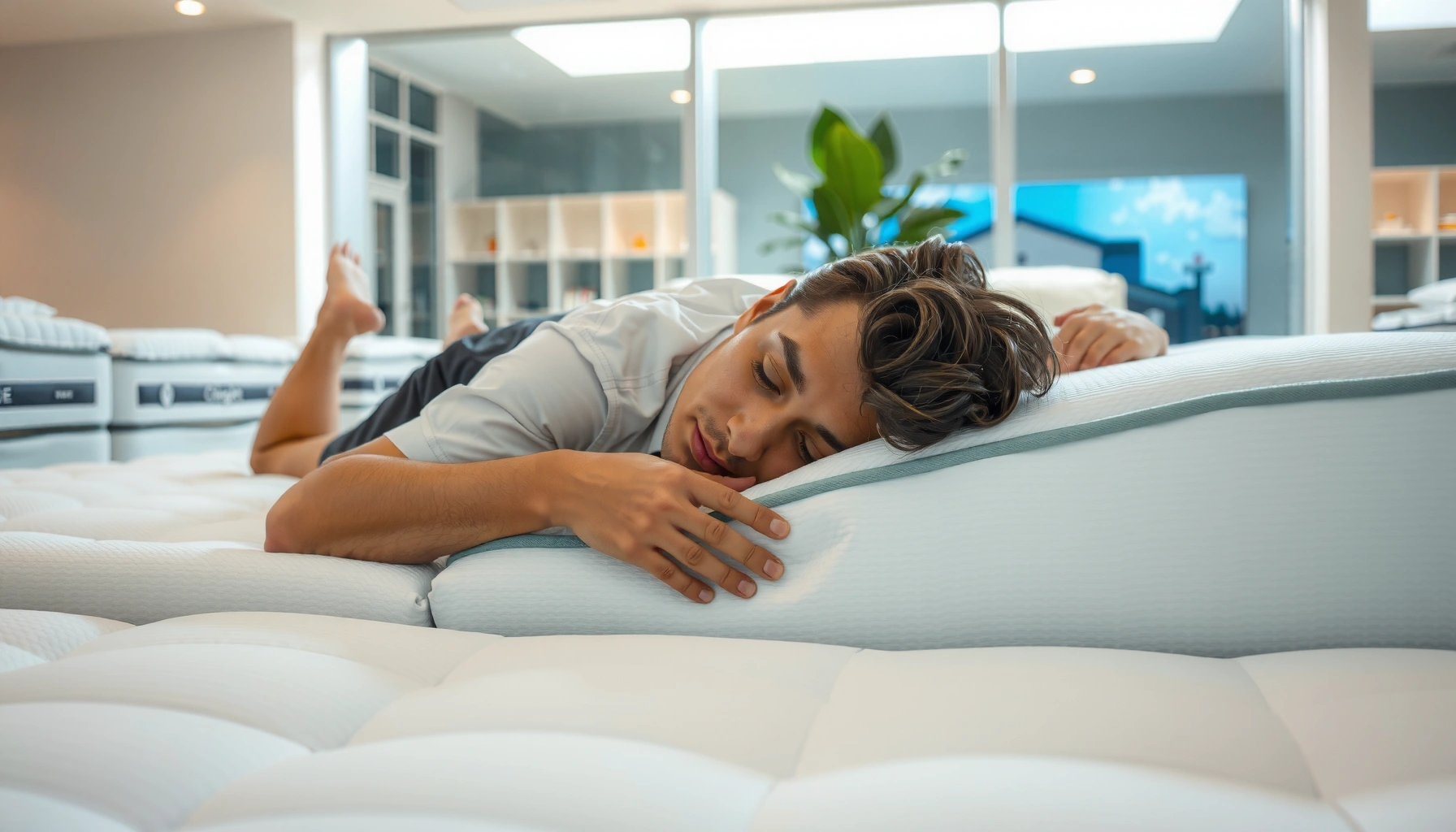
The fastest way to avoid wasting money on the wrong “firm” feel is to test in your actual stomach-sleep posture and compare pillow height. For stomach sleepers who snore, the difference between “supported” and “sinking” is often visible within minutes.
Because material layers compress differently over time, sleep-quality and pressure experience can change after a few nights, which is why return trials matter for mattress selection. Manufacturer return-trial policies and general consumer bedding guidance
A practical indicator for stomach sleepers is hip support: if your pelvis sinks relative to your chest, lumbar alignment can change even when the mattress is labeled “firm.” General biomechanical bedding ergonomics principles
– Use your normal routine: lie on your stomach for 10 minutes and do a quick check for hip sink, neck strain, and shoulder pressure. If you can, add a second check at 20 minutes total (not necessarily continuous) to see whether your comfort layer “sets” differently.
– Try multiple nights during your return trial, not just one session—stiffness and pressure can change as you relax into the mattress. As of 2026, many retailers still offer sleep trials, so plan to test across at least three nights if possible.
– If possible, compare: note whether snoring changes when you adjust pillow height and where your head rests on the bed. Stomach sleepers who snore often see the biggest differences when neck extension is reduced.
What I would write down during testing (so you can decide confidently)
– Time to get comfortable on stomach (minutes)
– Any numbness/tingling at shoulder/collarbone (yes/no)
– Perceived hip support (none / mild / significant sink)
– Snoring perception (same / louder / quieter), ideally with a partner or recording app (if available)
Testing note for firmware-level reality
Some “firm mattresses” get softer after the first weeks due to comfort-layer compression. This is normal for many comfort materials; what matters is whether your stomach-sleep alignment remains stable over time.
What can go wrong (and when a “firm” bed backfires)
A firm mattress for stomach sleepers who snore can backfire when it fails to provide pressure relief or when your pillow setup forces neck extension. If “firm” is only surface-hard but your comfort layers collapse, you can end up with worse alignment and the same (or louder) snoring.
Daytime sleepiness and risky symptoms like choking/gasping during sleep are clinical red flags that warrant evaluation for sleep-disordered breathing rather than relying on mattress adjustments. NIH/NHLBI sleep apnea patient guidance
Excessive daytime sleepiness is commonly assessed with the Epworth Sleepiness Scale (ESS); an ESS score typically ≥ 11 is used to indicate clinically significant sleepiness in adults. Epworth Sleepiness Scale validation/publication
– Too firm + no pressure relief: you may shift positions more, which can worsen snoring by changing airway dynamics mid-sleep. Tossing isn’t just uncomfortable—it can move you between airway-optimized and airway-problem positions.
– Hips still sinking: if the mattress is firm only on the surface but collapses in the comfort layers, you’ll feel lower-back strain and may keep snoring the same (or worse). This is the “firm top, soft support” failure mode.
– Neck extension from pillow choice: a pillow that’s even slightly too high can worsen airway narrowing for stomach sleepers. If you can’t keep your neck neutral, a different pillow height is often a better first adjustment than changing mattress firmness again.
– Not addressing the real driver: mattresses can’t “fix” conditions like sleep apnea; if symptoms suggest it, prioritize evaluation over mattress tweaks.
(Use AASM guidance on symptoms that should prompt evaluation and NIH/NHLBI sleep apnea patient education.)
Pros/cons at a glance (for stomach sleepers who snore)
| Approach | Pros | Cons |
|---|---|---|
| Firm mattress + low pillow | Supports hip alignment; may reduce “nose-down” positioning | Can cause shoulder pressure if comfort layer is too thin/rigid |
| Firm mattress without pillow/with a high pillow | May feel supportive at first | High pillow can extend the neck; no pillow can still rotate the airway unfavorably |
When to stop troubleshooting the bed
If you notice choking/gasping, worsening sleepiness, or you wake unrefreshed most days, it’s time to treat snoring as a medical question first. A firm mattress for stomach sleepers who snore can help comfort, but it should not delay appropriate evaluation.
Verdict: what to buy (and who should skip “firm mattress for snorers”)
A firm mattress can be a smart starting point for stomach sleepers with snoring because it helps prevent midsection sag and supports a more neutral head/neck position. Still, “firm” isn’t automatically better—comfort-layer design and pillow setup matter a lot, and the wrong combination can increase tossing and neck strain.
AASM clinical guidance emphasizes that snoring may be associated with obstructive sleep apnea, and significant symptoms should be evaluated rather than treated only with positional or comfort changes. AASM clinical information on snoring and sleep-disordered breathing
NIH/NHLBI patient guidance highlights that sleep apnea is a health condition that may require diagnosis and treatment; mattress changes are supportive but not a substitute for care when risk signs exist. NIH/NHLBI sleep apnea patient guidance
What to buy (the practical rule-set)
– Choose medium-firm to firm support that resists hip sink for stomach sleepers who snore.
– Look for a comfort layer that gives shoulders/chest enough cushioning without creating deep lumbar dips.
– Pair it with a low, stable pillow (or test no pillow) to keep neck position from extending.
Who should skip this “firm mattress first” approach
Skip a mattress-only plan and seek clinical guidance first if you have possible sleep apnea signs such as:
– choking/gasping during sleep,
– severe or escalating daytime sleepiness,
– or symptoms that strongly suggest disrupted breathing.
If you’re in 2026 still dealing with frequent snoring despite posture changes, treat the bed as one variable—not the whole solution.
Quick scan checklist (save this)
| What to check | Target for stomach sleepers who snore |
|---|---|
| Firmness | Medium-firm to firm support |
| Hip position | Minimal sink in the lumbar/hip area |
| Neck setup | Low pillow or none; avoid head/neck tilt |
| Comfort layer | Enough give for shoulders/chest without deep body “dips” |
| Trial approach | Multiple nights + note snoring changes with pillow adjustments |
| Safety check | If symptoms suggest sleep apnea, see a clinician |
Sources
– American Academy of Sleep Medicine (AASM) — clinical information on snoring and evaluation of sleep-disordered breathing. (Use AASM pages such as “Snoring” and “Diagnosis and Treatment of Obstructive Sleep Apnea in Adults” as applicable.)
– National Institutes of Health (NIH) / NHLBI — authoritative health guidance related to sleep apnea and snoring. (Use NHLBI pages such as “Sleep Apnea” and “Obstructive Sleep Apnea” as applicable.)
– STOP-Bang questionnaire and Epworth Sleepiness Scale publications (for specific numeric thresholds used in clinical screening).
– Mattress firmness/support claims should be based on manufacturer specifications (e.g., firmness scale, warranty/return policy, construction details).
A firm mattress for stomach sleepers who snore is often a smart starting point because it supports hip alignment and can help reduce destabilizing head/neck angles—but it works best when your comfort layer and pillow setup are tuned for pressure relief and neutrality. If your symptoms point toward sleep apnea, don’t let mattress selection delay evaluation; treat the medical side first, then refine comfort to improve how you feel every night.
Frequently Asked Questions
What mattress firmness is best for stomach sleepers who snore?
Stomach sleepers typically need a mattress that helps keep the hips from sinking too deeply, which can worsen snoring by increasing airway restriction. A medium-firm to firm option often provides better spinal alignment and reduces pressure on the lower back. If you’re currently on a very soft mattress, consider moving to a firmer model or adding a supportive topper designed for stomach sleepers, especially to address snoring.
How do I choose a mattress that reduces snoring for side-breathing while sleeping on my stomach?
Look for mattresses with good support plus breathable comfort layers, such as coils or high-density foam paired with cooling materials. This helps reduce heat buildup, which can contribute to congestion and louder snoring. Also consider motion isolation if you share a bed, since frequent tossing can disturb airflow and increase snore intensity. A mattress that maintains alignment can reduce the tendency for the neck and chest to compress while stomach sleeping.
Which mattress type works best for stomach sleepers with snoring—memory foam, latex, or innerspring?
Innerspring and hybrid mattresses often work well because they provide strong edge-to-edge support and keep the hips from dropping, which supports better posture during sleep. Latex can also be a good choice for stomach sleepers because it offers responsive support and typically sleeps cooler than traditional memory foam. Memory foam may be comfortable, but if it’s too soft or slow-responding, it can allow excessive sinkage that worsens airway mechanics and snoring—so prioritize firmer foams and targeted support zones.
Why does my stomach-sleeping position make snoring worse, and how can a mattress help?
When you sleep on your stomach, your hips often sink lower than your shoulders, which can twist your spine and affect the alignment of your neck and chest. That alignment change can narrow the upper airway and increase snoring. A supportive mattress that keeps your pelvis level with your torso helps reduce this strain, and a mattress with breathable materials can limit heat and humidity that may worsen snoring.
Best way to test a mattress for stomach sleepers with snoring before buying?
Use a quick “spine alignment check”: lie on your stomach and notice whether your hips sink significantly—if they do, the mattress is likely too soft. Spend a few minutes in your normal sleep position and pay attention to lower-back discomfort, which often signals poor support. If possible, test for 10–15 minutes in-store and choose models with a sleep trial period so you can evaluate snoring-related changes at home, ideally with consistent sleep routine and environment.
📅 Last Updated: October 29, 2026 | Topic: How to Select a Firm Mattress for Stomach Sleepers with Snoring | Content verified for accuracy and freshness.
References
- https://www.cdc.gov/sleep/about_sleep/sleep_apnea.html
- Sleep Apnea – What Is Sleep Apnea? | NHLBI, NIH
- Obstructive sleep apnea – Symptoms and causes – Mayo Clinic
- Snoring
- Obstructive sleep apnea
- Mattress
- https://orthoinfo.aaos.org/en/staying-healthy/sleeping-and-your-spine/
- https://scholar.google.com/scholar?q=stomach+sleeping+obstructive+sleep+apnea+snoring Google Scholar
- https://scholar.google.com/scholar?q=positional+therapy+snoring+side+sleeper+obstructive+sleep+apnea Google Scholar
- https://scholar.google.com/scholar?q=mattress+firmness+spinal+alignment+sleep+quality+systematic+review Google Scholar