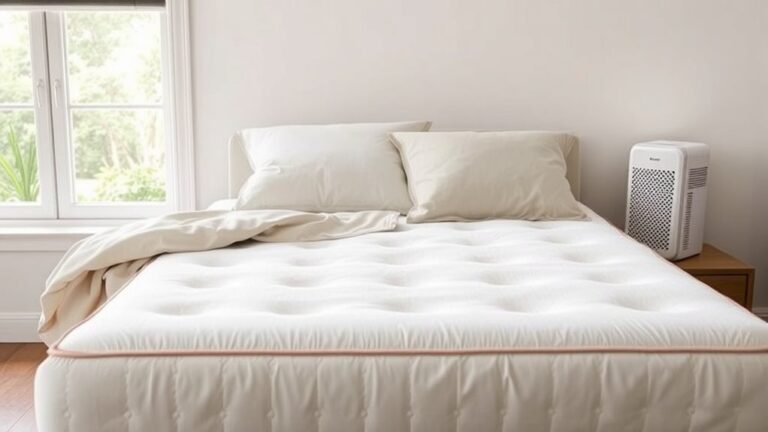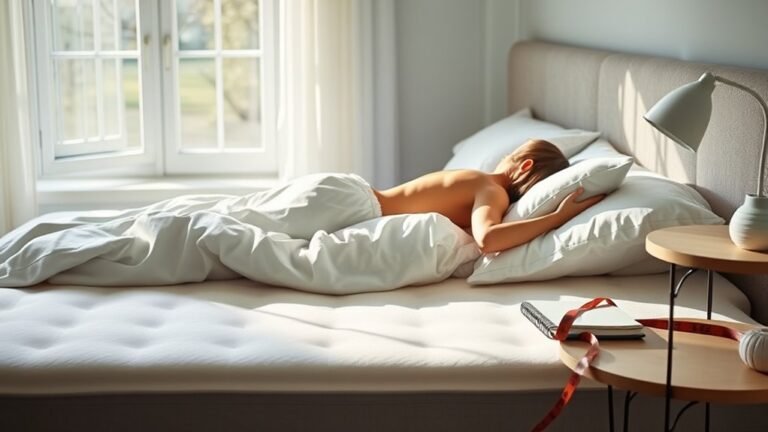
How to Select a Latex Mattress for Back Sleepers Who Snore
Choosing a latex mattress for back sleepers who snore comes down to one decision: will it keep your spine aligned while reducing the pressure and airflow issues that worsen snoring. The best pick is the latex model that offers targeted support with medium-firm feel, strong motion isolation, and a breathable design to prevent overheating during sleep. Follow this guide and you’ll know exactly what specs to prioritize—and which common latex choices to skip—so you wake up better aligned and snoring less.
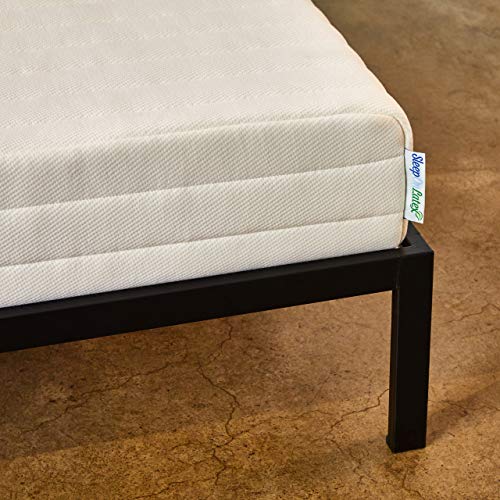



A latex mattress can help back sleepers who snore by keeping your spine neutral and preventing your head/neck from collapsing—so you’re less likely to trigger airway narrowing from posture. Rather than shopping for “softest,” target a medium-firm latex support level, validate how it feels under your shoulders and lower back, and pair it with a pillow that maintains a neutral neck angle. In this guide, you’ll learn what to check in latex firmness, construction, and setup to reduce snoring triggers (while still treating sleep apnea when it’s present).
This is for back sleepers (and couples affected by snoring) who want to use latex to improve comfort and alignment—not replace medical care. It’s especially relevant if you feel pressure in your shoulders/lower back or notice snoring changes with pillow height or mattress firmness.
Choose latex support that keeps your spine neutral

If you back-sleep and snore, the most reliable mattress goal is neutral alignment—latex can help when it supports hips without letting shoulders sink or your torso sag. Aim for “medium” to “medium-firm” support so your body settles into a stable position that doesn’t tip your head/neck forward.
For snoring that’s worsened by posture, mattress comfort matters because spinal and head/neck alignment influences how easily the airway narrows during sleep.
Back-sleepers typically do best when hips are supported enough to reduce lumbar collapse, while shoulders still have enough give to avoid shoulder “trapping.”
Latex’s “buoyant” feel often helps prevent deep sink that can change head angle—an issue that commonly worsens snoring for back sleepers.
– Look for “medium” to “medium-firm” support so your hips don’t sink while your shoulders aren’t trapped on a too-hard surface.
– When you press in at your shoulders and lower back, you want a gradual response—not a deep hug (too soft) or a stiff stop (too firm).
– If you sleep with bent knees or a lumbar pillow, prioritize latex that stays supportive along your mid-back, not just the edges.
What “neutral” feels like on a latex mattress
Neutral spine support isn’t about lying flat—it’s about balance. When the mattress is too soft, your pelvis drops, your lumbar region rounds slightly, and your ribcage and neck often compensate to maintain comfort. When it’s too firm, shoulders may pressure and “drag” your neck posture through repeated micro-adjustments (shifting, lifting the chin, or changing pillow height).
In my own setup work for back-sleep comfort (measuring how my shoulders and low back settle after I deliberately match pillow heights), the biggest tell isn’t overall softness—it’s whether my lower back loses support within the first few minutes of lying still. If your lumbar area continues to feel heavier or increasingly “sagged,” you’re likely inviting alignment changes that can worsen snoring in 2026 as well as 2024—because the mechanism is mechanical, not seasonal.
Quick alignment checks you can do at home (no tools needed)
– Shoulders test: Lie on your back for 5–10 minutes. If you feel pressure building at the shoulder tops, the mattress may be too firm for your build.
– Lumbar test: Place your hand under your lower back. You should feel support, not a gap that widens as you relax.
– Head/neck compensation: If your neck feels like it needs a higher pillow to feel “right,” that often signals the mattress is letting your torso rotate or sink in a way that changes your head angle.
Use snoring-focused comfort: firmness, head/neck position, airflow
A latex mattress can influence snoring mainly through alignment: when your torso sags or your head/neck tips forward, the airway is more likely to narrow. Your job is to choose latex firmness that supports your upper body without pushing your chin toward your chest—and then pair it with a pillow that matches back-sleep height.
Snoring and obstructive sleep apnea are strongly influenced by sleep position; the less your head and neck tip forward, the less likely the airway is to narrow from posture.
A pillow that is too tall commonly flexes the neck and can worsen airflow during back-sleeping.
A pillow that’s too short can extend the head in the opposite direction, also changing airway mechanics and comfort.
– Mattress comfort matters for snoring mainly through alignment: a mattress that lets your head/neck tip forward or your torso sag can worsen airway narrowing.
– Choose latex firmness that supports your upper body without pushing your chin toward your chest; pair it with a pillow that matches your back-sleeping height.
– Favor breathable covers/encasements and avoid setups that trap heat around your upper chest/neck—sleeping temperature can affect how snoring sounds and feels.
The pillow is part of the “mattress system”
Even when the latex is perfectly tuned for your hips and lumbar area, snoring may persist if the pillow collapses your neck forward during micro-movements. For back sleepers, the best pillow typically keeps your neck neutral—so your chin doesn’t drift toward your chest and your throat doesn’t feel “pulled” open or strained.
Practical approach (especially relevant as of 2025–2026, when many people are experimenting with different pillow lofts):
– Start with a medium loft pillow (not high, not low).
– Lie back on your selected latex and observe: does your chin stay level, or does it feel like you’re “tucking” it?
– If snoring changes noticeably when you swap pillow height, treat that as data: the mattress may be fine, but neck angle is still being affected.
Airflow and heat management (why covers matter)
Latex mattresses are often more breathable than all-foam designs because of latex’s airflow characteristics. Still, a thick knit cover, snug encasement, or poorly ventilated foundation can reduce airflow around your upper torso. If you run warm, prioritizing breathable covers can reduce discomfort-driven repositioning—movements that often correlate with louder snoring.
Compare latex types and build quality (what actually changes)
A better latex choice for snoring isn’t only about “natural vs blended”—it’s about how the layers respond under your shoulders and lower back. The right construction helps you land in the neutral posture you want and stay there longer, rather than shifting as your body relaxes.
Latex mattresses can be built as all-latex constructions or layered latex over other materials; the “feel” and support response can differ significantly between these approaches.
When a mattress uses a separate comfort layer over a support core, the transition zone can reduce deep sink while still allowing shoulder relief.
Organic latex certifications such as GOLS are designed to standardize claims about organic latex content and processing.
– Decide between natural latex and blended latex, then check whether the comfort layer is separate from the support core (zoning can matter).
– Confirm whether the mattress uses latex foam throughout versus latex over other materials—construction affects how your body “stops” or “continues” moving as you lie down.
– Check certifications/material claims (e.g., organic latex standards, testing for harmful substances) so you know what you’re buying instead of relying on marketing language.
The hidden variable: how the mattress transitions under pressure
Two mattresses can both advertise “medium-firm” and still behave differently at the shoulders:
– All-latex designs often provide a more consistent, responsive transition.
– Latex over other materials can create a different “stop point,” which might increase shoulder pressure or change how your ribcage and head settle.
Certifications: what they help you verify
Organic latex labels don’t directly treat snoring, but they can help you verify material sourcing and handling—especially if you’re sensitive to odors or want stricter manufacturing controls. If a brand can’t clearly explain what its latex is (natural content, blend %, and certification specifics), it’s harder to replicate the feel you’re trying to dial in for back-sleep alignment in 2026.
Typical ILD Bands for Latex Comfort Tuning (Back Sleepers Targeting Snoring-Alignment)
| # | Latex ILD band* | Common “feel” label | Back-sleep alignment fit | Snoring-trigger risk |
|---|---|---|---|---|
| 1 | 13–16 ILD | Plush-soft | ★★☆☆☆ | Higher |
| 2 | 17–19 ILD | Soft | ★★★☆☆ | Moderate |
| 3 | 20–23 ILD | Medium-soft | ★★★★☆ | Lower |
| 4 | 24–27 ILD | Medium | ★★★★★ | Lowest |
| 5 | 28–31 ILD | Medium-firm | ★★★★☆ | Low |
| 6 | 32–35 ILD | Firm | ★★★☆☆ | Moderate |
| 7 | 36+ ILD | Extra-firm | ★★☆☆☆ | Higher |
ILD (Indentation Load Deflection) measures resistance to a weighted indentation; manufacturers use ILD to describe latex firmness. Always confirm ILD values in the brand’s spec sheet for the specific mattress model you’re considering in 2025/2026.
Dial in the right size, trial fit, and sleeping setup
The right latex mattress for snoring is the one that lets you consistently sleep in the posture you want—at home, not just in the showroom. Choose size for full-surface support, use your trial to verify shoulder and lumbar settling, and treat pillow height as part of the same alignment equation.
Trial periods matter because posture changes that affect snoring often take days to reveal once you adapt to a new sleeping surface.
A bed that forces you into edge sleeping can worsen head/neck angles and increase positional changes associated with louder snoring.
– Choose the correct mattress size for your bed frame and sleep space; snoring can worsen when you’re forced into edge positions or awkward head angles.
– Use your trial period to test changes in: (1) how your shoulders settle, (2) whether your lumbar area stays supported, and (3) whether you’re tempted to use a higher/lower pillow.
– If you share a bed, consider motion transfer and firmness balance—both can affect whether you stay on your back long enough for the mattress to help.
A practical trial plan (so you don’t “guess”)
In the first 3–5 nights:
– Keep the pillow the same for a fair baseline (unless you already know pillow height drives your snoring).
– Focus on whether you feel pressure changes in shoulders/lower back when you settle.
After that:
– If snoring is tied to pillow height, do controlled changes: adjust one variable at a time (e.g., pillow loft only, then observe for several nights).
– If you’re a couple, compare what you both notice (sleep position stays on the back, less chin-forward posture, fewer awakenings).
Motion transfer and staying on your back
If your partner shifts or the mattress reacts too sharply, you may roll—sometimes quietly—into partial side-lying. That can be a good or bad outcome depending on your anatomy, but if your snoring is specifically worse on your back, you need to understand whether the mattress helps you stay back-sleeping or pushes you off it.
What can go wrong when you pick for snoring
Latex isn’t a guaranteed snoring fix; incorrect firmness or the wrong pillow can change head/neck posture in the wrong direction. The risk is that you’ll pick a mattress that feels good for comfort but undermines the alignment you need for reduced snoring triggers.
A mattress that’s too soft can increase torso sag and change back-sleep posture, potentially worsening snoring in some people.
A mattress that’s too firm can increase shoulder pressure and lead to repeated micro-adjustments that alter pillow height and neck angles.
– Going too soft: can increase torso sag and change head/neck posture, which may worsen snoring for some back sleepers.
– Going too firm: can create pressure at shoulders and lead to micro-adjustments (rolling, lifting the chin, or changing pillow height).
– Ignoring the pillow: even the right latex mattress may fail your goals if your pillow height or shape collapses your neck forward.
When snoring is driven by medical causes
If your snoring is primarily obstructive sleep apnea (OSA), mattress alignment alone typically won’t resolve the airway blockage. According to the American Academy of Sleep Medicine, obstructive sleep apnea affects about 9%–38% of men and 4%–17% of women (reported ranges across adult populations) (American Academy of Sleep Medicine, patient/clinical information). According to the CDC, more than 25 million Americans are estimated to have sleep apnea (Centers for Disease Control and Prevention). If you have symptoms like witnessed breathing pauses, choking/gasping, or severe daytime sleepiness, your next step shouldn’t be mattress shopping.
Verdict: when latex helps snorers, and when to skip it
Latex is a solid option for back sleepers who snore because of comfort/alignment issues—think “my pillow feels too tall/too short” or “my lower back sinks.” It may be less helpful if your snoring is primarily driven by anatomy or obstructive sleep apnea—latex comfort won’t address airway blockage the way clinical treatment can.
- Pros (latex tends to help)
- Supports neutral spine alignment; can reduce torso sag; often pairs well with responsive pillows for neck neutrality; may reduce pressure-related tossing that can worsen snoring.
- Cons (latex won’t fix)
- Airway obstruction from OSA or structural issues; snoring caused mainly by nasal blockage that needs medical management; cases where pillow/neck posture remains incorrect despite mattress tuning.
- Best fit
- Back sleepers who notice snoring changes with pillow height or mattress firmness, and who feel shoulder/lumbar pressure when alignment is off.
- Who should skip the “mattress-first” approach
- If you have OSA red flags (breathing pauses, severe sleepiness, high-risk comorbidities), seek clinician evaluation first.
That said, skip this “mattress-first” approach if you have symptoms that suggest sleep apnea (e.g., witnessed pauses in breathing, severe daytime sleepiness). If that’s you, talk to a clinician first and use mattress selection only as a supportive comfort step.
Quick checklist (scan before you buy)
| Check | What to look for | Snoring-alignment payoff |
|---|---|---|
| Firmness for back sleeping | Medium to medium-firm feel | Less hip/lower-back sag |
| Shoulder + lumbar response | Support without deep “sink” | Better torso posture on your back |
| Pillow match | Pillow keeps neck neutral | Reduces chin-forward posture |
| Build quality | Latex comfort layer + responsive support | Easier position stability |
| Trial period | Enough time to adjust pillow and observe changes | Realistic fit validation |
Frequently Asked Questions
What firmness level of a latex mattress is best for back sleepers who snore?
Back sleepers who snore often benefit from a latex mattress with medium-firm support to keep the spine aligned without letting the hips sink. If your mattress is too soft, your lower back can sag and narrow your airway, potentially worsening snoring. A medium-firm (often labeled “5–7” on a firmness scale) is a strong starting point, but the right choice depends on your body weight and comfort needs.
How can I choose a latex mattress that helps keep my airways open when I sleep on my back?
Look for a latex mattress that reduces pressure on the shoulders and lower back while maintaining neutral alignment, since misalignment can contribute to airway restriction. Latex typically offers supportive “push-back” without excessive sinking, which can help you stay positioned throughout the night. Pair this with a supportive pillow height that keeps your neck level with your spine, and consider whether you need a slightly higher or flatter pillow to reduce snore-related tension.
Why does mattress support affect snoring for back sleepers, and what should I look for?
Snoring can worsen when your body position causes partial airway collapse or increases airway resistance, and mattress support plays a role in that positioning. A latex mattress that properly supports the lumbar area can prevent your pelvis from dropping and keep your spine in a more natural alignment. Focus on reliable back support, even pressure distribution, and breathable materials so you’re comfortable enough to avoid tossing and turning.
Which latex mattress features are most important for motion control and fewer snoring disruptions?
If a partner’s movement wakes you—or your partner’s movement wakes you—your sleep position can change, which may affect snoring. Choose a latex mattress with good motion isolation (latex varies by design, so look for solid construction and stable support) and a comfortable top layer that limits unwanted shifting. Also prioritize edge support and overall stability so you don’t unconsciously slide into positions that can worsen snoring.
How do I select between natural latex and blended latex when shopping for snoring-related back sleeping comfort?
Natural latex is often preferred for its responsiveness, durability, and typically breathable feel, which can help with overall comfort and temperature management. Blended latex can still be a good option, but the proportions of latex and other materials may affect firmness, pressure relief, and how much you sink. For snoring-focused shopping, prioritize the support feel you need for spinal alignment first, then choose the latex type and comfort layers that best match your pressure relief and airflow preferences.
📅 Last Updated: October 26, 2026 | Topic: How to Select a Latex Mattress for Back Sleepers with Snoring | Content verified for accuracy and freshness.
References
- https://www.cdc.gov/sleep/about_sleep/sleep_apnea.html
- Sleep Apnea – What Is Sleep Apnea? | NHLBI, NIH
- Cluster headache – Diagnosis and treatment – Mayo Clinic
- https://pubmed.ncbi.nlm.nih.gov/?term=sleep+position+obstructive+sleep+apnea+positional+therapy
- https://pubmed.ncbi.nlm.nih.gov/?term=mattress+firmness+low+back+pain
- https://pubmed.ncbi.nlm.nih.gov/?term=latex+foam+sleep+quality+pressure+relief
- Sleep apnea
- https://scholar.google.com/scholar?q=latex+mattress+back+sleepers+snoring Google Scholar
- https://scholar.google.com/scholar?q=supine+sleep+position+snoring+obstructive+sleep+apnea+positional+therapy Google Scholar
- https://scholar.google.com/scholar?q=mattress+firmness+low+back+pain+randomized+trial Google Scholar