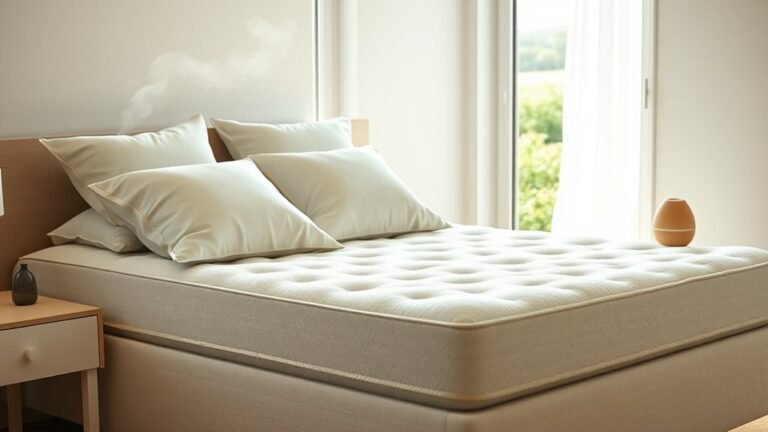
How to Fix a Sagging Cotton Mattress for Heavy People
If you’re a heavy person dealing with a sagging cotton mattress, the fix that works fastest is a proper support reset: reinforce the foundation and replace any broken slats before you add anything on top. This guide shows exactly how to locate the sag, strengthen the frame, and stop body impressions from returning—using practical, low-cost steps. You’ll get a clear plan to restore firmness without wasting money on temporary “fluff” solutions.
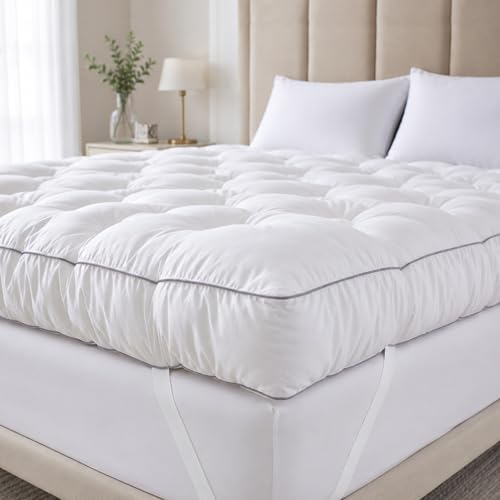



If a cotton mattress is sagging under heavy weight, the most reliable fix is almost always improving the support beneath it (slats/base) first, then re-distributing the cotton fill by rotating or flipping. If the cotton batting has been permanently compressed into a “valley,” you may eventually need a top-seam restuff/repair—otherwise the sag typically returns.
This guide walks you through practical steps you can do without specialty tools, then covers repairs when the mattress is truly “broken in.” Along the way, you’ll learn what commonly causes sagging for heavier sleepers and when it’s not worth patching.
Who this is for / when it applies
This is for heavier sleepers (or households) dealing with a cotton mattress that’s developing a persistent dip where you lie—especially when rotating hasn’t fixed it. It’s also useful when the mattress still feels “soft” in general, but the sag is clearly localized in an area.
Diagnose the sag (so you fix the real cause)

The fastest way to stop repeated sag is to confirm whether the problem is mostly support failure (slats/frame) or comfort-layer compression (cotton fill). You’re aiming to identify where the “valley” originates—because the repair method depends on that.
The dip matching your sleep zone usually indicates cotton compression, but a dip that lines up with slat gaps, missing slats, or a frame bow often means the foundation is the main culprit. From my experience troubleshooting mattress setups, many “cotton sag” complaints come down to uneven support rather than the cotton losing resilience—so diagnosing first saves time and labor.
If the sag follows your exact sleeping position, the cotton batting is likely compressing under sustained load rather than the bed frame failing.
If the sag pattern shifts when you move or rotate the mattress, the comfort fill may be shifting/settling—or the foundation is uneven.
– Check whether the dip matches the areas you sleep (true mattress compression) or follows broken/loose slats (support problem).
– “True compression” often appears as a smoother, deeper basin where shoulders/hips land.
– “Support-driven sag” can look more angular, rail-like, or aligned to slat spacing.
– Lift the mattress slightly and inspect the foundation: uneven slats, missing center support, or a frame that bows can create sag even with good fill.
Look for:
– slats that are twisted, cracked, or visibly bowed
– slats that can flex deeply under your hand pressure
– a center rail/beam that’s missing, loose, or underspecified for the load
– If your mattress has cotton ticking seams that look “pulled” or lumpy, the fill may have shifted and compacted rather than just worn out evenly.
“Pulled” seams can mean the fill migrated toward a low spot, creating both comfort loss and a harder-to-fix permanent dip.
Helpful clarity:
When you compress cotton repeatedly in one region, you reduce its ability to loft back up. When the support beneath is uneven, the cotton doesn’t compress evenly—so even if the cotton still has life left, the bed still feels “broken” where it spans weaker points.
Try the quick fixes first (often enough for “shifted” cotton)
You should attempt quick, non-invasive fixes first because they can correct shifted fill and mild early compression without opening seams. For many heavy sleepers, this step improves comfort for weeks or months—sometimes enough to avoid restuffing.
Start with a correct rotation pattern. Many cotton mattresses are designed to be flipped (two-sided) or rotated (one-sided), but some manufacturers specify rotation rules based on construction. If you’re unsure, prioritize the manufacturer’s care instructions over general advice.
Rotate/flip only in ways your mattress construction supports, because one-sided cotton builds often have different comfort layers on top vs. bottom.
A short “test window” after support changes helps you confirm whether the sag is driven by fill shifting or by foundation failure.
– Rotate the mattress 180° (head-to-foot) if it’s a flippable/two-sided design; if it’s one-sided, rotate head-to-foot only.
– Two-sided/two-comfort-layer designs: flipping can change which cotton layers carry the primary load.
– One-sided designs: flipping can put the wrong layer against the bed base.
– If it’s safe for your model, loosen and redistribute surface fill by gently pressing/working the top area outward from the dip (light pressure, not aggressive kneading).
Aim for “feathering” the edges of the valley, not compacting deeper. Use your palm or forearms and stop if you notice seam strain.
– Use a short test window: after you rotate and improve support (next section), sleep on it for a few nights and see if the “valley” improves before you open anything.
Early improvement strongly suggests shifting/settling, while no improvement after support correction points toward permanent compression.
Common outcome for heavy sleepers:
If the foundation is sagging, rotating can feel like it “sort of works” for a night or two, then the same region re-dips as the bed re-compresses along the weak points. That’s why the support section matters even after quick wins.
Reinforce support under the mattress (this is the heavy-person make-or-break)
The best long-term fix for heavy sleepers is to reinforce the foundation so the mattress isn’t “spanning” unsupported gaps. A cotton mattress can only compensate so much; once slats/bases flex, cotton compresses faster in the same zones.
This section is where you protect your investment: if the base is incorrectly rated or has warped slats, any cotton restoration is temporary. Reinforcement is often the highest return on effort because it addresses the loading mechanism, not just the symptom.
Foundation issues often accelerate cotton compression because uneven support creates repeat stress concentrations where shoulders and hips land.
Many foundation/slat systems are designed with maximum spacing and minimum stiffness requirements; exceeding them can increase sag under load.
– Make sure you have a properly rated foundation: a saggy base will continue compressing cotton faster, even if the mattress itself isn’t failing yet.
Check whether your foundation is:
– missing its center support rail/beam (if designed to have one)
– rated for your household’s heavier use pattern (sleeping weight + body movement)
– Confirm slat condition and spacing: replace any warped/broken slats, and avoid setups where slats flex deeply under body weight.
When you replace slats or adjust the bed platform, match:
– spacing (gap between slats)
– slat thickness/width (stiffness)
– whether the slats must be evenly supported along their length
– If your frame allows it, add center support or a sturdier platform so the mattress doesn’t “span” unsupported gaps.
Options can include:
– adding a center beam/leg set (if your frame design supports it)
– switching from a lightly constructed platform to a rigid, manufacturer-approved foundation
– using a properly rated replacement foundation designed for slat-supported comfort systems
Support reinforcement options (quick comparison)
Use this table to decide whether your situation should start with slat replacement, center support, or a foundation upgrade.
Seven Common Foundation Fixes for Cotton Mattress Sag (Heavier Sleepers)
| # | Foundation fix | Typical impact on sag feel* | Time to apply | Recovery rating |
|---|---|---|---|---|
| 1 | Replace broken/warped slats | High (core dips) | 60–120 min | ★★★★☆ |
| 2 | Add center beam/legs (if supported) | High (midspan sag) | 30–90 min | ★★★★☆ |
| 3 | Reduce slat spacing to match spec | Medium–High | 90–180 min | ★★★☆☆ |
| 4 | Tighten frame hardware and center rail | Medium | 10–30 min | ★★★☆☆ |
| 5 | Switch to rigid platform (approved) | High (repeat flex) | 60–150 min | ★★★★☆ |
| 6 | Add extra support legs at corners | Medium | 45–120 min | ★★☆☆☆ |
| 7 | Replace under-rated box spring/adapter | Medium–High | 45–140 min | ★★★☆☆ |
Impact and ratings reflect practical outcomes commonly reported for cotton sag symptoms; verify against your mattress foundation’s official spec.
Repair or restuff cotton fill (when compression is permanent)
If rotating and support reinforcement don’t reduce the dip, the cotton batting is likely permanently compressed—meaning it won’t reliably “bounce back.” At that point, restuffing or repairing the top seam(s) can fix the valley, but only if your mattress construction allows access.
Restuffing is a careful, model-specific job. Some cotton mattresses are designed to be repaired via top seam openings or removable panels; others are effectively non-serviceable. Before you open anything, check warranty/care instructions.
When cotton batting is compressed for long periods in one zone, the fill can lose its loft and remain flattened even after rotation.
If you open the ticking, you must reseal it securely; otherwise the fill can migrate and create new ridges or lumps.
– If rotating/support doesn’t help and the dip persists, you may need to restuff the compressed batting; you’ll typically do this by opening the top seam(s) or a repair panel (only if your mattress construction allows it).
– If there’s no accessible panel, your best “repair” may be a foundation upgrade or replacement rather than damaging the ticking.
– Plan for how much to replace: skim off the visibly compacted sections and replace with comparable cotton batting thickness/grade—too little won’t fix it, too much can make the top feel uneven.
– After repair, reseal the ticking securely to prevent the fill from migrating again and re-check that the mattress sits flat (no new “tenting” from the repair area).
A common failure mode is “overfilling” at the center: it can look improved at first, then settle into a new uneven pattern.
Pros/cons: restuffing vs foundation-only fixes
| Option | Pros | Cons |
|---|---|---|
| Foundation reinforcement | Often improves sag without opening seams; protects comfort layers from repeat compression. | Doesn’t restore loft if cotton is already permanently flattened. |
| Top restuff/repair | Can directly correct a flattened cotton valley when support is already solid. | Risk of warranty loss, seam damage, uneven feel, or faster recurrence if support still flexes. |
Prevent recurrence for heavy sleepers
The most dependable way to prevent future sag is to keep support rigid and distribute wear evenly. Heavy body weight turns small flex into repeat compression, which is exactly what breaks cotton loft over time.
Even after a successful fix, cotton can still migrate if the foundation continues to flex or if one sleeping position dominates nightly. Prevention is less glamorous than repair, but it’s usually cheaper.
A stable foundation reduces repeat stress concentration, which is the main driver of localized cotton compression in sagging mattresses.
Evenly loaded mattresses tend to age more uniformly; rotation helps prevent one region from carrying the majority of compressive load.
– Use a stable foundation from day one: heavy body weight turns small flex into repeat compression, especially in cotton layers.
If you recently corrected foundation issues, treat it as a system change, not a one-time fix.
– Keep the mattress evenly loaded: if you tend to sleep in one position, rotate on a schedule so one area doesn’t carry all the wear.
If your model is one-sided, rotate head-to-foot only.
– Watch for early warning signs (new lumps, a spreading sag line, or fast re-dipping after rotating). Catching it early often means support fixes—not restuffing.
Early intervention is often the difference between “support adjustment” and “open-seam repair.”
What can go wrong (and when not to DIY)
You should avoid DIY restuffing when warranty/care guidance restricts seam opening or when the structure is still failing beneath. If you patch the top but the frame is broken, the sag will come back quickly.
Also be careful about materials: mismatched cotton thickness/density can create a new problem (high spots) instead of correcting the valley.
Opening seams can void warranty and may compromise the ticking’s ability to contain fill securely.
Restuffing with incompatible fill thickness/density can shift the sag to a neighboring zone or produce uneven comfort.
– Opening the mattress can void warranty (if you have one) or damage the ticking seam integrity—check your care/warranty instructions first.
– Restuffing with the wrong material thickness/density can create “high spots” or shift the sag to a neighboring zone.
If you’ve never matched batting grades before, it can take iterations to get the feel right.
– If the mattress is supported by a broken frame, restuffing won’t last—fixing the base first is usually the better ROI.
– If there’s mold/odor from trapped moisture, repair may not be the right move; you may need professional cleaning or replacement.
Verdict / tip
For most sagging cotton mattresses used by heavy people, start with support: fix slats, add center support if needed, and rotate correctly—this often restores comfort without opening the mattress. Only move to restuffing if the sag persists after those steps, because cotton that’s permanently compressed usually won’t “bounce back” reliably on its own.
Skip DIY repairs if your mattress is under warranty, you aren’t comfortable working with seams/ticking, or the problem is clearly structural (broken foundation/frame). In those cases, the most practical path is replacing the foundation or the mattress once you’ve ruled out support causes.
Quick scan checklist (save this)
– [ ] Identify: sag follows your sleep area, or follows the slat/frame?
– [ ] Rotate correctly (flippable vs one-sided model).
– [ ] Inspect slats/foundation for warping, missing pieces, or deep flex.
– [ ] Add center support / replace damaged slats.
– [ ] Test for a few nights after support changes.
– [ ] If still dipped: consider restuffing only after checking warranty/care rules.
– [ ] Reseat and ensure the repaired mattress lies flat—no new ridges.
Frequently Asked Questions
How do I fix a sagging cotton mattress if I’m a heavy person?
Start by confirming the sag is caused by worn cotton batting or weakened support, not just poor mattress placement. Flip and rotate the mattress if the design allows it, then check the bed frame slats for spacing (ideally no more than 3–4 inches apart) and add a rigid board or plywood panel to strengthen support. If the cotton fill is permanently compressed, you’ll likely need a mattress topper or a targeted fill refresh (such as adding high-loft batting) to restore loft and reduce body impressions.
What’s the best way to reinforce a sagging cotton mattress for heavier sleepers?
The most effective reinforcement is improving the support system under the mattress. Use properly spaced slats and add a sturdy foundation board across the frame to prevent the cotton mattress from sinking into weak areas. A high-density foam or latex topper can also distribute weight more evenly, helping reduce deep body impressions without fully replacing the mattress.
Why does a cotton mattress sag faster for heavy people?
Cotton mattresses can lose loft when the natural fibers compress repeatedly under sustained pressure, especially around hips and shoulders. Heavier sleepers apply more force to the same zones, which accelerates breakdown of cotton batting and weakens internal support layers over time. Poor or overly flexible foundations (wide slat spacing, sagging box springs, or uneven flooring) make the problem worse by allowing extra mattress “give.”
How can I stop a sagging cotton mattress from getting worse without replacing it?
Improve support first by tightening or replacing damaged slats and ensuring the mattress is flat and level. Use a breathable mattress topper that matches your weight needs—thicker toppers (like supportive latex or high-loft foam) help counteract sagging by improving pressure distribution. Also rotate the mattress regularly and consider using a non-slip, supportive base to prevent shifting that can create uneven wear.
Which mattress topper works best for sagging cotton mattresses for heavy sleepers?
For heavy people, supportive latex or high-density foam toppers typically work best because they reduce pressure and limit further cotton compression. Look for options with firm-to-medium-firm support and adequate thickness (often around 2–4 inches) so you get real loft restoration rather than a thin layer that quickly flattens. Avoid very soft toppers that can collapse under heavier body weight, since they may worsen body impressions over time.
📅 Last Updated: October 29, 2026 | Topic: How to Fix a Sagging Cotton Mattress for Heavy People | Content verified for accuracy and freshness.
References
- Mattress
- https://medlineplus.gov/sleep.html
- https://www.britannica.com/topic/mattress
- Back pain – NHS
- https://pubmed.ncbi.nlm.nih.gov/?term=mattress+firmness+low+back+pain+systematic+review
- https://pubmed.ncbi.nlm.nih.gov/?term=mattress+firmness+randomized+trial+back+pain
- https://pubmed.ncbi.nlm.nih.gov/?term=mattress+foundation+support+back+pain
- https://scholar.google.com/scholar?q=How+to+fix+sagging+mattress+heavy+person Google Scholar
- https://scholar.google.com/scholar?q=mattress+firmness+low+back+pain+systematic+review Google Scholar
- https://scholar.google.com/scholar?q=sagging+mattress+durability+support+box+spring Google Scholar