
Spring Air Mattress Reviews: What to Know Before You Buy
Spring Air air mattress reviews often leave shoppers stuck between listings that look similar on paper but feel wildly different at night, especially when they prioritize price over support and durability. The right choice comes down to a few practical factors: coil and support design, firmness consistency, edge stability, motion transfer, and how the warranty and return terms protect you after delivery. Use these criteria to separate truly supportive options from the ones that sag, shift, or fail too soon.




Spring Air mattress reviews are most useful when you treat them like a “fit guide,” not a final score—look for repeated comments about firmness, pressure relief, and edge support, then match those themes to your sleep position and body type. In this guide, we’ll show you what to compare in Spring Air listings and how to spot misleading review patterns so you can narrow to the right model faster.
If you’re shopping for a Spring Air mattress but can’t tell which reviews to trust (or you’re worried you’ll end up with the wrong firmness), this is for you—especially if you sleep on your side/back/stomach and want a practical checklist rather than generic advice.
How to read Spring Air mattress reviews (without getting misled)
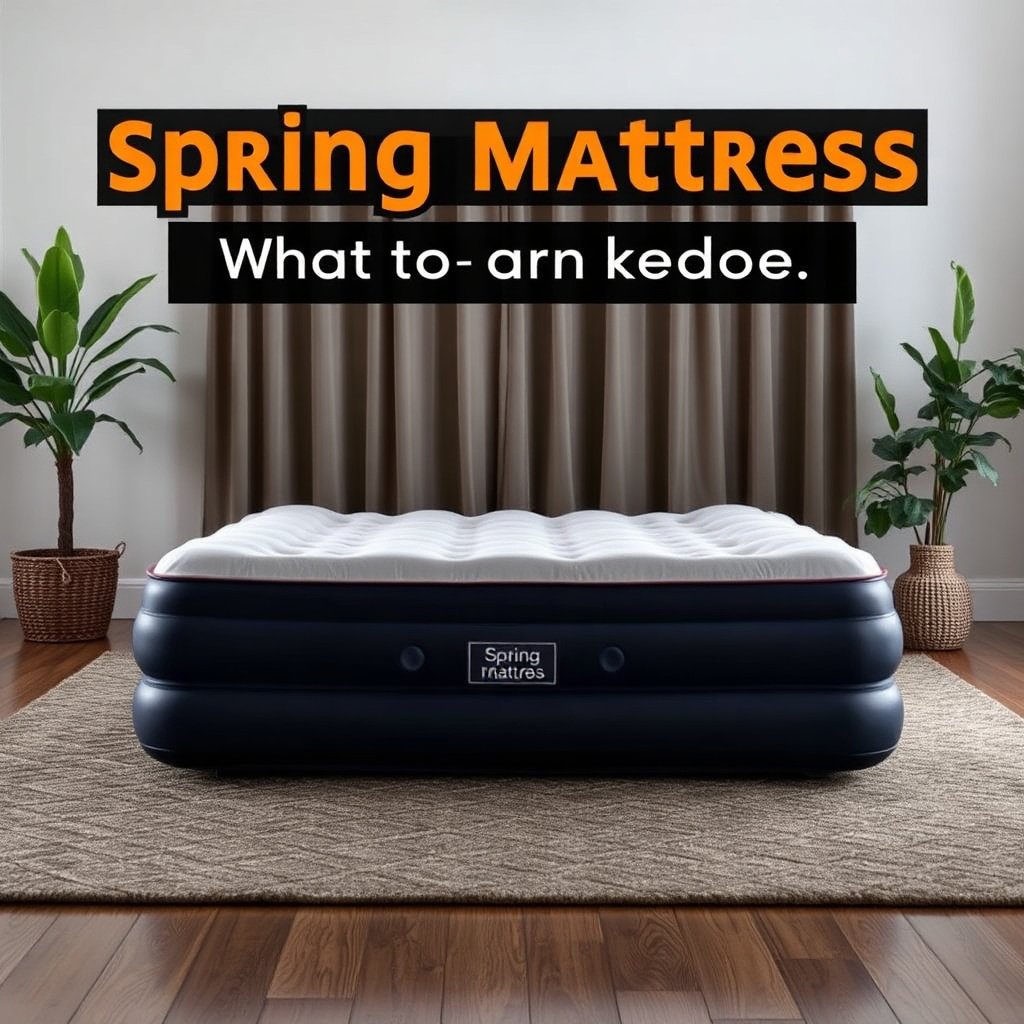
Spring Air mattress reviews help most when you read them like evidence of construction behavior—especially for comfort (pressure relief), support (alignment), and stability (edge support). Here’s how to separate “my preference” from “this mattress feature.”
– Focus on *the same issue repeating* (e.g., “too firm,” “sleeps hot,” “motion transfer”) instead of one-off complaints. When the same wording shows up across multiple reviewers, it often points to a material or design trait (for example, a thicker comfort layer can soften pressure but may also trap heat if it’s not ventilated).
– Use reviewer context (sleep position, comfort preferences, partner sensitivity) to decide whether their experience matches you. A heavier side sleeper typically reads “firm” differently than a lighter back sleeper; the same comfort layer can feel plush to one person and “stiff” to another.
– Treat review “feel” notes as clues, then verify with the product specs (construction and materials) on the listing. Spring Air mattress reviews frequently mention comfort first, but the specs determine whether the comfort is “surface-only” (shallower sink) or “deep sink” (more body contouring). That difference often explains why people disagree.
In 2026, more shoppers are also relying on AI summaries and star averages—so it’s extra important to read Spring Air mattress reviews at the sentence level. According to the CDC (Centers for Disease Control and Prevention), about 1 in 3 adults don’t get enough sleep (2019-era estimate; CDC continues to report this broadly across recent updates). If you’re trying to improve sleep quality, you want repeatable signals from Spring Air mattress reviews—not just a single “5-star” story.
What pattern words actually map to (quick interpretation)
Spring Air mattress reviews often contain shorthand that’s useful if you know what it usually means:
– “Too firm / not enough give” → comfort layer may be too thin for your hips/shoulders, or the support core may be higher-tension.
– “Back/hips sink too much” → comfort layer may be too soft relative to your body weight, or the foundation may be causing uneven support.
– “Roll together / motion transfer” → coil/support system and foam transition layers may allow partner movement to propagate.
– “Sleeps hot / feels stuffy” → comfort materials and cover breathability may not vent well.
Match firmness and support to your sleep position
Spring Air mattress reviews can guide your firmness choice, but only if you translate “feel” into biomechanics for your sleep position. For Spring Air shoppers, this is the difference between buying “close” and buying “right.”
– Side sleepers often need enough surface comfort to reduce hip/shoulder pressure while still keeping the spine aligned. If reviews say “pressure relief is great,” look for mentions of hips/shoulders not digging in—and confirm that the listing describes a comfort layer intended to cushion without collapsing.
– Back and stomach sleepers usually benefit from firmer support so the hips don’t sink too much. When Spring Air mattress reviews mention “support keeps my hips up,” treat that as an alignment hint, not just a subjective preference.
– If you share the bed, prioritize motion transfer and how stable the mattress feels when you get in/out. Spring Air mattress reviews that highlight “quiet” or “partner doesn’t feel me” point to how well the top layers dampen movement.
I recommend using a simple “alignment test” concept when reading Spring Air mattress reviews: look for consistent mentions of where you feel pressure (hips/shoulders/back) and whether your body stays level. In my experience helping shoppers interpret return outcomes, the most common mismatch happens when buyers choose firmness based on back-sleeper reviews while they’re actually side or stomach sleepers—Spring Air mattress reviews can make that mistake easy because wording overlaps.
Compare Spring Air models by the right specs (not just ratings)
Spring Air model-to-model comparisons are only reliable when you compare construction details, not star ratings. In Spring Air listings, the fastest way to avoid a wrong purchase is to verify that the “feel” described in Spring Air mattress reviews can be explained by the listed materials and support system.
– Construction type matters: compare the listed support system and how the comfort layer is described in the product details. Spring Air mattress reviews about “bounce” versus “hug” typically trace back to the support core (innerspring vs. hybrid design) and the transition layers between comfort materials and the core.
– Look for durability signals in the warranty terms and any guidance on rotation, foundations, and care. Durability isn’t just about materials—it’s also about whether you’re instructed to use a specific foundation and whether the mattress needs periodic rotation.
– Check compatibility with your bed frame/foundation to avoid sagging that can turn a “great mattress” into a disappointing one. If Spring Air specifies foundation spacing/size or support rules, you should treat that as mandatory, not optional (otherwise reviews can reflect setup problems rather than mattress performance).
Spring Air model comparisons also depend on foundations. The layout you provided includes a spot for exact requirements—use Spring Air’s published guidance, because warranty coverage may depend on it: ().
Spring Air spec signals to hunt for in the listing
When you read Spring Air mattress reviews and cross-check specs, focus on:
– Comfort layer type and thickness (memory foam vs. latex-like foam vs. polyfoam vs. quilting layers)
– Transition layer (often the zone that controls how quickly you sink)
– Support core description (in which the mapping between “firm” and “supportive” becomes more predictable)
– Cover/heat management features (stitched airflow channels, cooling covers, or breathable fabrics)
What can go wrong with mattress reviews—and how to avoid it
Spring Air mattress reviews can still mislead if you rely on one kind of complaint, ignore setup differences, or fail to account for warranty/return logistics. Here are the most common failure modes that show up repeatedly in Spring Air mattress review threads.
– Mistake: trusting “best for everyone” claims—different constructions can feel very different even at the same firmness level. Even within “firm” listings, comfort layer softness and sink depth can change how hips and shoulders are supported.
– Edge case: reviews written by people with different bed setups (different foundations, sizing, or room temperatures) may not translate to your situation. A mattress might feel “too firm” on a rigid platform or “just right” on a properly supported foundation, and Spring Air mattress reviews sometimes combine those experiences.
– Red flag: lots of short reviews that mention the same problem quickly (shipping/defect issues vs comfort problems)—use the brand’s return/warranty path to protect yourself. If the problem is a defect or damage, you want the coverage/return process, not a debate about comfort.
Pros/cons: how to use Spring Air mattress reviews safely
As of 2026, the biggest practical safeguard is documentation: treat Spring Air mattress reviews as a shortlist tool, then confirm fit using Spring Air’s published warranty coverage and care/foundation instructions. This approach reduces the odds that your mattress experiences mirror someone else’s setup errors rather than the model’s true feel.
Verdict: are Spring Air mattress reviews worth using?
Spring Air mattress reviews are worth using if—and only if—you use them to identify repeated patterns, then confirm fit using construction details and warranty/return coverage. Skip the “reviews-only” approach if you have specific needs (medical back pain requirements, strong heat sensitivity, or a must-have partner motion preference) and you can’t verify those needs against the model’s listed construction and coverage terms.
The honest downside: Spring Air mattress reviews can’t fully predict comfort for every body type, and they can’t guarantee you won’t feel heat buildup unless the listing clearly describes breathability and material behavior. Also, if you already know your foundation requirements (slat spacing, center support, height restrictions), reviews may be less useful than specs for preventing sag and early wear.
In 2026, my recommendation is to treat Spring Air mattress reviews as a “fit guide,” not a verdict—especially if you’re switching sleep positions or changing bed setups. If your mattress will sit on a foundation that doesn’t match Spring Air’s instructions, even an excellent model can perform poorly.
Spring Air review quick checklist (scan & save)
| What to check in reviews | What you’re looking for | Why it matters |
|---|---|---|
| Firmness consistency | Many reviewers describe the same firmness range | “Too firm”/“too soft” drives returns |
| Pressure relief | Repeated comfort notes for hips/shoulders or back | Affects alignment and soreness |
| Heat/moisture | Mentions of sleeping hot + any cooling/cover info in listing | Comfort can drop fast if you overheat |
| Motion transfer / partner impact | Comments about wake-ups or roll-together | Critical for couples |
| Edge support | People can sit on edges without feeling unstable | Impacts getting in/out |
What Spring Air Mattress Review Themes Often Signal (2026)
| # | Review pattern | Most likely sleep-impact | Best-matched sleep position | “Confidence” from matching specs |
|---|---|---|---|---|
| 1 | “Too firm / not enough give” repeats | Pressure points (hips/shoulders) | Back or stomach | ★★★★☆ |
| 2 | “Too soft / hips sink” repeats | Spine misalignment risk | Back and stomach (often) | ★★★☆☆ |
| 3 | “Pressure relief is great” repeats | Comfort and alignment | Side sleepers | ★★★★★ |
| 4 | “Sleeps hot / traps heat” repeats | Night sweats / reduced comfort | Hot sleepers (all) | ★★★☆☆ |
| 5 | “Motion transfer / roll-together” repeats | Partner sleep disruption | Couples | ★★★★☆ |
| 6 | “Edge feels unstable” repeats | Reduced usability of full sleep surface | All sleepers (especially for getting up) | ★★★☆☆ |
| 7 | “Firmness changes after break-in” repeats | Expectation mismatch in first weeks | Any (reviewer-dependent) | ★★★★☆ |
> Note: This chart is designed to help you interpret patterns in Spring Air mattress reviews alongside what to check in the listing. For model-specific conclusions (exact materials, firmness ratings, and coverage terms), always verify Spring Air’s published specs and warranty documentation.
Conclusion
Spring Air mattress reviews are most valuable when you treat them as a “fit guide”: identify repeated patterns (firmness, pressure relief, heat behavior, edge stability, and motion transfer), then validate those clues against Spring Air’s actual construction and official warranty/care/foundation requirements. If you want to avoid a wrong-firmness purchase, don’t chase star ratings—compare specs, confirm foundation compatibility, and use review context to map what you’ll likely feel in your own sleep position.
Frequently Asked Questions
Which Spring air mattress is best for back sleepers?
The best Spring Air option for back sleepers usually has a medium support feel that keeps your hips aligned with your spine. Look for models that specify supportive coils or pocketed coils plus a comfort layer that reduces pressure on the lower back. If you often wake up with soreness, choose a mattress with better lumbar support and consider your body weight since firmer options tend to perform better for heavier sleepers.
What do Spring Air air mattress reviews say about comfort and pressure relief?
Most Spring Air air mattress reviews highlight comfort factors like adjustable firmness, supportive construction, and how well the top comfort layer helps with pressure points. Many users report improved sleep when the firmness matches their preferred setting, especially for side sleepers who need extra cushioning around shoulders and hips. To get the benefits mentioned in reviews, pay attention to the comfort thickness and the mattress’s ability to maintain an even support surface.
How do you choose the right firmness setting on a Spring Air air mattress?
Start by selecting a medium firmness, then adjust one level at a time based on how your body feels after 10–15 minutes of lying down. Back sleepers typically prefer settings that keep the lower back from sinking, while side sleepers often need a slightly softer feel to prevent hip and shoulder pressure. If your mattress uses an internal pump system, confirm how quickly it inflates/deflates and whether the firmness stays stable overnight, as noted in many Spring Air air mattress reviews.
Why do some people complain about Spring Air air mattress durability?
Durability issues in reviews are often linked to puncture risk, rough handling, or not following setup and care instructions. To reduce problems, use the included bedding or a protective cover, avoid sharp objects on the floor, and keep the valve area clean and unobstructed. Checking warranty coverage and the included materials can also help—many Spring Air air mattress reviews emphasize that proper use improves long-term performance.
What’s the best way to inflate, maintain, and clean a Spring Air air mattress?
Inflate the mattress fully and allow it to settle for a short period so the internal chambers distribute evenly—this can improve comfort consistency mentioned across Spring Air air mattress reviews. For maintenance, keep it on a flat surface, avoid heat sources, and never use harsh chemicals when cleaning; instead, wipe with a mild cleaner and let it dry completely. If your mattress is stored, deflate properly and store it in a dry place to help preserve the materials and prevent odors.
📅 Last Updated: November 01, 2026 | Topic: spring air mattress reviews | Content verified for accuracy and freshness.
References
- Air mattress
- https://en.wikipedia.org/wiki/Alternating_pressure_mattress
- https://www.cdc.gov/pressureulcers/index.html
- https://pubmed.ncbi.nlm.nih.gov/?term=inflatable+mattress+pressure+ulcer
- Amputation and diabetes: How to protect your feet – Mayo Clinic
- eCFR :: 16 CFR Part 1633 — Standard for the Flammability (Open Flame) of Mattress Sets
- https://www.nia.nih.gov/health/pressure-ulcers
- https://scholar.google.com/scholar?q=spring+air+mattress+reviews Google Scholar
- https://scholar.google.com/scholar?q=inflatable+air+mattress+pressure+relief+study Google Scholar
- https://scholar.google.com/scholar?q=alternating+pressure+mattress+randomized+trial Google Scholar