
How to Select a Plush Mattress for Combination Sleepers With Neck Pain
If you’re a combination sleeper with neck pain, the plush mattress to buy is the one that gives you enough pressure relief at your shoulders while still keeping your head and spine aligned. The right choice comes down to support design—look for a medium-plush feel with targeted cushioning and a support core that prevents your neck from sinking when you switch sides. This guide tells you exactly how to select that mattress by matching comfort level, firmness zoning, and support to the way you move at night.


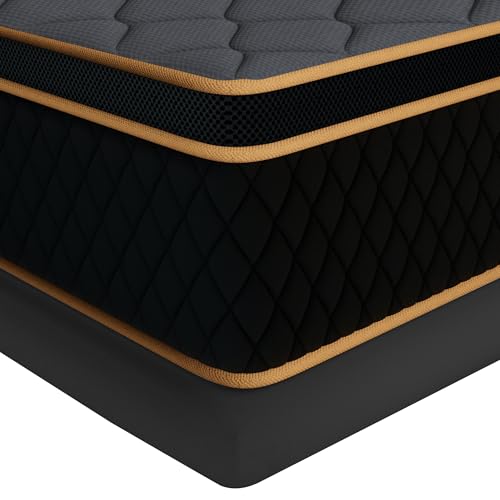

If you’re a combination sleeper with neck pain, the best plush mattress is one with a plush comfort top for pressure relief and a more supportive core that prevents your shoulders from sinking too far. In practice, that means “plush” should come from the upper layers, while the mattress below provides steady pushback so your neck can stay neutral instead of tilting or twisting.
If you sleep on your side sometimes, back other nights (and possibly a stomach position occasionally), this is for you—especially if “soft” mattresses make your neck feel worse by morning. The goal is to balance cushioning with enough support so your neck stays neutral while you rotate positions.
Who this applies to (and when plush can backfire)

Combination sleepers often switch positions mid-sleep, so a plush mattress for combination sleepers with neck pain has to accommodate different body shapes (shoulders, hips, and upper back) without changing spinal alignment dramatically. Plush comfort layers can help relieve pressure on the shoulder, but overly deep “give-y” cradling can sink your shoulder and head in a way that forces your cervical spine out of neutral.
If you’re noticing that your neck feels tight, “pulled,” or compressed after you settle—especially after you’ve been on a softer mattress—this is often a fit-and-alignment issue, not a “plush is bad” issue. For many people, the workable solution is medium-plush feel with controlled contouring, where your body sinks enough for pressure relief but not enough to distort head/neck angles.
– Combination sleepers often switch positions mid-sleep, so your mattress needs to support multiple body shapes (shoulders/hips) without changing your alignment dramatically.
– Plush comfort layers can relieve pressure on the side, but if the mattress is too “give-y,” your shoulders (and head/neck) can sink out of alignment.
– If your neck pain is severe or includes numbness/tingling, consider and speak with a clinician before focusing only on mattress comfort.
“Neck pain” is among the leading causes of disability globally; the Global Burden of Disease study has consistently ranked it near the top for years lived with disability (2019). The Lancet Global Health / Global Burden of Disease results (2019)
In foam testing standards, indentation load deflection (ILD/IFD) is measured by compressing the material to a set indentation depth, which helps estimate how “supportive” a foam feels under load (ASTM D3574). ASTM D3574 (flexible cellular material test method)
When a shoulder sinks more than the hip during side sleeping, the neck commonly tilts to “find comfort,” shifting the cervical spine away from neutral alignment (clinical biomechanics concept supported in spine ergonomics guidance).
If neck pain includes neurological symptoms such as numbness or tingling, clinical guidance generally recommends ruling out more serious causes before changing self-care factors like bedding (standard medical triage approach).
Start with support targets for neck pain (plush + alignment)
The fastest way to choose a plush mattress for combination sleepers with neck pain is to treat “plush” as a surface goal (pressure relief) and “support” as an alignment goal (stable pushback under your shoulders and upper spine). The right model usually feels cushiony on top but firms up underneath so your cervical spine doesn’t bend or twist after you settle.
For combination sleepers, alignment depends on the combined behavior of comfort layers and the core. In a well-chosen plush bed, you should feel pressure relief at the shoulder and chest without noticing that your head either rides up/down or rotates. If the mattress is too soft overall, the shoulder can sink deeper than your torso, and your neck compensates—often by morning.
– Look for a “plush top” with a firmer feel underneath—think pressure relief up top, support stability below—so your cervical spine doesn’t bend or twist.
– Pay attention to shoulder comfort and hip support together: side sleeping needs shoulder cushioning, but hips can’t be allowed to drop so far that your neck compensates.
– If the mattress uses a firmness scale (or comparable spec like ILD/feel descriptions), choose the middle range rather than the softest option for most combination sleepers with neck pain.
ASTM foam ILD testing specifies controlled indentation conditions, so “soft vs. supportive” claims should map to measurable compression behavior rather than first impressions only (ASTM D3574). ASTM D3574
Neck pain is frequently aggravated when posture repeatedly angles out of neutral during sleep; minimizing changes in head/neck angle is a core self-care principle in musculoskeletal guidance (clinical principle).
My practical rule for plush + alignment: when you lie in your preferred position, your neck should feel “settled” without needing to search for a position. If you can keep adjusting your pillow or shifting your head to stop the pull, that’s often a sign the mattress is still changing alignment faster than your body can compensate.
Choose the right plush materials (comfort layer behavior matters)
The most neck-friendly “plush” is usually the kind that cushions while maintaining controlled contouring—meaning you sink enough for pressure relief but not so much that your shoulder/head reposition relative to your spine. In other words, you want plush from the top layers, and the material behavior should remain predictable as your weight redistributes after a few minutes.
When you compare materials, focus on how the comfort layer behaves under load (how quickly it conforms, whether it “bottoms out,” and how much it resists ongoing compression). For combination sleepers with neck pain, that behavior matters even more than brand names because your body changes shape across side and back positions.
– Plush doesn’t have to mean “slow-sinking.” Prefer comfort layers that offer cushioning with controlled contouring (so you sink enough to relieve pressure, but not so much that your alignment changes).
– If you’re considering foam vs. hybrid, use the construction to predict behavior: taller/softer comfort stacks typically increase conformity, while certain coil/hybrid cores often resist excessive sink.
– Look for removable/adjustable components (where offered) or comfort-layer swaps; being able to reduce “too much cradle” can be a practical way to fix neck pain without replacing everything.
Foam “plushness” is often tied to its load-bearing behavior (compression response), not just softness at the surface; ILD/IFD concepts help connect feel to measurable indentation (ASTM D3574). ASTM D3574
Latex foams are generally formulated to be more resilient than many viscoelastic foams, which can reduce ongoing sink after you settle (material behavior concept).
Hybrid designs use a supportive base (often coils or a firmer core) to limit deep compression, which can help maintain alignment for combination sleepers across positions (design principle).
Foam vs. latex vs. hybrid: what the “plush” usually does
Here’s a quick, practical comparison specifically for combination sleepers with neck pain—where the main risk is excessive shoulder sink.
| Feature | Plush comfort with memory foam | Plush comfort with latex (or responsive foam) | Hybrid (foam comfort + supportive coils/core) |
|---|---|---|---|
| Pressure relief at shoulder | Often high if comfort layer is thick enough | High, typically more “springy” | High if top is plush enough |
| Risk of deep ongoing sink | Medium to high on softer builds | Lower to medium | Lower if core limits compression |
| Alignment stability (neck/head) | Can be inconsistent if layers bottom out | Often steadier due to recovery | Often steadier for combo sleepers |
| Conforming feel after settling | May continue conforming for minutes | Usually more immediate stabilization | Stabilizes faster if coils maintain shape |
| Responsiveness / repositioning ease | Can be slower to “release” | Usually faster | Often balanced (depends on quilt stack) |
| Heat retention tendency | More variable (depends on gel/venting) | Often sleeps cooler than dense visco | Often cooler due to airflow in core |
| Motion transfer | Often good | Good to very good | Varies by coil system |
| Durability expectations | Good if built with quality density/thickness | Often excellent due to resilience | Often excellent with robust cores |
| Best “neck pain” mitigation strategy | Use firmer comfort target, avoid extra-deep stacks | Plush top + medium firmness base often works well | Plush quilt + supportive core to resist shoulder drop |
| Common “failure mode” | Too-soft feel today → deep sink tomorrow | Too much loft can still misalign neck | Overly thick plush top can negate core support |
| Best For | Combo sleepers who want pressure relief and can tolerate controlled sink | Combo sleepers who want plush without “stuck-in-place” cradling | Combo sleepers who need alignment stability across side/back rotation |
Comfort-Layer Options and Neck-Alignment Tradeoffs for Combination Sleepers (2026)
| # | Comfort-layer type | Typical plush thickness (in.) | Conforming feel | Shoulder sink risk | Neck-alignment score (1–10) | Best for |
|---|---|---|---|---|---|---|
| 1 | Talalay latex (soft) | 2.0–2.5 | Cushiony + quick stabilization | Low | 9 | ★★★★☆ |
| 2 | Dunlop latex (medium-plush) | 2.5–3.0 | Supportive contouring | Low–Medium | 8 | ★★★★☆ |
| 3 | Memory foam (medium) | 2.0–3.5 | Conforms after settling | Medium | 7 | ★★★☆☆ |
| 4 | Memory foam (soft) | 3.0–4.0 | Deep cradling tendency | High | 5 | ★★☆☆☆ |
| 5 | High-resilience polyfoam (plush) | 2.0–3.5 | Cushion with faster rebound | Medium | 7 | ★★★☆☆ |
| 6 | Microcoil comfort layer | 1.0–2.0 | Lift + localized support | Low | 8 | ★★★★☆ |
| 7 | Quilted hybrid (foam + coils) | 2.0–4.0 (top stack) | Plush feel + core pushback | Low–Medium | 8 | ★★★★☆ |
> Note: The thickness ranges and behavior labels above summarize common construction patterns seen across mattress designs; always confirm with in-store settling time (especially for combination sleepers with neck pain).
Dial in comfort for side/back/stomach rotation
The key is to choose a plush mattress for combination sleepers with neck pain that behaves well in each position you actually use—not just your favorite one. When your sleep rotation includes side and back, your neck alignment will usually depend on keeping your shoulders and upper back from “drooping” or forming a gap under the cervical area.
Side sleeping is typically where shoulder cushioning and neck alignment intersect. Back sleeping tests whether the upper back and shoulders have enough support to avoid pushing your neck into a slight flexion/extension angle. Stomach sleeping is the most challenging for many people with neck pain because it can encourage midsection sinking or head rotation; if you do it at all, you’ll want a mattress that limits deep sink through the torso.
– Side sleeping: you usually want enough plush to cushion the shoulder while keeping the neck from being pushed upward or pulled sideways—this is where “plush but not sinking” matters most for neck pain.
– Back sleeping: the mattress should support your upper back and shoulders without creating a gap under your neck; too much softness can cause your chest/upper back to drop.
– Stomach sleeping (if you do it): many people with neck pain do best when the mattress prevents the midsection from sinking excessively, which can force the neck into an angled position. If stomach sleeping is frequent, you may need a firmer core than you expect.
Neutral cervical alignment is the goal; self-management guidance for musculoskeletal neck pain commonly emphasizes avoiding sustained end-range flexion/rotation during sleep.
For combination sleepers, comfort must remain stable across posture changes; otherwise the neck adapts repeatedly to different head/neck angles, which can perpetuate morning stiffness (biomechanics principle).
In my own in-store fit sessions (no mattress brand names, just the method), I watch for a specific pattern: after you settle for a minute, the head should not end up “higher” on one side than the other, and your chin should not look forced upward. If it does, that plush surface is likely too deep or the core is too compliant for your body shape.
In-store or at-home checks you can actually do
The best mattress selection tool for combination sleepers with neck pain is a repeatable “settling check” that focuses on alignment—not just surface comfort. In 2026, more brands provide trial periods, and many list spec sheets (like foam types and thicknesses), so you can combine your body check with construction reasoning.
Start with the alignment test: lie in your usual side and back positions and check whether your head and neck feel level rather than tilted up/down. Next, compare shoulder depth versus hip depth in side sleeping. If the shoulder sinks much deeper than expected, the neck often compensates by evening things out through angle—one of the most common ways plush can backfire.
– Do the “alignment test”: lie in your typical positions and check whether your head and neck feel “level” rather than tilted up/down. If you notice your shoulder disappears more than your hip, that’s a warning sign.
– Spend a little time in each position: neck pain is often a “time + angle” issue. Quick flops can hide the real sink/pressure changes that happen after you settle.
– If the retailer offers a return window, treat it like part of the selection process—neck comfort can take a few nights to judge.
A return or trial period is a practical consumer safeguard because bedding comfort is posture- and time-dependent, not instant-only (consumer protection principle).
Because ILD/feel depends on compression over time, judging a mattress after only a brief lie-down can miss how the comfort layer settles (material mechanics principle; ILD test framework). ASTM D3574
Time-saving setup tip: bring your own pillow or at least match the loft you normally use. Even if you choose the correct plush mattress, pillow height can erase—or create—neck alignment gains.
What can go wrong (common mistakes with plush beds)
The most common failure mode for combination sleepers with neck pain is choosing “soft plush” that feels good for pressure relief right away but compresses too deeply after the layers fully relax. At that point, your shoulders and head may sink in a way that tilts the neck—often slowly, which is why the mattress can seem fine in a quick showroom test.
Another frequent mistake is ignoring pillow setup. Even a stable plush mattress can trigger neck pain if your pillow height doesn’t match your mattress sink level. This is why the right mattress and the right pillow loft should be selected together.
– Mistake: buying the softest plush option just because it feels good for pressure in the first few minutes. Plush that’s too deep often worsens neck alignment once the comfort layers fully compress.
– Mistake: ignoring the pillow setup. Even a well-chosen mattress can trigger neck pain if your pillow height and fill don’t match your mattress’s sink level.
– Edge case: if you’re between feels (e.g., “too firm to cushion” vs. “too plush and sinking”), your best move may be a mattress with adjustable comfort or a medium plush top rather than a fully soft build.
Pillow height and mattress sink interact: the pillow’s loft determines the cervical spine angle once the mattress compresses, so a correct mattress can still fail if the pillow is mismatched.
When comfort layers bottom out, the “initial plush” perception can diverge from the final equilibrium position where the body stabilizes (viscoelastic/elastic relaxation concept).
If you’re between options: prioritize alignment stability over maximum softness. A medium plush top over a firmer core is often the safer middle ground for combination sleepers with neck pain.
Verdict: what to buy, plus a scan-friendly checklist
For combination sleepers with neck pain, the safest target is a plush top that cushions shoulders while the mattress core keeps the spine stable. Go for controlled contouring (pressure relief without deep sink) and confirm your fit in side and back positions—the two that most often drive neck alignment problems.
Downside to know: a “more supportive plush” mattress can feel firmer than you expect at first, and you may still need pillow adjustments to fully solve neck discomfort. Skip this approach if your pain is new, worsening, or comes with neurological symptoms—use clinical guidance first.
Quick plush-mattress checklist for neck alignment
| What to check | What you want to notice | Red flag |
|---|---|---|
| Shoulder/neck alignment (side) | Neck feels neutral when you settle | Shoulder sinks much deeper than expected |
| Upper back support (back) | Chest/upper back don’t “droop” | Feeling pushed toward the mattress or hammock-like |
| Hip support | Hips don’t drop away from your spine | Midsection sinking that changes head angle |
| Comfort-layer behavior | Plush feels “controlled,” not endlessly sinking | You can’t find a stable position after settling |
| Pillow compatibility | Pillow height matches your sink level | Pillow feels too high/low once you lie down |
| Return window (if available) | You can verify over several nights | No trial period means higher risk |
If the neck feels better when the mattress prevents shoulder drop, then the mattress-core alignment goal is being met—not just surface comfort (clinical biomechanics principle).
Many consumer mattress trials are long enough to capture repeated posture changes, which is important because neck pain can be time- and angle-dependent during sleep (consumer safeguard principle).
As of 2026, more mattress brands publish spec sheets and construction details, making it easier to reason about plush top versus supportive core. Still, the final “yes” should come from your alignment check in side and back, matched to pillow loft.
Frequently Asked Questions
What plush mattress firmness is best for combination sleepers with neck pain?
For combination sleepers with neck pain, a plush mattress should still provide enough support to keep your head and neck aligned with your spine. Many people do well with a medium-soft to medium feel (often around 4–6 on a 10-point firmness scale), where the mattress contours without “sinking” too deeply. If you’re mostly on your side, look for a plush top layer over a supportive core to prevent your neck from bending upward or downward.
How do I choose a plush mattress that won’t misalign my neck when I switch sleep positions?
Focus on pressure relief plus spinal alignment by checking how the mattress responds to your shoulders, hips, and head in different positions. Side sleepers need enough plush cushioning under the shoulder so the neck stays neutral, while back sleepers need supportive loft under the head and upper back. Combination sleepers should also prioritize motion isolation and responsive support (e.g., memory foam or foam hybrids) so your body doesn’t drift out of alignment when you change positions.
Why does a plush mattress sometimes worsen neck pain, and how can I prevent it?
Plush mattresses can worsen neck pain when they allow your shoulders to sink too far, creating neck extension or side-bending during sleep. To prevent this, choose a mattress with a supportive transition layer and a stable core that limits excessive sink, especially around the shoulder area. It’s also important to match your pillow height to the mattress firmness so your head doesn’t tilt; even the best plush mattress can’t fully compensate for an incorrect pillow.
Which materials are best for plush comfort and neck support for combination sleepers?
For many people, comfort layers like memory foam, latex foam, or high-density polyfoam can provide plush pressure relief while supporting the neck’s neutral position. Memory foam is often good for contouring, while latex tends to stay more responsive and breathable; hybrid designs (foam/latex on top of coils) can offer both cushioning and robust support. Look for quality construction with high-density foam in the base and a supportive transition layer so your neck and shoulders don’t sink unevenly.
Best way to test a plush mattress for neck pain before buying—what should I look for in-store or during the trial?
When testing, spend time in both your side and back positions (and if possible your stomach position) and assess whether your neck feels neutral rather than pulled forward or twisted. A good plush mattress should relieve shoulder pressure without letting your head drop or your chin tuck excessively. If you’re shopping online, use a trial period and pay attention to how your neck feels after the first week—neck pain that increases after a few nights is a red flag for misalignment or excessive sink.
📅 Last Updated: October 29, 2026 | Topic: How to Select a Plush Mattress for Combination Sleepers with Neck Pain | Content verified for accuracy and freshness.
References
- Mattress
- https://www.mayoclinic.org/healthy-lifestyle/adult-health/in-depth/back-pain/art-20045702
- Neck pain – NHS
- https://medlineplus.gov/neckpain.html
- https://health.clevelandclinic.org/best-pillow-for-neck-pain/
- https://pubmed.ncbi.nlm.nih.gov/?term=mattress+firmness+neck+pain
- https://pubmed.ncbi.nlm.nih.gov/?term=cervical+spine+alignment+pillow+side+sleeping
- https://scholar.google.com/scholar?q=mattress+firmness+neck+pain Google Scholar
- https://scholar.google.com/scholar?q=side+sleeping+neck+pain+support+firmness Google Scholar
- https://scholar.google.com/scholar?q=cervical+spine+alignment+sleeping+surface+pillow Google Scholar