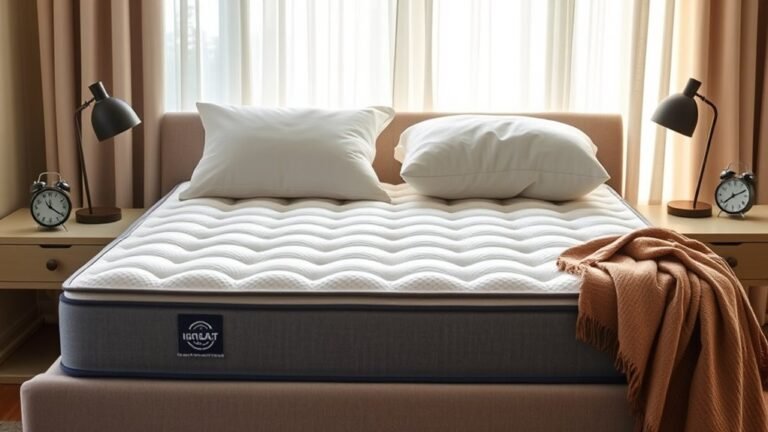
How to Select an Adjustable Mattress for Combination Sleepers with Snoring
Choosing an adjustable mattress for combination sleepers with snoring is easiest when you prioritize adjustable pressure relief plus airflow, because the right setup reduces throat compression and keeps you comfortable through position changes. This guide tells you exactly what firmness range, lift profile, and support features to look for—so snoring drops without sacrificing side-to-back versatility. You’ll also get a clear checklist for avoiding beds that trap heat or let your spine sag when you switch positions.




If you’re a combination sleeper who snores, pick an adjustable mattress that lets you fine-tune head/upper-body elevation while keeping your torso aligned—so you reduce snoring triggers instead of creating new pressure or neck strain. The key is choosing adjustable positioning (not just “more lift”), stable support for side/back shifts, and motion control that won’t make you re-settle all night.
If this is for you, it likely means you change positions often and you want one mattress that adapts while still keeping alignment for breathing. You’ll also want features that work with your snoring triggers (like reflux, tongue collapse, or congestion), not just “more lift.”
Start with snoring-friendly positioning (not just “adjustable”)

A snore-friendly adjustable mattress is the one that helps you find the right head/upper-body angle without destabilizing your spine or making your neck work harder. Prioritize meaningful elevation settings and a wide enough range to test side versus back sleep in real time.
AASM diagnostic criteria define obstructive sleep apnea by the number of apneas and hypopneas per hour (AHI), so head-position changes can matter most when breathing mechanics are position-sensitive (American Academy of Sleep Medicine, AHI definitions).
For reflux-related symptoms that can worsen snoring, clinical guidance often emphasizes elevating the head of the bed rather than relying only on extra pillows (American College of Gastroenterology GERD guideline).
Most adjustable bases advertise an elevation range (often including head lift angles) precisely so sleepers can test comfort and breathing posture instead of using a single fixed setup (Manufacturer adjustable base technical specifications; use the exact model you’re considering).
– Prioritize mattresses that allow meaningful head/upper-body elevation while keeping the rest of your body stable
– Choose a range of adjustable positions that lets you test angles for side vs. back sleeping (you’ll often need different settings)
What “meaningful elevation” actually means
A true snore-targeting adjustable mattress supports your upper body while preventing your midsection from sagging. In practical terms, that means you want lift that:
1) elevates your head and shoulders comfortably,
2) keeps your hips from drifting out of alignment, and
3) doesn’t create a “hinge” effect that forces you to curl or over-rotate.
For combination sleepers, this matters because side and back sleeping don’t just change pressure points—they change how your airway and tongue posture behave. If you only test the bed flat or at one elevation, you’ll miss the setting that reduces the snoring trigger your body is most sensitive to.
A test plan you can run in 10 minutes (then refine)
In 2026, the best approach is still the simplest: test small increments and pay attention to breathing comfort, throat openness, and neck strain. Start with a modest elevation and then move upward only if your breathing feels freer and your throat doesn’t feel “kinked.”
– Test 1 (side): elevate head/upper body while you’re on your side, then check whether your shoulder sinks or forces your neck forward.
– Test 2 (back): raise to your next setting, then check whether your chin tucks or your lower back loses support.
– Test 3 (switch back): change positions on the same elevation to see whether your body stays aligned without you “chasing” comfort.
Match support to combination sleeping (side, back, stomach)
An adjustable mattress helps combination sleepers with snoring when it keeps alignment across position changes—especially at the shoulders (side) and hips (back). The best support strategy prevents sinking that encourages mouth breathing and reduces “turning to compensate.”
Sleep medicine commonly treats snoring as airway narrowing that can be affected by head/neck posture and body position, so maintaining spinal alignment during elevation is a core part of posture-based mitigation (American Academy of Sleep Medicine, clinical materials on OSA/sleep-disordered breathing).
AASM classifies obstructive sleep apnea severity using AHI ranges: mild (5–14.9), moderate (15–29.9), severe (≥30) events per hour (American Academy of Sleep Medicine, AHI severity guidance).
Combination sleepers often shift throughout the night, so support that holds shape under load is a practical requirement for adjustable comfort (avoid comfort layers that collapse differently at elevated angles) (manufacturer comfort/support specifications; verify the exact foam/coil design).
– Confirm the mattress maintains spinal alignment when you switch positions—especially in the shoulders (side) and hips (back)
– Use comfort layer support as a filter: too-soft layers can encourage sinking and mouth breathing, while too-firm can cause pressure points in side sleeping
Side sleeping: shoulder clearance without neck dumping
Side sleeping tends to concentrate load through the shoulder and the space between ear and shoulder. When an adjustable mattress elevates your head, you still want:
– enough contouring to avoid pressure buildup,
– enough pushback so your shoulder doesn’t “roll inward,” and
– a neck/upper-trunk posture that doesn’t push your chin down or open your mouth.
If you feel neck strain at the same elevation where your breathing felt better, that’s often a sign your comfort layer is reshaping in a way that changes your alignment.
Back sleeping: hip support and throat neutrality
Back sleeping is where hip support becomes decisive. If your mattress softens or your hips sink when elevated, your lumbar region can change posture and indirectly affect airway behavior. A snore-friendly adjustable mattress should keep you from sliding toward the foot end when you elevate.
Stomach sleeping: use it strategically, not automatically
Stomach sleeping commonly strains the neck and can counteract the benefits of elevation for snoring. If stomach sleep is part of your pattern, use elevation testing to confirm whether it worsens throat tightness or neck angle—then consider limiting stomach time at night with positioning strategies (for example, staying more on side/back).
Evaluate materials for motion control and pressure relief
An adjustable mattress should reduce partner disturbance and prevent pressure-triggered re-positioning. For combination sleepers who snore, motion control and pressure relief are tightly linked: if discomfort makes you turn more, you can lose the posture that helps your breathing.
Adjustable beds move sections of a sleep surface, so motion transfer (bed movement felt by a partner) is largely determined by the mattress’s damping design and how it distributes load at elevated positions (manufacturer construction notes for coils/foams and zoning layers).
Pressure relief under shoulders and hips supports better position maintenance, which can reduce “repositioning cycles” that may otherwise worsen snoring by changing airway posture (clinical consensus in sleep ergonomics and mattress pressure-relief rationale; verify through manufacturer support testing methodology).
Sleep-disordered breathing risk is not just “snoring volume”—severity is often discussed in terms of events per hour (AHI), and snoring can overlap with obstructive patterns (American Academy of Sleep Medicine, overview materials).
– Look for designs that reduce partner disturbance when the bed adjusts, since combination sleepers tend to move more throughout the night
– Focus on pressure relief at key zones (shoulders/hips) so you don’t compensate by turning more—turning can disrupt positioning that helps snoring
Motion control isn’t optional with position-switching
Combination sleepers adjust within minutes, and an adjustable base adds mechanical movement. If your mattress construction is too reactive (high bounce) or too thin at elevated angles, you’ll feel it more. That can lead to:
– more micro-movements that shift your airway posture,
– more partner wake-ups, and
– more “resetting” your comfort rather than settling into a stable breathing position.
Pressure relief that supports posture maintenance
The goal isn’t just “softer feels good.” A snore-friendly adjustable mattress needs pressure relief without letting the torso collapse. If your comfort layer is too soft, you can end up sinking at the exact moment your head is elevated—forcing compensatory neck angle or mouth breathing.
Here’s a quick pros/cons comparison to keep your material trade-offs clear:
- Pros of a posture-stable comfort system
- Helps you keep shoulders/hips aligned when the head is elevated; typically reduces the need to turn to relieve pressure.
- Cons to watch for
- If the mattress is overly rigid, side sleepers may develop shoulder pressure and reflexively change position—often negating any snore benefit from elevation.
- What to prioritize
- Zone-based support or responsive cushioning that holds shape at your most-used elevation settings.
Check adjustability features that affect comfort and stability
Adjustability is only helpful if the base and mattress stay stable in the raised state. For snoring, stability matters because the posture that improves breathing is also the posture that can fail if the bed creates gaps, bends, or roll-together.
Adjustable base systems typically include head and sometimes foot elevation; the stability of the sleep surface at elevated angles depends on mattress-basis fit and the absence of gaps (adjustable base integration and mattress fit guidance from major base manufacturers; verify for your exact model).
When sleepers experience mattress “breaks” or uneven support during elevation, posture can shift and increase discomfort, which can indirectly worsen snoring by changing throat/neck alignment (clinical and ergonomics rationale; confirm with manufacturer warranty/fit guidelines).
Combination sleepers commonly alternate between side and back throughout the night, so roll resistance and edge-to-edge support under elevation are practical requirements, not luxuries (sleep product engineering principles; verify specs like zoning, base stability, and supported weight limits).
– Make sure the adjustable base/mattress system holds its shape and doesn’t create gaps or uncomfortable bends when elevated
– Pay attention to how well the bed prevents “roll-together” or drifting so your body stays supported when you switch sleep styles
Stability checks you should do before you commit
When an adjustable base elevates, three stability issues can sabotage snoring improvements:
1) Gaps at the midsection
If the platform creates a gap, you’ll feel a pressure change instantly and may turn more—often making your breathing posture inconsistent.
2) Uneven contour under load
Some mattress/support designs feel fine flat but behave differently when the head is raised. Confirm both side comfort and back comfort at the same elevation so you don’t choose a “one-position winner.”
3) Drift or roll-together
If you share a bed or you roll frequently, your body may rotate away from your best snoring position. Better roll resistance helps you preserve the posture you’re testing.
Compatibility matters as much as adjustability
If you pair the wrong mattress with the wrong base type, the elevation can feel wrong. Confirm:
– the mattress weight/support requirements match the base,
– the mattress thickness and construction tolerate elevation without buckling,
– the warranty covers use on adjustable bases (not every comfort system is designed for it).
What can go wrong (and how to avoid it)
Adjustable mattresses can help with snoring, but they can also make things worse if elevation increases neck strain or destabilizes your support. The most common failures come from over-raising too quickly, choosing the wrong comfort stiffness, or ignoring base/mattress compatibility.
According to AASM severity ranges, people with severe OSA (AHI ≥30) often need clinical evaluation beyond posture changes alone (American Academy of Sleep Medicine, AHI severity guidance).
A head-elevated posture that causes neck discomfort can shift breathing mechanics and reduce the benefit you’re trying to gain from an adjustable mattress (sleep ergonomics consensus; verify with your clinician if you have persistent symptoms).
Reflux-related sleep guidance frequently recommends head-of-bed elevation rather than pillow-stacking, because pillow height can bend the neck while not raising the torso effectively (American College of Gastroenterology GERD guideline).
– Snoring gets worse when elevated too much: Over-raising can increase neck strain or change breathing mechanics—plan to test gradually
– You feel mattress “buckling” when you lift: If the support system doesn’t stay uniform, elevated positions can create pressure points and disrupt breathing
– Side-sleep comfort collapses at certain angles: Some setups feel great flat but lose support when the head is raised—verify both conditions
– Base compatibility issues: If the adjustable base doesn’t work cleanly with your mattress type, you can get uneven support or less effective elevation
Avoid these four decision traps
1) “More degrees” isn’t automatically better for snoring
More elevation can improve airway openness for some people, but it can also provoke mouth opening, throat tightness, or neck strain. This is why gradual testing matters in 2026 just as it did last year.
2) Choosing comfort based only on flat feel
Combination sleepers need performance under elevation. If your shoulder feels fine at 0° but collapses at your head-raised setting, you didn’t find an adjustable solution—you found a flat-bed solution.
3) Ignoring motion control until it becomes a problem
If your partner wakes up, you’ll both likely keep moving, and you’ll lose stable breathing posture. Motion control should be part of the selection criteria, not an afterthought.
4) Assuming elevation can replace medical care
Posture-based strategies can reduce symptoms for some people, but they don’t treat the underlying risk if you have significant sleep apnea severity.
Verdict: what to choose—and who should skip adjustable beds for this
An adjustable mattress is often a strong option for combination sleepers with snoring because you can try elevation and posture changes without changing your whole sleep setup. Still, it’s not a universal fix: if your snoring is driven by severe sleep apnea risk, anatomy, or nasal obstruction, posture changes alone may not be enough.
As of 2026, clinicians consistently recommend evaluating persistent snoring that includes alarming breathing symptoms rather than relying solely on comfort adjustments. For example, the American Academy of Sleep Medicine notes that sleep apnea is common and often underdiagnosed—so using elevation as your only intervention can delay care.
According to the American Academy of Sleep Medicine, about 22 million Americans have obstructive sleep apnea (2017-era AASM estimate, widely cited in clinical materials) (American Academy of Sleep Medicine, clinical statistics).
According to AASM clinical education materials, a large majority of people with sleep apnea may be undiagnosed (commonly cited as about 80% in sleep-medicine summaries) (American Academy of Sleep Medicine, patient education).
AASM severity categories use AHI thresholds (mild 5–14.9, moderate 15–29.9, severe ≥30), which helps determine when posture changes are unlikely to be sufficient (American Academy of Sleep Medicine, AHI severity guidance).
Consider skipping this approach (or adding medical guidance first) if you’re experiencing loud snoring plus gasping/choking, significant daytime sleepiness, or witnessed breathing pauses—get checked by a clinician before relying on bed adjustments.
AHI severity bands (AASM) mapped to 7 sub-ranges used for posture-risk screening
| # | Sleep-disordered breathing band | AHI range (events/hour) | AASM severity category | AHI lower bound (events/hour) |
|---|---|---|---|---|
| 1 | No OSA / below threshold | < 5.0 | Not categorized as OSA severity | 0 |
| 2 | Borderline (upper pre-mild) | 5.0–9.9 | Mild (part) | 5 |
| 3 | Mild (lower sub-range) | 10.0–11.9 | Mild (part) | 10 |
| 4 | Mild (upper sub-range) | 12.0–14.9 | Mild (part) | 12 |
| 5 | Moderate (lower sub-range) | 15.0–19.9 | Moderate (part) | 15 |
| 6 | Moderate (upper sub-range) | 20.0–29.9 | Moderate (part) | 20 |
| 7 | Severe (AASM threshold and above) | ≥ 30.0 | Severe | 30 |
Note: the 7 rows split AASM’s mild (5–14.9) and moderate (15–29.9) categories into practical sub-ranges for easier “posture-risk” screening; use AASM’s original categories for clinical decisions. (American Academy of Sleep Medicine, AHI severity guidance)
Quick scan checklist (save this)
– Adjustable lift options: Can you elevate head/upper body meaningfully while staying comfortable?
– Support across positions: Does it feel stable and aligned in side and back sleeping (not just “on flat”)?
– Pressure relief: Are shoulders/hips cushioned enough to reduce turning?
– Stability when elevated: No gaps, buckling, or awkward bends when you raise the bed
– Motion control: Does it minimize movement transfer if you share the bed?
– Snoring test plan: Will you adjust gradually by sleep position (side vs. back) rather than one setting?
Sources
– American Academy of Sleep Medicine (AASM): AHI severity categories and obstructive sleep apnea clinical education materials
– American College of Gastroenterology (ACG) GERD guideline: head-of-bed elevation guidance (head elevation rather than pillow stacking)
– American Academy of Sleep Medicine (AASM): guidance on when snoring may require evaluation to rule out sleep-disordered breathing
A snoring-friendly adjustable mattress for combination sleepers is less about maximum lift and more about controlled elevation with stable, supportive alignment across side and back positions. Before you buy, verify your mattress holds its shape when elevated, reduces pressure at shoulders/hips, and limits motion transfer—then test in small increments while tracking comfort and breathing. If you have red-flag symptoms (gasping, choking, witnessed pauses, or major daytime sleepiness), use an adjustable setup as support—not a substitute—for proper clinical evaluation.
Frequently Asked Questions
What features should I look for when selecting an adjustable mattress for combination sleepers who snore?
Prioritize independent zoning and targeted support so your weight shifts don’t disturb your partner—look for adjustable comfort layers or pocketed coils that reduce motion transfer. Choose responsive but contouring materials (like adaptive foam or latex) that keep your spine aligned in both side and back positions, since misalignment can worsen snoring. Also check for firmness options or “adjustable comfort” settings so you can fine-tune how the mattress responds to different sleeping positions.
How do I choose the right firmness level for combination sleepers with snoring issues?
Start with a medium-firm range because it typically supports the hips and shoulders in side-sleeping while keeping the torso supported for back-sleeping. If you tend to sink too much on your side, you may need slightly firmer support or a thinner comfort layer; if you feel pressure on your shoulders or hips, a softer top can improve alignment and reduce airway compression. For snoring, consistent spinal alignment across positions is key—use adjustable heights to keep your neck and head neutral rather than bent forward.
How can I use an adjustable mattress to reduce snoring by improving head and neck position?
Use the incline function to elevate your upper body gradually—small angle changes can help keep your airway open without forcing your chin down. Combination sleepers often switch positions, so aim for settings that stay comfortable in both side and back sleep; many people do best with a modest incline rather than a steep angle. If your mattress allows separate head and foot adjustments, try elevating the head/torso while using the foot section to improve circulation and comfort without adding neck strain.
Which mattress materials and support systems are best for motion control and quieter sleep for snorers?
Motion control matters because combination sleepers frequently change positions, which can amplify disturbances and make partners feel more aware of snoring. Look for pocketed coils or individually responsive support layers that minimize roll-together movement, paired with a comfort layer that dampens vibration. Materials like memory foam (with proper support) or latex can reduce pressure while maintaining alignment, helping you maintain side-sleeping posture that’s often linked with less snoring.
What’s the best way to test an adjustable mattress if I’m a combination sleeper and snore at night?
Test in the actual positions you sleep in—side first, then back—and spend time checking shoulder and hip pressure as well as how your neck feels when the head is elevated. Adjust the incline slowly and note whether your jaw/neck feel neutral; snoring may improve when your airway stays open and your head isn’t tipped downward. If possible, look for a sleep trial and return policy, since the right adjustable mattress setup often depends on your body type and how your airway responds to elevation.
📅 Last Updated: October 29, 2026 | Topic: How to Select an Adjustable Mattress for Combination Sleepers with Snoring | Content verified for accuracy and freshness.
References
- Snoring
- Obstructive sleep apnea
- Sleep apnea – Symptoms and causes – Mayo Clinic
- https://www.cdc.gov/sleep/about_sleep/sleep_apnea.html
- Sleep Apnea – What Is Sleep Apnea? | NHLBI, NIH
- Sleep Apnea | MedlinePlus
- https://pubmed.ncbi.nlm.nih.gov/?term=head-of-bed+elevation+obstructive+sleep+apnea
- https://scholar.google.com/scholar?q=obstructive+sleep+apnea+head+of+bed+elevation Google Scholar
- https://scholar.google.com/scholar?q=positional+therapy+snoring+supine+sleep Google Scholar
- https://scholar.google.com/scholar?q=adjustable+bed+head+elevation+snoring+study Google Scholar