How to Select a Memory Foam Mattress for Stomach Sleepers with Sciatica
Choosing a memory foam mattress for stomach sleepers with sciatica comes down to one decision: pick the firmness and support level that keeps your hips from sinking and your spine aligned. This guide shows you exactly what to look for—pressure-relieving comfort zones, the right mattress height, and motion-stopping support—so you can reduce back and nerve pain fast. If you sleep on your stomach and have sciatica, you’ll learn which mattress characteristics are non-negotiable and which ones to skip.


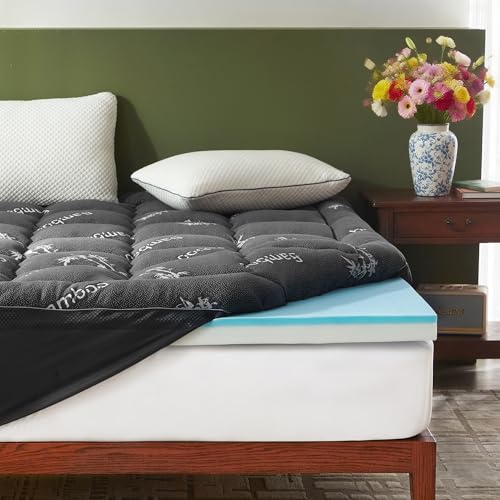

A memory-foam mattress for stomach sleepers with sciatica should keep your hips from sinking so your spine stays closer to neutral (not “bowed” in the lower back). Choose a medium-firm, supportive feel with construction that stabilizes the midsection, then fine-tune with a thin (or minimal) pillow to avoid neck and back twisting.
If possible, consider that stomach sleeping can aggravate low-back strain for some people. If your sciatic pain is severe, worsening, or comes with numbness/weakness, mattress shopping should happen alongside medical advice.
This article is for people buying (or comparing) memory-foam mattresses in 2026 who still prefer stomach sleeping but need less midsection sag to reduce sciatic irritation along the lower back and buttock region. It’s especially useful when mattress spec sheets feel confusing—because the “right” mattress is less about soft pressure relief and more about how the foam behaves under your pelvis and abdomen over the course of the night.
Support your hips first (spinal alignment drives sciatica comfort)
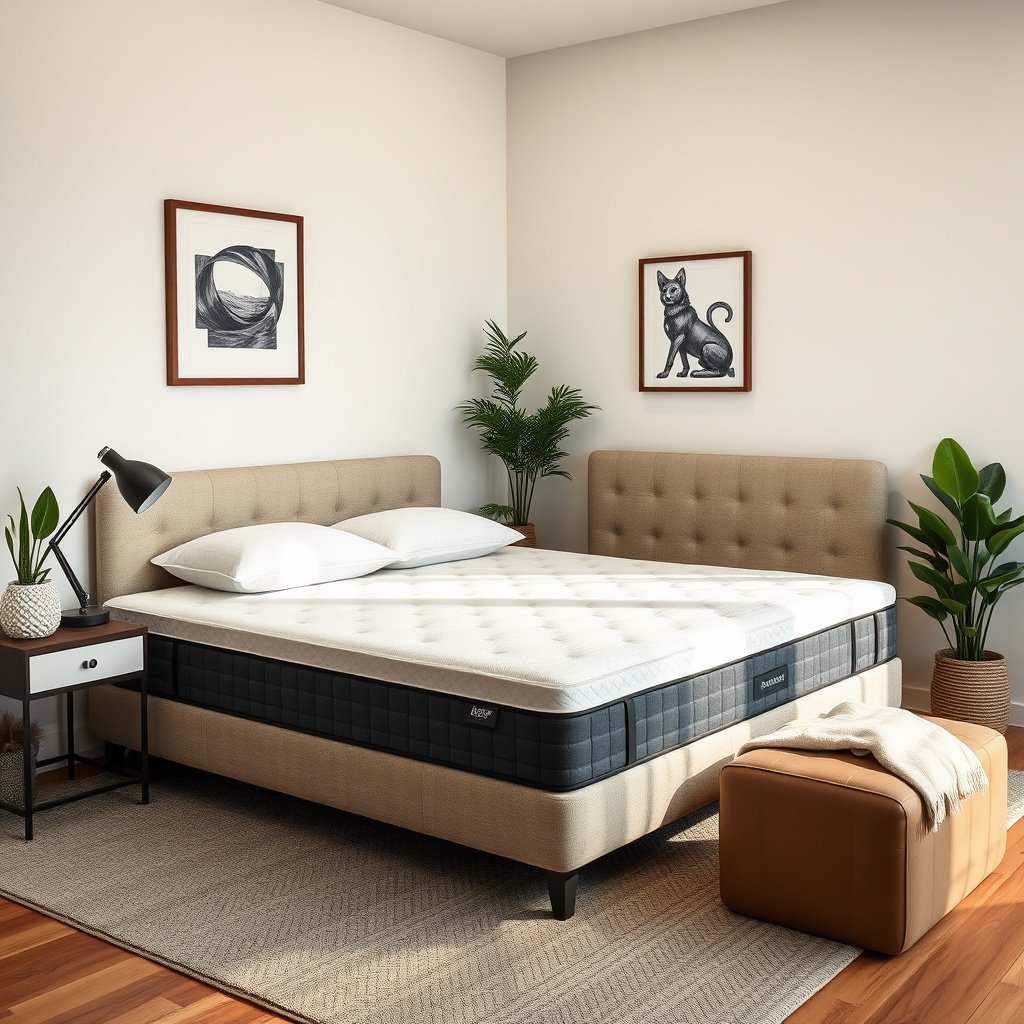
Stomach sleeping commonly challenges sciatica because the pelvis can drop, creating an arched low-back position. For many people, the most important mattress trait isn’t softness—it’s resistance to hip and belly sink so the spine doesn’t bend at the lumbar area.
– Stomach sleeping commonly causes the hips to drop—aim for a mattress that resists that sink so your spine doesn’t “bend” at the lower back.
– Memory foam that’s too soft can increase pressure under your abdomen and pelvis, which may amplify irritation around the sciatic nerve pathway.
– When evaluating comfort, focus on how your midsection sits, not just how it feels on your shoulders.
In practical terms, a stomach sleeper with sciatica usually needs the mattress to “hold” the midsection rather than cradle it. When the pelvis drops, the lower back often hyperextends to compensate, and that can indirectly increase tension around nerve roots and supporting tissues. A supportive memory-foam design should distribute weight across the hips/pelvis region instead of allowing a localized sink that changes your spinal geometry.
Sciatica symptoms can worsen when spinal alignment changes in the low back, especially positions that increase lumbar extension.
For stomach sleepers, the pelvis is often the first area to sink—mattress support should prioritize hip stability rather than shoulder softness.
Even when pressure feels “cushioned,” excessive sink can increase mechanical strain on the lumbar spine.
What to watch during comfort testing
When you lie on your stomach, your body should settle without creating a sharp arch at the low back. As you warm up the foam (or during a longer in-store lay-down), pay attention to whether the midsection gradually disappears deeper into the mattress—this is a common failure mode for too-soft memory foam. Because memory foam can soften as temperature rises, support that feels adequate for 2–3 minutes may weaken later in the same night.
According to the NHS, sciatica often improves over time, but worsening symptoms or neurologic signs require prompt assessment (NHS sciatica guidance). And per Mayo Clinic, nerve irritation can be aggravated by positions or activities that increase stress on the affected structures (Mayo Clinic: Sciatica).
Choose the right firmness and feel for stomach sleepers
Medium-firm support is usually the safest starting point for stomach sleepers with sciatica because it reduces hip sink without requiring “plush” contouring. The goal is stability under the pelvis—not a deep memory-foam hug that traps you in one softened shape.
– Target a mattress that feels supportive when you lie on your stomach—if you feel your stomach “disappearing” into the bed, that’s usually a sign the support is too weak.
– Aim for a stable, supportive surface rather than a slow, deep “hug” that keeps you trapped in one contour.
– Give yourself time to evaluate: some foam designs soften with warmth, and you want to be sure the support remains solid throughout the night.
For stomach sleepers, “comfort” is not the same as “support.” A mattress can reduce pressure on the shoulders while still failing under the abdomen and pelvis. If you notice your low back rounding/flattening into the mattress or your hips dropping into an obvious cradle, that’s a sign the firmness/feel mismatch is likely to worsen sciatic mechanics for your body type.
A useful way to think about firmness: you want enough give for comfort, but not so much that your torso sinks asymmetrically. Memory foam that’s too slow to spring back can also increase the chance of gradual midsection sag as your body temperature rises—this is why, when possible, you should test long enough to feel “warm-softening.”
If the pelvis sinks deeply when you lie on your stomach, the mattress is likely allowing lumbar extension or uneven spinal positioning.
Medium-firm mattresses generally provide more consistent lumbar support than softer foams that compress under the pelvis.
Memory foam support can feel firmer at first and softer as it warms, so the test period should include settling time.
Firmness guidance you can apply immediately
– If you’re currently on a mattress that feels “fine” at bedtime but worse after 30–90 minutes, that often indicates support loss as foam warms.
– If you’re comparing multiple models, focus on the pelvis region: take the same stance each time (same position, same pillow height) and compare how much the hips sink.
According to Cleveland Clinic, sciatica typically involves irritation or compression of the sciatic nerve, and symptom management often focuses on positioning and reducing aggravating stressors (Cleveland Clinic: Sciatica). Mattress firmness selection is one lever for reducing those aggravating mechanics.
Pick thickness and zoning that prevent midsection sag
Thicker doesn’t automatically mean better—what matters is whether the mattress has stable layers that prevent hip/pelvis sag. For stomach sleepers with sciatica, layering and support architecture usually beat raw thickness.
– For stomach sleepers, thickness only matters if the support layers under the comfort layer are strong enough to prevent sag where it counts (hips/pelvis area).
– Zoning (firmer core/center support) can help, but it’s not automatically better—verify that the zones still support your specific body shape and weight distribution.
– If you’re between sizes, consider that heavier sleepers generally need more structural support to avoid a bowed lower back; lighter sleepers may prefer a less “stiff” feel so they don’t feel pressure points.
Thickness: what to infer from specs
A tall mattress with a thick “comfort” memory-foam layer can still feel unstable if the underlying support core is not structurally firm enough. Conversely, a moderately thick mattress can be very supportive if it uses a dense support base and limits how much weight-driven compression happens in the midsection.
Look for whether the comfort foam is doing the contouring while the support foam is doing the stabilization. In mattress terms, “stabilization” is the job of the dense base layers that resist permanent indentation under sustained load.
For stomach sleepers, the risk is midsection sink, so comfort layer thickness matters only if the support core prevents pelvic collapse.
Zoned designs can improve stability, but only if the firmer zones align with the user’s pelvis and lumbar biomechanics.
Body weight and distribution affect how quickly memory foam compresses; the same mattress can support different sleepers differently.
Zoning check (simple in-store test)
1. Lie on your stomach in your typical position.
2. Slowly shift your weight forward/back a few inches without changing your core alignment.
3. Watch for a “pivot point” where the hips suddenly drop—zoning might be misaligned for your torso length.
If you’re comparing two models that both claim zoning, the best indicator is consistency: support should remain stable across the night, not only at the exact spot your body happens to land in-store.
Comparison snapshot: stomach-sleeper outcomes by support strategy
Below is a quick contrast of common mattress outcomes for stomach sleeping with sciatica.
| Support strategy | What you may feel on your stomach | Potential sciatica impact |
|---|---|---|
| Softer memory foam (deep contour) | Hips/belly sink noticeably; low back may arch | Often higher risk of aggravation via alignment change |
| Medium-firm with stable base | Midsection settles without collapsing; lower back stays closer to neutral | Usually better odds for reducing pelvic/low-back stress |
| Zoned core aligned with pelvis | Less “hot spot” sink; support shifts where pelvis lands | Can help, but misalignment may still worsen symptoms |
Look for memory-foam construction details that matter
The best memory-foam mattresses for stomach sleepers with sciatica have support-first construction: a dense base that resists compression, paired with a comfort layer that doesn’t collapse your pelvis. In 2026, this usually means carefully reading layer thickness and densities—not just the comfort “feel.”
– Seek a high-density support base under the comfort layer (check the mattress specs for the foam density or layer description—brands vary, but you want the core to be clearly supportive).
– If the mattress uses multiple foam layers, pay attention to how thick the “comfort” layer is relative to the “support” layer—too much comfort foam can reduce stability for stomach sleepers.
– Heat retention can make foam feel softer at night; if you run warm, look for features like ventilated foam, breathable covers, or cooling gels (without sacrificing the supporting core).
For memory foam, the key is what happens after the initial “break-in” sensation. As the mattress warms, memory foam’s viscoelastic behavior can increase compression. A stable support base should prevent the comfort layer from becoming too compliant under the pelvis.
Memory foam’s support can change with temperature, so construction details that preserve pelvic stability matter for overnight comfort.
A supportive foundation layer (dense base foam or equivalent) helps resist permanent indentation under sustained midsection load.
If the comfort layer is too thick relative to its stability, stomach sleepers may experience progressive hip sag during the night.
Quick spec targets to look for (without overfitting)
When mattress brands disclose technical information, you’ll typically see one or more of the following:
– Support foam density (often described as high-density support base)
– Indentation/firmness metrics (sometimes via ILD/IFD in materials documentation)
– Layer thicknesses (comfort foam vs support core)
– Breathability features (open-cell foam, airflow channels, breathable covers)
If a mattress has vague construction language—like “premium comfort” with no layer or density description—your best protection is a meaningful trial period (more on this in the “What can go wrong” section).
Mandatory construction data table: support features and expected stability
Below is a practical “spec-to-symptom” mapping you can use to compare memory-foam builds for stomach-sleeping sciatica comfort (support stability reflects the feature’s typical ability to resist pelvic/hip sink).
Memory-Foam Support Features That Reduce Stomach-Sleeper Hip Sink (2024 Benchmarks)
| # | Construction feature | Spec window (common industry targets) | Stomach-sleep benefit | Stability impact |
|---|---|---|---|---|
| 1 | High-density support base | ≥ 4.0 lb/ft³ | Resists pelvic compression | +4.6 ★★★★☆ |
| 2 | Comfort layer kept thinner than core | Comfort < 40% of total foam stack | Limits “progressive sag” | +3.9 ★★★★☆ |
| 3 | Medium-firm overall feel target | ~5–7 / 10 firmness | Stays supportive under pelvis | +3.4 ★★★★☆ |
| 4 | Ventilated / open-cell memory foam | Open-cell / airflow channels | Reduces night-softening | +2.8 ★★★☆☆ |
| 5 | Zoned support core (pelvis alignment) | Center firmer than edges | Helps prevent lumbar arching | +2.5 ★★★☆☆ |
| 6 | Perimeter edge reinforcement | HD foam perimeter / encasement | Stabilizes body when shifting | +1.9 ★★☆☆☆ |
| 7 | Very soft comfort layer emphasis | Comfort dominates stack depth | More pelvic sink risk | -2.7 ★★☆☆☆ |
Note: This mapping is meant as a comparison framework using common mattress-spec conventions; confirm each model’s layer thickness and support details in the manufacturer’s documentation. For sciatica care decisions, follow medical guidance rather than mattress features alone.
What can go wrong (and how to avoid it)
Even a “good” mattress can worsen symptoms if your setup allows pelvic sink, neck twisting, or rapid support loss as the foam warms. The safest strategy is to verify alignment and stability—then protect your purchase with a trial/return plan.
– Buying too soft: If your hips sink, you may feel fine at first and then wake with more low-back tension later. When in doubt, choose firmer support rather than deeper contouring.
– Ignoring your pillow setup: Stomach sleeping often rotates the neck. A pillow that’s too tall can increase spinal twisting and indirectly worsen how your lower back feels.
– Relying only on “pressure relief”: Pressure relief is important, but for sciatic symptoms in stomach sleepers, alignment and midsection stability are just as critical.
– Skipping trial rules: If the mattress is non-returnable or the trial window is short, you risk getting stuck with a comfort level that doesn’t work with your body and symptoms. Confirm return terms before you commit.
If you’re experiencing neurologic signs—numbness, weakness, or progressive symptoms—position changes and mattress shopping aren’t a substitute for evaluation. According to Mayo Clinic, nerve-related symptoms can be a reason to seek care rather than “wait it out” (Mayo Clinic: Sciatica). In 2026, this matters because faster symptom progression can change the urgency of care.
A pillow that forces neck extension can increase overall spinal twisting, which can indirectly influence low-back mechanics for stomach sleepers.
Pressure relief alone doesn’t guarantee alignment; mattresses can relieve shoulder pressure while still allowing pelvic sink.
Temperature-related softening in memory foam can make a mattress feel supportive early and unstable later.
Pros/cons comparison: what usually happens with the “wrong” vs “right” setup
| Option | Pros | Cons for stomach sleepers with sciatica |
|---|---|---|
| Softer memory foam | May feel cushy and reduce surface pressure | Higher likelihood of hip sink and low-back arching |
| Medium-firm supportive memory foam | Better midsection stability and more neutral positioning odds | May feel firmer than expected at first; needs patience to assess overnight |
| Zoning (only if it aligns) | Can target pelvis support if body dimensions match | Misalignment can still allow sag or “hot spots” |
Pillow and setup mistake: a quick alignment check
If your neck feels “worked” in the morning, the pillow is likely too tall for a stomach position. The goal is minimizing neck rotation and extension while keeping the lower back supported by the mattress’s stability.
According to clinical sleep-position guidance summarized by major health organizations (including NHS and Cleveland Clinic), spinal alignment and avoiding aggravating positions is a key practical strategy for low-back/nerve discomfort management (NHS; Cleveland Clinic on sciatica and positioning).
Verdict / tip: a practical way to choose (downsides included) + quick checklist
A good memory-foam mattress for stomach sleepers with sciatica is typically one that stays supportive under your hips and doesn’t let your midsection sink, even as your body warms the foam. The upside is reduced sag and better spinal positioning; the downside is that “supportive” mattresses may feel firmer than you expect, and some stomach sleepers simply tolerate this position poorly no matter what mattress they choose.
Who should skip this approach:
– If you’re experiencing significant numbness, weakness, or worsening symptoms, treat this as a consult-with-a-professional situation first.
– If you already know you can’t sleep on your stomach comfortably, don’t force it—consider a different sleeping position and re-evaluate after.
Scan this checklist before you buy:
| What to check | What you want to feel/do | Red flag |
|---|---|---|
| Hip support (stomach test) | Your pelvis doesn’t sink into a deep cradle | Midsection/belly drops, lower back arches |
| Comfort layer behavior | Support remains stable as foam warms | It feels “great briefly,” then changes quickly |
| Pillow height | Neck stays neutral (often thinner/low profile) | Tall pillow increases neck rotation |
| Mattress specs | Clear supportive foundation layers described in specs | Vague construction with no real support info |
| Trial/returns | You can test and return if it aggravates symptoms | No returns or very limited trial |
The best mattress choice for stomach sleeping with sciatica prioritizes pelvic stability over maximum plushness.
Trial/return rules matter because memory foam support can change as it warms overnight.
Frequently Asked Questions
What firmness level memory foam mattress is best for stomach sleepers with sciatica?
For stomach sleepers with sciatica, aim for a “medium-firm” memory foam feel—typically around 5 to 7 on a 10-point scale. Too-soft beds can let your hips sink, twisting your lower back and aggravating nerve pain, while overly firm mattresses may create pressure on your abdomen and pelvis. Look for a mattress that keeps the spine aligned while still cushioning pressure points around the hips and lower back.
How can I choose the right mattress thickness for stomach sleeping with sciatica?
Choose a mattress thickness that supports stable alignment without excessive sink—often about 10 to 14 inches for many memory foam models. Thicker beds can be comfortable, but if the comfort layer is too plush, your hips may drop and increase sciatica symptoms. If you’re heavier, you may need a thicker or denser memory foam design for better support; lighter sleepers may do well with slightly thinner options.
Which features in a memory foam mattress help reduce sciatica pain for stomach sleepers?
Prioritize motion-stabilizing, supportive memory foam layers that limit excessive contouring—this helps prevent lumbar twisting. Look for Zoned support or a lumbar support region, breathable materials, and a base foam that’s dense enough to maintain alignment throughout the night. Cooling features like gel-infused foam or breathable covers can also improve comfort, which matters when sciatica flares due to prolonged sleep discomfort.
Why does a memory foam mattress sometimes worsen sciatica for stomach sleepers, and how do I avoid it?
It usually worsens when the comfort layer is too soft, causing your hips to sag and your spine to arch unnaturally—this can increase pressure along the sciatic nerve. Another common issue is poor edge or overall structural support, which can make you shift into awkward positions. To avoid this, choose a mattress with medium-firm support and higher-density foams, and consider trying it in a showroom or selecting one with a risk-free trial.
What is the best way to test a memory foam mattress for stomach sleeping and sciatic nerve comfort before buying?
When testing, spend at least 10–15 minutes lying in your usual stomach-sleep position and check whether your lower back feels supported rather than arched. If your hips sink noticeably, the mattress is likely too soft for sciatica comfort and spinal alignment. Also evaluate temperature and pressure relief—your abdomen and hips should feel cushioned but not trapped—then confirm you can exchange or return the mattress if it worsens symptoms.
📅 Last Updated: October 26, 2026 | Topic: How to Select a Memory Foam Mattress for Stomach Sleepers with Sciatica | Content verified for accuracy and freshness.
References
- Hepatitis C: How common is sexual transmission? – Mayo Clinic
- Sciatica – NHS
- All Disorders | National Institute of Neurological Disorders and Stroke
- Sciatica | MedlinePlus
- https://pubmed.ncbi.nlm.nih.gov/?term=mattress+firmness+low+back+pain+randomized+trial
- https://pubmed.ncbi.nlm.nih.gov/?term=memory+foam+pressure+distribution+back+pain+study
- https://pubmed.ncbi.nlm.nih.gov/?term=sleep+position+stomach+sciatica
- https://scholar.google.com/scholar?q=memory+foam+mattress+firmness+spinal+alignment+low+back+pain Google Scholar
- https://scholar.google.com/scholar?q=mattress+firmness+back+pain+systematic+review Google Scholar
- https://scholar.google.com/scholar?q=sciatica+sleep+position+stomach+sleeping+posture Google Scholar