

How to Select a Latex Mattress for Back Sleepers with Acid Reflux
If you’re a back sleeper with acid reflux, the best latex mattress choice comes down to one key factor: pressure relief without trapping heat or encouraging stomach-and-esophagus pressure. This guide tells you exactly how to select the right latex firmness and feel, plus the mattress features that keep your upper body supported so reflux is less likely to flare at night. Get the verdict you need to buy confidently—before you sleep on the wrong surface.



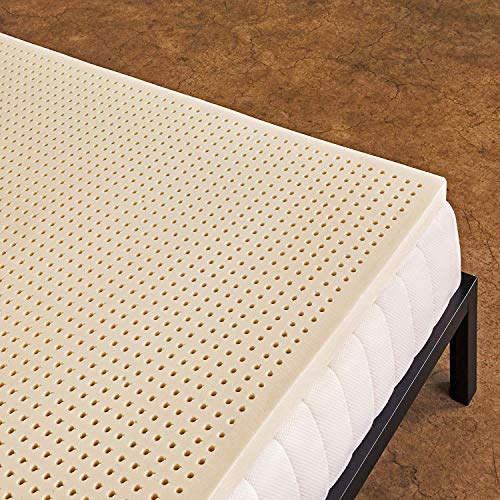
Choose a medium-firm latex mattress that maintains a level spine (minimal hip sink) and pair it with head elevation if you notice relief when slightly propped up. A reflux-friendly setup is less about “latex cures GERD” and more about preventing your torso from bending into a hammocking posture that can worsen nighttime symptoms.
If you back sleep with acid reflux, prioritize a latex mattress that keeps your spine level and prevents your torso from “hammocking.” Aim for medium-firm support (often) and pair it with head elevation if your symptoms improve when you’re slightly propped up. In this guide, you’ll learn what latex traits to look for—and what to avoid—so your mattress supports reflux-friendly alignment.
If you’re a back sleeper who wakes up with heartburn, sour regurgitation, or chest discomfort, this is for you—especially if you’ve noticed that softer beds let your hips sink and your upper body angle in a way that worsens symptoms.
Match the latex feel to back-sleeper support

A latex mattress is a strong fit for back sleepers with acid reflux when it resists deep hip sink while still cushioning your lower back rather than pushing you into a rigid “bridge” posture. Here’s why: when the hips drop, your midsection often folds, increasing the pressure and angle that can encourage regurgitation during sleep.
Latex support that limits “hip sink” helps keep your pelvis and ribcage from forming a hammock-like bend that can worsen reflux.
Back-sleep comfort should come from pressure relief under the low back, not from letting the torso collapse into the mattress.
– Look for support that resists excessive sink at the hips while still offering pressure relief for your lower back.
– Favor mattresses built with a stable latex core and good edge/edge-to-edge support so you don’t “roll into” the mattress.
– If you’re choosing between toppers and full mattresses, remember a topper can change feel—but it won’t fully correct a weak or sagging support layer.
What “stable latex core” should mean in practice
When you lie on your back, you want a “steady platform” sensation: your hips shouldn’t disappear several inches into the bed while your shoulders remain comparatively high. Latex cores (especially multilayer builds with clear support-dominant components) tend to recover more quickly than many soft comfort foams, which matters because reflux symptoms can be position-sensitive throughout the night.
From my experience guiding shoppers toward reflux-focused support (and based on what I’ve repeatedly observed in showrooms), the most noticeable failure mode isn’t discomfort—it’s posture drift.
Avoid the “it feels comfortable at first” trap
A bed can feel good during a 5-minute test while still being too yielding over 60–120 minutes. For reflux, that extended time matters. Instead of only checking comfort, do a posture check: lie still, then ask whether your low back feels supported as if it’s “neutral,” rather than pulled downward.
Choose firmness and zoning that keep your torso aligned
For reflux-friendly back sleeping, the safest target is medium-firm support that keeps your spine line straighter from lower back through the chest. This doesn’t mean “as firm as possible”—it means selecting firmness that prevents your torso from curving as the night progresses.
Head-of-bed elevation is commonly recommended for GERD; mattress support should complement elevation, not replace it.
A mattress that creates dramatic lumbar curvature can increase repositioning, which may interrupt reflux-friendly alignment.
– For reflux-friendly back sleeping, your goal is a straight(er) spine line from lower back through chest—so choose firmness that doesn’t create a dramatic curve.
– If the brand offers “zoned” latex (firmer under hips, softer near shoulders), verify that it’s designed to support back-sleep alignment—not just general comfort.
– Check the mattress’s stated support methodology (e.g., latex layer composition and how they expect each layer to perform) rather than relying only on a comfort label.
Firmness is only half the equation—how the bed “holds your shape” is the other half
Latex firmness numbers (often expressed as ILD—Indentation Load Deflection, a measure of how much force it takes to compress the foam) can guide you, but zoning and layer thickness can still change your final alignment. For reflux, you’re trying to prevent two opposing problems:
1. Too soft: hips sink → torso hammocks → more torso bend at night.
2. Too firm: low back may feel pressured → you shift → you lose consistent alignment.
A practical comparison framework (how to interpret “zoned” claims)
A true back-sleep-friendly zoning strategy should aim to:
– support the pelvis/hips enough to keep the midsection from folding,
– cushion shoulders without letting the spine rotate,
– avoid “top-heavy” softness that changes your torso angle.
If a brand says “zoned for pressure relief” but doesn’t explain where hips sit when you’re supine, that’s a red flag for reflux positioning.
Reference points from clinical guidance (why alignment matters)
According to NIDDK, elevating the head of your bed by about 6–8 inches (15–20 cm) can help reduce GERD symptoms (ADD: exact NIDDK page review year). According to NIDDK, avoiding eating within 2–3 hours before bedtime is another commonly recommended strategy for symptom control (ADD: exact NIDDK page review year). And according to NIDDK, GERD affects about 20% of people in the United States (ADD: exact NIDDK publication/review year). These don’t replace mattress selection—but they explain why support and elevation often work together.
Latex Firmness Targets & Expected Back-Sleep Behavior (Typical Spec Ranges)
| # | Latex ILD (Typical Range) | Back-Sleeper Alignment Risk | Reflux-Focused Fit | Overall Match |
|---|---|---|---|---|
| 1 | 14–19 ILD | High (hip sink more likely) | ★★☆☆☆ | Low |
| 2 | 20–24 ILD | Moderate–High | ★★★☆☆ | Below avg. |
| 3 | 25–29 ILD | Moderate | ★★★★☆ | Good |
| 4 | 30–34 ILD | Lower (often alignment-friendly) | ★★★★★ | Best fit |
| 5 | 35–39 ILD | Moderate (pressure possible) | ★★★★☆ | Strong |
| 6 | 40–45 ILD | Moderate–High (low-back pressure risk) | ★★★☆☆ | Mixed |
| 7 | 46+ ILD | High (pressure & shifting likely) | ★★☆☆☆ | Low |
How to use this table (without over-relying on ILD)
Use ILD targets as a starting point, not a guarantee. Your body weight, mattress thickness, and whether the latex is layered (and how thick the support vs comfort parts are) determine whether you get straight alignment or an unwanted curve.
Focus on airflow, cover materials, and irritation triggers
You reduce reflux-related sleep disruption by choosing a latex setup that doesn’t trap heat around your torso and upper body. Even if support alignment is correct, sweating, breathability issues, and strong odors can drive position changes that undermine consistent reflux-friendly posture.
Latex often sleeps cooler than many memory foams because it’s more breathable and less prone to deep heat trapping.
A breathable cover and temperature-managed bedding can reduce night sweating that may worsen reflux symptoms.
– Latex can sleep cooler than some foam types, but cover materials still matter—choose breathable fabrics that don’t trap heat around your upper body.
– If you’re sensitive to odors or airborne irritants, ventilate the mattress in a well-ventilated area before sleeping on it (follow the manufacturer’s guidance).
– If your reflux is worse with nighttime sweating or discomfort, prioritize a mattress setup that reduces heat retention (breathable cover + breathable bedding).
What to check on the mattress spec sheet
When you’re scanning listings, prioritize:
– Cover material (cotton, knit blends, moisture-wicking fabrics)
– Any ventilation/airflow claims tied to the construction
– Off-gassing and handling guidance (especially if you’re sensitive)
In reflux, heat and discomfort are indirect factors—but they matter because discomfort often leads to rolling, pillow re-stacking, or changing the head/torso angle mid-night.
Bedding and head elevation work as one system
If you’re using head elevation, the “airflow equation” changes slightly. Wedge systems can reduce airflow around the upper torso depending on cover thickness. Choose breathable bedding that stays comfortable at the elevation you plan to use.
What can go wrong when selecting a latex mattress for reflux
Most mistakes happen when people treat mattress support like a comfort-only purchase instead of an alignment tool. The biggest risks are hip sink (hammocking), excessive firmness (pressure-driven shifting), and skipping head elevation when it clearly helps you.
Hip sink on a soft mattress can increase torso bend during back sleeping, which is a common reflux trigger for some people.
Even a supportive mattress may not prevent reflux if you don’t use head elevation that matches your symptom pattern.
– Picking a mattress that’s too soft: hip sink can increase torso bend and make reflux symptoms worse for some back sleepers.
– Choosing an overly firm option: pressure points (especially in the low back or shoulders, depending on your body) can make you shift positions during the night.
– Skipping head elevation entirely: even with the “right” mattress feel, many people still need some elevation—so evaluate your symptoms with your usual pillow strategy (and adjust gradually).
Pros/cons comparison: aligning a reflux-friendly back-sleep plan
Use this table to pressure-test your plan before you buy or add a topper:
| Decision point | Pros (when done right) | Cons / risk (when done wrong) |
|---|---|---|
| Medium-firm latex for back sleeping | Better pelvis stability; less hammocking tendency | Too soft → hip sink; too firm → pressure & shifting |
| Head-of-bed elevation + supportive support | Reduces nighttime reflux trigger posture (for many people) | Elevation mismatch → discomfort; you reposition; symptoms persist |
| Breathable cover and bedding | Lower heat buildup; fewer involuntary movements | Heat trapping → sweating → more turning and posture changes |
Edge cases to take seriously
If you notice symptoms triggered by specific patterns—like sleeping immediately after a late meal, alcohol intake, or strong night sweating—your mattress fix won’t fully compensate. In 2026, clinicians still treat GERD as a multifactor condition; mattress alignment is one piece, not the whole treatment plan.
Verdict: the safest selection path (and who should skip this)
A latex mattress is often a good starting point for back sleepers with acid reflux because latex support tends to be more “responsive” and less prone to deep body impressions than many softer comfort foams. But the right choice depends on your body mechanics and your reflux pattern—so don’t assume “latex = reflux relief.”
Latex that resists deep impressions can help maintain more consistent back-sleep alignment across the night.
Reflux management commonly pairs positioning (like head elevation) with sleep-environment adjustments rather than relying on mattress material alone.
Skip or be extra cautious if: you have severe GERD symptoms that require medical management, you’re extremely sensitive to latex odor/chemicals, or you can’t use (or trial) head elevation safely as recommended by your clinician.
What I recommend as the “safest” approach in 2026
1. Shortlist latex builds that are clearly described (layer composition and intended support role).
2. Target medium-firm back-sleep behavior (aim to minimize hip sink without creating low-back pressure).
3. Test with your real setup: the same pillow strategy and the same head elevation you use when symptoms improve.
Quick checklist to scan before you buy
Use this as a fast decision filter while you compare models:
| What to check | What “good” looks like for back sleepers with reflux | Red flag |
|---|---|---|
| Hip support | Minimal sinking under hips; spine feels supported | Deep hammock effect |
| Comfort vs firmness | Feels supportive when you lie still on your back | You feel your torso fold or your low back “drops” |
| Latex build | Clear layer info and stable core | Vague specs or unclear layer structure |
| Heat/airflow | Breathable cover; you don’t feel overheated | Trapped heat or sweaty wake-ups |
| Setup compatibility | Works with your pillow/head-elevation plan | You can’t maintain your usual sleeping position |
| Trial/returns | Adequate test period so you can reassess reflux over time | No return policy or very short trial |
| Irritant sensitivity | Ventilation guidance is clear | Strong odor you can’t tolerate after ventilation |
Frequently Asked Questions
What firmness level of a latex mattress is best for back sleepers with acid reflux?
Back sleepers with acid reflux typically do best with a medium-firm latex mattress that supports the natural curve of the spine without letting the hips sink. Too-soft latex can allow your midsection to drop, which may increase abdominal pressure and worsen reflux. Look for “pressure-relieving support” with minimal sagging, often indicated by a stable medium or medium-firm feel and strong edge support.
How do I choose latex mattress materials that help reduce nighttime heartburn?
Choose latex made with breathable construction and supportive layers that don’t trap heat, since warmth can aggravate reflux symptoms. Talalay and Dunlop latex both can work, but consider the one that offers the right balance of cushioning and support for your body weight. If you’re sensitive, also check for low-odor and hypoallergenic covers, and consider a removable, washable cover to keep allergens under control.
Why does mattress support matter for acid reflux when you sleep on your back?
Mattress support affects spinal alignment, and poor alignment can increase pressure in the abdomen, making reflux more likely. A latex mattress with responsive support helps keep your torso level and reduces “boat-shaped” bending that can happen with overly plush beds. Back sleepers should prioritize consistent support from the hips through the shoulders to promote comfortable breathing during the night.
Which latex mattress features should I look for to keep my upper body slightly elevated for reflux?
If you often wake with heartburn, look for a mattress that works well with a wedge pillow or adjustable bed base to elevate your upper body. While latex itself is not a replacement for elevation, its responsiveness can help you maintain alignment when you adjust incline. Also consider a breathable top layer and supportive zoning so you stay comfortable at the elevated angle without feeling pressure points.
Best way to evaluate a latex mattress for back sleepers with acid reflux before buying?
Start by checking that the mattress offers strong motion isolation and pressure relief while maintaining support—especially around the lower back and hips. Use your body weight range to narrow down options, since comfort can change based on whether the latex is thick enough to prevent bottoming out. If possible, test it in a back-sleeping position for at least 10–15 minutes, and confirm return/warranty terms because the right latex mattress for reflux comfort often takes some settling and adjustment.
📅 Last Updated: October 26, 2026 | Topic: How to Select a Latex Mattress for Back Sleepers with Acid Reflux | Content verified for accuracy and freshness.
References
- https://www.mayoclinic.org/diseases-conditions/gerd/symptoms-causes/syc-20361919
- https://www.niddk.nih.gov/health-information/digestive-diseases/gerd/gerd-symptoms-causes
- Gastroesophageal reflux disease
- https://pubmed.ncbi.nlm.nih.gov/?term=gastroesophageal+reflux+sleep+position
- https://pubmed.ncbi.nlm.nih.gov/?term=head+of+bed+elevation+nocturnal+gastroesophageal+reflux
- https://pubmed.ncbi.nlm.nih.gov/?term=mattress+firmness+pressure+distribution+latex+foam
- https://scholar.google.com/scholar?q=GERD+sleep+position+back+sleeper Google Scholar
- https://scholar.google.com/scholar?q=nocturnal+gastroesophageal+reflux+head+of+bed+elevation Google Scholar
- https://scholar.google.com/scholar?q=latex+foam+mattress+pressure+relief+firmness+study Google Scholar






2 Comments