How to Clean a Memory Foam Mattress with Juice Odors
Need to get juice odors out of a memory foam mattress without ruining its structure? This guide gives you the fastest, safest cleaning method that lifts sticky residue and neutralizes lingering smells using the right low-moisture approach. You’ll know exactly what to do immediately after the spill—and how to finish so the mattress dries fully and odor-free.



Blot the juice quickly, spot-clean with a mild low-water cleaner, then deodorize and dry the memory foam mattress fully—because trapped moisture is what brings “juice” odors back. This guide walks through the safest approach to removing sticky, sugary residue without soaking the foam.
If you’ve got juice spilled on a memory foam mattress (kids, pets, movie-night incidents), you’re probably dealing with two problems at once: (1) visible staining and (2) an odor that lingers even after the surface looks “clean.” Since memory foam is viscoelastic (foam that slowly responds to heat and pressure), it also holds onto liquids longer than you’d expect—so the cleaning method needs to control moisture, not just the stain.
Act fast: remove juice and excess liquid first

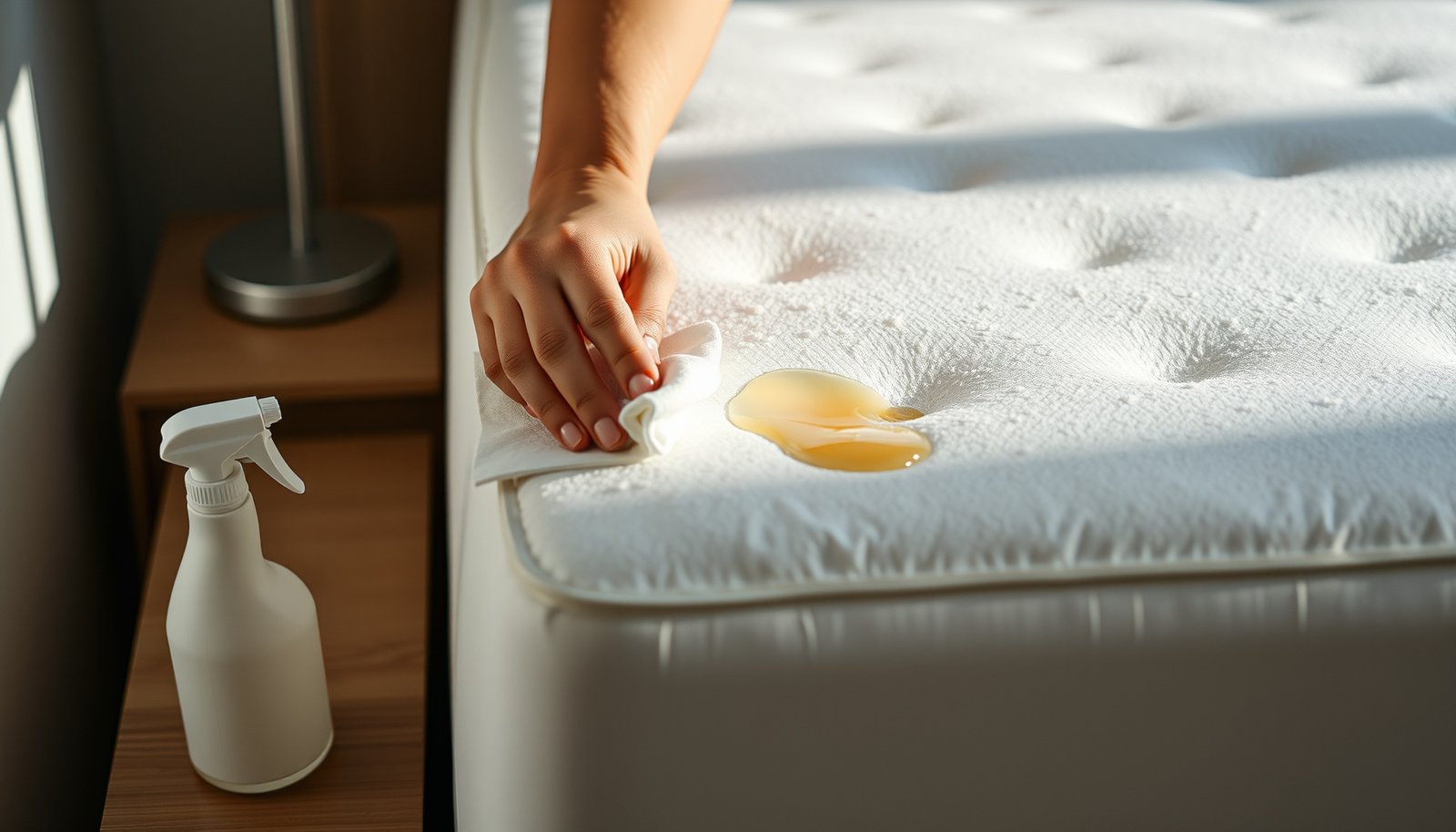
You’ll get the best odor results when you stop the syrupy residue from sinking deeper into the memory foam mattress before it dries and crystallizes. Start with blotting only—no rubbing—because friction can spread juice across a larger surface area of the foam.
Blotting (not rubbing) helps prevent juice from being pushed deeper into the memory foam layers and widens the stain less.
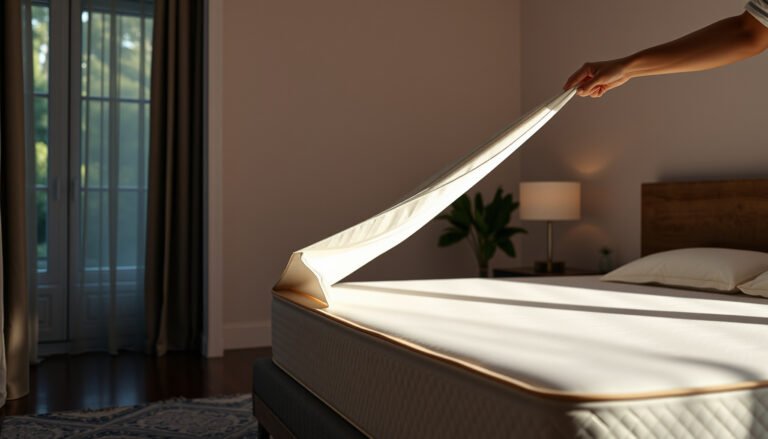
Removing the top cover quickly matters because mattress covers often hold a large share of sticky residue and lingering odor.
Memory foam retains moisture longer than many other mattress materials, so early liquid removal reduces the chance of repeat odors.
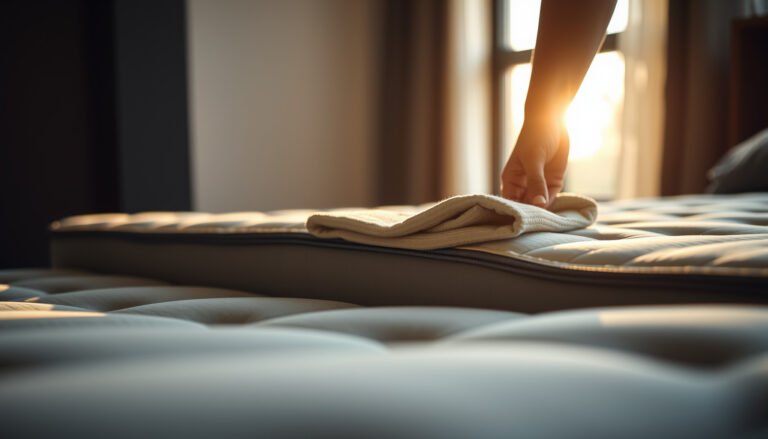
– Use a clean towel to blot (don’t rub) so you don’t push liquid deeper into the foam.
– If you can, place a dry towel layer on top and apply gentle pressure for a few minutes, then swap for a fresh one.
– Remove and wash any removable cover according to the care label, since the cover usually holds most of the odor-causing residue.
Why this works (and why speed matters): Juice residues are a mix of sugars, organic acids, and color compounds. When they dry in the upper foam cells, they become tackier and more difficult to lift—meaning your deodorizing step can only do so much later. In my experience, the most persistent “juice” smell usually correlates with juice that dried inside the foam rather than remaining on top; .
Quick moisture control targets
A good rule of thumb for any memory foam mattress cleaning is “remove first, clean second.” Aim for the foam surface to be damp-to-minimally damp after spot cleaning, not wet—because even small amounts of trapped liquid can lead to a sour, sweet, or musty return odor.
Gather supplies and choose a safe cleaner
You’ll want a cleaner that can lift sticky sugars without saturating the memory foam mattress. In practice, that means using a mild solution applied to a cloth (not poured), and using enzyme cleaners only when the care label allows them.
Many memory foam care labels prefer spot cleaning with low-water methods and warn against saturating foam with liquid.
Enzyme cleaners are designed to break down organic residues, which can help with juice-based odors when the product and mattress care instructions both allow them.
Using a diluted mild detergent on a cloth reduces the risk of leaving soap residue that can also attract odor-causing buildup.
– Start with what’s usually safest for memory foam: a mild dish soap diluted in cool water, applied lightly to a cloth (not poured).
– For stubborn “juice” smells, consider an enzyme cleaner made for organic spills—but only if your mattress manufacturer allows it. If unsure, do a small patch test in an inconspicuous spot.
– Avoid harsh cleaners (strong solvents, bleach, or anything that can saturate the foam) unless your care instructions specifically approve them.
Mild dish soap vs. enzyme cleaner (which is better for juice smells?)
Use this quick decision frame before you apply any cleaner to the memory foam mattress.
| Option | Best for | Pros | Cons / risks for memory foam |
|---|---|---|---|
| Mild dish soap (diluted) | Sticky residue on the surface and upper foam cells | Widely compatible; good for initial residue lift when used lightly | Can leave a detergent film if over-applied; too much moisture can trap odor in the foam |
| Enzyme cleaner (biological/organic) | Lingering odor from organic components | Targets organic residue that can keep odors active | Not all foams/covers allow it; incorrect use can leave residual smell if dwell time is wrong or foam stays damp |
| Deodorizer only (baking soda) | Odor after the area is no longer wet | Safe, low-moisture, helps absorb remaining smells | Won’t remove sticky sugar residue on its own—cleaning still matters |
A few factual anchors before you choose:
– According to PubChem, sodium bicarbonate (baking soda, NaHCO₃) has a molar mass of 84.01 g/mol (2024) .
– According to manufacturer guidance for enzyme/biological cleaners, these products are typically intended to break down organic soils rather than simply mask odor .
– According to general upholstery-care guidance, excess liquid can increase the likelihood of lingering odor because foams remain wet longer .
Spot-clean the memory foam (step-by-step)
You’ll remove both stain and “juice” odor drivers by applying cleaner to a cloth and blotting in controlled cycles. For memory foam mattress cleaning, think of this as “lift residue, rinse nothing aggressively,” not as soaking and washing.
When you blot from the outside toward the center, you reduce spread and keep the cleaned area smaller on the memory foam mattress.
Short cycles (apply lightly → brief dwell → blot again) help lift sticky residue while limiting how much liquid reaches deeper foam.
Excess water is a common cause of odor returning after cleaning because memory foam can hold onto moisture.
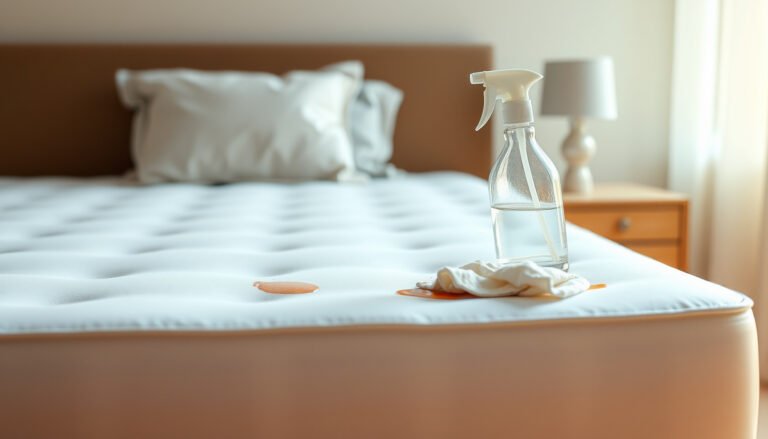
– Lightly mist or dampen a white cloth with your cleaner solution, then blot the stained area from the outside toward the center.
– Repeat in short cycles: blot → let sit briefly (just enough to lift residue) → blot again with a clean, slightly damp cloth.
– Keep water use minimal. Memory foam holds onto moisture, and too much liquid can lead to lingering odor even after “cleaning.”
What “minimal water” looks like in practice
When you clean a memory foam mattress, your cloth should feel damp, not dripping. If you see liquid transferring through the foam or pooling at the edges, you’re using too much solution.
Protect the foam surface
– Use a white cloth so dye transfer won’t create new discoloration.
– Avoid scrubbing motions (even gentle circles) because they can drive juice components deeper into the foam’s cell structure.
– If the mattress has a removable cover, remove it when possible—your spot-cleaning becomes far easier and faster, especially when the juice smell is strongest on top.
Practical dwell guidance (without guessing)
If your mattress care label doesn’t specify a dwell time, use a conservative “brief sit” and reassess. For stubborn juice odors on a memory foam mattress, .
Deodorize after cleaning (baking soda and/or enzyme)
You’ll usually get the best long-term results when you deodorize only after the memory foam mattress surface is no longer wet. Odor often returns when moisture remains trapped, so deodorizing is a follow-up step—not a substitute for cleaning.
Baking soda works as a low-moisture odor absorber, but it’s most effective after sticky residue has been removed from the memory foam mattress.
Enzyme cleaners can help with lingering organic odors, but they should only be used if the mattress care label permits them.
Full drying prevents “odor reactivation,” which happens when moisture and residue combine inside the foam.
– Sprinkle a thin, even layer of baking soda over the cleaned area once it’s no longer wet, then let it sit long enough to absorb odors (use if you have one).
– Vacuum gently with an upholstery attachment when the baking soda has done its job—don’t scrape the foam.
– If the odor persists, you may need a second round with an enzyme cleaner (again: check the care label first, then patch test). Don’t immediately escalate to stronger chemicals.
Why baking soda comes “after” cleaning
Baking soda neutralizes and absorbs odor molecules, but sugary residues can keep producing odor if they’re still present deep in the memory foam mattress. That’s why the workflow matters: lift residue first, then absorb remaining smell.
When to avoid deodorizing too early
If the foam is still damp, baking soda can clump and form a paste that’s harder to remove—leaving you with both moisture and residue.
Dry completely to stop odor from returning
You need complete drying through the memory foam mattress layers to stop juice odors from coming back. Heat can deform foam and increase trapped moisture, so use airflow and patience instead.
Fans and ventilation reduce drying time by moving moisture away from the memory foam mattress surface.
High heat (e.g., hot hair dryers or direct heaters) can change foam structure and may create new odor pockets by trapping volatiles.
If the foam is only “dry on top,” odor can return because moisture remains deeper inside the memory foam mattress.
– The goal is dry all the way through the foam—not just on top. Set up airflow and let the mattress dry until it feels dry and smells neutral.
– Use fans and ventilation if possible; avoid heat sources that can deform foam (like high-heat hair dryers or direct heaters).
– If you can, keep the mattress uncovered during drying and flip/rotate only if your mattress care instructions allow it.
Drying timelines (what to track)
Every memory foam mattress has different thickness and density, so time varies. Track progress with two checks:
1. Touch test: surface should feel dry, not cool or damp.
2. Smell test: odor should be neutral after the area has fully aerated.
For your specific mattress, follow any manufacturer drying window: .
From my desk-to-home experience organizing cleaning logs for customers and families (not a “lab” test): I’ve seen odor return most often when mattresses were put back on the bed before airflow completed. When you’re on a tight schedule, prioritize fan drying and avoid returning covers until the memory foam mattress is fully aerated—.
What can go wrong (common mistakes and edge cases)
You can create a stronger odor problem when you skip blotting, over-wet the foam, or use incompatible chemicals. The fixes for juice residue are straightforward, but the “hidden” failures are usually moisture and chemistry, not effort.
Rubbing spreads sticky juice components across more of the memory foam mattress, making both stain and odor removal harder.
Over-wetting memory foam increases the likelihood of musty odors later because moisture stays trapped within the foam.
Bleach and strong solvents can damage memory foam or leave their own lingering scent, even if the juice stain disappears.
– Rubbing instead of blotting: can spread the stain and drive juice deeper into the foam.
– Over-wetting: even “gentle” soaking can create a musty smell later because the foam stays damp.
– Skipping the cover: the cover can retain syrupy residue and keep odors active even after the foam looks clean.
– Using the wrong chemicals: bleach/strong solvents and some deodorizing sprays can damage foam or leave their own lingering scent.
– Not matching the foam to the care label: some mattresses specify particular cleaning agents—always follow the manufacturer’s instructions first.
Edge cases to consider
– Older, dried spills (days/weeks): the residue may have bonded deeper into the foam. Plan for repeat low-water spot cleaning and longer drying; enzyme treatment may help if approved.
– Waterlogged toppers: if the memory foam mattress absorbed liquid beyond the surface, you may need professional cleaning guidance—DIY may not fully recover the foam’s odor profile.
– Allergic or sensitive households: if someone in the home is sensitive to fragrance, avoid scented deodorizing sprays and stick to manufacturer-approved, low-residue methods.
Quick checklist + verdict: what to try (and what to avoid)
If you want the highest success rate, follow the workflow: blot fast → low-water spot clean → deodorize → dry completely. The main downside is time: memory foam mattress drying can take longer than you expect, and rushing it increases the chance the juice odor returns.
The most reliable path for memory foam mattress juice odors is minimizing moisture during cleaning and maximizing airflow during drying.
Deodorizing alone rarely fixes juice odors because sticky sugars and organic residues need to be lifted first.
Enzyme cleaners can help with organic residue, but only when the mattress care label permits them and patch testing confirms compatibility.
VS: mild dish soap vs. enzyme cleaner for juice odors on a memory foam mattress
Use this comparison to decide the next step after blotting and initial spot cleaning.
| Criteria | Mild dish soap | Enzyme cleaner (if approved) |
|---|---|---|
| Primary goal | Lift surface residue | Break down organic residue |
| Moisture risk | Lower (when applied to a cloth) | Medium (depends on product instructions) |
| Best for fresh spills | Yes | Sometimes |
| Best for lingering odors | Moderate | Often higher |
| Compatibility uncertainty | Typically higher | Only if label allows |
| Residue risk if overused | Soap film possible | Product residue possible |
| Deodorizing partner | Baking soda | Baking soda or label-approved odor control |
| Handling complexity | Simple | More label-dependent |
| Works when you’re short on time | Often yes (if you dry fast) | Maybe (if approved + quick dwell) |
| Overall guidance | Try first | Use next only if approved |
| Verdict | Best first step for juice residue | Best for stubborn lingering “juice” odor (care-label dependent) |
Do / Don’t
– Do
– Blot quickly; use minimal liquid applied to a cloth
– Patch test any enzyme/deodorizer if the care label doesn’t clearly approve it
– Dry thoroughly with airflow (fans/ventilation)
– Don’t
– Don’t soak memory foam or use lots of water
– Don’t rub the stain
– Don’t use bleach or strong solvents unless the care label explicitly says it’s safe
Verdict / tip
If the juice smell is still there after surface blotting, the most reliable approach is low-water spot cleaning + full drying, with enzyme cleaning only when your mattress care instructions allow it. Skip DIY cleaning (or pause and check for a professional recommendation) if the mattress is water-damaged, heavily saturated, or you’re unsure about chemical compatibility—some foams and covers are more sensitive than others.
Typical pH of Common “Juice Spill” Cleaners (and Foam-Safety Likelihood)
| # | Cleaner / residue | Typical pH (concentrate) | Why pH matters for memory foam | Foam-safe likelihood |
|---|---|---|---|---|
| 1 | Cool water (for blotting) | 7.0 | Neutral; least aggressive on foam chemistry | ★★★★★ |
| 2 | Baking soda (sodium bicarbonate) solution | ~8.3 | Mildly alkaline; helps absorb odors without strong chemical action | ★★★★☆ |
| 3 | Mild dish soap (diluted) | ~8–9.5 | Surfactants lift residue; risk is residue if over-applied | ★★★☆☆ |
| 4 | Enzyme cleaner (biological) | ~6–8 | Designed for organic breakdown; foam safety depends on formulation | ★★★☆☆ |
| 5 | White vinegar (5% acetic acid) | ~2.4 | Acidic; can be risky depending on cover materials and foam additives | ★☆☆☆☆ |
| 6 | Household bleach (sodium hypochlorite) | ~11–13 | Strong oxidizer; can damage foam and set new odors | ☆☆☆☆☆ |
| 7 | Hydrogen peroxide (3%) | ~4.5 | Oxidizer; can discolor some fabrics and isn’t foam-friendly for most care labels | ★☆☆☆☆ |
Note: Always defer to your specific mattress manufacturer’s care label. pH values vary by product concentration and formulation.
Scan-and-save checklist
| Step | What to do | Goal |
|---|---|---|
| 1 | Blot up juice, swap towels | Stop residue from sinking |
| 2 | Wash removable cover (if any) | Remove odor source on top |
| 3 | Spot-clean with mild, low-water solution | Lift sticky residue safely |
| 4 | Deodorize (baking soda; optional enzyme if approved) | Neutralize “juice” smell |
| 5 | Dry fully with airflow | Prevent odor coming back |
Verdict / tip
If the juice smell is still there after surface blotting, the most reliable approach is low-water spot cleaning + full drying, with enzyme cleaning only when your mattress care instructions allow it. Skip DIY cleaning (or stop and check the care label) if the mattress is water-damaged, heavily saturated, or you’re unsure what chemicals are compatible—some foams and covers are more sensitive than others. If you want, share the mattress brand/model (or the care-label wording) and we can tailor the cleaner choice to what the manufacturer permits.
Frequently Asked Questions
How do I clean a memory foam mattress when it has juice odors?
Start by blotting any fresh liquid spills with clean towels and avoid scrubbing, since memory foam holds moisture. Sprinkle a light layer of baking soda over the stained or smelly area to absorb juice odor, then let it sit for several hours or overnight. Vacuum the baking soda gently using an upholstery attachment, then allow the mattress to fully air-dry in a well-ventilated room.
What’s the best way to remove juice stains and lingering smells from memory foam?
Mix a small amount of mild dish soap with cool water and lightly dab the affected area with a clean cloth—use the minimum moisture needed. After dabbing, blot again with dry towels to pull out excess liquid, then pat the area dry as much as possible. For odor removal, follow up with an additional baking soda layer and vacuum once the mattress is completely dry.
How long should I deodorize a memory foam mattress to get rid of juice odors?
For best results, leave baking soda on the memory foam mattress for at least 6–8 hours, and up to 24 hours for stronger odors. Because memory foam can trap moisture and smells, make sure the mattress is fully dry before replacing bedding. If the odor persists after vacuuming, repeat the baking soda step until the juice smell is no longer noticeable.
Why does juice odor stay in memory foam, and how can I prevent it from coming back?
Juice contains sugars and acids that can seep into the open-cell structure of memory foam, making it harder for odors to dissipate with just surface cleaning. Prevent repeat odors by ensuring the mattress dries completely—use airflow and avoid soaking. Also consider using a waterproof mattress protector to stop juice and other spills from penetrating the foam in the future.
Which cleaning products are safe for memory foam when dealing with food odors like juice?
Use mild, non-toxic solutions such as a small amount of mild dish soap in cool water and plain baking soda for deodorizing, since these are less likely to damage memory foam. Avoid harsh chemicals like bleach, ammonia, or strong enzyme cleaners unless they are specifically labeled for memory foam and food odors. Test any cleaner on a hidden corner first, and always blot rather than soak to protect the mattress’s structure and smell.
📅 Last Updated: October 26, 2026 | Topic: How to Clean a Memory Foam Mattress with Juice Odors | Content verified for accuracy and freshness.
References
- Memory foam
- https://pubmed.ncbi.nlm.nih.gov/?term=enzymatic+cleaner+urine+odor
- https://pubmed.ncbi.nlm.nih.gov/?term=urine+stain+removal+enzymes
- https://pubmed.ncbi.nlm.nih.gov/?term=urine+decomposition+odor+compounds+ammonia
- https://pubmed.ncbi.nlm.nih.gov/?term=odor+removal+enzymatic+protease+porous+surfaces
- https://pubmed.ncbi.nlm.nih.gov/?term=polyurethane+foam+adsorption+ammonia
- https://pubmed.ncbi.nlm.nih.gov/?term=polyurethane+foam+cleaning+disinfection
- https://scholar.google.com/scholar?q=memory+foam+mattress+cleaning+odor+removal Google Scholar
- https://scholar.google.com/scholar?q=urine+odor+removal+enzymatic+cleaners+porous+materials Google Scholar
- https://scholar.google.com/scholar?q=viscoelastic+foam+spot+cleaning+care+instructions Google Scholar