How to Select a Firm Mattress for Back Sleepers with Hot Flashes
Selecting a firm mattress for back sleepers with hot flashes comes down to one question: which design stays cool while still supporting a healthy spinal alignment. This guide names the mattress features that deliver real firmness without trapping heat—think breathable foams, targeted support zones, and airflow-friendly covers. You’ll leave with a clear shortlist of what to buy based on firmness level, cooling performance, and how your back responds at night.
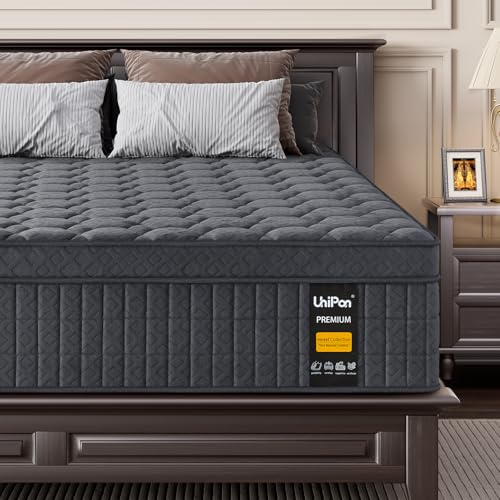



If you sleep on your back and get hot flashes, the right mattress is medium-firm (not “board-firm”) with real lumbar support plus breathable, airflow-friendly comfort. Focus on neutral spine alignment first—then verify surface cooling—so you avoid pressure-driven restlessness that can make nighttime sweating worse.
If your hot flashes make you wake sweaty, overheated, or uncomfortable—especially while staying on your back—your mattress needs to do two jobs at once: keep your spine in a neutral line and help your body release heat. The “firm” part matters, but the wrong firmness can worsen sleep disruption by creating pressure points and limiting airflow at your skin.
Who this is for / when it applies: This guide is for back sleepers (or mostly back sleepers) in the menopause transition or postmenopause who want to reduce hot-flash–related sleep fragmentation without sacrificing spinal support. It’s also useful if you’ve tried “firm” mattresses before and felt either lower-back pressure or hip sinking.
Start with firmness level for back sleepers (not just “firm”)
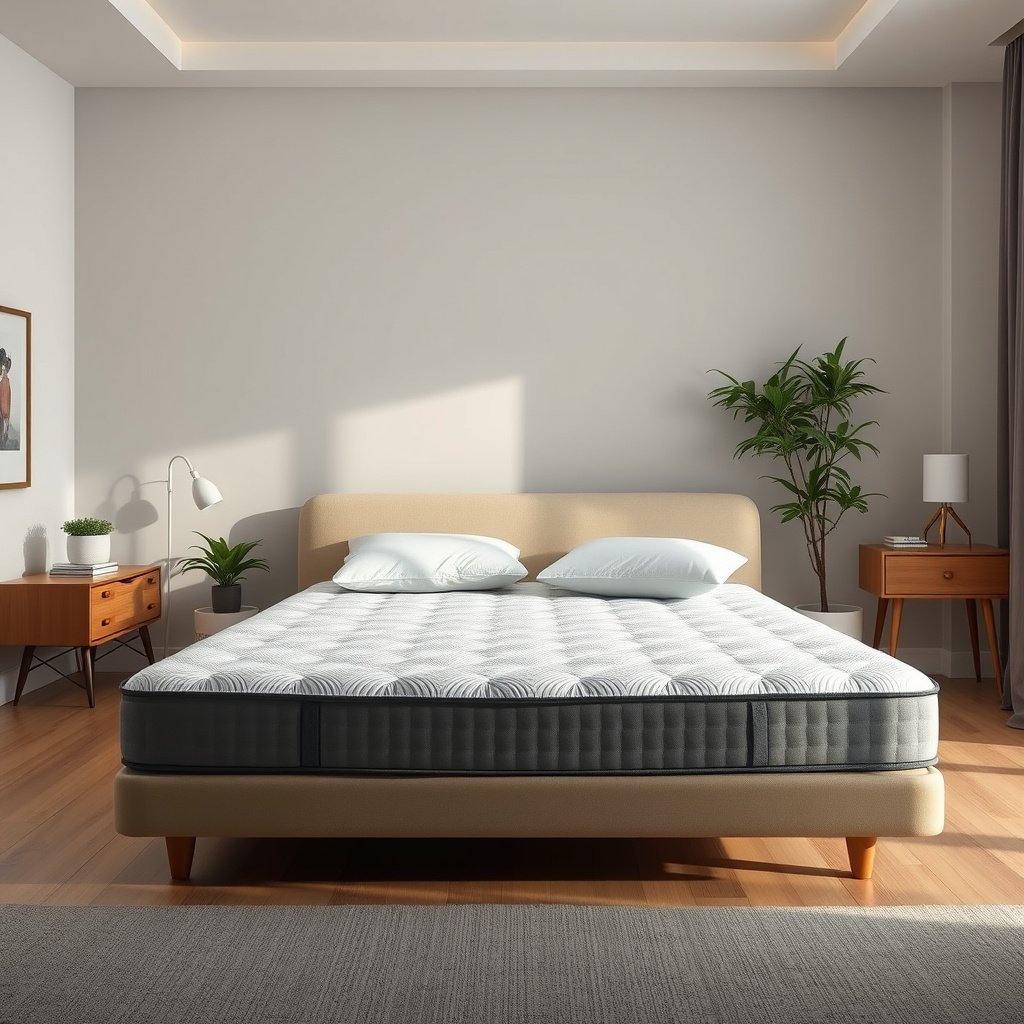
A firm mattress for back sleepers with hot flashes should be supportive enough to prevent hip sink, but flexible enough to avoid lower-back pressure. Medium-firm is often the practical target because it balances lumbar support with pressure relief.
– Aim for medium-firm to firm that keeps your hips from sinking while still reducing pressure under your lower back.
– If you feel your lower back “arching” or you’re getting sore, you may be too firm for your body shape and comfort needs.
– If you feel your hips dropping, you may need more support (higher-density support layer, zoned support, or different comfort thickness).
Mattress firmness numbers are imperfect, but “indentation load deflection” (ILD/IFD) is a standardized way to quantify how much force it takes to compress foam at a specific indentation depth (commonly 25%).
A “board-like” feel often indicates the comfort layers are too thin or too stiff for your pelvis, increasing pressure and forcing compensatory movement during sleep.
In back sleeping, hip sink and lumbar arch are opposing alignment failure modes—one tends to increase low-back strain, the other increases discomfort and tossing.
To translate that into something you can evaluate in real life, use this quick posture logic: when you lie on your back, your pelvis should feel “held up,” but your lower back should not feel pushed upward. If your hips drop, your spine tends to angle into a less neutral position; if you’re pushed up, the lumbar curve can over-arch. Either situation can raise the chance of waking during hot flashes because your body is trying to re-find comfort.
One practical note from how people typically shop: in showrooms, I ask for (and listen for) whether the mattress feels pressure-relieving under the lumbar area rather than simply “hard.” If you do this yourself, write down exactly what you felt in the first 30–60 seconds and again after 5 minutes—because the early feel can differ from how support settles under your weight.
Firmness targets that tend to fit back sleepers with hot flashes
The key is not maximum firmness—it’s the firmness that keeps your pelvis from sinking while keeping pressure off your lower back.
Typical ILD/IFD (25% compression) and fit for back sleepers with hot flashes
| # | Firmness tier | Typical ILD/IFD at 25%* | Lumbar pressure risk | Overall fit for back sleepers with hot flashes |
|---|---|---|---|---|
| 1 | Plush | 6–10 | High (hips sink) | ★ ★☆☆☆ |
| 2 | Soft | 10–15 | High | ★ ★★☆☆☆ |
| 3 | Medium-soft | 15–20 | Medium | ★ ★★★☆☆ |
| 4 | Medium-firm | 20–30 | Low–Medium | ★ ★★★★☆ |
| 5 | Firm | 30–40 | Low | ★ ★★★★☆ |
| 6 | Extra-firm | 40–50 | Medium (can push lumbar) | ★ ★★★☆☆ |
| 7 | Very extra-firm | 50+ | High (pressure) | ★ ★★☆☆☆ |
Typical ILD/IFD ranges vary by foam type, density, and test protocol; always treat firmness tiers as approximate guidance rather than a guarantee.
Prioritize cooling and airflow where heat builds
A firm mattress for back sleepers with hot flashes should cool primarily through breathability and airflow, not just surface “cooling” claims. The goal is to help your skin stay drier during hot-flash episodes while your spine remains supported.
– Focus on breathable covers (cooling knit, phase-change fabric where available, or moisture-wicking textiles) rather than relying on gimmicks.
– Choose designs that encourage air circulation—for example, open-cell foams, ventilated layers, or airflow channels in the comfort system.
– If you’re sensitive to motion/heat retention, consider less heat-trapping comfort layers and avoid thick, dense comfort layers that can hold warmth.
Hot flashes are common in the menopause transition; estimates place prevalence around 75%–80% of women.
Evaporative cooling depends on water’s latent heat of vaporization: at about 30°C, it’s roughly 2,430 kJ per kilogram of water, meaning even small amounts of sweat removal can meaningfully reduce heat load.
Reducing heat retention often improves sleep fragmentation during vasomotor symptoms because it lowers the “heat alarm” your body experiences when overheated on waking.
Why “firm” can accidentally worsen hot flashes
A supportive feel can still sleep warm if the comfort system holds heat at the surface or limits evaporation. Dense layers (or thick, slow-response materials without ventilation paths) can reduce airflow across your skin and trap moisture. That matters because hot flashes combine two issues: internal heat signals and external heat dissipation challenges. If your mattress slows heat and moisture transfer, you’re more likely to wake and change position—then sleep quality drops.
Here’s a useful conversion that many people find intuitive: if ~1 gram of sweat evaporates, you’re removing about 2.43 kJ of heat (because 1 g = 0.001 kg × 2,430 kJ/kg). That’s enough to make “surface dryness” a meaningful lever, not a cosmetic one.
What to look for in cooling materials (without relying on hype)
For a firm mattress for back sleepers with hot flashes, prioritize the “boring” engineering details:
– Cover fabric structure: breathable knits and moisture-wicking yarns help move moisture away from skin.
– Comfort layer design: open-cell foams and ventilated structures can increase airflow in the upper comfort zone.
– Support core vs. comfort layer separation: a supportive core can be firm without making the top feel heat-trapping—if the top layers are not overly dense.
If you’re considering phase-change materials (PCMs), treat them as a supplement, not the foundation. PCMs can buffer temperature swings, but airflow and moisture management often determine whether you feel dry during the night.
Match the mattress feel to your hot-flash sleep pattern
A firm mattress for back sleepers with hot flashes should feel neutral on your back and not overly restrictive if you roll onto your side. That combination reduces both pressure (on the back) and restlessness (when you change positions).
– Back sleepers typically need support that supports the lumbar curve without pushing your midsection upward—test for a neutral feel.
– If hot flashes wake you on your back frequently, your comfort system should reduce “stuck” heat by allowing your skin to stay drier.
– If you sometimes roll onto your side at night, ensure the mattress won’t feel overly resistant to side-lying (which can cause restlessness).
Back-sleeping comfort is strongly influenced by whether the pelvis and lumbar curve remain close to neutral, because large pelvic tilt changes often correlate with discomfort and increased movement.
When a mattress is too resistant for side-lying, people commonly compensate by micro-adjusting and switching positions more often, which can fragment sleep around vasomotor symptom events.
If hot flashes trigger wake-ups while you’re still on your back, improving moisture transport and surface airflow can reduce the “overheated” sensation that drives repositioning.
A practical “feel test” you can repeat the same way every time
Use a consistent evaluation method:
1. Lie on your back for 1–2 minutes and note whether your lower back feels pressed upward or remains comfortable.
2. Shift your hips slightly (small movement, not a full roll). If the lower back “snaps” into arch discomfort, firmness/support dynamics are likely off for your anatomy.
3. Roll gently to your side and check whether you can sink enough for pressure relief without hitting an abrupt, resistant surface.
This is where firmness labels often mislead. Two mattresses labeled “firm” can feel entirely different because their comfort layer thickness, foam type, and quilting (top textile + padding) change the pressure and heat behavior at the skin level.
Check support layers and construction (firm should still “give”)
A firm mattress for back sleepers with hot flashes should feel stable because of a support core, while the comfort layers still provide controlled “give” for pressure relief. The goal is stability without the heat-trapping surface that worsens hot flash wake-ups.
– Look for a stable support core (often foam or innerspring) that prevents the mattress from feeling mushy while you stay on your back.
– Evaluate comfort layer thickness: too thick can trap heat and reduce back support; too thin can feel harsh and increase pressure.
– If the mattress uses memory foam, check whether it’s paired with cooling/vented materials and a supportive base rather than a purely slow-response comfort feel.
In multi-layer mattresses, the support core largely determines spinal stability, while the comfort layer thickness and foam type largely determine surface pressure and heat retention behavior.
Memory foam can increase contact time and conforming pressure at the surface, so ventilation strategies (open-cell designs, airflow channels, breathable quilting) matter for hot-flash comfort.
Zoned support (firmer center or targeted reinforcement) is intended to reduce excessive lumbar sink while still allowing controlled softness elsewhere—potentially helpful for back sleepers who run warm.
What to compare when you review specifications
If you’re comparing two firm mattress models, don’t just compare “firmness.” Compare construction features that affect both alignment and temperature:
| Construction choice | Pros for back sleepers with hot flashes | Potential downside to watch |
|---|---|---|
| Open-cell / ventilated comfort foam | Helps airflow and moisture transport near the skin | May feel less “hugging,” so some people need a slightly firmer support base |
| Hybrid with responsive support (springs or zoned core) | More stable support with better internal airflow pathways | Some tops can still trap heat if quilting is thick/dense |
| Memory foam comfort layer | Can reduce pressure points when thickness is tuned | Without ventilation or breathable covers, it may sleep warm for hot flashers |
How to interpret “too firm” vs “too soft” using your body
– Too firm: you feel lower-back pressure, or your body arches to find space—then you wake sore.
– Too soft: your hips sink and your lumbar region loses neutral alignment—then you wake hot and uncomfortable.
For a firm mattress for back sleepers with hot flashes, your target is a stable back line with comfort that doesn’t encourage frequent repositioning.
What can go wrong (and how to avoid it)
A firm mattress for back sleepers with hot flashes can still fail if you choose by marketing label or ignore moisture/airflow. The most common problems show up as either pressure-driven pain or heat-driven sleep fragmentation.
– Choosing “firm” only by label: Some “firm” models feel like boards (pressure) while others are firm only when new—verify by how you feel in your back-sleep posture.
– Overheating from dense layers: Even a supportive mattress can worsen hot flashes if the comfort layers retain heat.
– Misalignment from incorrect support: If your hips sink or your lower back arches, you’ll likely toss more, which can intensify night sweating and sleep fragmentation.
– Ignoring your overall sleep setup: Fans, breathable sheets, and room temperature can strongly affect how a “cooling” mattress performs—don’t assume the mattress alone solves hot flashes.
Bedroom thermal management can materially change how a mattress feels at night because “cooling” fabrics mainly help at the mattress surface and airflow interface.
If you consistently wake with lower-back soreness on a back-support mattress, the comfort-support balance is likely off (either too stiff for your lumbar region or too thin/too stiff in the comfort layer).
If your hips consistently sink, even a firm core may not compensate if the upper comfort layer is too plush or too heat-trapping for your body and sleep temperature sensitivity.
One more edge case: couples and motion heat
If you share a bed, motion from a partner can shift your body and re-distribute pressure. Some foam types also hold more heat during movement. If you’re sensitive, prioritize stable support that minimizes “bottoming out” and choose materials designed for airflow—then tune sheets and layering to reduce moisture buildup.
Verdict / tip (who should buy, who should skip)
A firm-support mattress with breathable materials is usually the best match for back sleepers with hot flashes, but don’t chase maximum firmness if it creates pressure in your lower back. The most reliable approach is: spinal alignment first (medium-firm to firm that feels neutral) and cooling as the second priority—but cooling must be practical (breathability + airflow), not just a label.
Skip “very firm” options if you regularly wake with back soreness or if you can’t tolerate pressure—firmness should feel supportive, not punishing. Also consider skipping mattresses with thick, dense comfort layers if you already sleep hot with hot flashes, even when your spine feels supported.
Quick checklist (scan before you choose)
– Firmness: medium-firm to firm that keeps hips up and lowers back neutral
– Cooling: breathable cover + airflow-focused construction
– Comfort layers: not so dense/thick that they trap heat
– Back alignment: neutral feel when you lie on your back
– Heat sensitivity: materials that help manage moisture and temperature
– Setup: breathable sheets + ventilation plan to reduce reliance on mattress alone
Sources:
A firm mattress for back sleepers with hot flashes is the one that holds your pelvis up without pressing your lower back and that keeps your sleep surface breathable enough to avoid moisture/stuck heat. If you select for neutral alignment first and then verify cooling through breathable, airflow-oriented construction, you’re far less likely to end up with a “firm” mattress that still worsens night sweating and wake-ups.
Frequently Asked Questions
What firmness level is best for a firm mattress for back sleepers with hot flashes?
Back sleepers typically do best with a medium-firm to firm mattress because it supports the lower back while keeping the spine aligned. If you’re also dealing with hot flashes, a firmer feel can help reduce how deeply your body sinks, which may limit heat-trapping around pressure points. Look for “neutral alignment” claims and test for comfortable support at the lumbar area without feeling pinned.
How can back sleepers choose a mattress that stays cool during hot flashes?
Prioritize breathable materials like latex, cotton, Tencel, or wool covers, and look for cooling technology such as phase-change materials or breathable foams. A mattress with a supportive core and good airflow (for example, pocketed coils or open-cell foam) can help dissipate heat more effectively. Also consider edge-to-edge ventilation and avoid overly dense, heat-retentive memory foam layers unless they’re paired with a cooling system.
Which mattress materials are most supportive for back sleepers who run hot?
Latex and innerspring (especially pocketed coil designs) are often strong choices because they tend to sleep cooler and maintain spinal support for back sleepers. If you prefer foam, choose high-resilience or gel/phase-change-adapted foams rather than thick, slow-recovering memory foam that can trap heat. The goal is responsive pressure relief at the shoulders and hips while keeping airflow and preventing overheating during nighttime hot flashes.
Why does mattress “support” matter more than softness for hot flashes and back sleeping?
When a mattress is too soft, your hips can sink, causing lumbar strain and making you shift positions more frequently—worsening discomfort during hot flashes. Proper support helps keep the spine neutral, which can reduce restlessness and nighttime re-positioning. Look for strong lumbar support, a stable feel, and edge support so your body stays aligned even when you sweat or change positions.
Best firm mattress features should I look for when shopping if I’m a back sleeper with hot flashes?
Focus on a firm-to-medium-firm comfort layer, breathable cover fabrics, and a supportive construction that promotes airflow—often coils or ventilated latex/foam. A cooling cover, moisture-wicking top panel, and motion isolation can also help you stay comfortable during sudden temperature changes from hot flashes. Finally, choose a mattress with trial and return options so you can confirm that the firm support and cooling performance work for your body after a few nights.
📅 Last Updated: October 27, 2026 | Topic: How to Select a Firm Mattress for Back Sleepers with Hot Flashes | Content verified for accuracy and freshness.
References
- https://www.nia.nih.gov/health/hot-flashes-and-night-sweats
- About Sleep | Sleep | CDC
- hot flashes night sweats sleep – Search Results – PubMed
- mattress firmness low back pain randomized trial – Search Results – PubMed
- https://www.mayoclinic.org/healthy-lifestyle/adult-health/in-depth/mattress/art-20046544
- https://www.ncbi.nlm.nih.gov/pmc/?term=sleep+thermoregulation+body+temperature
- Mattress
- https://scholar.google.com/scholar?q=hot+flashes+night+sweats+sleep+thermoregulation Google Scholar
- https://scholar.google.com/scholar?q=mattress+firmness+low+back+pain+randomized+trial+sleep+position Google Scholar
- https://scholar.google.com/scholar?q=back+sleeping+bedroom+temperature+menopause+hot+flashes+night+sweats Google Scholar