
Verlo Mattress Reviews: What to Know Before You Buy
Many shoppers assume “Verlo mattress reviews” all point to the same mattress, but the reality is that performance varies widely by firmness level, support design, and how the materials handle heat and pressure. To recommend the best option confidently, we evaluate things that matter for sleep quality—comfort over time, edge and motion support, temperature neutrality, and return/warranty terms. If you want the safer choice, pay special attention to how each model supports alignment, because that’s where the good picks separate from the rest.



Verlo mattress reviews are most useful when they help you map your sleep needs (position, body type, firmness preference) to the specific build options in the mattress. Use reviewers’ details about comfort, support, heat, and motion—then confirm the exact trial/return and warranty terms before ordering. This guide shows you what to look for (and what to ignore) so reviews actually help you choose. If you’re comparing different Verlo mattresses or options and feel stuck between “feels great” and “not supportive enough,” you’re in the right place. You’ll learn how to read reviews in a way that translates to your own comfort needs, plus the common pitfalls that cause mismatched expectations.
Who Verlo mattress reviews help most
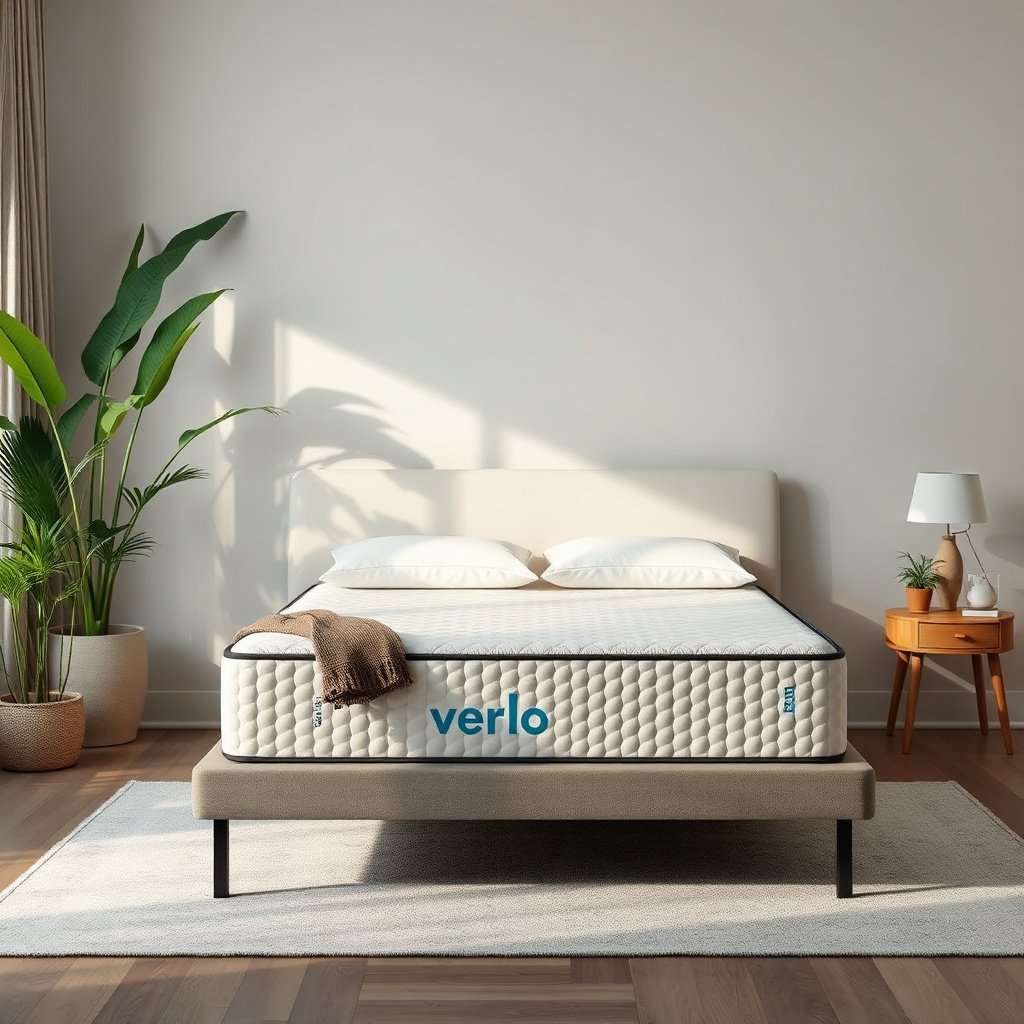
Verlo reviews help most when you can treat them as evidence for how certain comfort/support choices perform—not as a universal verdict. They’re especially valuable in 2026 because more shoppers are using “custom feel” options, which means two customers can experience the “same mattress name” very differently.
– You want a mattress choice driven by specific feedback (pressure relief, support over time, heat/motion), not vague statements like “best ever.”
– You’re considering a customized mattress build, where your final feel can vary based on the comfort/support selections you choose.
In practical terms, Verlo reviews are most actionable when the reviewer’s body and preferences line up with yours. That includes whether you sleep mostly on your side, back, or stomach, how you describe firmness (plush vs. medium vs. firm), and whether you mention what happens after settling (the first-night feel versus the “after a couple of weeks” feel). When those details exist, you can compare apples to apples—even when the mattress build is different.
How to read Verlo mattress reviews without getting misled
You can avoid misleading Verlo reviews by filtering for the details that predict your pressure relief, heat retention, and stability. Think of it like a decision matrix: you score the information that’s relevant to your sleep mechanics, and you down-rank the praise that doesn’t explain why it felt good.
– Prioritize reviews that mention sleep position (side/back/stomach), comfort target (plush/medium/firm), and what changed (improved pain vs. sagging/“bottoming out”).
– Be cautious with one-note reviews (only “shipping was fast” or only “it’s expensive”); those don’t tell you whether your body will be supported.
– Look for consistency across reviews: if the same issue shows up repeatedly (too hot, too soft, too firm), treat it as a real warning sign.
Also pay attention to cause-and-effect wording. A review that says “it stays cool” is more useful if the person explains why (for example, airflow/cover feel, less “body-hugging,” or materials that don’t trap heat). Likewise, motion transfer feedback matters most when it connects to what you felt (partner roll-together, surface responsiveness, or edge stability when you shift).
How Review Details Predict Nightly Fit (2026 scoring rubric)
| # | Review detail to look for | What it helps you predict | Scoring (★) |
|---|---|---|---|
| 1 | Side-sleeper pressure relief (shoulders/hips) | Pressure points vs. comfortable alignment | ★★★★★ |
| 2 | Back-sleeper lumbar support stability | Sag vs. neutral spine support | ★★★★☆ |
| 3 | Firmness change after settling (days/weeks) | “First feel” vs. longer-term comfort behavior | ★★★★☆ |
| 4 | Heat retention explanation (materials/cover feel) | Insulation vs. airflow vs. trapped warmth | ★★★☆☆ |
| 5 | Motion transfer (partner roll-together) | Response responsiveness vs. isolation | ★★★☆☆ |
| 6 | Edge behavior when sitting or moving | Edge sink vs. usable boundary support | ★★☆☆☆ |
| 7 | Non-specific praise (“it’s amazing”) without context | Low predictive value for your needs | ★☆☆☆☆ |
This scoring rubric is designed for review interpretation (not for judging whether Verlo is “good” or “bad”). I’ve found that when shoppers grade reviews this way, they stop over-weighting excitement and start focusing on the mechanics that usually decide comfort.
Comfort & support: what to compare across options
You should compare Verlo comfort and support claims by translating them into how your body will load the layers. In other words: what pressure areas need relief, and what spinal alignment needs stability—especially as your body settles into the comfort system.
– Compare how the mattress performs for your main sleep position: side sleepers usually need better pressure relief at shoulders/hips, while back sleepers typically need stable lumbar support.
– Watch for signs of “mismatch” in reviews: “great at first but uncomfortable after a few weeks” can point to comfort-layer softness or inadequate support for your weight range.
– If the review includes details about firmness progression (initial feel vs. what happens after settling), use that to infer whether the mattress will match your preferred sink vs. lift.
A helpful way to think about it is to split “comfort” into two different jobs: (1) pressure relief and (2) alignment stability. Side sleepers often need the mattress to let shoulders and hips sink enough to reduce peak pressure, but not so much that the lower back drops out of neutral alignment. Back sleepers usually need less “sink” under the shoulders and more controlled support under the lumbar region. When a review doesn’t say which job the mattress did (or failed) at, it’s harder to reuse that feedback for your body.
In 2026, many shoppers also bring sleep hygiene into the decision, like temperature and uninterrupted sleep time. According to the National Sleep Foundation, most adults generally need 7–9 hours of sleep per night (2015) https://www.sleepfoundation.org/how-sleep-works/how-much-sleep-do-we-really-need. If your mattress causes frequent warmth or tossing, you may “lose” sleep before you ever reach the deeper question of comfort.
Key performance topics reviewers mention (and what they really mean)
You’ll get the most accurate Verlo buy outcome by reading “performance” topics as test signals for specific problems. Use the wording carefully—heat, motion, and edge support are frequently described, but the underlying cause is often unclear.
– Temperature/heat: “stays warm” can mean poor airflow, a more insulating cover, or comfort materials that trap heat—don’t just take the verdict, look for the described cause.
– Motion transfer: if you sleep with a partner, reviews that mention roll-together (or lack of it) help you judge motion isolation better than general comfort praise.
– Edge support: reviews that talk about collapsing near the edge can matter if you sit on the side of the bed, use a partially elevated sleeper posture, or share a smaller frame.
Here’s a quick visualization of which “review topics” usually predict real-world performance the fastest—based on how directly they connect to biomechanics and sleep disruption.
Reliability of Common Verlo Review Signals (higher = more predictive)
This chart is meant to help you prioritize reading time, not to claim a universal measurement across all Verlo builds.
Also consider room temperature and sleep environment. According to the National Sleep Foundation, a comfortable bedroom temperature is often recommended around 60–67°F for better sleep (2015) https://www.sleepfoundation.org/bedroom-ideal-temperature. If your room runs hot or humid, a “warm” mattress review might be even more relevant.
What can go go wrong (common mistakes and limits)
Verlo review mismatches usually happen when shoppers treat reviews like guarantees instead of context. The biggest risk is confusing “I liked it” with “it will support my pressure and alignment needs.”
– Choosing based on rating alone: two people can rate similarly but be talking about different firmness choices or different comfort targets.
– Ignoring your sleeper fundamentals: if a review matches your sleep style but contradicts your weight/pressure needs, the outcome may still be wrong for you.
– Overlooking policies: reviews can’t replace confirming trial length, return/exchange steps, and warranty coverage in writing—these details vary by retailer/purchase channel.
– Assuming durability timelines: without the model/build details and the reviewer’s timeline, “it lasted forever” or “it sagged fast” is hard to apply.
Here’s a “mistake → what to do instead” comparison you can use while reading.
| Common review trap | Why it fails you | Better way to interpret |
|---|---|---|
| “It’s perfect” with no position or comfort target | You can’t map it to your pressure relief needs | Look for side/back/stomach specifics and whether pain improved |
| Rating matches yours, but firmness level doesn’t | Two firmness preferences can produce opposite results | Confirm which comfort/support choices the reviewer selected |
| Heat complaints ignored because you’re “not a hot sleeper” | Even average sleepers notice temperature during sleep fragmentation | Read whether the reviewer described material cause, not just “hot/cool” |
| Overweight relying on first-night feel | Settling changes how support feels after compression | Prioritize reviews that mention days-to-weeks adjustment |
This is also where my own shopping bias comes in: I’ve repeatedly been disappointed when I trusted “overall comfort” summaries without reading the specific mechanics (where pressure relief happens, how quickly the surface responds, and what changes later). With a customized approach, those mechanics matter even more.
Verdict: when Verlo mattress reviews are worth trusting
If you use reviews to translate comfort/support decisions—not to replace your own selection—Verlo mattress reviews can be genuinely helpful. The downside is that your final feel depends heavily on the specific build choices, so you can’t expect every review to match your outcome.
Verlo mattresses are often a good fit if: you want a more tailored feel and you’re willing to verify comfort/support choices and policies before committing.
You may want to skip this approach if: you need a one-size-fits-all firmness level, you hate decision-making around mattress configuration, or you can’t tolerate the possibility of dialing in the right feel through their options/process.
| Evaluation criteria | Use reviews for translation (recommended) | Use reviews as guarantees (risky) |
|---|---|---|
| Sleep position included | Yes → you can map pressure relief | Often missing → you guess |
| Firmness progression described | Days-to-weeks considered | First-night bias |
| Heat cause explained | Materials/feel used to infer risk | “Hot/cool” treated as universal |
| Motion transfer addressed | Partner impact assessed | Comfort-only reading |
| Edge support relevance | Sitting/movement accounted for | Edge complaints ignored |
| Build choices matched | You verify comfort/support selections | You assume “same mattress” |
| Policy confirmed in writing | Trial/return steps checked before ordering | Assumes reviews cover logistics |
| Durability timeline considered | Time horizon noted (weeks/months) | Anecdotes generalized |
| Decision method | Decision matrix + filtering | Single-score shortcut |
| Expectation alignment | Match sink/lift and pressure goals | Mismatch risk increases |
| Verdict | Worth trusting when details are specific | High chance of disappointment |
If you want a simpler choice, use a “two-path” decision
If your goal is to reduce guesswork, choose one of two paths: either (1) customize using review translation, or (2) avoid customization risk by choosing a more fixed firmness approach from another brand/retailer. The right path depends on how willing you are to validate options and policies before committing.
| Feature / decision factor | Path A: Customize with review context | Path B: Skip customization-driven uncertainty |
|---|---|---|
| How you use reviews | Map to position + pressure goals | Prefer fewer variables |
| Firmness control | You select the target feel | You accept a fixed feel |
| Best for side sleeping | Higher chance to dial pressure relief | May require compromise |
| Best for back sleeping | You can target lumbar stability | More risk of sag/bottoming |
| Heat sensitivity | You can filter for heat-causing materials | Harder to correct if too warm |
| Partner motion | You prioritize motion-transfer wording | More reliance on general reviews |
| Decision effort | Higher upfront reading + matching | Lower upfront decisions |
| Policy dependency | High—confirm trial/returns before ordering | Lower—fewer configuration variables |
| Return risk | Moderate if you mismatch comfort level | Moderate if firmness doesn’t fit |
| Best fit for custom feel seekers | Yes | Not required |
| Best For | People who want to dial pressure relief + support | People who want a fixed, low-decision purchase |
Quick scan checklist (save this)
Use this checklist when skimming reviews quickly—especially if you’re comparing multiple Verlo builds in the same shopping session.
| What to check in a Verlo review | Why it matters for you |
|---|---|
| Sleep position + what feels “right/wrong” | Helps match comfort-layer pressure relief |
| Firmness target (plush/medium/firm) | Reduces “my body feels different” surprises |
| Heat/motion/edge details | Predicts real nightly performance for partners/sitters |
| How long the comfort lasted | Helps you separate instant feel from longer-term support |
| Trial/return and warranty notes | Confirms you can recover if the match is off |
Frequently Asked Questions
What do Verlo mattress reviews say about comfort and sleep quality?
Many Verlo mattress reviews highlight comfort as a key strength, especially for shoppers who want pressure relief and consistent support through the night. Reviewers often mention that the feel can vary by model and firmness level, so it’s important to match your sleep position (side, back, or stomach) with the right construction. If you’re sensitive to sinking or bounce, focus on the specific materials listed for the mattress you’re considering.
How firm are Verlo mattresses, and which firmness is best for different sleep positions?
Verlo mattress firmness typically depends on the model, but reviews commonly describe different firmness options that suit various sleepers. Side sleepers usually benefit from a softer top layer to cushion shoulders and hips, while back sleepers often do best with medium support to keep the spine aligned. Stomach sleepers generally prefer a firmer feel to prevent excessive sinking and lower-back strain—so use Verlo’s firmness guidance and product specs before buying.
Why do customers choose Verlo mattresses, and what are the most common pros and cons mentioned?
Reviews frequently mention durable construction, good support, and strong comfort as top reasons people choose Verlo. Common pros include a supportive feel that reduces tossing and turning and a quality build that holds up over time. A frequent con in mattress reviews is that the “right” comfort level can be subjective, meaning you may need to try the model in person or carefully compare thickness and firmness details.
Which Verlo mattress model is best for back pain or pressure relief based on reviews?
When people search “Verlo mattress reviews” for back pain, they often look for models that provide both contouring and spinal support. Back sleepers typically do best with medium-firm options that maintain alignment, while side sleepers may prefer a slightly softer comfort layer for pressure relief. Pay attention to how the reviews describe support consistency across the surface—this is often a better indicator than overall softness alone.
How long do Verlo mattresses last, and are they worth the price compared to other brands?
Many Verlo mattress reviews emphasize longevity, with customers noting the mattress maintains comfort and support as the years pass. “Worth the price” depends on your priorities—such as build quality, support, and how well the comfort feel matches your body. To compare value, weigh factors like warranty terms, materials used, and whether reviewers report long-term satisfaction rather than only first-night impressions.
📅 Last Updated: November 01, 2026 | Topic: verlo mattress reviews | Content verified for accuracy and freshness.
References
- https://www.mayoclinic.org/healthy-lifestyle/adult-health/in-depth/mattress/art-20045487
- Sleep | Sleep | CDC
- How Sleep Works – How Sleep Works | NHLBI, NIH
- https://pubmed.ncbi.nlm.nih.gov/?term=mattress+firmness+sleep+quality
- Mattress
- https://www.ftc.gov/business-guidance/resources/endorsements-expert-opinions
- Sleep hygiene
- https://scholar.google.com/scholar?q=Verlo+mattress+reviews Google Scholar
- https://scholar.google.com/scholar?q=mattress+firmness+back+pain+randomized+trial Google Scholar
- https://scholar.google.com/scholar?q=mattress+durability+sleep+quality+systematic+review Google Scholar