

How to Use HSA or FSA Funds for a Mattress Purchase
Shopping for a mattress while trying to use your HSA or FSA can feel confusing, especially when you are not sure what counts as a qualified medical expense. The good news is that with the right documentation and a few eligibility checks, you can often apply these funds smoothly toward a purchase that supports your health and comfort. Expect it to take about 15–30 minutes to verify requirements and prepare what you need before you pay.


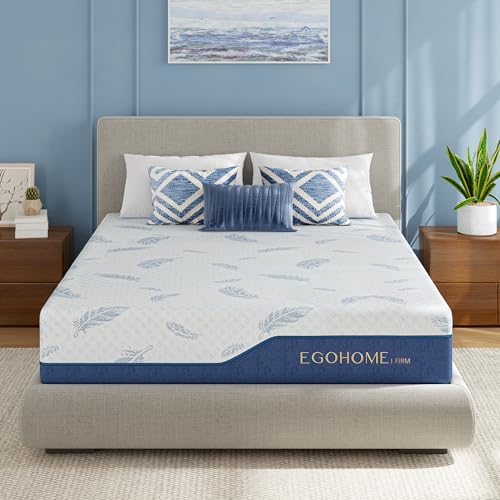

Yes—sometimes you can use HSA or FSA funds for a mattress purchase, but it’s only likely to qualify when the expense is primarily for medical care (not general comfort) and you have clear clinician documentation. In many cases, a standard “for comfort” mattress won’t qualify, so the key step is making sure the mattress (or medical-grade overlay/bed accessory) is tied to treatment and properly documented. This guide walks you through what typically qualifies, what documentation to gather, and what commonly causes claims to get denied.
If you have a health condition (like mobility limitations or pressure-injury prevention) and you’re considering a mattress upgrade for medical reasons, this is for you. It’s also relevant if your HSA/FSA administrator has denied a prior claim or you want to avoid delays before you purchase.
Check if a mattress is actually eligible (medical, not just preferred)

A mattress purchase is eligible when it meets the IRS standard for “medical care,” meaning the primary purpose is diagnosis, cure, mitigation, treatment, or prevention of disease (or an equivalent standard tied to body function/structure). Here’s the key: a mattress that’s primarily about comfort, sleep preferences, or aesthetics is generally treated as a personal expense, even if you feel better after changing it.
– HSA/FSA generally must follow the IRS definition of “medical care,” which means the expense is mainly for treatment, not general comfort or lifestyle. In practice, most administrators look for a clinician’s explanation that connects your condition to the specific sleep product’s therapeutic purpose. IRS Publication 502, “Medical and Dental Expenses”
– Standard mattresses usually fall into the “personal expense” category; medical-grade sleep products (like pressure-injury prevention overlays) are more likely to be treated as medical. If your doctor frames the purchase as part of a care plan (rather than “for back pain relief”), your approval odds improve.
– Eligibility can depend on what you’re buying (mattress vs. overlay vs. hospital/medical bed component) and how your plan interprets “primarily for medical care.” Administrators often evaluate both product category and claim wording—so “medical” in the product description isn’t enough by itself.
Pick the right product type (mattress vs. overlay vs. bed-related items)
If your medical need is pressure injury prevention or therapeutic support, an HSA/FSA claim is more likely to align with plan rules when you buy an item marketed and sold as medical equipment or therapeutic support (not a generic mattress upgrade). The fastest path is to choose the product category that most closely matches durable medical use.
– If your goal is medical support (for example, pressure injury prevention), an item described and sold as medical equipment/therapeutic support is more likely to align with plan rules. Look for language like “pressure redistribution,” “therapeutic support surface,” or “medical-grade overlay.”
– Mattress toppers/overlays may be treated differently than full mattresses—ask your provider or review your plan’s eligible-expense list for the exact product category. When you review your plan documents, search for wording that includes terms such as “durable medical equipment,” “therapeutic support,” or “medical equipment and supplies.”
– Accessories (like sheets, mattress protectors, or decorative covers) are commonly denied because they’re not directly medical equipment. In many plans, items that are primarily “hygiene/comfort” (even if helpful) are treated as non-qualified because they don’t directly provide therapy.
To make this decision easier, use this contrast view before you spend:
| Feature | Standard mattress | Medical-grade overlay/therapeutic support surface |
|---|---|---|
| Primary purpose | Comfort and general sleep | Treatment/prevention support tied to a condition |
| How administrators read it | Often a personal furnishing unless documentation is very specific | More likely to fit “medical care” framing when clinician-linked |
| Best clinical tie-in | Usually must be exceptionally well documented to justify “medical necessity” | Pressure injury prevention, wound-risk mitigation, mobility-related support |
| Typical required proof | Clinician note prescribing medical need and explaining why this exact mattress is required | Clinician note + product category proof (therapeutic/medical support surface) |
| Product description matter | Marketing terms like “support” may still look like comfort claims | Therapeutic terminology aligns better with plan review |
| Common coding/claim outcomes | Often denied as home furnishing | More likely approved when billed/charged as medical equipment category |
| Risk if documentation is thin | High—comfort interpretation is likely | Lower—still not guaranteed, but documentation aligns better |
| Plan variation | Many plans will not treat a mattress as qualified | More consistent across plans, but category rules still apply |
| Time to approval | Can be slower due to extra review and requests for more detail | Often faster when documentation matches product category |
| Best for | Only situations with strong medical documentation connecting the exact mattress to treatment | Most cases where a clinician prescribes therapeutic support (especially pressure-related needs) |
| Best For row | Comfort + lifestyle upgrades (generally not qualified) | Condition-related prevention/treatment support (more likely qualified) |
Use a simple step-by-step reimbursement process
If you want the highest chance of approval, follow a “documentation-first” workflow: get medical support, confirm claim requirements with your administrator, then submit a clean package of receipts and notes. This avoids the most expensive mistake—buying first and discovering your plan will not treat the product category as medical.
– Get medical support first: ask your clinician for a note/letter that explains the medical need and why the specific sleep product is part of care. A strong letter typically identifies the condition, the goal (prevention/mitigation/treatment), and the reason the sleep surface is necessary.
– Check with your HSA/FSA administrator before buying (if you can): some allow you to submit a “pre-check” or ask what documentation they need for approval. In many plans, you can use terms like “prior review,” “expense pre-authorization,” or “qualifying expense verification” through your member portal or claims support line—ask what options your administrator offers.
– Save everything for the claim: receipt/invoice, product description, and any documentation showing the expense is for medical care. Your receipt should ideally include the product name/model, not just the retailer total.
This is also where your file discipline matters. Keep a folder (digital or paper) with: (1) clinician documentation, (2) the itemized receipt, (3) the product page/spec sheet showing therapeutic/medical positioning, and (4) any correspondence with your administrator.
Gather documentation that reduces the odds of a denial
If you’re trying to avoid denied claims, the goal is consistency: your clinician’s letter, the product description, and the way you describe the expense on your claim must all align. When those elements don’t match, administrators can interpret the purchase as a personal furnishing.
– Doctor documentation: a prescription or signed letter that ties the need to diagnosis/treatment and supports the specific product type you purchased. Whether you need a prescription vs. a letter depends on your plan, but many administrators accept a clinician letter that states medical necessity and explains why the product is required.
– Proof of purchase: itemized receipt showing the product name/model (and ideally what it is designed to do, e.g., medical/therapeutic support). If you’re buying an overlay, ensure the receipt reflects the overlay/therapeutic support item specifically—not only the base mattress.
– Claim notes (if your plan allows): a brief explanation matching your clinician’s reason for the mattress/overlay. Avoid guessing—stick to what the documentation supports.
From my experience reviewing documentation requests for healthcare reimbursement workflows, the missing piece is often specificity: letters that say “needs better mattress” without tying it to a condition and treatment plan are where approvals commonly break down.
Styled data table: what’s easiest to support vs. hardest
How Administrators Commonly Frame Mattress-Related Purchases (IRS medical-care standard, 2026)
| # | Sleep-related item type | How explicitly tied to “medical care” the category appears | Typical documentation needed | Claim risk (based on category-fit) |
|---|---|---|---|---|
| 1 | Therapeutic pressure-redistribution overlay | High | Clinician letter + product category proof | ★★★☆☆ |
| 2 | Medical-grade mattress topper labeled therapeutic/clinical | Medium–High | Clinician letter + detailed product specs | ★★★☆☆ |
| 3 | Hospital/medical bed accessory component (therapeutic function) | High | Clinician/medical necessity note + invoice | ★★☆☆☆ |
| 4 | Standard mattress (firmness/support marketed for pain/sleep) | Low–Medium | Strong clinician justification + explanation of why mattress itself is required | ★★★★☆ |
| 5 | Standard mattress + “back pain” letter without condition-treatment link | Low | Often needs stronger diagnosis/treatment tie and product-specific rationale | ★★★★★ |
| 6 | Mattress protector/decorative cover | Very low | Rarely accepted as medical equipment | ★★★★☆ |
| 7 | Replacement bedding sheets (general comfort) | Very low | Usually treated as personal/home furnishing | ★★★★★ |
What can go wrong (and how to avoid it)
Even when you have a medical reason, claims can still get denied if the product category looks like a home furnishing or if your documentation doesn’t clearly tie the expense to treatment. Think of HSA/FSA review as “medical-care first, everything else second.”
– Claim denied because it’s treated as a standard home furnishing: this usually happens when the product is “regular mattress” without a medical-necessity tie. Administrators tend to discount broad statements like “improves sleep” unless the letter explains medical treatment goals.
– Missing or weak documentation: if the letter doesn’t connect the medical condition to the specific item, your administrator may disallow it. For example, a diagnosis of mobility limitation isn’t the same as explaining why a particular mattress/overlay is required.
– Mixed purchases: delivery, setup, bedding materials, or non-med add-ons can be denied even when the mattress/overlay itself qualifies. If your receipt bundles multiple line items, ask the retailer to separate eligible and ineligible components (when possible).
– Timing issues: with FSAs, deadlines are plan-year dependent. Many FSAs also allow a short grace period for some plans, and IRS rules commonly limit the grace period to up to 2.5 months beyond the plan year end. IRS Publication 969 (HSA and other tax-favored health plans)
To reduce the “plan rules surprise,” make sure you understand whether your plan is HSA-like (withdraw any time for qualified medical expenses) or FSA-like (use it within the plan year or grace/carryover rules).
| Criteria | HSA | FSA |
|---|---|---|
| Who can enroll | Generally requires an eligible high-deductible health plan (HDHP) | Offered through employers |
| Use of funds | Funds can be used for qualified medical expenses | Funds can be used for qualified medical expenses |
| Plan-year deadline risk | Lower risk (account typically persists) | Higher risk (use-it-or-lose-it rules vary) |
| Grace period rule | Not applicable | May allow up to 2.5 months for unused amounts (plan-specific) |
| Annual dollar limits (example year) | For 2024: $4,150 self-only; $8,300 family | For 2024: $3,200 FSA maximum (general limit) |
| Documentation expectations | Typically requires proof of qualified medical expense and medical necessity | Typically requires the same “medical care” support |
| Denial reason pattern | Often category mismatch (standard furnishing) | Often category mismatch + timing/plan-year submission cutoffs |
| Best fit when | You want more flexibility and longer horizon for medical spending | You expect near-term qualified expenses and can submit on time |
| Who reviews claims | Your HSA administrator | Your FSA administrator (often tied to your employer) |
| Claim submission method | Usually reimburse after purchase or pay at time of expense (varies) | Usually reimburse after purchase (varies by employer) |
| Verdict | Fewer timing penalties if your mattress need is medical and documented | More time-sensitive—document and submit quickly to protect against plan-year loss |
Verdict: when HSA/FSA for a mattress is worth it
Using HSA/FSA for a mattress can be worth it when you have clear medical-need documentation and you’re buying a mattress/overlay that’s realistically part of treatment (not just comfort). The tradeoff is paperwork and the risk of denial if the purchase looks like a regular bedroom upgrade to your plan—especially if your letter doesn’t connect a diagnosis to the exact product category you purchased.
Skip this approach (or expect extra pushback) if you’re buying mainly for preference, aesthetics, or general “back pain relief” without clinician documentation. Also consider skipping if you don’t want to provide receipts/product details or you’re working under tight FSA deadlines—timing cutoffs can be unforgiving even when the medical need is legitimate.
Quick checklist (scan before you buy)
| Item to confirm | Yes/No | Notes |
|---|---|---|
| Mattress/overlay is tied to medical care (not just comfort) | Your clinician letter states medical necessity and treatment/prevention goal | |
| Product is the medically relevant type (overlay/therapeutic support vs. standard mattress) | Receipt/product category aligns with “therapeutic support surface” or medical equipment | |
| You have a clinician note/prescription explaining the medical need | Includes diagnosis and why the specific item is required | |
| Receipt is itemized and matches the exact product purchased | Product name/model appears; non-med items are separated when possible | |
| Delivery/accessories won’t be bundled as “qualified” items | Avoids mixed-line-item denials | |
| You know your plan’s submission method and deadlines | For FSA, confirm plan-year end/grace or carryover rules |
Frequently Asked Questions
What mattress purchases qualify for HSA or FSA funds?
In most cases, HSA and FSA funds can be used for medical equipment or supplies only when they are prescribed as part of a treatment plan and meet IRS guidelines. Mattresses may qualify if they are specifically recommended by a healthcare provider for a medical condition (for example, pressure relief needs, mobility issues, or certain complications). Common examples include medically necessary hospital-style beds or specialty pressure-relieving mattress systems, but a standard “comfort” mattress usually does not qualify. Check your plan rules and keep the prescription or documentation for reimbursement.
How can I use HSA or FSA to pay for a mattress purchase?
Start by asking your doctor whether you need a medically necessary mattress due to a condition, and request any required documentation (such as a prescription, letter of medical necessity, or diagnosis details). Then purchase the mattress from a retailer that can provide an itemized receipt showing the mattress and relevant components. When you file a claim, submit the prescription/letter and receipt through your HSA or FSA portal, and be ready for requests for additional paperwork. Always confirm eligibility with your FSA/HSA administrator before paying if you want to minimize reimbursement delays.
Why do HSA and FSA rules for mattresses require medical necessity?
HSA and FSA accounts are limited to qualified medical expenses, meaning the purchase must be primarily for medical care rather than general comfort or lifestyle. Mattress eligibility is stricter than many people expect because “healthcare-related” items must generally be prescribed or specifically designed for medical use. By requiring medical necessity, plan administrators reduce improper claims and ensure the expense meets IRS requirements. If your mattress is for a diagnosed condition, documentation helps establish that it’s a qualified medical expense.
Which types of mattresses are most likely to be approved with HSA or FSA?
Specialty medical mattresses are the most likely to qualify, especially those designed for pressure injury prevention or treatment, such as pressure-relieving foam systems or medically oriented bed support surfaces. If the mattress is part of a broader prescribed therapy (like a pressure ulcer prevention plan), approvals are more common. Conversely, a typical foam, memory-foam, or hybrid mattress meant mainly for sleep comfort is usually not approved without a clear medical component and documentation. The safest approach is to look for mattresses explicitly marketed and documented for medical use and to verify eligibility with your plan.
What’s the best way to get reimbursed if my mattress claim is denied?
If your claim is denied, request the denial reason from your HSA or FSA administrator and ask what documentation would satisfy the medical necessity requirement. Often, adding a more detailed letter of medical necessity from your clinician—tying the mattress to your diagnosis and treatment plan—can help. You can also confirm whether the plan requires the mattress to be classified as durable medical equipment (DME) or whether only certain specialty mattress systems qualify. Re-submit with an itemized receipt, prescription, and any required forms, and consider contacting your administrator before trying again.
📅 Last Updated: November 02, 2026 | Topic: How to Use HSA or FSA Funds for a Mattress | Content verified for accuracy and freshness.
References
- Publication 502 (2025), Medical and Dental Expenses | Internal Revenue Service
- Publication 969 (2025), Health Savings Accounts and Other Tax-Favored Health Plans | Internal Rev…
- https://www.irs.gov/health-care-plans/health-savings-accounts-hsas
- https://www.irs.gov/retirement-plans/plan-participant-education/flexible-spending-accounts-fsas
- Topic no. 502, Medical and dental expenses | Internal Revenue Service
- https://medlineplus.gov/pressureulcers.html
- pressure ulcer support surfaces air mattress – Search Results – PubMed
- https://scholar.google.com/scholar?q=HSA+FSA+qualified+medical+expenses+durable+medical+equipment Google Scholar
- https://scholar.google.com/scholar?q=pressure+ulcer+support+surface+guideline+alternating+pressure+mattress Google Scholar
- https://scholar.google.com/scholar?q=FSA+mattress+pressure+ulcer+eligible+medical+expense Google Scholar





One Comment