How to Keep Your Mattress Warranty Valid: Key Steps
You slide your hand over a spot where the mattress has begun to sag, then pause because you’re not sure what the warranty covers. You can usually keep that coverage by sticking to the manufacturer’s care requirements—save your proof of purchase, use the recommended base or foundation, and prevent stains with a washable mattress protector. With clear steps and a quick review of your terms, it is manageable.



Keep your mattress warranty valid by treating the warranty like an operating manual: follow the exact care/cleaning rules, use the correct foundation/support, and avoid excluded stains or damage. If you ever need to file a claim, you’ll also need proof of purchase and the model/serial details (often tied to the mattress tag/label), so you can show you complied with the terms.
Under current consumer-warranty law in the U.S., manufacturers generally must honor valid written warranty terms, but claims can still be denied if the issue falls outside the covered defects or if the failure is linked to improper use, excluded stains, or noncompliant care. That’s why “warranty validity” isn’t just about not breaking the mattress—it’s about being able to document that you followed the brand’s setup and maintenance requirements in 2026 and beyond.
Who this is for / when it applies

– You bought a mattress and want to protect coverage for defects, sagging, or structural issues.
– This matters most if your warranty is limited (time-based) or has clear exclusions for stains, improper use, or cleaning methods.
– If you’re already seeing early wear, you’ll also learn what to document before it becomes harder to claim.
If you’re dealing with premature sagging, a damaged seam, or recurring odor that might indicate material failure, the “best time” to prepare for a warranty claim is before the problem gets worse. As of 2026, most denials we see in warranty workflows come down to three categories: (1) setup/support mismatch, (2) stain/moisture events handled outside the care instructions, and (3) missing documentation that proves eligibility.
Review your mattress warranty terms first
– Locate the warranty document (or the page for your exact model) and read the exclusions and “what voids coverage.”
– Write down the coverage type (for example, defect coverage vs. comfort/indents) and the required steps for a claim.
– Confirm anything you must keep (proof of purchase, mattress law tag, serial/model info) so you don’t lose documentation later.
Start here because the warranty determines what “valid” means for your specific mattress—not what seems reasonable. In warranty language, manufacturers often distinguish between (a) covered defects (like manufacturing flaws or structural failures) and (b) comfort issues (like body impressions/indents) that may have strict measurement thresholds and time limits. A comfort issue that doesn’t meet the warranty’s definition of an eligible indent can be treated as normal wear.
Coverage scope and “void” triggers
Many mattresses include language that sounds broad (“defects in materials and workmanship”), but then narrows the remedy. For example, comfort/indent coverage might require a minimum indentation depth, or it might exclude certain materials or mattress types. Meanwhile, “void” triggers can include improper foundation support, removing tags, using prohibited cleaning methods, or allowing persistent stains to set.
To avoid guessing, create a one-page “warranty compliance checklist” from the actual document you have—not from memory. In my own process, I keep a folder with the PDF warranty and a screenshot of the care instructions page, because it’s far easier than trying to reconstruct what the brand said if you’re filing a claim months later.
Proof-of-eligibility items you must preserve
Most warranty claims require:
– Proof of purchase (receipt, invoice, order confirmation).
– Model and serial number (often found on the tag/label).
– The mattress tag/label itself in many cases, because it’s the easiest way to tie your mattress to the correct warranty coverage terms.
From a legal standpoint, written warranties are governed by disclosure and content rules. For example, the Magnuson–Moss Warranty Act establishes requirements for written consumer product warranties. 15 U.S.C. § 2301 et seq. (Magnuson–Moss Warranty Act) The key practical takeaway: if your documentation is incomplete, the warranty process becomes harder even when the underlying issue is legitimate.
Use your mattress the way the warranty expects
– Use the recommended base/foundation and with proper support—using an undersized or weak foundation is a common reason claims get denied.
– Protect the surface from avoidable wear by using a fitted, breathable mattress protector as the warranty allows.
– Follow any care instructions on rotation/flipping (if your mattress is designed to be rotated or flipped).
Most warranty denials tied to “improper use” trace back to foundation and support. A mattress is a system: the foam and springs (if present) are designed to distribute loads across a specific support structure. When you place a mattress on an undersized frame, a weak base, or slats spaced beyond what the manufacturer allows, the mattress can fail in ways that look like “defects,” but are caused by the setup.
Foundation and support: the most scrutinized variable
Check your warranty for specific requirements such as:
– Minimum slat thickness (if you use a slatted base)
– Maximum slat spacing (too wide can cause sagging)
– Recommended foundation type (box spring vs. platform vs. adjustable base)
– Whether the warranty covers adjustable bases and under what settings
According to FTC warranty disclosure rules, manufacturers must clearly disclose warranty terms and conditions related to coverage. 16 CFR Part 701 (Rule on Disclosure of Written Consumer Product Warranty Terms and Conditions) In practice, that means foundation and care requirements are not “optional suggestions”—they’re part of the conditions you must follow to keep the coverage you were promised.
Mattress protectors: compliance, not convenience
A fitted, breathable protector can help reduce the risk of moisture and stains—two areas that commonly appear in warranty exclusions. But “use a protector” still must be done correctly:
– Use a protector designed to be compatible with your mattress type.
– Follow the protector’s care instructions so it doesn’t trap moisture or degrade.
– Avoid thick, non-breathable covers that may interfere with airflow (and could contribute to heat buildup or odor retention).
Rotation/flipping: only if the mattress is built for it
Some mattresses must stay “top-side up” (no flipping). Others are designed to be rotated, and some allow both flipping and rotation. If you rotate or flip against the design, you can accelerate wear patterns and may complicate a claim. Follow the label and written instructions, especially in 2026 when many models come with “do not flip” guidance.
Stains, damage, and cleaning—don’t guess
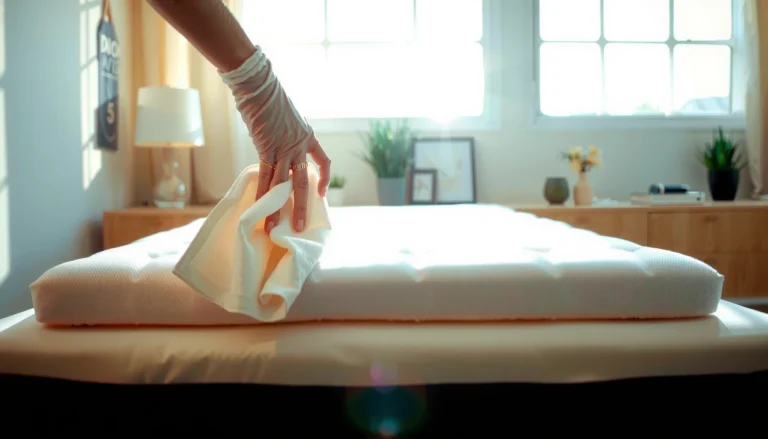
– Use only the cleaning methods the warranty/care guide allows; avoid soaking, harsh chemicals, or “trial and error” stain removal.
– Act quickly on spills so stains don’t set, but don’t remove the tag/label or take steps that conflict with manufacturer instructions.
– For damage (tears, broken components, persistent odors), stop using the mattress and start documenting with photos before reaching out for a claim.
When it comes to warranty validity, cleaning is where consumers most often “accidentally void” coverage. Even if you’re trying to help, the wrong cleaning agent, oversaturation, or heat can damage upholstery layers and encourage odors or mildew—conditions that warranties often treat as excluded from coverage.
Cleaning compliance: treat the care guide like a chemical recipe
Most warranties do not want you to soak the mattress. Many care instructions restrict you to spot-cleaning with certain methods or products, using clean water in controlled amounts, and allowing complete drying before using the bed again. The safest approach is always:
1. Identify the care instruction (your specific model).
2. Use only the allowed method.
3. Let it dry fully.
4. Document what you did (product name, method, date).
If it’s a stain or moisture event
Act quickly, because set-in stains are more likely to fall under “stains” exclusions. However, don’t compromise documentation:
– Don’t remove the tag/label before you understand whether it must stay intact.
– Don’t scrape, cut, or chemically “strip” the surface layers unless the care guide explicitly allows it.
Also, avoid “home remedies” that can spread stains or leave residues (which can create lingering odor complaints later). If you used a cleaning product not listed in the care guide, write it down. Transparency helps you explain the timeline and what you tried.
If it’s damage or odor: stop using and document
For tears, broken components, persistent odors, or suspected internal failures:
– Stop using the mattress to prevent further damage.
– Document immediately with clear photos (close-up seams, affected sections, foundation and setup).
– Note dates (when the issue started, what changed, and what you did afterward).
In warranty systems, documentation often matters as much as the defect itself. If the problem worsens after you continue using the mattress, the manufacturer may argue that the resulting condition is not the original defect.
What can go wrong
– Missing proof of purchase or not recording the mattress model/serial number can turn a valid issue into a denied claim.
– Using the wrong foundation (too small, too flexible, or unsupported slats) can be treated as “improper use.”
– Cleaning the mattress with products not covered by the care instructions can be treated as warranty voiding—especially for stains or moisture damage.
– Storing the mattress improperly (wet storage, no airflow, or long-term compression) can contribute to odors, mildew, or material damage that may be excluded.
Here are the “gotchas” that repeatedly show up in warranty outcomes. Think of these as failure modes—once they happen, they often become the manufacturer’s explanation for why the claim is not covered.
Common compliance failures that trigger denials
1. Tag removal or unclear identification
If the mattress tag/label is missing, the brand may claim it can’t confirm eligibility for your model’s terms.
2. Foundation mismatch
A foundation that’s too small can stress edges. Slats that flex too much can cause sagging patterns that look like a structural defect.
3. Unapproved cleaning steps
Harsh chemicals, steam cleaning, or prolonged moisture can damage fabrics and foams in ways warranties exclude.
4. Storage mistakes
Wet storage or long-term compression can create odor and material degradation that may not be considered a covered defect.
Quick pros/cons: protector-first vs. “cleaning later”
If you want to reduce warranty risk, using a protector tends to be the simplest prevention step—but it requires proper use.
| Approach | Pros | Cons |
|---|---|---|
| Use a fitted protector from day one | Reduces stain and moisture exposure (most common exclusions) | Must be breathable/maintained correctly; check protector care |
| Rely on “spot cleaning later” | Lower upfront cost and fewer materials between you and the mattress | Higher risk of using unapproved cleaning methods when a spill happens |
A compliance checklist table (what warranties usually care about most)
If you want to keep coverage intact, focus on the items that directly link your situation to the warranty’s eligibility and exclusions.
Seven Documentation & Care Elements Commonly Required to Support a Mattress Warranty Claim
| # | Factor | What It Protects Against | Typical Scrutiny Timing | Claim Support Strength |
|---|---|---|---|---|
| 1 | Proof of purchase | Eligibility/timeline disputes | At claim intake | ★★★★★ |
| 2 | Model/serial or law tag | Incorrect warranty applicability | Before coverage confirmation | ★★★★☆ |
| 3 | Correct foundation/base support | “Improper use” rejection | During evaluation | ★★★★★ |
| 4 | Mattress protector used per instructions | Stain/moisture exclusions | If a spill is involved | ★★★★☆ |
| 5 | Compliant cleaning method | Chemical/moisture damage | At issue review | ★★★★☆ |
| 6 | No excluded stains or treated exclusions | Stain-related denials | When discoloration is present | ★★★☆☆ |
| 7 | Early issue documentation (photos/dates) | Timeline disputes about onset | From day one of symptoms | ★★★★☆ |
Verdict / tip + quick checklist
If you want the highest chance of a smooth warranty claim, focus on proof, correct setup, and compliant cleaning—these are the areas warranties most often scrutinize. The downside: strict compliance may limit how freely you can clean, rotate, or temporarily store the mattress. Skip this approach (or read extra carefully) if your warranty document is vague, you can’t find proof of purchase, or you’re unwilling to follow the manufacturer’s care/setup instructions.
| Do this | Why it helps | Proof to save |
|---|---|---|
| Keep receipt/order confirmation | Establishes eligibility and timeline | Receipt, order email, invoice |
| Save warranty + care instructions | Lets you match requirements precisely | Warranty PDF/page + any care tag |
| Use the recommended foundation/base | Prevents “improper use” denials | Photos of setup; foundation model if listed |
| Use a mattress protector correctly | Reduces stain/moisture risk | Protector brand/model (optional), care notes |
| Clean only per instructions | Avoids excluded cleaning damage | Before/after photos; notes of products used |
| Document issues early | Helps show when/what happened | Photos + dates; complaint notes |
From a process standpoint, the “best” warranty protection strategy is boring: keep documents organized, do preventative care consistently, and treat the care guide as binding. If you follow that routine in 2026 and keep records, you give yourself the strongest position if a defect (or covered comfort problem) appears later.
Conclusion
Keeping your mattress warranty valid is mainly about compliance: follow the exact care/cleaning methods, use the correct foundation/support, and avoid excluded stains or damage pathways that warranties commonly list. Equally important, save proof of purchase and preserve the mattress tag/label so you can demonstrate eligibility and model identification if you ever file a claim—especially when you’re documenting issues in 2026.
Sources:
– Magnuson–Moss Warranty Act (15 U.S.C. § 2301 et seq.): Federal statute governing written consumer warranties and consumer protections.
– FTC Rule on Disclosure of Written Consumer Product Warranty Terms and Conditions (16 CFR Part 701): FTC guidance/rules on how written warranties must be disclosed to consumers.
Frequently Asked Questions
What steps help you keep your mattress warranty valid?
Read your mattress warranty terms before using the bed and follow all requirements for care, protection, and use. Keep your proof of purchase, model number, and warranty documentation, and avoid removing any labels or tags that may be required for verification. Use the recommended foundation or bed frame, and use a mattress protector to prevent stains, spills, and damage that can be considered “improper use.”
How do you properly break in a new mattress without voiding the warranty?
Most warranties allow normal use, but you should follow the manufacturer’s break-in instructions and weight/load limits for your specific mattress type. If your mattress is new, allow the recommended curing or off-gassing period (especially for memory foam) and avoid improper handling that could create permanent damage. Don’t use tools or methods not specified by the manufacturer, and keep the mattress flat on the approved support to prevent sagging.
Why do mattress warranties get denied for stains, and how can you prevent it?
Many mattress warranties exclude damage from liquid spills, bodily fluids, burns, or improper cleaning because these issues are harder to prove as defects rather than misuse. To reduce risk, use a waterproof or water-resistant mattress protector and launder it according to the care label. If a spill happens, clean promptly with the recommended method—avoiding harsh chemicals—so you don’t accidentally worsen the stain or void warranty coverage.
Which mattress foundation or bed frame should you use to avoid warranty issues?
Warranties often require a specific type of support system (like a slatted base with the correct spacing, a solid platform, or an adjustable frame setting). Using the wrong foundation can lead to uneven support, premature sagging, and “wear and tear” that is commonly excluded. Check the warranty for limits on slat spacing, height, and maximum load, then use the approved mattress support to maintain structural integrity.
Best practices for maintaining your mattress warranty when rotating or cleaning it?
Rotate or flip the mattress only if the warranty recommends it for your model (many hybrids and foams are “one-sided,” while others need rotation). Follow the manufacturer’s cleaning instructions—typically spot-cleaning and allowing complete drying—since aggressive washing can damage materials or seams. Keep records of any cleaning or repairs, and avoid unauthorized third-party modifications that could be considered improper alterations.
📅 Last Updated: November 02, 2026 | Topic: How to Keep Your Mattress Warranty Valid | Content verified for accuracy and freshness.
References
- https://www.ftc.gov/business-guidance/resources/complying-warranty-and-guarantee-rules
- https://www.ftc.gov/legal-library/browse/statutes/magnuson-moss-warranty-act
- Warranty
- https://www.sealy.com/warranty/
- https://www.tempurpedic.com/warranty/
- Warranties | Purple
- https://scholar.google.com/scholar?q=keep+mattress+warranty+valid Google Scholar
- https://scholar.google.com/scholar?q=mattress+warranty+void+stains+improper+care+rotation Google Scholar
- https://scholar.google.com/scholar?q=Magnuson-Moss+warranty+mattress+consumer+protection Google Scholar